
Fun Lacrosse Games for Kids: Spark Joy & Skill
 By Speech Blubs Team•Jan 19, 2026•21 min.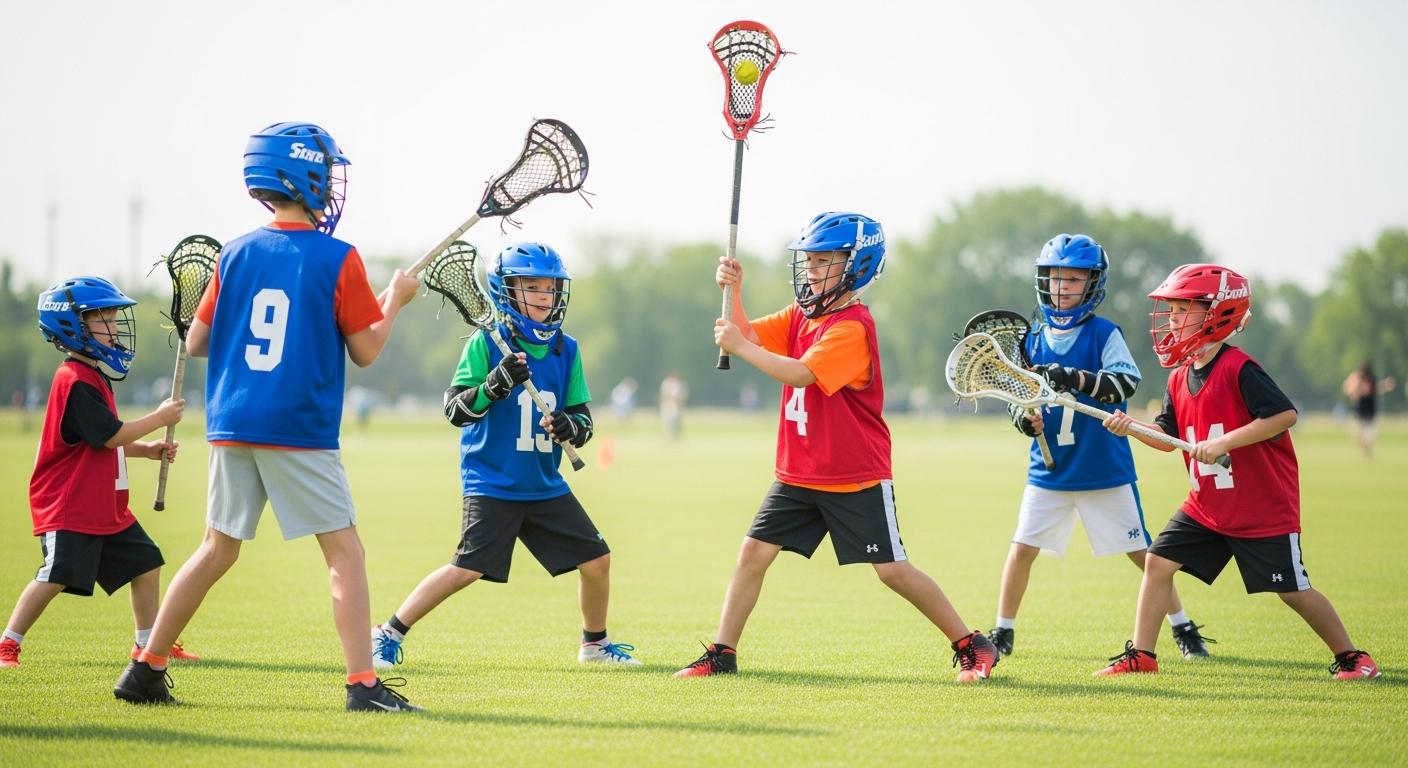
Table of Contents
- The Power of Play: Why Fun Matters in Youth Sports
- Ground Ball Galore: Scooping Up Skills with Excitement
- Dodging & Defensive Footwork: Mastering Movement
- Passing & Catching Perfection: Connecting the Team
- Shooting for Success: Goals and Glory
- Conditioning and Agility: Building the Engine
- Goalie Drills: The Last Line of Defense
- Beyond the Skills: Team Building and Creativity
- Conclusion: Play Your Way to Success
- Frequently Asked Questions About Fun Lacrosse Games for Kids
Have you ever noticed how quickly a child's attention can wander during repetitive drills, even in the most exciting sports? While the foundational skills of lacrosse – scooping ground balls, precise passing, powerful shooting, and agile dodging – are crucial, the way we teach them determines whether a child develops a lifelong love for the game or simply goes through the motions. At Speech Blubs, we understand this deeply; our mission is to empower children to speak their minds and hearts by turning essential communication practice into joyful, engaging experiences. We believe the same principle applies to sports: when learning feels like play, children thrive.
This post isn't just about listing activities; it's about transforming the lacrosse field into a playground where every movement, every pass, and every shot builds confidence and competence without feeling like work. We'll dive into a treasure trove of fun lacrosse games for kids that disguise skill development as exciting challenges and team adventures. From quick-thinking ground ball relays to creative shooting competitions and agility-boosting chases, we'll explore how these games not only enhance athletic abilities but also foster teamwork, problem-solving, and a genuine passion for the sport. Join us as we unlock the secrets to making youth lacrosse practice the highlight of their week, nurturing their physical literacy just as we nurture their verbal expression.

The Power of Play: Why Fun Matters in Youth Sports
In many ways, the philosophy behind effective youth sports mirrors our approach at Speech Blubs. We both recognize that children learn best when they are actively engaged, stimulated by their environment, and encouraged to participate freely, rather than being passively instructed. Just as we offer a screen-free alternative to passive viewing through our interactive app, creating "smart screen time" experiences, youth lacrosse can provide "smart field time" – moments where kids are fully present, moving, thinking, and interacting.
For young athletes, play isn't just a break from serious training; it is the training. Games naturally incorporate movement, decision-making, and social interaction in a way that isolated drills often cannot. When children are having fun, their brains are more receptive to learning. They're more likely to try new things, recover from mistakes quickly, and internalize complex skills because the motivation comes from within. This intrinsic motivation is key to building resilience, fostering creativity, and developing a positive self-image, all foundational elements that contribute to a child's overall development, much like how mastering communication through our app builds confidence and reduces frustration in everyday interactions.
We've seen firsthand how our unique video modeling methodology, where children learn by watching and imitating their peers, sparks a love for communication. In lacrosse, similar peer-to-peer learning happens organically in game settings, as kids observe and mimic their teammates' successful dodges or scoops. By focusing on games, coaches and parents create an environment where fundamental skills like scooping, cradling, passing, and shooting are practiced repeatedly, but in varied, exciting contexts that keep young players eagerly coming back for more.
Ground Ball Galore: Scooping Up Skills with Excitement
Ground balls are the lifeblood of lacrosse. Winning possession often comes down to who can get to and secure the ball first. Making this fundamental skill engaging is crucial, and these games turn a potentially tedious drill into a thrilling contest.

Hungry Hungry Hippos
Transform the classic board game into a ground ball frenzy that kids will love. This game is fantastic for reinforcing proper scooping technique, acceleration, and field awareness under light pressure.
- How to Play:
- Divide players into four teams, each positioned at a corner of a large square.
- Scatter 20 or more lacrosse balls in the center circle.
- On the whistle, one player from each team sprints into the center to grab a ground ball.
- Players must properly scoop the ball, secure it in their stick, and carry it back to their team's corner.
- As soon as a player returns, the next teammate can go.
- The team that collects the most balls within a two-minute time limit wins the round.
- Skill Focus: Proper scooping technique (getting low, stick on the ground, guiding with top hand, driving with bottom hand), explosive acceleration, spatial awareness, and quick decision-making.
- Why Kids Love It: The competitive, fast-paced nature of the game, combined with the visual of scattered balls, instantly engages them. It feels like a race against friends!
Ground Ball Relay Race
For a straightforward but equally engaging challenge, a relay race can foster team spirit while honing ground ball skills.
- How to Play:
- Divide players into two or more teams, lining them up at one end of the field.
- Place a cone or marker about 10-15 yards in front of each team.
- The coach rolls a ground ball towards the cone for the first player of each team.
- The first player sprints, scoops the ball, cradles it around their team's cone, and sprints back to hand off the ball (or their stick, if preferred) to the next player.
- The first team to have all players complete the relay wins.
- Skill Focus: Scooping on the run, cradling while moving, agility around a cone, quick transitions, and teamwork.
- Why Kids Love It: Relays are inherently fun and competitive. The peer pressure (in a positive way) to perform for their team makes every scoop and sprint more exciting.
Messy Backyard
This game is all about controlled chaos, turning ground ball collection into a fun, strategic clean-up mission.
- How to Play:
- Designate a "backyard" area (e.g., a 20x20 yard square) and scatter many balls within it.
- Players are divided into two teams, each with their own "shed" (a designated goal or bucket outside the backyard).
- On the whistle, both teams try to "clean up" the backyard by scooping balls and depositing them into their team's shed.
- Players can only carry one ball at a time.
- The team that collects the most balls in their shed after a set time wins.
- Skill Focus: Ground ball proficiency, continuous movement, spatial awareness, carrying/cradling, and teamwork.
- Why Kids Love It: The sheer number of balls and the continuous movement make it feel like a playful scramble rather than a drill.
Dodging & Defensive Footwork: Mastering Movement
Lacrosse is a game of dynamic movement, requiring players to constantly adjust, evade, and defend. These games build agility, quickness, and strategic thinking.
Sharks and Minnows
This playground classic adapts perfectly to develop dodging and defensive footwork in a fun, high-energy format. It's an excellent way to get kids moving and thinking creatively about evasion.
- How to Play:
- Designate two "sharks" (defenders) who start in the middle of a defined playing area (e.g., half a field). The sharks can use pool noodles or simply tag players with their hands.
- "Minnows" (players with sticks and balls) line up at one end of the area.
- Minnows must cradle their balls and try to cross to the opposite side without being tagged by a shark.
- If a minnow is tagged, they become a shark in the next round.
- The last minnow standing wins the round.
- Skill Focus: Cradling on the run, dodging techniques (split dodge, face dodge, roll dodge), defensive footwork, agility, and spatial awareness.
- Why Kids Love It: The chase element is universally appealing to children. They naturally develop creative dodges and learn to protect their ball without even realizing they’re working on fundamental skills. It’s pure, unadulterated fun, much like the engaging activities we design at Speech Blubs to make learning sounds exciting.
Mirror Drill
This simple yet effective drill is fantastic for developing defensive footwork, reaction time, and the ability to stay in front of an opponent.
- How to Play:
- Two players face each other within a small designated area (e.g., 5x5 yards).
- One player is the "attacker" and the other is the "defender."
- The attacker tries to move laterally, forward, and backward within the area, without leaving it.
- The defender's goal is to mirror the attacker's movement precisely, trying to stay directly in front of them at all times.
- After a set time (e.g., 30 seconds), players switch roles.
- Skill Focus: Defensive stance, shuffling, quick changes of direction, reactive footwork, and anticipation.
- Why Kids Love It: It's a direct, person-to-person challenge that taps into their competitive spirit. The immediate feedback of whether they successfully "mirrored" their partner is highly motivating.
Passing & Catching Perfection: Connecting the Team
Passing and catching are the language of lacrosse, allowing players to communicate on the field and move the ball effectively. These games turn repetition into dynamic interaction.
Rapid Fire Relay
Turn passing practice into a high-energy competition that reinforces accuracy under pressure and develops quick stick skills.
- How to Play:
- Form teams of 4-5 players, lining them up behind a starting cone.
- About 10-15 yards away, place a target (e.g., a net, a coach holding a stick, or a designated area on a wall).
- The first player in line passes to the target. After passing, they sprint to the back of their line.
- Teams score a point for each accurate pass that hits the target.
- The first team to reach a set score (e.g., 20 points) wins.
- Skill Focus: Passing accuracy, catching, quick release, stick control, and sprinting.
- Why Kids Love It: The combination of passing fundamentals with team-based competition creates natural peer coaching and celebration. The rapid pace keeps everyone engaged and moving. This kind of dynamic interaction fosters confidence, similar to how our app's structured play helps children gain confidence in their communication skills, empowering them to speak their minds and hearts.
Triangle Passing
This drill improves quick ball movement and decision-making, essential for offensive flow.
- How to Play:
- Three players form a triangle, standing approximately 10-15 feet apart.
- The ball starts with one player. They pass to the next player in the triangle and then immediately follow their pass, running to take the position of the receiver.
- The receiving player then passes to the third player and follows their pass, continuing the cycle.
- Players should continuously move and call out the name of the person they are passing to.
- Skill Focus: Passing accuracy, catching on the move, quick transitions, communication, and field awareness.
- Why Kids Love It: The constant movement and interaction make it feel more like a mini-game. It teaches them to anticipate passes and move into open space.
For parents looking to support their child's development across various domains, remember that building foundational skills in one area can positively impact others. Just as repetitive passing builds muscle memory and coordination, consistent practice with Speech Blubs strengthens a child's speech muscles and cognitive connections. If you're wondering if your child might benefit from a boost in their communication skills, take our quick 3-minute preliminary screener. It provides a simple assessment and a next-steps plan, and even includes a free 7-day trial of our app!
Shooting for Success: Goals and Glory
Scoring goals is often the most exciting part of lacrosse. These games build shooting accuracy, power, and confidence, turning every shot into a moment of potential glory.
Castle Defense
This medieval-themed game builds shooting precision while creating heroic moments for every player. It adds an imaginative element that resonates with kids.
- How to Play:
- Stack five cones in a pyramid formation directly in front of the goal or a designated target area (this is "the castle").
- Position a goalie (either a player or coach) to defend the castle.
- Attacking players take shots from designated distances (e.g., 10-15 yards).
- Award points based on shot difficulty (e.g., 1 point for hitting a cone, 2 points for knocking one down, 3 points for a shot that goes past the goalie without hitting cones).
- The first player to reach a set number of points (e.g., 10 points) becomes the "Castle Defender" for the next round.
- Skill Focus: Shooting accuracy, shot power, aiming, and strategic shot placement.
- Why Kids Love It: The imaginative play combined with the clear objective of "defending" or "destroying" the castle makes practice memorable. It also allows for individual achievements within a group setting.
Knockdown
A straightforward and highly competitive game that focuses purely on shooting accuracy.
- How to Play:
- Players line up about 15-20 feet away from a goal or a sturdy backstop.
- Place several small objects (e.g., cones, extra balls, water bottles) on top of the goal or along the crossbar.
- Players take turns trying to knock down the objects by shooting the ball.
- The player who knocks down the most objects in a set number of shots, or the first to knock down all objects, wins.
- Skill Focus: Pinpoint shooting accuracy, hand-eye coordination, and consistent follow-through.
- Why Kids Love It: It's an immediate, tangible challenge. The satisfaction of hitting and knocking down an object is incredibly rewarding and keeps them motivated to improve their aim.
Musical Balls
A twist on the classic game of musical chairs, this drill emphasizes quick shooting under pressure and adds a fun, frantic element.
- How to Play:
- Place several balls around the field, one fewer than the number of players.
- When a coach blows a whistle or plays music, players must run and grab a ball, then immediately shoot it into a goal.
- The player(s) who don't get a ball or miss the goal are out. Remove one ball after each round.
- The last player remaining wins.
- Skill Focus: Quick reflexes, sprinting, ground ball scooping (if not starting with balls in sticks), shooting under pressure, and decision-making.
- Why Kids Love It: The element of surprise, the race to get a ball, and the elimination format make it incredibly exciting and unpredictable. It’s a great way to end a practice on a high-energy note.
Conditioning and Agility: Building the Engine
While fun games are essential for skill acquisition, lacrosse also demands a strong physical foundation. These drills integrate conditioning into engaging activities, so kids build stamina and agility without dreading "sprints."
Zig-Zag Sprint
This drill is excellent for developing agility, change-of-direction speed, and footwork.
- How to Play:
- Set up 5-7 cones in a zig-zag pattern, spaced about 5-7 yards apart.
- Players sprint from one cone to the next, touching each cone as they change direction sharply.
- They can perform multiple repetitions or race against a partner.
- Skill Focus: Explosive acceleration, deceleration, efficient change of direction, and quick footwork.
- Why Kids Love It: It's a fast-paced activity that feels like a challenge, especially when competing against a clock or a teammate. The visual markers provide clear goals for each segment of the sprint.
Four Corner Drill
This drill combines conditioning with the option to integrate lacrosse skills, making it versatile and effective.
- How to Play:
- Set up four cones in a square shape, with each cone about 15-20 feet apart.
- Players start at one cone and sprint to each cone in sequence, making a full loop back to the start.
- Variation: To add complexity, coaches can incorporate ground balls, quick passes to a coach at each corner, or even a shot on goal after completing a loop.
- Skill Focus: Sustained sprinting, agility around cones, endurance, and (with variations) multi-tasking with lacrosse skills under fatigue.
- Why Kids Love It: The clear visual path and the opportunity to add skill challenges keep it dynamic. It's a great way to push their limits in a structured, measurable way.
Goalie Drills: The Last Line of Defense
The goalie is a unique and vital position. Special drills help young goalies develop their reflexes, anticipation, and confidence in the net.
Rapid Fire Shots
This drill helps goalies get accustomed to seeing many shots quickly and reacting without hesitation.
- How to Play:
- The goalie stands in the net.
- Multiple shooters line up (or a single shooter with many balls) and take turns shooting at the goal in quick succession.
- The goalie tries to block as many shots as possible, focusing on their stance, hand-eye coordination, and rebound control.
- Skill Focus: Reaction time, hand-eye coordination, quick movements, proper save technique, and mental focus under pressure.
- Why Kids Love It: It's a high-action drill that puts them right in the center of the action. Every save feels like a victory, building immense confidence.
Bounce Shot Drill
A common challenge for goalies is tracking shots that bounce. This drill helps them anticipate and react to these tricky shots.
- How to Play:
- The goalie stands in the net.
- A shooter (coach or player) shoots the ball into the ground a few yards in front of the crease, aiming for it to bounce before reaching the goal.
- The goalie tries to predict the ball's bounce and block the shot, focusing on adjusting their body position quickly.
- Skill Focus: Anticipation, tracking bouncing balls, quick footwork adjustments, and save technique for low shots.
- Why Kids Love It: It's a specific challenge that feels like a puzzle to solve. Successfully blocking a bounce shot is very satisfying and builds a specialized skill.
At Speech Blubs, we know that building confidence is a journey, whether it's in the goal or in expressing oneself verbally. We are committed to providing an immediate, effective, and joyful solution for the 1 in 4 children who need speech support, blending scientific principles with play into one-of-a-kind "smart screen time" experiences. Our methodology has been rigorously studied, placing us in the top tier of speech apps worldwide. You can learn more about the science behind our success on our research page.
Beyond the Skills: Team Building and Creativity
Lacrosse isn't just about individual prowess; it's about team synergy. Incorporating team-building activities fosters camaraderie, communication, and a shared love for the game.
Lacrosse Scavenger Hunt
This activity blends skill application with problem-solving and teamwork, making for a truly memorable practice.
- How to Play:
- Coaches create a list of lacrosse-related tasks (e.g., "Make a pass from 30 feet away with your non-dominant hand," "Score a goal after performing a split dodge," "Scoop 5 ground balls in under 10 seconds").
- Players are divided into small teams (e.g., 3-4 players per team).
- Teams race to complete all tasks on the list, often requiring collaboration and strategic thinking.
- The first team to complete all tasks and return to the starting point wins.
- Skill Focus: All-around lacrosse skills, problem-solving, communication, teamwork, and strategic planning.
- Why Kids Love It: The element of a "hunt" and the variety of tasks keep every player engaged. It’s not just about individual skill but also about collective intelligence, teaching them the value of working together.
Trick Shot Competition
Ending a practice with a trick shot competition is a fantastic way to unleash creativity and celebrate individual flair, reinforcing the fun aspect of the game.
- How to Play:
- Players take turns attempting "trick shots" on goal. This could involve shooting from behind the back, between the legs, or from unusual angles.
- Coaches or teammates can act as judges, awarding points based on creativity, difficulty, and execution.
- The player with the most points after a set number of attempts wins.
- Skill Focus: Stick creativity, hand-eye coordination, balance, and a willingness to experiment.
- Why Kids Love It: It's light-hearted, encourages individual expression, and removes the pressure of traditional scoring. It's a chance for kids to show off and have fun with their sticks, similar to how we encourage expressive communication in Speech Blubs, celebrating every sound and word they master.
Incorporating these types of fun, engaging activities into youth lacrosse practices creates an environment where children can thrive, developing not just as athletes but as confident, communicative individuals. The joy of play is a powerful teacher, and by harnessing it, we can foster a lifelong passion for sports and learning.
Conclusion: Play Your Way to Success
We've explored a wide array of fun lacrosse games for kids, from the fast-paced "Hungry Hungry Hippos" and "Sharks and Minnows" to the strategic "Castle Defense" and the collaborative "Lacrosse Scavenger Hunt." The common thread weaving through all these activities is the power of play – a philosophy we deeply embrace at Speech Blubs. By transforming skill acquisition into exciting games, we not only make learning enjoyable but also foster essential developmental traits like confidence, teamwork, problem-solving, and a genuine love for the process. Just as our app helps children discover the joy of communication, these games help young athletes discover the joy of movement and skill mastery on the field.
Remember, the goal isn't just to produce skilled lacrosse players, but to nurture well-rounded, confident children who understand the value of effort, collaboration, and fun. These games provide an invaluable opportunity for children to develop physical literacy, social skills, and self-belief in an environment where they feel empowered to try, fail, and ultimately succeed.
Are you ready to bring more joy and effective learning to your child's developmental journey, whether on the lacrosse field or through confident communication? We invite you to experience the transformative power of Speech Blubs. Our app is designed to make speech practice engaging and effective, helping your child speak their minds and hearts.
Ready to get started?
Begin your 7-day free trial and unlock a world of fun and learning today! The best way to get the full Speech Blubs experience, including the free trial, the extra Reading Blubs app, early access to new updates, and 24-hour support, is to choose our Yearly plan. It's just $59.99 per year, breaking down to only $4.99/month – a significant saving of 66% compared to the Monthly plan at $14.99, which does not include these exclusive benefits.
Don't wait! Transform your child's learning journey:
- Create your account and start your 7-day free trial
- Download Speech Blubs on the App Store
- Download Speech Blubs on Google Play
Join the Speech Blubs family and see what other parents are saying about their child's success with our app on our testimonials page.
Frequently Asked Questions About Fun Lacrosse Games for Kids
Q1: How do I make sure these games are safe for my child?
A1: Safety is paramount in all youth sports. Always ensure players wear appropriate protective gear (helmets, gloves, shoulder/chest pads, mouthguards). Clearly define boundaries and rules before starting any game. Emphasize proper technique for scooping, passing, and shooting to prevent injuries. Supervise actively and modify games based on the skill level and physical capabilities of your players. Regular water breaks are also essential.
Q2: What's the best way to introduce a new game to young players?
A2: Start with a clear, concise explanation of the game's objective and rules. Demonstrate the game, perhaps by walking through it with a few players. Begin with a simpler version, then gradually add complexity or competitive elements as players become more comfortable. Encourage questions and focus on participation and effort over perfect execution in the initial stages. Keep the energy positive and fun!
Q3: How can I adapt these games for different age groups or skill levels?
A3: Most games can be easily modified. For younger or less experienced players, reduce the playing area, use fewer balls, eliminate defenders, or slow down the pace. You can also focus on one specific skill at a time. For older or more skilled players, increase the number of balls, add more defenders, introduce time limits, require specific dodges, or mandate non-dominant hand use for an added challenge. The key is to adjust the game to ensure all players feel challenged yet capable of success.
Q4: My child gets frustrated easily when they don't perform well. How can these games help?
A4: Games are excellent for reducing frustration because they shift the focus from individual "failures" (like a dropped pass in a drill) to the larger, fun context of the game. The fast pace and variety of tasks mean there's always another opportunity to succeed just around the corner. Emphasize effort and teamwork over individual scores. Celebrate small wins and positive plays from everyone. The inherent enjoyment of the game itself often distracts from individual mistakes, building resilience and a love for the process, much like how our playful approach at Speech Blubs helps children overcome communication hurdles with joy rather than anxiety.
About the author