
Fun Minute to Win It Games for Kids: 60 Seconds to Joy
 By Speech Blubs Team•Jan 19, 2026•18 min.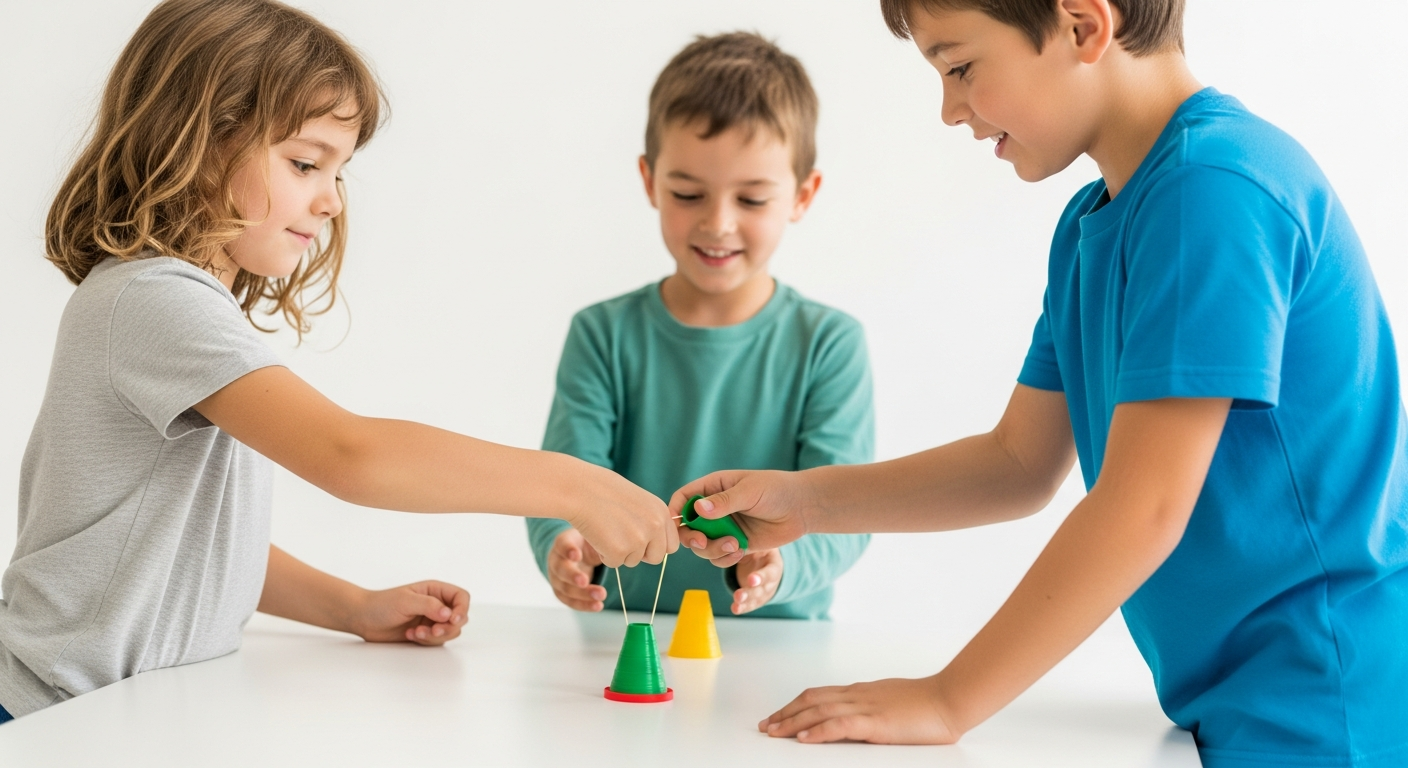
Table of Contents
- Introduction
- The Magic of 60 Seconds: Why Minute to Win It Games Are Perfect for Kids
- Developmental Benefits: More Than Just Fun
- A Dozen Dazzling "Fun Minute to Win It Games for Kids"
- Maximizing the Fun: Tips for Hosting Your Own Minute to Win It Party
- Choosing Your Speech Blubs Plan: Maximize Value and Features
- Conclusion
- Frequently Asked Questions
Introduction
Do your kids ever seem to have an endless supply of energy, but a notoriously short attention span? One minute they're engrossed in a drawing, the next they're bouncing off the walls. This delightful paradox of childhood is something every parent knows well. In a world full of distractions, finding activities that capture their attention, unleash their creativity, and burn off some of that boundless energy, all within a reasonable timeframe, can feel like a quest for the holy grail of parenting. Enter "Minute to Win It" games: the ultimate solution for instant, high-energy fun that fits perfectly into those fleeting moments.
These games, typically lasting just 60 seconds, are a fantastic way to transform everyday household items into exciting challenges. They're not just about winning; they're about sparking laughter, fostering quick thinking, and encouraging a range of developmental skills. From boosting fine motor coordination to enhancing problem-solving abilities and even nurturing crucial communication skills, Minute to Win It games offer a powerful blend of entertainment and education. In this comprehensive guide, we'll dive into an exciting collection of these fast-paced challenges, explore their developmental benefits, and show you how to effortlessly integrate them into your family's routine. Get ready to turn ordinary moments into extraordinary memories, one minute at a time!

The Magic of 60 Seconds: Why Minute to Win It Games Are Perfect for Kids
There’s something inherently captivating about a ticking clock. For children, the one-minute timer adds a layer of excitement and urgency that focuses their attention like few other activities can. This isn't just a fleeting trend; it's a brilliant concept rooted in child psychology. Children thrive on clear goals and immediate feedback, both of which are central to Minute to Win It games.
Instant Engagement and Focus
The short duration of these games means there’s no time for boredom to creep in. Each challenge is quick, allowing kids to jump right into the action and experience a burst of concentrated effort. This instant engagement is particularly beneficial for children who might struggle with longer, more complex tasks. It teaches them to focus intensely for a brief period, a skill that translates into various learning environments.
Accessible Fun with Household Items
One of the greatest appeals of Minute to Win It games is their simplicity. You don't need expensive toys or elaborate setups. Most games utilize items you already have around the house—plastic cups, cotton balls, spoons, balloons, or even toilet paper. This accessibility means spontaneous fun is always just a minute away, making it easy to bust boredom on a rainy day or liven up a family gathering. It also sparks creativity, as kids (and parents!) learn to see ordinary objects as tools for extraordinary play.
Adaptability for All Ages and Abilities
Whether you have a preschooler, a grade-schooler, or even a pre-teen, Minute to Win It games can be easily adapted to suit different age groups and skill levels. Younger children might focus on simpler tasks or collaborate in teams, while older kids can take on more complex challenges or add competitive elements. This adaptability makes them ideal for family game nights or parties where children of various ages are present.
Developmental Benefits: More Than Just Fun
While the primary goal of these games is undeniably fun, their impact on a child's development is profound and multifaceted. Every laugh and every focused attempt contributes to building essential skills.

Enhancing Fine and Gross Motor Skills
Many Minute to Win It games require precise movements and coordination.
- Fine Motor Skills: Activities like "Apple Stack," where children carefully balance apples to build a tower, or "Witch Fingertips," involving transferring pom-poms with tweezers, demand dexterity and hand-eye coordination. These actions strengthen the small muscles in the hands and fingers, crucial for tasks like writing, drawing, and self-care.
- Gross Motor Skills: Games like "Balloon Keepy Uppy" or "Spoon Race" get kids moving, jumping, and balancing. These challenges refine balance, coordination, and spatial awareness, contributing to overall physical development.
Boosting Cognitive Abilities
Beyond the physical, these games are fantastic brain builders.
- Problem-Solving: When faced with a 60-second challenge, children quickly learn to strategize. How can they stack those cups faster? What's the most efficient way to blow a pom-pom across the table? This quick-thinking, trial-and-error process hones their problem-solving skills.
- Memory and Attention: Games like "Memory Match" explicitly target memory, while the time constraint itself naturally improves sustained attention and focus.
- Following Instructions: Each game comes with its own set of rules, requiring children to listen carefully and follow multi-step directions—a foundational skill for academic success.
Nurturing Communication and Social Skills
Perhaps less obvious, but equally important, is the role these games play in fostering communication and social interaction. Whether playing individually or in teams, children are constantly engaging with others.
- Expressive Language: Describing what they're doing, cheering on teammates, or explaining their strategy naturally encourages children to use their words. For a parent whose 3-year-old "late talker" loves animals, imagine playing "Fishing" where they have to name the "fishies" and "sharks" as they scoop them. This fun, active play naturally encourages expressive language. Similarly, our app offers engaging themes like "Animal Kingdom" where children learn new words and practice sounds by watching and imitating their peers, transforming screen time into "smart screen time" that sparks joyful communication.
- Turn-Taking and Collaboration: Team-based games like "Pass it Down" or "Mummy Wrap" require cooperation, negotiation, and waiting for one's turn. These activities are powerful teachers of social reciprocity. This hands-on experience complements the social communication skills we nurture at Speech Blubs, where our video modeling methodology helps children observe and imitate positive social interactions.
- Emotional Regulation: Winning and losing are part of the game. Learning to celebrate successes gracefully and handle setbacks with resilience is a vital life skill reinforced through these quick challenges.
At Speech Blubs, our mission is to empower children to "speak their minds and hearts," and we believe that playful interactions are at the core of developing confident communicators. These Minute to Win It games perfectly align with our philosophy of joyful learning. If you're ever wondering if your child could benefit from a little extra speech support, why not take our quick 3-minute preliminary screener? It involves 9 simple questions and provides an assessment and next-steps plan, often leading to a free 7-day trial of our app.
A Dozen Dazzling "Fun Minute to Win It Games for Kids"
Here are some fantastic Minute to Win It game ideas, broken down by the skills they emphasize, ensuring there's something for every child and every occasion.
Dexterity & Precision Challenges
These games test fine motor control and hand-eye coordination.
1. Paper Airplane Match-up
- How to Play: Players get a stack of paper. In one minute, they must make as many paper airplanes as possible and then launch them toward a target on a wall. The person with the most hits wins.
- Skills Boosted: Fine motor skills, planning, aiming, hand-eye coordination.
- Speech Blubs Connection: Encourage kids to verbally count their successful throws or describe their airplane design ("Mine's a speedy dart!"). This simple expressive language practice is valuable.
2. Spoon Race
- How to Play: Give each player a spoon and a light object to balance on it (like a plastic egg or ping-pong ball). Set up a short course. In one minute, see how many times players can race to the finish line and back without dropping the item. If it drops, they pick it up and continue.
- Skills Boosted: Balance, gross motor control, focus, careful movement.
- Speech Blubs Connection: Use descriptive words as they race: "fast," "slow," "wobbly," "steady." Prompt them to say "Go!" and "Stop!"
3. Cup Mittens
- How to Play: Players wear plastic cups over their fists ("mittens"). In front of them is a pile of cotton balls and an empty cup. In one minute, they must transfer as many cotton balls as possible from the pile to the empty cup, using only their "mitten" hands.
- Skills Boosted: Fine motor skills, dexterity, problem-solving (how to grasp with cups), frustration tolerance.
- Speech Blubs Connection: Encourage sounds of effort ("Ugh!", "Yes!"), or simple phrases like "Got one!" or "Almost!"
4. Apple (or Marshmallow) Stack
- How to Play: Give each player four apples (or five to six large marshmallows). In one minute, try to stack them into a tower that stands for at least 3 seconds. No squishing marshmallows!
- Skills Boosted: Fine motor skills, patience, balance, spatial reasoning.
- Speech Blubs Connection: Talk about the "tall" tower, the "wobbly" tower, or the "crash!" sound effects. This builds descriptive vocabulary and sound awareness.
Active & Energy-Burning Games
Perfect for getting those wiggles out!
5. Balloon Keepy Uppy
- How to Play: Working individually or in small groups, players must keep a balloon in the air for one minute using any part of their body. If it touches the ground, they're out (or the group gets a point deducted). See who's left standing or who has the fewest drops.
- Skills Boosted: Gross motor skills, coordination, spatial awareness, teamwork (if in a group).
- Speech Blubs Connection: Use action verbs like "hit," "tap," "bounce," "kick." Practice calling out "Up!" or "Don't let it touch!"
6. Pom-Pom Race
- How to Play: Players go on all fours. Give each person a straw and a cotton ball or pom-pom. In one minute, see who can blow their cotton ball across a finish line using only the straw.
- Skills Boosted: Breath control, oral motor skills, gross motor skills (crawling).
- Speech Blubs Connection: This is fantastic for breath control, which is foundational for speech. Encourage strong "P" sounds to get the pom-pom moving.
7. Mummy Wrap
- How to Play: In pairs or small teams, give each team a roll of toilet paper or crepe paper. In one minute, one player must wrap their teammate as a "mummy." The team that uses the most complete rolls or creates the most covered mummy wins.
- Skills Boosted: Teamwork, gross motor skills, speed, creative expression.
- Speech Blubs Connection: Guide children to give instructions to their partners ("Wrap my arm!", "Go faster!"). Practice words like "roll," "tight," "loose."
8. Laundry Toss
- How to Play: Give empty pillowcases to "catchers" and balled-up socks to "pitchers." From several feet away, teams have one minute to throw as many socks into the pillowcase as possible.
- Skills Boosted: Aiming, gross motor skills, teamwork, counting.
- Speech Blubs Connection: Count the socks aloud together. Discuss throwing "far" or "close." Reinforce positive cheering and encouragement.
Brainy & Creative Challenges
These games engage cognitive skills and imaginative thinking.
9. Word Scramble
- How to Play: Split children into two lines. Hold up a card with a scrambled word from a common theme (e.g., "alloweenH" for Halloween). The first child to unscramble the word wins a point for their team. The pair goes to the end of the line, and the next pair takes a turn. See how many points teams can earn in a minute.
- Skills Boosted: Vocabulary, spelling, quick thinking, teamwork.
- Speech Blubs Connection: This directly works on phonological awareness and word recognition. Verbalizing the letters and sounds is key.
10. Memory Match
- How to Play: Write numbers 1-8 (or draw simple matching pictures) on small papers, creating two of each. Place a 4x4 grid of cups upside down with a number/picture under each. In one minute, players try to find all the matching pairs by flipping over two cups at a time.
- Skills Boosted: Memory, visual recognition, pattern matching, concentration.
- Speech Blubs Connection: Encourage children to name the numbers or describe the pictures they see when they flip them over. Practice phrases like "It's a match!" or "No match!"
11. Magic Letters
- How to Play: Pick a letter (e.g., "B") and five to seven categories (e.g., animals, fruits, sports team names). In one minute, players (individually or in small groups) think of unique words starting with that letter for each category.
- Skills Boosted: Vocabulary, categorization, quick recall, creative thinking.
- Speech Blubs Connection: This is a direct exercise in phonological awareness and vocabulary expansion. It can also be adapted to target specific speech sounds a child is working on.
12. Tower Race
- How to Play: Give players a bunch of plastic cups. In one minute, they stack the cups into the tallest possible pyramid. The catch: they must stack them top-to-top, then bottom-to-bottom, and repeat the pattern.
- Skills Boosted: Spatial reasoning, fine motor skills, strategy, patience.
- Speech Blubs Connection: Encourage children to describe the construction process: "layer," "corner," "balance." Discuss the "high" tower and what makes it "fall."
These games are more than just fun; they're opportunities for growth. For parents looking to further support their child’s communication development in a joyful way, we recommend exploring our app. You can download Speech Blubs on the App Store or Google Play to see how our unique video modeling approach, where children learn by imitating their peers, can make a difference.
Maximizing the Fun: Tips for Hosting Your Own Minute to Win It Party
Making these games a regular part of your family life is easier than you think. Here are some tips to ensure everyone has a blast.
Setting the Stage
- Clear the Space: Ensure a safe, open area for games, especially the active ones.
- Gather Supplies: Prepare all necessary items for each game beforehand. Label bins or piles for easy access.
- Explain Clearly: Briefly explain the rules for each game. For younger children, demonstrate the activity first.
- Set the Timer: A visual timer (like an egg timer, phone timer, or even a simple stopwatch) adds to the excitement.
- Keep it Positive: Focus on effort and participation, not just winning. Celebrate small successes and laugh at the epic fails!
Ways to Play
Minute to Win It games are incredibly versatile and can be played in a few different formats:
- Player vs. Timer: One player attempts to complete a challenge within 60 seconds. If they succeed, they "win" that round. This is great for individual practice or building confidence.
- Player vs. Player: Two players compete simultaneously to complete a challenge first or achieve the most repetitions within the minute. This adds a competitive edge.
- Team Play: Divide into two or more teams. Players take turns or work collaboratively on challenges, earning points for their team. This format encourages cooperation and cheering!
Incorporating Speech Blubs into Your Play
We understand that modern parenting often involves navigating screen time. At Speech Blubs, we've designed our app to be a screen-free alternative to passive viewing, offering a powerful tool for family connection. While Minute to Win It games offer valuable real-world interaction, our app can seamlessly complement this.
Consider this: after an exhilarating round of "Magic Letters," where your child has been actively thinking of words, transition to a related category within the Speech Blubs app. For example, if they were thinking of animals starting with 'B' (bear, butterfly), open our "Animal Kingdom" section. Here, they can practice saying those same animal names by watching and imitating real children, reinforcing the sounds and words learned during the game. This blended approach creates a holistic learning environment where physical play and "smart screen time" work hand-in-hand to foster communication skills.
We were born from the personal experiences of our founders, who all grew up with speech problems and created the tool they wished they had. We are committed to providing an immediate, effective, and joyful solution for the 1 in 4 children who need speech support, blending scientific principles with play into one-of-a-kind "smart screen time" experiences. Our methodology has earned us high ratings on the MARS scale, placing us in the top tier of speech apps worldwide. You can read more about our approach and its effectiveness on our research page.
Choosing Your Speech Blubs Plan: Maximize Value and Features
We believe every child deserves the chance to speak their mind and heart. That’s why we’ve created Speech Blubs, a unique tool designed to make speech practice engaging and effective. When you're ready to unlock its full potential, we offer flexible plans to suit your family’s needs.
Our pricing is designed to provide exceptional value, especially with our Yearly plan:
- Monthly Plan: This plan is available at $14.99 per month.
- Yearly Plan: The Yearly plan is our absolute best value, priced at just $59.99 per year. This breaks down to an incredible $4.99 per month, allowing you to save 66% compared to the monthly option!
Why the Yearly Plan is the Smart Choice
Choosing the Yearly plan isn’t just about the significant cost savings; it's about gaining access to a complete suite of features designed to maximize your child’s progress and your family’s convenience:
- 7-Day Free Trial: Only the Yearly plan includes a 7-day free trial, giving you and your child a full week to explore all the fun and educational activities our app has to offer before committing.
- The Extra Reading Blubs App: Get full access to our companion app, Reading Blubs, which supports early literacy skills—a perfect complement to speech and language development.
- Early Access to New Updates: Be among the first to experience our latest features, games, and content as soon as they're released.
- 24-Hour Support Response Time: Enjoy priority customer service with guaranteed support responses within 24 hours, ensuring you always have the help you need, when you need it.
The Monthly plan, unfortunately, does not include these valuable benefits. For the most comprehensive experience, best value, and a chance to try before you buy, we strongly encourage you to opt for the Yearly plan.
Ready to get started on your child's communication journey with Speech Blubs? Create your account and begin your 7-day free trial today! Join thousands of other families who are seeing fantastic results; you can see what other parents are saying about their child's success with Speech Blubs.
Conclusion
Minute to Win It games are a treasure trove of fun, offering endless opportunities for laughter, learning, and connection within your family. Their quick, engaging nature makes them perfect for children with varying attention spans, while the use of everyday items ensures accessibility for spontaneous play. More than just entertainment, these 60-second challenges are powerful catalysts for developing essential fine and gross motor skills, boosting cognitive abilities, and nurturing crucial communication and social interaction skills.
By embracing these games, you’re not just filling time; you’re investing in your child's holistic development, fostering confidence, reducing frustration, and creating joyful family moments. And when you’re ready to complement this hands-on fun with dedicated speech and language practice, Speech Blubs is here to empower your child to speak their minds and hearts through scientifically-backed, playful "smart screen time."
Ready to infuse your home with joy and impactful learning? Download Speech Blubs and start your child's journey to confident communication today. We strongly recommend selecting the Yearly plan to unlock your 7-day free trial, access the Reading Blubs app, enjoy early updates, and receive 24-hour support. Don't miss out on the best value and the full suite of features!
Download Speech Blubs on the App Store or get it on Google Play to begin your adventure into engaging and effective speech therapy for kids.
Frequently Asked Questions
What age group are Minute to Win It games best for?
Minute to Win It games are incredibly versatile and can be adapted for children as young as preschoolers (with simplified rules and closer adult supervision) up to teenagers and even adults. The key is to choose challenges appropriate for their developmental stage and adjust the difficulty as needed.
Do I need special equipment for these games?
Not at all! One of the best things about Minute to Win It games is that they primarily use common household items. Think plastic cups, cotton balls, spoons, paper, balloons, toilet paper, or even socks. You likely already have most of the supplies you need tucked away in your cupboards.
How do Minute to Win It games help with child development?
These games offer a wide range of developmental benefits. They enhance fine motor skills (e.g., stacking, transferring small objects), gross motor skills (e.g., balancing, aiming, running), cognitive abilities (e.g., problem-solving, memory, focus, strategy), and crucially, communication and social skills (e.g., turn-taking, verbalizing, cheering, expressing emotions). The time limit also helps children practice quick decision-making and concentration.
Can these games help children with speech and language development?
Absolutely! Many Minute to Win It games naturally encourage communication. Children describe actions, give instructions, cheer on others, and use descriptive words. This active engagement with language in a fun, low-pressure environment can significantly support expressive language, vocabulary building, and social communication skills. For more targeted support, pairing these games with tools like Speech Blubs, which uses video modeling to encourage imitation and speech practice, creates a powerful and joyful learning experience.
About the author