
Fun Outdoor Activities for Groups of Kids: Boost Speech & Joy
 By Speech Blubs Team•Jan 13, 2026•18 min.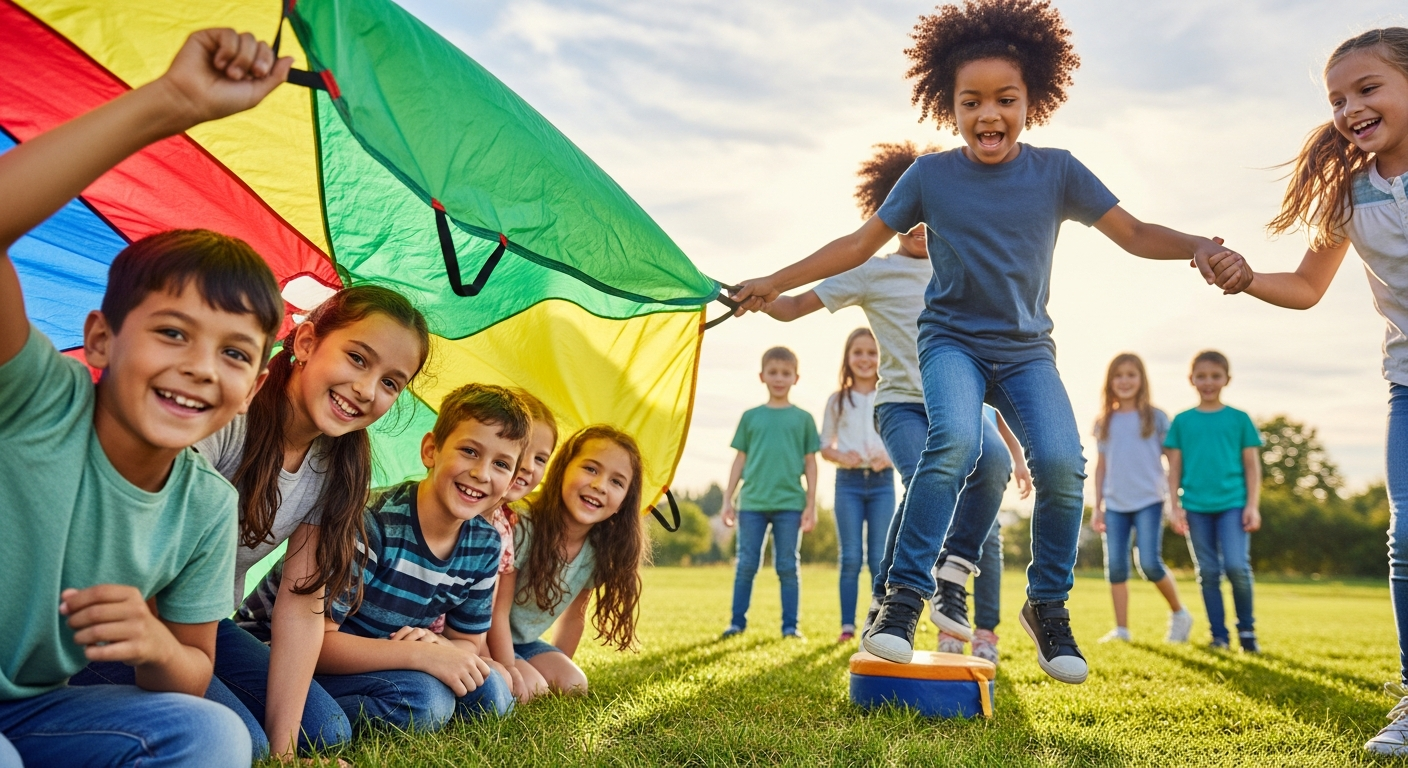
Table of Contents
- The Unbeatable Benefits of Outdoor Group Play
- Fostering Communication through Shared Adventures
- Engaging Activities for Every Group & Every Mood
- Making Every Outdoor Moment a Speech Opportunity
- Speech Blubs: Extending the Joy of Communication Indoors
- Choosing the Right Plan for Your Family
Are you a parent who sometimes feels like your children are more connected to screens than to the vibrant world just outside your door? It's a common feeling in our digital age, where captivating entertainment is always just a tap away. But imagine the laughter, the fresh air, and the rich learning that unfolds when kids come together for outdoor adventures. Beyond the obvious physical benefits, these shared experiences are profound opportunities for growth, especially in developing crucial social and communication skills.
This blog post will delve into a treasure trove of fun outdoor activities perfect for groups of kids, highlighting how each one can naturally foster everything from gross motor skills to imaginative play, and most importantly, enhance speech and language development. We'll explore a variety of games and explorations designed to spark joy and connection. At Speech Blubs, we believe in empowering children to speak their minds and hearts, and we recognize that the foundation for strong communication is built not just through focused practice, but through rich, real-world interactions. Join us as we uncover how group outdoor play, combined with thoughtful parental guidance, creates an unparalleled environment for learning, communication, and lasting memories.

The Unbeatable Benefits of Outdoor Group Play
The great outdoors offers a dynamic classroom unlike any other, especially when children engage with their peers. When kids play together outside, they embark on a holistic developmental journey that nourishes their bodies, minds, and spirits.
Physical Health and Vitality
It's no secret that outdoor play is a powerful antidote to sedentary lifestyles. Running, jumping, climbing, and exploring all contribute to robust physical health. Children develop stronger muscles, improve coordination, and build stamina. The natural sunlight provides a vital dose of Vitamin D, essential for bone health and mood regulation. These physical activities aren't just about burning energy; they lay the groundwork for a healthy future.
Mental Well-being and Cognitive Growth
Beyond the physical, nature has a calming effect on the mind. Spending time outdoors has been shown to reduce stress, improve focus, and enhance concentration. The unstructured nature of outdoor play encourages children to think creatively, solve problems, and adapt to changing environments. They learn to take calculated risks, build resilience, and develop a sense of self-reliance. The vastness of the outdoors sparks curiosity, inspiring questions and fostering a deeper understanding of the world around them.
Social-Emotional Growth and Connection
Perhaps one of the most significant advantages of group outdoor play is the rich tapestry of social-emotional learning it provides. Children learn to negotiate, share, compromise, and resolve conflicts in real-time. They practice empathy as they support friends, celebrate successes, and navigate challenges together. Group activities foster a sense of belonging and teamwork, teaching invaluable lessons about cooperation and mutual respect. These interactions are fundamental for building healthy relationships and navigating social dynamics throughout life.
The Speech and Language Boost
For us at Speech Blubs, the connection between outdoor group play and speech development is incredibly exciting. The natural, spontaneous environment of outdoor play is a goldmine for language acquisition and practice.

- Rich Vocabulary Exposure: Imagine a child discovering a "bumpy" rock, a "slimy" worm, or a "whispering" tree. Outdoor play constantly introduces new vocabulary related to textures, colors, sounds, movements, and natural objects. Parents can narrate observations, label new items, and describe actions, naturally expanding a child's lexicon.
- Narrative Skills Development: Every outdoor adventure becomes a story waiting to be told. Children can recount what they saw, what they did, and who they played with, practicing sequencing events, using descriptive language, and structuring narratives.
- Social Communication: Group play demands constant communication. Children must ask for turns, negotiate roles, explain rules, express desires, and respond to their peers. This active engagement strengthens conversational skills, including turn-taking, active listening, and understanding non-verbal cues.
- Auditory Processing: The sounds of nature—rustling leaves, chirping birds, distant sirens—provide a rich auditory landscape. Following verbal instructions in an open environment, distinguishing different sounds, and responding to spoken cues all enhance auditory processing skills.
Ultimately, outdoor group play is a powerful, multi-sensory experience that naturally stimulates the brain in ways that directly support comprehensive communication development. If you're wondering whether your child could benefit from more focused support, our quick 3-minute preliminary screener offers a simple assessment and a personalized next-steps plan.
Fostering Communication through Shared Adventures
The dynamic of group play inherently enhances communication skills. When children interact with others, they are constantly exposed to different voices, perspectives, and communication styles. They learn to adapt their own language to be understood, to listen actively, and to respond appropriately. This process is remarkably similar to the foundational principles of our Speech Blubs methodology, where children learn by observing and imitating their peers through "video modeling." Seeing another child articulate a sound or word creates a relatable and motivating learning experience, and this mirror-neuron activation is powerful both on and off the screen.
In outdoor group settings, this "modeling" happens organically. A child might learn a new word by hearing a friend exclaim "Look at that huge squirrel!" or understand a complex instruction by watching how others navigate an obstacle course. Adults play a vital role in amplifying these learning moments. By engaging in co-play, asking open-ended questions, and narrating the actions and observations, parents can transform simple outdoor fun into rich language lessons.
Engaging Activities for Every Group & Every Mood
Ready to dive into some amazing outdoor activities? Here’s a collection of ideas, designed not just for fun, but with an eye towards nurturing every aspect of your child's development, especially their burgeoning communication skills.
Classic Group Games: Timeless Fun, Language-Rich Opportunities
These tried-and-true favorites offer endless laughter and built-in opportunities for speech practice.
- Hide and Seek: This classic is perfect for practicing spatial prepositions ("Are you behind the tree? Under the bush?"), counting ("Ready or not, here I come!"), and asking/answering simple questions. For a child who is a 'late talker', even pointing and making a sound like "boo!" when found is a huge step in expressive communication.
- Red Light, Green Light: An excellent game for impulse control and following multi-step directions. Children practice understanding "stop" and "go," along with learning to interpret verbal cues and waiting for instructions.
- Hopscotch: Drawing the squares with chalk can be a joint activity, practicing number names and sequencing. While hopping, children can verbalize each number they land on, or describe their actions: "I hop, hop, hop!"
- Hot Potato / Musical Chairs: These games sharpen listening skills, requiring children to respond quickly to auditory cues (music stopping). They also teach turn-taking and how to gracefully handle being "out," fostering emotional regulation.
- Duck, Duck, Goose: The repetitive nature of this game is fantastic for early language learners. Children practice naming and identifying peers, and the exciting "Goose!" moment encourages an enthusiastic vocal response.
- Capture the Flag / Spud: For slightly older groups, these games introduce strategic planning and negotiation. Children must use descriptive language to explain rules, formulate plans, and communicate effectively with their teammates, practicing persuasion and problem-solving through dialogue.
- Freeze Dance: Play some music outside and have everyone dance. When the music stops, everyone freezes! This game is great for practicing action verbs ("shake," "spin," "wiggle") and body part identification. It also reinforces listening to cues and following instructions in a joyful, active way.
Creative & Imaginative Play: Building Worlds with Words
Unleash your children's imaginations with activities that transform the backyard into a land of adventure.
- Mud Pies & Nature Kitchens: Set up a "mud kitchen" with old pots, pans, spoons, and natural elements like leaves, pebbles, and dirt. This sensory-rich play encourages descriptive vocabulary ("squishy," "gritty," "smooth," "slimy"), pretend play scenarios ("I'm making a delicious mud cake!"), and collaborative storytelling. A child might "sell" their mud pies, practicing requesting and offering language.
- Fort Building: Whether with blankets and chairs or sticks and branches, building a fort is a supreme exercise in collaborative planning and problem-solving. Children use directional language ("Put it here," "Lift that," "It goes over the top"), negotiate roles, and share ideas, building a shared narrative around their creation.
- Nature Art & Collages: Collect leaves, twigs, petals, and small stones. Use glue on a paper plate or a sticky contact paper sheet to create nature collages. Children can describe their finds ("a spiky leaf," "a soft feather"), talk about their artistic choices, and share their creations with the group.
- Potion Making: Gather various natural elements – water, dirt, flowers, grass – in clear containers. Encourage kids to mix them to create "potions." This sparks imaginative narratives ("This potion makes you invisible!"), naming ingredients, and sequencing steps.
- Nature Scavenger Hunts: Create a list of items for kids to find (e.g., "something red," "a smooth rock," "a crunchy leaf," "a feather"). This promotes object identification, descriptive clues, and asking questions ("Did you find something green?"). For a child working on specific sounds, you could focus the hunt on items that start with that sound.
- Outdoor Storytelling / Role-Playing: Encourage children to create and act out stories using the natural environment as their stage. A fallen log becomes a ship, a patch of flowers a magical garden. This develops narrative skills, character voices, and turn-taking in conversation, fostering confidence in expressing ideas verbally.
Team Challenges & Collaborative Fun: The Power of "We"
Activities that require working together build not only teamwork but also vital communication for success.
- Group Jump Rope / Hula Hoop Challenge: With a long rope, several kids can jump together, counting jumps or chanting rhymes. The Hula Hoop Challenge involves a group holding hands in a circle and passing a hula hoop around without letting go, requiring coordination, physical maneuvering, and verbal encouragement. These activities promote counting, rhythmic language, and encouragement among peers.
- Over Under Relay / Agility Course: Children stand in a line and pass a ball or object "over" their heads and "under" their legs. An agility course using playground equipment or cones and chalk lines requires following multi-step directions, spatial concepts, and cheering for teammates. This teaches children how essential it is to focus on a task when others rely on them.
- "Blindfolded" Trust Walk (with guidance): One child is gently blindfolded while another guides them verbally through a safe, clear path. This builds trust and relies heavily on clear, concise positional language ("Take two steps forward," "Turn left," "Watch for the bump"). This is a fantastic exercise for developing precise instruction-giving.
- Nature Building Challenge: Divide children into small groups and challenge them to build something using only natural materials found in the yard – perhaps a small shelter for a toy animal or a miniature bridge. This encourages collaborative planning, descriptive adjectives, and sharing ideas, fostering a sense of shared accomplishment.
Nature Exploration & Discovery: Unlocking the World Around Us
Ignite a sense of wonder and observation with these investigative activities.
- Bug Hunts & Insect Investigations: Provide magnifying glasses and encourage children to search for insects. As they find them, describe characteristics ("creepy," "crawly," "striped," "fast"), ask "what if" questions, and learn new names for creatures.
- Leaf Rubbings & Bark Tracings: Place a leaf or a piece of bark under paper and rub a crayon over it to capture its texture. Children can compare and describe the different textures ("bumpy," "smooth," "rough") and identify patterns.
- Rock Collecting & Sorting: Encourage children to collect interesting rocks and then sort them by size, color, shape, or texture. This activity is perfect for practicing comparative language ("This one is bigger than that one," "This rock is smoother"), and using descriptive adjectives.
- Birdwatching & Sound Safari: Sit quietly and listen for bird calls, then try to spot the birds. Use a simple bird guidebook or an app to identify them. This activity builds auditory discrimination skills and encourages descriptive language for appearance and behavior.
- Gardening Together: Whether planting seeds, watering, or harvesting, gardening provides countless opportunities for language. Children learn names of plants, tools, and actions ("dig," "water," "plant"). They can sequence steps in the gardening process and discuss the growth they observe.
Water Play & Sensory Fun: Splashing into Speech
Water always equals fun, and it's a fantastic sensory stimulant for language.
- Sprinkler Fun & Water Balloon Fights: Simple yet exhilarating, these activities generate excited exclamations, action verbs ("splash," "run," "throw"), and turn-taking. The sheer joy often encourages vocalizations.
- Pond Life Exploration: With adult supervision, explore a local pond's edge. Children can name aquatic creatures, ask "where" and "what" questions, and describe their observations. For older kids, you can create a simple viewer with a plastic jug to look into the water without glare.
- DIY Car Wash for Toys/Bikes: Set up buckets of soapy water and sponges. Children can wash their bikes or outdoor toys, practicing sequencing actions, using verbs ("scrub," "rinse," "dry"), and engaging in imaginative play scenarios.
Active Sports & Movement: Energy Out, Words In
Channel that boundless energy into games that are both active and language-rich.
- Ball Games (Catch, Soccer): Simple games of catch or kicking a soccer ball around encourage action verbs, directional commands ("Throw it here!"), and cheering for teammates.
- Outdoor Obstacle Courses: Create a course using natural elements (logs, rocks) or household items (hula hoops, cushions). Children follow instructions, develop spatial awareness, sequence actions, and express their achievements ("I did it!").
- Bike Rides & Walks with Themes: Turn a regular bike ride or walk into a themed adventure: "Let's find all the blue things!" or "Count how many dogs we see." This encourages descriptive language and question-answering about observations.
- Kite Flying: On a windy day, flying a kite can lead to conversations about the wind, movement, colors, and simple narratives about the kite's journey in the sky.
Making Every Outdoor Moment a Speech Opportunity
As parents and caregivers, you are your child's first and most important language teacher. Here’s how you can maximize speech and language development during these fun outdoor activities:
- Be a Narrator: Describe everything you see, hear, and do. "Look at that big, green leaf!" "I'm climbing over the log." This models rich vocabulary and sentence structure.
- Ask Open-Ended Questions: Instead of "Is that fun?" try "What do you like most about this game?" or "Tell me about your mud pie." These questions encourage more than a "yes" or "no" answer, prompting longer responses and deeper thought.
- Model Language: If your child points and says "bug," you can expand on it: "Yes, that's a tiny, black bug crawling on the ground!" Repeat and gently expand on what your child says to provide richer language input.
- Encourage Peer Interaction: Facilitate conversations among children. "Sarah, can you ask Alex if he wants to play next?" "What's your plan for the fort, Leo? Tell Maya."
- Praise Effort, Not Just Perfection: Celebrate every attempt at communication, whether it's a sound, a word, or a full sentence. Building confidence is key to fostering a love for communication.
Remember, the goal isn't to turn every playtime into a therapy session, but to naturally weave language into the fabric of their fun. The more they enjoy communicating, the more they will want to do it.
Speech Blubs: Extending the Joy of Communication Indoors
At Speech Blubs, we are deeply passionate about complementing these real-world learning experiences with engaging, "smart screen time" solutions. Our company was born from the personal experiences of our founders, who all grew up with speech problems and created the tool they wished they had. We are committed to providing an immediate, effective, and joyful solution for the 1 in 4 children who need speech support, blending scientific principles with play.
While outdoor play builds foundational skills and real-world context, Speech Blubs offers a structured, motivating environment to practice and reinforce those skills. Imagine a child who has just discovered a squirrel in the park. Later, they can open our app and practice the "s" sound in "squirrel" or learn new animal sounds and names in our "Animal Kingdom" section. This seamless connection between real-life experiences and app-based learning makes communication truly stick.
Our unique approach of teaching complex communication skills through our "video modeling" methodology is particularly effective. Children learn by watching and imitating their peers, which is incredibly engaging and less intimidating than interacting solely with adults. This fosters a love for communication, builds confidence, and reduces frustration, providing a screen-free alternative to passive viewing (like cartoons) and a powerful tool for family connection. With Speech Blubs, parents can join in the activities, turning screen time into a shared, interactive learning experience that complements their outdoor adventures. Our methodology is backed by science, placing us in the top tier of speech apps worldwide. You can explore more about our research and scientific backing here.
Choosing the Right Plan for Your Family
We believe in transparency and want to ensure you get the most value from Speech Blubs. We offer two main subscription plans:
- Monthly Plan: For $14.99 per month, you get access to all core Speech Blubs features.
- Yearly Plan: For just $59.99 per year, this plan breaks down to an incredible $4.99/month, allowing you to save 66% compared to the monthly option!
The Yearly plan is our absolute best value and comes with exclusive, high-value features designed to supercharge your child's development:
- A 7-day free trial: Test out all the amazing features before committing.
- The extra Reading Blubs app: An additional app dedicated to early literacy development.
- Early access to new updates: Be the first to experience our latest improvements and content.
- 24-hour support response time: Get your questions answered quickly and efficiently.
The Monthly plan, while flexible, does not include these fantastic benefits, including the free trial. We highly recommend opting for the Yearly plan to unlock the full suite of Speech Blubs features and begin your 7-day free trial today. Join thousands of families who have seen incredible progress with their children, as highlighted in our parent testimonials.
Conclusion
The magic of childhood unfolds beautifully when children are outdoors, especially when they're playing together. From the simplest game of hide-and-seek to elaborate mud kitchens, these fun outdoor activities with a group of kids are not just about burning off energy; they are vital crucibles for physical health, mental well-being, social-emotional intelligence, and, crucially, robust speech and language development. Every laugh, every negotiation, every shared discovery is a building block for confident communication.
At Speech Blubs, we are honored to be a part of your child's communication journey. We wholeheartedly encourage the joyful, enriching experiences that outdoor group play provides, and we offer a powerful, scientifically-backed tool to extend that learning indoors. By blending the spontaneity of nature with our unique video modeling "smart screen time," we help children develop the foundational skills they need to express themselves clearly and confidently.
Ready to unlock your child's full communication potential and create more joyful learning moments? We invite you to experience the transformative power of Speech Blubs. Don't miss out on the incredible value and exclusive features of our Yearly plan, which includes a 7-day free trial and the bonus Reading Blubs app.
Download Speech Blubs on the App Store or Google Play to begin your adventure today! You can also create your account on our website and select the Yearly plan to get the free trial and full suite of features. Let's empower your child to speak their minds and hearts!
Frequently Asked Questions
Q1: How can I encourage my child to participate in group outdoor activities if they are shy or prefer solitary play? A1: Start small with low-pressure activities like nature walks or simple scavenger hunts where the focus isn't solely on social interaction. Gradually introduce short bursts of group play, always respecting your child's comfort level. Lead by example, and choose activities that genuinely excite them. Praising their efforts, no matter how small, can build confidence over time.
Q2: What if my child has special needs? Are these activities still suitable for them? A2: Absolutely! Most outdoor activities can be adapted to suit various abilities and needs. Focus on the process and enjoyment rather than perfect execution. For instance, in a scavenger hunt, a child might only need to point to items instead of collecting them. Group play encourages peer support and understanding, creating an inclusive environment for all children to thrive.
Q3: How does Speech Blubs specifically help with communication skills developed through outdoor play? A3: Speech Blubs acts as a fantastic reinforcement tool. After an outdoor adventure, children can use the app to practice vocabulary related to what they saw (e.g., animal sounds, nature words), rehearse social scripts (like asking for a turn), or work on specific sounds they struggled with during excited group conversations. Our video modeling feature, where kids imitate peers, helps transfer real-world observational learning into structured practice, making it an excellent bridge between play and development.
Q4: How does the Speech Blubs Yearly plan offer better value than the Monthly plan? A4: The Yearly plan is designed to provide the most comprehensive and cost-effective experience. Not only does it offer significant savings, breaking down to just $4.99 per month, but it also unlocks exclusive benefits. These include a 7-day free trial to explore all features, access to our Reading Blubs app, early access to new updates, and faster 24-hour support. These added features are not available with the Monthly plan, making the Yearly plan the best choice for committed, long-term development.
About the author