
Fun Outdoor Toddler Activities for Active Learning
 By Speech Blubs Team•Mar 25, 2026•14 min.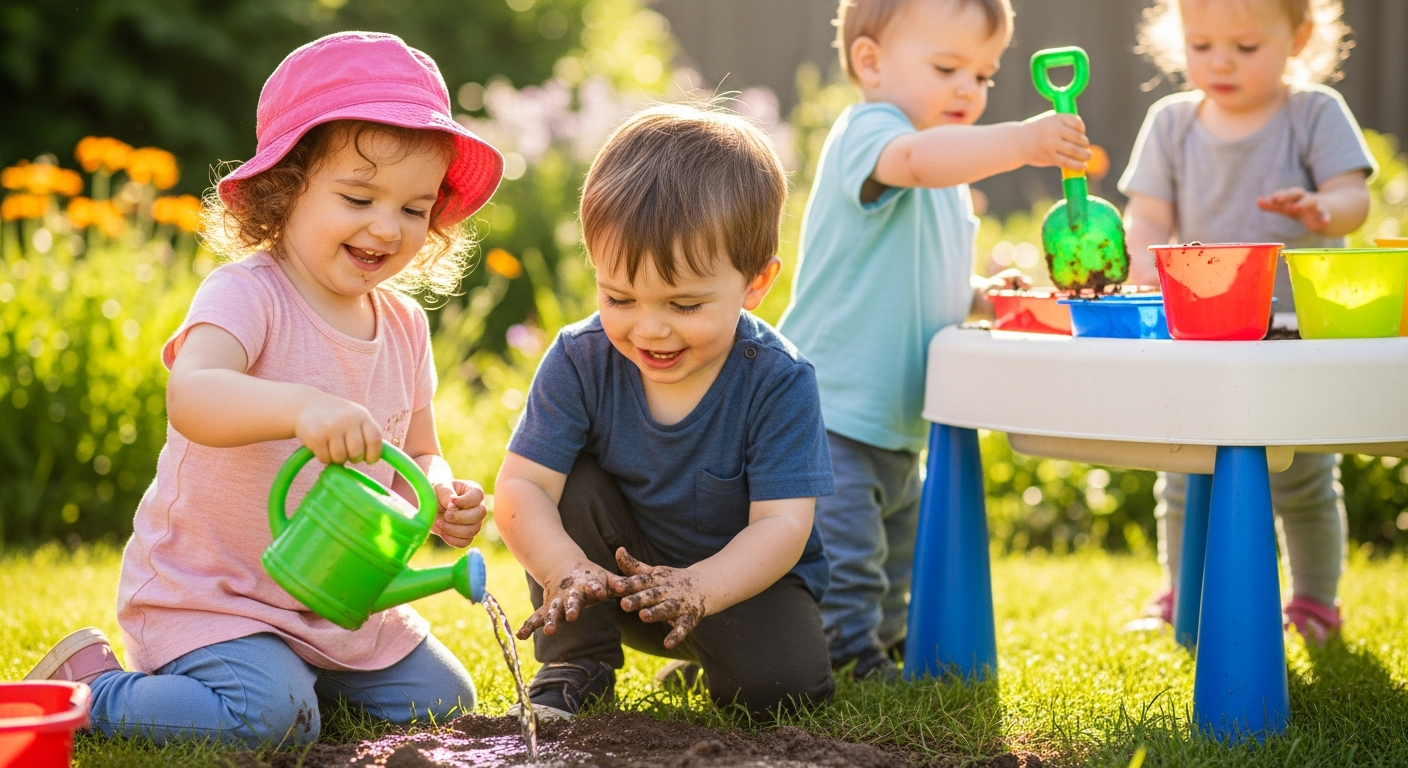
Table of Contents
- Introduction
- The Developmental Power of Outdoor Play
- Sensory-Focused Outdoor Toddler Activities
- Movement and Gross Motor Skills
- Nature-Based Learning and Vocabulary
- Creative Arts in the Wild
- Bridging Digital and Physical Play
- Practical Tips for Parents
- Choosing the Right Plan for Your Family
- Summary of Key Takeaways
- FAQ
- Conclusion
Introduction
Have you ever noticed how a toddler’s entire face lights up the moment you mention going "outside"? It is as if the simple act of crossing the threshold from the living room to the backyard unlocks a new level of curiosity and energy. But beyond just "burning off steam," did you know that the time your child spends outdoors is one of the most powerful catalysts for their speech, motor skills, and cognitive development?
In this post, we are going to dive deep into a variety of outdoor toddler activities that go beyond the basic trip to the playground. We will explore sensory-rich play, nature-based learning, and creative projects that you can set up in minutes using items you likely already have in your pantry or garage. We will also discuss how to bridge the gap between "green time" and "smart screen time," ensuring that every moment of your child's day contributes to their growth.
At Speech Blubs, our mission is to empower children to speak their minds and hearts. We know that language development doesn't just happen at a desk or in a clinic; it happens while splashing in puddles, pointing at ladybugs, and drawing lopsided suns on the driveway with chalk. Our goal is to provide you with a toolkit of activities that foster a love for communication and build the foundational skills your little one needs to thrive. By the end of this article, you will have a comprehensive plan to turn your backyard into a joyful learning laboratory.

The Developmental Power of Outdoor Play
The outdoors provides a multi-sensory environment that a controlled indoor setting simply cannot match. When a toddler feels the crunch of dried leaves, hears the distant chirp of a bird, or watches a dandelion seed float on the breeze, their brain is working overtime to process these inputs.
For many parents, the challenge is finding activities that are engaging enough to compete with the allure of passive cartoons. This is why we advocate for "smart screen time" as a supplement to active play. Unlike passive viewing, which can be isolating, our approach at Speech Blubs focuses on video modeling. This scientific methodology encourages children to learn by watching and imitating their peers. When your child sees a "Blubber" (a child actor in our app) making a funny face or saying a new word, they are motivated to try it themselves.
The outdoors offers the perfect "real-world" stage to practice these skills. If your child has been practicing animal sounds in the app, taking them outside to find a real bird or a neighborhood dog creates a powerful connection between the digital lesson and the physical world.
Sensory-Focused Outdoor Toddler Activities
Sensory play is the foundation of early childhood learning. It helps toddlers build nerve connections in the brain's pathways, which lead to the child's ability to complete more complex learning tasks.
1. The DIY Water Table Exploration
You don't need an expensive, store-bought water table to give your child a high-quality sensory experience. Grab a few large, shallow plastic storage bins and prop them up on milk crates or a low outdoor table. Fill them with water and add a drop of food coloring to each for an extra "wow" factor.
Provide your toddler with "tools" from your kitchen: whisks, ladles, funnels, and measuring cups. As they pour and splash, use descriptive language. "Look how the water pours!" or "Is the water cold or warm?" This helps build their vocabulary of adjectives and verbs. For a parent whose 3-year-old "late talker" loves anything to do with water, the "Splish Splash" section in the Speech Blubs app offers a fun, motivating way to practice words like "bubble," "ducky," and "water" before they head out to play.

2. Frozen Toy Rescue
This is a fantastic activity for a hot afternoon. The night before, place small plastic animals, cars, or colorful blocks into a freezer-safe container, fill it with water, and freeze it. The next day, pop the giant ice block into a bin outside. Give your child a small spray bottle of warm water or a toy hammer and let them work on "rescuing" the toys. This encourages problem-solving and fine motor control, all while providing a cool sensory experience.
3. The Edible "Dirt" Bin
If you have a toddler who still likes to put things in their mouth, a traditional sandbox might be a bit stressful. Instead, create a sensory bin using crushed cereal (like O’s or cornflakes) or even chocolate pudding for "mud." Add toy tractors and shovels. They can dig, bury, and scoop to their heart's content. As they play, you can model speech by saying "beep beep" for the trucks or "dig, dig, dig" as they move the "dirt."
Movement and Gross Motor Skills
Toddlers are built to move. Engaging their large muscle groups not only helps with physical health but also helps regulate their sensory systems, making them more receptive to learning and communication.
4. Sidewalk Chalk Obstacle Courses
Sidewalk chalk is one of the most versatile tools in your parenting arsenal. Instead of just drawing pictures, try drawing a "path" for your toddler to follow.
- The Swirly Line: They have to "twirl" like a ballerina.
- The Blue Circles: They have to "jump" like a frog.
- The Red Squares: They have to "stop" and count to three.
This activity is excellent for practicing direction-following. If you find your child struggles with these multi-step instructions, it might be helpful to see where they stand developmentally. You can take our quick 3-minute preliminary screener to get a simple assessment and a free 7-day trial of our full suite of tools.
5. Animal Adventure Walks
Turn a simple walk around the block into an "Animal Adventure." Tell your child you are searching for hidden animals. When you see a bird, flap your arms and chirp. If you see a squirrel, pretend to gather nuts. This type of "symbolic play" is a major milestone in cognitive development.
At Speech Blubs, we use this exact principle through peer-to-peer modeling. In the "Animal Kingdom" section of the app, children watch other kids making animal sounds and movements. By mimicking their peers, your toddler builds the confidence to try these sounds in the real world. You can download Speech Blubs on the App Store to see these peer models in action.
6. Bubble Chasing and Popping
Never underestimate the power of bubbles. They are an incredible tool for eye-tracking and hand-eye coordination. More importantly, they are a "requesting" goldmine. Blow a few bubbles, then close the container. Wait for your child to look at you, gesture, or attempt to say "more" or "please" before blowing more. This creates a functional need for communication, which is the heart of speech therapy.
Nature-Based Learning and Vocabulary
The natural world is full of opportunities to teach colors, shapes, and categorization.
7. The Nature Scavenger Hunt
Create a simple visual list for your toddler (you can draw the items or print out pictures). Ask them to find:
- Something green (a leaf)
- Something rough (a piece of bark)
- Something round (a stone)
- Something yellow (a dandelion)
As they find each item, put it in a "treasure bag." Later, you can sit together and talk about what you found. "This leaf is very smooth." "This rock is heavy." This builds their descriptive vocabulary and helps them learn to categorize objects by their attributes.
8. Bug Catching and Observation
Many toddlers are fascinated by the "tiny worlds" under rocks or in the grass. Use a clear plastic container (with air holes!) to catch a ladybug or a beetle. Spend time just watching it move. Talk about its legs, its colors, and how it crawls. This encourages "joint attention," where you and your child are focused on the same object together—a critical precursor to language development. Our method is backed by science, emphasizing that these moments of shared focus are where the most significant learning occurs.
9. Mini-Gardening
Give your child a small patch of dirt or a flower pot. Let them help you dig a hole, drop in a seed, and "water" it. Even if the plant doesn't survive, the process of nurturing something and waiting for it to grow teaches patience and the concept of "cause and effect." Plus, it’s another great excuse to get messy!
Creative Arts in the Wild
Bringing art outside means less mess in the kitchen and more freedom for your child to express themselves.
10. Nature Collages
Using the treasures found during your scavenger hunt, create a nature collage. Give your child a piece of cardboard with some double-sided tape or non-toxic glue. They can stick their leaves, twigs, and flower petals onto the board to create a "masterpiece." This is a great way to work on fine motor skills and tactile exploration.
11. Rock Painting
Find some smooth, flat stones and provide your child with washable paints or chalk markers. They can turn the rocks into "ladybugs," "monsters," or just colorful decorations for your garden. If your child is particularly proud of their creation, it’s a wonderful opportunity for them to "tell a story" about their rock, which builds narrative skills.
12. Sidewalk Paint
Instead of just chalk, try making "sidewalk paint" by mixing equal parts cornstarch and water with a few drops of food coloring. Give your child big paintbrushes or even old dish sponges. The texture is different from chalk, and the colors are often more vibrant. It washes away easily with a hose, making it a stress-free activity for parents.
Bridging Digital and Physical Play
We know that modern parents are looking for a balance. We aren't anti-screen; we are pro-growth. That’s why we created a tool that functions as a "screen-free alternative" to passive viewing. When your child uses Speech Blubs, they aren't just watching a cartoon; they are participating in a session designed by experts to trigger "mirror neurons" in the brain. These are the neurons that fire both when we perform an action and when we see someone else perform that same action.
By using the app for 10-15 minutes a day and then heading outside for some outdoor toddler activities, you are creating a "loop" of learning.
- Step 1: Watch a peer in the app model a sound or word.
- Step 2: Practice that sound together with a parent in a playful, low-pressure environment.
- Step 3: Head outside to find a real-world example of that word.
This holistic approach is why so many parents have found success with our platform. You can read our testimonials to see how other families have used this method to reduce frustration and build confidence in their little ones.
Practical Tips for Parents
To make your outdoor time as successful as possible, keep these strategies in mind:
Focus on the Process, Not the Product: Your toddler’s "nature collage" might just look like a pile of sticks stuck to a piece of cardboard. That’s okay! The value is in the exploration and the conversation you have while making it.
Embrace the Mess: Toddlers learn best when they can fully immerse themselves. Dress them in "play clothes" that you don't mind getting stained with grass or mud. This removes the "no" and "be careful" from the environment, allowing them to explore freely.
Follow Their Lead: If you set up a water bin but your child is more interested in watching an ant carry a crumb, go with the ant! Forcing a specific activity can lead to power struggles. The best learning happens when the child is genuinely curious.
Be the Model: If you want your child to be excited about the outdoors, show your own excitement. Point out things you find interesting. "Wow, look at that big yellow butterfly!" Your enthusiasm is contagious.
Choosing the Right Plan for Your Family
We want to make speech support accessible and effective for every family. While we offer a variety of ways to engage with our content, we always recommend our Yearly Plan as the best choice for long-term progress.
Language development is a marathon, not a sprint. Consistency is the key to seeing real changes in your child's communication skills. Our pricing is transparent because we want to build a relationship of trust with our community:
- Monthly Plan: $14.99 per month. This is a great "pay-as-you-go" option for families who want to try things out.
- Yearly Plan: $59.99 per year. This breaks down to just $4.99/month, saving you 66% over the monthly rate.
The Yearly Plan isn't just about the price; it’s about the extra value we provide to our most committed members. When you choose the Yearly Plan, you receive:
- A 7-day free trial to explore all our features risk-free.
- Access to Reading Blubs, our companion app designed to help toddlers transition from speaking to reading.
- Early access to all new updates and content releases.
- Priority support with a 24-hour response time guarantee.
The Monthly plan does not include the free trial, Reading Blubs, or priority support. To give your child the full suite of "smart screen time" tools, we encourage you to create your account and begin your 7-day free trial today.
Summary of Key Takeaways
Outdoor play is more than just a way to pass the time; it is a vital component of your child's developmental journey. By engaging in outdoor toddler activities like sensory bins, obstacle courses, and nature hunts, you are providing the "raw materials" for language and cognitive growth.
Remember that you don't have to do this alone. At Speech Blubs, we are here to support you with scientific methodology, joyful play, and a community of parents who are all working toward the same goal: helping our children find their voices. Whether you are dealing with a speech delay or simply want to give your child a head start, combining active outdoor play with our unique video modeling approach is a powerful way to foster a love for communication.
FAQ
1. How much outdoor time does my toddler really need? While every child is different, most experts suggest that toddlers should have at least 60 to 90 minutes of active play per day, much of which should ideally be outdoors. This helps with physical health, sleep regulation, and sensory processing.
2. What if I don't have a backyard? You don't need a private yard to enjoy the outdoors! Local parks, community gardens, or even a wide sidewalk can work perfectly. Many of the activities mentioned, like "Animal Adventure Walks" or "Sidewalk Chalk Cities," are perfectly suited for public spaces.
3. Is "screen time" always bad for speech development? Not all screen time is created equal. Passive viewing (like sitting and watching cartoons) doesn't encourage interaction. However, "smart screen time" like Speech Blubs is designed to be active and participatory. It uses video modeling to encourage your child to vocalize and interact with the content, making it a powerful supplement to their overall development.
4. When should I be concerned about my child's speech? Every child develops at their own pace, and it's important to set realistic expectations. However, if you feel your child is frustrated by their inability to communicate or isn't hitting major milestones, it never hurts to check. You can download Speech Blubs on Google Play to start using our tools, and we always recommend consulting with a professional speech-language pathologist for a formal evaluation.
Conclusion
The world is a vast, exciting place for a toddler, and the outdoors is their greatest classroom. By prioritizing active play and choosing high-quality, scientifically-backed resources, you are setting the stage for a lifetime of confident communication. We invite you to join the Speech Blubs family and see the difference that "smart screen time" can make.
Don't wait to start this journey. Download Speech Blubs on the App Store or Google Play to begin. For the best value and the most comprehensive support for your child's development, be sure to select our Yearly plan. You'll get a 7-day free trial, access to Reading Blubs, and the peace of mind that comes with knowing you're providing your child with the best tools available. Let’s help your little one speak their mind and heart, one joyful outdoor adventure at a time!
About the author