
Fun Party Activities for Kids: 50+ Ideas They'll Love
 By Speech Blubs Team•Jan 13, 2026•22 min.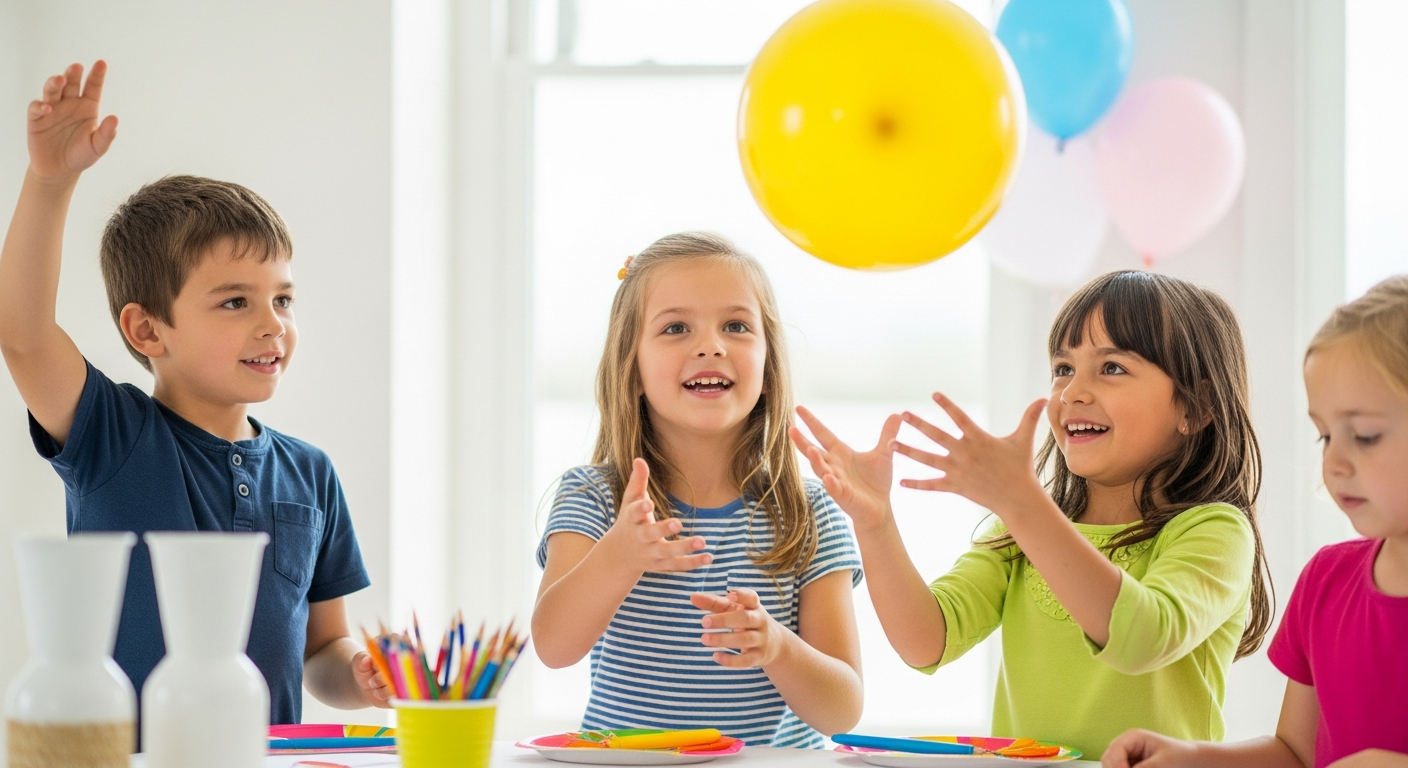
Table of Contents
- Introduction
- Setting the Stage for Fun: The Importance of Play
- Classic Games with a Twist: Timeless Fun for All Ages
- Creative Crafts & Artistic Adventures: Sparking Imagination
- Active Outdoor & Indoor Games: Burning Energy, Building Skills
- Mindful Activities for Quieter Moments: Calm & Connection
- Integrating Communication into Every Activity
- How Speech Blubs Supports Your Child's Communication Journey
- Unlock More Fun with Speech Blubs: Pricing & Features
- Conclusion
- Frequently Asked Questions (FAQ)
Introduction
Picture this: The invites are out, the cake is ordered, and the big day is almost here. But suddenly, a wave of panic hits – what activities will keep all those excited little guests engaged, happy, and having a blast? Planning a child's party can sometimes feel like orchestrating a small circus, balancing the need for structure with the boundless energy of kids. We understand the desire to create unforgettable memories, but also the challenge of finding activities that are genuinely fun, easy to set up, and perhaps even a little developmental.
This comprehensive guide is here to rescue you from party-planning woes! We’re diving deep into over 50 fantastic ideas for fun party activities for kids, covering everything from timeless outdoor games to creative indoor crafts. Our goal is to equip you with a treasure trove of inspiration, ensuring your child's next celebration is filled with laughter, joy, and plenty of opportunities for growth. Beyond just entertainment, we’ll explore how these activities can naturally foster essential communication skills, build confidence, and even strengthen family connections. Get ready to transform your next children's party into an engaging adventure that everyone will cherish.

Setting the Stage for Fun: The Importance of Play
A child's birthday party is more than just cake and presents; it's a vibrant stage for developmental growth, social interaction, and pure, unadulterated joy. Play is the primary way children learn about the world, and party games amplify this learning in a dynamic, social setting. When kids engage in structured or free play during a party, they're not just having fun; they're practicing crucial skills like turn-taking, problem-solving, negotiation, and expressing themselves.
At Speech Blubs, we believe that play is the most powerful tool for learning, especially when it comes to communication. Our mission is to empower children to "speak their minds and hearts," and we know that a joyful, playful environment is key to unlocking their potential. This philosophy extends perfectly to party planning. By choosing activities that encourage participation, interaction, and even a little bit of silly chaos, you're creating an environment where communication can flourish naturally. From calling out "red light!" in a game to describing their masterpiece at a craft station, every moment is an opportunity for language development.
Classic Games with a Twist: Timeless Fun for All Ages
Some games never go out of style, and for good reason! They’re easy to explain, require minimal setup, and often bring out the most exuberant energy in kids. These classics are excellent for promoting listening skills, following instructions, and understanding social cues – foundational elements of effective communication.
Red Light, Green Light
One child stands as the "stoplight" with their back to the others, calling out "Green Light!" The other players (the "traffic") run towards them. When the "stoplight" turns around and shouts "Red Light!" everyone must freeze. Anyone caught moving has to return to the starting line. The first player to reach the stoplight wins. This game is fantastic for developing impulse control, listening carefully, and following multi-step commands.

Simon Says
This beloved game is a masterclass in auditory processing and selective listening. A grown-up, or even the birthday child, acts as "Simon," giving instructions like "Simon says touch your nose." Players only follow commands preceded by "Simon says." If Simon just says "Touch your nose" without the magic phrase, players shouldn't do it. Those who don't follow the rule (or follow it incorrectly) are out. This helps children differentiate between direct commands and conditional instructions, sharpening their focus.
Party Limbo
How low can you go? With just a broom or a stick, limbo is an instant hit. Two adults hold the stick horizontally, and kids take turns bending backward to pass underneath without touching it. Lower the stick with each round. This game not only tests flexibility but also encourages verbal encouragement and cheering for friends.
Capture the Flag
For older, more energetic groups, Capture the Flag is an epic team game. Divide players into two teams, each with a "flag" (a bandana or piece of fabric) hidden in their territory. The goal is to capture the opposing team's flag and bring it back to your base. This game is a fantastic exercise in strategic thinking, teamwork, and communication. Kids will naturally use directive language ("Go left!"), descriptive language ("He's near the big tree!"), and negotiation skills.
Steal the Bacon
Another great team game, Steal the Bacon involves two teams lining up opposite each other, with an object ("the bacon") placed in the middle. Players on each team are assigned numbers. When a number is called, one player from each team races to grab the bacon and bring it back to their side without being tagged. This game is excellent for quick thinking, following rules, and understanding spatial directions.
Tug-of-War
A true test of teamwork and strength, Tug-of-War requires a sturdy rope and a clear center line. Two teams pull on opposite ends of the rope, trying to drag the opposing team over the line. Beyond the physical challenge, this game fosters a sense of collective effort and the expressive sounds of exertion and encouragement!
Horse (Basketball)
If you have a basketball hoop, Horse is a simple yet engaging game. The first player attempts a shot from anywhere. If they make it, the next player must attempt the exact same shot. If they miss, they get a letter (H, then O, R, S, E). The last player to get all five letters wins. This encourages observation, imitation, and sequential memory.
Hopscotch
With some sidewalk chalk, hopscotch is a classic outdoor activity. Draw a numbered pattern on the ground, and players take turns hopping through it, retrieving a marker, and returning. It’s a great way to practice number recognition and following a sequence of movements.
Scavenger Hunt / Inspector Party Game
Transform your party into a thrilling quest! Hide clues around the party area, with each clue leading to the next, until players uncover a hidden "treasure." For younger children, a simple picture-based scavenger hunt works well. For older kids, more complex riddles or puzzles can be used. This activity is perfect for fostering problem-solving, collaboration, and using descriptive language to discuss clues. For a child who might be a "late talker" and loves exploring, verbally processing clues and discoveries ("I found a shiny rock!") can be incredibly motivating. Unsure if your child could benefit from a little extra support? Take our quick 3-minute preliminary screener to get a simple assessment and a free 7-day trial.
Obstacle Course
Build an exciting obstacle course using pillows, tunnels, blankets, hula hoops, and furniture indoors, or tires, pool noodles, and wooden planks outdoors. Kids race against the clock or each other to complete the course. This encourages following directions, spatial awareness, and using action verbs ("climb," "crawl," "jump").
Keep It Up
All you need is a balloon! The goal is for a group of players to keep the balloon in the air for as long as possible without it touching the ground. This simple game promotes cooperation, hand-eye coordination, and verbal cues ("My turn!", "Hit it higher!").
Monkey in the Middle
A small group game where one or more players ("the monkey") stand in the middle, trying to intercept a ball being tossed between the other players. If the monkey catches the ball, the player who threw it becomes the new monkey. This game reinforces throwing and catching skills, as well as quick reactions.
I Spy
A gentle game perfect for winding down or for younger children. One person says, "I spy with my little eyes... something [color/shape/description]." Other players guess what the object is. This game enhances descriptive vocabulary, observational skills, and question-asking abilities.
Many of these interactive games build on the concept of "video modeling" by encouraging imitation and social cues, similar to how children learn new sounds and words by watching and imitating their peers in the Speech Blubs app. When they see a friend balancing a box or crouching low for limbo, they're naturally motivated to try it too! This form of active engagement is a powerful way to reinforce learning.
Creative Crafts & Artistic Adventures: Sparking Imagination
Unleashing creativity through arts and crafts is a fantastic way to engage children at a party. These activities are not just about making something beautiful; they also develop fine motor skills, encourage self-expression, and provide rich opportunities for descriptive language and storytelling.
Tie-Dye Station
Provide white cotton t-shirts (pre-washed), rubber bands, and various colors of fabric dye. This messy but incredibly fun activity allows kids to create unique wearable art. Editor's Tip: Plan to do this one outside for easy cleanup! While they're twisting and dyeing, encourage them to describe the colors they're choosing and the patterns they're creating.
Party Painting
Cover a long table with butcher paper and set out washable paints, markers, and crayons. Give each child a small canvas or a piece of thick paper and let them create their own masterpiece. This encourages artistic expression and can spark conversations about colors, shapes, and themes. For a child who loves to create but struggles with verbally expressing their ideas, a craft station provides a low-pressure environment to practice descriptive language. As they paint their canvas or decorate their mask, parents can encourage them to describe the colors, shapes, and textures, fostering vocabulary and sentence structure. "Tell me about the blue you chose for the sky!" or "What sound does your frog mask make?"
DIY Slime Station
Slime-making is always a crowd-pleaser! Set up a table with glue, baking soda, contact lens solution, food coloring, and glitter. Provide individual containers for each child to mix their ingredients and personalize their slime. This sensory activity is not only entertaining but also a great way to discuss textures ("sticky," "squishy," "stretchy") and follow multi-step instructions.
Handmade Flower Crowns
For a whimsical touch, set up a station with faux flowers, floral wire, twine, and glue. Guide guests in creating their own beautiful flower crowns. This fine motor activity is perfect for encouraging focus and careful manipulation.
Puppet Craft Station
Provide socks, paper bags, googly eyes, yarn, felt scraps, and glue. Kids can design and build their own puppet characters. Once finished, encourage them to put on an impromptu puppet show, which is a fantastic way to practice storytelling, character voices, and imaginative play.
Face Painting
A surefire way to add magic to any party! Offer a variety of designs – superheroes, butterflies, animals – and transform your guests. This activity sparks imagination and leads to fun conversations about what character or creature they want to become.
DIY Friendship Bracelets
Set out an array of colorful embroidery threads, beads, and charms. Provide simple instructions (perhaps visual aids for younger kids) for knotting and braiding. Children can make bracelets for themselves or to exchange with friends, fostering a sense of connection and the practice of giving instructions.
Mask-Making Station
Using paper plates as a base, provide markers, feathers, glitter, and elastic bands. Kids can create their own animal, superhero, or fantastical masks. This engages creativity and allows for role-play and imaginative sound effects once the masks are complete.
Temporary Art Gallery Wall
As children finish their crafts, designate a "gallery" space where they can proudly display their creations. This celebrates their efforts and encourages them to talk about their art with others.
Coloring Station
Sometimes, a quiet coloring station with themed coloring sheets, crayons, and markers is a welcome break from high-energy activities. It allows for calm focus and can still be a source of conversation as children discuss their favorite colors or characters.
These activities are fantastic for encouraging expressive language. Describing choices, explaining steps, and narrating their creative process are all invaluable for speech development. Our research shows that engaging, interactive experiences are crucial for learning. You can read more about the science behind our method here.
Active Outdoor & Indoor Games: Burning Energy, Building Skills
Kids have boundless energy, and parties are the perfect opportunity to let them run, jump, and play! These active games, whether indoors or out, are not only great for physical development but also for developing social skills, following rules, and engaging in dynamic communication.
Balancing Act
Wrap lightweight boxes in colorful paper and challenge kids to walk around balancing them on their heads. Gradually increase the pace. This simple activity helps with balance and focus, and kids can cheer each other on.
Outdoor Can Toss
Collect and decorate empty tin cans, then stack them in a pyramid. Guests take turns tossing beanbags to knock them down. This classic carnival game develops hand-eye coordination and friendly competition.
Hop to It!
Use colorful paper squares taped to the floor or ground to create a winding path. Kids jump from square to square. If they step on the floor, they're out! This active game practices agility and following patterns.
Bottle Toss
Cut the bottom off clean bleach bottles and decorate them. Use them to play catch, offering a unique twist on a simple game. This encourages coordination and communication about throwing and catching.
Birthday Present Stack
Gather empty boxes of various sizes, wrapped in colorful paper. Challenge kids to stack them as high as possible without toppling the tower. This game of balance and strategy can lead to fun exclamations and giggles as towers inevitably fall!
Cone Relay Race
Give each child an empty ice cream cone and a small ball. Teams race to pass the ball from cone to cone without dropping it. This promotes teamwork, careful movement, and verbal coordination within the team.
Water Balloon Toss
On a warm day, a water balloon toss is pure joy. Kids pair up and toss balloons, taking a step back after each successful catch. The last pair with an intact balloon wins (or everyone just gets happily soaked!). This is a great way to practice simple directives like "catch!" and "throw!"
Slip and Slide
Set up a long plastic sheet or a dedicated slip and slide with a hose for endless wet fun. This high-energy activity guarantees laughter and shouts of delight.
Sprinkler Tag
Turn on the sprinkler and let the kids run through it, or make it a game of tag where the "it" person tries to tag others as they run under the water stream. This is a simple, refreshing way to play.
Mini Golf Course
Create a backyard mini golf course using cups as holes, toys as obstacles, and pool noodles as putters. This allows for creative course design and promotes turn-taking and counting scores.
Pop the Bubbles
For toddlers and preschoolers, a bubble machine provides endless entertainment. Just let them run, jump, and pop as many bubbles as they can! This simple activity encourages gross motor skills and joyous exclamations.
Treasure Dig
Fill a sandbox or a large bin with sand and hide small toys or trinkets. Provide plastic shovels and let kids dig for "buried treasure." This sensory activity is perfect for imaginative play and describing discoveries.
NERF Wars
Gather NERF blasters and darts, and set up a backyard battle zone with obstacles and hiding spots. This encourages strategic thinking, teamwork, and active running.
Many of these games involve action verbs and prepositions, which are critical for early language development. Encouraging kids to describe what they are doing ("I am hopping," "The ball is under the cone") can naturally reinforce these concepts, mirroring how our app guides children through engaging actions to practice specific speech sounds and words.
Mindful Activities for Quieter Moments: Calm & Connection
While high-energy games are a party staple, incorporating some calmer, more focused activities can provide a welcome break and foster different kinds of developmental growth, like emotional regulation and narrative skills.
Story Time with Puppets
After making their puppets, gather the children for a group story time. You can tell a story and encourage them to use their handmade puppets to act out parts, or invite them to create their own short puppet shows. This promotes listening, imagination, and narrative development.
DIY Photo Booth
Set up a fun backdrop (a colorful sheet or decorated poster board works well) and provide an assortment of silly props like oversized glasses, hats, boas, and cut-out speech bubbles. Kids love dressing up and taking playful photos. This encourages imaginative play and expressions of joy. You can print the photos as party favors!
These quieter moments are valuable for fostering connection and allowing children to process their experiences in a less stimulating environment. They still offer rich opportunities for communication, from discussing characters to describing funny poses.
Integrating Communication into Every Activity
Every single activity at a children's party, from the most boisterous game to the quietest craft, is an opportunity to support communication development. Here are some practical tips for parents to encourage speech and language throughout the celebration:
- Model Clear Language: Speak clearly and use complete sentences when giving instructions, narrating actions, or asking questions. For example, instead of just pointing, say, "Can you hand me the red ball, please?"
- Narrate Actions: As children play, describe what they are doing. "You are running fast!" or "You are building a tall tower!" This connects actions to words and expands their vocabulary.
- Ask Open-Ended Questions: Instead of questions that require a "yes" or "no" answer, ask questions that encourage more detailed responses. "What did you like most about that game?" or "Tell me about the colors you chose for your painting."
- Use Descriptive Words: Introduce new vocabulary related to the activities. For slime, talk about "sticky," "squishy," "stretchy." For painting, use "vibrant," "bright," "smooth."
- Encourage Turn-Taking in Conversation: Just like in games, model and encourage taking turns in talking. Pause after asking a question to give children time to formulate their thoughts.
- Praise Effort, Not Just Perfection: Acknowledge their attempts at communication, even if words are unclear. "Great job trying to tell me about your drawing!" This builds confidence and reduces frustration.
- Connect to Emotions: Help children label their feelings. "You look so excited about this game!" or "Are you feeling a little tired after all that running?" This expands emotional vocabulary.
At Speech Blubs, we are deeply committed to providing an immediate, effective, and joyful solution for the 1 in 4 children who need speech support. We understand that effective communication is about more than just sounds; it's about the confidence to express thoughts, feelings, and ideas. By embracing these strategies in party settings and daily life, you are actively helping children build those foundational communication skills that empower them to "speak their minds and hearts."
How Speech Blubs Supports Your Child's Communication Journey
Finding engaging ways to support your child's speech and language development can be a challenge, especially in a world often dominated by passive screen time. At Speech Blubs, we've created a unique solution that blends scientific principles with play, offering one-of-a-kind "smart screen time" experiences designed to empower children to communicate effectively. Our company was born from the personal experiences of our founders, all of whom grew up with speech problems and created the tool they wished they had.
We offer a screen-free alternative to passive viewing (like cartoons) and a powerful tool for family connection. Our unique approach focuses on a "video modeling" methodology, where children learn by watching and imitating their peers. This natural way of learning mirrors how children learn to speak in real-life social interactions, including during party games! When a child sees other kids making a sound or pronouncing a word, their mirror neurons activate, making it easier for them to imitate and learn.
For example, for a parent whose 3-year-old "late talker" loves animals, the "Animal Kingdom" section within Speech Blubs offers a fun, motivating way to practice "moo" and "baa" sounds, with real kids modeling the sounds and actions. This kind of targeted, engaging practice can be a powerful supplement to party games and daily interactions, providing consistent exposure to correct speech models in an interactive and encouraging environment. Whether your child is working on specific sounds, expanding their vocabulary, or building sentence structure, Speech Blubs provides a comprehensive, playful platform to support their journey. We aim to foster a love for communication, build confidence, reduce frustration, and create joyful family learning moments that extend far beyond the app. See what other parents are saying about their child's success with Speech Blubs.
Unlock More Fun with Speech Blubs: Pricing & Features
We are dedicated to making speech support accessible and effective for every family. To help you integrate Speech Blubs into your child's learning journey, we offer flexible subscription plans designed to provide maximum value.
Our Monthly plan is available for $14.99 per month. This plan offers access to our core features, allowing your child to explore and engage with our video modeling activities.
However, for the best value and a complete experience, we highly recommend our Yearly plan at $59.99 per year. This breaks down to just $4.99 per month, meaning you save 66% compared to the monthly subscription!
The Yearly plan isn't just more affordable; it also unlocks exclusive, high-value features designed to enhance your child's development:
- A 7-day free trial: Experience the full power of Speech Blubs before committing.
- The extra Reading Blubs app: Expand your child's learning with our complementary reading program.
- Early access to new updates: Be the first to enjoy our latest content and features.
- 24-hour support response time: Get prompt assistance whenever you need it.
Please note that the Monthly plan does not include these additional benefits. Choosing the Yearly plan ensures your child gets the full suite of tools and support we offer, setting them up for comprehensive communication success.
Ready to provide your child with an engaging and effective tool for speech development? Create your account and begin your 7-day free trial today!
Conclusion
Creating a memorable and joyful party for kids doesn't have to be overwhelming. By incorporating a variety of fun party activities – from classic games that teach valuable social skills to creative crafts that spark imagination and active adventures that burn off energy – you can craft an experience that is not only entertaining but also enriching. Remember, every laugh, every shared instruction, and every descriptive word spoken during play contributes to a child's foundational communication abilities.
At Speech Blubs, we believe in the power of playful learning to empower children to speak their minds and hearts. Our app seamlessly blends scientific principles with engaging "smart screen time" through video modeling, making learning to speak an immediate, effective, and joyful solution. Whether it's through the structured play of our app or the vibrant chaos of a birthday party, creating supportive and interactive environments is key to fostering confident communicators.
Don't let party planning stress you out, and don't let speech development feel like a chore. Embrace the fun, encourage the conversation, and remember that every moment of playful interaction is a step forward. Ready to give your child the gift of clear and confident communication? Download Speech Blubs on the App Store or Google Play to begin your 7-day free trial today. Be sure to select the Yearly plan to unlock our complete suite of features and the absolute best value for your family!
Frequently Asked Questions (FAQ)
Q1: How do I choose the best party activities for different age groups?
A1: Consider the developmental stage of the majority of your guests. For toddlers and preschoolers, focus on sensory play, simple imitation games like "Simon Says," and open-ended crafts like coloring or bubble popping. For elementary school-aged children, team games, scavenger hunts, and more intricate crafts like friendship bracelets work well. Pre-teens might enjoy competitive team sports, escape room-style challenges, or more involved DIY projects like slime making. Always have a mix of active and quieter options.
Q2: What's the secret to keeping kids engaged throughout the entire party?
A2: Variety and flexibility are key! Plan for a mix of activities, rotating between high-energy games and calmer, more focused options. Keep the pace moving, but don't be afraid to ditch an activity if it's not working. Have a few backup ideas ready in case. Involving the birthday child in the planning process can also boost excitement, and remember to join in the fun yourself – your enthusiasm is contagious!
Q3: How can I incorporate speech and language development into party games without making it feel like "work"?
A3: The key is natural integration. Narrate what's happening ("You're running so fast!"), ask open-ended questions ("What's your favorite part about making that mask?"), and model clear language. Encourage kids to describe their creations, explain game rules, or cheer on their friends. Focus on participation and effort rather than perfect articulation. Apps like Speech Blubs can also be a fun, supplementary tool at home, leveraging play to practice sounds and words in an engaging way, supporting the skills used in party interactions.
Q4: Are party favors necessary, and if so, what are some affordable and meaningful ideas?
A4: Party favors are not strictly necessary, and many parents opt out to simplify. If you choose to give them, focus on meaningful or consumable items to avoid clutter. Ideas include small craft supplies (stickers, crayons), seed packets, homemade cookies, a small book, or a personalized thank-you note from the birthday child. These thoughtful gestures can be more appreciated than generic plastic trinkets.
About the author