
Fun & Simple Christmas Crafts for Kids: Boosting Communication & Joy
 By Speech Blubs Team•Dec 22, 2025•23 min.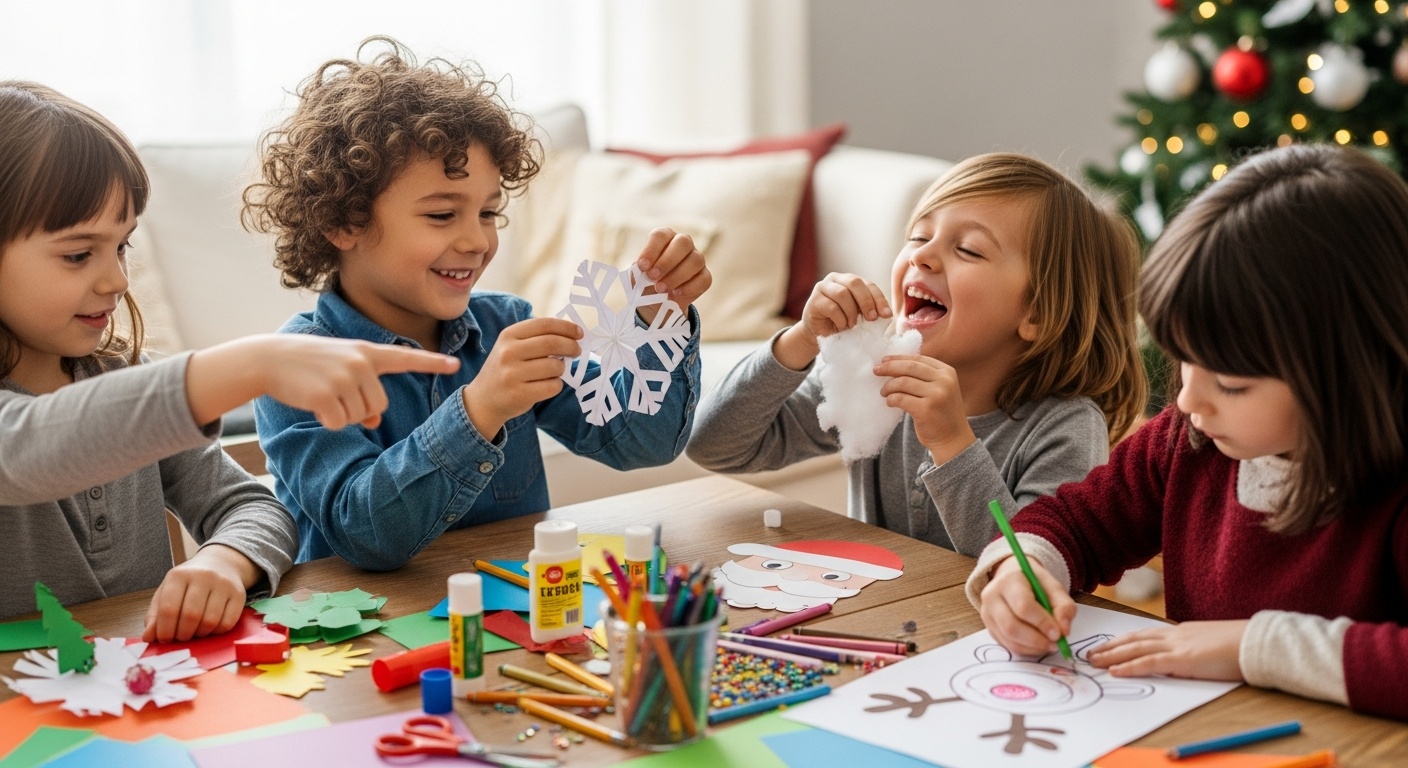
Table of Contents
- Introduction
- Why Christmas Crafts are More Than Just Fun: A Developmental Boost
- Our Philosophy: Playful Learning, Just Like Speech Blubs
- Getting Started: Setting Up Your Craft Zone
- Super Simple Christmas Crafts for Toddlers (Ages 1-3)
- Engaging Christmas Crafts for Preschoolers (Ages 3-5)
- Creative Christmas Crafts for School-Aged Kids (Ages 6-8)
- Maximizing the Language Benefits of Craft Time
- When to Seek Additional Support: Recognizing the Signs
- Empowering Your Child's Voice with Speech Blubs
- Conclusion
- Frequently Asked Questions
The holiday season is a magical time, filled with sparkling lights, festive music, and the warmth of family togetherness. But beyond the glitter and gifts, Christmas offers a unique opportunity for something truly precious: connecting with our children in meaningful ways that also foster their growth and development. Imagine transforming a quiet afternoon into an exciting adventure, where sticky fingers, bursts of color, and happy chatter fill the air, all while little minds are actively engaged in learning. This post isn't just about making pretty decorations; it's about harnessing the power of simple Christmas crafts to spark joy, build confidence, and, most importantly, nurture your child's budding communication skills. We'll explore a sleigh-full of easy, age-appropriate craft ideas that promise smiles, creative expression, and rich language-learning opportunities, much like how we at Speech Blubs strive to empower children to speak their minds and hearts through engaging, playful experiences. Get ready to create lasting memories and cultivate a love for communication, one festive craft at a time.

Introduction
As parents, we're constantly seeking ways to enrich our children's lives, to provide them with experiences that are both fun and formative. The sheer delight on a child's face when they proudly display their handmade ornament or a slightly lopsided paper reindeer is a reward in itself. But what if these simple moments could also be powerful catalysts for development, especially in the realm of communication? This holiday season, we invite you to look beyond the store-bought and embrace the homemade, not just for the festive décor, but for the incredible developmental benefits it offers. This blog post will guide you through a variety of simple Christmas crafts suitable for toddlers, preschoolers, and early elementary children, providing step-by-step instructions and highlighting the often-overlooked opportunities for language development embedded in each activity. We’ll also explore how these hands-on, interactive experiences perfectly complement the scientifically backed, play-based approach we champion at Speech Blubs, helping your child find their voice and connect with the world around them.
Why Christmas Crafts are More Than Just Fun: A Developmental Boost
Engaging in simple Christmas crafts is far more than just a way to pass the time or decorate the house. These activities are rich with developmental benefits that support a child's growth across multiple domains. From the moment they choose a material to the final flourish of glitter, children are actively learning and growing.
Fine Motor Skills & Coordination
Crafting demands precision. Holding a crayon, squeezing glue, snipping with child-safe scissors, or carefully placing a sequin all require the intricate coordination of small muscles in the hands and fingers. These fine motor skills are crucial for tasks like writing, drawing, dressing themselves, and even feeding. Simple crafts provide a low-pressure, enjoyable way to practice and refine these essential abilities.
Language Development & Communication
This is where the magic truly happens, and it's a core tenet of our mission at Speech Blubs. Crafts are an open invitation for conversation. As children engage with materials and instructions, they are exposed to a wealth of new vocabulary—colors, textures (fuzzy, bumpy, smooth), shapes, actions (cut, glue, paint, stick), and descriptive words (sparkly, shiny, tiny, huge). They learn to follow multi-step instructions, ask questions, express preferences, and describe their creations. For a parent whose child is still developing their expressive language, co-creating a craft offers a natural, low-stress environment for modeling words and encouraging imitation. Just as our app provides a "smart screen time" alternative to passive viewing by engaging children in video modeling to encourage speech, craft time offers a powerful "screen-free" alternative for interactive communication. It's a chance to discuss materials, processes, and the stories behind their creations, truly empowering children to speak their minds and hearts.

Creativity & Imagination
With a pile of craft supplies, a child's imagination knows no bounds. They're not just making a predefined object; they're envisioning, problem-solving, and making creative choices. Will their snowman have a blue hat or a red one? Will their reindeer have glittery antlers or googly eyes? These decisions foster imaginative thinking, an essential component of cognitive development and a precursor to complex problem-solving.
Problem-Solving & Patience
Sometimes, the glue won't stick quite right, or the paper rips. These minor "crafting dilemmas" are fantastic opportunities for children to practice problem-solving. How can we fix it? What else could we use? They also learn patience, understanding that some projects take time and effort, and that mistakes are simply part of the creative process.
Emotional Connection & Family Bonding
Perhaps most importantly, crafting together creates cherished memories and strengthens family bonds. It's dedicated time spent side-by-side, sharing laughter, offering encouragement, and celebrating achievements, big and small. These shared experiences build a foundation of security and connection, which are vital for a child's overall well-being and willingness to communicate.
Our Philosophy: Playful Learning, Just Like Speech Blubs
At Speech Blubs, we deeply understand the power of play in learning. Our company was born from the personal experiences of our founders, all of whom grew up with speech problems and created the tool they wished they had. We are committed to providing an immediate, effective, and joyful solution for the 1 in 4 children who need speech support, blending scientific principles with play into one-of-a-kind "smart screen time" experiences. We believe learning should be engaging, fun, and integrated seamlessly into a child's day.
This philosophy extends perfectly to holiday crafting. Just as our app utilizes a unique "video modeling" methodology where children learn by watching and imitating their peers, you can model language and actions during craft time. Our approach isn't about passive consumption; it’s about active participation and interaction, which is precisely what crafting offers. We provide a screen-free alternative to passive viewing and a powerful tool for family connection, and we see craft time as another beautiful avenue for achieving just that. To learn more about the science behind our method and why it's so effective, you can explore our research page.
Getting Started: Setting Up Your Craft Zone
Before diving into the festive fun, a little preparation goes a long way to ensure a smooth, enjoyable, and mess-manageable crafting experience.
Gathering Materials
You don't need to break the bank to have a fantastic craft session. Many simple Christmas crafts utilize materials you likely already have around the house or can find affordably.
- Essentials: Construction paper (red, green, white, brown), child-safe scissors, glue sticks, liquid glue, cotton balls, pipe cleaners, pom-poms, googly eyes, glitter, crayons, markers, paint (washable tempera is best).
- Recycled/Household Items: Paper plates, toilet paper rolls, pinecones, buttons, yarn, ribbon scraps, old magazines, pasta.
- Festive Touches: Candy canes, small jingle bells, cinnamon sticks, glitter glue.
Safety First
Always supervise young children during craft time, especially when using scissors, glue, or small objects that could be choking hazards for toddlers. Opt for child-safe, non-toxic materials.
Embracing the Mess
Crafting with kids will be messy. Lay down newspaper, an old tablecloth, or a craft mat. Dress your child in old clothes or an art smock. Remember, the mess is often part of the fun and a sign of active engagement! A little pre-planning for cleanup can save a lot of stress.
Super Simple Christmas Crafts for Toddlers (Ages 1-3)
Toddlers thrive on sensory experiences, simple actions, and immediate results. These crafts focus on large movements, repetition, and a limited number of steps, providing rich opportunities for early language development.
Pom-Pom Ornament Drop
Description: A wonderfully simple activity that involves dropping colorful pom-poms into a container, perfect for fine motor practice and color recognition. Materials: Empty plastic bottle or jar (with a wide opening), various colored pom-poms. Instructions:
- Sit your toddler in front of the container and the pile of pom-poms.
- Demonstrate how to pick up a pom-pom and drop it into the container.
- Encourage them to follow suit. Language Opportunities:
- Colors: "Red pom-pom!" "Blue!" "Find the green one!"
- Counting: "One, two, three pom-poms!"
- Verbs: "Drop," "put in," "pick up."
- Concepts: "In/Out," "more," "all done."
- Scenario: For a parent whose toddler is just beginning to understand simple commands and identify colors, this craft provides a fantastic opportunity for practicing these skills. You can say, "Drop the red pom-pom in!" and then encourage them to repeat the color. This playful imitation and labeling are similar to how our Speech Blubs app uses engaging video models to help children connect words with actions and objects.
Cotton Ball Snowman
Description: A classic winter craft that’s all about texture and sticking, perfect for small hands. Materials: Blue or black construction paper, cotton balls, glue stick or liquid glue, markers (orange for carrot nose, black for eyes/mouth). Instructions:
- Draw a simple snowman outline (two or three circles) on the construction paper.
- Help your toddler apply glue generously within the snowman shape.
- Let them pick up cotton balls and press them onto the glue.
- Once dry, you can add a carrot nose, eyes, and mouth with markers. Language Opportunities:
- Descriptive Words: "Soft," "fluffy," "white," "sticky."
- Body Parts: "Snowman's eye," "nose," "mouth."
- Verbs: "Stick," "press," "glue," "draw."
- Concepts: "Big/Small" (for different sized circles).
Handprint/Footprint Reindeer or Santa
Description: A personalized keepsake that captures tiny hands or feet, transforming them into festive characters. Materials: Brown or red construction paper, washable paint (brown for reindeer, red for Santa), googly eyes, red pom-poms (for Rudolph's nose), markers. Instructions:
- Paint your child's palm (for reindeer head) or foot (for Santa's body) with the chosen color.
- Press firmly onto the construction paper.
- Let dry.
- For reindeer: Add googly eyes, a red pom-pom nose, and draw antlers or use brown pipe cleaners.
- For Santa: Add cotton balls for a beard, hat trim, and googly eyes. Language Opportunities:
- Body Parts: "Hand," "foot," "fingers," "toes," "nose," "eyes."
- Actions: "Paint," "press," "dry," "stick."
- Animal/Character Names: "Reindeer," "Santa."
- Feelings: "Tickly" (when painting).
Paper Plate Wreath
Description: A simple, round craft that's great for practicing tearing paper and gluing. Materials: Paper plate, green construction paper (various shades), red construction paper, glue stick. Instructions:
- Cut out the center of a paper plate, leaving a ring.
- Help your toddler tear green paper into small pieces.
- Apply glue to the paper plate ring.
- Let your toddler stick the green paper pieces onto the ring to create a wreath.
- Tear or cut small red circles for "berries" and glue them on. Language Opportunities:
- Shapes: "Round" (wreath, paper plate, berries).
- Colors: "Green," "red."
- Actions: "Tear," "glue," "stick," "decorate."
- Concepts: "All around," "on."
Engaging Christmas Crafts for Preschoolers (Ages 3-5)
Preschoolers are ready for slightly more complex instructions, sequencing, and using basic tools like child-safe scissors. These crafts encourage storytelling and reinforce early academic concepts.
Candy Cane Reindeer
Description: A sweet and simple craft that transforms a classic treat into an adorable reindeer. Materials: Candy canes, brown pipe cleaners, small googly eyes, small red pom-poms (for Rudolph's nose), hot glue (adult use only) or strong craft glue. Instructions:
- Twist two brown pipe cleaners around the top curve of the candy cane to create antlers. Shape them as desired.
- Glue two googly eyes onto the top curve of the candy cane, just below the pipe cleaners.
- Glue a red pom-pom onto the front curve of the candy cane for Rudolph's nose. Language Opportunities:
- Shapes: "Curve," "round."
- Colors: "Red," "white," "brown."
- Concepts: "Top," "bottom," "around."
- Sequencing: "First, we twist... then we glue..."
- Scenario: If your preschooler enjoys imaginative play and stories, creating 'Candy Cane Reindeer' can naturally lead to discussions about Santa's sleigh, the North Pole, and the reindeer's individual personalities. This kind of descriptive language practice and narrative building is a cornerstone of our Speech Blubs app, where children learn new vocabulary and sentence structures through engaging themes and characters.
Pinecone Christmas Trees
Description: Nature meets craft in this tactile project, perfect for decorating. Materials: Pinecones (collected from outdoors, cleaned), green paint, glitter, small pom-poms, beads, glue. Instructions:
- Paint the pinecones green. Let them dry completely.
- Once dry, apply glue to the tips of the pinecone "branches" and sprinkle with glitter.
- Glue small pom-poms or beads onto the pinecone as ornaments. Language Opportunities:
- Textures: "Spiky," "rough," "smooth" (once painted), "sparkly."
- Colors: "Green," "red," "gold," "silver."
- Actions: "Paint," "sprinkle," "glue," "decorate."
- Concepts: "Big/Small," "top/bottom."
Paper Chain Garland
Description: A classic, repetitive craft that's excellent for fine motor skills, color recognition, and pattern making. Materials: Construction paper strips (various colors), glue stick or stapler. Instructions:
- Provide pre-cut strips of construction paper (or let older preschoolers practice cutting straight lines).
- Form a strip into a circle and glue/staple the ends together to make a link.
- Thread another strip through the first link, form a circle, and secure.
- Continue linking strips to create a long garland. Language Opportunities:
- Colors: Identifying and naming colors.
- Counting: Counting the links.
- Patterns: Creating color patterns (e.g., red, green, red, green).
- Verbs: "Link," "connect," "glue," "staple."
- Concepts: "Long," "short," "together."
DIY Ornament Decorating (Ball Ornaments)
Description: A personalized touch for the Christmas tree, allowing for creative expression. Materials: Plain, inexpensive ball ornaments (plastic or shatterproof for young children), acrylic paint pens, glitter glue, stick-on gems. Instructions:
- Provide the plain ornaments and various decorating supplies.
- Let your child draw, doodle, write their name, or stick on gems to decorate their ornament.
- Supervise closely with glitter glue to prevent overuse. Language Opportunities:
- Descriptive Words: "Shiny," "sparkly," "colorful," "my favorite."
- Shapes: "Circle," "star," "heart."
- Feelings: "Proud," "happy."
- Expressing Choices: "I want the blue one." "I like this color."
Salt Dough Ornaments
Description: A wonderful sensory experience that results in durable, paintable ornaments. Materials: 1 cup flour, 1/2 cup salt, 1/2 cup water, cookie cutters (Christmas shapes), straw, baking sheet, paint, glitter, ribbon. Instructions:
- Mix flour, salt, and water in a bowl until a dough forms. Knead for 5-10 minutes.
- Roll out the dough to about 1/4 inch thickness.
- Use cookie cutters to cut out shapes.
- Use a straw to make a hole at the top of each ornament for hanging.
- Bake at 250°F (120°C) for 2-3 hours, or until completely hardened. Let cool.
- Once cool, your child can paint and decorate the ornaments.
- Thread ribbon through the hole to hang. Language Opportunities:
- Actions: "Mix," "knead," "roll," "cut," "bake," "paint," "decorate."
- Sensory Words: "Smooth," "sticky," "hard."
- Pre-reading/Following Directions: Discussing the "recipe" steps.
- Shapes: Naming the cookie cutter shapes.
- Scenario: For a child who might be a "late talker" and benefits from concrete actions, discussing each step of making 'Salt Dough Ornaments' provides an excellent opportunity for repetition and practicing action verbs. Just like how our app encourages children to imitate sounds and actions they see from their peers, you can model words like "roll," "cut," and "mix" while doing the craft together. If you're wondering if your child could benefit from more targeted speech support, consider taking our quick 3-minute preliminary screener to get a simple assessment and a free 7-day trial.
Creative Christmas Crafts for School-Aged Kids (Ages 6-8)
At this age, children can handle more intricate steps, work with greater independence, and enjoy crafts that require a bit more precision and problem-solving.
Popsicle Stick Sleds/Stars
Description: Building small structures with popsicle sticks encourages spatial reasoning and careful gluing. Materials: Popsicle sticks, craft glue, paint or markers, glitter. Instructions (Sleds):
- Glue three popsicle sticks side-by-side to form the base of the sled.
- Glue two more popsicle sticks across the top of the base, slightly angled, to form the runners.
- Let dry completely.
- Decorate with paint, markers, or glitter. Instructions (Stars):
- Glue five popsicle sticks together to form a star shape.
- Decorate as desired. Language Opportunities:
- Spatial Concepts: "Side-by-side," "across," "angled," "top," "bottom."
- Geometry: "Triangle," "star," "line."
- Sequencing: Explaining the steps in order.
- Problem-Solving: "How can we make it sturdy?"
- Scenario: For a child who might be hesitant to express their ideas or needs, collaborating on a 'Popsicle Stick Sled' project offers a low-pressure environment to discuss choices and preferences, like "Should the runners be closer together or further apart?" This mirrors how Speech Blubs empowers children to articulate their thoughts and feelings, building confidence in their communication abilities step-by-step.
Button Christmas Trees/Wreaths
Description: A beautiful craft that practices sorting, patterning, and fine motor skills with small objects. Materials: Cardboard (cut into tree or wreath shapes), various colored and sized buttons, craft glue. Instructions:
- Draw or trace a simple tree or wreath shape onto cardboard and cut it out.
- Provide a selection of buttons.
- Your child can glue buttons onto the cardboard shape, overlapping them to fill the space.
- Encourage creating patterns or color schemes. Language Opportunities:
- Sorting & Classification: "Sort the red buttons," "find the big buttons."
- Patterns: "What pattern are you making?"
- Descriptive Words: "Shiny," "round," "small," "large," "colorful."
- Storytelling: Discussing their design choices.
Paper Snowflakes (Advanced)
Description: A classic winter craft that can be made surprisingly intricate, teaching about symmetry and design. Materials: White paper, scissors. Instructions:
- Start with a square piece of paper.
- Fold it in half diagonally to form a triangle.
- Fold it in half diagonally again to make a smaller triangle.
- Fold the triangle into thirds (bringing one corner across, then the other).
- Cut various shapes (triangles, curves, lines) along the folded edges.
- Carefully unfold to reveal the snowflake. Language Opportunities:
- Geometry/Math: "Square," "triangle," "half," "quarter," "symmetry."
- Actions: "Fold," "cut," "unfold."
- Descriptive Words: "Intricate," "delicate," "unique."
- Sequencing: Following multi-step directions precisely.
Reindeer Food (Oatmeal & Glitter)
Description: A magical activity perfect for Christmas Eve, involving mixing "food" for Santa's reindeer. Materials: Oatmeal, glitter (edible glitter is best if possible), small zipper bags or decorative bags, small scoops or spoons. Instructions:
- Combine a cup or two of oatmeal with a generous amount of glitter in a bowl.
- Mix well using scoops or spoons.
- Portion the "reindeer food" into small bags.
- On Christmas Eve, sprinkle the food outside to guide the reindeer. Language Opportunities:
- Following a "Recipe": Discussing ingredients and steps.
- Descriptive Words: "Sparkly," "oaty," "magical."
- Actions: "Pour," "mix," "scoop," "sprinkle."
- Imaginative Play: Discussing reindeer, Santa, and Christmas Eve traditions.
- Scenario: For a child who might struggle with imaginative play or expressing abstract ideas, creating 'Reindeer Food' can be a fun, tangible way to engage them in storytelling about Christmas Eve. You can prompt them with questions like, "What do you think Rudolph will think of this food?" or "How will it help them fly?" This type of open-ended discussion cultivates narrative skills, much like the interactive exercises in our Speech Blubs app, which are designed to spark curiosity and encourage children to articulate their thoughts.
Maximizing the Language Benefits of Craft Time
Crafting is inherently communicative, but with a few conscious efforts, you can supercharge its language-boosting potential.
- Talk, Talk, Talk: Narrate your actions ("I'm cutting the paper," "You're gluing the button"). Ask open-ended questions ("What color should we use next?" "Tell me about your snowman").
- Describe Everything: Use rich descriptive language for colors, textures, shapes, and actions. "This glitter is so sparkly!" "Feel how rough the pinecone is."
- Follow Directions: Give multi-step instructions and encourage your child to repeat them or explain what they're doing next. This strengthens auditory processing and sequencing skills.
- Storytelling: Encourage your child to create a story around their craft. "What adventures will your reindeer have?" "Who will live in this little house?"
- Role-Playing: Once the crafts are complete, use them as props for imaginative play. This encourages creative language use and social interaction.
Just as we encourage interactive play during crafts, our app offers a screen-free alternative to passive viewing, making screen time productive and engaging. If you're looking for additional resources to support your child's speech and language development at home, the Speech Blubs homepage is a great place to start your journey.
When to Seek Additional Support: Recognizing the Signs
While engaging in enriching activities like Christmas crafts significantly supports language development, it's also important for parents to be aware of typical developmental milestones. Most children develop speech and language skills at their own pace, but sometimes, a little extra support can make a world of difference. If you have concerns about your child's speech development—perhaps they're not meeting typical milestones, have difficulty being understood, or show frustration with communication—remember that early intervention is key.
At Speech Blubs, we believe in empowering parents with tools and knowledge. You can gain insight into your child's development with our quick 3-minute preliminary screener, which involves 9 simple questions and provides an assessment and next-steps plan. This can help you understand if your child might benefit from targeted speech support and offers a free 7-day trial of our app.
Empowering Your Child's Voice with Speech Blubs
At Speech Blubs, our mission is to empower children to "speak their minds and hearts." Our company was founded by individuals who personally navigated speech challenges as children, and we created the innovative tool we wished we had. We are dedicated to providing an immediate, effective, and joyful solution for the 1 in 4 children who need speech support, blending scientific principles with the natural joy of play. Our unique "video modeling" methodology allows children to learn complex communication skills by watching and imitating their peers, fostering natural learning and engagement.
We offer "smart screen time" experiences that are a world apart from passive viewing like cartoons. Speech Blubs is designed to be a powerful tool for family connection, turning screen time into an interactive, educational, and fun experience for both children and parents. Our app, which boasts a high MARS scale rating, is packed with thousands of expertly designed activities focusing on articulation, vocabulary, early reading, and social communication. See what other parents are saying about their child's success with Speech Blubs and how it's transformed their communication journey on our testimonials page.
We believe in transparency and providing exceptional value. Here's a clear breakdown of our plans:
- Monthly Plan: For $14.99 per month, you get access to our core features.
- Yearly Plan: For just $59.99 per year, you save a significant 66%, breaking down to an unbeatable $4.99 per month! This plan is designed to give you the most value and features to support your child's continuous growth.
Why the Yearly Plan is the Best Choice:
The Yearly plan is not just cheaper; it's a comprehensive package designed for holistic development. It includes:
- A 7-day free trial: Experience the full power of Speech Blubs before committing.
- The extra Reading Blubs app: An invaluable bonus to support early literacy skills, complementing speech development.
- Early access to new updates: Be the first to try out exciting new features and content.
- 24-hour support response time: Get prompt assistance whenever you need it.
The Monthly plan, while an option, does not include these exclusive benefits, meaning you miss out on the free trial, the Reading Blubs app, early access, and priority support.
Conclusion
This holiday season, let's rediscover the simple, profound joy of creating together. Simple Christmas crafts for kids are far more than just decorations; they are powerful tools for sparking imagination, developing crucial fine motor skills, and, most importantly, fostering robust language and communication abilities. Every cut, glue, and sparkle becomes an opportunity for conversation, learning new words, following instructions, and sharing stories. These shared moments of creative play strengthen family bonds and build a child's confidence, laying a strong foundation for them to express their unique voice.
Just as these hands-on activities provide a rich environment for learning, Speech Blubs offers a complementary, science-backed approach to nurturing your child's communication journey. We are dedicated to making speech support joyful, accessible, and effective, empowering children to speak their minds and hearts through engaging "smart screen time."
Ready to empower your child's communication and create lasting holiday memories? Take the first step today! We encourage you to experience the full potential of our app. Download Speech Blubs on the App Store or Google Play Store and select the Yearly plan to unlock your free 7-day trial and access all premium features, including the valuable Reading Blubs app. Alternatively, you can create your account and begin your 7-day free trial today on our website, ensuring you choose the Yearly plan for the best value and complete access. Let’s make this Christmas a season of communication, creativity, and connection!
Frequently Asked Questions
Q1: What age group are these Christmas crafts best suited for?
A1: This guide includes crafts for a wide range of ages, generally categorized into toddlers (1-3 years), preschoolers (3-5 years), and school-aged children (6-8 years). Each section provides ideas tailored to the developmental capabilities and interests of children within that age bracket, ensuring maximum engagement and safety. Many crafts can also be adapted for slightly younger or older children with adult supervision and modification.
Q2: How can I make these crafts more language-rich for my child?
A2: To maximize language development, actively engage with your child throughout the craft process. Talk constantly, narrating your actions ("I'm cutting the green paper") and describing materials ("This glitter is so sparkly!"). Ask open-ended questions ("What color do you want to use next?" "Tell me about your reindeer!"). Encourage them to follow multi-step directions and to describe their own creations. For additional targeted support, remember that interactive tools like the Speech Blubs app complement these hands-on activities by providing structured, playful opportunities for speech and language practice through video modeling.
Q3: What if my child gets frustrated with a craft?
A3: It's natural for children to get frustrated sometimes. The key is to keep the experience positive and low-pressure. Offer help, simplify steps, or suggest a different craft if needed. Remember, the goal is bonding and enjoyment, not perfection. Focus on the effort and the process, praising their attempts rather than just the final product. Sometimes, simply taking a break and revisiting the craft later can make all the difference.
Q4: How does Speech Blubs relate to these craft activities?
A4: Both Christmas crafts and Speech Blubs share a common philosophy: learning through play and interactive engagement. While crafts provide hands-on, screen-free opportunities for communication in a natural setting, Speech Blubs offers a structured, science-backed app experience that uses video modeling to help children learn new sounds, words, and communication skills. They are complementary tools that empower children to "speak their minds and hearts," with Speech Blubs serving as a powerful supplement to a child's overall development plan and enhancing the verbal skills cultivated during activities like crafting. You can get a sense of its impact by checking out our parent testimonials.
About the author