
Fun Snow Day Activities for Kids: Play, Learn & Connect
 By Speech Blubs Team•Jan 13, 2026•18 min.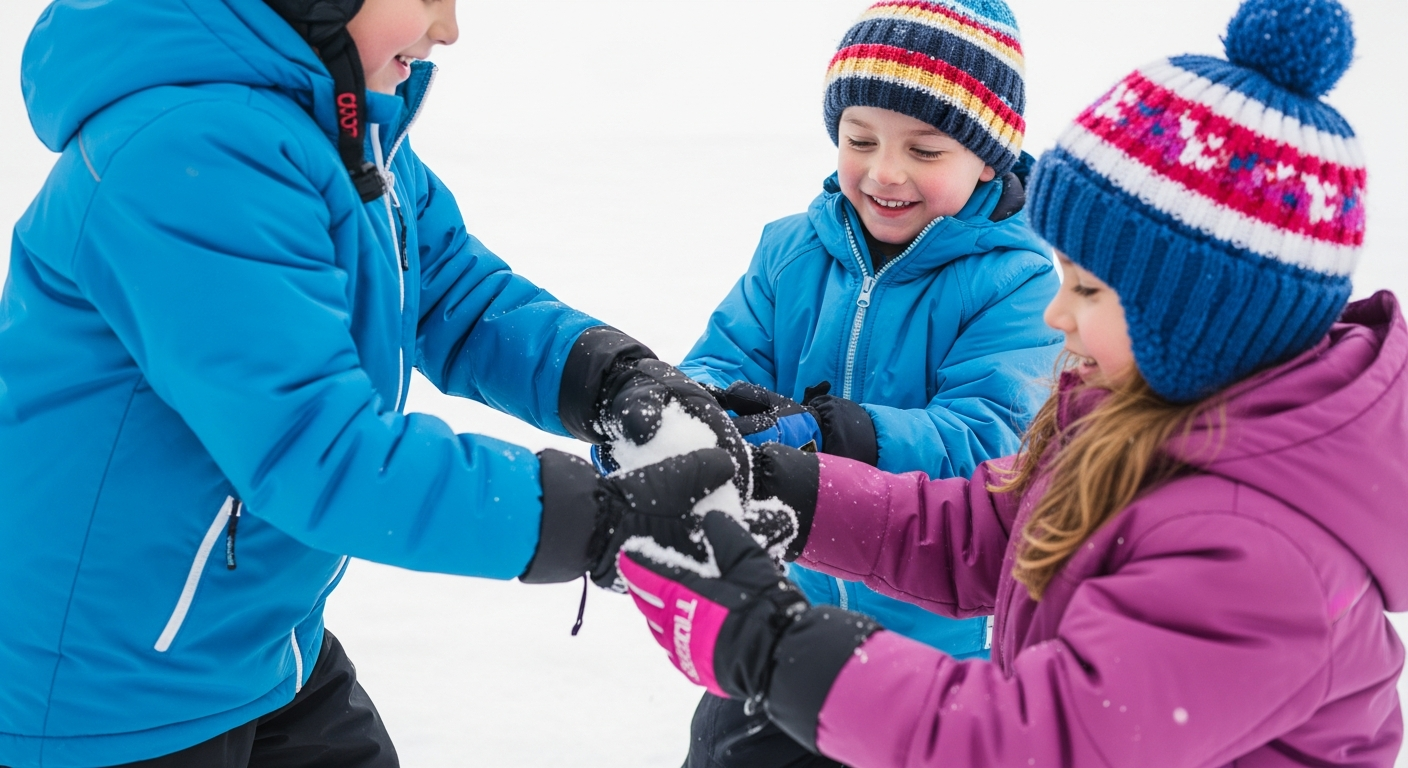
Table of Contents
- Embracing the Winter Wonderland: Outdoor Snow Day Fun
- Cozy Adventures Indoors: Active & Creative Play
- Sparking Curiosity: STEM & Sensory Activities
- Kitchen Creativity: Delicious Learning Moments
- Engaging Minds: Games, Puzzles & Stories
- Speech Blubs: Your Partner in Snow Day Communication Fun
- Making the Most of Your Speech Blubs Journey: Value & Pricing
- Conclusion
- Frequently Asked Questions (FAQ)
The unexpected hush of a snow day can bring both immense joy and a touch of parental panic. One moment, children are cheering at the news of school closures, dreaming of frosty adventures. The next, you might find yourself wondering how to keep that boundless energy channeled into something constructive and, well, fun, without resorting to endless screen time. It's a common dilemma – how do we turn an impromptu day off into an opportunity for enriching play and meaningful connection?
This blog post is your comprehensive guide to transforming those snowy days into memorable experiences filled with laughter, learning, and developmental growth. We'll explore a wide array of activities, from outdoor escapades to cozy indoor crafts and imaginative games, all designed to engage your child's mind and body. More than just beating boredom, we believe snow days offer a unique chance to foster crucial communication skills in a natural, playful environment. By blending exciting activities with purposeful language opportunities, we can turn a day off from school into a powerful catalyst for your child's speaking confidence and overall development.

Embracing the Winter Wonderland: Outdoor Snow Day Fun
When the world outside transforms into a sparkling canvas of white, it’s the perfect invitation to bundle up and embrace the magic of the season. Outdoor snow activities are not just about burning energy; they’re rich sensory experiences that naturally spark conversation and encourage descriptive language.
Building & Sculpting Snowy Masterpieces
There’s something incredibly satisfying about transforming fresh snow into a tangible creation.
- The Classic Snowman (or Snow Creature): Go beyond the traditional three-ball snowman. Challenge your child to create a snow animal, a fantastical monster, or even a mini snow village. As you build, describe the parts: “Let’s find a big snowball for the bottom, then a medium one for the middle.” Talk about textures ("This snow is fluffy," "This snow is packed"), sizes ("big, bigger, biggest"), and shapes ("a round head," "pointy ears"). Ask open-ended questions like, "What kind of hat should our snowman wear?" or "What expression should our snow creature have?"
- Snow Forts and Igloos: Encourage architectural thinking by building a fort. This activity promotes planning, spatial reasoning, and collaborative communication. Children can discuss where to place "walls" or "windows," practicing directional words like "over here," "next to," and "behind." They might even assign roles: "You be the builder, I'll be the designer!" This imaginative scenario naturally elicits language for planning and cooperation.
- Snow Art with Colors: Fill spray bottles with water and a few drops of food coloring. Your child can "paint" on the snow, creating colorful designs or even giving your snowman a vibrant outfit. This is excellent for learning colors, shapes, and action verbs ("spray," "draw," "mix"). The act of creating temporary art can lead to fascinating discussions about how colors blend and how their artwork changes as the snow melts.
Exploring & Moving in the White Landscape
The cold air and slippery surfaces add an extra layer of sensory input to outdoor play, creating unique opportunities for physical and linguistic development.

- Sledding Adventures: If you have a safe hill nearby, sledding is a thrilling way to experience the snow. Talk about the sensations: "Wow, that was fast!" "Are you ready to go up the hill again?" Use words like "slide," "speed," "gentle," "steep," and "brave." This is also a great chance to practice requesting ("Again!") and expressing excitement.
- Nature Walks in the Snow: Even a short walk around the yard can be an adventure. Point out how the snow changes familiar objects: "Look, the tree branches are sparkly!" "The evergreen needles have snow caps." Talk about animal tracks you might find, encouraging observations and predictions ("Whose tracks are these? Where do you think they're going?"). Listen to the sounds of snow – "crunchy" underfoot, the "swish" of wind through snowy branches.
- Snowball Target Practice: Instead of a chaotic snowball fight, set up targets (e.g., buckets, tree trunks) and practice aiming. This introduces counting ("How many did you hit?"), measurement ("That one went far!"), and comparative language ("Yours went further than mine!"). It also helps with gross motor skills and hand-eye coordination.
For a child who is captivated by the wonders of the outdoors, our Speech Blubs app offers a fantastic complement. Sections like "Outdoor Fun" or "Animal Kingdom" feature engaging video modeling that introduces words for weather, nature, and creatures they might encounter, making a seamless transition from real-world exploration to guided speech practice.
Cozy Adventures Indoors: Active & Creative Play
Eventually, the call of warmth (and perhaps a cup of hot cocoa!) will bring you back inside. But the fun doesn't have to stop there. Indoor activities are perfect for fostering creativity, imagination, and focused language development.
Unleashing Energy with Indoor Movement
Even when confined indoors, children need outlets for their physical energy. These activities promote gross motor skills while also being rich in language-learning potential.
- Create an Indoor Obstacle Course: Use couch cushions, pillows, blankets, tunnels, and chairs to build a course across your living room. Children can crawl under a blanket, climb over pillows, jump onto a rug, and zig-zag between chairs. This activity is a goldmine for practicing prepositions and action verbs. For a parent whose 3-year-old "late talker" loves active play, giving simple instructions like "Crawl under the table" or "Jump over the cushion" can reinforce understanding of directions and vocabulary. Our app's "Let's Get Moving" section is perfect for introducing and practicing action words like "jump," "crawl," and "spin."
- Balloon Tennis or Bowling: These activities are wonderfully simple and require minimal supplies. For balloon tennis, use paper plates as rackets and a balloon as the ball. For bowling, use empty plastic bottles or toilet paper rolls as pins and a soft ball. Both encourage turn-taking, counting, and descriptive language like "hit," "serve," "roll," "fall," "strike!" They're also great for developing hand-eye coordination.
- Indoor Scavenger Hunt: Hide objects around the house and provide clues (either verbal or picture-based). This activity targets vocabulary, comprehension of multi-step directions, and problem-solving. For instance, a clue might be, "Find something red under the couch." For younger children, a picture scavenger hunt helps them match words to objects. This can be adapted to focus on specific categories or sounds, such as finding items that start with a certain letter or are from the "kitchen" category.
Building Worlds with Imaginative Play
Snow days are ideal for fostering imaginative play, where children can create their own worlds and stories. This is where language truly blossoms.
- Fort Building Extravaganza: Blankets, pillows, chairs, and clothespins are all you need to construct an epic fort. This activity is fantastic for collaborative language, as children plan, negotiate, and describe their creation. They can assign roles ("You're the queen, I'm the knight!"), which naturally leads to dialogue and expanded vocabulary. Inside the fort, encourage imaginative scenarios like "living in a cave," "exploring a spaceship," or even an "indoor campout" with flashlights and pretend snacks.
- Puppet Show or Play Production: Use socks, paper bags, or even stuffed animals as puppets. Encourage children to invent characters, develop a simple plot, and perform for the family. This is an incredible exercise in storytelling, character development, voice modulation, and expressive language. The low-pressure environment of imaginative play can be particularly beneficial for children who are hesitant to speak in other contexts, allowing them to experiment with new words and phrases.
At Speech Blubs, we believe in the power of "smart screen time" – experiences that are active and engaging rather than passively viewed. Our app's unique "video modeling" methodology, where children learn by watching and imitating their peers, is perfectly designed for this. Whether it’s acting out a story with words from our "Speech Island" section or describing an object found in a scavenger hunt, children are actively participating, not just watching. We know that creating the tools we wished we had as children with speech problems is crucial to our mission of empowering children to speak their minds and hearts.
Sparking Curiosity: STEM & Sensory Activities
Snow days also present excellent opportunities for hands-on science, technology, engineering, and math (STEM) activities, along with sensory exploration, all of which are fertile ground for language development.
Discovering Through Science & Experimentation
These activities encourage observation, prediction, and the use of scientific vocabulary.
- Simple Science Experiments: Turn your kitchen into a lab!
- Homemade Lava Lamp: Combine oil, water, food coloring, and an effervescent tablet in a bottle. Children can describe the "bubbles," "colors," and "movement."
- Invisible Ink: Write secret messages with lemon juice or baking soda solution, then reveal them with heat or grape juice. This sparks discussions about cause-and-effect and the concept of "secret" versus "visible."
- Volcano Eruption: A classic baking soda and vinegar volcano allows children to describe the "fizzing," "bubbling," and "overflowing."
- Snow Ice Cream: Bring clean snow inside and mix it with milk, sugar, and vanilla for a delicious treat. This sensory activity involves describing textures ("cold," "fluffy," "creamy") and tastes ("sweet," "vanilla").
- Magnetic Tiles & LEGO Challenges: These building toys are fantastic for STEM learning. Challenge your child to build the tallest tower, a bridge for their toys, or a complex machine. As they build, they can describe their plans, troubleshoot problems, and use spatial language ("on top," "underneath," "beside," "diagonal").
Engaging the Senses with Creative Crafts
Sensory activities are not just fun; they help children explore the world through touch, sight, and even smell, providing rich context for vocabulary development.
- DIY Playdough or Slime: Making playdough or slime from scratch is a highly engaging sensory experience. As you mix ingredients, talk about the consistency ("sticky," "gooey," "smooth"), colors, and the process ("stir," "knead," "stretch"). For a child working on expanding their vocabulary for textures, this provides a perfect opportunity to use words like "squishy," "slippery," and "malleable." Our Sensory Play category within Speech Blubs can reinforce these words through video modeling.
- Toilet Paper Roll Crafts: Don't throw away those cardboard rolls! Transform them into animals, characters, or even miniature buildings. This simple craft encourages creativity, fine motor skills, and descriptive language as children explain what they are making and the features of their creations ("It has big eyes and a long tail!").
- Paper Snowflakes & Winter Scenes: Cutting paper snowflakes, making paper chains, or creating winter-themed collages with cotton balls and glitter are wonderful for fine motor practice and color/shape recognition. Children can describe their designs and the "snowy" effects.
These hands-on activities are incredibly beneficial for developing the foundational cognitive skills that underpin language learning. Children learn to observe, categorize, compare, and describe, all while having fun.
Kitchen Creativity: Delicious Learning Moments
Snow days often mean more time in the kitchen, and what better way to engage children than through cooking and baking? These activities are packed with opportunities for following directions, learning new vocabulary, and practicing conversational skills.
Baking & Cooking Together
From simple snacks to more involved recipes, cooking fosters a sense of accomplishment and practical life skills.
- Mug Cakes & Hot Chocolate Creations: These quick treats are perfect for little chefs. Following a recipe, children learn sequencing ("First, add the flour, then the sugar"), measurement ("one teaspoon," "half a cup"), and ingredient names. Making a hot chocolate bar with various toppings (marshmallows, whipped cream, sprinkles) encourages choice-making and descriptive language ("What kind of hot chocolate do you want? Sweet? Chocolatey?").
- Homemade Granola Bars or Rock Candy: These offer a slightly more complex culinary project. Making granola bars involves mixing, pressing, and baking, while rock candy demonstrates crystallization – a fun science lesson! Children can narrate the steps, describe the ingredients, and predict outcomes.
- "Snow Day" Mocktails: Let your child invent their own non-alcoholic drink using juices, sparkling water, and fruit garnishes. This encourages creativity, naming new concoctions, and describing tastes ("fizzy," "tangy," "sweet," "refreshing").
The kitchen is a natural environment for conversations. For a child working on expanding their vocabulary for food items or action verbs related to cooking, our "Yummy Time" section within the Speech Blubs app provides engaging video modeling for words like "mix," "stir," "pour," and "eat," making the connection between the app and real-life cooking even stronger.
Engaging Minds: Games, Puzzles & Stories
When the snow is falling, it’s a wonderful time to slow down and engage in activities that nurture cognitive skills, imagination, and, of course, communication.
Sharpening Skills with Games & Puzzles
Board games, card games, and puzzles are fantastic for developing social skills, critical thinking, and specific language abilities.
- Board Games & Card Games: Pull out your favorite family board games like Candy Land, Chutes and Ladders, or even a simple card game like Go Fish. These games teach turn-taking, following rules, counting, and problem-solving. Children practice asking questions ("Is it my turn?"), making requests ("Can I have a five?"), and expressing disappointment or excitement ("Oh no, I landed on a snake!" or "Yay, I won!"). Our blog frequently shares insights into how playing games can boost speech development.
- Word Puzzles & Tongue Twisters: Printable word searches, crosswords, or riddles can be great fun. Tongue twisters, like "She sells seashells by the seashore," are excellent for articulation practice and developing phonological awareness – the ability to hear and manipulate the sounds in language. For a child working on specific sounds, practicing tongue twisters that target those sounds (e.g., "s" or "sh" sounds) can be a fun, low-pressure way to generalize new skills. Our app's "Sounds" section can help children identify and practice individual sounds in isolation and context.
The Magic of Reading & Storytelling
A snow day is the perfect excuse to curl up with a good book or create your own narratives.
- Reading Aloud & Independent Reading: Encourage reading by creating a cozy reading nook in your fort or by the window. Reading together exposes children to new vocabulary, sentence structures, and story elements. Discuss the characters, plot, and settings, prompting comprehension and critical thinking.
- Creating Your Own Stories: Use story cubes, picture prompts, or simply imagination to invent stories together. This fosters narrative skills, creativity, and expressive language. Children can practice sequencing events, developing characters, and using descriptive language to paint vivid pictures with words.
- Kid-Friendly Podcasts & Educational Websites: For a moment of quiet engagement, explore educational podcasts or websites that offer stories, facts, or interactive learning games. These resources can expand vocabulary and general knowledge.
Speech Blubs: Your Partner in Snow Day Communication Fun
At Speech Blubs, we understand the challenges and joys of raising children, especially when it comes to communication. Our mission is to empower children to speak their minds and hearts, providing an immediate, effective, and joyful solution for the 1 in 4 children who need speech support. Our company was born from the personal experiences of our founders, who all grew up with speech problems and created the tool they wished they had.
We blend scientific principles with play into one-of-a-kind "smart screen time" experiences, offering a screen-free alternative to passive viewing (like cartoons) and a powerful tool for family connection. Our unique approach of teaching complex communication skills through our "video modeling" methodology means children learn by watching and imitating their peers. This natural learning process is backed by extensive research, showing its effectiveness in developing speech.
Think of how Speech Blubs can seamlessly integrate into your snow day activities:
- After Building a Snowman: Head inside and use our "Winter Fun" or "Body Parts" sections to review words related to your frosty friend. Your child can practice saying "hat," "carrot," or "cold" by imitating other children in the app.
- Post-Cooking Adventure: Reinforce food vocabulary and action verbs with our "Yummy Time" category, where children can describe "stirring" or "eating" their delicious creations.
- Following an Obstacle Course: Practice action verbs and prepositions with the "Let's Get Moving" category, helping your child generalize these words from physical play to verbal expression.
We are committed to fostering a love for communication, building confidence, reducing frustration, and creating joyful family learning moments. Speech Blubs is a powerful supplement to your child's overall development plan and, when applicable, professional therapy. It’s about creating an engaging, interactive learning environment where every word is a step towards expressing themselves fully. Read testimonials from other parents who have seen incredible progress with Speech Blubs.
Making the Most of Your Speech Blubs Journey: Value & Pricing
To ensure you get the most out of Speech Blubs, we offer flexible plans designed to support your family's needs.
Our Monthly plan is available at $14.99 per month.
However, for the best value and access to our full suite of features, we highly recommend our Yearly plan at just $59.99 per year. This breaks down to an incredible $4.99 per month, allowing you to save 66% compared to the monthly subscription!
The Yearly plan isn't just about significant savings; it also includes exclusive, high-value features designed to supercharge your child's communication journey:
- A 7-day free trial: Experience the full power of Speech Blubs before committing.
- The extra Reading Blubs app: Enhance literacy skills alongside speech development.
- Early access to new updates: Be among the first to explore exciting new content and features.
- 24-hour support response time: Get prompt assistance whenever you need it.
The Monthly plan does not include these fantastic benefits. We encourage you to choose the Yearly plan to get the free trial and unlock the full potential of both Speech Blubs and Reading Blubs, ensuring a comprehensive and supported learning experience for your child.
Conclusion
Snow days, far from being just interruptions, are precious opportunities. They are blank canvases for creativity, stages for imaginative play, and quiet moments for heartfelt connections. By embracing a mix of outdoor exploration, indoor activities, and focused learning, you can transform these special days into powerful building blocks for your child's development. Every snowball thrown, every fort built, and every story told is a chance to foster a love for communication and build confidence.
With Speech Blubs as your partner, you can turn screen time into an active, engaging, and speech-boosting adventure, complementing the magic of a snow day with scientifically backed, joyful learning. We're here to support you in every step, ensuring your child has the tools to speak their minds and hearts, today and every day.
Ready to embark on a journey of joyful communication with your child? Download Speech Blubs on the App Store or Google Play today! Be sure to select the Yearly plan to unlock your 7-day free trial and gain access to the full suite of features, including the Reading Blubs app and priority support. Alternatively, you can create your account on our website to get started!
Frequently Asked Questions (FAQ)
1. How can I make snow day activities educational for my child's speech?
The key is active engagement and descriptive language. As your child participates in activities like building a snowman, making slime, or baking, constantly narrate what's happening, ask open-ended questions, and encourage them to describe their actions, observations, and feelings. Focus on vocabulary, sequencing, cause-and-effect, and following directions. Use words related to senses (e.g., "cold," "squishy," "sweet") and actions (e.g., "stir," "pour," "jump").
2. What if my child is a "late talker" and I'm unsure where to start on a snow day?
For late talkers, focus on creating a low-pressure, high-engagement environment. Start with activities that are highly motivating for your child, using simple words and gestures. Model words without demanding imitation, giving them opportunities to point, gesture, or make sounds. For instance, if they love animals, play with animal toys and make animal sounds. If you're unsure whether your child could benefit from additional support, you can take our quick 3-minute preliminary screener to get a simple assessment and a free 7-day trial of our app.
3. How can Speech Blubs help during a snow day?
Speech Blubs offers "smart screen time" that complements snow day activities by reinforcing speech and language skills in a fun, engaging way. After playing outside, use sections like "Winter Fun" or "Sounds" to practice related vocabulary. After baking, try "Yummy Time" to discuss food. The app's video modeling helps children learn by imitating peers, making it an active and effective tool for practicing new words, sounds, and phrases in a joyful environment, especially when the weather keeps you indoors.
4. Are these activities suitable for children of all ages?
Yes, many of these activities can be adapted for a wide range of ages and developmental stages. For toddlers, focus on simple sensory experiences, naming objects, and basic action words. For preschoolers, introduce more complex instructions, encourage descriptive language, and foster imaginative play. For older children, incorporate more complex STEM concepts, strategic games, and elaborate storytelling. The key is to tailor the complexity and expectations to your child's individual abilities and interests.
About the author