
Fun T-Ball Games for Kids: Building Skills & Confidence
 By Speech Blubs Team•Jan 19, 2026•19 min.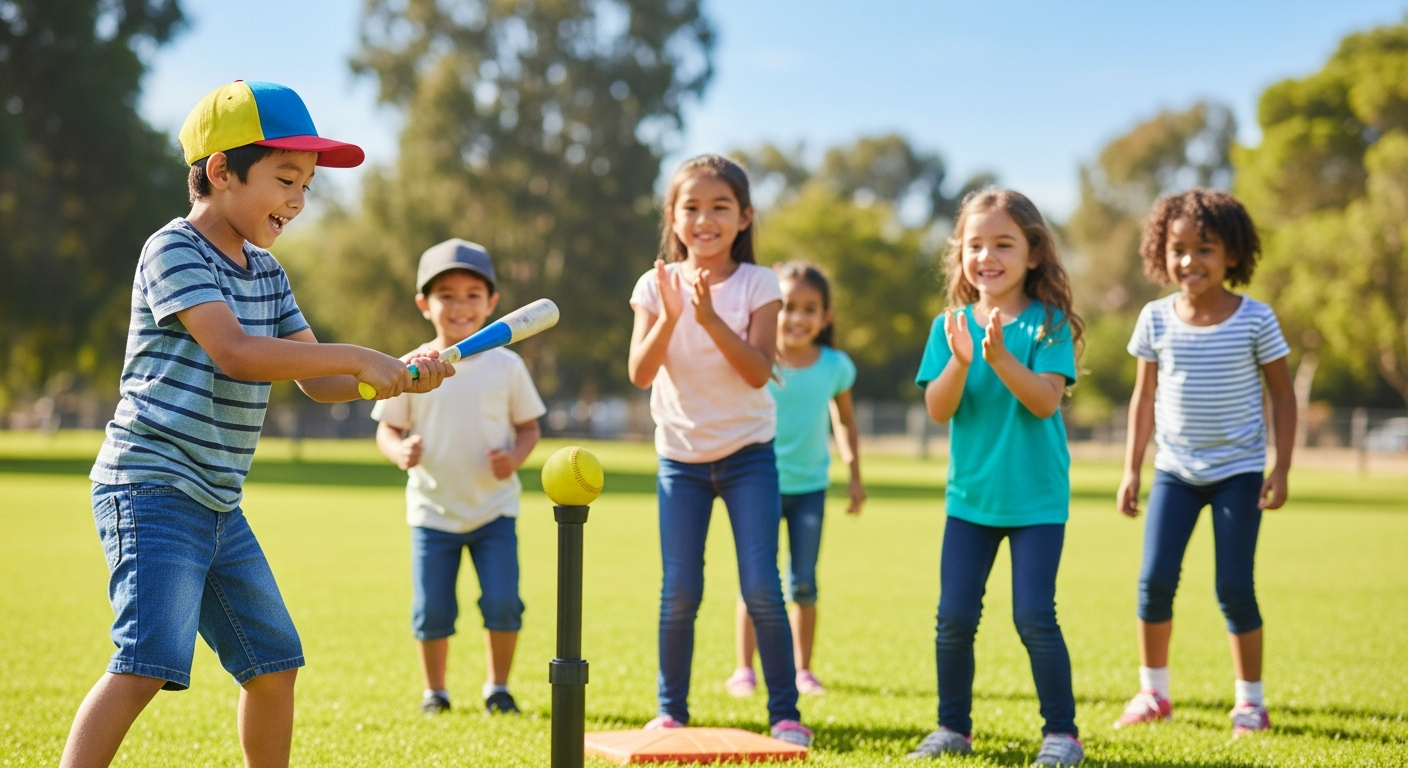
Table of Contents
- The Broader Benefits of Early Sports
- Essential Gear for Little Leaguers
- Fun T-Ball Games and Drills That Spark Joy
- Fostering Communication and Confidence: Beyond the Field
- Choosing the Right Tool for Your Child's Growth
- Conclusion
- Frequently Asked Questions
For many children, the first swing of a bat at a tee is their introduction to the thrilling world of team sports. T-ball isn't just about learning the mechanics of baseball; it's a foundational experience that shapes physical coordination, social skills, and self-confidence. But how do we ensure this initial encounter is memorable, joyful, and truly beneficial, rather than a source of frustration? The secret lies in making it overwhelmingly fun. If kids aren't enjoying themselves, the chances they'll continue with sports, or even develop a love for active play, diminish significantly.
This post will guide parents and coaches through a collection of exciting, age-appropriate T-ball games and drills designed to put the "fun" back into fundamentals. We'll explore activities that not only teach the basics of hitting, throwing, and running but also foster crucial skills like teamwork, listening, and following directions. Beyond the physical aspects, we'll delve into how these early sports experiences contribute to overall child development, including communication skills – a cornerstone of growth that we at Speech Blubs are passionate about. Ready to explore games that make T-ball unforgettable and discover tools to foster even greater growth? Download Speech Blubs today! or sign up for your free trial to support your child's communication journey.

The Broader Benefits of Early Sports
T-ball offers far more than just a chance to hit a ball. For young children aged 3-6, it's a dynamic classroom without walls, teaching life lessons through play. These early sports experiences lay critical groundwork for physical health, cognitive development, and social-emotional intelligence.
Physical Development
At its core, T-ball is a fantastic way to enhance gross motor skills. Running, swinging, throwing, and catching all contribute to better coordination, balance, and agility. It helps children develop spatial awareness – understanding where their body is in relation to other objects and people. These movements strengthen muscles, improve cardiovascular health, and build stamina, setting the stage for a physically active lifestyle. Consistent engagement in T-ball provides children with a healthy outlet for their abundant energy, contributing to better sleep patterns and overall well-being. It’s also an excellent way to refine hand-eye coordination, a crucial skill for many daily tasks beyond sports.
Cognitive Growth
Beyond the obvious physical gains, T-ball stimulates cognitive development in surprising ways. Children learn to follow multi-step instructions from coaches, understand rules, and adapt to changing game situations. They practice problem-solving when deciding where to throw the ball or how to catch it. Strategic thinking, even at a basic level, begins to emerge as they anticipate plays or remember the sequence of bases. This active engagement helps improve focus and attention span, skills that are highly transferable to academic settings. The repetition of drills, combined with playful engagement, solidifies these cognitive patterns without the child even realizing they are "learning."
Social and Emotional Learning
Perhaps one of the most significant benefits of T-ball is its impact on social and emotional development. Children learn the value of teamwork, understanding that success often requires cooperation and mutual support. They learn to share, take turns, and cheer for their teammates, fostering empathy and sportsmanship. Dealing with wins and losses, striking out, or making an error provides valuable lessons in resilience, managing emotions, and bouncing back from setbacks. The encouragement from coaches and peers builds self-esteem and confidence, which is vital for expressing oneself in all aspects of life. Children learn to communicate their needs, ask questions, and celebrate successes together, strengthening their social bonds. This is where the world of T-ball beautifully intersects with our mission at Speech Blubs: empowering children to "speak their minds and hearts."

Essential Gear for Little Leaguers
Before diving into the games, ensuring your child has the right (and safe) gear is essential. Simplicity and comfort are key for T-ball beginners.
- T-Ball Bat: Lightweight and appropriately sized for your child’s height and strength. Many leagues provide these, or you can find them easily at sporting goods stores.
- Helmet: Non-negotiable for safety during batting practice and games. Ensure it fits snugly and has proper ear flaps.
- Glove: A smaller, flexible glove that’s easy for little hands to manage. Don’t worry about breaking in a stiff leather glove; softer materials are perfect for this age.
- Cleats (Optional but Recommended): While not strictly necessary, plastic cleats can provide better traction on grass fields, reducing slips and improving stability.
- Comfortable Clothing: Loose-fitting athletic wear that allows for a full range of motion.
- Water Bottle: Staying hydrated is crucial for active kids.
- Sunscreen and Hat: Protect them from the sun, especially during outdoor practices and games.
Fun T-Ball Games and Drills That Spark Joy
Here are some of our favorite T-ball games and drills, designed to keep young players engaged, active, and eager to learn. We’ll break down each activity, its benefits, and how you can adapt it for maximum fun.
1. Running the Bases: The Victory Lap Race
Running is fundamental to T-ball, and making it a game gets kids moving with excitement. This drill is perfect for warming up and teaching the sequence of bases.
How to Play:
Gather the kids at home plate. Start by calling out each base as you lead them in a run around the diamond: "First Base!", "Second Base!", "Third Base!", and finally, a celebratory dash to "Home Plate!" Encourage exaggerated celebrations at home plate – high fives, air high fives, or even a pretend grand slam cheer. Time them if they're competitive, or just let them enjoy the sprint.
Benefits:
- Cardiovascular Health: Gets their heart rates up and bodies warmed.
- Spatial Awareness: Teaches them the layout of the baseball diamond and the sequence of bases.
- Following Directions: Reinforces listening skills as they run to named bases.
- Confidence Building: The act of running fast and celebrating success boosts self-esteem.
Pro Tip:
Turn it into a "Race to First." Line kids up at home plate and have them race to first base and back. Stand just past first base and give high-fives as they sprint past. This drill emphasizes sprinting out a ground ball. For a child who might be a "late talker," the clear, repetitive commands ("Run to first!") coupled with physical action can reinforce verb understanding, which can be subtly supported by activities in Speech Blubs that pair actions with words.
2. Partner Toss: Learning to Love Catch
Throwing and catching are cornerstone skills. This activity introduces them in a low-pressure, cooperative way.
How to Play:
Pair children up, standing about 10 feet apart. Start with softer objects like beanbags or soft foam balls if catching a baseball is too daunting initially. Emphasize proper throwing mechanics: side to the target, stepping with the opposite foot, and following through. Have them toss gently to their partner, focusing on accuracy rather than power. If you have an odd number, jump in as a partner!
Benefits:
- Hand-Eye Coordination: Crucial for both throwing and catching.
- Gross Motor Skills: Develops arm and shoulder strength and control.
- Turn-Taking & Cooperation: Essential social skills learned through shared activity.
- Confidence in Handling the Ball: Starting with softer objects reduces fear and builds confidence.
Pro Tip:
Break down the throwing motion into simple steps: "Point," "Step," "Throw." This helps visual and kinesthetic learners. For a child who struggles with sequencing actions or following multi-step commands, practicing these steps can be incredibly beneficial. Speech Blubs offers various routines and structured play activities that help children internalize sequences and follow directions, which translates well to structured sports drills.
3. Dirty Diamond: The Ball-Collecting Challenge
This is a high-energy game that combines throwing, collecting, and teamwork.
How to Play:
Divide the team into two groups. Draw a line in the outfield, placing an equal number of T-balls on each side. When you yell "Go!", each team tries to throw all the balls from their side to the other side of the line. Set a timer for 60 seconds. When the time is up, the team with the fewest balls on their side wins (meaning they have the "cleaner diamond"). Remind players to throw over or around opponents, never at them.
Benefits:
- Teamwork: Encourages working together towards a common goal.
- Throwing Practice: Lots of repetitions in a fun, competitive context.
- Quick Thinking: Players must rapidly assess where to throw and retrieve balls.
- Energy Release: A great way to burn off some steam while practicing skills.
Pro Tip:
To make it more challenging as kids improve, introduce different types of throws (e.g., underhand, overhand) or require balls to land in specific zones. The fast-paced nature of this game, coupled with clear rules and quick decision-making, helps children develop executive function skills. A child who learns to follow the rules of Dirty Diamond can also learn to navigate social cues and conversational turns, areas where Speech Blubs provides engaging support through interactive stories and social scenarios.
4. Station Work: Minimized Downtime, Maximized Engagement
Young children have short attention spans. Station work keeps them constantly engaged by rotating them through different activities. This requires assistant coaches or parent volunteers.
Station 1: Batting Practice – Hit the Target!
- Activity: Kids hit balls off a tee. To make it more exciting, set up fun targets like hula hoops, stuffed animals, or even buckets at various distances. Encourage them to aim for specific targets. For kids struggling with frustration, switch to a larger, softer ball (like a mini soccer ball) to guarantee success and build confidence.
- Focus: Hitting mechanics (hands back, feet shoulder-width, eye on the ball, level swing plane, follow-through).
- Benefits: Hand-eye coordination, focus, muscle memory, managing frustration.
- Relatable Scenario: For a parent whose 3-year-old "late talker" loves animals, having them aim for a "moo cow" target offers a fun, motivating way to practice 'moo' sounds while hitting. This kind of playful integration of sound and action is mirrored in Speech Blubs' "Animal Kingdom" section, where children imitate animal sounds and movements, reinforcing vocalizations in a joyful context.
Station 2: Fielding – Ground Ball Gurus
- Activity: Focus on ground balls. Coaches roll or softly hit grounders to the players, emphasizing getting their bodies in front of the ball, using two hands, and "alligator mouth" (glove and bare hand together). As they gain confidence, introduce very soft pop flies.
- Focus: Not being scared of the ball, proper fielding technique.
- Benefits: Agility, reaction time, hand-eye coordination, courage.
- Relatable Scenario: A child who is hesitant to field a ball due to fear might also be hesitant to try new words. The gentle, encouraging approach here, gradually building confidence, is akin to how Speech Blubs introduces new sounds and words in a supportive, play-based environment, reducing anxiety and fostering a "can-do" attitude.
Station 3: Stretching & Movement
- Activity: Lead kids through simple stretches (touching toes, arm circles, side bends) counting to ten together. Incorporate bodyweight exercises like push-ups, sit-ups, and jumping jacks, making them fun challenges.
- Focus: Flexibility, strength, body awareness, team counting.
- Benefits: Physical fitness, understanding body movement, listening to commands, rhythm and counting.
Pro Tip for Stations:
Keep groups small (3-4 kids) and rotate them every 5-7 minutes. This keeps energy high and prevents boredom. Constant movement and engagement are crucial for this age group.
5. PICKLE! (Rundown): The Ultimate Chase Game
Every T-ball practice should end with this fan-favorite! Pickle, or rundown, is a high-energy game that teaches base running strategy and fielding under pressure.
How to Play:
Two coaches stand on adjacent bases (e.g., first and second). One player starts between the bases. The coaches toss the ball back and forth, trying to tag the runner out as they go back and forth between the bases. The goal is to avoid being tagged. You can have kids go one at a time or even multiple runners at once for controlled chaos. Once a runner is tagged out, another child steps in.
Benefits:
- Agility & Speed: Great for quick changes in direction and sprinting.
- Decision-Making: Runners must decide which way to run to avoid the tag.
- Understanding Game Situations: Introduces the concept of a rundown.
- Pure Fun: Guaranteed to elicit laughter and excitement, ending practice on a high note.
Pro Tip:
Ensure coaches are gentle with tags and focus on the fun of the chase. This game teaches valuable lessons about being "stuck" and trying to find a way out, which can be a metaphor for problem-solving. It’s also a fantastic way to reinforce directional language ("Go back!", "Run to second!") in an exciting context.
6. Hit the Bucket: Aim for Accuracy
Another great throwing drill that adds a target element to make it more engaging.
How to Play:
Have all players form a large circle around a bucket. Each player takes a turn tossing a T-ball they have at the bucket, trying to get it inside. If a player hits the bucket, it counts as an "out" for the team. If a player gets the ball inside, it counts as "three outs" and the round is over. The team tries to get to three outs. You can also progress to seeing how many balls the team can get inside during a specified time.
Benefits:
- Throwing Accuracy: Focuses on precision rather than just distance.
- Strategic Aiming: Encourages players to think about their throw.
- Team Goal: Even individual turns contribute to a collective score.
Pro Tip:
Use different sized buckets or targets for varying difficulty. Encourage players to cheer each other on, whether they hit the target or not. The collective goal helps foster a sense of belonging and shared effort, similar to the collaborative learning approach in Speech Blubs where children are motivated by seeing and interacting with their peers.
Fostering Communication and Confidence: Beyond the Field
While T-ball focuses on physical skills and teamwork, it also inherently builds confidence and opens avenues for communication. Children learn to listen to coaches, ask questions, respond to teammates, and express their excitement or frustration. These are fundamental communication skills that extend far beyond the baseball diamond.
At Speech Blubs, we understand that every child deserves the opportunity to "speak their minds and hearts." Our company was born from the personal experiences of our founders, who all grew up with speech problems and created the tool they wished they had. We are committed to providing an immediate, effective, and joyful solution for the 1 in 4 children who need speech support, blending scientific principles with play into one-of-a-kind "smart screen time" experiences. We provide a screen-free alternative to passive viewing (like cartoons) and a powerful tool for family connection.
How Speech Blubs Complements T-Ball Development
Imagine a child who excels at running the bases but feels shy when it comes to expressing their thoughts or asking a teammate for the ball. This is where Speech Blubs can make a profound difference. Our unique approach teaches complex communication skills through our "video modeling" methodology, where children learn by watching and imitating their peers. This is incredibly powerful, as children are naturally inclined to mimic their peers, finding motivation and confidence in seeing others just like them successfully articulate sounds and words.
For example, a child who loves the teamwork and peer interaction in T-ball might find similar joy and motivation in Speech Blubs' "Animal Kingdom" or "Numbers" sections. They watch other kids make animal sounds or count, and then eagerly try it themselves. This active imitation fosters confidence not just in speech, but in overall self-expression. The app encourages active participation, making screen time a truly "smart" experience where learning occurs through engaging interaction, rather than passive consumption.
Our method is backed by extensive research and consistently earns top ratings for effectiveness, placing us in the top tier of speech apps worldwide. We focus on benefits like fostering a love for communication, building confidence, reducing frustration, developing key foundational skills, and creating joyful family learning moments. We understand that Speech Blubs is a powerful supplement to a child's overall development plan and, when applicable, professional therapy. It’s about building a consistent, positive experience that empowers children to find their voice both on and off the field. Empower your child to find their voice both on and off the field. Get Speech Blubs on the App Store or Google Play and start building confidence today.
Recognizing the Need for Support
Sometimes, what looks like shyness or a simple "late bloomer" can be an indication that a child might benefit from speech and language support. If your child is struggling to follow directions, express their needs, or interact verbally with peers, it might be time to consider extra help. Unsure if your child could benefit from a little extra speech support? Take our quick 3-minute preliminary screener to get a simple assessment and a free 7-day trial. It's a non-intrusive way to gain insights and formulate a next-steps plan.
Choosing the Right Tool for Your Child's Growth
Investing in your child's development, whether through sports or educational apps, is a decision that yields lifelong rewards. At Speech Blubs, we strive to make our valuable resources accessible while providing the best possible features to support your child's communication journey.
We offer two distinct subscription plans designed to fit your family’s needs:
- Monthly Plan: Priced at $14.99 per month. This plan offers access to our core features, allowing for flexibility.
- Yearly Plan: Our most popular and highly recommended option, at $59.99 per year. This breaks down to just $4.99 per month, representing an incredible 66% savings compared to the monthly plan!
Unlock Superior Value with the Yearly Plan
The Yearly plan is not just about significant savings; it's about providing a richer, more comprehensive experience that maximizes your child's potential:
- 7-Day Free Trial: Only with the Yearly plan do you get to explore the full functionality of Speech Blubs completely free for seven days. This allows you to witness firsthand the joy and progress your child can make.
- Access to Reading Blubs App: Exclusively included with the Yearly plan, Reading Blubs is an additional app designed to complement speech development by fostering early literacy skills. It's like getting two powerful developmental tools for the price of one!
- Early Access to New Updates: Yearly subscribers are the first to experience our latest features, content, and improvements, ensuring your child always has access to the cutting edge of speech development tools.
- 24-Hour Support Response Time: We prioritize our Yearly plan members with faster, dedicated customer support, ensuring any questions or concerns are addressed promptly.
The Monthly plan, while flexible, does not include these exclusive benefits, nor does it offer a free trial. To unlock these incredible benefits, including the 7-day free trial and the Reading Blubs app, we encourage you to choose our Yearly plan when you create your account. It's the best way to commit to your child's long-term communication growth and receive the fullest support from our team.
Don't just take our word for it; read inspiring testimonials from parents who have seen incredible progress with Speech Blubs.
Conclusion
T-ball offers an extraordinary pathway for young children to develop physically, cognitively, and socially. By incorporating fun, engaging games and drills, parents and coaches can ensure that this first sports experience is positive, confidence-building, and foundational for a lifelong love of activity. The skills learned on the field—from following directions and teamwork to managing emotions and celebrating successes—are invaluable.
Equally important is nurturing a child's ability to communicate effectively. Just as T-ball builds a child's confidence in their physical abilities, Speech Blubs empowers them to find their voice, articulate their thoughts, and connect with the world around them. By combining the benefits of active play with intelligent, research-backed tools, we can provide our children with the most comprehensive support for their holistic growth.
Ready to empower your child's journey, both on the T-ball field and in their communication development? Download Speech Blubs from the App Store or Google Play and start your 7-day free trial with the Yearly plan today! Give your child the gift of joyful learning and confident self-expression.
Frequently Asked Questions
Q1: What age is best for kids to start T-ball?
A1: Most T-ball leagues cater to children aged 4-6 years old. Some programs may even start as young as 3, offering a simplified introduction to the sport. The key is to ensure the environment is fun, supportive, and focused on basic motor skills rather than competitive play.
Q2: How can I keep my child engaged in T-ball if they seem easily bored or frustrated?
A2: The best strategies are variety, positive reinforcement, and focusing on fun over performance. Incorporate games like "Dirty Diamond" or "Hit the Target" to keep things dynamic. Praise effort and improvement, not just successful outcomes. If frustration arises, switch to an easier task (like hitting a larger ball) to rebuild confidence. Short, engaging stations also help minimize downtime and maintain interest.
Q3: How does Speech Blubs help with communication skills developed through T-ball?
A3: T-ball helps with listening, following directions, and expressing needs on the field. Speech Blubs complements this by directly targeting articulation, vocabulary, and sentence formation through engaging video modeling. It builds the foundational confidence in speaking that can then translate into more effective communication and social interaction with coaches and teammates in a sports setting.
Q4: Is the Speech Blubs app a substitute for professional speech therapy?
A4: Speech Blubs is a powerful, science-backed tool designed to supplement and support a child's speech and language development. While it offers incredible value and progress for many children, it is not intended to replace professional speech therapy. We always recommend consulting with a speech-language pathologist for personalized diagnosis and treatment plans. Speech Blubs can be an excellent resource to use in conjunction with therapy, providing consistent, fun practice at home.
About the author