
Fun Team Building Activities for Kids: Boost Communication & Confidence
 By Speech Blubs Team•Jan 13, 2026•20 min.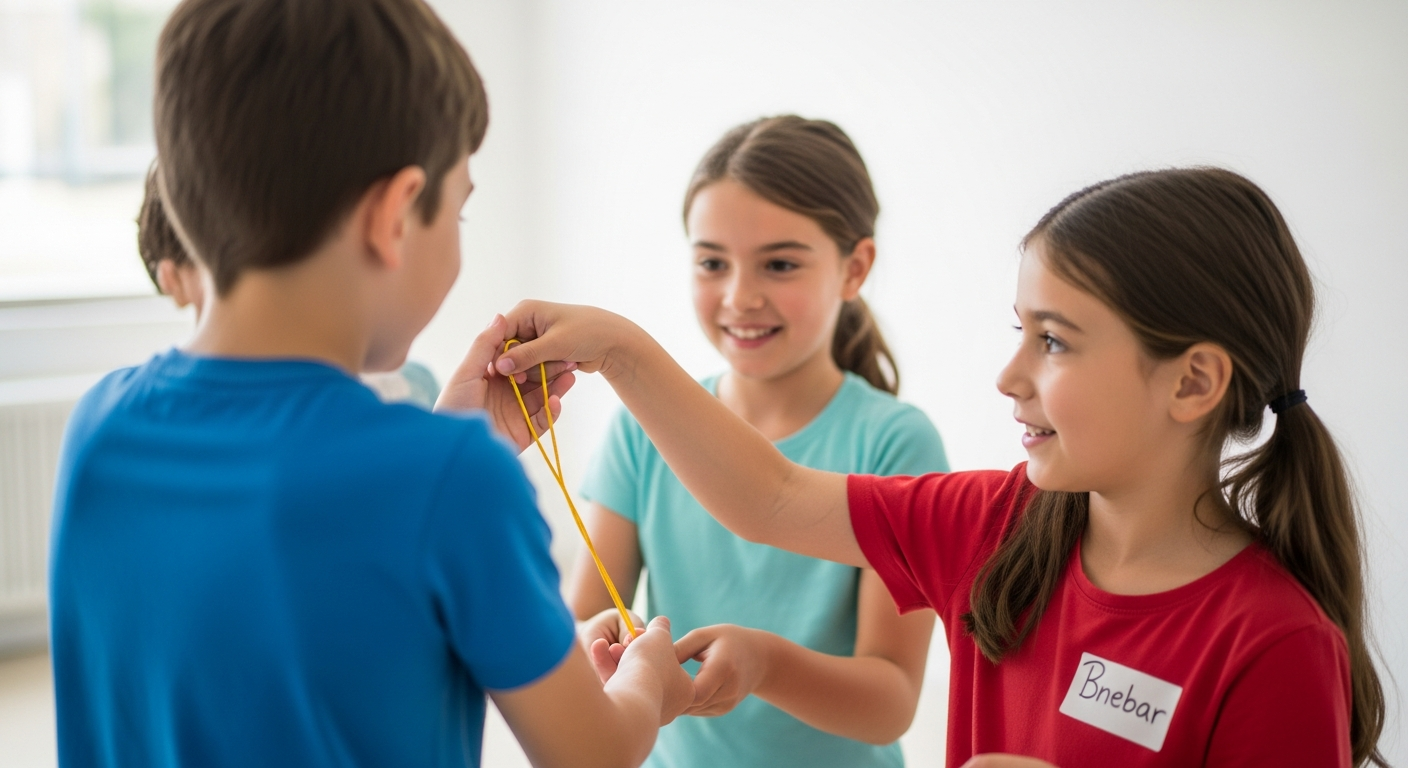
Table of Contents
- Why Team Building Matters for Kids
- Key Principles for Successful Team Building Activities
- Fun Team Building Activities for All Settings
- Integrating Communication Skills and Speech Blubs
- Maximizing Your Child's Communication Journey with Speech Blubs
- Conclusion
- Frequently Asked Questions (FAQ)
Have you ever watched a group of children struggle to work together, perhaps squabbling over a shared toy or misunderstanding a simple instruction? In a world that increasingly emphasizes individual achievement, the vital skills of teamwork and collaboration can sometimes take a backseat. Yet, these are the very foundations upon which strong friendships, effective learning, and future success are built. When kids learn to work together, they’re not just achieving a common goal; they’re building communication skills, fostering empathy, and boosting their confidence in ways that will serve them for a lifetime.
At Speech Blubs, our mission is to empower children to "speak their minds and hearts." We know firsthand the challenges some children face with communication, as our company was born from the personal experiences of our founders, all of whom grew up with speech problems and created the tool they wished they had. We believe that every child deserves the chance to express themselves fully, and while our app provides a fantastic head start, real-world team-building activities offer an invaluable playground for putting those emerging communication skills into practice. This post will delve into why team building is so crucial for young minds and share a wealth of fun, engaging activities designed to help your child develop essential social and communicative abilities.

Why Team Building Matters for Kids
Team building is more than just playing games; it's a dynamic process that cultivates a rich tapestry of social, emotional, and cognitive skills. When children engage in collaborative activities, they learn lessons that extend far beyond the playground or classroom.
Developing Communication Skills
Perhaps the most obvious benefit of team building is the boost it gives to communication. Children learn how to express their ideas clearly, listen actively to others, and understand both verbal and non-verbal cues. This dual process of speaking and listening is fundamental. For example, in a "Birthday Line-Up" activity where children must arrange themselves in chronological order without speaking, they learn to use gestures and eye contact to convey information. This builds a foundational understanding of how to communicate effectively even when words are scarce or difficult to find. Strong communication reduces frustration and helps children connect meaningfully with their peers.
Fostering Problem-Solving and Critical Thinking
Many team-building activities present challenges that cannot be solved alone. Whether it's figuring out how to untangle a "Human Knot" or strategizing the tallest "Marshmallow and Toothpick Tower," children are encouraged to think creatively, plan strategically, and adapt when initial attempts don't work. This nurtures their problem-solving abilities and resilience. They learn that "failure" is just another step towards finding a solution, encouraging a growth mindset that is invaluable in all areas of life.
Encouraging Collaboration and Cooperation
Working as part of a team requires compromise, negotiation, and a willingness to share ideas and responsibilities. Children learn to respect diverse perspectives and understand that collective effort often yields better results than individual endeavors. This is especially true in activities like the "Cup Tower Challenge," where delicate balance and synchronized movements are essential. They quickly discover that everyone's contribution is vital, fostering a sense of shared ownership and mutual respect.

Boosting Confidence and Promoting Leadership Skills
When a child contributes to a team's success, whether by offering a crucial idea or performing a key task, their self-confidence soars. Team activities also provide natural opportunities for leadership to emerge. A child might take the lead in organizing a "Scavenger Hunt" or motivating their peers during a "Hula Hoop Pass." These moments empower children, showing them they have valuable insights and abilities, and strengthening their self-image in lasting ways.
Promoting Social Inclusion and Fostering Friendships
Team-building games are excellent catalysts for social inclusion. They create structured opportunities for children to interact with peers they might not usually play with, breaking down social barriers and building empathy. The shared experience of working towards a common goal or laughing through a silly challenge creates bonds. For instance, a "Common Denominator" activity helps children discover unexpected similarities, sparking new friendships and strengthening existing ones, cultivating a profound sense of belonging.
Building Resilience and Conflict Resolution Skills
Not every team activity goes smoothly. There will be disagreements, frustrations, and moments when a challenge seems insurmountable. These are prime opportunities to build resilience—the ability to bounce back from setbacks. Furthermore, these moments allow adults to model and guide children through conflict resolution, teaching them constructive ways to navigate disagreements, voice concerns respectfully, and find amicable solutions. This ability to work through conflict is a vital life skill.
Team building activities are invaluable for developing these crucial life skills. For children who might initially find group interactions challenging, or those working on specific communication goals, the structured yet playful environment of a team activity is incredibly beneficial. For additional support in mastering foundational speech and language skills that empower confident interaction, we invite you to explore our app. Take our quick 3-minute preliminary screener to get a simple assessment and a free 7-day trial, and see how Speech Blubs can support your child's communication journey.
Key Principles for Successful Team Building Activities
To maximize the benefits of any team-building activity, consider these guiding principles:
- Age-Appropriateness: Ensure the activity matches the developmental stage and physical abilities of the children involved. What's fun for a 5-year-old might bore a 10-year-old, and vice versa.
- Clear Objectives (and Rules): Children thrive on structure. Clearly explain the goal of the activity and any rules before starting.
- Emphasis on Participation, Not Just Winning: While friendly competition can be motivating, the primary goal should be collaboration and learning. Celebrate effort, teamwork, and problem-solving, regardless of the outcome.
- Adult Guidance and Facilitation: Adults play a crucial role in setting the stage, observing dynamics, and stepping in to guide discussions or resolve minor conflicts. They can ask open-ended questions to encourage reflection on the team's process.
- Fun and Engagement: Above all, these activities should be enjoyable! The more fun children have, the more engaged they will be, and the more naturally they will absorb the intended lessons.
- Safety First: Always prioritize physical and emotional safety. Ensure the environment is safe, and the activity doesn't put anyone at undue risk or cause unnecessary embarrassment.
Fun Team Building Activities for All Settings
No matter your space or available materials, there are countless ways to foster teamwork. Here are some of our favorite fun team building activities for kids, categorized by setting and focus.
Icebreakers & Getting to Know You Activities
These are perfect for new groups or for re-energizing existing teams, focusing on discovery and initial communication.
1. Birthday Line-Up
How to Play: Challenge kids to line up in order of their birthdays (January 1st to December 31st) without speaking. They'll need to use gestures, head nods, and other non-verbal cues to communicate. For older kids, you can add a talking variation to encourage verbal communication and questioning. Teamwork Benefit: Develops non-verbal communication, observation skills, and strategic thinking under a gentle time constraint.
2. Common Denominator (or Thread)
How to Play: Divide children into small groups and give them five minutes to find one thing that everyone in their group has in common (e.g., "everyone has a pet," "everyone likes pizza," "everyone has a sibling"). They then share their commonality with the larger group. Teamwork Benefit: Encourages active listening, questioning, and finding shared connections, promoting social bonding and group identity.
3. Collaborative Storytime
How to Play: As a whole class or in small groups, provide a theme (or let them choose). The first person starts a story with four words, the next person adds four more, and so on. The story continues until everyone has contributed. Teamwork Benefit: Boosts creative thinking, sequential reasoning, and the ability to build upon others' ideas, crucial for collaborative communication. For a child who struggles with initiating conversations, this provides a structured, low-stakes way to contribute verbally.
4. Yes, No, Stand Up
How to Play: Prepare a list of simple yes-or-no questions (e.g., "Do you like chocolate?", "Is your favorite color blue?", "Do you have a pet cat?"). Read a question, and if the answer is "yes," participants stand up. If "no," they stay seated. Pause between questions to allow kids to observe who shares their answers. Teamwork Benefit: A low-pressure way to discover shared interests and connect with peers, helping children see commonalities and differences in a fun, visual way. This can be particularly beneficial for English language learners, as it uses simple direct questions.
5. Spiderweb
How to Play: Have everyone sit in a circle. The leader holds a ball of yarn, shares something about themselves (e.g., favorite food, a unique fact), and then, holding onto one end of the yarn, gently tosses the ball to someone else. That person shares something, holds onto a piece of the yarn, and tosses it again. Continue until a "spiderweb" connects everyone. Teamwork Benefit: Creates a visual representation of how everyone is connected within the group, encouraging personal sharing and active listening.
Indoor Problem-Solving & Cooperation Activities
These activities are perfect for classrooms or limited spaces, focusing on strategic thinking and coordinated action.
6. Human Knot
How to Play: Have small groups (5-10 kids) stand in a circle, reach their hands into the center, and randomly grab two different people's hands. The challenge is to untangle themselves into a single circle without letting go of anyone's hands. Teamwork Benefit: Requires immense communication, physical coordination, strategic planning, and patience. Giggles are guaranteed as they bob, weave, and climb to solve the puzzle.
7. Cup Tower Challenge
How to Play: Give each small team a rubber band with several strings tied to it (one string per team member) and a stack of plastic cups. The goal is for the team to use only the strings to manipulate the rubber band, pick up cups, and stack them into a tower without touching the cups with their hands. Teamwork Benefit: Demands precise communication, synchronized movements, and problem-solving. Children learn to direct each other ("up a little," "pull your string"), building clear verbal instruction skills.
8. Marshmallow and Toothpick Challenge
How to Play: Provide teams with a set number of marshmallows and toothpicks. Their challenge is to build the tallest, strongest, or most creative free-standing structure within a time limit. Teamwork Benefit: Encourages design thinking, structural engineering principles (sneaky physics!), and collaborative decision-making about how to best use limited resources. A child who is a visual thinker can contribute by drawing out the design, while another might be good at verbalizing the plan.
9. Blind Polygon
How to Play: Give a team a long piece of rope tied into a closed loop. Blindfold all participants (or have them close their eyes) and instruct them to form a specific geometric shape (e.g., a perfect square or triangle) using only the rope and verbal communication. They can only open their eyes once they believe the shape is complete. Teamwork Benefit: Builds trust, enhances verbal communication (especially giving clear, concise instructions), and fosters reliance on teammates' senses and directions.
10. Group Juggle
How to Play: Have the group stand in a circle. Introduce one ball (or soft tossable item). The goal is for everyone to receive and pass the ball once in a specific sequence. Once they master the sequence, introduce a second and then a third ball, requiring faster communication and coordination to keep all items in the air without dropping them. Teamwork Benefit: Develops quick thinking, memory, non-verbal cues, and dynamic communication under pressure. It highlights the importance of everyone fulfilling their role.
Outdoor Movement & Strategic Play
These activities utilize open spaces and often involve more physical movement and strategic planning.
11. Obstacle Course Relay
How to Play: Design a simple obstacle course using natural elements or playground equipment. Divide kids into pairs or small teams. One variation: one student is blindfolded, and their partner verbally guides them through the course without touching. Another: teams complete the course as a relay, cheering each other on. Teamwork Benefit: The blindfolded version builds trust and demands crystal-clear verbal instructions (e.g., "three steps forward," "turn left around the tree"). The relay fosters encouragement, quick transitions, and a shared sense of pace. For a child using directional words, this offers a natural opportunity to practice.
12. Tug-of-War
How to Play: A classic. Divide into two teams of equal size and strength. Using a sturdy rope with a midpoint marker and a center line on the ground, teams pull to try and drag the opposing team across the line. Teamwork Benefit: Pure collective effort and synchronization. It's a physical demonstration of how combined strength, rhythm, and encouragement lead to success.
13. Hula Hoop Pass
How to Play: Have the entire class form a circle and hold hands. Place a hula hoop on one student's arm. The goal is to pass the hula hoop all the way around the circle, over their bodies, without anyone letting go of hands. Teamwork Benefit: Requires flexible thinking, physical coordination, and non-verbal problem-solving as they twist and maneuver to get the hoop past each person.
14. Caterpillar Race
How to Play: Divide into teams of 4-10. Each team forms a line, with everyone placing their hands on the shoulders of the person in front. On "go," they crouch down and move forward as a single unit, like a caterpillar, without letting go. Teamwork Benefit: Emphasizes synchronized movement, maintaining formation, and responding to the group's collective pace, building a strong sense of unity.
15. Relay Races with a Twist
How to Play: Set up a traditional relay race but add silly or challenging "twists" to each leg: crab walk, backward run, balancing a beanbag, hopping on one foot, or carrying a water balloon between knees. Teamwork Benefit: Encourages playful competition, adaptability, and lots of laughter. Kids learn to cheer for everyone, celebrating effort and humor.
Creative & Expressive Activities
These activities tap into imagination and artistic expression, using collaborative methods.
16. Group Art Projects
How to Play: Provide a large canvas, mural paper, or separate canvases that will eventually form a single larger piece. Give teams a theme or allow free expression with various art supplies. The challenge is to create a cohesive piece together. Teamwork Benefit: Fosters shared vision, negotiation (whose idea goes where?), sharing resources, and appreciation for different artistic styles. The final product is a testament to their collective creativity.
17. Puppet Shows
How to Play: Provide simple materials (paper bags, socks, craft supplies) for teams to create puppets. Then, challenge them to brainstorm a story, write a simple script, assign roles, and perform a show. Teamwork Benefit: Builds storytelling skills, character development, scriptwriting, and performance cooperation. It allows shy children to express themselves safely behind a puppet character. For a child learning new vocabulary, this is a fun way to use those words in a creative context.
18. Improv Games
How to Play: Simple improv games like "One Word Story" (each person adds one word to build a collective story) or "Freeze Frame" (one person strikes a pose, another joins and adds to the scene, then a third, and so on). Teamwork Benefit: Encourages quick thinking, active listening, building on others' ideas, and letting go of perfectionism. It's all about spontaneous collaboration and embracing the unexpected.
19. Cooking Class for Kids
How to Play: Choose a simple, kid-friendly recipe (mini pizzas, fruit skewers, decorated cookies). Divide tasks among small groups (chopper, mixer, decorator, clean-up crew). Teamwork Benefit: Practical application of teamwork. Kids learn to follow instructions, share tools, measure accurately, and work together towards a delicious shared reward. Few things bring people together like making and sharing food.
20. STEM Building Challenges
How to Play: Give teams limited materials like spaghetti and marshmallows, LEGOs, or craft sticks and glue, and challenge them to build something specific (e.g., the tallest free-standing tower, a bridge that can hold a specific weight, a vehicle). Teamwork Benefit: Integrates scientific principles with creativity and problem-solving. Children learn to design, test, adapt, and refine their creations collaboratively, understanding cause and effect.
Adventure & Exploration Activities
These activities provide a sense of discovery and mystery, requiring teams to combine intellect and navigation.
21. Scavenger Hunts
How to Play: Create a list of clues or items for teams to find, either indoors or outdoors. The clues can be riddles, pictures, or tasks. The first team to complete the hunt or find all items wins. Teamwork Benefit: Develops problem-solving, critical thinking, observation skills, and strategic division of labor. Kids learn to communicate effectively to interpret clues and navigate their environment.
Integrating Communication Skills and Speech Blubs
While team-building activities provide invaluable real-world practice, some children need extra support to build foundational speech and language skills. This is where Speech Blubs shines as a powerful supplement.
Our unique "video modeling" methodology means children learn by watching and imitating their peers, not just static animations or adult instructors. This approach is rooted in scientific principles, leveraging the power of "mirror neurons" in the brain. When a child sees another child performing a speech exercise or making a sound, their brain activates as if they are doing it themselves, making imitation more natural and effective. This provides a screen-free alternative to passive viewing (like cartoons) and a powerful tool for family connection, truly making it "smart screen time." Our research shows that Speech Blubs is highly effective, placing us in the top tier of speech apps worldwide. You can learn more about our scientific methodology and high MARS scale rating on our research page.
Consider a child who is a 'late talker' and struggles with consonant sounds. While a team activity like "Storytime" encourages verbal contribution, Speech Blubs offers a low-pressure, engaging environment to practice those specific sounds first. For instance, in our 'Animal Kingdom' section, a child can practice 'moo' or 'baa' sounds, or learn words like "bear" or "monkey" by imitating their peers. Then, when they participate in an animal-themed scavenger hunt, they have the confidence and vocabulary to contribute meaningfully, using their newly practiced sounds and words to communicate with their team. This creates joyful family learning moments, where foundational skills learned in the app are seamlessly applied in real-life, collaborative play. We are committed to providing an immediate, effective, and joyful solution for the 1 in 4 children who need speech support, blending scientific principles with play.
Maximizing Your Child's Communication Journey with Speech Blubs
Investing in your child's speech and language development is one of the most impactful decisions you can make. At Speech Blubs, we've designed our app to be an accessible, engaging, and scientifically-backed tool to help your child "speak their minds and hearts."
We offer flexible plans to suit your family's needs:
- Monthly Plan: For $14.99 per month, you get access to our core features, supporting your child's daily speech practice.
- Yearly Plan: For just $59.99 per year, this plan offers incredible value, breaking down to only $4.99 per month! This is our best value plan, allowing you to save 66% compared to the monthly subscription.
The Yearly Plan isn't just about savings; it unlocks an enhanced experience designed for long-term progress and maximum benefit:
- 7-Day Free Trial: Try out all our premium features completely risk-free for a full week.
- Exclusive Reading Blubs App: Gain access to our companion app, Reading Blubs, designed to further support literacy and language development.
- Early Access to New Updates: Be among the first to experience new features and content as they are released.
- 24-Hour Support Response Time: Get priority assistance from our dedicated support team whenever you need it.
The Monthly Plan does not include these additional benefits, making the Yearly Plan the clear choice for families committed to their child's comprehensive communication journey.
Ready to get started on this empowering path? We encourage you to choose the Yearly plan to unlock the free trial and the full suite of features that will support your child's communication growth. Begin your 7-day free trial and experience the difference today!
Conclusion
Team building activities are far more than just fun and games; they are powerful catalysts for holistic child development. By engaging in collaborative play, children refine their communication skills, hone their problem-solving abilities, build confidence, and forge stronger social connections. These experiences provide the real-world context where foundational language skills, often nurtured in supportive environments like the Speech Blubs app, truly flourish.
From the structured conversations in a "Common Denominator" activity to the non-verbal cues of a "Birthday Line-Up," every team challenge is an opportunity for growth. They teach resilience, encourage empathy, and demonstrate the incredible power of working together. These are life skills that equip children not just for school, but for navigating the complexities of friendships, family, and future endeavors.
At Speech Blubs, we are dedicated to complementing these vital real-world interactions by providing a joyful, effective tool for speech and language development. Our app empowers children to find their voice, giving them the confidence to speak their minds and hearts in every team, every friendship, and every conversation.
Don't wait to give your child the gift of confident communication and joyful collaboration. Ready to make a real difference? Download Speech Blubs on the App Store or Google Play today. For the best value and access to all our exclusive features, remember to select the Yearly plan to begin your free 7-day trial!
Frequently Asked Questions (FAQ)
1. What age are these team building activities suitable for?
Many of the activities listed are adaptable for a wide range of ages, from preschoolers to pre-teens. The key is to adjust the complexity, rules, and level of adult guidance. For younger children, focus on simpler games with clear, repetitive instructions and shorter durations. For older children, you can introduce more complex problem-solving, strategic elements, and allow for more independent planning. The benefits of teamwork are universal, so find activities that match your child's developmental stage and interests.
2. How do team building activities help with communication development?
Team building activities naturally create situations where children must communicate to succeed. They encourage active listening as children receive instructions, verbal expression as they share ideas or ask questions, and non-verbal communication through gestures, facial expressions, and body language. These interactions provide practical experience in conveying messages clearly, understanding others' perspectives, negotiating, and resolving misunderstandings—all critical components of effective communication.
3. Do I need special materials for these activities?
Many fantastic team building activities require minimal or no special materials, utilizing everyday items or simply the children themselves. For example, "Human Knot," "Birthday Line-Up," and "Common Denominator" need no props. Others might use simple items like a ball of yarn, plastic cups, marshmallows, toothpicks, or a hula hoop. The emphasis is on creativity and collaboration, not expensive equipment. Always check the activity description for suggested materials, but feel free to improvise with what you have!
4. How does Speech Blubs fit into my child's communication development alongside team activities?
Speech Blubs acts as a powerful foundational tool that complements the real-world practice gained from team activities. For children who are developing their speech and language skills, the app provides a safe, engaging, and scientifically-backed environment to practice specific sounds, words, and sentences through our unique video modeling technique. This helps build the confidence and vocabulary needed to participate more fully and expressively in group settings. Think of Speech Blubs as the practice ground where skills are honed, and team activities as the exciting arena where those skills are put into joyful, meaningful action.
About the author