
Fun Theatre Games for Kids to Boost Speech & Confidence
 By Speech Blubs Team•Jan 19, 2026•20 min.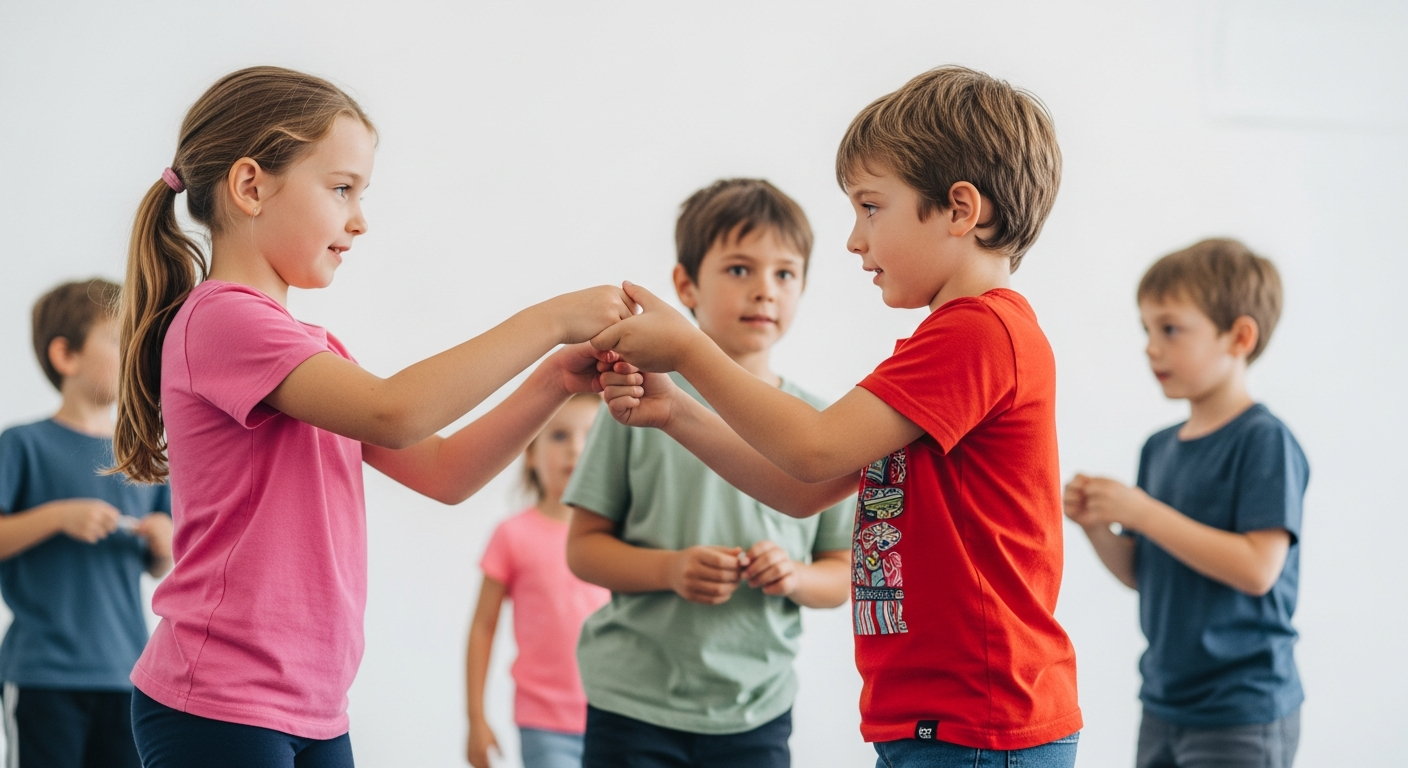
Table of Contents
- Introduction
- The Magic of Play: Why Theatre Games Transform Communication
- Warming Up the Voice and Mind: Games for Articulation and Focus
- Body Language & Emotions: Acting Without Words
- Crafting Stories and Characters: Igniting Imagination
- Building Confidence: Stepping into the Spotlight
- Collaborative Creativity: Games for Group Harmony
- Speech Blubs: Your Partner in Communication Development
- Making the Most of Speech Blubs: Pricing and Value
- Conclusion
- FAQ
Introduction
Have you ever watched a child lost in a world of make-believe, effortlessly transforming into a roaring lion, a soaring superhero, or a shy princess? Children are natural performers, using their voices, bodies, and imaginations to explore the world around them. Yet, for some children, finding the words to express these rich inner worlds can be a challenge. That's where the magic of theatre games comes in. These aren't just for aspiring actors; they are powerful, playful tools that can dramatically enhance a child's communication skills, emotional intelligence, and self-confidence, all while fostering invaluable family connection.
At Speech Blubs, we believe every child deserves to "speak their minds and hearts." This conviction is deeply personal to us, as our founders grew up facing their own speech challenges and built the very tool they wished they had. We understand the profound impact that engaging, effective, and joyful solutions can have for the 1 in 4 children who need speech support. This post will delve into a treasure trove of fun theatre games for kids that can unlock vocal potential, build expressive confidence, and strengthen social bonds. We'll also show you how our scientifically-backed app complements these activities, turning screen time into "smart screen time" that prepares children for richer, more meaningful interactions. Get ready to discover how play can transform communication for your child.

The Magic of Play: Why Theatre Games Transform Communication
Theatre games are more than just fun ways to pass the time; they are dynamic platforms for holistic child development. They invite children into a safe, imaginative space where they can experiment with language, emotions, and social dynamics without the pressure of "getting it right" in real-world scenarios. The benefits extend far beyond the stage, seeping into everyday interactions and building crucial life skills.
Consider these profound impacts:
- Vocal Projection and Articulation: Many games inherently require children to speak louder, clearer, and with more varied tones, directly improving their pronunciation and confidence in using their voice.
- Emotional Intelligence: By stepping into different characters and acting out various scenarios, children learn to identify, express, and understand a wide range of emotions, fostering empathy and self-awareness.
- Social Skills and Teamwork: Group-based theatre games necessitate active listening, cooperation, negotiation, and turn-taking, essential skills for successful social interactions.
- Problem-Solving and Creative Thinking: Improvisation and imaginative play challenge children to think on their feet, come up with innovative solutions, and build narratives.
- Self-Confidence and Self-Expression: The act of performing, even for a small audience, builds self-esteem and empowers children to express their unique personalities and ideas.
At Speech Blubs, our entire philosophy revolves around blending scientific principles with the power of play. We know that children learn best when they are engaged and having fun. That's why we champion activities like theatre games, which naturally align with our mission to provide immediate, effective, and joyful solutions for communication development. We offer a screen-free alternative to passive viewing, making family connection a powerful component of every child's learning journey.
Warming Up the Voice and Mind: Games for Articulation and Focus
Before any grand performance, a good warm-up is essential. These games prepare children's vocal cords, minds, and bodies for the exciting communication challenges ahead.

Tongue Twisters: The Art of Clear Speech
Tongue twisters are a delightful way to hone articulation and enunciation. They are sequences of words or sentences that are purposefully difficult to pronounce rapidly due to their similar sounds.
- How it works: Start by saying a tongue twister slowly, focusing on each sound. Gradually increase speed as pronunciation improves. Examples: "She sells seashells by the seashore," "Peter Piper picked a peck of pickled peppers."
- Benefits: Improves diction, clarity of speech, and the ability to distinguish between subtle phonetic differences. This helps children pay attention to the individual sounds within words, crucial for clear communication.
- Relatable Scenario: For a child who tends to mumble or rush their words, regular practice with tongue twisters can slow them down and encourage precision. Imagine a child who struggles with 's' and 'sh' sounds; working on "She sells seashells..." helps isolate and practice those specific sounds in a playful context.
- Speech Blubs Connection: Many activities within Speech Blubs are designed to help children practice specific sounds and build their vocabulary through engaging, interactive exercises. This foundational work makes tackling tongue twisters even more accessible and fun. Our unique video modeling methodology allows children to watch and imitate their peers producing sounds and words, reinforcing correct mouth movements and sound production. Why not download Speech Blubs today and see how it can enhance your child's articulation journey?
Gibberish: Unleashing Spontaneity and Expressive Sounds
Gibberish is the art of communicating using made-up, nonsensical sounds and utterances in place of real speech.
- How it works: In pairs or small groups, children communicate a scene or emotion using only made-up sounds and gestures. They can use as many strange, random sounds as they like.
- Benefits: Encourages improvisation, embracing randomness, and developing non-verbal communication skills through body language and vocal tone. It allows children to experiment with the melody and rhythm of speech without the pressure of forming correct words.
- Relatable Scenario: This game is fantastic for a shy child who might feel inhibited by standard vocabulary. It gives them permission to make silly sounds and be spontaneous, building confidence in vocal expression in a low-pressure environment. It's also great for helping children understand that meaning can be conveyed through tone and gesture, even without words.
- Speech Blubs Connection: Before engaging in full gibberish conversations, children can build their confidence in producing a wide range of sounds and vocalizations through our app's diverse prompts and activities. These exercises prepare them to explore the expressive possibilities of their voice, which is a key component of effective communication.
Zip, Zap, Zop: Sharpening Focus and Reaction
This energetic warm-up game is a classic for building focus, reaction time, and group awareness.
- How it works: Children stand in a circle. One person starts by clapping their hands together and pointing to another person while saying "Zip." The person who was "Zipped" then "Zaps" someone else by clapping and pointing, saying "Zap." A "Zoom" sends the energy to someone across the circle. Additional rules can be added, like no two "Zaps" or "Zooms" in a row.
- Benefits: Boosts concentration, quick thinking, and auditory processing. It enhances group cohesion and the ability to respond quickly to cues.
- Relatable Scenario: This is a perfect activity for getting a group of fidgety children energized and attentive before transitioning to a more complex scene or discussion. It teaches them to be present and responsive within a group setting.
Body Language & Emotions: Acting Without Words
Communication isn't just about the words we say; it's also profoundly influenced by our body language, facial expressions, and emotional cues. These games help children master the art of non-verbal communication.
Mirror Mirror: Imitating Movement and Expression
A fantastic partner game for practicing observation and imitation skills.
- How it works: Children pair up, with one designated as the leader and the other as the mirror. Facing each other a few feet apart, the leader makes slow movements and expressions that the mirror must mimic precisely and simultaneously. The goal is for it to look like one person standing in front of an actual mirror. After a few minutes, roles switch.
- Benefits: Develops keen observational skills, body awareness, empathy, and strengthens non-verbal communication. It helps children understand how subtle shifts in movement and expression convey meaning.
- Relatable Scenario: This game is incredibly beneficial for a child who struggles with understanding or producing appropriate facial cues. By actively practicing mirroring, they can internalize and better comprehend emotional expressions and body language. For example, if a child struggles to show excitement, they can practice mirroring an enthusiastic leader.
- Speech Blubs Connection: Our app's core video modeling methodology directly supports this skill. Children watch real peers performing specific sounds and actions, encouraging imitation of mouth movements, facial expressions, and gestures. This "smart screen time" provides a powerful foundation for the mirror game. You can learn more about the science behind our approach and how it helps children on our research page.
Acting to Music: Expressing Emotions Through Movement
This activity encourages children to explore and express emotions without relying on words.
- How it works: Play different genres or moods of music (e.g., upbeat pop, dramatic classical, calming instrumental). Children listen and then perform movements and expressions in response to how the music makes them feel. No talking allowed, just movement.
- Benefits: Builds emotional intelligence, fosters non-verbal expression, and helps children understand how music can evoke and convey different moods. It provides a safe outlet for emotional exploration.
- Relatable Scenario: For children who find it difficult to articulate their feelings, acting to music can be a transformative experience. A child struggling with anger can express it through powerful, stomping movements, while a child processing sadness might move slowly and deliberately. This gives them a creative avenue for emotional release and understanding.
- Speech Blubs Connection: Our app includes activities that help children identify and label emotions. By giving children the vocabulary for feelings (happy, sad, angry, surprised), these games become even richer, allowing them to connect their physical expressions with specific emotional labels.
Body Sculpture Olympics (or 10-Second Object): Creative Freeze Frames
This fast-paced game challenges groups to use their bodies to create a unified image.
- How it works: Divide children into small groups. Call out an object or scenario (e.g., "washing machine," "a stormy sea," "a proud peacock"). Give them a short countdown (e.g., 10 seconds) to form a freeze frame using their bodies to depict the given stimulus. Shout "Freeze!" and have groups hold their poses.
- Benefits: Encourages collaborative creativity, problem-solving under pressure, non-verbal storytelling, and quick thinking. It helps children understand how to convey meaning visually and physically as a team.
- Relatable Scenario: This game is excellent for helping children with limited verbal expression communicate complex ideas or concepts visually. A group depicting a "washing machine" might have one child as the drum, another as the agitator, and others as the spinning clothes, all working together silently to create a coherent image.
Crafting Stories and Characters: Igniting Imagination
Imagination is the bedrock of creativity and a powerful driver for language development. These games encourage children to weave tales, build worlds, and step into the shoes of diverse characters.
Let's Pretend (Silent Scenes): Teamwork in Storytelling
This game fosters collaborative storytelling and non-verbal communication.
- How it works: Divide children into small groups. Each group silently creates and acts out a short scene (e.g., "a trip to the grocery store," "a day at the park," "a visit to the doctor"). The other groups watch and try to guess what the scene was about.
- Benefits: Promotes cooperation, teamwork, non-verbal communication, and imaginative play. It also develops narrative understanding and the ability to infer meaning from actions and expressions.
- Relatable Scenario: This is an excellent improv game for children because it teaches them how to cooperate and work as a team—two of the most important skills to harness while acting or performing. For a child who struggles with initiating conversations, this game provides a structured way to participate in storytelling through action.
Write a Play Day: From Imagination to Script
Encourage budding playwrights and storytellers by dedicating time to creating their own narratives.
- How it works: Children, individually or in small groups, invent characters, establish a setting, imagine different scenarios, and write the dialogue for a short play. They can then act it out.
- Benefits: Fosters imagination, creative thinking, problem-solving, and self-reflection. It builds confidence as children create and perform their original work.
- Speech Blubs Connection: Many sections within the Speech Blubs app, such as "Sing Along" activities or "What's Wrong?" scenarios, encourage narrative thinking and vocal expression. These activities build the cognitive and linguistic skills necessary for children to conceptualize and articulate their own stories and dialogues. We're committed to helping children speak their minds and hearts, and playwriting is a wonderful extension of that mission.
Space Objects: Transforming the Ordinary
This game sparks imagination by challenging children to see everyday items in new ways.
- How it works: One child holds an imaginary object and uses it for a specific purpose (e.g., a magic wand). They then pass the same imaginary object to another child, who must transform it into something completely different and use it (e.g., a toothbrush). This continues around the circle.
- Benefits: Develops imagination, abstract thinking, and descriptive language. It encourages spontaneity and divergent thinking.
- Relatable Scenario: Great for children who tend to be literal thinkers, as it pushes them to think outside the box and find new possibilities for familiar items, strengthening their cognitive flexibility.
Building Confidence: Stepping into the Spotlight
For many children, speaking in front of others can be daunting. These games provide low-stakes opportunities to practice presenting, performing, and owning their unique presence.
The Expert: Mastering Presentation Skills
This game helps children become comfortable speaking in front of an audience.
- How it works: Each child takes a turn acting as an "expert" on a chosen or assigned subject (e.g., "expert on dinosaurs," "expert on making cookies," "expert on superheroes"). They present their topic to the "audience" for a minute or two.
- Benefits: Builds comfort with public speaking, encourages clear vocal projection, and helps children organize their thoughts for presentation. It also boosts confidence in sharing knowledge.
- Relatable Scenario: This is a game-changer for children who experience anxiety when speaking in front of groups. By acting as an expert, they can distance themselves slightly from their own shyness and gain valuable practice in a supportive environment. Parents can play this at home, turning family dinner conversations into mini-presentations.
- Speech Blubs Connection: Speech Blubs is designed to build foundational communication skills that empower children to express themselves confidently. Our diverse range of activities, focusing on everything from articulation to storytelling, creates a strong base for these kinds of speaking exercises. We want children to feel confident enough to share their unique perspectives, whether in a game of "The Expert" or in everyday life.
Fashion Show: Owning the Stage
Costumes and self-expression go hand-in-hand, and this game leverages children's natural love for dressing up.
- How it works: Children pick out fun outfits (from a dress-up box or their own closet) and then walk down a designated "runway" (like a hallway). They can walk confidently as themselves or embody a character related to their outfit. Others can cheer them on or provide playful commentary.
- Benefits: Encourages self-expression, builds confidence in being "on stage" or in front of an audience, and helps children connect movement with character. It's a joyful way to practice presence.
- Relatable Scenario: For a child who might be hesitant to try new things or put themselves out there, a fun fashion show at home provides a safe and silly way to build stage presence and confidence in their own style. It teaches them to "own" their space.
Hot Seat: Becoming a Character
This classic drama game encourages quick thinking and character development.
- How it works: One child sits in a "hot seat" at the front of the room and assumes the role of a specific character (real or imaginary, historical figure, animal, etc.). The other children, acting as the audience, ask them questions, and the "character" in the hot seat must answer in character.
- Benefits: Boosts improvisation skills, encourages quick thinking, deepens character development, and fosters perspective-taking. It's a powerful way to understand different viewpoints.
- Relatable Scenario: Excellent for a child who needs practice with social interaction and maintaining a consistent persona. It challenges them to think deeply about what a character would say, do, and feel in various situations.
Collaborative Creativity: Games for Group Harmony
Theatre is often a collaborative art form, and many games focus on building teamwork, listening skills, and the ability to create something together.
Human Knot: Untangling Together
This physical puzzle fosters teamwork and non-verbal communication.
- How it works: Children stand in a small circle (4-6 per group). Everyone reaches into the center with both hands and grabs two different hands from two different people, ensuring they don't grab the hand of the person directly next to them. The goal is then to "untangle" the knot without letting go of anyone's hands, forming a circle or a line.
- Benefits: Promotes teamwork, problem-solving, communication (often non-verbal), spatial awareness, and patience. It highlights how individual movements affect the entire group.
- Relatable Scenario: This game is fantastic for teaching children negotiation and collaborative problem-solving in a fun, physical way. It emphasizes the importance of working slowly and carefully, with an awareness of how their movements affect others. For a classroom or family where siblings struggle to cooperate, this provides a tangible, shared goal.
Yes, And!: The Foundation of Improvisation
"Yes, And!" is arguably the most fundamental rule of improvisation, teaching active listening and building on others' ideas.
- How it works: Two or more players create a story or a scene. The first person says a sentence to start. The next person must accept what the first person said ("Yes...") and then add a new piece of information to the story or scene ("...and..."). This continues, building a narrative together. For example, "I baked a cake today!" "Yes, and it was shaped like a dragon!"
- Benefits: Cultivates active listening, acceptance of others' ideas, cooperative storytelling, and spontaneity. It helps children overcome the urge to block or negate ideas, fostering creative flow.
- Relatable Scenario: This is incredibly useful for children who tend to say "no" or get stuck when asked to contribute ideas. It gently guides them to expand on existing ideas, building confidence in collaborative creative processes.
Speech Blubs: Your Partner in Communication Development
At Speech Blubs, we are passionate about empowering children to "speak their minds and hearts." Our founders' personal journeys with speech challenges instilled in us a deep commitment to providing an immediate, effective, and joyful solution for families. We know that the journey of communication development is unique for every child, and we're here to support every step of the way.
Our app is built on robust scientific principles, with a particular focus on our unique video modeling methodology. Children learn by watching and imitating their peers, a powerful and natural way to acquire complex communication skills. This "smart screen time" is designed to be highly interactive, engaging, and a stark contrast to passive viewing like cartoons. It’s a powerful tool for family connection, creating shared moments of learning and joy.
Theatre games, as we've explored, are incredible for fostering expressive skills, confidence, and social interaction. Speech Blubs complements these activities beautifully by building foundational speech and language skills. Whether your child is working on specific sounds, expanding their vocabulary, understanding emotions, or developing storytelling abilities, our app provides a playful and structured environment for practice.
If you're wondering if your child could benefit from extra support, we invite you to take our quick 3-minute preliminary screener. It involves 9 simple questions and provides an assessment along with a personalized next-steps plan. It’s a great way to gain insight and even get started with a free 7-day trial of our app! See what other parents are saying about their child's success with Speech Blubs by visiting our testimonials page.
Making the Most of Speech Blubs: Pricing and Value
We believe in transparency and providing exceptional value to every family. To help you integrate Speech Blubs into your child's communication journey, we offer flexible subscription options:
- Monthly Plan: Get started for $14.99 per month. This plan provides full access to the Speech Blubs app’s core features.
- Yearly Plan: Our most popular and highly recommended option, priced at just $59.99 per year. This breaks down to an incredible value of just $4.99 per month, allowing you to save 66% compared to the monthly plan!
The Yearly Plan isn't just about saving money; it unlocks an even richer experience with exclusive, high-value features designed to maximize your child's development:
- A 7-day free trial: Experience the full Speech Blubs app before committing, giving you ample time to explore all its benefits.
- The extra Reading Blubs app: An amazing bonus to support early literacy and phonological awareness, seamlessly complementing speech development.
- Early access to new updates: Be among the first to experience our latest features and improvements.
- 24-hour support response time: Get prompt assistance whenever you need it from our dedicated support team.
We strongly encourage you to choose the Yearly plan to take advantage of the 7-day free trial and unlock the full suite of features, ensuring your child gets the most comprehensive support on their communication journey. It's the best way to empower your child's voice and heart.
Conclusion
The world of theatre games offers an unparalleled playground for children to develop essential communication skills, build confidence, and deepen their understanding of themselves and others. From mastering articulation with tongue twisters to expressing complex emotions through movement, these activities lay a joyful foundation for lifelong learning and connection. They transform the abstract challenge of communication into tangible, engaging play.
At Speech Blubs, we are proud to be a part of this transformative journey. Our commitment to empowering children to "speak their minds and hearts" drives everything we do. By blending scientific principles with playful, interactive experiences like our unique video modeling, we offer "smart screen time" that complements the magic of theatre games. Together, these tools create a holistic, supportive environment where every child can find their voice and shine.
Ready to unlock your child's full communication potential? Begin your 7-day free trial today! Download Speech Blubs on the Apple App Store or get it on Google Play. Alternatively, you can create your account on our website to start your trial and ensure you select the Yearly plan to get the best value and access to all our amazing features, including the bonus Reading Blubs app!
FAQ
How do theatre games help with speech development?
Theatre games naturally enhance speech development by encouraging children to use their voices in varied ways, improving articulation, vocal projection, and enunciation. They also build confidence in speaking, develop expressive language through storytelling, and foster an understanding of non-verbal cues, all of which are crucial components of effective communication.
Can Speech Blubs be used in conjunction with these games?
Absolutely! Speech Blubs is a powerful complement to theatre games. While games provide real-world, interactive practice, Speech Blubs builds foundational skills through structured, engaging activities. For example, the app can help children practice specific sounds for tongue twisters, expand their vocabulary for storytelling games, or identify emotions for acting exercises, making the games even more impactful.
Are these games suitable for children with speech delays or difficulties?
Yes, many theatre games are highly adaptable and beneficial for children with speech delays or difficulties. They create a low-pressure, playful environment for practicing communication skills. The focus on expression, movement, and imagination can provide alternative avenues for communication when verbal expression is challenging, building confidence and reducing frustration. Always adapt games to your child's individual needs and comfort level.
How can I get started with Speech Blubs and its features?
Getting started is easy! You can download the Speech Blubs app from the Apple App Store or Google Play, or create an account on our website. We highly recommend choosing the Yearly plan, which includes a 7-day free trial. This plan offers the best value at $59.99 per year (saving you 66%), and grants you exclusive benefits like the Reading Blubs app, early access to updates, and 24-hour support response time.
About the author