
Fun Toddler Activities for 2 Year Olds: Play & Learn
 By Speech Blubs Team•Mar 18, 2026•14 min.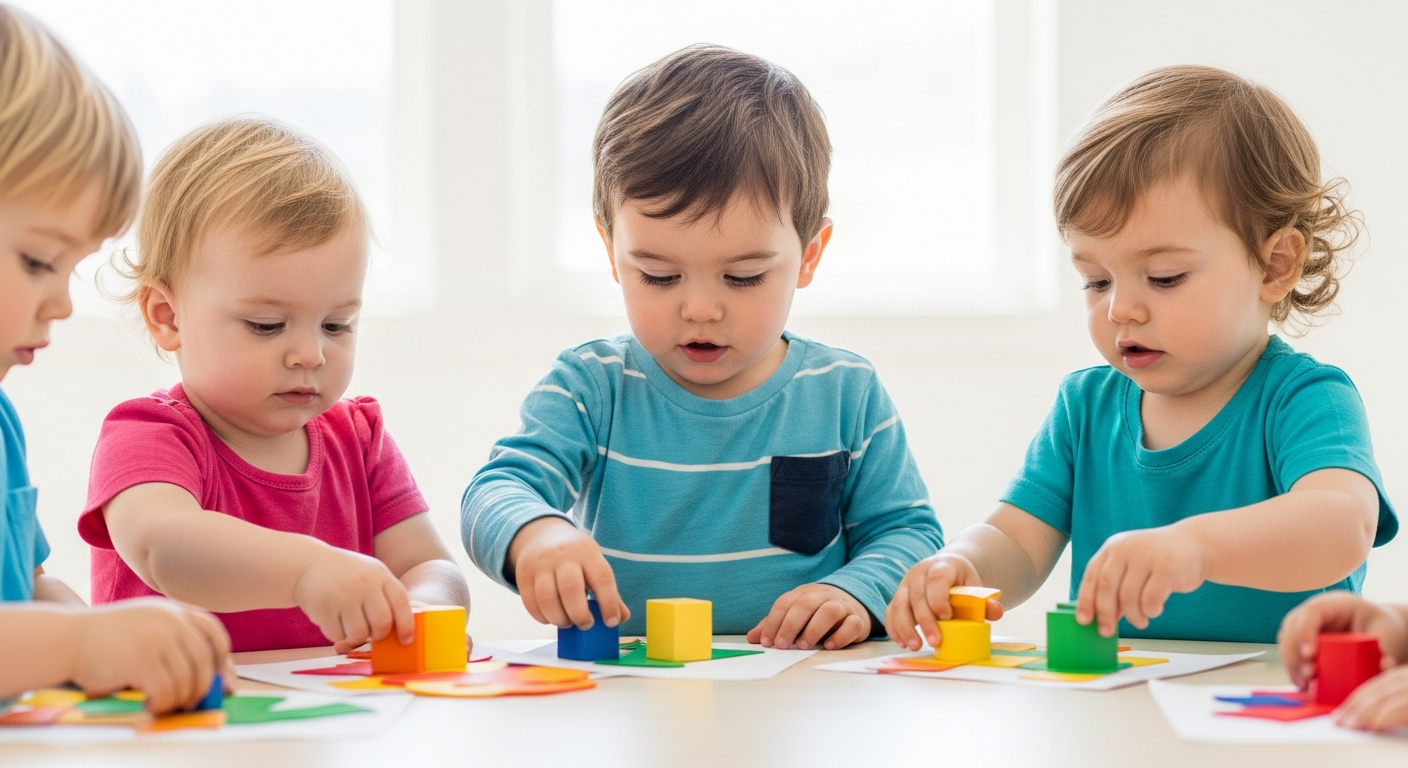
Table of Contents
- Introduction
- Understanding the "Language Explosion" at Two
- Low-Prep Fine Motor Activities for Quiet Times
- Gross Motor Play: Burning Energy and Building Strength
- Language and Communication Boosters
- Sensory Exploration and Science for Toddlers
- Social and Emotional Development through Play
- Integrating Speech Blubs: Smart Screen Time
- Creating a "Yes" Space for Play
- Managing the Routine in a Busy Household
- Frequently Asked Questions
- Conclusion
Introduction
Have you ever watched a two-year-old discover their own shadow or spend twenty minutes trying to fit a square peg into a round hole? This age is often affectionately called the "tornado" stage, and for good reason. It is a whirlwind of curiosity, burgeoning independence, and a seemingly infinite supply of energy. At two, a child’s brain is a sponge, absorbing every sound, gesture, and interaction to build a map of the world around them. For many of us at Speech Blubs, this journey is personal. Our founders grew up with speech challenges themselves, and they created the tools they wished they had—solutions designed to help every child "speak their minds and hearts."
The purpose of this guide is to provide you with a treasure trove of toddler activities for 2 year olds that are not only fun but also deeply rooted in developmental science. We understand that as a parent, your days are a balancing act. Whether you are homeschooling older children, working from home, or simply trying to keep the household running, you need activities that are low-prep and high-impact. We will explore fine motor games, gross motor play, and language-boosting strategies that fit into your busy life.

By the end of this post, you will have a clear roadmap for fostering your child’s growth through joyful, intentional play. Our core message is simple: play is the work of the child, and when we provide the right environment and tools, we help them build the confidence to navigate the world with a smile.
Understanding the "Language Explosion" at Two
If it feels like your child is suddenly trying to say everything at once, you aren’t imagining it. The age of two is synonymous with the "language explosion." During this window, toddlers begin to transition from single words to short phrases, experimenting with the rhythm and power of communication. They are learning that their voice has an impact—that saying "more" gets them another slice of apple, and saying "no" (their favorite word!) establishes their autonomy.
At Speech Blubs, we recognize that 1 in 4 children will need some form of speech support during these early years. We’ve dedicated our mission to providing "smart screen time" that acts as a powerful supplement to your child’s development. Unlike passive cartoons that offer little more than bright lights, our approach uses "video modeling." This methodology is backed by science and involves children watching their peers perform speech exercises. This triggers mirror neurons in the brain, encouraging your little one to imitate and learn. You can dive deeper into the research page to see why our method is rated so highly on the MARS scale.
When choosing toddler activities for 2 year olds, focusing on language-rich play is key. Activities shouldn't just be about "doing"; they should be about "describing." When your child pushes a car, you aren't just watching; you're saying, "Vroom! The blue car goes fast!" This verbal labeling is the fuel for their growing vocabulary.
Low-Prep Fine Motor Activities for Quiet Times
Fine motor skills involve the small muscles in the hands and wrists. For a two-year-old, mastering these muscles is a prerequisite for everything from feeding themselves to eventually writing their name. Here are several low-mess activities that keep little hands busy while you tackle your to-do list.

1. The Card Slot Drop
This is a classic "around the house" activity. Take an empty oatmeal container or a shoe box and cut a thin slit in the lid. Give your toddler a deck of playing cards and show them how to slide the cards into the slot.
- Why it works: It builds hand-eye coordination and spatial awareness.
- Language boost: Use words like "in," "down," "flat," and "more."
2. Pipe Cleaner Colander Push
Turn a kitchen colander upside down and give your child a handful of colorful pipe cleaners. Show them how to thread the pipe cleaners through the small holes.
- Why it works: It requires precision and focus, often keeping a "tornado" still for surprisingly long stretches.
- Scenario: If you have a child who gets frustrated easily, start with just one pipe cleaner and celebrate the "win" together. This builds the confidence they need to try harder tasks in the Speech Blubs app.
3. Contact Paper Art
Tape a piece of clear contact paper to a wall or table, sticky side out. Provide your toddler with scraps of tissue paper, ribbons, or cotton balls. They can stick and peel the items repeatedly.
- Why it works: It’s a sensory experience without the gluey mess.
- Language boost: Discuss textures like "sticky," "soft," and "bumpy."
4. The "Animal Wash" Station
Fill a shallow Tupperware bin with just an inch of soapy water. Give your child a few plastic animal figurines and an old toothbrush. Let them "scrub" the animals clean.
- Why it works: It introduces the concept of hygiene and care while providing a soothing water-play experience.
- Speech Blubs Connection: For a child who loves animals, the "Animal Kingdom" section of our app is a perfect companion to this activity. They can practice making the "Moo" or "Baa" sounds they see other children making on the screen, then "wash" that animal in real life.
Ready to see how your child’s skills are progressing? Take our 3-minute preliminary screener to get an assessment and a personalized next-steps plan.
Gross Motor Play: Burning Energy and Building Strength
Two-year-olds are physical beings. They need to run, jump, climb, and test the limits of their bodies. Gross motor activities use the large muscles and are essential for physical health and even sleep quality.
5. Indoor Obstacle Course
You don't need fancy equipment. Use couch cushions as "mountains" to climb over, a hula hoop (or a circle of yarn) as a "pond" to jump into, and a hallway as a "race track."
- Pro Tip: Incorporate "Stop" and "Go" commands to help with impulse control.
- Building Confidence: As they navigate the course, they learn that they are capable of overcoming physical challenges.
6. The Laundry Basket Toss
Gather a few soft balls or even rolled-up socks. Place a laundry basket a few feet away and encourage your toddler to "score a basket."
- Why it works: It develops aim and gross motor control.
- Language boost: Count the socks as they go in: "One, two, three! Yay!"
7. Bubble Chasing
Whether indoors or out, bubbles are magic. Blow bubbles and encourage your child to "pop" them with different body parts—point with a finger, clap with hands, or stomp with feet.
- Why it works: It encourages movement and tracking objects with their eyes.
Language and Communication Boosters
While every activity is an opportunity for language, some are specifically designed to target communication milestones. At Speech Blubs, we focus on making this process joyful rather than a chore.
8. The "What’s This?" Bag
Place 5-6 familiar household objects (a spoon, a shoe, a toy car, a brush) into an opaque bag. Have your child reach in, feel an object, and try to name it before pulling it out.
- Why it works: It uses tactile feedback to reinforce vocabulary.
- Scientific Note: This encourages mental representation—the ability to think about an object even when it isn't fully visible.
9. Mirror Mimicry
Stand in front of a mirror with your toddler. Make funny faces, stick out your tongue, or puff out your cheeks. Ask them to copy you.
- Speech Blubs Methodology: This is the low-tech version of our video modeling. By watching your mouth move, they learn the mechanics of speech. To take this further, you can Download Speech Blubs on the App Store to let them mimic children their own age, which is often even more motivating.
10. Interactive Reading
Don't just read the words on the page. Point to the pictures and ask, "Where is the doggy?" or "What color is the hat?" For two-year-olds, books with repetitive phrases or rhyming schemes are especially effective.
- Goal: Foster a love for stories and communication, reducing the frustration that often comes when a child can't find the right words.
Sensory Exploration and Science for Toddlers
Sensory play is any activity that stimulates a child’s senses: touch, smell, taste, movement, balance, sight, and hearing. It is the foundation of all learning.
11. Texture Sorting
Gather objects from around the house with different textures—a fluffy scarf, a wooden block, a piece of sandpaper, and a silky ribbon. Let your child touch them and group them by how they feel.
- Why it works: It builds the brain's "sensory library."
12. Cause and Effect Water Play
Give your child a bin of water and objects that sink (like a stone) and objects that float (like a cork or a plastic boat). Ask them, "Will it stay up or go down?"
- Why it works: This is their first introduction to physics!
13. Edible "Sand"
If you’re worried about your toddler putting things in their mouth, create edible sand by pulsing cheerios or crackers in a blender. Give them scoops and cups to "dig" and "pour."
- Why it works: It provides the tactile experience of sand without the safety concerns.
Social and Emotional Development through Play
Two-year-olds are beginning to notice that other people have feelings too. This is the start of empathy.
14. Stuffed Animal Tea Party
Encourage your child to "feed" their stuffed animals or put them to bed. This type of pretend play is a huge milestone.
- Scenario: If your toddler is about to start daycare, use this play to act out "dropping off" and "picking up" the stuffed animal to help ease their anxiety.
15. The "Emotion Mirror" Game
Use flashcards or just your own face to show "Happy," "Sad," and "Surprised." Have your child try to identify the emotion.
- Speech Blubs Mission: We want kids to "speak their hearts." Being able to label an emotion is the first step in managing it. You can see how this has helped other families by reading our parent success stories.
Integrating Speech Blubs: Smart Screen Time
We know that many parents feel guilty about screen time. However, not all screens are created equal. Passive consumption (like watching cartoons) doesn't require the child to engage. Speech Blubs is different. We provide a "smart screen time" experience that is active, educational, and designed for co-play.
Our app is built on the principle of video modeling. When your child sees a peer on the screen making a specific sound or word, their brain is wired to mimic that behavior. It’s a joyful, pressure-free way to practice communication.
Why the Yearly Plan is the Smart Choice
While we offer a monthly subscription, our Yearly plan is designed to provide the most comprehensive support for your child’s development. We want to be a long-term partner in your child's journey.
- Cost Efficiency: The Monthly plan is $14.99 per month. The Yearly plan is $59.99 per year, which breaks down to just $4.99/month—a 66% savings.
- Exclusive Benefits: The Yearly plan includes a 7-day free trial, giving you a week to explore the features risk-free.
- Reading Blubs: You get access to our companion app, Reading Blubs, which helps transition speech skills into early literacy.
- Priority Support: Enjoy 24-hour support response times and early access to all our latest updates and new activities.
Ready to get started? Create your account and begin your 7-day free trial today.
Creating a "Yes" Space for Play
One of the best things you can do for your two-year-old is to create a "Yes" space—an area where everything is safe for them to touch, climb, and explore. When we spend our whole day saying "No, don't touch that" or "Careful, that's breakable," we inadvertently stifle their curiosity.
A "Yes" space might just be a corner of the living room with a soft rug, a few baskets of open-ended toys (like blocks and silks), and a low shelf for books. When a child feels safe to explore, they build the confidence to try new things, which is essential for learning new words and skills.
Key Takeaway: Consistent, joyful play is more effective than any "drilled" lesson. When your child is having fun, their brain is most open to learning.
Managing the Routine in a Busy Household
If you are a parent of multiple children, you know that one-on-one time with a toddler can be rare. The key is to involve them in what you are already doing.
- The "Kitchen Assistant": Give them a bowl of water and a whisk while you cook dinner.
- The "Laundry Helper": Let them help you move wet clothes to the dryer or "sort" the socks by color.
- The "Clean-Up Song": Use music to turn chores into a game.
At Speech Blubs, we believe that these small, everyday moments are where the real magic happens. Our app is a tool to enhance these moments, not replace them. We encourage you to use the app together, laughing at the funny filters and celebrating every time your child attempts a new sound.
Frequently Asked Questions
1. How much screen time is okay for a 2-year-old?
The American Academy of Pediatrics suggests limiting screen time to high-quality programming and co-viewing with parents. Speech Blubs is designed for exactly this. We recommend short, 10-15 minute sessions of "smart screen time" where you interact with your child and the app together.
2. My child isn't talking much yet. Should I be worried?
Every child develops at their own pace. However, early intervention is incredibly effective. A great first step is to take our quick 3-minute preliminary screener to see where your child stands and get professional advice on the next steps.
3. What makes Speech Blubs different from other apps?
We focus on peer-to-peer video modeling. Children are naturally more interested in watching other children than they are in watching cartoons or adults. This "kids teaching kids" approach is what makes our app so effective and joyful. Plus, our method is rooted in speech therapy principles used by professionals.
4. Is the Yearly plan really worth it?
Yes! At just $4.99/month (billed annually), it is much more affordable than the monthly option. More importantly, it includes the Reading Blubs app and a 7-day free trial, allowing you to fully integrate speech and reading into your child's routine at the best possible price.
Conclusion
The journey of parenting a two-year-old is filled with both challenges and immense joy. From the "tornado" moments to the quiet snuggles over a favorite book, every interaction is a building block for your child's future. By incorporating these toddler activities for 2 year olds into your daily routine, you are doing more than just keeping them busy; you are fostering their independence, sharpening their motor skills, and fueling their language development.
At Speech Blubs, we are honored to be a part of your family’s story. Our mission is to ensure that no child feels left behind in their ability to communicate. Whether you are using our "smart screen time" to spark a new word or using our "around the house" tips to create a sensory bin, remember that you are your child's best teacher.
Don't wait to start this exciting chapter. Download Speech Blubs on Google Play Store or the App Store today to begin your journey. We highly recommend choosing the Yearly plan to unlock the full suite of features, including Reading Blubs and your 7-day free trial. Together, we can help your child find their voice and speak their mind and heart to the world.
About the author