
Fun Toddler Daily Activities for Development and Joy
 By Speech Blubs Team•Feb 23, 2026•14 min.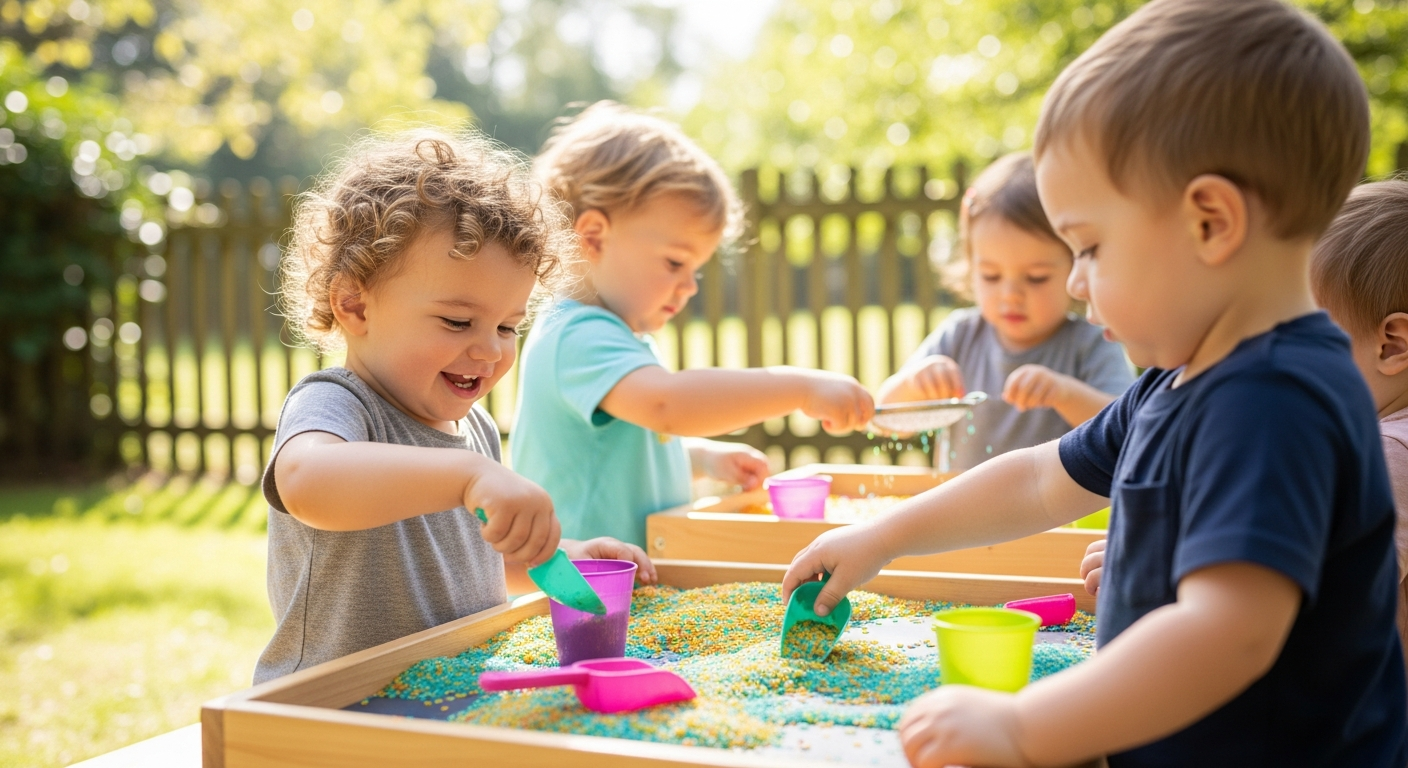
Table of Contents
- Introduction
- The Power of Predictability: Why Toddlers Need Routine
- A Sample Daily Rhythm for Toddlers
- 25 Low-Prep Toddler Daily Activities
- How to Integrate Speech Blubs into Your Daily Routine
- Practical Scenarios: Real-World Solutions
- Choosing the Right Plan for Your Family
- Setting Realistic Expectations
- Frequently Asked Questions (FAQ)
- Conclusion
Introduction
Have you ever found yourself standing in the middle of a toy-strewn living room at 10:00 AM, wondering how there are still eight hours left until bedtime? You aren't alone. In fact, approximately one in four children will require some form of speech or developmental support during their early years. For many parents, the challenge isn't just finding things to do; it’s finding activities that actually help their children grow while keeping the household from descending into total chaos.
The purpose of this post is to provide you with a comprehensive roadmap for toddler daily activities that foster language development, cognitive growth, and physical coordination. We will explore the science of why routines matter, provide a minute-by-minute breakdown of a successful day, and offer over 25 low-prep activity ideas that you can start today. Most importantly, we’ll show you how to integrate "smart screen time" to turn passive viewing into an active learning experience.

At Speech Blubs, our mission is to empower children to speak their minds and hearts. We understand the unique challenges of the toddler years because our founders grew up with speech hurdles themselves. They created the tool they wished they’d had—one that blends scientific principles with the joy of play. By the end of this article, you will have a toolkit of strategies to reduce frustration, build your child’s confidence, and create joyful family learning moments that last a lifetime.
The Power of Predictability: Why Toddlers Need Routine
Toddlers are tiny explorers in a world that often feels overwhelming. Their brains are under massive development, particularly in areas governing executive function—skills like impulse control, focus, and decision-making. Because these areas are still maturing, toddlers often experience big emotions and "testing" behaviors.
Scientific research shows that a consistent daily routine creates a sense of safety and security. When a child knows what happens next, their environment becomes predictable. This predictability lowers stress hormones and allows the brain to shift from "survival mode" to "learning mode." Instead of worrying about when lunch is coming, your child can focus on mastering new words or stacking blocks.
Routines don't have to be rigid schedules dictated by the clock. Instead, think of them as a "rhythm." Whether you are a stay-at-home parent or balancing a busy work-from-home schedule, establishing a flow of events helps your toddler navigate transitions—like moving from playtime to naptime—with significantly fewer tantrums.
A Sample Daily Rhythm for Toddlers
Every family is different, and the best routine is the one that works for your specific home environment. However, many parents find success by following a general flow that balances high-energy activities with quiet, focused moments.
7:00 AM – 8:30 AM: The Morning Launch
Start your day with a "gentle start." Many experienced parents find that waking up 15–30 minutes before the kids to have a quiet cup of coffee or a shower sets a much calmer tone for the day.

For toddlers who wake up early, consider using an "OK to Wake" clock. This visual cue teaches them to stay in their room and engage in independent play until the light turns green. Once everyone is up, involve your toddler in breakfast preparation. Let them help pour (with supervision) or stir. This encourages "imitation play," which is a foundational step for language development.
8:30 AM – 10:00 AM: Smart Screen Time and Chores
This is a great time to introduce structured learning. While you unload the dishwasher or start a load of laundry, your toddler can engage in "smart screen time." Unlike passive cartoons that often lead to "zombie mode," we advocate for interactive tools that encourage participation.
For example, a parent whose 3-year-old "late talker" loves animals can use the "Animal Kingdom" section of our app. Through our unique video modeling methodology, your child watches other children making "moo" and "baa" sounds. This triggers mirror neurons in the brain, encouraging your toddler to imitate their peers. It’s not just watching; it’s practicing communication. You can download Speech Blubs on the App Store to see this science in action.
10:00 AM – 12:00 PM: Outdoor Exploration and Errands
Fresh air is a natural mood-booster. Whether it’s a trip to the local park, a walk around the block to look at construction trucks, or a quick run to the grocery store, getting out of the house provides a necessary change of scenery. Outdoor time is excellent for gross motor skills like running, jumping, and climbing.
12:00 PM – 3:00 PM: Lunch and Recharging
After lunch, transitions are key. Creating a "wind-down" routine—dimming the lights, reading a story, or listening to soft music—signals to your child that it’s time for a nap or quiet time. If your toddler has outgrown naps, this is a perfect window for quiet, solo play with puzzles or books in their room.
3:00 PM – 5:00 PM: Afternoon Activity Burst
This is often the "witching hour" where energy levels dip and frustration peaks. Having a go-to list of sensory and fine motor activities can save the day.
25 Low-Prep Toddler Daily Activities
You don't need a Pinterest-perfect craft room to keep your toddler engaged. Most of the best developmental activities use items you already have in your pantry or junk drawer.
Sensory Play Activities
Sensory play is vital because it builds nerve connections in the brain’s pathways.
- Noodle Sensory Bin: Fill a plastic tub with dry pasta and add scoops, funnels, or small plastic animals.
- Water Play: A kitchen sink full of soapy water and "dirty" plastic toys to wash can keep a toddler busy for 30 minutes.
- Fizzy Drips: Place a tray of baking soda in front of your child. Give them small cups of vinegar colored with food coloring and a dropper. Watching the "fizz" is a lesson in cause and effect.
- Popsicle Bath: Give your toddler a popsicle while they are in the bathtub. It’s a sensory experience that also makes cleanup a breeze!
- Bean Construction Site: Use dried beans as "dirt" for toy dump trucks and excavators in a large bin.
- Shaving Cream Paint: Squirt shaving cream on a cookie sheet or the wall of the bathtub and let them "paint" with their fingers.
Fine Motor and Cognitive Activities
These activities help strengthen the small muscles in the hands, which are necessary for later skills like writing and buttoning clothes. 7. Painter’s Tape Track: Use blue painter’s tape to create roads and tracks for toy cars all over the living room floor. 8. Sticker Wall: Tape a large piece of butcher paper to the wall and give your child a sheet of stickers. Peeling the stickers is fantastic for finger dexterity. 9. Pom Pom Push: Take an old cardboard tube and tape it to the wall. Let your toddler drop pom poms through the tube into a bowl. 10. Color Sorting: Lay out colored pieces of construction paper and have your child find toys around the room that match each color. 11. Tube Tunnels: Use toilet paper rolls to create slides for marbles or small balls. 12. Colander Threading: Give your toddler a colander and a handful of pipe cleaners. Have them "thread" the pipe cleaners through the holes. 13. Toy Wrapping: Wrap a few of their favorite toys in foil or wrapping paper and let them "rescue" the toys.
Gross Motor and Physical Activities
Burn off that toddler energy with these movement-based ideas. 14. Pillow Obstacle Course: Arrange sofa cushions and pillows on the floor for them to crawl over and jump between. 15. Balloon Toss: Try to keep a balloon in the air as long as possible. This is great for hand-eye coordination. 16. Indoor Scavenger Hunt: Ask them to find "something red," "something soft," or "something that makes a sound." 17. Animal Walk: Call out an animal and have them move like it (hop like a frog, crawl like a bear). 18. Dance Party: Put on their favorite music and just let loose. Movement is a great way to reset a bad mood. 19. Sidewalk Chalk: If you have a driveway or sidewalk, let them draw large shapes and "jump" into the circle or the square.
Language and Social Activities
- Mirror Imitation: Sit in front of a mirror and make funny faces or sounds. Encourage them to copy you.
- Phone Call Pretend: Use a toy phone (or a block) to have a "conversation" with a favorite character or grandparent.
- Reading Aloud: This remains the gold standard for language development. Focus on books with rhyming and repetition.
- Puppet Shows: Use socks as puppets to act out simple daily routines, like brushing teeth.
- "Follow the Leader": Take turns being the leader and the follower to teach the concept of social reciprocity.
How to Integrate Speech Blubs into Your Daily Routine
While physical play is essential, we live in a digital world. Our goal at Speech Blubs is to provide a "smart" alternative to the passive consumption of cartoons. If you are unsure if your child’s communication skills are on track, you can take our quick 3-minute preliminary screener. It consists of nine simple questions and provides you with a personalized assessment and a next-steps plan.
Our methodology is rooted in the "video modeling" technique. Research shows that children are highly motivated by watching their peers. When a toddler sees another child on screen successfully making a sound or saying a word, they are much more likely to try it themselves. This approach is backed by science and has earned us a high rating on the MARS scale for educational quality. You can learn more about the research behind our method on our website.
A great way to use the app is as a "co-play" tool. Instead of handing the device to your child and walking away, sit with them. When the child on the screen says "Apple," you say "Apple" too. This creates a joyful family learning moment and reinforces the lesson. Many parents have shared how this has helped reduce their child’s frustration and built foundational communication skills. You can read some of these heartwarming success stories from our community.
Practical Scenarios: Real-World Solutions
Let's look at how these toddler daily activities and tools work in real life.
Scenario A: The Transition Struggle Your 2-year-old has a meltdown every time you try to leave the park. Solution: Five minutes before leaving, use a visual timer. Tell them, "When the timer beeps, we say 'bye-bye park' and 'hello car'." To make the car ride exciting, tell them they can choose one "animal sound" to practice on Speech Blubs once they are buckled in. This gives them something to look forward to, easing the transition.
Scenario B: The "Quiet Time" Challenge Your toddler has stopped napping but isn't quite ready to go all day without a break. Solution: Set up a "Quiet Bin" that only comes out during this time. Include stickers, a mess-free water coloring book, and 15 minutes of "smart screen time" with the Speech Blubs app. This keeps them engaged and allows you to have a much-needed 30-minute break.
Scenario C: Encouraging a Late Talker Your child is 24 months old and has very few words, leading to frustration for both of you. Solution: Focus on "functional language" during your daily activities. During the "Noodle Sensory Bin" play, emphasize words like "pour," "in," and "out." Supplement this by using the "Early Sounds" section of Speech Blubs. By watching other children make basic vowel sounds and facial movements, your child may feel more confident to attempt these sounds in a low-pressure environment.
Choosing the Right Plan for Your Family
We believe that every child should have access to high-quality developmental tools. To help you get started, we offer two straightforward pricing options.
The Monthly Plan is available for $14.99 per month. This is a great option if you want to test the waters and see how your child responds to the video modeling exercises.
However, the Yearly Plan is our most popular choice and offers the best value. For $59.99 per year, the cost breaks down to just $4.99 per month—a 66% savings compared to the monthly rate.
More importantly, the Yearly Plan includes exclusive features designed to accelerate your child's progress:
- A 7-day free trial: You can explore the entire app with zero risk.
- The Reading Blubs app: An extra tool dedicated to early literacy and phonics.
- Early access: Be the first to try new updates and activities.
- Priority support: Enjoy a 24-hour response time from our dedicated support team.
We recommend the Yearly plan for families who are committed to making "smart screen time" a consistent part of their toddler's daily activities. You can create your account and begin your free trial today to see the difference it can make.
Setting Realistic Expectations
As a child development expert, it is important to remember that every child follows their own timeline. While Speech Blubs is a powerful supplement to your child's development and professional therapy, it is not a "magic wand." Progress in speech and communication is often measured in small, joyful steps—a new sound one day, a new word the next, and a decrease in frustration over time.
Our goal is to foster a love for communication and build the confidence your child needs to express themselves. Whether they are practicing their first words or building complex sentences, the most important factor is the support and encouragement they receive from you.
Frequently Asked Questions (FAQ)
1. How much screen time is okay for a toddler?
While the American Academy of Pediatrics suggests limiting screen time for very young children, they also emphasize the quality of the content. We advocate for "smart screen time" that is interactive and educational. Using Speech Blubs for 15–20 minutes a day as a co-play activity is a productive way to use technology to support developmental goals.
2. My child isn't talking yet; can these activities help?
Yes! Language development starts with "pre-linguistic" skills like imitation, joint attention, and fine motor coordination. Activities like the "Noodle Sensory Bin" or "Painter's Tape Track" encourage exploration and cause-and-effect thinking, which are foundational for speech. Using video modeling helps bridge the gap between observing and doing.
3. What if my toddler refuses to follow the routine?
Routines should be flexible, not rigid. If your child is having a rough day due to teething or poor sleep, it’s okay to scrap the plan and focus on cuddles and quiet play. The goal is to have a general "rhythm" that they can return to when things settle down. Consistency over time is more important than perfection on any single day.
4. Is the Yearly plan really worth it?
If you plan to use the app more than four months out of the year, the Yearly plan pays for itself. With the addition of the Reading Blubs app and the 7-day free trial, it provides a comprehensive toolkit for both speech and early literacy at a significantly lower monthly cost.
Conclusion
Creating a day full of engaging toddler daily activities doesn't require a degree in early childhood education or a massive budget. By establishing a predictable rhythm, incorporating sensory and physical play, and utilizing "smart screen time," you are providing your child with the best possible environment to thrive.
At Speech Blubs, we are honored to be a part of your parenting journey. We know that the days can be long, but the milestones are worth every effort. Our tool is designed to make those milestones happen through joy, peer imitation, and scientifically-backed methods.
Ready to transform your toddler's screen time into a learning adventure? Download Speech Blubs on Google Play or the App Store today. We highly recommend choosing the Yearly Plan to take advantage of the 7-day free trial, the Reading Blubs app, and our best pricing. Let’s help your little one speak their mind and heart together!
About the author