
Fun Toddler Earth Day Activities for Eco-Friendly Play
 By Speech Blubs Team•Mar 18, 2026•13 min.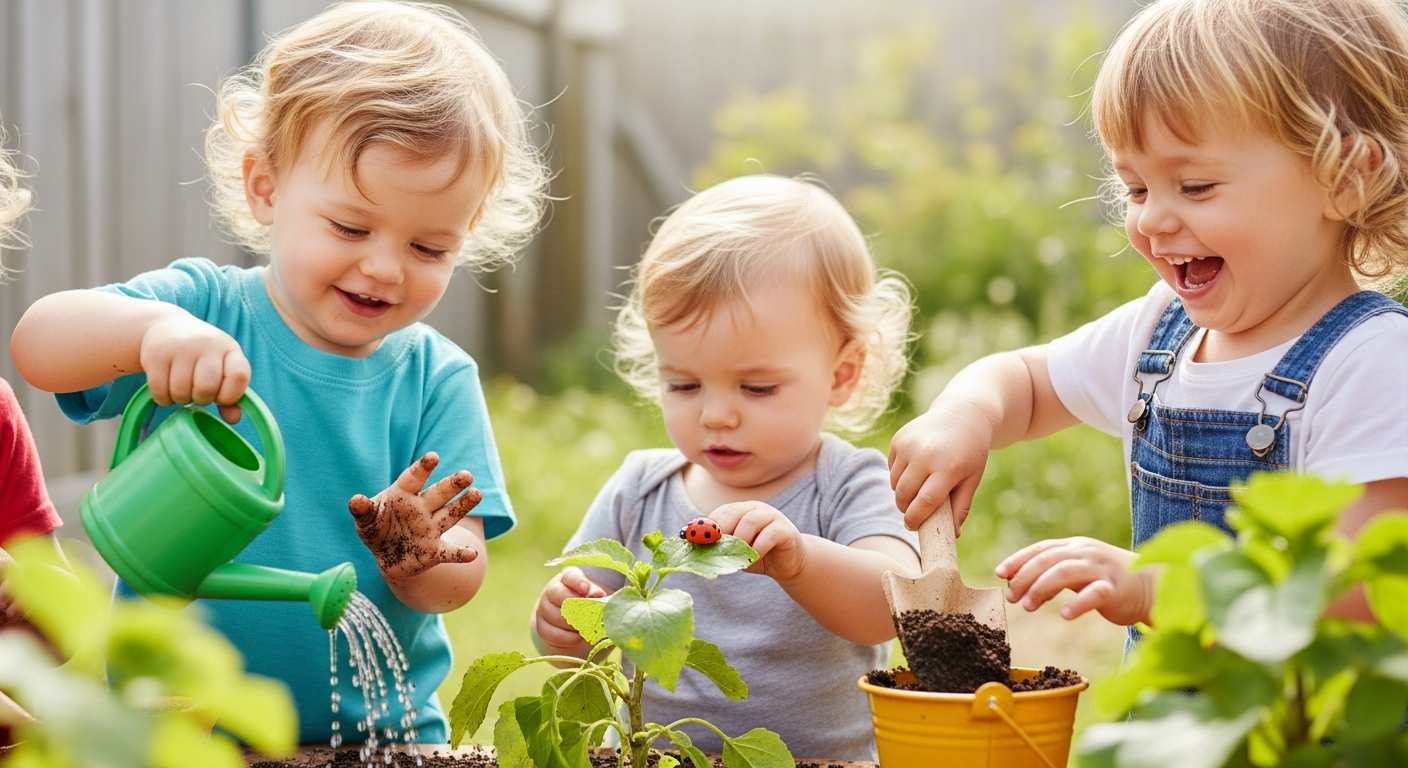
Table of Contents
- Introduction
- The Power of Nature in Early Development
- Sensory Toddler Earth Day Activities
- Outdoor Exploration and Science
- Upcycling: Turning Trash into Treasure
- Using "Smart Screen Time" to Support Earth Day
- Transparency in Our Tools: Choosing the Right Plan
- Building Sustainable Habits for the Future
- Realistic Expectations: The Journey of Development
- Summary of Toddler Earth Day Activities
- Conclusion
- Frequently Asked Questions
Introduction
Did you know that a toddler’s brain develops more in the first three years of life than at any other time? During this incredible window of growth, every interaction with the world around them serves as a building block for their future. This is why introducing toddler earth day activities isn't just about celebrating a holiday; it is about planting the seeds of empathy, curiosity, and communication. At Speech Blubs, our mission is to empower children to speak their minds and hearts, and we believe that connecting with nature is one of the most powerful ways to foster those early communication skills.
In this post, we will explore a wide variety of hands-on, sensory-rich activities designed specifically for little hands and growing minds. We will cover everything from mess-free nature art and sensory bins to simple science experiments that explain big concepts like pollution and recycling. More importantly, we’ll show you how these activities can be paired with our unique approach to learning to help your child find their voice while they discover the beauty of our planet.

Our goal is to provide you with a roadmap for joyful, "smart screen time" and screen-free play that brings your family closer together. By the end of this article, you will have a toolkit of activities that encourage your child to explore, imitate, and ultimately express themselves with confidence.
The Power of Nature in Early Development
At Speech Blubs, we are committed to providing an immediate, effective, and joyful solution for the 1 in 4 children who need speech support. Our founders grew up with speech problems themselves and created the tool they wished they had—a way to turn screen time into a powerful tool for family connection rather than a passive experience like watching cartoons. When we combine this "smart screen time" with outdoor exploration, we create a holistic environment for learning.
Nature provides a rich, multi-sensory environment that is perfect for speech development. When a child feels the squish of "Earth Oobleck" or smells a freshly picked leaf, they are more likely to want to comment on it. These moments of wonder are prime opportunities for language expansion. Our "video modeling" methodology—where children learn by watching and imitating their peers—is built on this same principle of joyful imitation. By watching other kids engage with the world, your toddler gains the confidence to do the same.
If you are wondering where to start with your child's developmental journey, we recommend taking our quick 3-minute preliminary screener. It involves just 9 simple questions and provides an assessment and next-steps plan to help you support your child's unique needs.
Sensory Toddler Earth Day Activities
Sensory play is the foundation of early learning. It helps toddlers process information and build the neural pathways necessary for more complex tasks later in life.
1. Earth Day Oobleck
Oobleck is a classic "non-Newtonian" fluid—it’s a solid when you squeeze it and a liquid when you let it go. It’s perfect for teaching toddlers about textures and cause-and-effect.

- What you need: 2 cups of cornstarch, 1 cup of water, and blue/green food coloring.
- The Activity: Mix the cornstarch and water. Swirl in the food coloring to represent the land and the oceans.
- Speech Connection: Use descriptive words like "sticky," "gooey," "cold," or "melt." Encourage your child to say "more" or "all gone."
2. Taste-Safe "Earth" Paint
For younger toddlers who still put everything in their mouths, taste-safe paint is a must.
- What you need: Plain yogurt (or a flour and water mix) and natural dyes like turmeric (yellow), beet powder (pink/red), or spirulina (green).
- The Activity: Let your child paint directly on a highchair tray or a large piece of recycled cardboard.
- Pro Tip: If your child is a "late talker" and loves animals, you can use the green paint to make a "forest" and then head over to the "Animal Kingdom" section of our app to practice "moo" and "baa" sounds. You can download Speech Blubs on the App Store to start these animal sound exercises today.
3. Nature Suncatchers
This activity creates a beautiful visual reminder of Earth Day while working on fine motor skills.
- What you need: Clear contact paper (sticky paper), blue and green tissue paper squares, and bits of leaves or flower petals from your yard.
- The Activity: Cut out a circle of contact paper. Let your child stick the tissue paper and nature finds onto the sticky side. Seal it with another circle and hang it in a sunny window.
Outdoor Exploration and Science
Getting outside is the best way to celebrate the planet. These activities focus on observation and the scientific method in its simplest form.
4. The Egg Carton Nature Scavenger Hunt
An empty egg carton is a toddler’s best friend for sorting and collecting.
- The Activity: Color the bottom of each egg cup a different color using markers. Ask your child to find something in nature that matches each color—a green leaf, a gray rock, a yellow dandelion.
- Why it works: Sorting and categorizing are foundational math and logic skills. It also encourages "joint attention," where you and your child focus on the same object together.
5. Growing a "Senses" Garden
Gardening isn't just about the end result; it's about the process of nurturing life.
- The Activity: Choose plants that stimulate different senses. Lamb's ear is incredibly soft to touch; lavender has a calming scent; snapdragons are fun to "pop" open.
- Speech Blubs Tip: As you garden, narrate your actions: "Dig, dig, dig," or "Water the thirsty flower." This mimics the repetitive, rhythmic language we use in our app to help children latch onto new words.
6. The "Pollution" Bag Experiment
Teaching a 2-year-old about pollution sounds difficult, but visual aids make it clear.
- The Activity: Fill two zip-top bags with water. In one, put clean water. In the other, add "pollution" like brown food coloring and some sprinkles (representing trash).
- The Lesson: Place a paper fish under each bag. Ask your child, "Which fish looks happy? Which fish looks sad?" This builds empathy for living creatures and helps them understand why we don't throw trash on the ground.
Upcycling: Turning Trash into Treasure
Earth Day is the perfect time to explain that many things we "throw away" can actually be used again. This reduces waste and sparks creativity.
7. Cardboard Tube Forests
Don't throw away those toilet paper or paper towel rolls!
- The Activity: Paint the tubes brown for trunks and glue on green paper or real leaves for the tops. Create a whole forest for your child’s toy animals to play in.
- Testimonial Link: Many parents find that these types of hands-on crafts combined with our app lead to huge breakthroughs. You can read our testimonials to see how other families have used creative play to support their child's speech journey.
8. DIY Bird Feeders
Help your local wildlife by creating a simple snack station.
- The Activity: Tie a string to a pinecone. Slather it in sunflower butter (or peanut butter) and roll it in birdseed. Hang it near a window.
- The Reward: Use this as a "sit spot" where you and your child sit quietly for two minutes every morning to see who comes to visit. Observation is a key part of our research-backed methodology, which emphasizes that children learn best when they are calm, engaged, and observant.
9. The Great Recycling Sort
Make chores a game. Toddlers love to feel helpful and "big."
- The Activity: Set out three bins labeled with pictures: Paper, Plastic, and Metal. Give your child various clean items and help them "post" the items into the right bins.
- Communication Tip: Ask "Is this plastic?" and wait for a response. Giving your child "wait time" (at least 5-10 seconds) is a professional technique we encourage to let them process and formulate their own answer.
Using "Smart Screen Time" to Support Earth Day
While we advocate for plenty of outdoor play, we know that modern parenting often requires a balance. This is where Speech Blubs comes in as a "smart screen" alternative. Instead of your child zoning out to high-paced cartoons, they can use our app to engage in peer-led learning.
The Power of Video Modeling
Our app uses video modeling, which is a scientifically proven way to encourage imitation. When a child sees another child making a sound or saying a word, their "mirror neurons" fire, making them much more likely to try it themselves.
For Earth Day, you might explore our "Nature" or "Animal" sections. After you’ve been outside looking at trees, you can use the app to practice the word "leaf" or the sound of the wind. This creates a bridge between the digital world and the physical world, reinforcing learning through multiple channels.
Real-World Scenarios
Imagine a parent whose 3-year-old is a "late talker." This child might feel frustrated when they can't express what they see in the garden. By using the app's face filters, the child can "become" a bee or a flower. This playfulness reduces the pressure to perform and turns speech practice into a game. The joy they feel when seeing themselves as a buzzing bee on screen can be the spark that leads to their first "Bzzz" sound in the garden.
Transparency in Our Tools: Choosing the Right Plan
We want every family to have access to high-quality speech support. Because we believe in the long-term benefits of consistent practice, we offer two main ways to join our community.
- Monthly Plan: This plan is $14.99 per month. It’s a great way to test the waters if you’re looking for a short-term supplement.
- Yearly Plan: This is our most popular and highest-value option. At $59.99 per year, it breaks down to just $4.99 per month—a 66% savings compared to the monthly rate.
Why the Yearly Plan is the clear choice:
- 7-Day Free Trial: You get a full week to explore everything we offer before committing.
- Reading Blubs Included: You gain access to our companion app, Reading Blubs, designed to foster early literacy and a love for stories.
- Exclusive Access: Yearly members get early updates on new features and a guaranteed 24-hour response time from our support team.
- Consistency: Speech development is a marathon, not a sprint. The yearly plan ensures you have the tools you need for every stage of your child's growth.
If you’re ready to see how "smart screen time" can transform your child's communication, you can get started with your 7-day free trial here.
Building Sustainable Habits for the Future
Earth Day is more than just one day of toddler earth day activities; it’s about a lifestyle of connection. When we teach our children to care for the world, we are also teaching them to care for themselves and others.
Here are three simple ways to keep the Earth Day spirit alive year-round:
- Walk instead of Drive: Whenever possible, walk to the park or the store. Talk about what you see along the way.
- Reduce and Reuse: Before buying a new toy, see if you can make one out of a cardboard box. This encourages resourcefulness and imaginative play.
- Use Mindful Media: Choose apps like Speech Blubs that focus on development and connection rather than passive consumption. You can find us on the Google Play Store to join over 5 million parents who have chosen a better way to use technology.
Realistic Expectations: The Journey of Development
It is important to remember that every child develops at their own pace. We don't promise that your child will be giving public speeches in a month. Instead, we focus on the foundational wins:
- Fostering a love for communication: When a child realizes their voice has power, they want to use it more.
- Building confidence: Imitating a peer in the app or successfully sorting recycling builds "can-do" confidence.
- Reducing frustration: Providing a child with the tools to express basic needs and observations significantly lowers behavioral meltdowns.
- Joyful family moments: Whether you are making seed bombs or playing a game together on the app, these shared experiences are what your child will remember.
Summary of Toddler Earth Day Activities
To help you plan your week, here is a quick summary of the activities we've discussed:
ActivityMaterialsDevelopmental Focus
Earth Oobleck
Cornstarch, Water, Food Color
Sensory Processing, Textures
Nature Scavenger Hunt
Egg Carton, Outdoor Access
Categorization, Observation
Pollution Baggies
Zip-lock bags, Sprinkles
Empathy, Cause-and-Effect
Recycling Sort
Bins, Clean Trash
Fine Motor, Logic
Seed Bombs
Clay, Soil, Seeds
Persistence, Nature Connection
Speech Blubs Play
Tablet/Phone
Imitation, Speech Milestones
Conclusion
Celebrating Earth Day with your toddler is an opportunity to slow down and see the world through their eyes. Whether you are splashing in mud, sorting through the recycling bin, or using Speech Blubs to learn the sounds of the "Animal Kingdom," you are doing the important work of building a foundation for communication and environmental stewardship.
Our mission at Speech Blubs is to be your partner in this journey. We want to help your child "speak their minds and hearts" while providing you with the peace of mind that comes from using a science-backed, peer-reviewed tool. Remember, the best learning happens when children are having fun and feel supported by the adults in their lives.
Are you ready to give your child a head start? We encourage you to choose our Yearly plan today to take advantage of the 7-day free trial, the bonus Reading Blubs app, and the best overall value. It’s an investment in your child’s voice and a commitment to joyful, productive learning.
Download Speech Blubs on the App Store or Google Play to begin your journey!
Frequently Asked Questions
1. Are these Earth Day activities safe for 2-year-olds?
Yes, all the activities mentioned—like the taste-safe paint and the Earth Oobleck—are designed with toddler safety in mind. However, adult supervision is always required, especially with small items like seeds or when playing near water.
2. How long should my toddler use Speech Blubs each day?
We recommend "smart screen time" sessions of about 10 to 15 minutes. This is long enough to engage their interest and practice imitation without leading to the overstimulation often caused by passive cartoons. Co-playing with your child is the best way to maximize the benefits!
3. Does the Yearly plan really include a free trial?
Absolutely! When you select the Yearly plan, you receive a 7-day free trial. You won't be charged until the trial period ends, giving you plenty of time to explore the "Animal Kingdom," "Early Sounds," and all our other fun categories.
4. Can Earth Day activities really help with speech delays?
While these activities are not a replacement for professional therapy, they are powerful supplements. They provide "natural reinforcement"—which means they give your child a real-world reason to use new words and sounds in a low-pressure, high-fun environment.
About the author