
Fun Toddler Scissor Activities for Fine Motor Skills
 By Speech Blubs Team•Feb 23, 2026•16 min.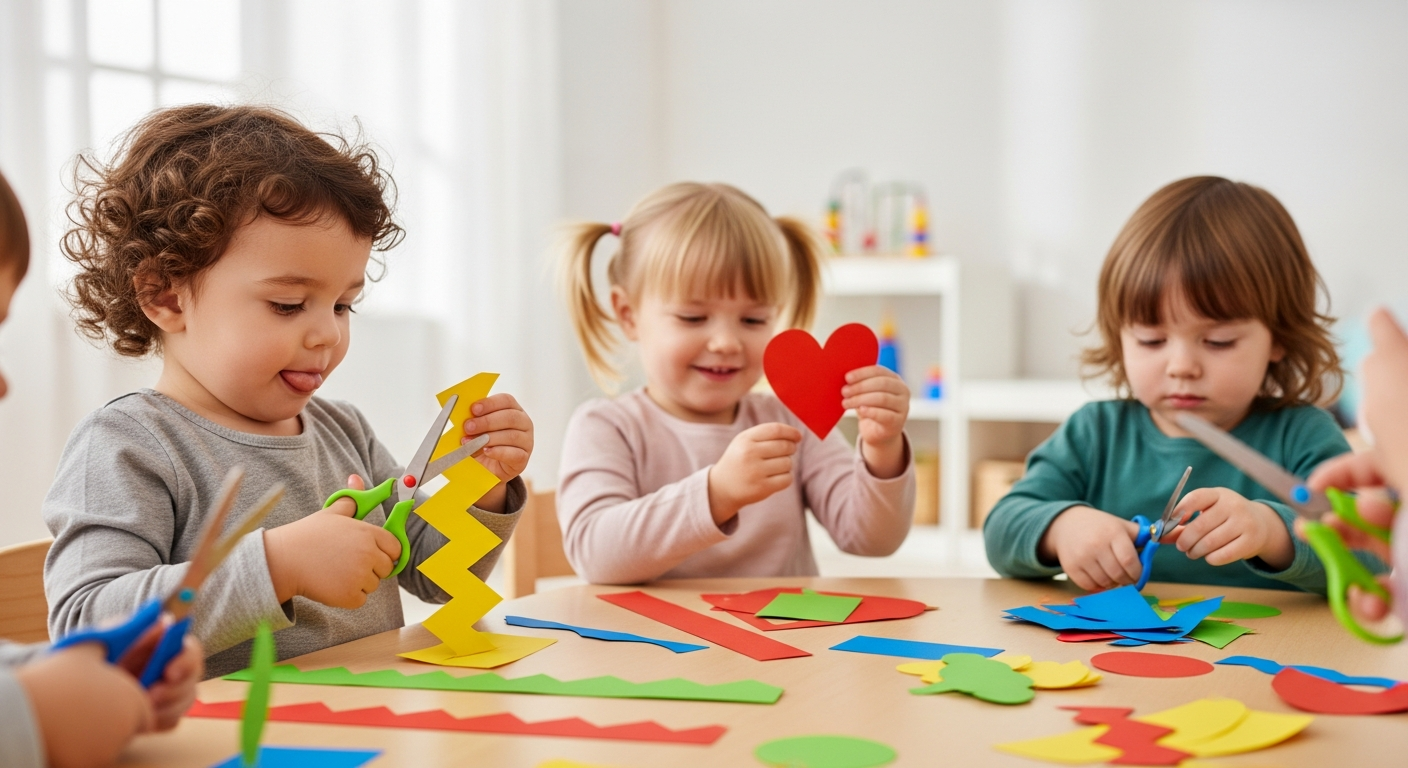
Table of Contents
- Introduction
- The Developmental Magic of Scissor Skills
- When to Start: A Realistic Timeline
- Preparing the Hands: Pre-Scissor Activities
- Setting Up for Success: Choosing the Right Tools
- 5 Engaging Toddler Scissor Activities to Try Today
- How Speech Blubs Supports Motor and Language Development
- Transparency and Value: Choosing the Right Plan
- Practical Scenarios: Connecting Play to Progress
- Safety First: Scissor Rules for Your Home
- The Connection Between Fine Motor and Literacy
- Conclusion
- Frequently Asked Questions
Introduction
Did you know that the same neurological pathways used for precise hand movements are often closely linked to the pathways used for speech and language? It might seem like a giant leap from a toddler holding a pair of safety scissors to a child speaking their first clear sentences, but in the world of early childhood development, these milestones are deeply interconnected. Many parents feel a understandable spark of anxiety when their little one first reaches for a pair of "sharp" tools, but introducing toddler scissor activities is actually a vital step in fostering independence, confidence, and physical coordination.
At Speech Blubs, we believe in empowering children to speak their minds and hearts, and that journey often begins with the "building blocks" of fine motor control. Our founders, who navigated their own speech challenges as children, created our platform to be the tool they wished they had—a joyful, scientifically-backed bridge between play and progress. We understand that about 1 in 4 children will face some form of developmental or speech delay, and our mission is to provide an immediate, effective solution that fits right into your daily routine.

In this comprehensive guide, we will explore why scissor skills matter, the developmental timeline you can realistically expect, and a variety of engaging toddler scissor activities that transform a potentially nerve-wracking "chore" into a delightful bonding experience. We’ll also discuss how these physical skills mirror the communication skills we help children develop through our unique video modeling methodology. By the end of this post, you’ll have a toolkit of ideas to help your child snip, cut, and create their way toward greater developmental success.
The Developmental Magic of Scissor Skills
When a toddler successfully snips a piece of paper, they aren't just making a mess for you to clean up (though that is often part of the process!). They are engaging in a complex multi-sensory task. Using scissors requires "bilateral coordination," which is the ability to use both sides of the body at the same time to complete a task. One hand holds and moves the paper, while the other hand operates the scissors.
This coordination is a fundamental skill that translates to many other areas of life, including buttoning a coat, tying shoes, and even the rhythmic patterns of speech. Furthermore, the "open-close" motion of the scissors strengthens the tiny "intrinsic" muscles of the hand. These are the same muscles your child will eventually use to hold a pencil or a toothbrush.
At Speech Blubs, we see a strong parallel between these motor milestones and language acquisition. Just as a child must master the "fine motor" movements of their tongue and lips to produce complex sounds, they must master the muscles of their hands to interact with the physical world. Our approach to "smart screen time" is designed to be a powerful supplement to these physical activities, encouraging children to watch their peers and imitate their movements—a concept known as video modeling.
When to Start: A Realistic Timeline
Every child is an individual, and development is rarely a straight line. However, having a general framework can help you set realistic expectations and reduce frustration for both you and your toddler.

1.5 to 2 Years: The Exploration Phase
At this age, children are usually more interested in the scissors as objects. They might try to stick their fingers in the loops or open and close them with two hands. This is the perfect time for "pre-scissor" activities like using tongs or play dough.
2 to 2.5 Years: The Snipping Phase
This is when the real magic begins. Most toddlers can start making single "snips" on the edge of a piece of paper. They might not be moving across the paper yet, but the action of closing the blades on a target is a huge win.
3 to 3.5 Years: The Forward Motion Phase
By age three, many children start to understand how to move the scissors forward across a piece of paper. They might be able to cut across a 6-inch strip of paper, though the line might be a bit "creative" rather than straight.
4 to 5 Years: The Shape Phase
Preschoolers generally begin to follow lines more accurately. They move from cutting straight lines to curves, and eventually to complex shapes like circles and squares.
If you are ever unsure where your child stands in their developmental journey, we recommend taking our quick 3-minute preliminary screener. It consists of 9 simple questions and provides a clear assessment and next-steps plan, along with a free 7-day trial of our app.
Preparing the Hands: Pre-Scissor Activities
Before you even hand over the safety shears, you can build the necessary strength and coordination through play. Think of these as the "warm-up" exercises for toddler scissor activities.
Strengthening with Play-Doh
Rolling, squishing, and pinching modeling clay or Play-Doh is one of the best ways to build hand strength. For a child who is just starting to show interest in communication, you might even find that doing these activities together encourages them to use descriptive words. For example, if your child loves the "Animal Kingdom" section of Speech Blubs, you can practice making "long snakes" out of dough and then use the scissors to "snip" them into small pieces.
The Puppet Show Method
Using sock puppets or mittens is a fantastic way to practice the "open and close" motion. Encourage your child to make the puppet "talk" by moving their thumb and fingers together. This not only prepares them for the physical motion of scissors but also fosters a love for communication and storytelling.
Tongs and Clothespins
Give your child a pair of kitchen tongs or some colorful clothespins and ask them to move "treasures" (like cotton balls or pom-poms) from one bowl to another. This specifically isolates the thumb, index, and middle fingers—the "power trio" of scissor use.
Setting Up for Success: Choosing the Right Tools
The right tools make a world of difference. When looking for the best scissors for your toddler, consider the following:
- Blunt Tips: Safety is paramount. Look for scissors with rounded, blunt ends to prevent accidental pokes.
- Plastic Blades vs. Metal: Some "first scissors" are entirely plastic and only cut paper, which is great for the very youngest learners. However, these can sometimes be frustrating if they don't cut cleanly.
- Spring-Assisted Scissors: These are a game-changer for toddlers who have the strength to close the scissors but struggle to open them back up. The spring does half the work!
- Left-Handed Scissors: If your child shows a preference for their left hand, please invest in true left-handed scissors. Using right-handed scissors in the left hand is physically difficult because the blades don't line up correctly for the user's line of sight.
To see how other parents have navigated these developmental milestones with their children, you can read our parent testimonials. Hearing about real success stories can provide that extra boost of encouragement you might need.
5 Engaging Toddler Scissor Activities to Try Today
Now that the hands are ready and the tools are prepped, let's dive into some specific activities that will keep your toddler engaged and learning.
1. The Play-Doh "Snake" Cut
This is the gold standard for beginners. Roll a piece of play dough into a long, thick "snake." Hold it for your child and let them snip pieces off. Because the dough is thick and provides resistance, the scissors won't "slip" as easily as they might on thin paper. This build-up of resistance is great for muscle development.
2. The Nature Snipping Bin
Take the learning outside! Fill a bin with grass, leaves, and thin twigs. Let your toddler go to town "trimming" the garden. This is a sensory-rich activity that teaches them about different textures. It also moves the focus away from "staying on the line" and toward the pure joy of the physical action.
3. Straw "Bead" Making
Grab a handful of colorful plastic or paper drinking straws. Let your child snip them into small segments. These "beads" can then be used for a secondary activity—stringing them onto a piece of yarn to make a necklace. This double-whammy activity works on both scissor skills and precision threading.
4. Junk Mail Shredding
Instead of tossing those credit card offers and flyers into the recycling bin, let your toddler "process" them for you. Construction paper and cardstock are actually easier for beginners to cut than regular printer paper because they are stiffer and don't "flop" over. Give them a dedicated basket to fill with their paper scraps.
5. The "Smiley Face" Trick
One of the hardest things for toddlers to remember is to keep their "thumb up" while cutting. Use a non-toxic marker to draw a tiny smiley face on the nail of their cutting thumb. Tell them, "Keep the smiley face looking at you!" This simple visual cue reduces the need for constant verbal corrections and helps them self-correct their grip.
How Speech Blubs Supports Motor and Language Development
You might wonder, "What does a speech app have to do with cutting paper?" At Speech Blubs, we believe in a holistic approach to child development. Our app isn't just a digital toy; it's a "smart screen time" experience that encourages active participation.
Our methodology is rooted in video modeling. When children watch other children (their peers) performing an action, it triggers "mirror neurons" in their brains. This makes them significantly more likely to attempt the action themselves. Whether it’s mimicking the "b-b-b" sound of a bubble or the wide "O" of a surprised face, this imitation is the foundation of all learning.
By using the Speech Blubs app on the App Store, your child is practicing the same observational skills they need to master scissors. They watch, they process, and they imitate. It’s a joyful cycle that builds the confidence needed to tackle new challenges, both in communication and in physical play.
Our app serves as a screen-free alternative to passive viewing. While cartoons might entertain, Speech Blubs engages. We provide a tool for family connection, where you and your child can play together, laugh at the funny filters, and celebrate every new sound and skill.
Transparency and Value: Choosing the Right Plan
We want our tools to be accessible to every family who needs them. We are transparent about our pricing because we want to build a relationship of trust with our community. We offer two main paths to joining the Speech Blubs family:
- Monthly Plan: $14.99 per month. This is a great way to try us out if you prefer a short-term commitment.
- Yearly Plan: $59.99 per year. This is our clear best-value choice, breaking down to just $4.99 per month—a savings of 66% compared to the monthly rate!
We highly recommend the Yearly Plan not just for the price, but for the exclusive features designed to maximize your child's progress. The Yearly plan includes:
- A 7-day free trial to ensure it's the right fit for your family.
- Access to the Reading Blubs app, which helps transition those hard-earned speech skills into early literacy.
- Early access to all new updates and content.
- Priority support with a 24-hour response time.
The Monthly plan does not include these additional benefits. We encourage most parents to start with the Yearly plan on the Google Play Store to get the full suite of developmental tools.
Practical Scenarios: Connecting Play to Progress
Let's look at how these toddler scissor activities and Speech Blubs work together in real life.
Scenario A: The Frustrated 3-Year-Old Imagine a 3-year-old who is a "late talker" and gets easily frustrated when they can't express their needs. This frustration often spills over into physical tasks. By starting with the "Nature Snipping Bin," you give them a low-pressure way to feel successful. To supplement this, you might use the "Early Sounds" section of Speech Blubs. As they snip a leaf, you can practice the "s-s-s" sound together. This turns a moment of potential frustration into a "smart screen time" win that builds both hand strength and vocal confidence.
Scenario B: The High-Energy Explorer For a child who can't sit still, "Junk Mail Shredding" is a productive outlet for that energy. While they are busy snipping, you can have the Speech Blubs app ready on a tablet. Between "jobs," you can watch a video of a peer making a "pop" sound. The physical activity helps regulate their sensory system, making them more receptive to the language modeling in the app.
Our method is backed by rigorous scientific principles, which you can explore in detail on our research page. We are proud to be rated highly on the MARS scale, reflecting our commitment to quality and efficacy.
Safety First: Scissor Rules for Your Home
Before you embark on your journey with toddler scissor activities, it is essential to establish "The Scissor Rules." Consistency is key to keeping this activity joyful rather than stressful.
- The Sitting Rule: Scissors are "sitting down" tools. We never walk, run, or jump while holding them.
- The Paper-Only Rule: (Or dough/leaves). We explicitly list what is okay to cut and what is not (hair, clothes, the cat’s whiskers).
- The "Two-Hand" Rule: One hand holds the paper, one hand holds the scissors. If the helper hand is too close, we take a break.
- Supervision is Mandatory: Never leave a toddler alone with scissors, even safety ones. This is a time for co-play and connection.
By framing these rules clearly, you reduce the "fear factor" and create a safe environment for exploration.
The Connection Between Fine Motor and Literacy
As your child masters these toddler scissor activities, they are actually preparing for the world of reading and writing. Cutting along a line requires "visual-motor integration"—the ability of the eyes to guide the hands. This is the exact same skill needed to follow a line of text across a page or to copy a letter from a chalkboard.
This is why our Yearly plan includes the Reading Blubs app. We recognize that the journey from first words to first sentences to first books is a continuous path. By supporting their fine motor skills today, you are laying the groundwork for their academic success tomorrow.
If you are ready to see the difference for yourself, you can create your web account and begin your 7-day free trial today. It’s an investment in your child’s ability to "speak their mind and heart."
Conclusion
Teaching a toddler to use scissors is about so much more than just cutting paper. It’s about building the physical strength, neurological coordination, and emotional confidence that will serve them for a lifetime. From the first messy snips of Play-Doh to the precision of cutting out a paper star, every step in this process is a victory to be celebrated.
At Speech Blubs, we are honored to be a part of your child's developmental team. Our founders created this tool because they knew firsthand the challenges of growing up with speech problems. They wanted to create a world where every child feels empowered to communicate. By combining hands-on toddler scissor activities with our scientifically-backed video modeling app, you are providing your child with a rich, multi-sensory environment for growth.
Remember, the goal isn't perfection—it's progress and joy. Whether your child is cutting a straight line or just making a pile of "confetti," they are learning. We invite you to join our community of over 5 million parents who are using "smart screen time" to make a real-world difference.
Ready to get started? Download Speech Blubs on the App Store or Google Play today. Don’t forget to choose the Yearly plan to unlock your 7-day free trial, the Reading Blubs app, and the best overall value for your child’s development!
Frequently Asked Questions
1. My toddler is 2 and has no interest in scissors. Should I be worried?
Not at all! Every child develops on their own timeline. At age 2, many children are still perfecting their "pincer grasp" (using the thumb and index finger to pick up small objects). Focus on "pre-scissor" activities like using tongs, squishing play dough, and playing with puppets. You can also use the Speech Blubs app to encourage imitation in general, which builds the foundational skills needed for more complex tasks like cutting later on.
2. Is it better to start with plastic safety scissors or metal ones?
For the very first introduction, plastic "paper-only" scissors can be a safe way to let them explore the tool. However, plastic blades can sometimes bend the paper rather than cut it, which leads to frustration. Once your child understands the "open-close" motion, transitioning to high-quality safety scissors with metal blades and blunt tips usually provides a more successful and less frustrating experience.
3. How do I help my left-handed toddler learn to cut?
First, ensure you have actual left-handed scissors. In left-handed scissors, the top blade is on the left side, which allows the child to see the line they are cutting. If you are right-handed, try to sit opposite them so they can see a "mirror image" of your movements, or simply focus on the "smiley face" thumb trick to ensure their hand position is correct.
4. Can an app like Speech Blubs really help with physical motor skills?
Yes, indirectly but powerfully! Speech Blubs uses video modeling, which activates mirror neurons. When a child practices imitating facial expressions and sounds in the app, they are strengthening the brain's "imitation muscle." This makes them more observant and better able to mimic other physical tasks, like holding scissors or a pencil. It builds the overall confidence and "can-do" attitude that is essential for all developmental milestones.
About the author