
Fun Valentine's Day Games for Kids
 By Speech Blubs Team•Jan 13, 2026•20 min.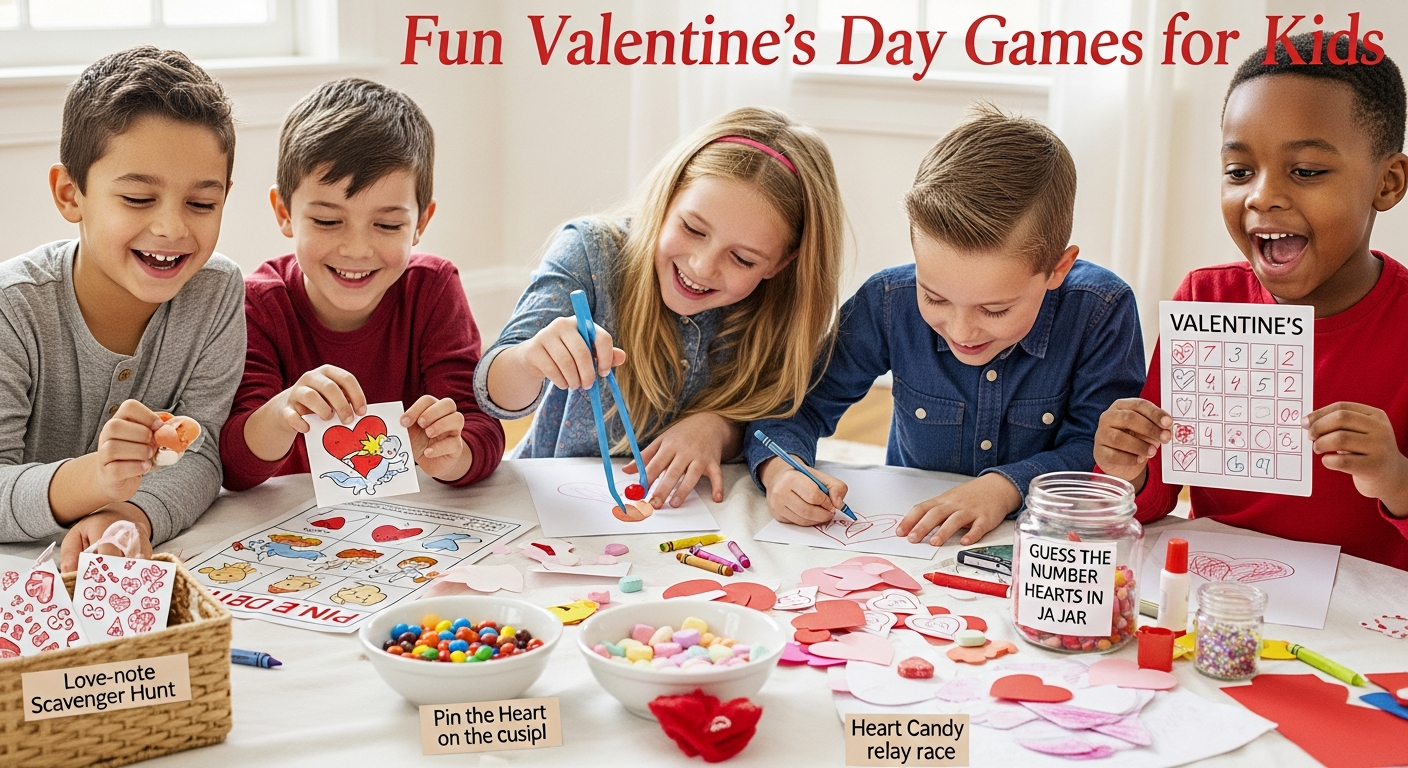
Table of Contents
- Introduction
- Why Play Valentine's Day Games? More Than Just Fun
- Getting Started: Setting the Scene for Fun
- Heartfelt Games for Little Ones (Toddlers & Preschoolers)
- Engaging Games for Growing Minds (Ages 4-7)
- Collaborative & Creative Games for Older Kids (Ages 7+)
- Speech Blubs: Your Partner in Communication & Play
- Making the Most of Your Valentine's Day Fun (Parent Tips)
- Ready to Empower Your Child's Voice? Discover Speech Blubs Today!
- Frequently Asked Questions (FAQ)
Do you ever find yourself caught in the delightful chaos of holidays, wondering how to make them truly special and meaningful for your children? Valentine's Day, with its themes of love, friendship, and kindness, offers a wonderful opportunity to do just that. Beyond the candies and cards, this heartwarming holiday is a perfect time to engage your little ones in activities that not only bring immense joy but also foster crucial developmental skills. We believe that play is the most powerful catalyst for learning, and a well-chosen game can transform a simple afternoon into a rich educational experience. This post isn't just about listing games; it's about showing you how these fun Valentine's Day games can become powerful tools for building communication, social-emotional intelligence, and a deeper family connection.

Introduction
Imagine a room filled with laughter, the gentle rustle of paper hearts, and the excited chatter of children engaged in playful pursuits. This isn't just a scene from a holiday movie; it's a tangible reality that can be created in your own home this Valentine's Day. While store-bought treats and heartfelt cards are wonderful, the true magic often lies in the shared experiences and the connections we forge through play. Many parents seek activities that are not only entertaining but also genuinely enriching, particularly for children who are developing their communication skills. This is where the power of fun Valentine's Day games for kids comes into its own. This article will delve into a delightful array of games, from those that encourage early language development and fine motor skills in toddlers to more complex activities that build narrative abilities and social competence in older children. We'll explore how these seemingly simple games can unlock a child's potential, foster a love for communication, and create cherished memories, demonstrating that the best kind of play is often the most profound.
Why Play Valentine's Day Games? More Than Just Fun
At first glance, Valentine's Day games might seem like mere entertainment, a way to pass the time during a festive occasion. However, for children, play is work, and these themed activities offer a rich landscape for essential developmental growth. When children engage in structured and semi-structured play, they're not just having fun; they're actively building the foundational skills they need to navigate the world.
Building Communication Skills
Every game, from a simple matching activity to a more elaborate charade, presents opportunities for children to practice and expand their communication abilities. For instance, playing "Heart Sorting" with a toddler helps them name colors and shapes ("red heart," "big heart"), while a "Valentine's Day Scavenger Hunt" encourages following multi-step directions and using positional words ("find the heart under the table," "the heart is next to the book"). These seemingly small linguistic exercises accumulate, enhancing vocabulary, sentence structure, and comprehension. For children who may be late talkers or have specific speech challenges, games provide a low-pressure, highly motivating environment to vocalize, imitate sounds, and experiment with new words. We understand this deeply at Speech Blubs, where our mission is to empower children to "speak their minds and hearts." We know that when children are having fun, they are more open to learning and more likely to mimic sounds and words, just as they do when watching and imitating peers in our app's unique video modeling sessions.

Fostering Social-Emotional Development
Valentine's Day is inherently about connection, and games provide a natural framework for children to learn about social interactions and emotional expression. Taking turns, sharing game pieces, negotiating rules, and celebrating wins (and gracefully handling losses) are all critical social skills. Games like "Love Story Collaborative Storytelling" teach empathy and perspective-taking as children build a narrative together. Moreover, expressing affection and kindness, core themes of Valentine's Day, are practiced in activities like "Love Game," where family members share things they appreciate about each other. These experiences help children understand their own emotions and respond appropriately to others, laying the groundwork for strong relationships.
Enhancing Fine and Gross Motor Skills
Many Valentine's Day games incorporate physical actions that are vital for motor development. Fine motor skills, essential for writing and self-care, are honed through activities like threading beads for a "Valentine's Day Necklace," carefully placing candy hearts in a stack for "Heart Stack," or peeling stickers for "Heart Tracing." Gross motor skills, involving larger muscle groups, are developed through games like "Musical Hearts" or "Heart Hopscotch," which encourage running, jumping, and balancing. These physical engagements are not just good for the body; they are integral to cognitive development and provide sensory input that supports overall learning.
Creating Lasting Family Memories
Perhaps one of the most precious benefits of playing together is the creation of joyful, lasting family memories. In our fast-paced world, dedicated time for playful interaction can feel rare. Valentine's Day offers a specific occasion to intentionally slow down, connect, and build traditions. These shared moments of laughter, problem-solving, and collaboration strengthen family bonds, creating a sense of belonging and security for children. These are the moments that children will recall fondly, long after the candy is gone.
Getting Started: Setting the Scene for Fun
Before diving into the games, a little preparation can go a long way in ensuring a smooth and joyful experience for everyone. Remember, the goal is not perfection, but engagement and connection.
Simple Prep: What You Need
The beauty of many Valentine's Day games is that they often require minimal supplies, many of which you might already have around the house. Think craft staples like construction paper (red, pink, purple, white), markers, glue sticks, scissors, and yarn. Everyday items like plastic cups, spoons, dice, and a timer are also incredibly useful. And of course, candy hearts or small chocolate kisses add a festive touch and can be fantastic, motivating game pieces. Don't feel pressured to buy elaborate supplies; often, the simplest materials spark the most creativity.
Adapting for Age & Ability
A key to successful game playing is tailoring activities to your child's developmental stage and individual needs. For toddlers, focus on simple, repetitive actions and clear verbal cues. For preschoolers, introduce turn-taking and slightly more complex rules. Older children can handle more intricate challenges, teamwork, and abstract thinking. If your child is working on specific speech sounds or language concepts, think about how you can incorporate those into the game's vocabulary. For example, if they're practicing 'L' sounds, choose a "Valentine's Day Scavenger Hunt" where they look for "love letters" or "long laces." This intentional adaptation makes the games more accessible and effective.
The Power of Co-Play
While our app, Speech Blubs, offers "smart screen time" that actively engages children, many of these Valentine's Day games are fantastic opportunities for truly screen-free, interactive co-play. Adult participation is invaluable. When you play with your child, you become a model for language, social interaction, and problem-solving. You can provide encouragement, offer gentle guidance, and expand on their responses. For a parent whose 3-year-old "late talker" loves animals, for example, the "Animal Kingdom" section in Speech Blubs offers a fun, motivating way to practice "moo" and "baa" sounds by imitating their peers. Similarly, playing a game like "Heart Matching" at home allows you to model descriptive language and reinforce new vocabulary. Co-play makes learning natural, fun, and deeply connected.
Heartfelt Games for Little Ones (Toddlers & Preschoolers)
These games are designed to captivate younger children with their simplicity and engaging nature, while subtly building foundational skills.
Musical Hearts
This is a wonderful way to get toddlers and preschoolers moving and practicing listening skills. How to Play: Cut out large paper hearts (or buy foam hearts) and write a simple action or sound on the back of a few (e.g., "Hop like a bunny," "Say 'love'," "Make a kissy face"). Place the hearts face down on the floor in a circle. Play music and have the children walk or dance around the hearts. When the music stops, each child stands on a heart, flips it over, and performs the action. For a child who is just learning to follow basic commands, this is perfect for practicing "stop" and "go" cues and simple imitation. It also encourages turn-taking and gross motor movement. Skills Targeted: Gross motor, listening, turn-taking, following directions, imitation, early vocabulary.
Heart Sorting & Counting
A classic activity reimagined for Valentine's Day, this game is fantastic for cognitive development and early math skills. How to Play: Gather a collection of heart-shaped objects in different colors and sizes (candy hearts, foam hearts, paper cut-outs). Provide several bowls or paper plates, each labeled with a color or number. Ask your child to sort the hearts by color or to count a specific number of hearts into each bowl. For a child learning colors and numbers, this provides a hands-on way to practice "red heart," "two hearts," or "big heart." You can encourage them to describe the hearts as they sort. Skills Targeted: Color recognition, number recognition, counting, sorting, vocabulary, fine motor skills.
Mystery Message Hearts (Revealing Love)
This activity adds an element of magic and surprise, which young children adore. How to Play: On white paper, use a white crayon to draw several medium-sized hearts and write secret messages (simple words, letters of their name, or small pictures) inside. Have your child paint over the paper with diluted watercolors (add a few drops of food coloring to water for a festive touch). As they paint, the crayon resist will reveal the secret messages. This is excellent for fine motor skills (holding the brush) and for building anticipation and early literacy interest. Skills Targeted: Fine motor, color recognition, anticipation, early literacy.
Sensory Bin of Love
Sensory bins are incredible for tactile exploration and language development. How to Play: Fill a bin with Valentine's Day themed items like red and pink shredded paper, heart-shaped pasta (uncooked), conversation hearts, pom-poms, small plastic hearts, and scoops or tongs. Let your child explore freely, scooping, pouring, and manipulating the items. Engage them by asking questions: "What does that feel like?" "Can you find a soft pom-pom?" "How many hearts can you scoop?" This naturally encourages descriptive vocabulary and imaginative play. For a child who might be hesitant to vocalize, the non-verbal sensory input can be very calming and motivating. Skills Targeted: Tactile exploration, descriptive vocabulary, fine motor, imaginative play, early math concepts (counting, comparing).
Engaging Games for Growing Minds (Ages 4-7)
As children grow, their capacity for more structured play and complex rules expands, making these games perfect for preschoolers and early elementary children.
Valentine's Day Scavenger Hunt
This game gets children moving and actively using their language skills to follow directions. How to Play: Hide various Valentine's Day themed items (paper hearts, small candies, heart-shaped toys) around a designated area. Provide clues that use positional words (e.g., "Find the red heart under the pillow," "Look for the pink heart next to the lamp"). You can make the clues pictorial for non-readers or written for emerging readers. This is particularly valuable for a child practicing 'L' sounds or other specific phonemes, as you can incorporate words with their target sounds into the clues. For instance, "Look for the lovely heart left by the library book." Skills Targeted: Following directions, positional concepts, vocabulary expansion, problem-solving, reading comprehension (if using written clues). Unsure if your child could benefit from speech support? Take our quick 3-minute preliminary screener to get a simple assessment and a free 7-day trial, helping you understand their communication development and providing next-steps plan.
Love Sucks (Marshmallow Transfer)
A hilarious and challenging game that hones fine motor control and concentration. How to Play: Provide each player with a straw and two plates. On one plate, place a pile of small heart marshmallows or conversation hearts. The goal is to use only the straw (by sucking to pick up the marshmallow) to transfer as many hearts as possible from one plate to the other within a minute. This is a fantastic minute-to-win-it style game that builds breath control, oral motor skills, and fine motor precision. Skills Targeted: Fine motor, concentration, breath control, oral motor skills, problem-solving.
Cupid's Arrow Toss
This game combines physical activity with hand-eye coordination. How to Play: Set up a target (e.g., a bucket, a laundry basket, or even a drawn heart on the floor). Give children "arrows" (Q-tips or craft sticks) and have them try to toss them into the target. You can assign points for different targets or distances. This helps with spatial awareness, aiming, and counting. Skills Targeted: Hand-eye coordination, spatial awareness, counting, gross motor skills.
Valentine's Day Bingo
A classic game that supports listening comprehension and visual recognition. How to Play: Create Bingo cards with Valentine's Day themed images (hearts, cupid, flowers, chocolates, love birds, "XOXO"). Call out the names of the images, and children mark them on their cards. The first to get Bingo wins. This is excellent for vocabulary reinforcement, listening skills, and visual scanning. Skills Targeted: Listening comprehension, vocabulary, matching, visual recognition, turn-taking.
Collaborative & Creative Games for Older Kids (Ages 7+)
For older children, games can become more complex, encouraging teamwork, strategic thinking, and advanced language use.
Valentine's Day Charades/Pictionary
These classic party games are perfect for encouraging expressive language, non-verbal communication, and creative thinking. How to Play: Write down Valentine's Day related words or phrases (e.g., "Cupid," "chocolate box," "sending a Valentine," "falling in love," "hug"). Players take turns acting out or drawing the phrase without speaking, while their teammates guess. This is fantastic for understanding nuances of language, interpreting non-verbal cues, and thinking abstractly. It also helps children articulate their ideas clearly, even under pressure. Skills Targeted: Expressive language, non-verbal communication, interpretation, creative thinking, vocabulary, social cues.
"Love Story" Collaborative Storytelling
This game is a fantastic way to build narrative skills and foster creativity. How to Play: Start a story with a Valentine's Day theme (e.g., "Once upon a time, in a land filled with candy hearts..."). Each person takes turns adding a sentence or two to continue the story, building on what the previous person said. This encourages sequential thinking, imaginative language, and active listening. It's a wonderful way to see children "speak their minds and hearts," weaving their unique ideas into a shared narrative. Our founders, who grew up with speech challenges, created Speech Blubs to provide the tool they wished they had – a joyful way for children to express themselves. Skills Targeted: Narrative skills, imagination, sequential thinking, active listening, creative expression.
Valentine's Day Family Feud (Adapted)
An adapted version of the popular game show, perfect for family fun and quick thinking. How to Play: Prepare a list of Valentine's Day themed survey questions (e.g., "Name something you associate with Valentine's Day," "Name a song with 'love' in the title," "Name a famous romantic movie"). Divide into two teams. Ask a question, and teams take turns guessing the most popular answers. This game boosts vocabulary, general knowledge, and quick recall, all within a fun, competitive framework. Skills Targeted: Vocabulary, general knowledge, quick recall, teamwork, social interaction.
DIY Valentine Card Creation Station
While not strictly a "game," this activity encourages immense creativity and thoughtful communication. How to Play: Set up a station with various craft supplies: paper, markers, stickers, glitter, glue, lace, cut-out hearts, and even old magazines for collaging. Encourage children to create personalized Valentine's Day cards for family, friends, or even local nursing home residents. This allows for self-expression, fine motor practice, and the development of empathy as they think about what might make someone else happy. You can prompt them with ideas for messages, helping them articulate their feelings. Skills Targeted: Creativity, fine motor skills, self-expression, empathy, written communication (if writing messages).
Speech Blubs: Your Partner in Communication & Play
As we explore the joy and developmental benefits of play, it's worth acknowledging that some children need extra support on their communication journey. That's where Speech Blubs comes in. Our app is born from the personal experiences of our founders, who all navigated speech problems in their youth and were driven to create the immediate, effective, and joyful solution they wished they had. We understand the challenges and frustrations parents face, and we're here to help the 1 in 4 children who need speech support.
We blend scientific principles with play, transforming screen time from a passive viewing experience into one-of-a-kind "smart screen time" that truly engages and educates. Our unique approach utilizes "video modeling," where children learn by watching and imitating their peers. This method taps into mirror neurons in the brain, making the learning process incredibly effective and natural. You can learn more about the science behind our methods and our high MARS scale rating by visiting our research page.
Speech Blubs is designed to be a powerful tool for family connection, offering a screen-free alternative to passive viewing experiences like cartoons. Instead, it provides a structured, interactive environment where children are motivated to speak, imitate, and develop vital communication skills. We're committed to empowering children to "speak their minds and hearts" every day.
Making the Most of Your Valentine's Day Fun (Parent Tips)
To ensure your Valentine's Day games are truly impactful, here are a few final tips:
- Focus on the Process, Not Perfection: The goal isn't for every game to run flawlessly or for every child to win. It's about the shared experience, the effort, and the learning that happens along the way. Celebrate small victories and the joy of participation.
- Encourage Participation, Not Just Winning: Shift the emphasis from being the "best" to simply trying and engaging. Praise effort and cooperation, not just outcomes. This builds confidence and fosters a love for communication and interaction, rather than just competition.
- Connect Games to Everyday Learning: Point out how the skills practiced in games apply to daily life. "Remember how we sorted the hearts? You can sort your toys that way too!" This helps children generalize their learning.
- Be Present and Engaged: Put away distractions and immerse yourself in the play. Your active presence, genuine enthusiasm, and engaged responses are the most powerful motivators for your child.
Ready to Empower Your Child's Voice? Discover Speech Blubs Today!
Valentine's Day is a beautiful reminder of the power of connection and the joy of expression. By incorporating these fun, engaging, and developmentally beneficial games into your celebrations, you're not just creating memories; you're building a stronger foundation for your child's communication journey. Every word, every laugh, and every shared moment contributes to their confidence and ability to "speak their minds and hearts."
If you're looking for more ways to support your child's speech and language development with engaging, scientifically-backed tools, we invite you to explore Speech Blubs. Our app offers a world of interactive learning designed to complement these playful activities and provide consistent, joyful practice.
We offer flexible plans to suit your family's needs:
- Monthly Plan: Get started for just $14.99 per month.
- Yearly Plan: Our most popular and recommended option! Save an incredible 66%, bringing the cost down to just $59.99 per year, which breaks down to an amazing $4.99/month. This plan offers unparalleled value and access to our full suite of features.
By choosing the Yearly plan, you unlock exclusive benefits that truly enhance your child's learning experience:
- A 7-day free trial to explore all the app has to offer.
- Access to the extra Reading Blubs app, a fantastic tool to further literacy skills.
- Early access to new updates and a dedicated 24-hour support response time.
The Monthly plan does not include these additional high-value features, so for the best experience and savings, we highly recommend the Yearly plan.
Don't wait to give your child the gift of confident communication. Many parents have seen remarkable progress in their children's speech and language development, fostering a love for talking and reducing frustration. See what other parents are saying about their child's success with Speech Blubs!
Ready to get started? Download Speech Blubs on the App Store or Google Play to begin your 7-day free trial today by selecting the Yearly plan. Or, you can create your account and sign up on our website to embark on this joyful journey of communication with us!
Frequently Asked Questions (FAQ)
Q1: How can I make these Valentine's Day games accessible for a child with limited verbal skills?
A1: Focus on non-verbal communication and visual cues. Use gestures, picture cards, and exaggerated facial expressions. For games like "Heart Sorting," prompt them to point to colors or "give me red." If they make any sound approximating a word, acknowledge and expand on it. The goal is participation and connection, with verbalization as a bonus. Speech Blubs, with its video modeling, provides a visual and auditory model that can be incredibly helpful for children with limited verbal skills, encouraging imitation in a low-pressure environment.
Q2: My child loses interest quickly. How can I keep them engaged in these games?
A2: Keep game sessions short and sweet, especially for younger children, and don't be afraid to stop before they get bored. Offer choices within the game (e.g., "Do you want to sort by color or size?"). Incorporate their interests—if they love cars, maybe they're "delivering" hearts to a car. And most importantly, stay engaged and enthusiastic yourself; your energy is contagious! Remember, consistency with short, engaging activities is more effective than infrequent, long, frustrating sessions.
Q3: Are these games a substitute for professional speech therapy if my child has a diagnosed speech delay?
A3: No, these games are a wonderful supplement to professional speech therapy, not a replacement. They provide a fun, natural environment to practice skills learned in therapy and build a love for communication. If you have concerns about your child's speech development, consulting with a certified speech-language pathologist is always the best first step. Speech Blubs is also designed to be a powerful tool that complements professional therapy, offering daily practice and motivation between sessions.
Q4: How does Speech Blubs' "smart screen time" approach differ from other educational apps for kids?
A4: At Speech Blubs, our "smart screen time" is built on the scientifically-backed "video modeling" method, where children learn by observing and imitating their real-life peers, not animated characters. This active participation encourages genuine vocalization and imitation, making it a truly interactive and engaging experience that stands apart from passive educational apps. We're not just about consumption; we're about active contribution and empowering children to develop their voices through joyful, scientifically-grounded play.
About the author