
Ghoulishly Good: DIY Halloween Party Games for Kids
 By Speech Blubs Team•Jan 28, 2026•26 min.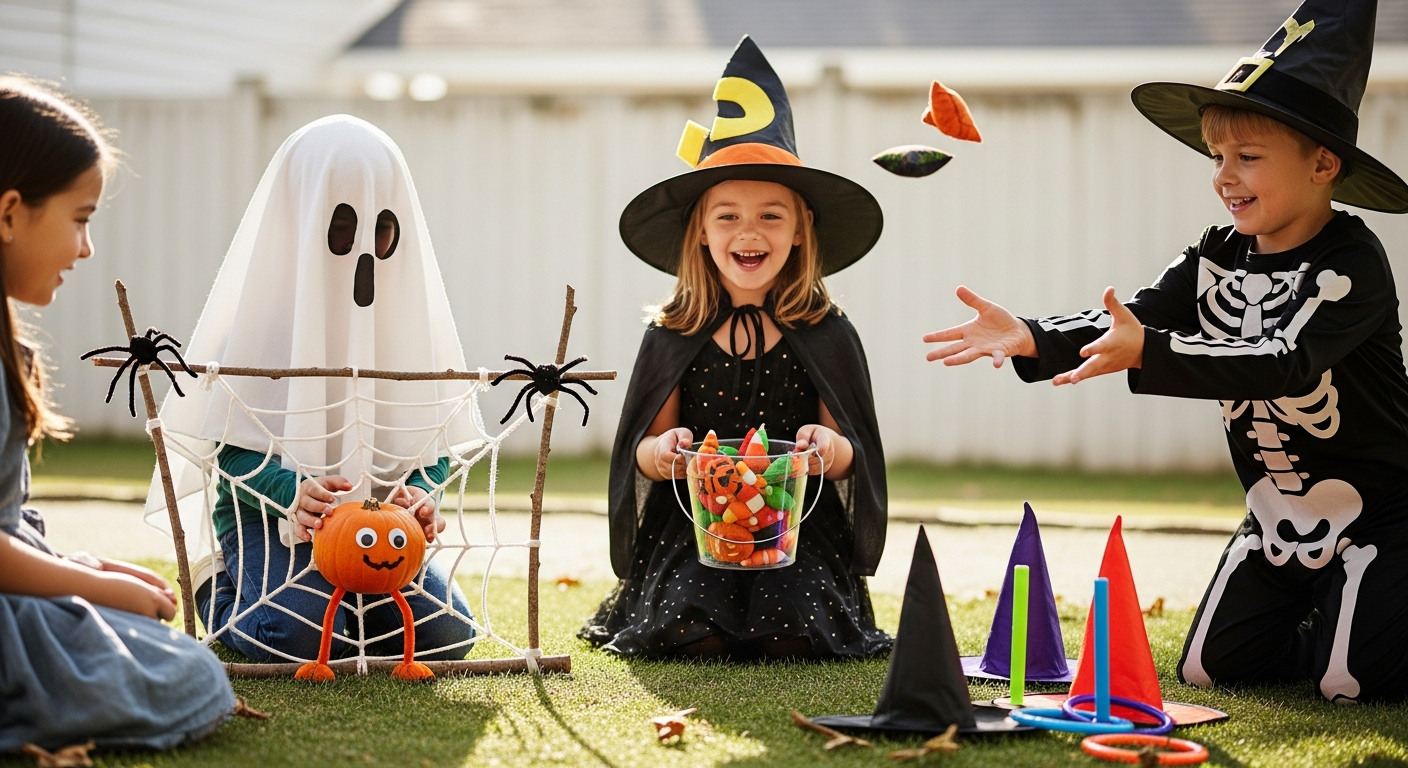
Table of Contents
- Introduction
- Why DIY Halloween Games are a Treat, Not a Trick
- Setting the Scene: Planning Your Spooktacular Soiree
- The Ultimate Collection of DIY Halloween Party Games
- Enhancing the Halloween Party Experience with Speech Blubs
- Conclusion
- FAQ
Introduction
As autumn leaves crunch underfoot and the scent of pumpkin spice fills the air, a different kind of magic begins to brew: Halloween! For many parents, the thought of hosting a children's Halloween party conjures up images of endless to-do lists, elaborate decorations, and the daunting task of keeping a gaggle of sugar-fueled youngsters entertained. But what if we told you that creating an unforgettable, laughter-filled Halloween bash doesn't have to be a nightmare? What if it could be an opportunity for simple, budget-friendly fun that also subtly nurtures your child's development, especially their communication skills?
At Speech Blubs, we believe that every interaction is a chance for growth, and Halloween parties are no exception. Far from just a day for costumes and candy, this spooky season offers a unique canvas for creativity, connection, and learning. This blog post is your ultimate guide to crafting a spectacular Halloween party using ingenious DIY games that are not only easy on your wallet but are also packed with developmental benefits. We'll show you how to transform everyday items into ghoulishly good entertainment, fostering everything from fine motor skills and problem-solving to social interaction and, yes, even speech and language development. Get ready to embrace the spirit of play, empower your children to express themselves, and create cherished memories that will last long after the last candy wrapper is gone.

Why DIY Halloween Games are a Treat, Not a Trick
When it comes to children's parties, the allure of store-bought decorations and pre-packaged entertainment can be strong. However, choosing the DIY route for your Halloween games offers a cauldron full of benefits that go far beyond just saving a few dollars. It's about infusing your celebration with a personal touch, engaging children in the creation process, and unlocking a wealth of developmental opportunities.
Firstly, budget-friendliness is a huge perk. Many of the most memorable party games can be crafted from items you already have around the house, like cardboard boxes, toilet paper rolls, old sheets, and craft supplies. This allows you to allocate your party budget to other areas, like healthy snacks or fun party favors, or perhaps to invest in tools that support your child’s development year-round, like a subscription to our app.
Secondly, creativity and personalization shine through. When you DIY, you're not just buying a product; you're creating an experience tailored to your child's interests and the theme of your party. Involving your child in making the games, from decorating "monster" tin cans for bowling to designing "ghost" sheets for a sack race, transforms party prep into a fun, collaborative activity. This process alone encourages imaginative thinking and a sense of ownership, making the party even more special.
But perhaps the most significant advantage of DIY Halloween games lies in their profound developmental benefits. These aren't just time-fillers; they are rich opportunities for growth across multiple domains:
- Gross Motor Skills: Games involving running, jumping, crawling, and balancing help children develop coordination, strength, and spatial awareness. Think "Mummy Wrap Races" or "Ghostly Sack Races" that get kids moving.
- Fine Motor Skills: Activities like decorating cookies, pinning features on a character, or tossing rings require precision and hand-eye coordination.
- Cognitive Development: Following game rules, strategizing in team games, and solving riddles in a scavenger hunt boost problem-solving abilities, memory, and critical thinking.
- Social-Emotional Learning: Sharing, taking turns, cheering for teammates, and handling wins and losses gracefully are all vital social skills practiced in a fun, low-pressure environment. These interactions are crucial for building empathy and self-regulation.
- Communication and Language Development: This is where DIY games truly excel and align perfectly with our mission at Speech Blubs. Every game provides a natural context for language use:
- Vocabulary Expansion: Naming Halloween-themed objects, actions, and characters ("spooky," "creepy," "ghost," "witch," "boo!").
- Following Instructions: Listening and comprehending multi-step directions for how to play a game.
- Expressive Language: Describing what they see, how they feel, what they're doing, and explaining game rules.
- Sound Production: Making sound effects during games (e.g., a "woosh" for a flying ghost, "growl" for a monster).
- Turn-Taking: Engaging in conversations about the game, asking questions, and responding.
- Social Communication: Learning to negotiate, collaborate, and express desires or frustrations appropriately within a game setting.
At Speech Blubs, our mission is to empower children to "speak their minds and hearts." We know firsthand the challenges children can face because our founders grew up with speech problems themselves and created the tool they wished they had. These DIY games are the perfect screen-free alternative to passive viewing, offering a powerful tool for family connection and laying foundational communication skills in a joyful, natural way. Whether your child is a "late talker" exploring new sounds or a burgeoning conversationalist practicing social nuances, interactive play is a cornerstone of their journey.

Ready to see if your child could benefit from more communication support? Take our quick 3-minute preliminary screener to get a simple assessment and a personalized next-steps plan. It’s a great way to understand your child’s communication development!
Setting the Scene: Planning Your Spooktacular Soiree
Before the little ghouls and goblins arrive, a little preparation can go a long way in ensuring your Halloween party is a howling success. Thinking through a few key elements will help you create an atmosphere that's both festive and conducive to fun and learning.
Choosing Your Theme and Decor
While "Halloween" is a theme in itself, you can narrow it down further. Will it be a "Friendly Monsters" party, a "Spooky Enchanted Forest," or a classic "Haunted House" theme? Your chosen theme can guide your decor and game selection, making everything feel cohesive. For DIY decor, think creatively:
- Ghostly Garlands: Cut out ghost shapes from white paper or old sheets and string them up.
- Spider Webs: Stretch cotton batting or yarn across corners and doorways.
- Frankenstein's Lab: Use green and black streamers, empty jars filled with "potions" (colored water), and a few plastic spiders.
Involving your child in decorating isn't just a time-saver; it’s an early opportunity for communication. Ask them about their favorite monster, what colors they like for the party, or where they think the ghosts should go. These simple questions encourage descriptive language and expression of preferences.
Age-Appropriateness and Safety First
Consider the age range of your party guests. Toddlers will thrive with simple, non-competitive games focusing on sensory exploration and basic motor skills, while older children might enjoy more complex team challenges and strategic thinking. Ensure that all game materials are safe for the youngest attendees – no small choking hazards for babies, and make sure any active games have clear boundaries and adult supervision. A few safety tips:
- Clear Playing Areas: Remove any tripping hazards.
- Allergen Awareness: If serving food, be mindful of common allergies.
- Supervision: Always have enough adults to supervise games, especially those involving movement or competitive elements.
The Power of Adult Involvement: Co-Play and Connection
These DIY games are designed for active participation, not just passive observation. Your role as a parent or caregiver is paramount. Embrace the spirit of co-play: get down on the floor, demonstrate the game, offer encouragement, and laugh alongside the children. This engaged interaction is where the true magic happens, both for fun and for developmental growth.
When we talk about "smart screen time" at Speech Blubs, we emphasize interactive, engaging experiences that foster active participation, unlike passive viewing. While our app provides a fantastic tool for structured speech practice, these DIY games are the perfect "screen-free alternative," promoting face-to-face interaction and family connection. Think of it as enriching your child's communication toolkit from all angles – digital and real-world.
Remember, the goal isn't perfection; it's participation, laughter, and creating a supportive environment where every child feels empowered to try, learn, and "speak their minds and hearts."
The Ultimate Collection of DIY Halloween Party Games
Get ready to transform your home into a hub of Halloween fun with these easy-to-create, engaging games. We've designed this list to cover a range of ages and skill sets, ensuring there's something for every little monster. For each game, we'll provide simple DIY instructions, how to play, and highlight the incredible developmental boosts, including how it can naturally support speech and language.
Active & Energetic Games (Gross Motor & Following Instructions)
These games are perfect for burning off some of that Halloween energy while refining coordination and the ability to follow directions.
1. Mummy Wrap Race
This classic is a perennial favorite for its sheer silliness and teamwork!
- DIY Instructions: Gather rolls of toilet paper or white streamers. That’s it!
- How to Play: Divide children into teams of 2-3. Each team designates one "mummy" and the others are "wrappers." On "go," wrappers race to wrap their mummy from head to toe (leaving face clear for breathing!) as quickly as possible with an entire roll of toilet paper. The first team to use up their roll and create a fully mummified friend wins.
- Developmental Boost:
- Gross Motor: Running, turning, reaching, bending.
- Fine Motor: Manipulating the toilet paper, wrapping.
- Social-Emotional: Teamwork, cooperation, turn-taking, problem-solving (how to wrap efficiently!).
- Communication: Giving and following instructions ("Wrap faster!", "Go around the legs!"), descriptive language ("You look so white!", "He's all covered!"), cheering, sound effects ("Whoosh!"), expressing excitement.
- Speech Blubs Connection: Before the game, practice action words like "wrap," "run," "go," and "stop." Afterwards, describe the mummies using adjectives like "tall," "round," "silly," "white." Our "When I Grow Up" section features characters that encourage descriptive language, much like describing a mummy's costume.
2. Pumpkin Patch Stomp (Balloon Pop)
A simple, satisfying game that kids adore!
- DIY Instructions: Inflate orange and black balloons. Before inflating, you can stuff them with small, squish-proof candies or slips of paper for prizes. Scatter them across the "pumpkin patch" (your designated play area).
- How to Play: Children stomp on the balloons to pop them. You can make it a race (first to pop X balloons) or a free-for-all prize hunt.
- Developmental Boost:
- Gross Motor: Stomping, jumping, balancing.
- Sensory: The loud "pop!" and feel of balloons.
- Communication: Counting how many balloons they pop, exclamations of "Pop!" "Boom!" "Got it!", requesting "More!" if they want to keep playing.
- Speech Blubs Connection: Practice early sounds like "P" for "pop!" and "B" for "balloon." The excitement of the game creates a motivating environment for vocalizations and expressive sounds, similar to how our app uses fun video modeling to encourage imitation.
3. Spider Web Crawl Obstacle Course
Transform your hallway or living room into a spooky challenge.
- DIY Instructions: Use yarn, crepe paper, or streamers to create a "spider web" across a hallway or between furniture. Criss-cross them at different heights, creating tunnels and obstacles to crawl under, step over, or climb through.
- How to Play: Children navigate the web without touching the "sticky" strings. You can time them for a challenge or simply let them explore.
- Developmental Boost:
- Gross Motor: Crawling, balancing, flexibility, spatial awareness.
- Problem-Solving: Figuring out the best path through the web.
- Communication: Using positional words ("under," "over," "through"), following multi-step directions, describing their movements ("I'm crawling!"), making spider sounds ("hiss!").
- Speech Blubs Connection: This game is fantastic for prepositions. Practice these words repeatedly. Our app helps children learn concepts through repetition and visual cues, and you can mimic that by demonstrating the actions with clear verbal labels.
4. Ghostly Sack Race
A spooky twist on a classic field day game.
- DIY Instructions: Gather old white pillowcases or large fabric sacks. Draw friendly or spooky ghost faces on them with a black marker.
- How to Play: Children step into their "ghost" sack, hold it up around their waist, and hop from a starting line to a finish line. This works great as a relay race with teams.
- Developmental Boost:
- Gross Motor: Jumping, hopping, balancing, coordination.
- Social-Emotional: Turn-taking, cheering for teammates, understanding competition.
- Communication: Saying "Go!", "Hop!", "Faster!", encouraging peers, simple narratives ("The ghost is racing!").
5. Monster Freeze Dance
Dance until the music stops, then become a spooky statue!
- DIY Instructions: Create a Halloween playlist with fun, spooky tunes.
- How to Play: Play music and encourage kids to dance like different Halloween characters (zombies, witches, vampires). When the music stops, everyone freezes in a spooky pose. Anyone caught moving is out, or has to perform a "spooky" challenge (e.g., make a monster sound).
- Developmental Boost:
- Gross Motor: Dancing, freezing, body control.
- Following Instructions: Listening for the music to start/stop.
- Communication: Making monster sounds, describing their dance moves, naming Halloween characters.
- Speech Blubs Connection: This is perfect for encouraging expressive vocalizations and sound imitation. Challenge kids to make specific animal sounds like a cat (meow) or dog (woof) during their dance moves, which they can practice in our "Animal Kingdom" section.
Skill & Aim Games (Fine Motor, Hand-Eye Coordination, Vocabulary)
These games require a bit more precision, helping kids refine their hand-eye coordination and fine motor skills, while offering chances to build vocabulary.
6. Frankenstein Bowling
Recycle and play!
- DIY Instructions: Collect 6-10 empty tin cans (soup, vegetable cans work great). Wash them thoroughly. Paint them green or cover them with green paper, then draw Frankenstein monster faces with black marker. Use a small pumpkin or rubber ball as the "bowling ball."
- How to Play: Set up the "Frankenstein" cans like bowling pins. Children roll the ball to knock them down. Keep score or simply play for fun.
- Developmental Boost:
- Fine Motor: Rolling the ball with control.
- Hand-Eye Coordination: Aiming for the pins.
- Communication: Counting how many pins fall, saying "Strike!", "Oops!", "My turn!", using descriptive words for the monster faces.
- Speech Blubs Connection: Count the pins, name the colors, or use action words like "roll" and "hit." Our app has many counting and naming activities that can be reinforced during this game.
7. Poke-a-Pumpkin
A surprise game with minimal setup.
- DIY Instructions: Gather a large piece of cardboard or a sturdy foam board. Cut circles into it (large enough for a child's hand to fit through). Before the party, tape a plastic cup over each hole from the back, placing a small prize (candy, sticker) inside the cup. Cover the front of each hole with a piece of orange tissue paper, securing it with a rubber band, creating "pumpkin" domes. Decorate the board to look like a pumpkin patch.
- How to Play: Children take turns "poking" through the tissue paper on a "pumpkin" to reveal their surprise prize.
- Developmental Boost:
- Fine Motor: Poking, grasping.
- Anticipation: Building excitement for the surprise.
- Communication: Expressing excitement ("Wow!", "What is it?"), naming the prize, asking "Can I poke?", turn-taking phrases.
8. Witch Hat Ring Toss
A bewitching game of skill.
- DIY Instructions: Purchase inexpensive witch hats (or make them from black cardstock). Secure them to a sturdy piece of wood or cardboard. Use glow stick bracelets or cut-out cardboard rings as tossing rings.
- How to Play: Children stand a set distance away and try to toss rings onto the witch hats. Assign points for each hat, or simply play to see who can get the most rings.
- Developmental Boost:
- Hand-Eye Coordination: Aiming and throwing.
- Number Recognition: Counting successful tosses.
- Communication: Naming colors of rings, counting, verbalizing "miss," "got it," "my turn," asking for "more."
9. Feed the Monster
A hungry monster that loves balls!
- DIY Instructions: Find a large cardboard box. Cut a large, jagged mouth opening in one side. Decorate the box to look like a friendly or spooky monster. Use beanbags, soft balls, or even crumpled newspaper "eyeballs" as "food."
- How to Play: Children stand a short distance away and try to toss the "food" into the monster's mouth.
- Developmental Boost:
- Gross Motor: Throwing, aiming.
- Turn-Taking: Waiting for their turn to feed the monster.
- Communication: Making monster sounds ("Grrr!"), exclamations of "Yummy!", "Eat!", "Feed the monster!", naming the "food" items.
- Speech Blubs Connection: This is great for action words ("throw," "eat," "feed") and requesting ("More food, please!"). Our app’s sections like "When I Grow Up" or "We Are People" can inspire discussions about different characters and their "food" preferences, bridging imaginative play with language.
Creative & Imaginative Games (Cognitive, Expressive Language)
These games tap into children's imaginations, encouraging them to think creatively, express themselves, and use descriptive language.
10. Pin the Boo on the Ghost / Pin the Nose on the Pumpkin
A classic game with a ghostly makeover.
- DIY Instructions: Draw or print a large ghost without a mouth or a pumpkin without a nose on a poster board. Cut out several "boos" (speech bubbles with "Boo!") or pumpkin noses. Put a loop of tape on the back of each cutout. Blindfolds are optional depending on age.
- How to Play: Blindfold each child (or have them close their eyes), spin them around a few times, and have them try to pin the "boo" or nose in the correct spot. The closest wins.
- Developmental Boost:
- Spatial Awareness: Understanding "where" the object should go.
- Body Awareness: Navigating while disoriented.
- Communication: Using positional words ("up," "down," "left," "right"), encouraging peers with directions, exclamations.
11. Halloween Charades
Act out spooky words without speaking!
- DIY Instructions: Write down various Halloween-themed words or phrases on slips of paper (e.g., ghost, witch, vampire, cat, pumpkin, trick-or-treat, broomstick, scarecrow, zombie, spider, bat). Fold them and put them in a hat or small pumpkin.
- How to Play: Children take turns picking a slip of paper and acting out the word or phrase without speaking. Others guess what they are. You can play individually or in teams.
- Developmental Boost:
- Expressive Language: Non-verbal communication, body language.
- Receptive Language: Comprehending and guessing words.
- Vocabulary: Expanding their knowledge of Halloween terms.
- Social-Emotional: Encouraging imagination, understanding social cues.
- Speech Blubs Connection: This game is a fantastic follow-up to vocabulary building. If your child is working on a specific category like animals or actions, tailor the charade words to that. Our app introduces hundreds of words and actions through video modeling, giving kids a rich vocabulary to draw upon for games like this.
12. Ghostly Guessing Game (Sensory Box)
A tactile game that encourages descriptive language.
- DIY Instructions: Decorate several cardboard boxes with spooky themes. Cut a hand-sized hole in one side of each box. Inside each box, place a mysterious, Halloween-themed item with a unique texture (e.g., cooked spaghetti for "worms," peeled grapes for "eyeballs," dried leaves for "dead skin," jelly for "slime," a rubber glove filled with flour for a "dead man's hand," or even just a small pumpkin or fake spider).
- How to Play: Children reach into a box without looking and describe what they feel. Others try to guess what the mystery item is.
- Developmental Boost:
- Sensory Exploration: Exploring different textures.
- Descriptive Language: Using adjectives to describe texture ("slimy," "bumpy," "squishy," "soft," "hard"), size, and shape.
- Cognitive: Making inferences and guesses based on sensory input.
- Speech Blubs Connection: This game directly supports descriptive language, a key component of building a rich vocabulary. You can practice words like "cold," "wet," "smooth," and "rough" within this fun context. Our app helps children label objects and actions, and this game extends that learning into the sensory realm.
Team & Collaborative Games (Social Skills, Turn-taking, Problem-solving)
These games emphasize working together, sharing, and navigating social dynamics in a festive way.
13. Haunted Scavenger Hunt
A thrilling search for spooky treasures.
- DIY Instructions: Create a list of Halloween-themed items for children to find (e.g., a plastic spider, a mini pumpkin, a black cat drawing, a ghost sticker, a bat cutout, a piece of "eyeball" candy). Hide these items around your party space. For older kids, you can write riddles or clues that lead to the next item. Provide small "cauldrons" (buckets or bags) for teams to collect their treasures.
- How to Play: Divide children into teams. Give each team a list and send them off to find the items. The first team to collect all items wins, or simply let everyone find them for fun.
- Developmental Boost:
- Teamwork: Collaborating to find items.
- Problem-Solving: Deciphering clues (if used).
- Communication: Calling out finds, asking for help, negotiating, using directional language ("It's over there!").
- Vocabulary: Naming the items found.
14. Halloween Bingo
A low-key game that's perfect for a short break between active games.
- DIY Instructions: Print free Halloween Bingo cards online or draw your own with simple images (ghost, pumpkin, bat, witch hat, candy corn, spider). Use candy corn or small Halloween erasers as markers.
- How to Play: Call out Halloween-themed words or show images. Children mark them on their cards. The first to get Bingo (a line of 5) wins a small prize.
- Developmental Boost:
- Auditory Processing: Listening for called words/images.
- Visual Recognition: Identifying pictures.
- Turn-Taking: Waiting for their turn to call Bingo.
- Vocabulary: Reinforcing Halloween words.
15. Musical Pass the Pumpkin / Musical Cauldron
A gentle game of anticipation and sharing.
- DIY Instructions: For "Pass the Pumpkin," use a small, lightweight pumpkin or a soft Halloween-themed toy. For "Musical Cauldron," place a large cauldron in the center of the room and fill it with various Halloween dress-up items (hats, masks, capes, glasses).
- How to Play (Pass the Pumpkin): Children sit in a circle and pass the pumpkin around while music plays. When the music stops, the child holding the pumpkin is out (or gets to do a silly dance). The last child remaining wins.
- How to Play (Musical Cauldron): Children dance around the cauldron while music plays. When the music stops, everyone quickly grabs a new item from the cauldron to wear. Restart the music and repeat.
- Developmental Boost:
- Auditory Processing: Listening for music cues.
- Social-Emotional: Sharing, turn-taking, handling being "out" gracefully.
- Communication: Naming items, expressing choices, following directions.
These DIY games are not just activities; they are catalysts for interaction, learning, and joy. By engaging in them with your child, you're building a foundation for strong communication skills and creating priceless memories.
Enhancing the Halloween Party Experience with Speech Blubs
While these DIY games provide fantastic opportunities for natural language development, sometimes children need an extra boost, or a more structured, yet equally joyful, approach to developing their speech and communication. This is where Speech Blubs comes in as a powerful complement to your child's overall developmental journey.
We are deeply committed to providing an immediate, effective, and joyful solution for the 1 in 4 children who need speech support. Our app was born from the personal experiences of our founders, who all grew up with speech problems and created the tool they wished they had. We seamlessly blend scientific principles with play into one-of-a-kind "smart screen time" experiences. We provide a screen-free alternative to passive viewing (like cartoons) and a powerful tool for family connection.
How Speech Blubs Supports Communication Beyond the Party
Imagine your child is particularly excited about the "Monster Freeze Dance" game. Before the party, you could use our app to explore the "When I Grow Up" section, where they can practice making monster sounds or imitating words related to different characters. The core of our methodology is "video modeling," where children learn by watching and imitating their peers. This natural, engaging process encourages them to articulate sounds and words more clearly, building confidence and reducing frustration.
Here are a few ways Speech Blubs can seamlessly integrate into your Halloween fun and everyday learning:
- Pre-Party Warm-Up: Use our "Animal Kingdom" or "Yummy Time" sections to practice sounds or words related to creatures or treats they might encounter at the party. For instance, if you're playing "Feed the Monster," practice monster sounds or action words like "eat" in the app beforehand.
- Post-Party Cool-Down: After all the excitement, a calm session with Speech Blubs can help reinforce new vocabulary learned during the games. Discuss the characters or objects they saw, connecting the app content to their real-world experiences.
- Targeted Skill Development: If you notice your child struggling with certain sounds or words during games, Speech Blubs offers targeted exercises to address those specific areas in a fun, pressure-free way. Our research-backed methodology helps children develop complex communication skills, placing us in the top tier of speech apps worldwide. You can learn more about our scientific approach here.
- Confidence Building: The success children experience in imitating and producing sounds and words within our app translates directly to greater confidence in real-life interactions. This reduces frustration and fosters a love for communication, which is invaluable during social gatherings like parties.
Ultimately, Speech Blubs acts as a powerful supplement to your child's overall development plan. We focus on fostering a love for communication, building confidence, reducing frustration, developing key foundational skills, and creating joyful family learning moments. We are proud to share that thousands of parents have seen incredible progress, and you can read their success stories here.
Investing in Your Child's Future: Our Plans
We want to make Speech Blubs accessible to every family. We offer two main subscription plans, with the yearly option providing the best value and most features:
- Monthly Plan: For just $14.99 per month, you get access to our core app features, perfect for trying it out for a shorter period.
- Yearly Plan: This is by far our most popular and value-packed option at $59.99 per year. That breaks down to just $4.99/month, allowing you to save 66% compared to the monthly plan!
Why choose the Yearly Plan? It’s not just about saving money; it’s about unlocking the full potential of Speech Blubs and more:
- 7-Day Free Trial: Only with the Yearly Plan do you get a full week to explore every corner of our app with absolutely no commitment.
- Reading Blubs App: Gain exclusive access to our companion app, Reading Blubs, designed to further enhance early literacy skills.
- Early Access to New Updates: Be the first to try out exciting new games, activities, and features as soon as they're released.
- 24-Hour Support Response Time: Get priority assistance from our dedicated customer support team whenever you need it.
The Monthly Plan, while flexible, does not include these invaluable benefits. We highly recommend starting with the Yearly Plan to take advantage of the 7-day free trial and access the full suite of features that will truly empower your child's communication journey.
Ready to see the difference Speech Blubs can make? Download Speech Blubs on the Apple App Store or Google Play Store to begin your 7-day free trial today!
Conclusion
Creating a memorable Halloween party for kids doesn't require elaborate spending or professional party planners. With a dash of creativity and a willingness to embrace the DIY spirit, you can transform everyday items into ghoulishly good games that entertain, engage, and educate. From energetic mummy races that build gross motor skills to imaginative charades that expand vocabulary, each activity offers a unique opportunity for your child to learn, grow, and connect.
More than just fun, these interactive games are powerful tools for fostering essential developmental skills – especially communication. By actively participating alongside your child, asking questions, offering descriptive language, and encouraging their expressions, you are building a strong foundation for them to "speak their minds and hearts." This Halloween, let's move beyond passive screen time and embrace joyful, hands-on experiences that strengthen family bonds and boost your child's confidence in expressing themselves.
And remember, for targeted support and continued progress in speech and language development, Speech Blubs is here to help. Our research-backed app, filled with engaging video modeling activities, is the perfect companion to your child's learning journey, whether as a fun warm-up before party games or a focused session to build specific skills.
Ready to unlock a world of communication possibilities for your child? Start your 7-day free trial today! Head over to the Apple App Store or Google Play Store to download Speech Blubs. Make sure to select the Yearly plan to get your free trial and access to all the exclusive features, including the Reading Blubs app and priority support, for the best value! Or, if you prefer, create your account on our website to start your journey with us today. Happy Halloween, and happy communicating!
FAQ
Q1: How can DIY Halloween games specifically support my child's speech development?
DIY Halloween games offer a natural, low-pressure environment for speech development by creating opportunities for active communication. Children use new vocabulary (e.g., "spooky," "pumpkin," "ghost"), practice following and giving instructions ("roll the ball," "pass the pumpkin"), engage in turn-taking conversations, make sound effects (monster growls, balloon pops), and describe actions and observations. When adults actively participate and model clear language, these games become incredibly rich language-learning experiences.
Q2: Are these DIY games suitable for all ages of children attending a Halloween party?
Yes, many DIY Halloween games can be adapted for a wide range of ages. For toddlers and preschoolers, focus on simpler games with basic rules, lots of sensory input (like the "Ghostly Guessing Game"), and gross motor activities (like "Pumpkin Patch Stomp"). For older children, you can introduce more complex rules, team competition, and cognitive challenges like scavenger hunts with riddles or charades with more abstract words. Always prioritize safety and ensure supervision appropriate for the youngest guests.
Q3: What if I don't have much time for extensive DIY preparations?
Even with limited time, you can still host a fantastic DIY Halloween party. Focus on "low-effort, high-impact" games. For instance, a "Mummy Wrap Race" only requires toilet paper. "Monster Freeze Dance" just needs a Halloween playlist. "Halloween Bingo" can be quickly printed online. The key is to select a few simple, engaging activities that don't require intricate crafts. Involving children in the simple prep, like drawing faces on cans for bowling, also saves time and adds to the fun!
Q4: How does Speech Blubs fit into our Halloween fun, or my child's overall communication development?
Speech Blubs complements your Halloween fun by offering structured, engaging "smart screen time" that reinforces communication skills in a joyful way. Before a party, you can use the app to practice Halloween-themed vocabulary or sounds (e.g., animal sounds, action words) through our unique video modeling. After the party, it can serve as a calming activity to reinforce new words or concepts learned during the games. Beyond the party, Speech Blubs provides a comprehensive, research-backed tool for consistent speech and language practice, helping children build confidence and expressive abilities year-round, making it a valuable part of their communication journey.
About the author