
Gobble Up Fun: Easy Turkey Crafts for Kids
 By Speech Blubs Team•Jan 13, 2026•21 min.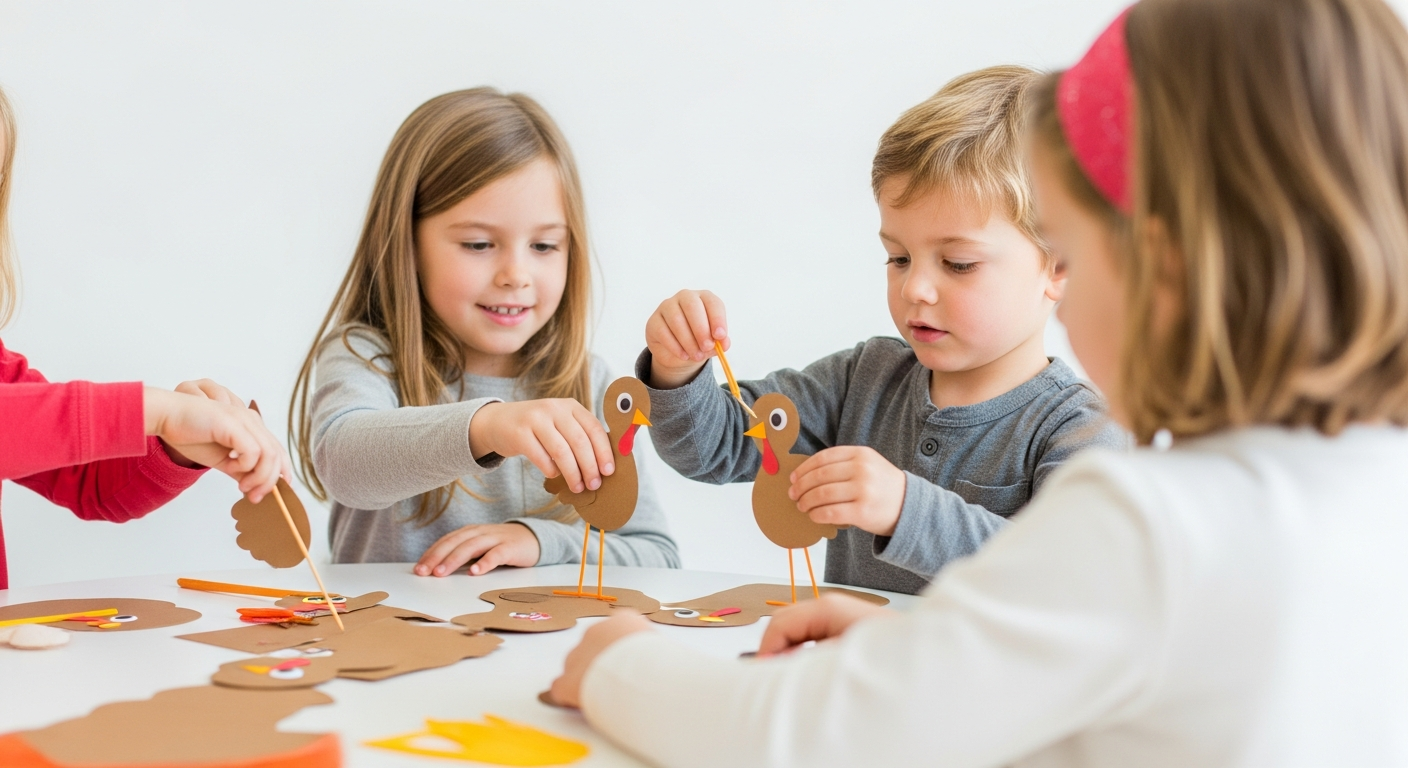
Table of Contents
- Introduction
- Why Turkey Crafts? More Than Just Fun
- Preparing for Your Crafting Adventure
- Our Favorite Easy Turkey Crafts for Kids
- Enhancing the Crafting Experience with Communication
- Speech Blubs: Your Partner in Communication Development
- Getting Started with Speech Blubs Today
- Conclusion
- FAQ
Ever wonder if those adorable crafts your child brings home are doing more than just collecting dust on the fridge? The truth is, engaging in simple, hands-on activities like turkey crafts can unlock a world of developmental benefits, from boosting fine motor skills to sparking imagination and, crucially, fostering communication. As parents and caregivers, we often seek creative ways to keep our little ones engaged, especially during the festive holiday season. What if we told you that making a feathered friend could also be a powerful tool for language development?
This post will dive deep into a vibrant collection of easy turkey crafts perfect for children of all ages, offering practical tips, material suggestions, and, most importantly, strategies to turn each crafting session into a rich opportunity for learning and connection. We'll explore how these seemingly simple projects can build confidence, reduce frustration, and create joyful family learning moments. Get ready to transform everyday materials into magnificent gobblers while simultaneously nurturing your child's budding communication skills, paving the way for them to speak their minds and hearts.

Introduction
As autumn leaves turn brilliant shades and a crispness fills the air, minds naturally drift towards cozy gatherings, delicious food, and the warmth of family. For many families, this season also brings a wonderful opportunity for creativity: Thanksgiving crafts! While the idea of making a turkey out of a paper plate might seem like a simple seasonal activity, these projects are truly golden opportunities for children's growth and development. They’re not just about cutting, gluing, and coloring; they’re about exploration, expression, and building crucial skills that underpin a child's overall well-being and their ability to connect with the world around them.
In this comprehensive guide, we'll explore a variety of easy turkey crafts, suitable for toddlers, preschoolers, and elementary-aged children, using materials you likely already have at home or can easily gather. Beyond the step-by-step instructions, we’ll uncover the profound developmental benefits each craft offers, paying special attention to how these activities can be transformed into powerful language-learning experiences. We at Speech Blubs are passionate about empowering children to communicate effectively, and we believe that everyday play, including crafting, is a cornerstone of this journey. Join us as we equip you with ideas and insights to make this holiday season not just fun, but also remarkably enriching for your child’s speech and language development.
Why Turkey Crafts? More Than Just Fun
Crafting with your child is an investment in their development. While the immediate joy of creating something with their hands is evident, the underlying benefits are extensive and contribute significantly to their cognitive, emotional, and communicative growth.
Developing Fine Motor Skills
When children engage in crafts, they are constantly refining their fine motor skills – the coordination of small muscles, especially in the hands and fingers, with the eyes. This includes actions like:
- Cutting: Using scissors to cut paper feathers or shapes strengthens hand muscles and improves hand-eye coordination.
- Gluing: Squeezing glue bottles or dabbing with a glue stick enhances grip strength and precision.
- Coloring/Painting: Holding crayons, markers, or paintbrushes develops proper pencil grip and control.
- Tearing/Pinching: Tearing paper for feathers or pinching small items like googly eyes builds finger dexterity.
These skills are fundamental for future tasks such as writing, dressing themselves, and even using utensils. Imagine a child carefully placing small beads or sequins onto a turkey's tail; this meticulous action directly translates to the dexterity needed for holding a pencil or fastening buttons.

Boosting Creativity and Imagination
Crafts provide an open-ended canvas for a child's imagination. There's no single "right" way to make a turkey!
- Color Choices: Allowing children to choose their own colors for feathers, even if they're unconventional, encourages self-expression.
- Material Exploration: Using different textures like cotton balls, pipe cleaners, fabric scraps, or leaves introduces sensory experiences and encourages creative problem-solving.
- Storytelling: Once the turkey is complete, children often invent stories about their creation, giving it a name, a personality, or an adventure, which further fuels their imaginative play.
This freedom to create fosters innovative thinking and problem-solving, essential skills that extend far beyond the craft table.
Encouraging Communication and Language
This is where the magic truly happens, and it's a core part of our mission at Speech Blubs. Crafts are inherently conversational. As children engage with materials and the process, they naturally want to talk about what they're doing, seeing, and feeling.
- Vocabulary Expansion: Introduce new words related to colors ("crimson," "ochre"), shapes ("oval," "triangle"), textures ("bumpy," "smooth," "fuzzy"), actions ("cut," "glue," "fold," "dab"), and sounds ("gobble," "snip").
- Descriptive Language: Encourage children to describe their turkey. "My turkey has big, colorful feathers!" or "The eyes are round and shiny."
- Following Instructions: Simple multi-step instructions ("First, cut the feathers, then glue them on the body") build listening comprehension and sequencing skills.
- Question and Answer: Parents can ask open-ended questions like, "What do you think we should use for the turkey's wattle?" or "How does this glitter feel?"
For a parent whose 2-year-old "late talker" loves animals, the "Animal Kingdom" section within Speech Blubs offers a fun, motivating way to practice "moo" and "baa" sounds by imitating our video models. Similarly, while crafting a turkey, you can mimic animal sounds like "gobble, gobble!" or practice color names as you pick out feathers. This hands-on, multi-sensory approach reinforces concepts learned in the app and vice versa. Our video modeling methodology, where children learn by watching and imitating their peers, is perfectly complemented by real-world imitation activities like crafting.
Fostering Family Connection
Crafting together creates cherished memories and strengthens family bonds. It's a shared experience that provides dedicated time for interaction, laughter, and collaborative effort.
- Teamwork: Older children can help younger siblings, fostering patience and empathy.
- One-on-One Time: Crafting provides a focused opportunity for parents to connect with their child, observing their interests and offering support.
- Shared Joy: The pride of creating something together and then displaying it reinforces positive experiences and encourages future collaborative activities.
These moments are powerful, offering a screen-free alternative to passive viewing and a powerful tool for family connection, much like the interactive play fostered by our app.
Practicing Gratitude
Many turkey crafts, especially around Thanksgiving, naturally lend themselves to conversations about gratitude.
- Gratitude Feathers: Decorating feathers with things your child is thankful for provides a tangible way to express appreciation.
- Discussion: Crafting can open doors to discussions about family traditions, kindness, and the importance of saying "thank you."
This helps children develop emotional intelligence and a positive outlook, building a foundation for empathy and social skills.
Preparing for Your Crafting Adventure
Before diving into the glue and glitter, a little preparation can make the experience smoother and more enjoyable for everyone.
Gathering Materials (Common Household Items, Nature Finds)
You don't need a specialty craft store to create amazing turkey crafts. Many items can be found right in your home or backyard:
- Paper Goods: Construction paper (various colors), paper plates, toilet paper rolls, paper bags, coffee filters, cupcake liners.
- Art Supplies: Crayons, markers, colored pencils, watercolors, tempera paint, glue sticks, liquid glue, child-safe scissors, glitter.
- Nature's Treasures: Pinecones, fall leaves, twigs, small stones.
- Recyclables: Cardboard scraps, foam cups, small clay pots, mason jars.
- Odds and Ends: Googly eyes, pipe cleaners, pom-poms, yarn, fabric scraps, old buttons, cotton balls, popsicle sticks.
Having a dedicated "craft bin" stocked with these basics makes spontaneous crafting much easier!
Setting Up Your Workspace (Mess-Friendly, Accessible)
Crafting can be messy, and that's part of the fun!
- Protect Surfaces: Lay down newspaper, old tablecloths, or a plastic mat to protect tables and floors.
- Easy Access: Arrange materials within your child's reach, preferably in small containers, so they can choose and manage them independently (with supervision).
- Cleanup Ready: Keep wet wipes, paper towels, and a small trash can nearby for quick clean-ups.
- Comfortable Seating: Ensure your child is comfortably seated at a table or on the floor where they can easily manipulate materials.
Age-Appropriate Adaptations
Tailoring crafts to your child's developmental stage is key to preventing frustration and maximizing engagement.
- Toddlers (1-3 years): Focus on large, chunky items, pre-cut shapes, and sensory experiences. Allow them to tear paper, paint with fingers or sponges, and stick large items. The goal is exploration, not perfection. Simple handprint or footprint turkeys are ideal.
- Preschoolers (3-5 years): Introduce safety scissors for supervised cutting. They can glue smaller pieces, practice drawing simple shapes, and understand multi-step directions. Crafts involving paper plates or toilet paper rolls with pre-drawn outlines work well.
- Elementary (5+ years): Children in this age group can follow more complex instructions, cut intricate shapes, and work with smaller details. They might enjoy designing their own turkey features, writing messages of gratitude, or even attempting Perler bead designs.
Remember, the process is more important than the product. Celebrate their effort and creativity at every stage!
Our Favorite Easy Turkey Crafts for Kids
Now, let's get to the fun part! Here's a curated selection of easy turkey crafts, incorporating ideas from the most popular online resources and enhancing them with developmental insights.
Classic Handprint and Footprint Turkeys
These are timeless for a reason – they're simple, personal, and create wonderful keepsakes. They're fantastic for body awareness and identifying body parts.
- Handprint Paper Turkeys:
- How to: Trace your child's hand on different colored paper for feathers. Cut them out, then glue them onto a paper circle or oval for the body. Add googly eyes, a small triangle beak, and a red wattle.
- Benefits: Tracing helps with pre-writing skills. Cutting improves fine motor control. Identifying colors and counting feathers ("How many feathers does your turkey have?") boosts early math skills and vocabulary.
- Handprint Turkey Placemats:
- How to: Paint your child's hand brown or a fall color and press it onto a piece of construction paper or cardstock. Let it dry, then add colorful drawn or paper feathers to the "fingers." Draw a face and legs. Laminate for durability.
- Benefits: Sensory experience with paint. Conversation starter for Thanksgiving dinner. Reinforces "mine" and "yours" and the concept of personalization.
- Handprint Turkey Crowns:
- How to: Trace and cut out several handprints from colorful paper. Glue them onto a strip of paper (a sentence strip works well) that fits around your child's head. Add a turkey face to the front.
- Benefits: Encourages self-expression and imaginative play ("I'm a turkey!"). Helps with size comparisons and measurement ("Is it too big? Too small?").
- Handprint Turkey Napkins:
- How to: Use fabric paint on plain cloth napkins to create handprint turkeys. A permanent marker can be used for details once dry.
- Benefits: Creates a lasting keepsake and a functional item. Introduces the concept of different materials (fabric vs. paper) and their properties.
Nature-Inspired Turkeys
Taking a walk outside to gather materials adds an extra layer of adventure and sensory exploration to these crafts.
- Pinecone Turkeys:
- How to: Collect pinecones of various sizes. Glue colorful paper feathers, felt, or real fall leaves into the crevices of the pinecone. Add googly eyes, a small beak, and a wattle to the front.
- Benefits: Connects children with nature. Introduces textures ("pokey," "rough," "smooth"). Develops fine motor skills through manipulating small pieces and gluing.
- Fall Leaf Turkeys:
- How to: Gather a variety of colorful fall leaves. Glue them onto a paper turkey body (or even a small pumpkin!) to create vibrant tail feathers. Draw or glue on a head, beak, and eyes.
- Benefits: Teaches about seasons and nature. Vocabulary for leaf shapes, colors, and textures. Encourages observation during nature walks.
- Wood Slice Turkeys:
- How to: Use small, pre-cut wood slices (available at craft stores) as the turkey's body. Glue on paper or felt feathers, googly eyes, and a small beak. Floral wire can turn them into place card holders.
- Benefits: Introduces natural materials. Can be used for practical purposes, like place cards, linking crafts to real-world functions and building early literacy skills by writing names.
Recycled Material Turkeys
Upcycling common household items into crafts teaches resourcefulness and reduces waste.
- Toilet Paper Roll Turkeys:
- How to: Paint or cover a toilet paper roll with brown paper. Cut out colorful paper feathers and glue them to the back. Add a construction paper head with googly eyes, a beak, and a wattle.
- Benefits: Excellent for practicing "in front," "behind," "on top" spatial concepts. Reinforces the idea of transforming everyday objects. For a child who struggles with imaginative play, taking an object like a toilet paper roll and giving it a new identity as a turkey can spark creative thinking, similar to how Speech Blubs uses familiar objects and characters to introduce new words in engaging contexts.
- Paper Plate Turkeys:
- How to: Paint a paper plate brown for the body. Cut colorful paper strips or handprints for feathers and glue them around the plate's edge. Add a head, beak, and eyes. Variations include making paper plate turkey hats or suncatchers.
- Benefits: Versatile craft for various ages. Excellent for learning colors, shapes (circle plate), and counting. "Paper plate gratitude crafts" involve writing what they're thankful for on each feather, linking art to emotional expression.
- Foam Cup Turkeys:
- How to: Paint a foam cup brown. Attach paper feathers, a head, and facial features.
- Benefits: Introduces different materials and textures (foam vs. paper). Good for practicing grip and stability while painting a round surface.
- Clay Pot Turkeys:
- How to: Paint small terra cotta pots brown. Glue on craft foam or paper feathers, googly eyes, and a beak.
- Benefits: Offers a more durable craft. Teaches about different forms of art (pottery/ceramics) and allows for 3D construction.
- Mason Jar Lantern Turkeys:
- How to: Decorate mason jars with construction paper turkey faces and colorful paper or real leaves glued to the outside for feathers. Place a battery-operated tea light inside.
- Benefits: Explores light and transparency. Teaches patience as glue dries. Creates a festive decoration for the Thanksgiving table.
Sensory and Play-Based Turkeys
These crafts emphasize tactile experiences and encourage open-ended play.
- Play Dough Turkeys:
- How to: Provide homemade or store-bought play dough in various fall colors. Let children shape turkey bodies and then stick real feathers, pipe cleaners, or small twigs into the dough for tails.
- Benefits: Fantastic for tactile sensory input and strengthening hand muscles. Encourages imaginative play and fine motor skill development without the pressure of a permanent product. For a child who is just beginning to imitate sounds, making a "gobble, gobble" sound while shaping the play dough turkey provides a meaningful context for vocalization.
- Sponge Painted Turkeys:
- How to: Cut sponges into feather shapes. Dip them in various paint colors and stamp them onto paper for the turkey's tail. Add a paper body and face.
- Benefits: Introduces a new painting technique. Helps with cause-and-effect ("If I press hard, the color is brighter"). Encourages color mixing.
- Yarn Wrapped Turkeys:
- How to: Cut a turkey shape (or just a circle for the body) out of cardboard. Have children wrap colorful yarn around the cardboard, then add paper feathers and a face.
- Benefits: Improves fine motor control and hand dexterity. Teaches about patterns and repetition. Introduces different textures (soft yarn).
- Perler Bead Turkeys (Older Kids):
- How to: Following a pattern or creating their own, children arrange Perler beads on a pegboard to form a turkey. An adult then fuses them with an iron.
- Benefits: Excellent for focus, concentration, and pattern recognition. Develops precise fine motor skills.
Writing & Gratitude Focused Turkeys
These crafts beautifully blend creativity with early literacy and emotional development.
- Gratitude Turkey:
- How to: Create a turkey body and several "feather" cutouts. On each feather, have your child draw or write something they are thankful for. Glue the feathers to the turkey's body.
- Benefits: Promotes reflective thinking and emotional expression. Encourages early writing or drawing skills. Sparks conversations about family, friends, and blessings. This is a wonderful activity to foster social-emotional learning, a key area we support at Speech Blubs by helping children gain the vocabulary to express their feelings and ideas.
- Turkey Feather Pens:
- How to: Decorate pens with colorful duct tape or paper, cutting one end into a feather shape. Create a turkey body from cardboard or a small cup to hold the pens.
- Benefits: Encourages writing for a purpose (e.g., writing thank you notes). Combines crafting with functional use.
- Thankful Hats:
- How to: Provide a turkey hat template (many free printables are available). Children color the turkey and then write or draw things they are thankful for on specific sections or attached feathers.
- Benefits: Direct way to practice gratitude and share it with others. Encourages fine motor skills (coloring, cutting).
Enhancing the Crafting Experience with Communication
Every craft can be a speech and language lesson! Here's how to maximize those communication opportunities.
Talk About It: Colors, Shapes, Textures
- Be Specific: Instead of just "blue," say "This is a sky blue feather!" or "Look at this rough pinecone."
- Point and Label: As your child picks up an item, name it and its attributes. "You chose the long, red pipe cleaner."
- Compare and Contrast: "This glitter is sparkly, but this paper is smooth."
Model Sounds: "Gobble, Gobble!" "Snip, Snip!"
- Onomatopoeia: Use sound words frequently. "Gobble, gobble goes the turkey!" "Snip, snip, snip, the scissors are cutting!" "Squish, squish, the glue is sticky!"
- Action Words: Emphasize verbs. "Let's glue the feathers." "Now we paint the body." "Cut the paper." These actions are directly modeled in many Speech Blubs activities, making it easier for children to connect the sound to the action.
Ask Open-Ended Questions
- Beyond Yes/No: Instead of "Do you like this color?", ask "Why did you choose that color?" or "What do you think will happen if we add glitter?"
- Encourage Choices: "Should we use big feathers or small feathers?" This fosters decision-making and gives your child a sense of agency.
- "Wh-" Questions: "What are you making?" "Where should this go?" "Who is this turkey for?" For a child who struggles with descriptive language, asking questions like "How would you describe your turkey's tail?" can be challenging. In Speech Blubs, we provide video models who vividly describe objects and actions, giving children clear examples to imitate and build their vocabulary, which they can then apply to their craft creations.
Encourage Storytelling
- Give Your Turkey a Name: "What should we name our turkey?"
- Invent a Story: "What adventures will your turkey have for Thanksgiving?" "Where does your turkey live?"
- Puppet Play: If you make a puppet turkey (like a toilet paper roll turkey or paper bag turkey), encourage a short puppet show.
Speech Blubs: Your Partner in Communication Development
At Speech Blubs, we understand that supporting a child's communication journey is a priority for every parent. Our mission is to empower children to speak their minds and hearts, and our app was born from the personal experiences of our founders, who all grew up with speech problems and created the tool they wished they had. We are committed to providing an immediate, effective, and joyful solution for the 1 in 4 children who need speech support.
We blend scientific principles with play into one-of-a-kind "smart screen time" experiences. Our unique approach of teaching complex communication skills through our video modeling methodology is key. Children learn by watching and imitating their peers, making the learning process engaging and natural. This isn't passive viewing; it's active participation designed to stimulate speech, language, and social skills.
When used as a powerful supplement to a child's overall development plan and, when applicable, professional therapy, Speech Blubs can make a significant difference. For example, a parent worried about their child's social communication skills during playdates might find that Speech Blubs helps their child learn expressive language in a low-pressure, engaging environment, giving them the confidence to interact more freely. We aim to foster a love for communication, build confidence, reduce frustration, develop key foundational skills, and create joyful family learning moments. We always encourage adult co-play and support, turning screen time into a truly interactive and beneficial experience.
Getting Started with Speech Blubs Today
Are you ready to give your child the tools to explore their world through communication? We invite you to experience the difference Speech Blubs can make.
We offer flexible plans to fit your family's needs:
- Monthly Plan: For $14.99 per month, you get access to our core features, designed to help your child develop essential speech and language skills.
- Yearly Plan: This is our most popular and best-value option at just $59.99 per year. That breaks down to an incredible $4.99 per month, allowing you to save 66% compared to the monthly plan!
The Yearly plan isn't just cheaper; it also unlocks exclusive, high-value features designed to enhance your child's learning journey:
- A 7-day free trial: Experience the full power of Speech Blubs before committing.
- The extra Reading Blubs app: An additional tool to support early literacy skills.
- Early access to new updates: Be the first to try out exciting new content and features.
- 24-hour support response time: Get prompt assistance whenever you need it.
The Monthly plan does not include these fantastic benefits, making the Yearly plan the clear choice for comprehensive support and incredible savings.
Don't wait to empower your child's voice. Take the first step today! If you're unsure where to begin, you can take our quick 3-minute preliminary screener to get a simple assessment and a free 7-day trial.
Download Speech Blubs on the App Store or Get Speech Blubs on Google Play and choose the Yearly plan to begin your 7-day free trial and unlock the full suite of features! See what other parents are saying about their child's success with Speech Blubs.
Conclusion
From simple handprint turkeys to intricate pinecone creations, engaging in easy turkey crafts offers far more than just a seasonal decoration. These activities are rich developmental playgrounds, nurturing fine motor skills, sparking creativity, and, most significantly, fostering robust communication and language development. Each snip of the scissors, every dab of glue, and every choice of color becomes an opportunity for conversation, vocabulary expansion, and precious family bonding.
By embracing these hands-on activities, you're not only making wonderful memories but also actively supporting your child's foundational skills. And when it comes to truly empowering your child's voice, Speech Blubs is here to complement these efforts with our scientifically-backed, joyful approach to speech and language development.
Ready to embark on a journey of joyful communication and creative discovery? We invite you to experience the difference Speech Blubs can make. Start your 7-day free trial today by downloading our app and choosing the Yearly plan to unlock all premium features, including the extra Reading Blubs app and priority support, all while enjoying incredible savings. Let's work together to help your child communicate with confidence and joy, one gobble and one craft at a time!
FAQ
Q1: What are the benefits of turkey crafts for young children?
A1: Turkey crafts offer a wide range of benefits for young children, including developing fine motor skills through cutting and gluing, boosting creativity and imagination, expanding vocabulary and encouraging communication, and fostering family connection. They can also provide opportunities to practice gratitude around the Thanksgiving holiday.
Q2: How can I make turkey crafts more educational for language development?
A2: To enhance language development, actively engage in conversation during crafting. Describe colors, shapes, and textures ("This smooth, red circle is for the turkey's body"). Model action words ("Let's glue the feathers"). Use onomatopoeia ("Gobble, gobble!" or "Snip, snip!"). Ask open-ended questions like "What do you think will happen next?" or "Why did you choose that color?" These strategies, much like the video modeling in Speech Blubs, provide context and repetition for new words and sounds.
Q3: What materials do I need for most easy turkey crafts?
A3: Many easy turkey crafts can be made with common household items and basic art supplies. Essential materials often include construction paper (various colors), paper plates, toilet paper rolls, child-safe scissors, glue sticks or liquid glue, crayons, markers, and googly eyes. You can also incorporate nature finds like pinecones and fall leaves, or recycled items like cardboard scraps and foam cups.
Q4: How does Speech Blubs support my child's communication journey?
A4: Speech Blubs is designed to be a joyful and effective tool for speech and language development. Our app uses a unique video modeling methodology where children learn by imitating their peers, making learning engaging and natural. We offer a screen-free alternative to passive viewing and provide activities that help children expand vocabulary, improve articulation, build confidence, and reduce frustration. It's a powerful supplement to a child's overall development, supporting them in learning to speak their minds and hearts.
About the author