
Groove & Grow: Fun Dance Party Games for Kids
 By Speech Blubs Team•Jan 28, 2026•22 min.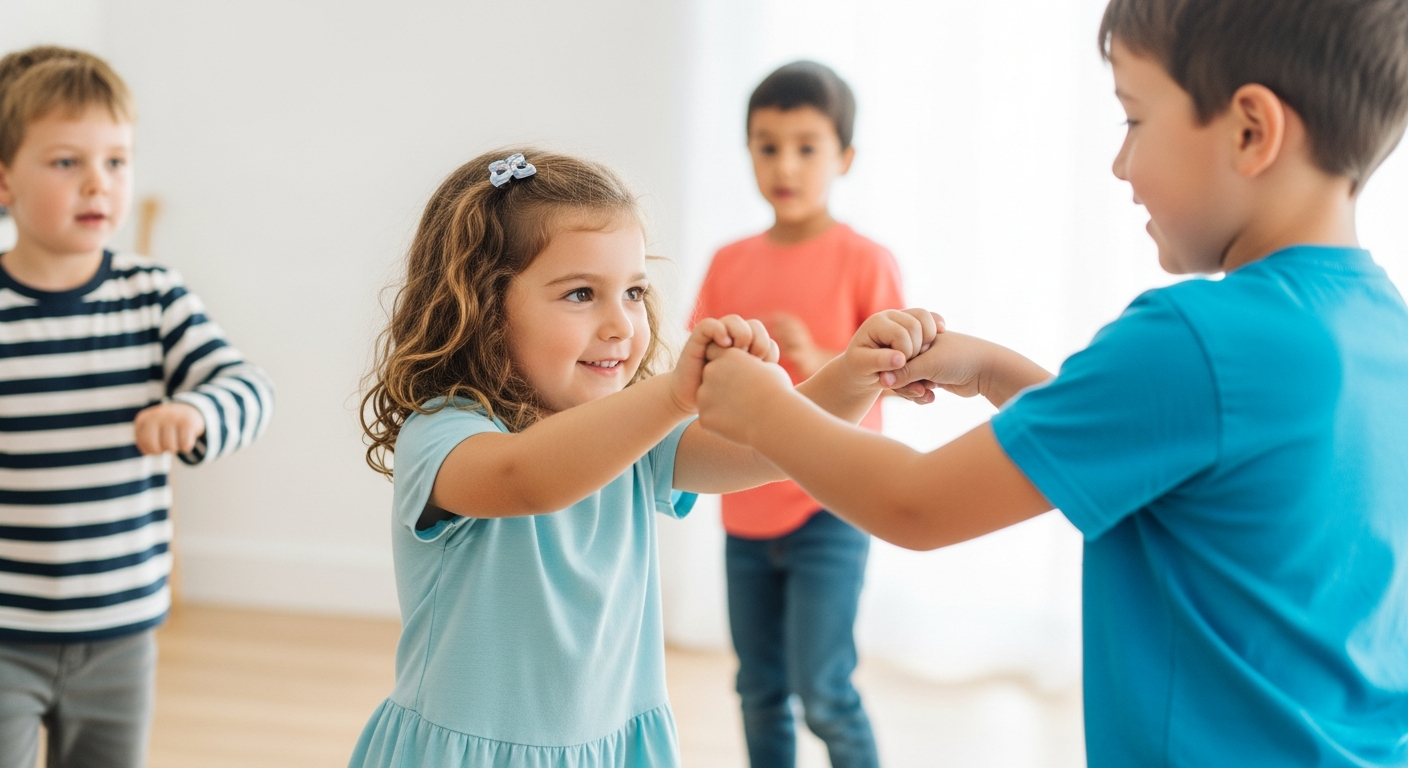
Table of Contents
- Introduction
- The Magic of Movement: Why Dance Games Matter for Kids
- Setting the Stage for a Perfect Dance Party
- Easy Dance Games for At-Home Fun (Small Groups)
- Energetic Dance Games for Larger Gatherings (Parties, Playdates)
- Beyond the Steps: Nurturing Creativity and Communication
- Speech Blubs: Your Partner in Joyful Development
- Conclusion
- FAQ
Is there anything more universally joyful than a child breaking out into a spontaneous dance? The infectious energy, the uninhibited movement, the sheer delight – it’s a powerful reminder of how naturally children express themselves through motion and rhythm. Beyond being just a source of laughter and silliness, dance party games for kids are incredibly beneficial for their overall development. They are a fantastic way to blend physical activity with imaginative play, fostering crucial skills that lay the groundwork for confident communication and strong social connections.
At Speech Blubs, we believe in empowering children to "speak their minds and hearts," and we understand that communication isn't just about words; it's about expression, confidence, and connection. Our journey began from a deeply personal place, as our founders themselves grew up navigating speech challenges. This personal experience fueled our mission to create the very tool they wished they had: an immediate, effective, and joyful solution for the 1 in 4 children who need speech support. We blend scientific principles with the magic of play, transforming screen time into "smart screen time" experiences where children learn by watching and imitating their peers through our unique video modeling methodology. This approach not only makes learning fun but also provides a powerful tool for family connection, creating a screen-free alternative to passive viewing.

In this comprehensive guide, we’ll explore the myriad benefits of dance party games for children of all ages. We’ll dive into a treasure trove of exciting, easy-to-implement games perfect for home, playdates, or larger gatherings, and show you how these playful activities can significantly contribute to your child's physical, social, emotional, and cognitive growth. Get ready to turn up the music, clear some space, and discover how dancing can become a cornerstone of joyful learning and confident expression for your child.
Introduction
Children are natural movers, and the world of dance offers an unparalleled avenue for self-discovery, physical exertion, and imaginative play. From the moment they hear a catchy beat, their bodies instinctively respond, twirling, swaying, and jumping with unbridled enthusiasm. But what if we told you that these seemingly simple dance moments are also powerful learning opportunities? Dance party games are more than just a way to burn off energy; they are dynamic platforms that foster essential developmental skills, from gross motor coordination and rhythm to social interaction, emotional expression, and even cognitive abilities like memory and problem-solving.
In a world increasingly dominated by screens, finding engaging ways to encourage active play and direct interaction is more important than ever. Dance games provide a vibrant alternative, transforming any living room into a lively stage for growth and connection. They allow children to explore different musical genres and dance styles, sparking curiosity and appreciation for diverse cultures, all while building a strong sense of self-confidence. This post is dedicated to helping parents and caregivers harness the power of movement and music, offering practical advice and a rich collection of games designed to bring joy, learning, and connection into your family's routine. Join us as we explore how a simple dance party can become a profound experience for your child's development, echoing our mission at Speech Blubs to nurture every child's potential for self-expression.

The Magic of Movement: Why Dance Games Matter for Kids
Dance is a universal language, and for children, it's often their first foray into structured, expressive movement. The benefits extend far beyond just having fun; they encompass a holistic approach to child development, nurturing skills that are vital for growth and learning.
Physical Benefits: Building Strong Bodies
When children dance, they are engaging in a full-body workout that's disguised as pure fun. This active engagement is crucial for:
- Gross Motor Skills and Coordination: Dance requires moving various body parts in sync, from jumping and spinning to balancing and swaying. This continuously refines their gross motor skills, enhancing their coordination, agility, and overall body control.
- Balance and Spatial Awareness: Navigating a dance space, avoiding obstacles, and maintaining balance during dynamic movements helps children develop a keen sense of their body in space. This spatial awareness is not only important for physical activities but also for cognitive processing.
- Stamina and Cardiovascular Health: Sustained dancing is an excellent form of aerobic exercise. It strengthens their heart and lungs, improves endurance, and promotes a healthy lifestyle from an early age.
- Flexibility and Strength: Different dance moves stretch muscles and build core strength, contributing to greater flexibility and a more robust physique.
Social-Emotional Benefits: Connecting Hearts and Minds
Dance games are inherently social, offering rich opportunities for children to practice vital social and emotional skills in a playful, low-pressure environment.
- Teamwork and Cooperation: Many dance games involve working with others, whether it's mirroring a partner or forming a group. This teaches children the value of collaboration, turn-taking, and adapting to others' movements.
- Empathy and Understanding: When children learn to "read" others' non-verbal cues in a dance, they begin to develop empathy, understanding how others express joy, frustration, or excitement through movement.
- Self-Expression and Confidence: Dance provides a safe outlet for children to express a wide range of emotions without words. Successfully mastering a new move or confidently improvising builds immense self-esteem. This confidence translates directly into other areas of life, including verbal communication. For instance, a child who finds joy and confidence in expressing themselves through movement often feels more empowered to "speak their minds and hearts," a core value at Speech Blubs.
- Emotional Regulation: Moving to music can be incredibly therapeutic, helping children to release pent-up energy, process emotions, and find a sense of calm or exhilaration.
Cognitive Benefits: Sharpening Young Minds
Surprisingly, dance is also a powerful cognitive workout, engaging several brain functions simultaneously.
- Memory and Sequencing: Remembering a sequence of dance steps or mimicking a series of moves in "Follow the Leader" significantly boosts memory and recall abilities. This is much like how our video modeling in Speech Blubs helps children remember and produce target sounds and words by observing and imitating.
- Listening Skills and Concentration: Following musical cues, responding to instructions, and staying on beat demand focused listening and sustained attention.
- Creativity and Problem-Solving: Inventing new dance moves, adapting to a changing rhythm, or figuring out how to express a concept through movement all stimulate creative thinking and problem-solving skills.
- Language and Communication Foundation: While dance is non-verbal, it lays a crucial foundation for verbal communication. Understanding instructions, describing movements, and expressing desires during a game build vocabulary and comprehension. For a parent whose 3-year-old "late talker" loves animals, for example, the "Animal Kingdom" section in Speech Blubs offers a fun, motivating way to practice 'moo' and 'baa' sounds, mirroring the imitative learning found in dance.
Understanding these profound benefits helps us appreciate that a simple dance party is much more than just noise and movement; it's a vibrant learning laboratory. For parents curious about their child's developmental journey, consider taking our quick 3-minute preliminary screener to get an assessment and next-steps plan.
Setting the Stage for a Perfect Dance Party
You don't need a professional studio or elaborate equipment to host a fantastic dance party. With a little planning, any space can be transformed into a joyful dance floor.
Clear the Dance Floor
- Safety First: Before the music starts, ensure the play area is clear of any furniture, sharp objects, or tripping hazards. A spacious, open area is ideal for free movement.
- Comfortable Flooring: Carpeting or a rug can provide a softer surface, but any clear floor works. Just ensure it's not too slippery.
Music Selection: The Heartbeat of the Party
- Variety is Key: Create a playlist with a mix of genres and tempos. Include upbeat pop, fun children's songs, instrumental tracks, and even some world music to introduce children to different rhythms and cultures.
- Age-Appropriate Tunes: Choose music with lyrics and themes suitable for children.
- Volume Control: Keep the music at a comfortable level that encourages dancing but still allows for communication and isn't overwhelming.
Optional Props: Adding Sparkle and Fun
Simple props can enhance the creative aspect of dance games:
- Scarves and Ribbons: Lightweight scarves or ribbons can be twirled, tossed, and used to create flowing movements, adding a visual element to the dance.
- Glow Sticks: In a dimly lit room, glow sticks add an exciting, disco-like atmosphere.
- Simple Costumes: Hats, sunglasses, or boas can spark imaginative role-playing and encourage dramatic flair.
Adult Involvement: Your Role as a Dance Partner
The most crucial "prop" is often an enthusiastic adult!
- Model Enthusiasm: Your participation and positive attitude will encourage even the shyest dancers to join in. Don't worry about perfect moves; just enjoy the moment!
- Encourage and Affirm: Praise effort and creativity, not just "correct" steps. Remind children there's no "wrong" way to dance.
- Facilitate and Guide: Explain game rules clearly and help manage transitions between activities. For children who are still developing their social skills, an adult can gently guide them in turn-taking or group formation.
Remember, dance parties are about joyful exploration and connection. For more resources on making learning fun and engaging, visit the Speech Blubs homepage.
Easy Dance Games for At-Home Fun (Small Groups)
These games are perfect for spontaneous dance sessions at home, suitable for individual play or small groups, requiring minimal setup and maximum fun.
1. Freeze Dance
How to Play: This classic is simple yet incredibly effective for developing listening skills and impulse control. Play music and have everyone dance freely. At random intervals, pause the music. When the music stops, everyone must freeze in place, holding their position until the music restarts. Anyone caught moving while the music is off can be playfully "out" for that round, or simply given a gentle reminder to "freeze like a statue!"
Developmental Benefits: Enhances auditory processing (listening for the stop cue), promotes impulse control, strengthens balance and body awareness, and encourages creative expression during the dancing phases.
2. Dance Follow the Leader
How to Play: One person starts as the leader and performs a dance move. Everyone else must immediately copy that move. After a few seconds, the leader performs a new move, and the followers copy it. Switch leaders regularly so everyone gets a turn to guide the dance.
Developmental Benefits: A fantastic game for imitation skills, which are foundational for speech development (mirroring how Speech Blubs uses video modeling where children learn by observing and replicating peers). It also builds memory, sequencing, and encourages creative movement.
3. Mirror Dance
How to Play: Pair children up, facing each other. One child is the "leader" and performs slow, deliberate dance moves. The "follower" must mirror their partner's movements exactly, as if they are looking into a mirror. After a minute or so, switch roles.
Developmental Benefits: This game hones focus, observation skills, and non-verbal communication. It also fosters empathy as children try to anticipate and match their partner's movements.
4. Musical Chairs (with a Twist)
How to Play: Arrange chairs in a circle, with one less chair than the number of players. Play music as children dance around the chairs. When the music stops, everyone quickly finds a chair to sit in. The person without a chair is out. Remove one chair each round, continuing until only one winner remains.
Developmental Benefits: Develops quick reflexes, listening skills, attention, and understanding of social rules. The "twist" can be adding a specific dance move they must do before sitting down, or requiring them to sit in a funny way.
5. Ribbon Dance
How to Play: Provide each child with a long ribbon or scarf. Play a variety of music and encourage them to dance, twirling, swirling, and waving their ribbons to the beat. They can make big, sweeping movements or small, intricate patterns.
Developmental Benefits: Promotes both fine motor skills (gripping and manipulating the ribbon) and gross motor skills (large body movements). It's wonderful for creative expression, allowing children to visualize the music and translate it into fluid movement.
6. Emoji Dance
How to Play: Put on some music. Shout out an emotion (e.g., "Happy!"), and children must dance in a way that expresses that feeling. Then shout a different emotion ("Sad!" or "Excited!" or "Confused!"), and they adapt their dance. For younger children, you can hold up printed emoji cards.
Developmental Benefits: This game is brilliant for emotional literacy, helping children identify and express feelings through physical movement. It expands their emotional vocabulary and understanding, which is a key part of developing robust communication skills and being able to "speak their minds and hearts."
These games are simple, fun, and provide fantastic opportunities for growth, even in the smallest spaces. For a child who loves to mimic dance moves but is hesitant to vocalize, Speech Blubs' video modeling exercises offer a familiar, low-pressure way to practice sounds and words, building on their natural inclination to imitate.
Energetic Dance Games for Larger Gatherings (Parties, Playdates)
When you have a bigger group and more space, these games crank up the energy and foster even more collaborative fun.
1. Group Dance-Off
How to Play: Divide the group into smaller teams. Play upbeat music and challenge each team to take turns showcasing their best dance moves. You can set a time limit for each team's performance (e.g., 60 seconds). A designated judge or audience applause can determine the winners.
Developmental Benefits: Encourages creativity, teamwork, performance skills, and builds confidence in a playful competitive setting. It also teaches children to appreciate different styles and expressions.
2. Dance Circle (Add-On Dance)
How to Play: Form a large circle. One person steps into the center and performs one dance move. The next person enters the circle, repeats the first person's move, and then adds their own new move. This continues around the circle, with each person repeating the growing sequence and adding a new move.
Developmental Benefits: An excellent memory game, requiring players to recall a sequence of movements. It also promotes sequencing, turn-taking, and active participation. This is very similar to the cognitive processes involved in learning complex sentence structures or word sequences.
3. Rhythm Relay / Pass the Dance Move
How to Play: Divide players into teams and have them line up. The first person in line performs a simple dance move and then tags the next person, who repeats the move and adds their own. This chain continues down the line, with each person repeating the previous moves and adding one more. The first team to successfully complete their chain wins.
Developmental Benefits: Focuses on memory, sequencing, and teamwork. It requires concentration and the ability to accurately recall and reproduce movements, mirroring the imitative learning that is so effective in early language acquisition.
4. Musical Statues / Musical Bobs / Musical Buddies
How to Play: These are variations of Freeze Dance for larger groups.
- Musical Statues: Play music, everyone dances. When music stops, freeze. Anyone moving is out.
- Musical Bobs: Same as statues, but when the music stops, everyone must quickly "bob" down to the floor. Last to bob is out.
- Musical Buddies: When the music stops, call out a number (e.g., "3!"). Players must quickly form groups of that number. Anyone not in a group, or the last group to form, is out.
Developmental Benefits: Enhances quick thinking, listening skills, impulse control, and for "Musical Buddies," promotes rapid social grouping and negotiation.
5. Limbo
How to Play: Two people hold a broomstick or pole horizontally. Play music as dancers take turns bending backward to shimmy under the pole without touching it. After everyone has gone, lower the pole slightly. The last dancer remaining is the winner.
Developmental Benefits: A fantastic game for flexibility, balance, and coordination. It also encourages playful perseverance and celebrates physical agility.
These games are fantastic for fostering a sense of community and shared fun, helping children develop social graces and confidence in a group setting.
Beyond the Steps: Nurturing Creativity and Communication
Dance party games offer a unique opportunity to cultivate not just physical prowess but also deep wells of creativity and effective communication skills.
Encouraging Freestyle: The Power of Uninhibited Movement
Sometimes, the best dance game is no game at all, just pure freestyle. How to Play: Simply put on some varied music and encourage everyone to dance however they feel! No rules, no judgments, just joyful movement. Developmental Benefits: This is crucial for fostering genuine self-expression and imagination. It teaches children that their unique movements are valuable and encourages them to listen to their bodies and the music. This freedom of expression builds intrinsic motivation and confidence, essential precursors to confidently articulating thoughts and feelings.
Dance Charades
How to Play: Write down a list of actions, animals, or emotions on separate slips of paper (e.g., "sleeping," "flying like a bird," "being surprised"). One child picks a slip and must act it out using only dance moves, without speaking. Others guess what they are portraying.
Developmental Benefits: An excellent exercise in non-verbal communication, creative problem-solving, and imaginative play. It challenges children to think creatively about how to convey meaning through movement, enhancing their expressive abilities.
Name That Tune / Singer / Finish the Lyrics
How to Play: These games focus on auditory processing and musical knowledge.
- Name That Tune: Play just a few seconds of a song and have children guess the title.
- Name That Singer: Play a song and have them guess the artist.
- Finish the Lyrics: Play a song and pause it, challenging them to complete the next line of the lyrics.
Developmental Benefits: Sharpens auditory discrimination, expands vocabulary (especially with Finish the Lyrics), improves memory, and encourages active listening. These are critical skills that directly support language development.
Lip Syncing or Air Guitar Competitions
How to Play: Put on popular songs and invite children to perform a lip-sync routine or rock out with an imaginary air guitar. They can perform solo or in pairs.
Developmental Benefits: Boosts performance skills, confidence, dramatic play, and imaginative engagement. It allows children to step into a persona and express themselves flamboyantly, which can be incredibly liberating and empowering. This kind of playful imitation and role-playing is fantastic practice for expressive communication.
At Speech Blubs, we understand that learning often happens best through imitation and play. Our unique "video modeling" methodology, where children learn by watching and imitating their peers, aligns perfectly with the principles seen in these active, imitative dance games. It’s a scientifically-backed approach that turns screen time into "smart screen time," making it an active and engaging learning experience rather than passive viewing. For parents seeking to deepen their understanding of our approach, explore the research behind Speech Blubs and discover why we're rated among the top speech apps worldwide.
Speech Blubs: Your Partner in Joyful Development
Integrating dance and active play into your child's routine is a powerful way to foster their development. Just as these activities build confidence and communication skills through movement and sound, Speech Blubs provides a complementary, engaging tool to support their verbal development.
At Speech Blubs, our mission is to empower children to "speak their minds and hearts." We know firsthand the challenges of speech development, as our company was born from the personal experiences of our founders, who all grew up with speech problems. This profound understanding drives our commitment to providing an immediate, effective, and joyful solution for the 1 in 4 children who need speech support. We achieve this by blending scientific principles with engaging play, creating one-of-a-kind "smart screen time" experiences.
Our unique approach of teaching complex communication skills relies on our "video modeling" methodology. Children learn by watching and imitating their peers, which research shows is an incredibly effective way for young minds to acquire new skills. This isn't passive screen time like watching cartoons; it's an active, interactive experience that also serves as a powerful tool for family connection, often encouraging adult co-play and support. We help children build foundational skills, reduce frustration, and develop a love for communication, all within a positive and encouraging environment. We always set realistic expectations, focusing on the journey of development, fostering confidence, and creating joyful learning moments, understanding that our app is a powerful supplement to a child's overall development plan and, when applicable, professional therapy. See what other parents are saying about their children's success with Speech Blubs.
Discover the Value of Speech Blubs
We believe in making high-quality speech and language support accessible to every family. To build trust and transparency, we want to clearly outline our pricing and the incredible value you receive, especially with our Yearly plan.
When you decide to embark on this joyful learning journey with us, you have two main options:
- Monthly Plan: For $14.99 per month, you get access to our core Speech Blubs app. This plan is flexible, allowing you to pay month-to-month.
- Yearly Plan: This is by far our best value, costing $59.99 per year. When you break it down, that's just $4.99 per month, which means you save 66% compared to the monthly plan!
The Yearly plan isn't just cheaper; it's packed with exclusive, high-value features designed to give your child the most comprehensive support:
- A 7-day free trial: Experience the full power of Speech Blubs before committing. The Monthly plan does not include this trial.
- The extra Reading Blubs app: An entire additional app focused on early reading skills, seamlessly complementing their speech and language development.
- Early access to new updates: Be the first to try our latest features and content.
- 24-hour support response time: Get prompt assistance whenever you need it, ensuring a smooth and effective learning experience.
The Monthly plan does not include the free trial, the Reading Blubs app, early updates, or the priority support. To truly unlock your child's potential and get the full suite of our unique tools, the Yearly plan is the clear best choice.
Ready to see the difference Speech Blubs can make? We encourage you to choose the Yearly plan to get your 7-day free trial and access to all the fantastic features mentioned above. Download Speech Blubs today on the App Store or Google Play, or sign up for your account directly on our website to begin your family's journey toward confident communication!
Conclusion
Dance party games for kids are a vibrant, joyful, and incredibly effective way to support your child's holistic development. From strengthening physical coordination and stamina to nurturing crucial social-emotional skills like empathy and self-expression, and boosting cognitive abilities such as memory and problem-solving, the benefits of dancing are truly far-reaching. These games transform simple movement into powerful learning experiences, fostering confidence, creativity, and a lifelong love for communication.
By creating opportunities for active play, engagement, and connection, you're not just throwing a party; you're building a foundation for a child who is articulate, confident, and eager to explore the world around them. And as they groove and grow, remember that Speech Blubs is here to support every step of their communication journey, blending play with scientific methodology to empower children to truly "speak their minds and hearts."
Don't wait to ignite that spark of confidence and joy in your child. Start creating unforgettable family moments today. Download Speech Blubs on the App Store or Google Play, or create your account on our website to begin your 7-day free trial. Remember to choose the Yearly plan to unlock all the premium features, including the extra Reading Blubs app and priority support, ensuring your child receives the most comprehensive and joyful learning experience possible. Let the dancing begin, and let their voices soar!
FAQ
Q1: What are the main benefits of dance party games for kids?
Dance party games offer a wide array of benefits, including improved physical fitness (coordination, balance, stamina), enhanced social-emotional skills (teamwork, self-expression, confidence, emotional regulation), and boosted cognitive abilities (memory, listening skills, creativity, problem-solving). They provide a fun and engaging way for children to develop holistically.
Q2: How can I encourage my shy child to participate in dance games?
For shy children, start by joining in yourself and modeling enthusiasm. Begin with simple, less intimidating games like Freeze Dance or Ribbon Dance, or one-on-one Mirror Dance. Offer choices in music and movement, and always praise effort and creativity rather than "perfect" moves. Sometimes, simple props like scarves or glow sticks can make the experience more inviting and less focused on individual performance, encouraging them to freely express themselves.
Q3: What kind of music is best for kids' dance parties?
A varied playlist is best! Include a mix of upbeat pop, fun children's songs with clear rhythms, instrumental tracks that encourage imaginative movement, and even some world music to introduce diverse sounds. Varying tempos can keep the energy dynamic and allow for different styles of dance. The most important thing is to choose age-appropriate tunes that everyone enjoys.
Q4: How does Speech Blubs connect with these active play ideas?
Speech Blubs complements active play like dance games by reinforcing crucial communication skills. Just as children learn imitation in dance games, our app uses a "video modeling" methodology where children learn by watching and imitating their peers, which is highly effective for speech development. Both dance and Speech Blubs foster confidence, self-expression, listening skills, and memory, providing a holistic approach to empowering children to "speak their minds and hearts" through joyful, engaging experiences.
About the author