
Growing Fun: Easy Plant Crafts for Kids
 By Speech Blubs Team•Jan 13, 2026•19 min.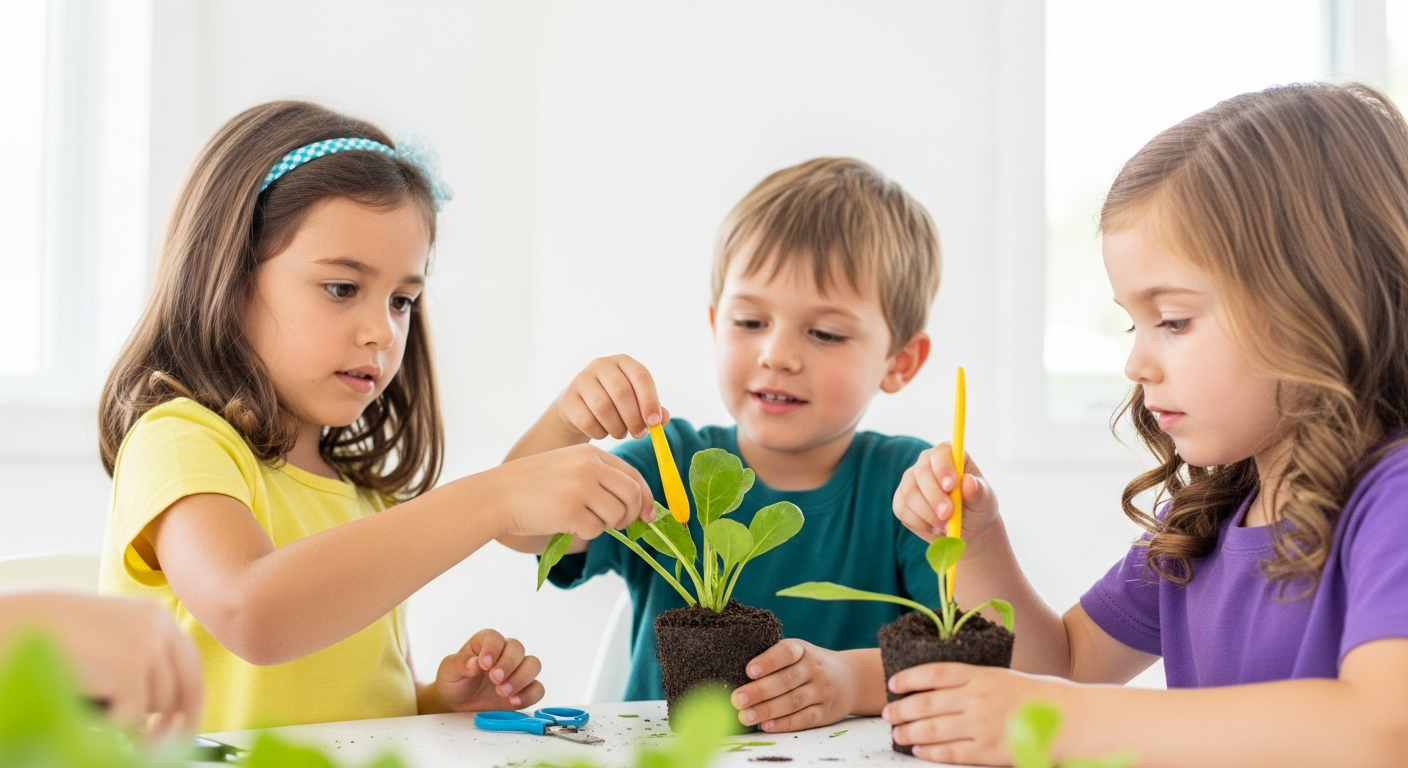
Table of Contents
- The Magic of Nature: Why Plant Crafts?
- Bringing the Garden Indoors: Easy Plant Crafts for Every Home
- Deepening the Learning: Plant Science Through Craft
- Practical Tips for Budding Botanists & Crafters
- Conclusion
- FAQ Section
Imagine the sheer delight on a child’s face as they proudly present a handprint flower bouquet, or the focused concentration as they carefully arrange seeds into a mosaic. These aren't just moments of artistic expression; they're profound learning experiences unfolding right before your eyes. From the tiniest sprout pushing through soil to the intricate patterns of a leaf, plants offer an endless source of inspiration and education. Many parents and educators seek engaging activities that can pull children away from digital distractions and immerse them in the tactile, vibrant world. Easy plant crafts for kids provide this perfect blend, fostering a genuine connection with nature while developing a myriad of essential skills.
The purpose of this comprehensive guide is to equip you, whether you're a parent, guardian, or educator, with a rich collection of accessible and exciting plant-themed craft ideas. We'll journey through activities suitable for various ages and skill levels, exploring how each craft can illuminate scientific principles, encourage artistic flair, and build confidence. From the simplest leaf rubbings to more involved experiments that reveal the hidden wonders of botany, we'll cover it all. Our aim is to illustrate how these hands-on adventures can spark curiosity, fuel creativity, and create cherished memories, all while embracing the philosophy of joyful, tangible learning. Get ready to transform your home or classroom into a vibrant workshop where imagination blossoms and knowledge takes root.

The Magic of Nature: Why Plant Crafts?
Before we dive into the delightful world of plant crafts, let's take a moment to understand why these activities are so incredibly beneficial for children. It’s more than just keeping little hands busy; it's about nurturing holistic development in a profoundly engaging way.
Cultivating STEM Skills
At Speech Blubs, our core belief is that learning should be integrated and exciting, blending scientific principles with play. Plant crafts are a natural fit for this philosophy, weaving science, technology, engineering, and math into every creative endeavor.
- Science (Botany & Ecology): Children learn about plant parts (roots, stems, leaves, flowers), their life cycles (seed to sprout to plant), and what plants need to grow (sunlight, water, soil). Experiments like observing how flowers change color or growing crystals on branches introduce concepts like osmosis, absorption, and chemistry in a digestible, visual way. They begin to understand ecosystems and the interconnectedness of living things.
- Technology (Observation & Tools): While not high-tech, using simple tools like magnifying glasses, rulers, or even craft scissors and glues teaches precision and observation. Documenting plant growth or changes over time fosters a scientific approach to recording data.
- Engineering (Design & Construction): Building a mini terrarium, designing a flower collage, or constructing a "sprout house" involves planning, problem-solving, and assembling components. Kids learn about structural integrity and spatial reasoning.
- Math (Counting & Measuring): Counting seeds, measuring plant growth, or sorting leaves by size and shape introduces foundational math concepts. Creating patterns with natural materials also reinforces geometric understanding.
Sparking Creativity and Artistic Expression
Plants offer an unparalleled palette of shapes, colors, and textures. This natural diversity is a powerful catalyst for artistic exploration.
- Color Theory: Observing the myriad greens of leaves, the vibrant hues of petals, and the earthy tones of soil can inspire children to experiment with color in their crafts. Activities like painting with natural dyes or creating colorful flower collages enhance their understanding and appreciation of color.
- Texture & Form: The rough bark of a twig, the delicate softness of a petal, the smooth surface of a seed – these provide tactile experiences that enrich artistic expression. Using these diverse textures in crafts encourages sensory development and adds depth to their creations.
- Imagination: A pinecone can become a gnome, a leaf can be a fish, and a collection of twigs can form a miniature forest. Plant crafts inherently invite imaginative play and storytelling, allowing children to transform natural elements into anything their minds can conjure.
Developing Fine Motor Skills and Coordination
Many plant crafts require precise movements that are excellent for developing fine motor skills.

- Cutting, Tearing, Gluing: These fundamental craft actions strengthen hand muscles and improve hand-eye coordination.
- Arranging Small Objects: Placing seeds, delicate petals, or tiny pebbles in a design demands patience and dexterity.
- Manipulating Materials: From molding salt dough with leaf impressions to tying yarn around branches, these activities refine motor control.
Fostering Patience and Responsibility
Nature operates on its own timeline. Planting a seed or pressing a flower teaches children the invaluable lesson of patience.
- Waiting for Growth: Observing a seed sprout or a flower dry requires waiting, teaching children that some of the most rewarding outcomes take time.
- Care and Nurturing: If the craft involves growing a plant, children learn responsibility by watering, providing light, and monitoring its health. This nurtures empathy and a sense of stewardship for living things.
Promoting Screen-Free Engagement and Family Bonding
In an age dominated by digital screens, plant crafts offer a refreshing and much-needed alternative.
- Real-World Interaction: These activities engage children with their physical environment, encouraging them to step outside, observe, and interact with the natural world directly.
- Shared Experiences: Crafting together provides wonderful opportunities for conversation, collaboration, and creating lasting family memories. It’s a chance to connect over a shared project, fostering a sense of togetherness that aligns perfectly with our values at Speech Blubs. We aim to provide a screen-free alternative to passive viewing and a powerful tool for family connection.
- Sensory Input: The smells of earth and fresh plants, the feel of different textures, the visual beauty of natural colors – these sensory experiences are rich and grounding, offering a calming contrast to the often overstimulating digital world.
Ready to embark on a journey of discovery that's both educational and incredibly fun? We've designed our Speech Blubs app to bring similar hands-on, multi-sensory learning right to your fingertips. For a parent whose child is a "late talker" and needs a gentle, engaging way to practice new words, our app offers a powerful supplement. You can learn more about our science-backed methodology and the benefits of our "video modeling" approach on our research page.
Bringing the Garden Indoors: Easy Plant Crafts for Every Home
You don't need a sprawling garden to enjoy the wonders of plant-themed crafting. Many fantastic projects can be done right at your kitchen table, often with materials you already have on hand or can easily forage.
Paper & Printable Plant Crafts
Paper is perhaps the most versatile crafting material, offering endless possibilities for plant-inspired creations. These crafts are fantastic for developing fine motor skills, color recognition, and imaginative play.
- Coffee Filter & Cupcake Liner Flowers: These are classics for a reason! Kids can color coffee filters or cupcake liners with markers, then spray them lightly with water to watch the colors bleed and blend, creating beautiful, unique petals. Layer them, add pipe cleaner stems, and create a vibrant bouquet. This simple chemical reaction delights and educates.
- Handprint & Fingerprint Flowers: Trace your child's hands on green paper for leaves and stems, and use their painted handprints or fingerprints for colorful flower petals. This is a wonderfully personal craft, perfect for gifts or keepsakes. It encourages self-expression and is a great way to talk about the different parts of a flower.
- Dot Flowers (Pointillism): Introduce a touch of art history by exploring pointillism, where images are created using tiny dots of color. Provide a flower template or let kids draw their own, then have them fill it in entirely with dots using markers, Q-tips dipped in paint, or even watercolors. This activity is excellent for focus and fine motor precision.
- Parts of a Plant Label Craft: Print or draw a large outline of a flower or plant (including roots, stem, leaves, and flower). Have children cut out labels with the names of the parts (or trace them) and glue them onto the correct sections. This reinforces vocabulary and understanding of plant anatomy. For a child who is learning new vocabulary, describing each part as they label it can be a great way to practice sounds and expand their language skills. Speech Blubs often uses visual cues and repetition in our "video modeling" activities to help children associate words with objects, much like this craft.
Nature Scavenger Hunt & Art
Combine outdoor exploration with indoor creativity! These activities encourage observation and appreciation for the natural world.
- Leaf Rubbings & Collages: Head outside for a nature walk to collect various leaves. Back inside, place leaves under paper and rub crayons over them to reveal their intricate patterns. Use the collected leaves to create collages, sorting them by size, shape, or color. This is excellent for sensory exploration and pattern recognition. For a child who is still mastering sounds like "s" or "sh," describing their finds ("shiny," "smooth," "spiky") offers a playful way to practice.
- Pressed Flower Art: Gather relatively flat flowers and leaves. Press them between sheets of newspaper inside a heavy book for a week or two until dry. Once pressed, children can arrange these delicate specimens onto paper to create beautiful pictures, bookmarks, or greeting cards. This teaches patience and appreciation for natural beauty.
- Nature Weaving: Create a simple loom by cutting notches into a piece of cardboard and stringing yarn. Kids can then weave small leaves, thin twigs, flower petals, or even blades of grass into their loom, creating a unique piece of natural art. This is fantastic for fine motor skills and hand-eye coordination.
- Nature Rainbow: On a piece of paper, draw an outline of a rainbow or simply create strips of double-sided tape. Challenge your child to find natural objects for each color of the rainbow during a nature walk (e.g., green leaves, red berries, yellow flowers, brown twigs). They then stick these finds onto their "rainbow." This is a vibrant, sensory activity that teaches color identification and observation.
Seed & Soil Creations
Seeds are tiny miracles, and crafting with them offers unique sensory experiences and lessons in growth.
- Seed Mosaics: Provide a variety of dried seeds (lentils, beans, corn kernels, sunflower seeds, rice) and a sturdy piece of paper or cardboard with a drawn design. Children can use glue to fill in the design with different seeds, creating intricate textures and patterns. This is excellent for fine motor skills, pattern recognition, and patience. When creating a seed mosaic, a child might naturally point to different seeds. This is an opportune moment for parents to model language, asking "What color is this seed?" or "How many seeds are there?" If your child is a "late talker" or just needs a gentle nudge to verbalize, our app's structured activities provide similar prompts. Download Speech Blubs on the Apple App Store or Google Play Store to begin your family's communication journey.
- DIY Seed Paper: This eco-friendly craft transforms old paper into new paper embedded with seeds! Tear scrap paper into small pieces, blend it with water to create pulp, stir in some small seeds (like wildflower or grass seeds), and then press the pulp flat to dry. Once dry, this paper can be planted to grow new flowers! It’s a wonderful lesson in recycling and the plant life cycle.
- "Grass Head" Pets: Fill the toe of a nylon stocking with grass seeds, then top with potting soil. Tie it off and decorate it with googly eyes and markers to create a "pet." Place it in a shallow dish of water, and soon, "hair" (grass) will sprout, which can be trimmed. This offers immediate gratification and visible results, making it ideal for children with shorter attention spans. This is similar to how Speech Blubs uses engaging, bite-sized video activities to hold attention and encourage repetition, making "smart screen time" truly productive.
Deepening the Learning: Plant Science Through Craft
Beyond simple art, many plant crafts offer fantastic opportunities to explore basic scientific principles in a hands-on way.
Observation & Growth Experiments
These experiments allow children to witness the magic of growth and natural processes firsthand.
- Growing Seeds in a Jar: Line the inside of a clear glass jar with a damp paper towel. Place a few large beans or seeds (like lima beans or peas) between the paper towel and the glass, so they are visible. Keep the paper towel moist. Children can observe and record the roots and shoots as they emerge, seeing the hidden process of germination. This teaches about what plants need to grow and the sequence of the life cycle.
- Celery or Cabbage Color Experiment: Place white celery stalks or cabbage leaves in glasses of water dyed with food coloring. Over several hours or a day, the plant will "drink" the colored water, and the dye will travel up the stalks/leaves, illustrating how water is absorbed and transported through the plant (capillary action). This is a captivating visual science lesson.
- Regrowing Vegetable Scraps: Save the bottom ends of lettuce, celery, or carrots. Place them in a shallow dish of water on a windowsill. Children can observe new roots and leaves sprouting from the "scrap," demonstrating how some plants can regenerate. This teaches about plant resilience and sustainable practices.
- Pinecone Weather Predictors: Collect pinecones. Discuss how they open and close based on humidity (closed for damp weather, open for dry). Bring them inside and observe changes. You can even experiment by placing one in water and one in a dry, warm spot. This introduces concepts of environmental adaptation and observation skills.
Sensory & Textural Plant Projects
Engaging multiple senses enhances learning and retention.
- Leaf Clay Impressions: Use air-dry clay or salt dough. Collect various leaves with interesting textures. Roll out the dough, then firmly press the leaves into it to create beautiful impressions. Peel the leaves away, and you're left with a detailed botanical imprint. This is wonderful for tactile sensory input and exploring natural patterns.
- Nature Sensory Bin: Fill a bin with potting soil, dried beans, small smooth pebbles, pinecones, twigs, and maybe some safe plastic plants or scoops. Children can explore, dig, sort, and play imaginatively. This encourages open-ended play and sensory development, and for children working on descriptive language, it's a rich environment for words like "crunchy," "soft," "rough," and "smooth."
- Chlorophyll Painting: Collect a variety of dark green leaves. With adult supervision, mash or crush them to release their chlorophyll. Children can then use the resulting green "pigment" to paint on fabric or paper, creating ephemeral, natural art. This introduces the concept of photosynthesis and plant pigments.
Practical Tips for Budding Botanists & Crafters
To ensure these easy plant crafts for kids are a joyful and enriching experience for everyone, keep these tips in mind:
- Embrace the Mess: Working with soil, water, paint, and natural materials often means things get a little messy. Lay down a newspaper or a drop cloth, put on aprons, and mentally prepare for some glorious disarray. Remember, the process is just as important as the product.
- Supervise & Co-Play: While many crafts are simple, adult supervision is always key, especially with younger children or when using tools like scissors. More importantly, join in! Your enthusiasm is contagious, and crafting together provides invaluable opportunities for conversation, bonding, and guiding their learning.
- Adapt to Age & Skill Level: Not every craft will be suitable for every age. Simplify complex steps for toddlers and preschoolers, focusing on sensory exploration. Offer more independence and detail for older children, encouraging their creativity and problem-solving.
- Focus on the Process, Not Perfection: The goal isn't to create gallery-worthy art, but to enjoy the act of making, exploring, and discovering. Praise effort, creativity, and the joy of participation rather than just the final outcome.
- Encourage Communication: Use these crafts as opportunities to build language skills. Ask open-ended questions: "What do you notice about this leaf?" "How does the soil feel?" "What color should we use next?" This naturally encourages children to speak their minds and hearts, which is at the core of our mission at Speech Blubs. For parents who are uncertain about their child's speech development, we offer a quick 3-minute preliminary screener to provide a simple assessment and a free 7-day trial to our app.
- Sustainability & Sourcing: Whenever possible, use natural materials found in your yard or local park (ensuring they are safe and non-toxic). Repurpose household items like egg cartons, toilet paper rolls, or plastic bottles for planters and craft bases.
Investing in Your Child's Communication Journey
Just as investing time in these crafts yields rich developmental rewards, choosing the right tools for your child's communication journey is equally impactful. At Speech Blubs, we believe in providing immediate, effective, and joyful solutions. Our company was born from the personal experiences of our founders, who all grew up with speech problems and created the tool they wished they had. We are committed to empowering the 1 in 4 children who need speech support, blending scientific principles with play into one-of-a-kind "smart screen time" experiences. We provide a screen-free alternative to passive viewing (like cartoons) and a powerful tool for family connection. Our unique approach teaches complex communication skills through "video modeling," where children learn by watching and imitating their peers.
We offer flexible subscription plans to suit your family's needs, but for the most comprehensive and valuable experience, we highly recommend our Yearly plan.
- Monthly Plan: $14.99 per month.
- Yearly Plan: $59.99 per year. This breaks down to just $4.99/month, meaning you save 66% compared to the monthly option!
The Yearly plan is the best choice, not just for the significant savings, but because it unlocks a full suite of features designed to maximize your child's progress and your family's convenience:
- A 7-day free trial: Experience the full app before committing.
- The extra Reading Blubs app: Double the learning fun with our companion reading app.
- Early access to new updates: Be the first to try new activities and features.
- 24-hour support response time: Get quick assistance whenever you need it.
The Monthly plan does not include these additional benefits. Investing in the Yearly plan ensures your child has consistent access to our engaging content and robust support system, fostering a love for communication and building confidence step by step. Read what other parents are saying about their child's success with Speech Blubs on our testimonials page.
Conclusion
Easy plant crafts for kids are far more than just pretty projects; they are powerful tools for holistic child development. From nurturing crucial STEM skills and igniting artistic expression to refining fine motor coordination and fostering patience, these activities offer a rich tapestry of learning opportunities. In a world that often pulls children towards passive digital consumption, these hands-on engagements with nature provide a refreshing, sensory-rich alternative that strengthens family bonds and sparks genuine curiosity about the living world. They empower children to observe, question, create, and communicate, laying foundational skills that will serve them for a lifetime.
At Speech Blubs, our mission is to empower children to "speak their minds and hearts." We understand that every step in a child's developmental journey, whether it's learning to identify a leaf or articulate a new word, builds confidence and opens up new worlds of expression. Our app complements these tangible experiences by providing a fun, effective, and scientifically-backed tool for speech and language development, turning screen time into smart learning time.
Ready to watch your child's creativity and communication skills blossom? We invite you to experience the full potential of our unique approach. Get started today and choose our Yearly plan to unlock a 7-day free trial, access to the Reading Blubs app, and continuous support. Begin your child's joyful learning journey by creating your account and downloading the app!
- Create your Speech Blubs account and start your 7-day free trial!
- Download Speech Blubs on the Apple App Store
- Get Speech Blubs on the Google Play Store
Choose the Yearly plan for the best value and access to all our exclusive features!
FAQ Section
Q1: What are the best ages for easy plant crafts?
A1: Easy plant crafts are wonderfully versatile and can be adapted for a wide range of ages, from toddlers to school-aged children. For toddlers (1-3 years), focus on sensory exploration with safe materials like large leaves, soil, and water, with lots of adult supervision. Preschoolers (3-5 years) can engage in simple cutting, gluing, and painting, like making coffee filter flowers or seed mosaics. School-aged children (6+) can tackle more complex projects, detailed science experiments, and independent foraging, encouraging their creativity and critical thinking skills. The key is to choose age-appropriate tasks and always supervise.
Q2: What kind of materials do I need for easy plant crafts?
A2: The beauty of easy plant crafts is that they often use materials you already have! You'll need basic craft supplies like paper (construction paper, coffee filters, cupcake liners), glue, scissors, markers, crayons, and paint. For natural elements, head to your backyard or a local park to collect leaves, twigs, pinecones, seeds, and small flowers. Recycled items like egg cartons, toilet paper rolls, and plastic bottles are also excellent. For growing activities, you'll need potting soil, seeds (beans, grass seeds), and clear jars or small pots.
Q3: How can plant crafts help with speech and language development?
A3: Plant crafts provide a rich, natural environment for language development. As children engage with materials, they encounter new vocabulary (e.g., "stem," "petal," "root," "sprout," "smooth," "rough," "green," "grow"). Parents can model descriptive language, ask open-ended questions ("What are you making?"), encourage children to explain their steps, and narrate observations ("The seed is getting bigger!"). This shared activity promotes conversation, listening skills, and the confidence to express thoughts and ideas, aligning perfectly with our mission at Speech Blubs to empower children to speak their minds and hearts.
Q4: My child quickly loses interest in crafts. How can I keep them engaged?
A4: To keep children engaged, focus on short, achievable activities, especially for younger kids. Let them take the lead in choosing materials or designing their craft. Break down tasks into small steps and celebrate every little accomplishment. Incorporate movement, like a quick nature walk to collect materials. Most importantly, make it fun and stress-free; the process of creating and exploring is more important than the final product. Remember that adult involvement, where you actively participate and show enthusiasm, is also a huge motivator. If a child has difficulty focusing on a craft, our app also offers engaging, short video modeling activities that are designed to capture attention and promote learning in digestible segments.
About the author