
Halloween Crafts for Kids: Easy DIY Fun at Home
 By Speech Blubs Team•Jan 13, 2026•22 min.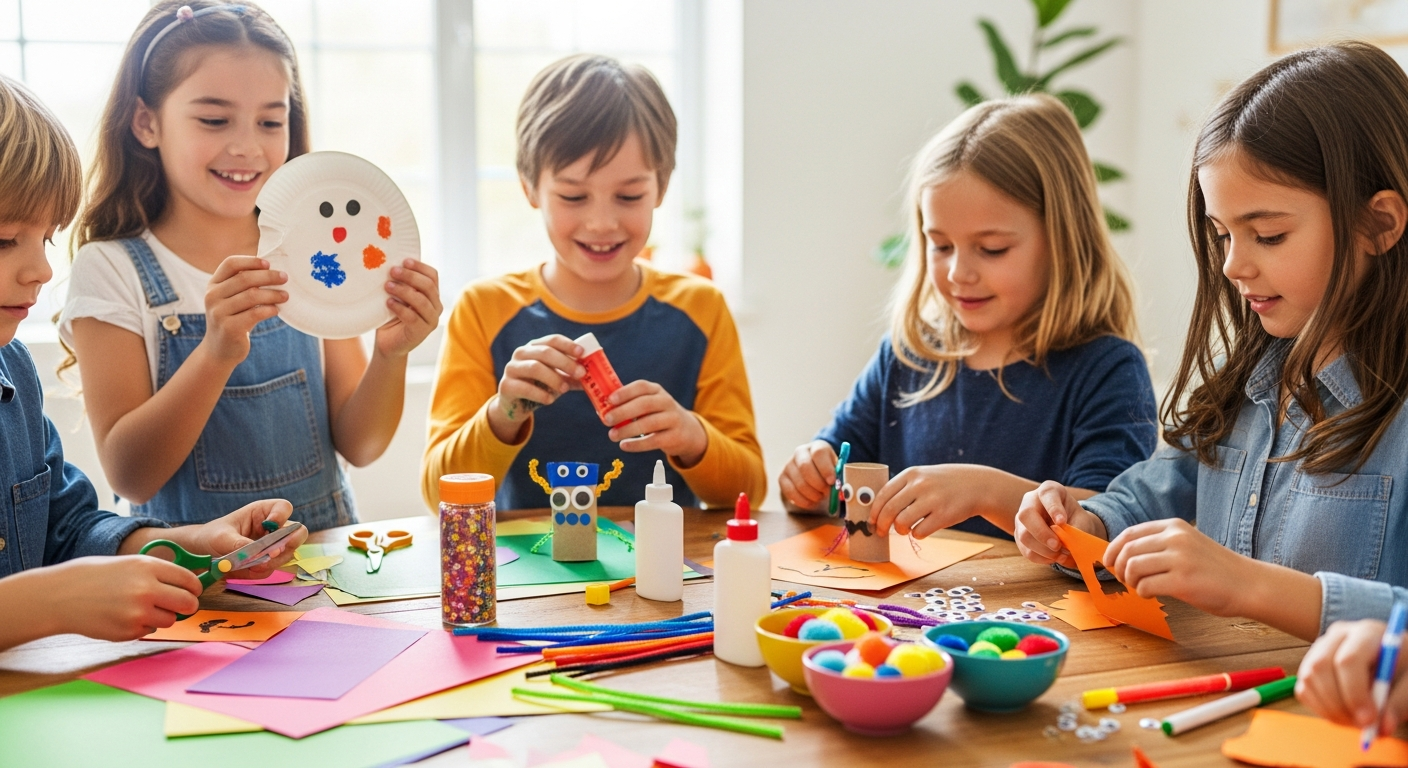
Table of Contents
- The Magic of Making: Why Crafting Matters for Little Ones
- Spook-tacularly Simple Halloween Crafts for Kids at Home
- Turning Craft Time into Smart Screen Time with Speech Blubs
- Get Started with Speech Blubs Today! Choose Your Plan for Maximum Value.
- Conclusion: Crafting Memories and Communication Skills
- Frequently Asked Questions (FAQ)
Imagine the sparkle in your child’s eyes as they transform a simple paper plate into a spooky bat, or the intense concentration as they carefully glue googly eyes onto a friendly monster. These aren't just moments of creative play; they are powerful learning experiences that lay the foundation for essential developmental skills, including speech and language. Halloween, often thought of as just a day for costumes and candy, is actually a fantastic opportunity to engage your little ones in hands-on activities that foster creativity, boost confidence, and, most importantly, create joyful memories and communication breakthroughs.
In this comprehensive guide, we'll dive into a treasure trove of easy-to-make Halloween crafts that require minimal supplies and maximum fun, all while highlighting the incredible developmental benefits they offer. From ghostly creations that encourage "oooo" sounds to pumpkin projects perfect for practicing the "p" sound, you’ll discover how simple craft time at home can become a dynamic learning environment. We’ll also explore how these tactile experiences beautifully complement the innovative approach of Speech Blubs, helping your child find their voice and speak their mind and heart.

The Magic of Making: Why Crafting Matters for Little Ones
Crafting is more than just an activity to fill an afternoon; it's a multi-faceted developmental powerhouse for young children. When little hands get busy with glue, scissors, and paint, a symphony of learning begins.
More Than Just Art: Unlocking Developmental Benefits
Engaging in simple crafts at home offers a wealth of benefits that support a child's holistic growth:
- Fine Motor Skills: The intricate actions involved in crafting—holding a crayon, snipping with child-safe scissors, peeling stickers, squeezing glue, or threading yarn—are superb exercises for developing the small muscles in the hands and fingers. These skills are crucial for tasks like writing, buttoning clothes, and self-feeding later on. For example, carefully wrapping yarn around a popsicle stick to create a spider web enhances hand-eye coordination and dexterity.
- Cognitive Development: Crafting engages a child's mind in multiple ways. They learn to follow multi-step instructions ("First, we paint the plate, then we add the eyes"), practice problem-solving ("How can I make this bat's wings stay open?"), understand cause and effect ("If I mix blue and yellow, I get green!"), and develop planning and sequencing skills.
- Creativity & Imagination: A blank piece of paper or a toilet paper roll becomes a canvas for limitless possibilities. Crafts encourage children to think outside the box, express unique ideas, and bring their imaginative worlds to life. This creative freedom is vital for fostering innovative thinking and self-expression.
- Sensory Exploration: The tactile experience of crafting is incredibly rich. Children explore different textures (fluffy cotton balls, smooth paper, gooey glue), vibrant colors, and sometimes even smells (paint, playdough). This sensory input helps them understand the world around them and can be particularly beneficial for children who thrive on tactile engagement.
- Emotional Expression & Self-Esteem: There's immense pride in creating something with one's own hands. Completing a craft, no matter how simple, provides a sense of accomplishment, boosting self-esteem and confidence. It also offers an outlet for emotional expression, as children can imbue their creations with their feelings.
- Social & Emotional Bonding: Crafting is often a shared activity. Working alongside a parent or sibling fosters cooperation, encourages turn-taking, and provides a natural environment for conversations. These shared moments strengthen family bonds and create lasting memories. It's a fantastic way to slow down, connect, and enjoy each other's company without the distractions of everyday life.
A Bridge to Language: Crafting and Communication
Beyond the visible art piece, crafting builds invisible bridges to language and communication. Every step of a craft project is an opportunity for verbal interaction and skill development:

- Vocabulary Expansion: Introducing new words related to materials (yarn, pipe cleaner, googly eyes), actions (cut, glue, paint, fold, snip, tear), colors, shapes, and the Halloween theme (ghost, monster, spooky, bat, pumpkin). "Can you pass the orange paper?" "Let's glue the eyes." "This pumpkin is round."
- Following Directions: Crucial for language comprehension, children practice listening to and acting upon instructions. Simple two-step directions ("Get the glue, then put it on the paper") can progress to more complex sequences. This directly supports their ability to understand and respond in daily life and academic settings.
- Expressing Ideas and Narrating: Children describe their creations, explain their choices ("I made a silly monster because I wanted it to be funny"), and narrate the steps they're taking ("Now I'm cutting the bat's wings"). These conversations build descriptive language and storytelling skills.
- Asking and Answering Questions: Craft time naturally leads to questions: "What color should I use next?" "Where does the nose go?" "Can I have more glitter?" Answering these questions reinforces understanding and encourages active participation in dialogue.
- Turn-Taking in Conversation: Sharing materials and working on a collaborative project fosters natural turn-taking, a fundamental skill for successful conversations. "Your turn to paint, then my turn to add sparkles."
At Speech Blubs, our mission is to empower children to speak their minds and hearts. We understand that every interaction, every playful moment, is a chance for communication to blossom. Crafting taps into this beautifully, providing a rich, hands-on context for language learning that can be further enhanced by our unique, science-backed approach.
Spook-tacularly Simple Halloween Crafts for Kids at Home
Now, let's get those creative juices flowing with some fantastic, easy-to-do Halloween crafts, perfect for toddlers, preschoolers, and older kids alike. Remember, the goal is the process, not perfection!
Ghostly Creations: Boo-tiful Fun and Sound Play
Ghosts are a Halloween classic, and these crafts offer wonderful opportunities to practice sounds like "oooo," "boo," and words starting with 'g'.
1. Cotton Ball Puffy Ghosts
These fluffy ghosts are a delight for sensory exploration and fine motor skill development.
- Materials: Black or dark blue construction paper, white glue, cotton balls, googly eyes (or a black marker), string for hanging (optional).
- Steps:
- Draw a simple ghost outline on the construction paper. For younger children, pre-draw this or use a cookie cutter to trace.
- Have your child spread glue inside the ghost outline. Encourage them to use their fingers or a paintbrush for a sensory experience.
- Carefully place cotton balls onto the glue, pressing them down gently. This is great for pincer grasp and hand-eye coordination.
- Once the ghost is covered, add googly eyes or draw eyes and a mouth with a black marker.
- Allow to dry completely. If desired, poke a small hole at the top and thread a string for hanging.
- Developmental & Language Benefits:
- Sensory: Feeling the soft cotton balls and sticky glue.
- Fine Motor: Picking up and placing cotton balls, drawing, squeezing glue bottle.
- Vocabulary: "Soft," "white," "sticky," "ghost," "boo," "fluffy," "round."
- Speech Sounds: Practice the "g" sound in "ghost," "gooey." The "b" sound in "boo." Encourage "oooooo" sounds like a ghost.
- Following Directions: "First glue, then cotton."
2. Tissue Paper Ghosts or Candy Corn
Tearing and scrunching tissue paper is a wonderfully tactile activity.
- Materials: White, orange, and yellow tissue paper (for candy corn); white tissue paper (for ghosts); construction paper (black for ghosts, white for candy corn); glue stick; string (optional).
- Steps (Ghosts):
- Draw a ghost shape on black construction paper.
- Tear white tissue paper into small pieces (fantastic for hand strength and bilateral coordination).
- Apply glue to the ghost shape and have your child stick the tissue paper pieces onto it.
- Add googly eyes or draw a face.
- Steps (Candy Corn):
- Draw a large candy corn triangle shape on white construction paper.
- Tear/cut orange, yellow, and white tissue paper.
- Apply glue to each section of the candy corn shape and fill with the corresponding colors.
- Developmental & Language Benefits:
- Fine Motor: Tearing, scrunching, sticking.
- Sensory: The delicate feel of tissue paper.
- Vocabulary: "Tear," "stick," "orange," "yellow," "white," "triangle," "ghost," "spooky."
- Speech Sounds: Targeting 't' in "tear," 's' in "stick." Naming colors.
- Concepts: "Big," "small," "same," "different."
3. Sockingly Spooky Ghosts
Recycling old socks for craft projects is always a win!
- Materials: Old white socks (the mismatched ones work perfectly!), cotton balls or paper scraps for stuffing, string or rubber bands, black marker.
- Steps:
- Help your child stuff the sock with cotton balls or paper scraps until it's a good ghostly shape. This is a great bilateral coordination activity.
- Tie a string or use a rubber band near the top to create the head.
- Use the marker to draw spooky or silly ghost faces.
- You can tie another string to the top of the head for hanging.
- Developmental & Language Benefits:
- Fine Motor & Bilateral Coordination: Stuffing the sock, tying the string.
- Sensory: Feeling the sock, the stuffing.
- Vocabulary: "Stuff," "tie," "sock," "head," "body," "face," "silly," "scary."
- Speech Sounds: 's' in "sock" or "spooky."
- Concepts: "Full," "empty," "top," "bottom."
Batty & Spidery Fun: Creepy Crawly Sounds and Descriptions
These crafts are excellent for working on sounds like 'b' for bat, 's' for spider, and descriptive words.
1. Paper Plate Bats
Simple and effective, these bats are easy to make and fun to "fly."
- Materials: Paper plate, black paint or black construction paper, black construction paper scraps, googly eyes, glue, scissors.
- Steps:
- If using paint, have your child paint the paper plate black and let it dry.
- Cut the paper plate in half. These will be the bat's wings.
- Cut out a small bat body shape from black construction paper.
- Glue the two paper plate halves to the back of the bat body, forming wings.
- Add googly eyes and draw a mouth with fangs.
- Discuss how bats fly, what sounds they might make (squeak!), and where they live.
- Developmental & Language Benefits:
- Fine Motor: Painting, cutting (with help), gluing.
- Bilateral Coordination: Holding the plate while painting.
- Vocabulary: "Bat," "black," "wings," "fly," "night," "cave," "paint," "cut."
- Speech Sounds: 'b' in "bat," "black." 'w' in "wings."
- Action Words: "Paint," "cut," "glue," "fly."
2. Popsicle Stick Spiderwebs
A fantastic craft for fine motor skills and weaving, perfect for older preschoolers.
- Materials: 3-4 popsicle sticks, glue, white yarn, plastic spiders (optional).
- Steps:
- Glue 3-4 popsicle sticks together in the center to form a star shape (like spokes of a wheel). Let dry completely.
- Tie one end of the white yarn to the center of the popsicle stick star.
- Guide your child to weave the yarn over and under each popsicle stick, moving outward to create a web. This can be tricky at first but is excellent for focus and dexterity.
- Once the web is as big as desired, tie off the yarn.
- Glue a small plastic spider onto the web, or draw one.
- Developmental & Language Benefits:
- Fine Motor: Tying, weaving, manipulating yarn.
- Concentration: Requires focus to weave the yarn correctly.
- Vocabulary: "Spider," "web," "weave," "yarn," "sticky," "over," "under," "star."
- Speech Sounds: 's' in "spider," "stick," "star," "sticky." 'w' in "web," "weave."
- Sequencing: Understanding the "over and under" pattern.
3. Handprint Spiders
A simple and sentimental craft that allows for discussion about body parts and counting.
- Materials: Black washable paint, white paper, googly eyes, glue.
- Steps:
- Paint your child's hand (palm and fingers) with black paint.
- Press their painted hand onto the paper, fingers spread, to create the spider's body and four legs.
- Repeat with the other hand, slightly overlapping the palms to form the body and the other four legs. Now your spider has eight legs!
- Once the paint is dry, glue on googly eyes (two or more for a fun monster spider!).
- Draw a happy or spooky mouth.
- Developmental & Language Benefits:
- Sensory: Feeling the paint on their hand.
- Fine Motor: Gluing eyes, drawing.
- Vocabulary: "Handprint," "spider," "black," "legs," "eyes," "creepy," "crawly," "paint."
- Concepts: Counting to eight, "more," "less," "big," "small" (if using different hand sizes).
- Speech Sounds: 'p' in "paint," 's' in "spider," "sticky."
Pumpkin Patch Projects: Orange, Round, and Full of P-Sounds
Pumpkins are iconic for Halloween, providing wonderful chances to practice the 'p' sound, describe colors, and shapes.
1. No-Carve Pumpkin Decorating
A safer, kid-friendly alternative to carving that allows for endless creativity.
- Materials: Small real or fake pumpkins/gourds, washable paint (orange, black, green, purple), markers, glitter, googly eyes, craft foam shapes, glue.
- Steps:
- Set up a protected workspace.
- Let your child paint their pumpkin whatever color they choose. This is great for open-ended creativity.
- Once dry, provide markers, googly eyes, glitter, and pre-cut craft foam shapes (triangles for eyes, circles for mouths).
- Let them create their own unique pumpkin faces or designs. Encourage them to explain their choices.
- Developmental & Language Benefits:
- Fine Motor: Holding brushes, markers, placing small shapes.
- Creativity: Open-ended design allows for unique expression.
- Vocabulary: "Pumpkin," "orange," "round," "paint," "decorate," "glitter," "eyes," "mouth," "silly," "spooky."
- Speech Sounds: 'p' in "pumpkin," "paint," "purple." 'r' in "round."
- Colors & Shapes: Naming and identifying colors and shapes used.
2. Jack-o'-Lantern Paper Crafts
A classic cut-and-paste activity that allows children to design their own faces.
- Materials: Orange construction paper (for pumpkin body), black construction paper (for face features), green/brown construction paper (for stem), child-safe scissors, glue stick.
- Steps:
- Cut a large pumpkin shape from orange paper.
- Cut a small stem from green/brown paper and glue it to the top.
- From black paper, cut out various shapes for eyes (triangles, squares, circles), noses (small triangles), and mouths (zig-zag, curved). For younger kids, pre-cut these shapes.
- Have your child arrange and glue the facial features onto the orange pumpkin.
- Discuss the emotions their jack-o'-lantern is expressing: "Is it happy? Silly? Surprised?"
- Developmental & Language Benefits:
- Fine Motor: Cutting, gluing, manipulating small shapes.
- Cognitive: Spatial reasoning (where to place features), understanding emotions.
- Vocabulary: "Jack-o'-lantern," "orange," "black," "stem," "eyes," "nose," "mouth," "happy," "sad," "silly," "cut," "glue."
- Speech Sounds: 'j' in "jack-o'-lantern," 'o' in "orange," 'p' in "paper."
- Concepts: Emotions, facial features, shapes.
3. Yarn Pumpkins
A visually appealing craft that is also wonderful for fine motor control and concentration.
- Materials: Orange yarn, balloons (inflated), white glue, paper plate or bowl (for glue mixture).
- Steps:
- Inflate a few balloons to desired pumpkin sizes.
- Mix equal parts white glue and water in a bowl.
- Dip sections of orange yarn into the glue mixture, making sure it's thoroughly coated but not dripping.
- Carefully wrap the glue-soaked yarn around the balloon in various directions, covering it evenly.
- Let the yarn-wrapped balloons dry completely (this may take 24-48 hours).
- Once dry, pop the balloon and gently remove it, leaving a hollow yarn pumpkin.
- You can add a small green paper stem or a brown pipe cleaner for extra detail.
- Developmental & Language Benefits:
- Fine Motor: Wrapping yarn, dipping in glue.
- Concentration: Requires patience and focus.
- Sensory: Sticky glue, textured yarn.
- Vocabulary: "Yarn," "orange," "balloon," "wrap," "sticky," "wet," "dry," "round," "hollow."
- Speech Sounds: 'y' in "yarn," 'w' in "wrap," 'b' in "balloon."
- Concepts: "Wet" vs. "dry," "inside" vs. "outside."
Monster Mash-Up: Friendly, Fearsome, and Fantastic for Words
Monsters offer incredible scope for imaginative play, descriptive language, and sound effects! These are great for the 'm' sound and expressing emotions.
1. Toilet Paper Roll Monsters
An eco-friendly craft that transforms everyday items into creative playthings.
- Materials: Empty toilet paper rolls, washable paint (various colors), paintbrushes, googly eyes, pipe cleaners, felt or construction paper scraps, glue.
- Steps:
- Have your child paint the toilet paper rolls in bright, monster-y colors. Let them get creative!
- Once the paint is dry, it's time to decorate. Glue on googly eyes (one, two, three, or more!).
- Cut out felt or paper shapes for mouths, horns, spikes, or teeth.
- Use pipe cleaners for arms, legs, or antennae by poking small holes in the roll and inserting them.
- Encourage your child to name their monster and describe its unique features.
- Developmental & Language Benefits:
- Fine Motor: Painting, gluing, cutting, manipulating pipe cleaners.
- Creativity: Designing a unique monster.
- Vocabulary: "Monster," "toilet paper roll," "paint," "googly eyes," "pipe cleaner," "arms," "legs," "horns," "spikes," "silly," "scary."
- Speech Sounds: 'm' in "monster," "mouth," "make." 'p' in "pipe cleaner," "paint."
- Imaginative Play: Using the finished monsters for pretend play.
2. Shape Monsters
A wonderful way to reinforce shape and color recognition while being incredibly creative.
- Materials: Various colors of construction paper, child-safe scissors, glue stick, googly eyes, markers, various embellishments (yarn, buttons, glitter, etc.).
- Steps:
- Cut out various shapes from different colored construction paper: circles, squares, triangles, rectangles, ovals, stars. For younger kids, pre-cut a variety of sizes and colors.
- Have your child choose shapes to create a monster body. They might use a large circle for the body, triangles for teeth, small circles for spots, etc.
- Glue the chosen shapes onto a background piece of paper.
- Add googly eyes, draw expressions with markers, and use other embellishments for extra flair (yarn for hair, buttons for buttons!).
- Talk about the shapes and colors used: "You used a big blue circle for the body and a small yellow triangle for the tooth!"
- Developmental & Language Benefits:
- Fine Motor: Cutting, gluing, placing small embellishments.
- Cognitive: Shape and color recognition, spatial reasoning, classification.
- Vocabulary: Naming shapes, colors, monster parts ("arm," "leg," "eye," "horn"), descriptive words ("big," "small," "colorful," "wobbly").
- Speech Sounds: Practice sounds embedded in shape names ('s' in "square," 't' in "triangle").
- Following Directions: "Find the green circle." "Glue the small triangle."
Turning Craft Time into Smart Screen Time with Speech Blubs
You've seen how engaging in hands-on Halloween crafts provides a rich foundation for developmental and language skills. Now, imagine a tool that can amplify these efforts, extending the learning and making communication development even more joyful and accessible. That's where Speech Blubs comes in.
At Speech Blubs, our mission is to empower children to "speak their minds and hearts." This isn't just a catchy phrase; it's a commitment born from personal experience. Our company was founded by individuals who grew up with speech problems themselves, inspiring them to create the tool they wished they had—an immediate, effective, and joyful solution for the 1 in 4 children who need speech support.
We blend scientific principles with play, transforming screen time from a passive activity (like watching cartoons) into a vibrant, interactive "smart screen time" experience. Our unique methodology, "video modeling," is at the core of our approach. Children learn by watching and imitating their peers on screen, activating mirror neurons in the brain and making the learning process incredibly intuitive and engaging.
How Speech Blubs Complements Hands-On Crafting
Think about how Speech Blubs can seamlessly integrate with your crafting adventures:
- Reinforcing Vocabulary: After making your "Paper Plate Bats," head over to the "Animal Kingdom" section in Speech Blubs. Your child can practice the 'b' sound with other animals, learn new animal names, and imitate the sounds they make, building on the vocabulary introduced during craft time.
- Expressing Emotions: After creating "Jack-o'-Lantern Paper Crafts" where you discuss happy, sad, or silly faces, explore the "Emotions" section within the app. Children can watch and imitate peers making different facial expressions, connecting the visual representation of emotions to their verbal expression.
- Practicing Sounds: Did you just finish a "Puffy Ghost" craft and practice the "boo" sound? Explore the "Sounds" section in Speech Blubs to find more expressive sounds or words beginning with 'b' to reinforce that phoneme in a fun, interactive way.
- Following Directions: Just like in crafting, Speech Blubs activities often involve following simple visual and auditory instructions, reinforcing a critical skill for language comprehension.
- Inspiring Imagination: The playful scenarios and diverse categories within Speech Blubs can spark new ideas for crafts, or vice-versa, allowing the learning to flow between hands-on and digital experiences.
Our app is designed not as a replacement for interaction but as a powerful supplement to a child's overall development plan and, when applicable, professional therapy. We encourage adult co-play and support, turning digital time into a moment of family connection and shared learning. We focus on fostering a love for communication, building confidence, reducing frustration, developing key foundational skills, and creating joyful family learning moments. For parents who are unsure if their child could benefit from additional support, we offer a quick 3-minute preliminary screener that provides a simple assessment and next-steps plan. Our method is backed by solid research, consistently placing us in the top tier of speech apps worldwide, a testament to our commitment to effective solutions. You can also read heartwarming testimonials from parents like you who have seen remarkable progress with Speech Blubs.
Ready to see the magic for yourself? Start your child's communication journey today by creating an account and accessing your 7-day free trial!
Get Started with Speech Blubs Today! Choose Your Plan for Maximum Value.
We believe in making speech and language support accessible, effective, and joyful. That's why we offer flexible plans designed to fit your family's needs, with clear, transparent pricing.
Our pricing options are straightforward:
- Monthly Plan: $14.99 per month.
- Yearly Plan: $59.99 per year. This breaks down to just $4.99 per month, which means you save 66% compared to the monthly plan!
The Yearly Plan is our best value and comes packed with exclusive, high-value features that enhance your child's learning journey:
- 7-Day Free Trial: Experience the full Speech Blubs app before committing, giving you peace of mind that it's the right fit for your child.
- The Extra Reading Blubs App: Unlock an additional app designed to support early literacy and reading skills, perfectly complementing the speech development tools.
- Early Access to New Updates: Be among the first to explore exciting new features and content as soon as they're released.
- 24-Hour Support Response Time: Get your questions answered quickly and efficiently by our dedicated support team, ensuring a smooth experience.
The Monthly Plan, while flexible, does not include these incredible benefits. To truly unlock your child's communication potential and get the most out of our comprehensive tools, we strongly recommend choosing the Yearly Plan. It's not just a smarter financial choice; it's an investment in a richer, more supported learning experience for your child.
Don't miss out on the full suite of features and the unparalleled value. Begin your 7-day free trial today by signing up for the Yearly Plan! You can download Speech Blubs on the App Store or Google Play to get started.
Conclusion: Crafting Memories and Communication Skills
Halloween crafts offer a unique blend of fun, creativity, and invaluable developmental benefits. From strengthening fine motor skills and boosting cognitive abilities to expanding vocabulary and encouraging expressive language, these easy-to-do-at-home activities are more than just seasonal decorations—they are stepping stones on your child's journey to confident communication. Every giggle over a silly monster, every careful snip of the scissors, and every proud display of a finished pumpkin contributes to a child's growth and their ability to connect with the world around them.
By integrating these hands-on activities with the targeted, engaging "smart screen time" provided by Speech Blubs, you create a powerful, holistic approach to nurturing your child's speech and language development. We are dedicated to providing a joyful, effective pathway for children to find their voice and express themselves fully.
Why wait to unleash your child's creative spirit and communication potential? Dive into the delightful world of Halloween crafts, and let Speech Blubs be your partner in fostering a love for communication that will last a lifetime. Download Speech Blubs on the App Store or Google Play today and embark on your 7-day free trial by choosing the Yearly plan for the best value and full suite of features! Empower your child to speak their minds and hearts, one spook-tacular craft and one engaging app activity at a time.
Frequently Asked Questions (FAQ)
Q1: What age group are these Halloween crafts suitable for?
These crafts are designed to be adaptable for a wide range of ages. Many projects, like cotton ball ghosts or handprint spiders, are perfect for toddlers and preschoolers (ages 2-5) with adult supervision and assistance. Older children (ages 6+) can enjoy more complex steps, independent work, and adding intricate details. The key is to simplify or elaborate steps based on your child's skill level and attention span, focusing on the process rather than a perfect end result.
Q2: How can I adapt crafts for children with special needs or sensory sensitivities?
Adapting crafts is crucial for inclusivity. For sensory sensitivities, offer alternatives: if sticky glue is an issue, use glue sticks or tape; if specific textures are overwhelming, provide gloves or use different materials. For fine motor challenges, pre-cut shapes, use larger materials, or provide adaptive scissors. For children with limited verbal output, focus on non-verbal communication like pointing, gestures, and facial expressions during the craft. Always prioritize safety, comfort, and engagement, allowing the child to lead as much as possible.
Q3: How do these crafts specifically help with speech development?
Crafts are rich environments for speech and language development because they provide concrete contexts for communication. They naturally encourage:
- Vocabulary acquisition: Naming materials, colors, shapes, actions (cut, glue, paint), and Halloween-themed words.
- Following directions: Essential for comprehension, practicing multi-step commands.
- Descriptive language: Explaining choices, describing their creation, using adjectives.
- Turn-taking and social interaction: Sharing materials, collaborating, and conversing with a caregiver.
- Sound practice: Targeting specific phonemes within related words (e.g., 'p' in "pumpkin," 'b' in "bat"). All these aspects create a natural, low-pressure setting for verbal practice, often without the child even realizing they're "working" on speech.
Q4: Can Speech Blubs replace traditional speech therapy?
Speech Blubs is a powerful and effective tool designed to supplement and enhance a child's speech and language development journey, but it is not intended to replace professional, individualized speech therapy when it is recommended. We believe in providing an immediate, effective, and joyful solution for children needing support, but the app works best as a proactive tool for development, a supplementary resource alongside therapy, or a fun way to reinforce skills learned in therapy sessions. For concerns about your child's speech development, we always recommend consulting with a certified speech-language pathologist for a comprehensive evaluation and personalized guidance. Speech Blubs can be a valuable part of that overall support system.
About the author