
Halloween Fun: Engaging Games to Boost Kids' Speech Skills
 By Speech Blubs Team•Jan 19, 2026•17 min.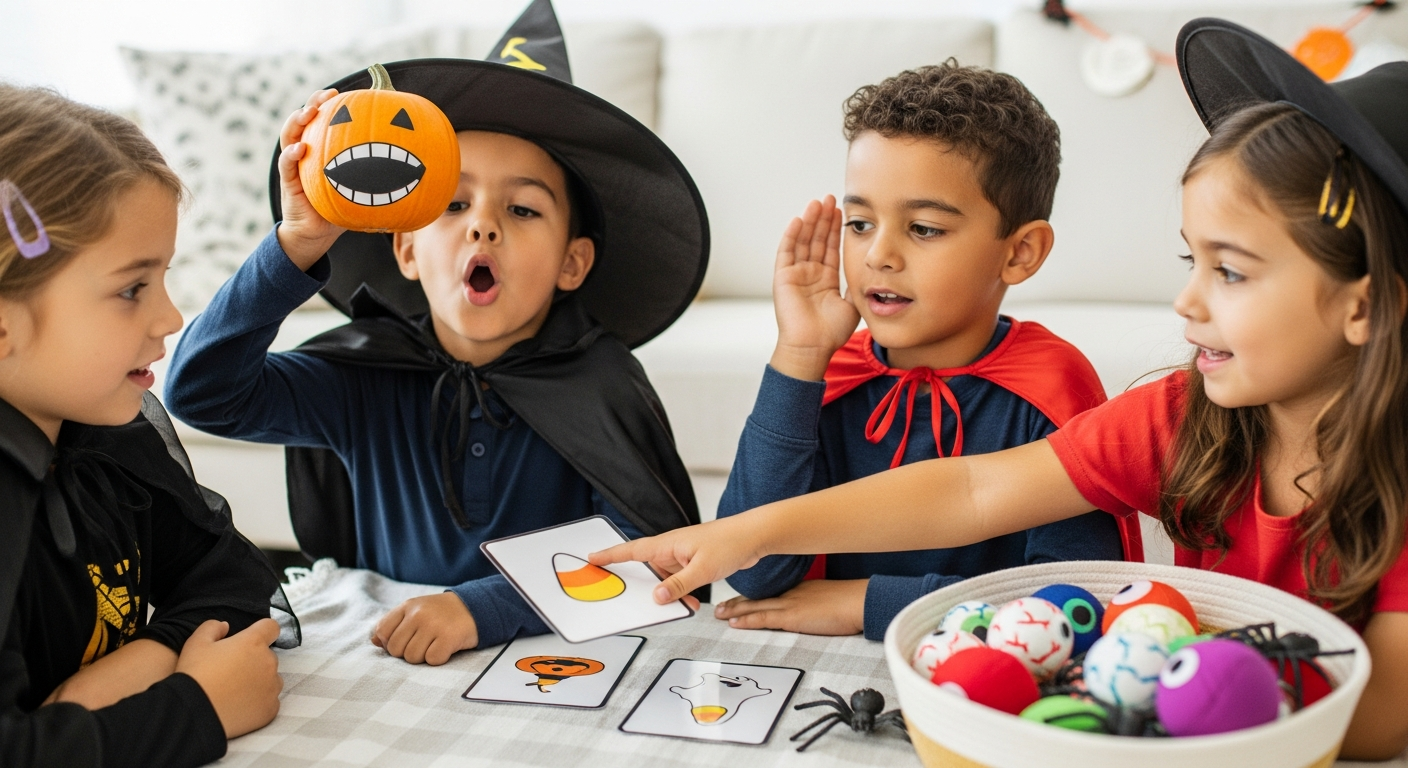
Table of Contents
- Why Halloween Games are More Than Just Fun
- Active & Energetic Halloween Games for Kids
- Sensory & Creative Halloween Games
- Classic Halloween Games with a Twist
- Boosting Language Through Play: How Speech Blubs Helps
- Making the Most of Halloween Learning Moments
- Ready to Empower Your Child's Voice? Discover Speech Blubs!
- Conclusion
- Frequently Asked Questions (FAQ)
The air grows crisp, leaves transform into a riot of fiery colors, and a thrilling anticipation buzzes through every child. Halloween is upon us! For many, it's a magical time filled with costumes, candy, and spooky stories. But beyond the festive fun, Halloween offers a golden opportunity—a vibrant, engaging backdrop for children to develop crucial communication and social skills through play.
As parents and caregivers, we’re always looking for ways to merge learning with laughter, and Halloween games are a perfect avenue. These aren’t just frivolous activities; they’re rich environments for vocabulary expansion, following instructions, turn-taking, and expressive language. In this comprehensive guide, we'll delve into a fantastic collection of fun Halloween games for kids, complete with language-boosting tips to transform your spooky celebrations into powerful learning moments. We'll also explore how Speech Blubs, built on scientific principles and a deep understanding of child development, empowers children to "speak their minds and hearts," turning screen time into "smart screen time" that complements these playful activities. Get ready to sprinkle some speech development magic into your Halloween!

Why Halloween Games are More Than Just Fun
Play is the primary language of childhood. It's how children explore the world, understand social dynamics, and, critically, develop their communication skills. Halloween games, with their inherent themes of mystery, imagination, and shared excitement, are particularly potent tools for fostering language growth.
When children engage in these activities, they are:
- Expanding Vocabulary: Encountering new words related to costumes, spooky characters, actions (e.g., mummy, ghost, cackle, creep, freeze), and sensory experiences (e.g., gooey, sticky, bumpy, slimy).
- Practicing Following Instructions: Listening to and carrying out multi-step directions, which is vital for comprehension and classroom readiness.
- Developing Social Communication: Learning to take turns, share, negotiate, express preferences, and understand non-verbal cues.
- Boosting Expressive Language: Describing what they see, feel, and do, telling stories, and asking questions.
- Building Confidence: Successfully participating in games, contributing to a team, and expressing themselves freely in a low-pressure, fun environment.
- Enhancing Auditory Processing: Listening carefully for clues, music cues, or instructions amidst the excitement.
At Speech Blubs, we know that every interaction is an opportunity for language development. Our mission is rooted in the belief that every child deserves to find their voice, and we understand the unique challenges some children face. Our founders, who experienced speech problems themselves as children, created Speech Blubs to be the immediate, effective, and joyful solution they wished they had. We seamlessly blend scientific principles with play, and these Halloween games offer the perfect "real-world" extension of that philosophy, supporting a child's overall development journey.
Active & Energetic Halloween Games for Kids
Let's get those little monsters moving and chattering with some high-energy games perfect for a Halloween party or a fun afternoon.

Mummy Wrap Race
The Game: Divide children into teams of two or three. Each team receives a roll of toilet paper or white streamers. One child is the "mummy," and the others race to wrap them up completely before the timer runs out or before other teams finish. The best-wrapped mummy (or the fastest team) wins!
Language Boost: This game is fantastic for giving and following instructions ("Wrap around their legs!", "Don't forget their arm!"), using action verbs ("wrap," "roll," "cover"), and descriptive language ("tight," "loose," "all covered"). Encourage teamwork and discussion among team members. "Who needs more paper?" "Let's wrap his head!"
Monster Mash Musical Freeze Dance
The Game: Like musical chairs but without the chairs! Play some spooky Halloween music and encourage everyone to dance like their favorite monster (zombies, witches, ghosts). When the music stops, everyone must freeze in their monster pose. Anyone who moves is out. The last monster standing wins. For younger kids, instead of eliminating players, have them do a silly "monster move" if they don't freeze fast enough.
Language Boost: This game hones auditory processing as children listen for music cues. It’s also great for practicing action verbs ("dance," "freeze," "stomp," "creep"), body parts ("shake your head," "wiggle your fingers"), and descriptive adjectives ("spooky," "silly," "fast," "slow"). Encourage children to describe their monster pose or the monster they are imitating.
Ghost in the Graveyard
The Game: This classic combines hide-and-seek with tag. One person is the "ghost" and hides while the other players count. After counting to "midnight," players search for the ghost. When someone spots the ghost, they yell, "Ghost in the graveyard!" and everyone races back to a designated "home base." The ghost tries to tag players before they reach safety. The first person tagged becomes the next ghost.
Language Boost: Excellent for following multi-step directions, turn-taking, and using spatial prepositions ("behind the bush," "under the table," "next to the tree"). Children will naturally describe where they found the ghost or where they plan to hide. This promotes narrative skills as they recount the chase.
Costume Relay
The Game: Gather a pile of oversized costume accessories (hats, capes, gloves, glasses). Divide children into teams. The first player runs to the pile, puts on one item, runs back, tags the next player, and then removes the item. The next player does the same, adding a new item. Alternatively, each player adds to the costume until the last player is wearing all the items.
Language Boost: This activity reinforces sequencing ("First, I put on the hat, then the cape"), naming clothing items and body parts, and using action verbs ("run," "grab," "put on," "take off"). Team communication is key, offering practice in encouraging peers and coordinating turns.
Pumpkin Races
The Game: Give each child a small or miniature pumpkin. The goal is to race the pumpkin from one end of the room/yard to the other without touching it with their hands. They can push it with their nose, roll it with their feet, or balance it on their head.
Language Boost: Perfect for action verbs ("roll," "push," "balance," "crawl"), spatial concepts ("over," "under," "around"), and problem-solving language ("How can I move it?", "It's stuck!"). Encourage children to narrate their own race or cheer for others, using descriptive words for how the pumpkins move.
Sensory & Creative Halloween Games
Engage multiple senses and spark imagination with games that encourage descriptive language and hands-on exploration.
Spooky Boxes (Mystery Feel Boxes)
The Game: Decorate a few cardboard boxes to look spooky (e.g., a monster, a haunted house). Cut a hand-sized hole in each box. Inside, place different textured "mystery" items: peeled grapes (eyeballs), cooked spaghetti (worms), dried beans (monster teeth), a peeled lychee (brain). Children reach in, describe what they feel, and guess what it is without looking.
Language Boost: This is a powerhouse for descriptive adjectives ("slimy," "bumpy," "squishy," "gritty," "cold," "warm"), comparative language ("It feels like..."), and inferencing. Encourage children to articulate why they think it's a certain item based on their tactile experience. This directly builds the descriptive vocabulary often targeted in speech therapy.
Pumpkin Decorating Station
The Game: Instead of carving, set up a station with mini pumpkins, paints, googly eyes, glitter, pipe cleaners, and stickers. Let children decorate their pumpkins freely.
Language Boost: This activity promotes naming colors, shapes, and materials. Children can describe their design choices ("I'm making a silly pumpkin with big green eyes"), ask for specific items ("Can I have the blue glitter?"), and follow multi-step directions ("First paint, then glue the eyes"). It also encourages expressing creativity and sharing ideas.
DIY Treat Bag & Cookie Decorating
The Game: Provide plain paper bags and Halloween-themed stickers, markers, and glitter for treat bag decorating. Or, bake some simple sugar cookies and offer icing, sprinkles, and edible googly eyes for a cookie decorating station.
Language Boost: Children practice sequencing ("First the icing, then the sprinkles"), naming colors and shapes, and describing their creations. They can ask for specific items, share their preferences, and describe the flavors and textures of the cookies. This activity encourages detailed descriptions and narration of their process. For example, a child working on multi-word utterances might say, "My cookie is sparkly" or "I need more purple sprinkles."
Oreo Spiders & Cheesy Broomsticks
The Game: Turn snack time into a game of creative assembly. For Oreo spiders, provide Oreos, pretzel sticks (legs), and mini M&Ms (eyes) with a dab of icing to attach. For cheesy broomsticks, use cheese slices, pretzel sticks (broom handles), and chives to tie the cheese. Children follow instructions to assemble these spooky treats.
Language Boost: Excellent for following recipes (sequencing), naming ingredients, action verbs ("twist," "insert," "attach"), and descriptive words for the food ("crunchy," "sweet," "salty"). This also provides a natural context for discussing healthy choices and the process of making food.
Classic Halloween Games with a Twist
Reimagine traditional favorites with a Halloween flair to keep kids engaged and talking.
Apple Bobbing
The Game: A true classic! Fill a large tub with water and apples. Children try to "bob" for apples using only their mouths, no hands allowed.
Language Boost: This game elicits a lot of excited exclamations and descriptive words ("cold," "wet," "slippery," "hard"). Children will use action verbs ("grab," "bite," "splash") and describe their attempts and successes. It also encourages persistence and lighthearted conversation about the challenge.
Wink Murder / Ghostly Statues
The Game: In "Wink Murder," one child is secretly chosen as the "murderer." The murderer "kills" players by winking at them. If winked at, a player falls dramatically. Others try to guess who the murderer is. "Ghostly Statues" is similar to freeze dance, but children dance like ghosts and freeze when the music stops. The "ghost host" tries to make them laugh or move.
Language Boost: These games are fantastic for social communication, non-verbal cues, and making inferences. Children learn to observe others, express their guesses, and describe actions or emotions. In Wink Murder, they might say, "I think it's Sarah because she winked at David!" This builds logical reasoning and justification skills.
Halloween Bingo
The Game: Use printable Halloween Bingo cards featuring common spooky images (ghost, pumpkin, witch hat, bat, spider). Call out the items, and children mark them on their cards.
Language Boost: Halloween Bingo reinforces vocabulary recognition, matching skills, and listening comprehension. It’s also great for turn-taking and celebrating success ("Bingo!"). For a fun twist, when a child gets Bingo, they have to shout "Trick or Treat!" instead of "Bingo!"
Pin the Tail on the Black Cat / Pin the Eye on the Monster
The Game: Print a large picture of a black cat, a pumpkin, or a monster. Create separate "tails," "stems," or "eyes" for children to try and pin in the correct spot while blindfolded.
Language Boost: This game is wonderful for directional language ("a little to the left," "up higher," "straight ahead"), body parts (of the creature), and spatial awareness. Children will ask for guidance, express their guesses, and describe where they think the piece should go.
Musical Cauldron
The Game: Place a large cauldron filled with various Halloween hats, masks, and props in the center of a circle. Play Halloween music, and children walk around the cauldron. When the music stops, everyone grabs an item, puts it on, and freezes. Start the music again, and they swap items with a neighbor.
Language Boost: This promotes quick item identification, naming costume pieces, and practicing turn-taking. Children can describe the item they picked, the item they swapped, and the character they are portraying. It's a lively way to encourage spontaneous verbalizations.
Boosting Language Through Play: How Speech Blubs Helps
These fun Halloween games are just one piece of the puzzle in nurturing your child's communication skills. For children who need a little extra support, Speech Blubs offers a dynamic, engaging, and scientifically-backed approach that works hand-in-hand with these everyday learning opportunities.
At Speech Blubs, we believe in empowering children to "speak their minds and hearts." Our company was born from the personal experiences of our founders, all of whom grew up with speech problems. They created the tool they wished they had – an immediate, effective, and joyful solution for the 1 in 4 children who need speech support. We understand the anxieties parents face and are committed to providing resources that truly make a difference.
Our unique approach blends scientific principles with play into one-of-a-kind "smart screen time" experiences. Unlike passive viewing like cartoons, Speech Blubs provides a screen-free alternative that encourages active participation and powerful family connection. How do we do this? Through our innovative "video modeling" methodology. Children learn complex communication skills by watching and imitating their peers on screen, activating crucial mirror neurons in their brains. This isn't just theory; our method is backed by research and places us in the top tier of speech apps worldwide. You can explore the research behind our methodology on our website.
For example, a parent whose child is struggling with expressive language might find our "Odd One Out" section incredibly helpful. Imagine your child playing a Halloween game, struggling to describe why a ghost doesn't belong with a pumpkin and a witch. Our app's activities, which often focus on categorization and describing differences, can provide the foundational practice needed. Or, for a parent whose 3-year-old "late talker" loves animals, our "Animal Kingdom" section offers a fun, motivating way to practice "moo" and "baa" sounds, building early vocabulary and confidence that translates to describing costumes or characters in a game.
Speech Blubs is designed to be a powerful supplement to your child's overall development plan and, when applicable, professional therapy. We focus on fostering a love for communication, building confidence, reducing frustration, developing key foundational skills, and creating joyful family learning moments. We never promise guaranteed outcomes, but we are committed to providing tools that help your child make meaningful progress.
Making the Most of Halloween Learning Moments
To maximize the language-boosting potential of these Halloween games, remember these tips:
- Narrate, Narrate, Narrate: Describe what your child is doing, seeing, and feeling. "You're wrapping the mummy so fast!" "Look at that slimy spaghetti!"
- Ask Open-Ended Questions: Instead of "Is it green?", try "What color is it?" or "What do you think will happen next?" Encourage them to tell you about their choices and experiences.
- Encourage Imitation: If your child is working on specific sounds or words, gently model them during play. "Can you say 'ghost'?" or "Let's make a 'boo' sound!"
- Emphasize Turn-Taking: Clearly define whose turn it is and wait patiently for their response. Use phrases like "My turn, then your turn."
- Follow Their Lead: Let your child's interests guide the play. If they're fascinated by the spooky boxes, spend more time there. Their engagement is key to learning.
- Celebrate Efforts, Not Just Perfection: Acknowledge every attempt at communication, no matter how small. "Great trying to say 'spider'!"
If you're unsure whether your child could benefit from speech support, we offer a quick 3-minute preliminary screener. It involves 9 simple questions and provides an assessment and a next-steps plan. Take our preliminary screener today to gain valuable insights and start a free 7-day trial of Speech Blubs.
Ready to Empower Your Child's Voice? Discover Speech Blubs!
Halloween is a fantastic time for playful learning, but the journey of communication development is year-round. We are here to support you every step of the way. Speech Blubs offers a world of engaging activities designed to make speech practice fun and effective.
To ensure you get the best value and access to all our incredible features, we encourage you to choose our Yearly plan. Here's why:
- Monthly Plan: $14.99 per month.
- Yearly Plan: Just $59.99 per year, which breaks down to an amazing $4.99 per month! You save a significant 66% compared to the monthly plan.
Beyond the substantial savings, the Yearly plan unlocks a wealth of exclusive, high-value features:
- A 7-day free trial: Experience the full power of Speech Blubs before committing.
- The extra Reading Blubs app: Double the fun and learning with our companion reading app.
- Early access to new updates: Be the first to try out our latest features and content.
- 24-hour support response time: Get prompt assistance whenever you need it.
The Monthly plan does not include these fantastic benefits. We want you and your child to have the fullest, most enriching experience possible.
Ready to provide your child with "smart screen time" that sparks their voice and builds confidence? Download Speech Blubs on the Apple App Store or Google Play Store today! To start your free 7-day trial and unlock all the premium features, be sure to select the Yearly plan during signup. Alternatively, you can create your account and begin your 7-day free trial directly on our website. Don't miss out on empowering your child's communication journey with the best value!
Conclusion
Halloween is a time of enchanting possibilities, and by incorporating these fun, language-rich games, we can transform it into an unparalleled opportunity for growth. From developing critical social skills to expanding vocabulary and boosting confidence, these activities are more than just entertainment; they are foundational building blocks for strong communication.
Remember that every interaction, every shared laugh, and every attempt at expressing themselves contributes to your child's journey. By actively engaging with them during play, narrating, asking questions, and providing encouragement, you are building a solid foundation for their voice. And for those moments when you seek expert-designed, joyful support, Speech Blubs is here. Our scientifically-backed approach, built by founders who truly understand, provides "smart screen time" that complements your efforts, empowering children to confidently "speak their minds and hearts."
Don't let this Halloween pass by without making the most of these playful learning moments. And when you're ready to further nurture your child's communication skills, join the Speech Blubs family. Start your 7-day free trial today by downloading the app and selecting the Yearly plan to access the full suite of features, including Reading Blubs and priority support. Let's make this Halloween—and every day—a celebration of your child's growing voice!
Frequently Asked Questions (FAQ)
Q1: How do these Halloween games specifically help with speech development?
A1: These games are rich in opportunities for language practice. They encourage vocabulary expansion (new Halloween words, descriptive adjectives), develop listening comprehension (following instructions), facilitate expressive language (describing actions, feelings, items), and practice social communication skills like turn-taking and negotiation. Active participation naturally prompts children to use their voices and respond to prompts.
Q2: What age group are these games best suited for?
A2: Many of these games are adaptable for a wide range of ages, from toddlers to early elementary school children. For younger children, simplify rules and focus on basic vocabulary and actions. For older children, add more complex instructions, team elements, or abstract concepts. Parents can always adjust the complexity to match their child's developmental stage.
Q3: How can I integrate Speech Blubs with these Halloween activities?
A3: Speech Blubs is a perfect complement! For example, after playing a game like "Spooky Boxes," you could use the app's descriptive language activities to reinforce vocabulary for textures and senses. If your child struggles with action verbs during "Pumpkin Races," you can find sections in Speech Blubs that focus on "run," "roll," and "push." The app provides structured practice that reinforces skills used during free play, making screen time productive and engaging.
Q4: Why should I choose the Yearly plan for Speech Blubs?
A4: The Yearly plan offers the best value and the most comprehensive experience. At just $59.99 per year (saving you 66% compared to the monthly plan), it includes a 7-day free trial, access to the Reading Blubs app, early access to new updates, and 24-hour support. This ensures your child has uninterrupted access to a full range of features designed for continuous growth, offering a complete learning ecosystem.
About the author