
Handmade Holiday Joy: Easy Kids Crafts for Christmas Gifts
 By Speech Blubs Team•Dec 22, 2025•20 min.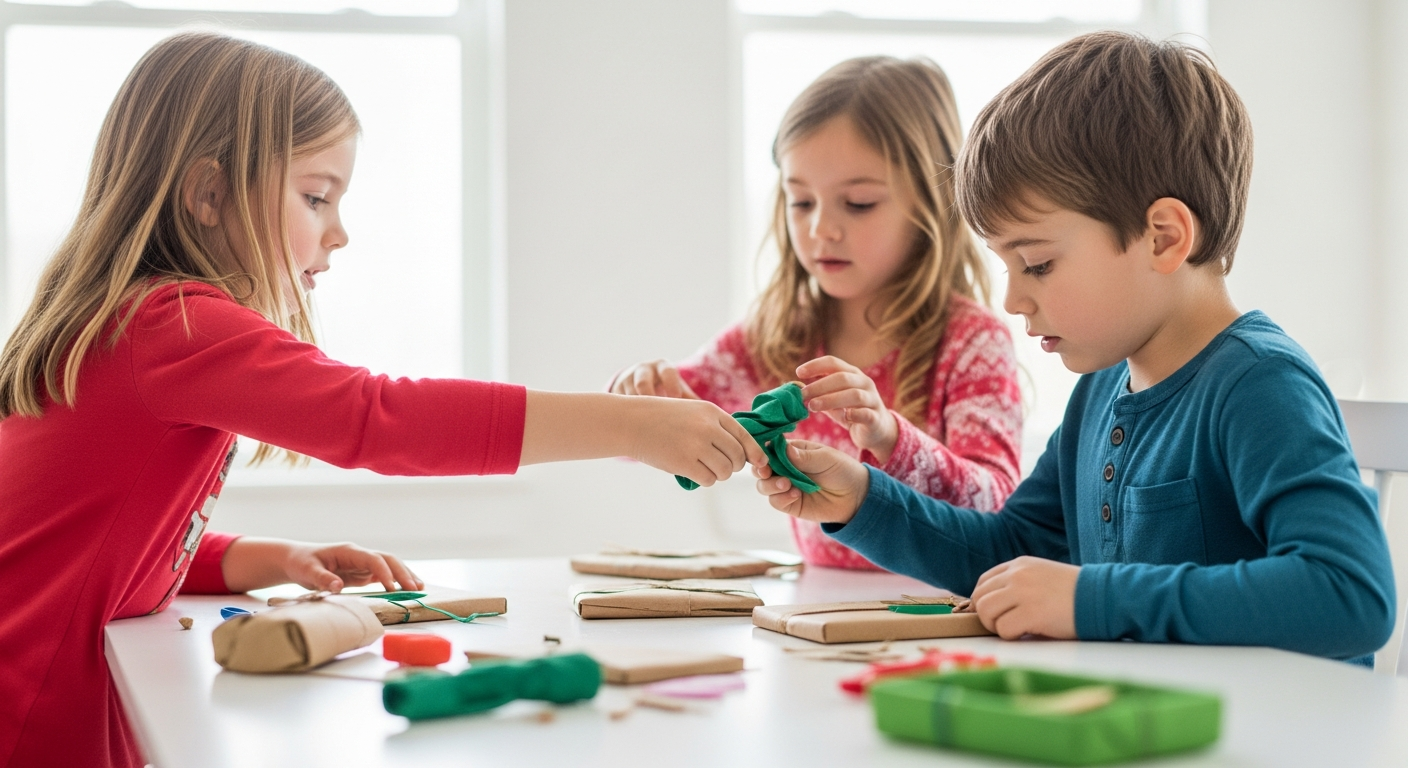
Table of Contents
- Introduction
- Why Handcrafted Gifts are Priceless
- Pre-Crafting Prep: Setting Up for Success
- Wonderful Christmas Craft Ideas for Little Hands
- Integrating Language and Learning Through Crafts
- Beyond the Craft: Presenting the Gift
- How Speech Blubs Supports Your Child's Communication Journey
- Discover the Speech Blubs Difference: Plans and Value
- Conclusion
- Frequently Asked Questions (FAQ)
Introduction
Imagine the look on a grandparent's face, not just at the sight of a gift, but at the realization that small, eager hands crafted it especially for them. The holiday season, with its twinkling lights and festive cheer, often brings a flurry of gift shopping, but there's an unparalleled magic in a present made by a child. These aren't just trinkets; they are tangible expressions of love, effort, and budding creativity. Yet, many parents wonder how to turn this beautiful idea into a fun, manageable reality that also supports their child's growth.
This blog post is your guide to transforming simple materials into treasured Christmas gifts, all while fostering essential developmental skills in your little ones. We’ll explore a delightful array of age-appropriate craft ideas that go beyond mere decoration, boosting fine motor skills, cognitive abilities, and – crucially – language and communication. You’ll discover how these joyful activities can become powerful learning experiences, reinforcing the very skills we champion at Speech Blubs. Get ready to create lasting memories and meaningful gifts that truly speak from the heart.

Why Handcrafted Gifts are Priceless
In a world brimming with store-bought toys and gadgets, a handmade gift stands out. It carries a unique warmth, a personal touch that no mass-produced item can replicate. When a child proudly presents a gift they’ve made themselves, they’re not just giving an object; they’re sharing a piece of their effort, their imagination, and their love.
Beyond the Store-Bought
The value of a personalized, handcrafted gift extends far beyond its monetary cost. It’s about the time invested, the thought put into selecting the recipient, and the unique expression of the child's personality. These gifts become cherished keepsakes, holding stories and memories that mass-produced items simply cannot. They teach children the profound joy of giving, fostering a sense of generosity and thoughtfulness that is at the heart of the holiday spirit.
Developmental Benefits Galore
Engaging in craft activities is a powerhouse for child development, touching upon various crucial areas that build a strong foundation for learning and communication.
Fine Motor Skills
From gripping a crayon to snipping paper with scissors, spreading glue, or threading beads, crafts are an excellent workout for tiny hands and fingers. These activities strengthen the small muscles in the hands and improve hand-eye coordination, which are vital for daily tasks like self-feeding, dressing, and eventually, writing. The precision required in many crafts helps refine these critical skills, preparing children for future academic and life challenges.
Cognitive Skills
Crafting is a wonderful brain booster. Children learn to follow instructions, sequence steps, and problem-solve when things don't go exactly as planned (and they often don't!). They engage in planning, decision-making (What color next? How do I attach this?), and spatial reasoning. Understanding concepts like "bigger," "smaller," "above," and "below" becomes concrete through hands-on creation.
Creativity & Imagination
Crafts provide an open canvas for children to express their unique ideas and perspectives. There’s no right or wrong way to make a snowflake or decorate a picture frame. This freedom encourages imaginative play and helps children think outside the box, fostering innovation and self-expression. It’s a chance for them to bring their inner worlds to life.

Self-Esteem & Confidence
The sense of accomplishment that comes with completing a craft project is immense for a child. When they see the finished product, especially one destined for a loved one, their self-esteem soars. The pride in saying, "I made this!" builds confidence, encourages perseverance, and instills a belief in their own abilities. This positive reinforcement is invaluable for their overall emotional well-being.
Language & Communication
Perhaps one of the most significant, yet often overlooked, benefits of crafting is its impact on language and communication development. As children engage in these activities with an adult, they are constantly exposed to new vocabulary and opportunities for conversation. They learn to describe actions ("I'm cutting the paper," "I'm painting it red"), identify colors, shapes, and textures ("This glitter is bumpy," "The glue is sticky"), and articulate their creative choices.
At Speech Blubs, our mission is to empower children to "speak their minds and hearts." We know firsthand the challenges children face with speech, as our company was born from the personal experiences of our founders, who all grew up with speech problems. Crafting provides a natural, low-pressure environment for children to practice new words and sounds, discuss their ideas, and tell stories about their creations. These interactive moments are invaluable, laying the groundwork for more complex communication. For a child who might be a "late talker," even simple utterances like "more glue" or "red star" during a craft session are huge steps forward.
Social-Emotional Learning
Crafting teaches patience as children wait for glue to dry or carefully work on a detailed section. It develops perseverance when a task is challenging, and they learn not to give up. The act of making a gift for someone else fosters empathy and an understanding of the joy that comes from making others happy. These are critical social-emotional skills that contribute to a child's ability to connect with the world around them.
Pre-Crafting Prep: Setting Up for Success
A smooth crafting session begins long before the glue comes out. A little preparation can make all the difference, turning potential frustration into a joyful experience.
Choosing the Right Craft
Consider your child's age and developmental stage. Toddlers will thrive with simple, sensory-rich activities, while older children can handle more intricate projects. Also, think about the recipient: who is the gift for, and what might they appreciate? A handprint ornament is perfect for a grandparent, while a personalized bookmark might be ideal for a favorite teacher. Involve your child in this decision-making process; it adds to their sense of ownership and excitement.
Gathering Supplies
Before you begin, gather all necessary materials. Nothing derails a crafting session faster than having to pause to hunt for scissors or a specific color of paper. Create a checklist and collect everything beforehand. Essential items often include construction paper, safety scissors, child-safe glue, crayons, markers, paint, glitter, yarn, and recyclable items like toilet paper rolls or cardboard. Having everything within reach makes the process flow smoothly.
Setting the Stage
Designate a specific workspace for your crafting adventure. This could be a kitchen table covered with an old newspaper or a dedicated craft mat. Protecting your surfaces from spills and stains is key to a stress-free experience. A relaxed atmosphere is also crucial; put on some festive music, ensure good lighting, and set aside enough time so no one feels rushed. Remember, the process is just as important as the outcome.
The Power of Co-Play
One of the most profound aspects of crafting with children is the opportunity for co-play. This isn't just about supervising; it's about actively participating alongside your child. Talk about what you're doing, ask open-ended questions, and model language. "I'm spreading the glue gently," "What color star do you want next?" This kind of interaction is at the core of how children learn complex communication skills. At Speech Blubs, our app is built on the principle of "video modeling," where children learn by watching and imitating their peers. This natural inclination to imitate extends to parents, making your active participation in crafting a powerful tool for language development. By modeling new words and actions, you become your child's first and most influential communication partner.
Wonderful Christmas Craft Ideas for Little Hands
Here's a selection of delightful Christmas craft ideas, categorized by age group, designed to be both fun to make and cherished as gifts.
For Toddlers (1-3 years): Simple, Sensory, and Sweet
Toddlers thrive on sensory experiences and simple actions. These crafts focus on basic motor skills, cause and effect, and early language development.
Salt Dough Ornaments
- What you'll need: Flour, salt, water, cookie cutters, paint, glitter, ribbon.
- How to make it: Mix equal parts flour and salt, then gradually add water until a dough forms. Knead, roll it out, and let your child use cookie cutters to create festive shapes. This is a fantastic opportunity for handprints or footprints! Bake at a low temperature until hard, then let your child paint and decorate.
- Language integration: Talk about "soft dough," "sticky hands," "rolling," "pressing," "baking." Identify shapes like "star" or "tree." For a child practicing early sounds, encourage vocalizations while pressing their hand into the dough: "push!" or "my hand!"
Fingerprint Christmas Cards
- What you'll need: Construction paper (folded), child-safe paint, markers.
- How to make it: Help your child dip their finger into green paint to create tree branches, or white paint for snowmen. Once dry, add details with markers (e.g., a star on top of the tree, snowman's eyes and buttons).
- Language integration: Name colors as you use them. Count fingers and fingerprints. "One, two, three… many snowflakes!" Describe the texture of the paint: "wet," "smooth."
Yarn-Wrapped Stars/Trees
- What you'll need: Cardboard cut into simple star or tree shapes, colorful yarn, glue.
- How to make it: Spread glue lightly over the cardboard shape. Help your child wrap yarn around the shape, covering the cardboard.
- Language integration: Use action verbs like "wrap," "wind," "around." Talk about colors and textures: "soft yarn," "sparkly yarn." Discuss "tight" and "loose" as they wrap.
For Preschoolers (3-5 years): Growing Skills, More Creativity
Preschoolers can handle more steps and express more detailed ideas. These crafts encourage fine-tuning motor skills and expanding vocabulary.
Popsicle Stick Photo Frames
- What you'll need: Popsicle sticks, glue, paint or markers, glitter, small photos.
- How to make it: Glue four popsicle sticks together to form a square frame. Let your child decorate the frame with paint, markers, glitter, or small buttons. Once dry, glue a cherished photo onto the back.
- Language integration: Discuss family members in the photos. "Who is this?" "What are we doing in the picture?" Talk about colors and patterns used for decoration. Introduce words like "attach," "decorate," "remember."
Handprint Mittens/Reindeer Art
- What you'll need: Construction paper, paint, markers, googly eyes (optional).
- How to make it: Help your child press their hand (or both hands) onto paper to create a handprint. Turn them into reindeer by adding antlers and a red nose with markers, or into cozy mittens by drawing a thumb and wrist cuff.
- Language integration: Practice body parts: "hand," "fingers," "thumb." Talk about animals like "reindeer" and their features. Encourage storytelling: "What is your reindeer doing?" This is a great chance to work on consonant sounds like "r" for reindeer.
Personalized Mugs (with adult help)
- What you'll need: Plain ceramic mugs, ceramic paint markers (oven-safe), rubbing alcohol.
- How to make it: Clean mugs with rubbing alcohol. Let your child draw pictures or write their name (with help) on the mug. An adult will then bake the mugs according to marker instructions to set the design.
- Language integration: Discuss who the mug is for and what the child wants to draw for them. "Grandma loves flowers," "Let's draw a big heart." Introduce concepts like "permanent" and "heat."
For Early School-Agers (5-8 years): Independence and Detail
Children in this age group enjoy more independence and can focus on intricate details. These crafts challenge their fine motor skills and encourage creative storytelling.
DIY Snow Globes
- What you'll need: Small, clean jars with tight-fitting lids, waterproof glue, distilled water, glitter, small plastic figurines (e.g., tiny trees, animals, Santa).
- How to make it: An adult glues figurines to the inside of the jar lid. Once dry, fill the jar with distilled water, add a pinch of glitter, and screw the lid on tightly. Secure with more glue if desired.
- Language integration: Discuss the sequence of steps: "First we glue, then we fill." Encourage imaginative play and storytelling about the scene inside the snow globe. "What is the snowman doing in the snow?"
Painted Rock Garden Markers/Paperweights
- What you'll need: Smooth, flat rocks, acrylic paints, paintbrushes, clear sealant spray.
- How to make it: Wash and dry the rocks. Let your child paint festive designs like snowmen, Santa faces, or decorated trees. Once dry, an adult can spray with a clear sealant to protect the artwork.
- Language integration: Encourage descriptive language about their designs: "My snowman has a long carrot nose and sparkly buttons." Discuss colors and mixing them. Practice "smooth rock," "rough brush."
Beaded Jewelry/Keychains
- What you'll need: Elastic string or jewelry wire, various beads (different colors, shapes, sizes), clasps (for necklaces/bracelets).
- How to make it: Let your child choose beads and thread them onto the string or wire. An adult will secure the ends or attach clasps.
- Language integration: Work on pattern recognition and sequencing: "Red, blue, red, blue." Discuss colors, shapes, and sizes of beads. "Big circle bead," "tiny star bead." Practice counting beads and discussing who the gift is for.
Integrating Language and Learning Through Crafts
Every craft session is a golden opportunity to boost your child's language development. It's about more than just making something; it's about the conversations, the descriptions, and the shared experiences.
Descriptive Language
Encourage your child to use descriptive words. Instead of just saying "glue," ask, "How does the glue feel?" (sticky, wet). "What color is the paper?" (bright red, dark green). "How does the glitter look?" (sparkly, shiny). This helps build a rich vocabulary and enhances their ability to articulate observations.
Action Verbs
Crafting is full of action! Point out and name the verbs as you perform them: "We are cutting the paper," "You are gluing the stars," "Let's paint the ornament." This reinforces verb usage and comprehension.
Sequencing & Storytelling
Many crafts involve a sequence of steps. Talk through these steps: "First, we draw the shape. Next, we cut it out. Then, we decorate." This helps develop narrative skills and logical thinking. Encourage your child to tell a story about their finished craft: "This snowman is going on an adventure!"
Concept Building
Reinforce concepts like colors, shapes, sizes, and textures. Use prepositions naturally: "Put the star on the tree," "The glue is under the paper." These concepts are fundamental building blocks for language and cognitive understanding.
Questioning & Answering
Ask open-ended questions that encourage more than a "yes" or "no" answer. "What do you like most about your creation?" "How did you decide on those colors?" "Who do you think will like this gift?"
Relatable Scenarios and Speech Blubs Connection:
- For the child struggling with sound imitation: Imagine making a paper plate tambourine or a rice shaker with your child. As you craft, you make sounds: "Shake, shake, shake!" or "Tap, tap, tap!" This playful sound-making during crafting naturally prepares them for activities in Speech Blubs like the "Animal Kingdom," where they imitate animal sounds like "moo" and "baa" by watching their peers. The transition from making craft-related sounds to imitating sounds in the app feels seamless and fun.
- For the child with limited vocabulary: While making a collage, you might hold up a "big" piece of paper and a "little" piece. "Which one is big? Which one is little?" You describe textures: "This cotton ball is soft!" These simple descriptive words expand their vocabulary in a tangible way. Our video modeling methodology at Speech Blubs then reinforces this by showing children peers using these words in context, making it easier for them to learn and use new words like "big," "little," and "soft."
- For parents observing struggles with focus: If your child struggles to sit still or maintain attention during structured learning, a fun, hands-on craft session can be a playful way to build focus and persistence. The tactile engagement helps them stay present. This mirrors the engaging, play-based approach of our app, which uses interactive games and visual stimuli to keep children motivated and focused on speech practice, turning screen time into "smart screen time."
- For the child who gets frustrated easily: Crafting offers opportunities for safe failure and learning. A piece of paper tears, a color mixes unexpectedly. As you calmly guide them through fixing it, you build resilience. This positive experience of overcoming minor challenges fosters confidence, a cornerstone for communication. Building this foundational confidence through real-world play directly supports their readiness for trying new sounds and words in Speech Blubs, making them more open to the learning process.
Beyond the Craft: Presenting the Gift
The journey doesn't end when the glue dries. The final steps of wrapping and giving are just as important for reinforcing the joy and lessons learned.
Wrapping Together
Involve your child in the gift-wrapping process. This can be as simple as letting them choose the wrapping paper or adding a handmade tag. Tearing tape, folding paper, and tying bows all contribute to fine motor skill development. Discuss whose gift it is and how excited they will be to receive it.
The Act of Giving
This is the grand finale! Encourage your child to personally present their handmade gift. Talk about why they chose to make it for that person and what makes it special. The pride on their face as they hand over their creation, and the recipient's genuine delight, is a powerful lesson in generosity and connection. It reinforces the idea that their efforts have made someone happy, building empathy and social awareness.
Building Confidence
The entire process—from conception to creation to presentation—builds immense confidence. Seeing their hard work appreciated reinforces their capabilities and encourages them to take on new challenges, both creative and communicative.
How Speech Blubs Supports Your Child's Communication Journey
While crafting offers wonderful opportunities for organic language development, sometimes children need a little extra support to unlock their full communication potential. This is where Speech Blubs comes in.
Our mission at Speech Blubs is deeply personal: to empower children to "speak their minds and hearts." We believe every child deserves the tools to communicate effectively, and our company was born from the personal experiences of our founders, who all grew up with speech problems themselves. They created the tool they wished they had—an immediate, effective, and joyful solution for the 1 in 4 children who need speech support.
We blend scientific principles with play to create one-of-a-kind "smart screen time" experiences. Unlike passive viewing like cartoons, Speech Blubs provides a screen-free alternative designed for active engagement and interaction. Our unique approach utilizes "video modeling," where children learn complex communication skills by watching and imitating their peers. This activates mirror neurons in the brain, making learning natural and effective. Learn more about our research and methodology that places us in the top tier of speech apps worldwide.
Speech Blubs is designed for family connection. We encourage co-play, turning practice into shared moments of discovery and achievement. If you've observed your child struggling with specific sounds, expanding their vocabulary, or building confidence in speaking, even during engaging activities like crafting, Speech Blubs can be a powerful supplement to their overall development plan.
Unsure if your child could benefit? Take our quick 3-minute preliminary screener to get a simple assessment and a personalized next-steps plan. It's a great way to understand their needs and discover how Speech Blubs can help.
Discover the Speech Blubs Difference: Plans and Value
We believe in transparency and providing exceptional value to families. When you choose Speech Blubs, you're not just getting an app; you're investing in your child's future communication and confidence.
We offer two straightforward plans to fit your family's needs:
- Monthly Plan: Priced at $14.99 per month.
- Yearly Plan: An incredible value at $59.99 per year, which breaks down to just $4.99 per month.
Why the Yearly Plan is the Best Choice for Your Family
The Yearly Plan isn't just cheaper; it offers a comprehensive package designed to maximize your child's progress and your family's convenience:
- Save 66%: By choosing the Yearly plan, you lock in significant savings compared to the monthly option. This means more effective "smart screen time" for less.
- 7-Day Free Trial: The Yearly plan includes a 7-day free trial, allowing you to explore all features and see the magic of Speech Blubs firsthand before committing.
- Includes Reading Blubs App: As an exclusive bonus, the Yearly plan gives you full access to our extra Reading Blubs app, a fantastic resource to further support your child's literacy journey.
- Early Access to New Updates: Be among the first to experience new features, games, and content as we continuously evolve and improve our app.
- 24-Hour Support Response Time: Get priority support with a guaranteed 24-hour response time, ensuring you always have assistance when you need it.
Important Note: The Monthly plan does not include the 7-day free trial, the extra Reading Blubs app, early access to updates, or the priority 24-hour support response. For the complete Speech Blubs experience and the best value, the Yearly plan is the clear choice.
Hundreds of thousands of parents worldwide have seen their children flourish with Speech Blubs. Read what other parents are saying about their children's amazing progress and newfound confidence.
Conclusion
This holiday season, move beyond the usual gifts and create something truly memorable. Engaging in kids' crafts for Christmas gifts offers a unique opportunity to bond with your child, spark their creativity, and significantly boost their developmental skills—especially in language and communication. From fine motor control to cognitive problem-solving, and from building self-esteem to fostering empathy, these handmade treasures are gifts that keep on giving.
As you guide your child through these joyful crafting adventures, remember that every conversation, every descriptive word, and every shared laugh is building their communication foundation. And for those moments when a little extra support can make a world of difference, Speech Blubs is here. We are committed to providing an immediate, effective, and joyful solution that empowers children to speak their minds and hearts, complementing the rich learning experiences you create at home.
Ready to foster your child's confidence and communication, making this Christmas truly unforgettable? Choose the Yearly plan to get the full suite of features and start your 7-day free trial today. Download Speech Blubs on the App Store or Google Play to embark on a journey of discovery, creativity, and confident communication.
Frequently Asked Questions (FAQ)
1. What age group are these Christmas crafts suitable for?
Our craft ideas are categorized for toddlers (1-3 years), preschoolers (3-5 years), and early school-agers (5-8 years). This ensures that the complexity and required skills are appropriate for your child's developmental stage. Always supervise young children, especially with small parts or scissors.
2. How can I make crafting more beneficial for my child's speech development?
The key is active participation and conversation. Describe actions, objects, colors, and textures. Ask open-ended questions about what your child is doing or seeing. Encourage them to explain their choices and tell stories about their creations. These interactions naturally boost vocabulary, descriptive language, and sequencing skills, mirroring the interactive learning principles we use at Speech Blubs.
3. Do I need special materials for these crafts?
Not at all! Many of these crafts utilize common household items and basic craft supplies like paper, glue, paint, yarn, and recyclables. We encourage using what you already have and getting creative with substitutions. The focus is on the process and interaction, not expensive materials.
4. How does Speech Blubs fit into my child's overall development?
Speech Blubs is designed as a powerful supplement to your child's overall developmental journey. It offers structured, play-based activities that target specific speech and language skills using our unique video modeling methodology. This complements the organic learning that happens during everyday activities like crafting, providing focused practice in a fun, engaging format. It helps build confidence, vocabulary, and sound imitation, ultimately empowering children to express themselves clearly and joyfully.
About the author