
Heartfelt Christmas Crafts from Kids for Parents
 By Speech Blubs Team•Dec 22, 2025•19 min.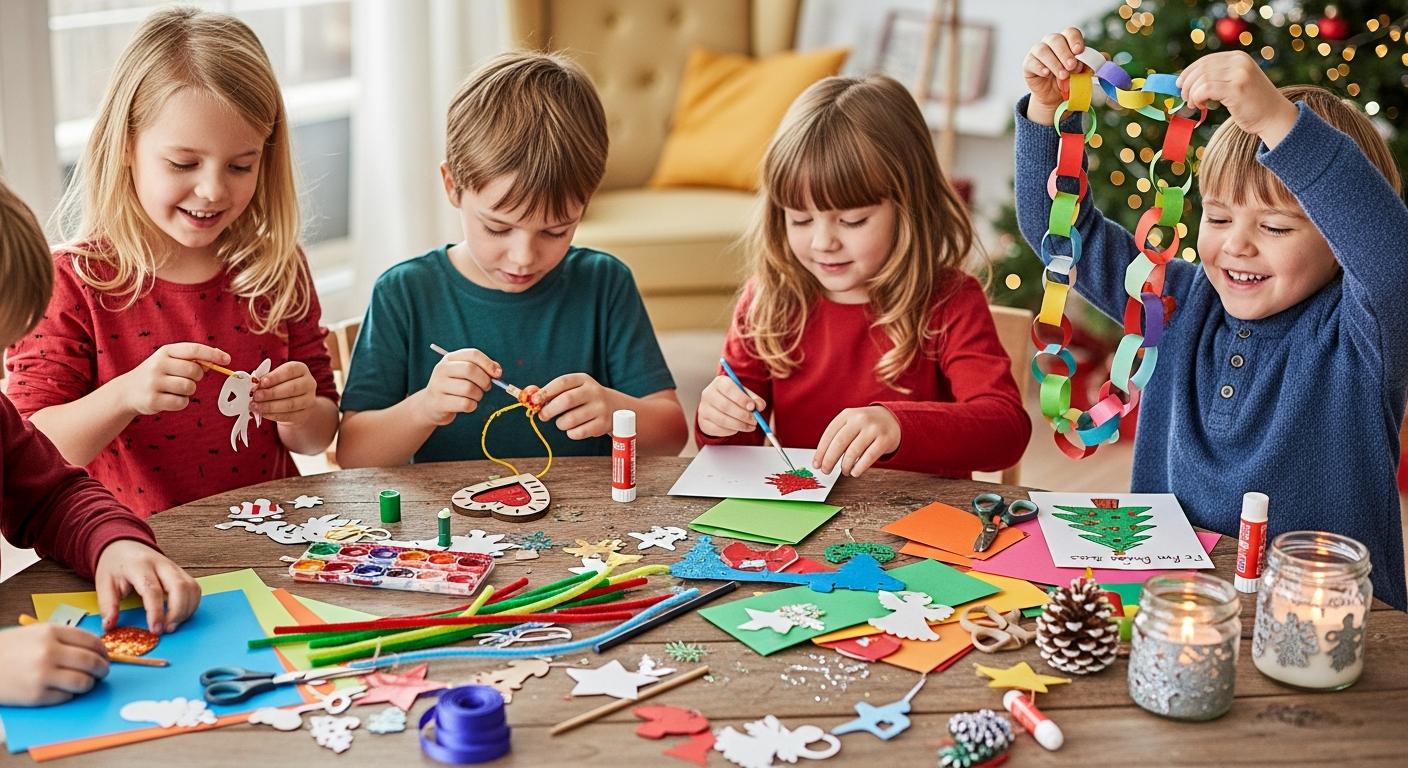
Table of Contents
- The Magic of Handmade: More Than Just a Craft
- Our Approach: How Speech Blubs Enhances Learning
- Festive Crafts for Developing Speech and Language Skills
- Making Craft Time "Smart Screen Time" with Speech Blubs
- Maximizing the Fun and Learning: Tips for Parents
- Take the Next Step with Speech Blubs This Holiday Season
- Frequently Asked Questions
The holiday season is a magical time, filled with twinkling lights, festive carols, and the joy of giving. While store-bought gifts have their place, there’s something truly special about receiving a handmade treasure from a child. These aren't just presents; they are tangible pieces of their heart, their effort, and their burgeoning skills. Imagine unwrapping a lopsided ornament painted with intense focus, or a card with scribbled messages of love, and feeling an immediate warmth that no mass-produced item can replicate. Beyond the sheer cuteness, these crafts offer incredible opportunities for children to explore creativity, develop essential fine motor skills, and, perhaps most importantly, enhance their communication abilities.
At Speech Blubs, we believe in empowering children to speak their minds and hearts, and we know firsthand the profound impact communication has on a child’s confidence and connection with the world. Our mission was born from the personal experiences of our founders, who all grew up with speech problems and created the tool they wished they had. We are committed to providing an immediate, effective, and joyful solution for the 1 in 4 children who need speech support, blending scientific principles with play into one-of-a-kind "smart screen time" experiences. This Christmas, let's harness the power of festive crafting to not only create cherished keepsakes but also to build foundational communication skills that will last a lifetime. This post will explore the myriad benefits of holiday crafting for children's development, offer specific, engaging craft ideas, and show you how to seamlessly integrate these activities with our scientifically-backed approach to foster even greater communication growth.

The Magic of Handmade: More Than Just a Craft
When a child presents you with a handmade gift, they're offering much more than paper, glue, and glitter. They're sharing a piece of their world, a testament to their imagination and growing capabilities. These crafts become cherished mementos, year after year, sparking memories of tiny hands and enthusiastic smiles. But the magic extends far beyond sentimentality. Engaging in craft activities is a powerful, multi-faceted learning experience that naturally supports a child's overall development.
Fostering Communication and Connection
Crafting provides a natural backdrop for conversation. As children cut, paste, paint, and create, they are constantly thinking, making choices, and observing. This creates countless opportunities for parents to engage them in meaningful dialogue. Asking questions like, "What color are you using?" "How does that feel?" "What do you want to make next?" or "Who is this for?" encourages them to articulate their thoughts, describe their actions, and express their feelings. This isn’t just about making noise; it’s about engaging in a back-and-forth exchange that builds critical pragmatic language skills – the social rules of communication.
For instance, consider a parent whose child is a 'late talker' and loves animals. Instead of passively watching a cartoon, they can decide to make a reindeer craft. While cutting out antlers, the parent can ask, "What sound does a reindeer make?" or "Where does Santa's reindeer live?" This interactive process naturally sparks curiosity and provides context for new vocabulary. We understand this need for engaging and motivating ways to learn; it's why Speech Blubs employs "video modeling," where children learn by watching and imitating their peers, making learning feel like a fun interaction rather than a chore. This "smart screen time" approach helps transition children from passive viewing to active participation, laying the groundwork for real-world communication, just like crafting does.

Boosting Fine Motor Skills and Coordination
Crafting is a fantastic workout for tiny hands and fingers. Activities like cutting with scissors, gluing small pieces, drawing lines, molding clay, or threading beads all demand precision and control. These actions strengthen the muscles in their hands, improve hand-eye coordination, and develop dexterity – all crucial precursors for later skills like writing, dressing themselves, and even using utensils. The repetitive nature of many craft tasks helps refine these motor plans, building confidence with each successful snip or stick.
Cultivating Creativity and Problem-Solving
There's no single "right" way to make a craft. Children are encouraged to experiment, innovate, and find their own solutions. What happens if the glue doesn't stick? How can they make their reindeer sparkle more? This open-ended exploration fosters creativity and teaches valuable problem-solving skills. They learn to adapt, try new approaches, and appreciate the unique outcome of their own efforts, even if it doesn't look exactly like the example.
Building Self-Esteem and Confidence
The sense of accomplishment a child feels when they complete a craft, especially one intended as a gift, is immense. Presenting their creation to a parent or loved one, seeing their joy and appreciation, provides powerful positive reinforcement. This boosts their self-esteem, encourages perseverance, and instills a belief in their own capabilities. Every "good job!" and every hug for their handmade masterpiece is a step towards a more confident communicator.
Our Approach: How Speech Blubs Enhances Learning
At Speech Blubs, we believe that every child deserves the chance to express themselves fully. Our founders’ personal journeys through speech difficulties ignited a passion to create an accessible, engaging, and effective tool. We combine scientific principles with play, transforming screen time from a passive activity into an interactive learning experience. Our unique "video modeling" methodology is at the heart of our app, where children learn by watching and imitating real peers, activating mirror neurons in the brain, and making learning incredibly intuitive and fun.
We offer an immediate solution that supplements a child's overall development plan. Our goal is to empower children to communicate effectively, reduce frustration, and build confidence, all while creating joyful family learning moments. Whether your child is just starting to babble, struggling with specific sounds, or expanding their vocabulary, Speech Blubs provides targeted activities designed to meet them where they are. You can learn more about the science behind our approach and our impressive MARS scale rating by visiting our research page.
We know that many parents wonder if their child could benefit from extra support. To help you gain clarity, we offer a quick 3-minute preliminary screener involving 9 simple questions. This provides an assessment and a next-steps plan, guiding you toward a free 7-day trial to experience the benefits firsthand. Take our preliminary screener here.
Festive Crafts for Developing Speech and Language Skills
Now, let's dive into some specific Christmas craft ideas that are perfect for little hands and offer fantastic opportunities for speech and language development. Remember, the goal is not perfection in the craft, but rich interaction and joyful connection.
1. Handprint and Footprint Ornaments
There's nothing quite as precious as capturing the tiny size of a child's hand or foot during the holidays. These ornaments become cherished keepsakes that highlight how much they've grown.
- How to Make It: Use salt dough, air-dry clay, or even paint on clear glass ornaments. For salt dough, mix 2 cups flour, 1 cup salt, and 1 cup water until it forms a dough. Roll it out, press your child's hand or foot into it, cut around the impression, poke a hole for hanging, and bake at a low temperature (around 250°F) for 2-3 hours until hard. Once cooled, children can paint and decorate them.
- Speech & Language Opportunities:
- Vocabulary: "Hand," "foot," "print," "dough," "roll," "press," "paint," "red," "green," "sparkle," "smooth," "hard."
- Action Verbs: "Mix," "roll," "press," "cut," "paint," "dry," "hang."
- Following Directions: "First, roll the dough. Next, press your hand."
- Sensory Words: "Sticky," "soft," "cold," "warm," "rough," "smooth."
- Early Sound Practice: For younger children, imitate sounds like "pat-pat" for pressing the dough or "swish-swish" for painting.
- Personal Connection: Talk about how small their hand is now and how big it will get. "This hand made a beautiful ornament for Grandma!"
- Speech Blubs Connection: Before starting, use our "Shapes and Colors" section to practice identifying and naming the colors they'll use for painting. For sensory vocabulary, you can act out actions from our "Action Verbs" category as you mix and mold the dough.
2. Salt Dough Creations: Beyond Handprints
Salt dough is incredibly versatile and allows for endless creative expression.
- How to Make It: Using the same salt dough recipe, children can use cookie cutters to make festive shapes like stars, trees, gingerbread men, or bells. They can also free-form sculpt small figures. After baking and cooling, decorate with paint, glitter, and markers.
- Speech & Language Opportunities:
- Shape Recognition: "Star," "tree," "circle," "triangle."
- Descriptive Words: "Shiny," "sparkly," "rough," "smooth," "thin," "thick," "round," "pointy."
- Sequencing: "First, roll the dough. Second, cut the shape. Third, bake it."
- Imagination: "What is your gingerbread man doing?" "Is your tree big or small?"
- Prepositions: "On top," "underneath," "in," "out."
- Speech Blubs Connection: Our "Things That Go" section can inspire discussions about car-shaped cookie cutters, or our "Animal Kingdom" can help with animal shapes. Use the app to practice descriptive words before decorating, like "shiny" or "sparkly" as found in various app activities.
3. Popsicle Stick Ornaments or Picture Frames
Simple craft sticks can be transformed into beautiful and personal gifts.
- How to Make It: Children can glue popsicle sticks together to form a triangle for a Christmas tree, a square for a frame, or intricate snowflake designs. Once the glue is dry, they can paint them vibrant colors, add glitter, beads, or small photos.
- Speech & Language Opportunities:
- Counting: "One stick, two sticks, three sticks."
- Colors: "Red stick, green stick, blue stick."
- Spatial Concepts: "Glue the stick on top," "put the photo inside the frame," "make it go across."
- Comparing: "This stick is long, this stick is short."
- Storytelling: "Who is in this picture? What are they doing?" (if making a frame).
- Speech Blubs Connection: Our app has sections specifically designed for practicing "Colors and Shapes." You can also find activities that encourage counting and comparing objects, reinforcing the concepts learned during crafting.
4. Pinecone Animals or Ornaments
Bringing nature indoors for crafting adds a lovely sensory element to holiday projects.
- How to Make It: Collect pinecones from outdoors (ensure they are clean and dry). Children can paint them, add googly eyes, felt ears, pipe cleaner antlers, or small pom-poms to transform them into owls, reindeer, or other woodland creatures. Add a loop of string for hanging.
- Speech & Language Opportunities:
- Nature Vocabulary: "Pinecone," "tree," "leaf," "branch," "soft," "poky."
- Animal Sounds & Names: "Hoo-hoo" for an owl, "neigh" for a reindeer (if making a horse), "squirrel," "fox."
- Descriptive Words: "Brown," "pointy," "spiky," "fluffy," "big," "small."
- Action Verbs: "Gather," "paint," "glue," "attach," "decorate."
- Categorization: "This is an animal. Is it a forest animal?"
- Speech Blubs Connection: Our "Animal Kingdom" section is perfect for this! Practice animal sounds and names before or during the craft. You can also work on descriptive words related to the animals, like "fluffy tail" or "pointy antlers."
5. DIY Snow Globes
A homemade snow globe is a captivating gift that inspires wonder.
- How to Make It: You'll need a clean jar with a tight-fitting lid, waterproof figurines (like small plastic animals or trees), glitter, distilled water, and waterproof super glue. Glue the figurine to the inside of the lid. Once dry, fill the jar almost to the top with distilled water, add glitter (and a tiny bit of glycerin for slower snow fall, if desired), then screw the lid on tightly.
- Speech & Language Opportunities:
- Predicting: "What will happen when we shake it?" "Will the snow fall fast or slow?"
- Action Verbs: "Shake," "spin," "fall," "watch," "glue," "fill."
- Storytelling: "What is the snowman doing in the snow?" "Who lives in this snowy world?"
- Size Concepts: "Big snow, little snow."
- Sounds: Imitate "swish-swish" for shaking, "whoosh" for snow falling.
- Speech Blubs Connection: For a parent whose child is working on action verbs, creating a DIY snow globe offers a fantastic opportunity to practice "shake," "spin," "fall," and "watch," which can be reinforced with movement-focused sections in the Speech Blubs app.
6. Personalized Holiday Cards
Nothing says "I love you" like a handmade card.
- How to Make It: Provide cardstock, construction paper, crayons, markers, glitter, stickers, and stamps. Let children draw, write, and decorate cards for family members. For younger children, you can hand-over-hand guide them to write their name or help them dictate a message for you to write.
- Speech & Language Opportunities:
- Identifying Recipients: "Who is this card for?" "What do you want to tell Grandpa?"
- Emotional Vocabulary: "Happy," "love," "joy," "thankful."
- Narrative Skills: "Tell me about your drawing." "What is happening here?"
- Letter Recognition/Pre-writing Skills: Practicing drawing lines, circles, and eventually letters.
- Social Greetings: "Merry Christmas," "Happy Holidays."
- Speech Blubs Connection: Our app offers foundational skills that support early literacy, like letter recognition and sound blending, which can naturally transfer to pre-writing activities like card making.
7. Reindeer Food Bags
This charming tradition is simple, magical, and great for sequencing.
- How to Make It: Fill small clear bags with a mix of oats, birdseed, and glitter. Attach a tag that says, "Magic Reindeer Food!"
- Speech & Language Opportunities:
- Sequencing: "First, we add the oats. Next, the birdseed. Last, the glitter."
- Vocabulary: "Oats," "birdseed," "glitter," "bag," "mix," "pour."
- Imaginative Play: "What will the reindeer do when they eat this food?" "Will they fly faster?"
- Sensory Descriptors: "Grainy," "sparkly," "soft."
- Speech Blubs Connection: Use Speech Blubs to practice action verbs like "pour," "mix," and "shake" while preparing the reindeer food. Our app's diverse activities help build the robust vocabulary needed for imaginative play.
Making Craft Time "Smart Screen Time" with Speech Blubs
You might be wondering how an app fits into a screen-free activity like crafting. The beauty of Speech Blubs is that it’s not just an app; it's a powerful tool that complements and enhances all aspects of a child's learning journey, including creative play. We offer a screen-free alternative to passive viewing (like mindlessly watching cartoons) by providing engaging, interactive "smart screen time" that sparks communication and curiosity, which can then be brought into activities away from the screen.
Here’s how you can seamlessly integrate Speech Blubs with your Christmas crafting adventures:
- Pre-Activity Warm-Up: Before starting a craft, use Speech Blubs for a few minutes to practice relevant vocabulary or sounds. For example, if you're making pinecone animals, do a quick "Animal Kingdom" session to get those animal sounds and names flowing. If you’re making a colorful ornament, practice "Colors and Shapes" to reinforce those terms.
- Reinforce Concepts: Did you just talk about "sticky glue" and "smooth paper" while crafting? Jump into Speech Blubs after the craft and find activities that use similar descriptive words to reinforce the vocabulary in a new context. This helps generalize learning.
- Spark Imagination: Our app is full of vibrant characters and scenarios. Let your child explore a section like "Things That Go" or "My Body" to get ideas for drawings or decorations for their cards or ornaments. The visual and auditory input can ignite new creative directions.
- Practice Following Directions: Many Speech Blubs activities involve listening and following multi-step directions. This skill is directly transferable to crafting, where you'll be giving instructions like, "First, paint the star red, then glue on the glitter."
- Motivation and Reward: Use a quick Speech Blubs session as a fun reward after completing a crafting step or the entire project. This keeps the energy positive and reinforces the idea that learning is enjoyable.
At Speech Blubs, we are dedicated to providing an effective and joyful solution. Our scientific methodology ensures that children learn complex communication skills through our "video modeling" approach, which is far more engaging and effective than passive content. It creates a powerful tool for family connection, turning screen time into a shared learning experience. We encourage you to see what other parents are saying about their child's success with Speech Blubs by visiting our testimonials page.
Maximizing the Fun and Learning: Tips for Parents
To make your Christmas crafting experience truly enriching for both you and your child, keep these tips in mind:
- Prioritize the Process, Not the Product: The goal isn't to create a perfect, Pinterest-worthy masterpiece. It's about the shared experience, the conversation, and the learning that happens along the way. Celebrate their effort and creativity, no matter the outcome.
- Offer Choices: Give your child autonomy by offering choices. "Do you want red paint or green paint?" "Should we use glitter or stickers?" This empowers them and increases engagement.
- Narrate and Describe: Be a language model! Talk about what you are doing, what your child is doing, and what you see. "I'm cutting the paper. You're gluing the star. Look at the sparkly glitter!"
- Ask Open-Ended Questions: Instead of "Is this red?", try "What color is this?" or "Tell me about your painting." This encourages more elaborate responses and critical thinking.
- Be Patient and Flexible: Crafting with kids can be messy and unpredictable. Embrace the chaos, adjust your expectations, and let your child lead sometimes. A relaxed atmosphere fosters creativity and communication.
- Make it a Shared Experience: Sit with your child, join in the crafting, and engage directly. Your presence and involvement are the most powerful motivators and learning tools.
Take the Next Step with Speech Blubs This Holiday Season
The joy of giving and the magic of Christmas are perfect opportunities to connect with your child and nurture their communication skills. By combining the hands-on fun of crafting with the scientifically-backed learning from Speech Blubs, you're providing a rich, supportive environment for their development.
Ready to embark on a journey of joyful communication with your child? We invite you to experience the full potential of Speech Blubs. Our app is designed to make learning fun and effective, blending our unique video modeling methodology with engaging activities.
We offer two main plans for your convenience:
- Monthly Plan: For just $14.99 per month.
- Yearly Plan: Our most popular and recommended option at $59.99 per year, which breaks down to an incredible $4.99 per month.
Choosing the Yearly Plan offers superior value. You'll not only save 66% compared to the monthly subscription, but also unlock exclusive, high-value features that aren't available with the Monthly plan:
- A 7-day free trial: Experience the app fully before committing.
- The extra Reading Blubs app: Double the fun and learning with a bonus app focused on early reading skills.
- Early access to new updates: Be the first to enjoy our latest features and content.
- 24-hour support response time: Get prompt assistance whenever you need it.
Don't miss out on these fantastic benefits! Empower your child to "speak their minds and hearts" and transform their communication journey.
To get started with your 7-day free trial and unlock all these exclusive features, choose the Yearly plan today!
Download Speech Blubs now:
- On the App Store
- On Google Play Store
- Or create your account on our website to begin your free trial and discover a world of joyful learning.
This Christmas, let every homemade craft and every interactive app session be a step towards clearer, more confident communication for your child.
Frequently Asked Questions
Q1: What age range are these Christmas crafts suitable for?
A1: Most of these crafts are adaptable for a wide range of ages, from toddlers to early elementary schoolers. For younger children (1-3 years), focus on simple activities like painting handprint ornaments or gluing large pieces, providing lots of verbal narration and assistance. Older children (4-7 years) can handle more complex tasks like cutting shapes, detailed painting, and expressing more elaborate ideas for their cards or snow globes. Always supervise closely and choose age-appropriate materials.
Q2: How do Christmas crafts specifically help with speech development, beyond just general interaction?
A2: Christmas crafts create a highly motivating and contextual environment for specific speech and language skills. For instance, making a reindeer craft provides a concrete reason to practice "reindeer," "antlers," "red nose," and the "r" sound. The step-by-step nature of crafting helps with following multi-step directions and sequencing words ("first, next, last"). The sensory input from materials like playdough or glitter offers natural opportunities for descriptive vocabulary ("sticky," "sparkly"). Plus, the excitement of making a gift for someone enhances a child's desire to communicate their process and their feelings about the gift.
Q3: My child gets frustrated easily when crafting. How can I keep them engaged?
A3: Patience and a focus on the process over the product are key. Break down complex tasks into smaller, manageable steps. Offer plenty of praise for effort, not just perfection. If frustration arises, offer to help, suggest a simpler alternative, or take a short break. Sometimes, simply narrating their actions ("You're working so hard on that tree!") or changing the activity slightly can rekindle their interest. Remember, the goal is fun and connection. If a craft isn't working, switch to another or just enjoy some unstructured play. You can also use short, engaging sessions on Speech Blubs as a "brain break" that still offers valuable learning.
Q4: How does Speech Blubs offer a better screen time experience compared to other apps or cartoons?
A4: Speech Blubs stands out because it provides "smart screen time" that is active, not passive. Unlike passive cartoons or other apps that may simply entertain, our app uses a unique "video modeling" approach where children learn by watching and imitating their peers, not animated characters. This scientific methodology is highly effective for language acquisition, activating mirror neurons in the brain and making learning feel like play. We empower children to "speak their minds and hearts" by focusing on interactive vocalization, sound imitation, and vocabulary building, turning screen time into a powerful tool for developing communication skills and fostering family connection. To experience this difference and access exclusive features like the Reading Blubs app and a 7-day free trial, we highly recommend choosing the Yearly plan when you download.
About the author