
Heartfelt Connections: Valentine's Day Fun Activities for Kids
 By Speech Blubs Team•Jan 13, 2026•18 min.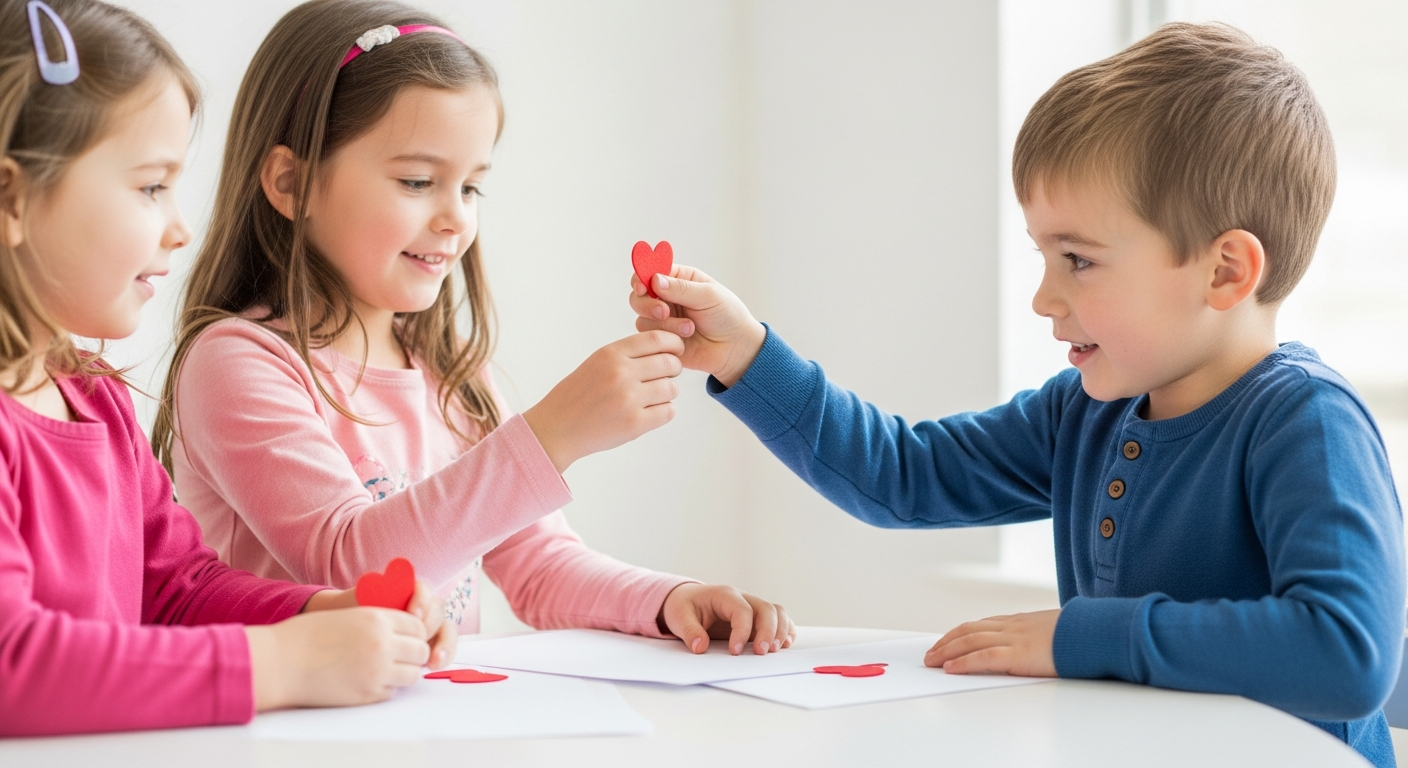
Table of Contents
- Heartfelt Communication: More Than Just "I Love You"
- Crafting Connections: Hands-On Valentine's Fun
- Sweet Treats & Kitchen Adventures: Cooking Up Conversation
- Interactive Play & Games: Learning Through Laughter
- Community & Kindness: Expanding Our Circle of Love
- Making "Smart Screen Time" Count: How Speech Blubs Supports Valentine's Learning
- Investing in Your Child's Voice: Our Flexible Plans
- Conclusion
- FAQ
As February arrives, bringing with it a flurry of hearts, chocolates, and expressions of affection, it’s easy for Valentine’s Day to feel like a holiday focused solely on romantic love. But for families, this special day offers a golden opportunity to celebrate a much broader, equally important kind of love: the deep, enduring love shared between parents and children, siblings, and friends. More than just a day for gifts, Valentine's Day can be a powerful catalyst for strengthening family bonds, fostering empathy, and, perhaps most importantly, enhancing your child’s communication skills.
At Speech Blubs, we believe every child deserves to speak their minds and hearts, and holidays like Valentine's Day provide countless avenues for joyful, meaningful interaction. Our founders, each with their own personal experiences navigating speech challenges as children, created Speech Blubs to be the tool they wished they had – an immediate, effective, and joyful solution for the 1 in 4 children who need speech support. We blend scientific principles with play, transforming screen time into "smart screen time" that builds essential communication abilities. This post will explore a wealth of engaging Valentine's Day fun activities for kids that not only sprinkle joy into your home but also subtly nurture your child's language development, emotional intelligence, and social skills. We'll show you how to turn simple moments into powerful learning opportunities, emphasizing hands-on experiences and meaningful conversations that help your child blossom.

Heartfelt Communication: More Than Just "I Love You"
Valentine's Day offers a unique chance to dive into the nuances of communication, moving beyond simple declarations to truly express and understand love. For children, this means developing the vocabulary to describe feelings, the social skills to share affection, and the confidence to articulate their appreciation for others.
Why Valentine's Day is More Than Just Romance
While the imagery of Cupid and red roses dominates adult celebrations, Valentine's Day for kids is a canvas for exploring friendship, kindness, and family love. It's a chance to teach children that love is an action, a feeling, and a way of relating to the world. It’s about recognizing the warmth in a hug, the joy in a shared laugh, and the comfort in knowing they are cherished. This broader understanding provides a rich context for language learning, as children encounter new words and concepts related to emotions, relationships, and gratitude.
Think about the sheer number of words associated with Valentine's Day: love, heart, friend, kind, grateful, sweet, hug, kiss, thoughtful, caring, happy, joyful, giving, sharing. Each of these words opens up a pathway for discussion, imitation, and comprehension, significantly expanding a child's expressive and receptive vocabulary. When a child learns to associate "happy" with the feeling of receiving a homemade card, or "kind" with the act of sharing a cookie, they are building vital bridges between language and emotion.
Fostering Expressive Language through Love
Encouraging children to talk about love, what it means to them, and how they feel it, is paramount. This can be challenging for some children, especially those who may be experiencing speech delays or difficulties with emotional expression. During Valentine’s Day, we can create a supportive environment where these expressions are welcomed and encouraged.
One simple yet profound way to foster this is through "love notes" or "gratitude jars." As a family, dedicate a jar for the month of February where everyone can write or draw something they love or appreciate about another family member. At the end of the day or week, gather together to read these notes aloud. This activity naturally encourages:

- Expressive vocabulary: Children practice using words to describe positive emotions and actions.
- Sentence structure: Even simple phrases like "I love your smile" or "Thank you for playing with me" build foundational sentence construction.
- Emotional literacy: Kids learn to identify and articulate feelings of affection and gratitude.
- Social communication: Sharing these notes fosters active listening and reciprocal interaction.
For parents who might be wondering if their child could benefit from a little extra support in expressing themselves, we offer a quick 3-minute preliminary screener. It involves 9 simple questions and provides an assessment along with a next-steps plan, and even leads to a free 7-day trial of our app. Take our quick screener today to gain valuable insights.
Crafting Connections: Hands-On Valentine's Fun
Crafts are quintessential Valentine's Day fun activities for kids. They offer a tangible way to express feelings, develop fine motor skills, and create lasting memories. Crucially, they are also ripe with opportunities for speech and language development.
DIY Cards & Letters: Writing Our Hearts Out
Instead of store-bought cards, encourage your child to create homemade valentines. This allows for personalization and creativity, making the act of giving even more meaningful.
- Materials: Construction paper, glitter, glue sticks, stickers, markers, crayons, scissors.
- Speech & Language Focus:
- Vocabulary: Names of colors, shapes (hearts, circles, squares), actions (cut, glue, draw, stick), materials (paper, glitter).
- Following Directions: "First, get the red paper. Next, cut out a heart shape."
- Descriptive Language: "This heart is shiny!" "I'm drawing a happy face."
- Narrative Skills: As they make cards, talk about who the card is for and why they love that person. "What do you want to tell Grandma?" This encourages them to form simple narratives around their feelings.
- Phonological Awareness: Practicing writing letters or their name helps with letter-sound recognition. For younger children, simply talking about the sounds in "heart" or "love" is beneficial.
Relatable Scenario: For a parent whose child struggles with fine motor skills and also finds it hard to articulate affection, creating a card can be a multi-faceted activity. As they cut out a heart, you can model phrases like "red heart," "cut, cut, cut." When they choose a sticker, ask "Who is this for?" and model "This is for Daddy. Daddy is kind." Our Speech Blubs app emphasizes imitation through video modeling, showing children how to form sounds and words by watching their peers. This peer-to-peer learning can be a wonderful supplement to the language modeling you provide during craft time.
Sensory Bins & Playdough: Engaging All Senses
Sensory play is fantastic for young children, stimulating multiple senses and providing a relaxed environment for language to emerge.
- Valentine's Sensory Bin: Fill a bin with red and pink dyed rice or pasta, heart-shaped beads, pom-poms, small plastic hearts, and scoops.
- Vocabulary: Color names, textures (smooth, soft, bumpy), quantities (more, less), actions (scoop, pour, hide, find).
- Prepositional Concepts: "The heart is under the rice," "Put the pom-pom in the cup."
- Imaginative Play: "Let's make a love potion!" This sparks creative storytelling and role-playing.
- Love Bug Playdough: Provide homemade playdough (red, pink, purple) with heart-shaped cookie cutters, pipe cleaners, googly eyes, and small craft supplies to make "love bugs."
- Descriptive Language: "My love bug has big, shiny eyes!" "The dough is soft."
- Action Verbs: Roll, squish, cut, poke, twist.
- Following Multi-Step Directions: "First, roll the dough. Then, cut a heart. Finally, add eyes."
Art Projects: Expressing Creativity
Art allows for non-verbal expression, which can be particularly liberating for children who struggle with verbal communication.
- Blot Art Hearts: Fold paper, add drops of red and pink paint, then unfold to create symmetrical heart shapes.
- Vocabulary: Colors, shapes, actions (fold, drop, press, open), adjectives (symmetrical, messy, beautiful).
- Faux Stained-Glass Valentines: Use black glue (glue mixed with black paint) to outline heart designs on wax paper, then fill with colorful tissue paper pieces.
- Concepts: Light, transparency, colors, shapes.
- Problem-Solving: "Where should this piece go?"
- Crayon Resist Hearts: Draw hearts with white crayons on paper, then paint over them with watercolors to reveal the hidden design.
- Cause and Effect: "What happens when we paint over the crayon?"
- Surprise & Excitement: "Wow, it appeared!"
Many of these activities can be done alongside engaging apps like Speech Blubs. Our app offers thousands of activities that teach words, sounds, and full sentences. For instance, while decorating hearts, you could use our "Colors" or "Shapes" sections to reinforce vocabulary, or explore emotions in the "Guess the Word" category. To explore all the fun, hands-on learning, download Speech Blubs today from the App Store or Google Play.
Sweet Treats & Kitchen Adventures: Cooking Up Conversation
Baking and cooking together are fantastic Valentine's Day fun activities for kids. The kitchen is a natural classroom for language, math, and science, all while creating delicious memories.
Baking Together: Following Directions, Vocabulary
From heart-shaped cookies to chocolate-covered strawberries, kitchen activities are a sensory delight.
- Decorate Valentine Sugar Cookies: Bake plain sugar cookies and let children decorate them with icing, sprinkles, and candies.
- Following Multi-Step Directions: "First, mix the sugar. Next, add the flour. Then, roll the dough."
- Action Verbs: Mix, stir, pour, sprinkle, spread, decorate.
- Sensory Vocabulary: Sweet, sticky, crunchy, smooth.
- Math Concepts: Counting cookies, measuring ingredients.
- Chocolate-Covered Strawberries: A simple treat that involves dipping and decorating.
- Sequencing: "First, we melt the chocolate. Second, we dip the strawberries. Third, we let them cool."
- Colors & Shapes: Red strawberries, brown chocolate, different colored sprinkles.
Relatable Scenario: Imagine a child who is learning to sequence events and follow multi-step instructions, a crucial skill for both language comprehension and daily tasks. Baking heart-shaped cranberry oatmeal cookies provides a perfect, low-pressure environment. "We need two cups of flour. Can you help me count to two?" or "Now, sprinkle the sugar. Good job!" This active participation, guided by your language, builds confidence and competence. For children who thrive on visual cues and repetition, our app’s activities, which feature real children demonstrating actions and words, can reinforce concepts like "mix" or "pour" in an engaging way.
Sharing & Gifting: Social Skills, Empathy
Once the treats are made, the act of sharing them becomes a lesson in social communication and empathy.
- Deliver Homemade Treats: Package your creations and deliver them to neighbors, friends, or family members.
- Social Scripts: Practicing "Happy Valentine's Day!" "Here's a treat for you." "Thank you!"
- Emotional Recognition: Observing the recipient's joy, and discussing their own feelings of happiness from giving.
- Turn-Taking: During delivery, taking turns ringing the doorbell or holding the gift.
Interactive Play & Games: Learning Through Laughter
Play is a child’s primary way of learning, and incorporating Valentine’s Day themes into games can make learning fun and festive.
Scavenger Hunts: Following Multi-Step Directions, Problem Solving
A Valentine's Day scavenger hunt can be a thrilling adventure. Hide clues around the house, each leading to the next, with a special "treasure" (a small treat, a book, or a new craft) at the end.
- Language Skills:
- Listening Comprehension: Children must listen carefully to each clue.
- Prepositions & Spatial Concepts: "Look under the red pillow," "The next clue is behind the door."
- Problem-Solving: Deciphering clues and planning their next move.
- Vocabulary: Words related to household objects and Valentine's themes.
Relatable Scenario: For a child who needs practice with listening to and following directions, a Valentine's scavenger hunt is ideal. If a child struggles with a particular preposition like "under," you can incorporate it into multiple clues, guiding them physically and verbally. "Is it on the chair? No. Is it under the chair? Yes!" This repetition in a fun context makes learning sticky. Our Speech Blubs app is designed for interactive smart screen time, encouraging active participation rather than passive viewing. It can be a great way to reinforce concepts of "where" things are through engaging games.
Dance Parties: Body Awareness, Rhythm, Emotional Expression
Put on some upbeat "love songs" (child-friendly ones!) and have a family dance party.
- Gross Motor Skills: Moving and grooving helps with coordination and balance.
- Body Awareness: "Shake your hands!" "Stomp your feet!"
- Emotional Expression: Moving to music can help children express joy and energy.
- Rhythm & Phrasing: The rhythm of music naturally connects to the rhythm of speech.
Story Time: Narrative Comprehension, Emotional Literacy
Reading Valentine's Day-themed books is a wonderful way to wind down and connect.
- Book Selection: Choose books that celebrate friendship, family love, and kindness.
- Language Skills:
- Vocabulary: Introducing new words through the story context.
- Narrative Skills: Discussing the plot, characters, and what happens next.
- Emotional Literacy: Talking about the characters' feelings and relating them to their own experiences. "How do you think the bear felt when he got a Valentine?"
- Comprehension: Asking "wh-" questions (who, what, where, when, why).
Community & Kindness: Expanding Our Circle of Love
Valentine's Day is an excellent opportunity to teach children about extending love and kindness beyond their immediate family, fostering a sense of community and empathy.
Making Cards for Others: Empathy, Social Communication
Creating and delivering cards to those who might be lonely or overlooked is a powerful lesson.
- Recipients: Nursing home residents, veterans, hospital patients, local librarians, police officers, or firefighters.
- Discussion: Talk about why these people might appreciate a card and how it makes them feel. "It might make them feel happy and remembered."
- Social Scripts: Practicing how to greet someone and present the card.
Acts of Service: Expressing Gratitude, Giving Back
Simple acts of service can teach children the joy of giving.
- "Love Jar" of Chores: Write small chores or acts of kindness on heart-shaped slips of paper (e.g., "Help set the table," "Give a hug," "Clean up toys"). Throughout February, kids pick a "love act" to perform.
- Vocabulary: Action verbs, household items.
- Responsibility & Contribution: Understanding their role in the family.
- Intrinsic Motivation: Learning the reward of helping others.
These activities cultivate a giving spirit and provide countless opportunities for verbalizing appreciation and connection. For more inspiring stories about how Speech Blubs has helped children connect and communicate, read our testimonials from other parents.
Making "Smart Screen Time" Count: How Speech Blubs Supports Valentine's Learning
In a world where screen time is inevitable, we at Speech Blubs are dedicated to making it a force for good. Our app transforms passive viewing into active learning, offering "smart screen time" that complements the hands-on Valentine's Day fun activities for kids mentioned above. It’s a powerful tool for family connection, not a screen-free alternative, but a screen-time alternative to passive viewing.
Video Modeling & Peer Learning
Our unique approach is rooted in scientific principles, specifically leveraging the power of "video modeling." Children learn best by watching and imitating their peers. This technique, coupled with the activation of mirror neurons in the brain, creates a highly effective and engaging learning experience.
- How it Works: In Speech Blubs, children watch short videos of other kids their age performing words, sounds, and facial expressions. This direct, relatable interaction encourages imitation and natural speech development.
- Valentine's Day Connection: Imagine your child watching peers say "heart," "love," "friend," or express emotions like "happy" or "kind." This visual and auditory input can be incredibly beneficial for children struggling with articulation or emotional vocabulary.
- Relatable Scenario: For a three-year-old 'late talker' who is captivated by faces and loves watching other children, Speech Blubs offers a joyful way to practice sounds related to Valentine's Day. In our "Words" or "People" sections, they might see peers saying "kiss" or "hug," giving them clear, encouraging models to imitate. This isn't just passive watching; it's active engagement that can spark new sounds and words.
Engaging Activities within the App
Speech Blubs offers over 1,500 activities across various categories, all designed to make learning fun.
- "Guess the Word" for Emotions: Our app has categories that help children identify and vocalize emotions, perfect for discussing feelings of love and kindness during Valentine's Day.
- "Animal Kingdom" for Sounds: While not directly Valentine's themed, practicing animal sounds (like a gentle "meow" or a strong "roar") helps strengthen oral motor skills essential for all speech.
- "Numbers" and "Colors" for Thematic Reinforcement: Reinforce colors (red, pink, purple) and numbers (counting hearts) that are prevalent during Valentine's crafts and games.
Our app is highly rated on the MARS scale, placing us in the top tier of speech apps worldwide, a testament to our research-backed methodology. You can learn more about the science behind our approach on our research page.
Remember, Speech Blubs is a powerful supplement to a child's overall development plan and, when applicable, professional therapy. We encourage adult co-play and support, turning screen time into a shared, joyful learning moment for the whole family. It's about empowering children to find their voice and connect with the world around them, one word, one sound, one heartfelt expression at a time.
Investing in Your Child's Voice: Our Flexible Plans
We understand that every family's needs are unique, which is why we offer flexible plans for Speech Blubs. We want to ensure that every child who needs it has access to our award-winning app and the support it provides.
Our plans are designed to be accessible and provide exceptional value:
- Monthly Plan: For just $14.99 per month, you can access our core features. This plan offers flexibility for those who prefer a month-to-month commitment.
- Yearly Plan: Our Yearly plan is by far the best choice, offering superior value and exclusive benefits. At $59.99 per year, it breaks down to just $4.99 per month, allowing you to save 66% compared to the monthly option.
The Yearly plan isn't just more affordable; it's packed with high-value features that enhance your child's learning journey:
- 7-Day Free Trial: Only the Yearly plan includes a comprehensive 7-day free trial, allowing you and your child to experience the full benefits of Speech Blubs before committing.
- Extra Reading Blubs App: Gain access to our Reading Blubs app, a fantastic tool to further support literacy and early reading skills.
- Early Access to New Updates: Be among the first to experience new features, games, and content as they are released.
- 24-Hour Support Response Time: Enjoy prioritized customer support with a guaranteed response within 24 hours.
These additional features are not included with the Monthly plan, making the Yearly plan the ultimate choice for dedicated and continuous support for your child's speech and language development.
Conclusion
Valentine's Day is more than just a single day; it's an entire season ripe with opportunities to foster love, connection, and, importantly, communication within your family. From crafting heartfelt cards and baking sweet treats to engaging in sensory play and meaningful conversations, these Valentine's Day fun activities for kids are designed to enrich your child's vocabulary, social-emotional skills, and confidence in expressing themselves. By embracing these moments, you're not just celebrating a holiday; you're building a foundation for a lifetime of confident, joyful communication.
At Speech Blubs, we are committed to empowering children to speak their minds and hearts. We provide a blend of scientific methodology and playful learning to support your child's development every step of the way. Don't let this season of love pass by without making the most of these enriching experiences.
Ready to give your child the gift of a stronger voice and create even more joyful learning moments? Choose our Yearly plan and begin your 7-day free trial today! Unlock the full suite of features, including the Reading Blubs app and early access to updates. Create your account and begin your 7-day free trial now!
FAQ
Q1: How can these Valentine's Day activities specifically help my child's speech development?
A1: These activities are rich in opportunities for language practice. Crafting helps with vocabulary (colors, shapes, actions) and following directions. Cooking involves sequencing and descriptive words. Games foster listening comprehension, problem-solving, and social communication. Reading encourages narrative skills and emotional literacy. All these interactions provide natural contexts for modeling and practicing speech and language.
Q2: What if my child is shy or struggles to express emotions verbally during these activities?
A2: It's perfectly normal for some children to be less verbal about emotions. Focus on creating a supportive, no-pressure environment. Use visual aids like emotion cards, model expressions yourself, and provide simple choices ("Do you feel happy or silly?"). Activities like blot art or playdough allow for non-verbal expression. Our Speech Blubs app uses video modeling, where children watch peers express emotions, which can be a powerful, low-pressure way for them to learn and imitate.
Q3: How does Speech Blubs fit into our family's Valentine's Day celebrations, which are often screen-free?
A3: Speech Blubs is designed for "smart screen time," turning passive viewing into active, engaging learning that complements hands-on activities. It’s a tool for family connection, not a replacement for screen-free time. You can integrate it by using the app to reinforce vocabulary learned during crafts (e.g., colors, shapes), practice sounds related to storybook characters, or explore emotions. Think of it as a guided, interactive activity that you do together, fostering communication and bonding.
Q4: What's the best way to get started with Speech Blubs?
A4: The best way to begin your Speech Blubs journey is by opting for our Yearly plan. This plan includes a 7-day free trial, giving you full access to all features, including the Reading Blubs app, early updates, and 24-hour support. It’s also our most cost-effective option, saving you 66% compared to the monthly plan. Download Speech Blubs from the App Store or Google Play and select the Yearly subscription to unlock all the benefits and start your free trial today.
About the author