
Heartfelt Fun: Engaging Valentine Activities for Kids
 By Speech Blubs Team•Jan 13, 2026•19 min.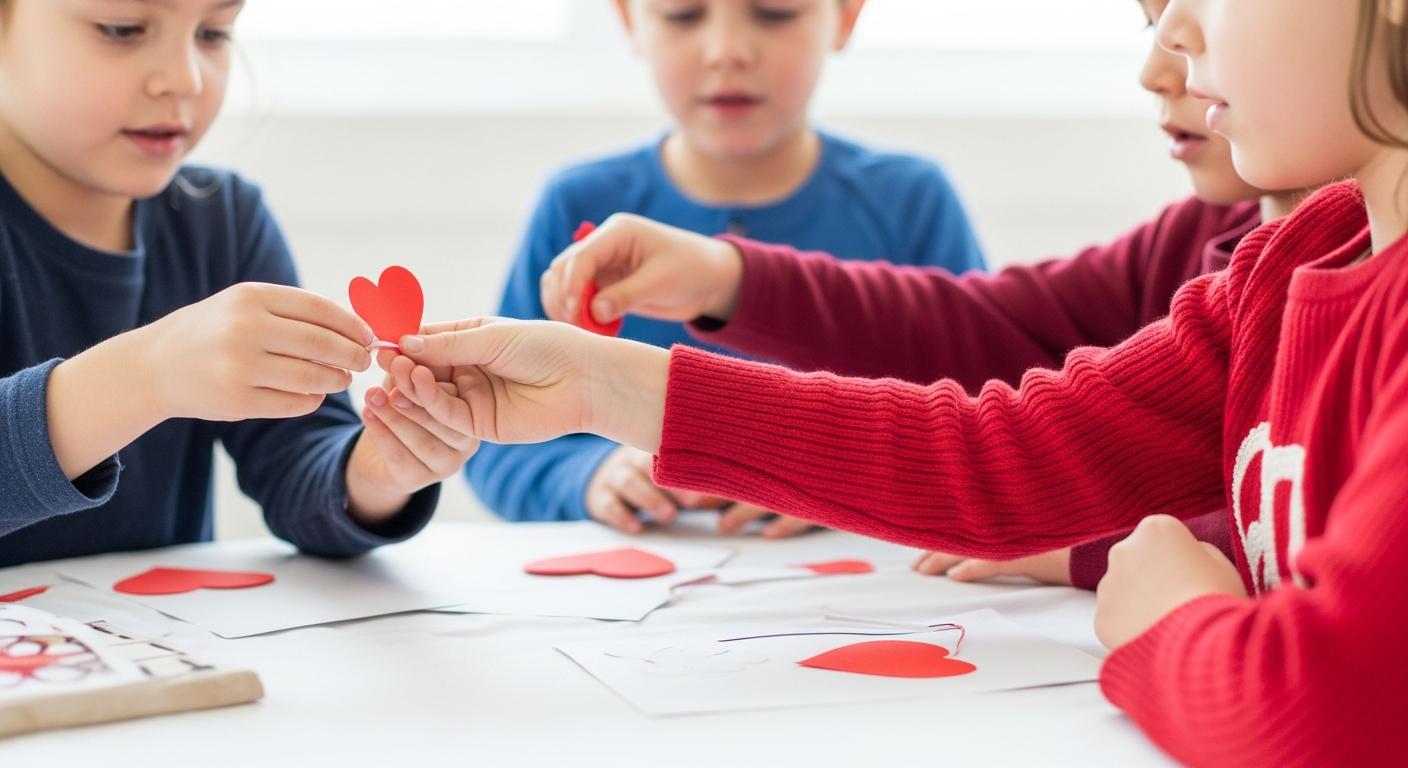
Table of Contents
- Crafting Connections: Hands-On Valentine's Creativity
- Sweet Treats & Kitchen Adventures
- Learning Through Play: Academic & Social Valentine's Fun
- Boosting Communication with Heart: How Speech Blubs Can Help
- Making the Most of Your Speech Blubs Experience
- Conclusion
- FAQ
The air crackles with a special kind of magic as February approaches – a time when hearts, handmade cards, and sweet treats fill our homes. But beneath the glitter and pink decorations, Valentine’s Day offers a truly golden opportunity: to celebrate love, friendship, and connection in ways that deeply enrich our children’s lives and foster their communication skills. Are you looking for ways to make this Valentine’s Day memorable, meaningful, and incredibly fun for your little ones, all while nurturing their ability to express themselves?
We understand that as parents, you're constantly seeking engaging activities that go beyond mere entertainment, providing real developmental benefits. This year, let’s transform Valentine’s Day into an exciting journey of discovery, creativity, and heartfelt communication. In this comprehensive guide, we'll dive into a treasure trove of fun Valentine activities for kids, from hands-on crafts and culinary adventures to games that encourage social-emotional growth and language development. We'll explore how simple, joyful moments can become powerful learning experiences, helping your child speak their minds and hearts with confidence. Get ready to create lasting memories and cultivate essential communication skills as we uncover delightful ways to celebrate love with your family!

Crafting Connections: Hands-On Valentine's Creativity
Valentine’s Day is practically synonymous with crafting! These hands-on activities aren't just about making pretty things; they're incredible avenues for fine motor skill development, creative expression, and, most importantly, communication. As children engage with materials, they describe, ask questions, explain choices, and narrate their process – all vital steps in their language journey.
Simple Heart Art for Tiny Hands
Art projects are fantastic for even the youngest learners, allowing them to explore textures, colors, and shapes. Remember, the process is always more important than the perfect finished product!
- Blot Art Hearts: This classic activity is pure magic for toddlers and preschoolers. Fold a piece of paper in half, open it, and have your child dollop different shades of red, pink, and white paint on one side. Fold the paper again, press down, and then open it to reveal a beautiful, symmetrical heart design. As they work, encourage them to describe the colors they’re using ("Look at the bright red!"), the action ("Squish, squish!"), and what they see emerge ("Wow, a big heart!"). This simple back-and-forth fosters descriptive language and turn-taking in conversation.
- Coffee Filter Hearts for the Window: Gather coffee filters, washable markers in Valentine's colors, and a spray bottle with water. Children can color abstract designs on the filters, then gently mist them with water to watch the colors bleed and blend, creating a beautiful stained-glass effect. Once dry, cut them into heart shapes and hang them in a sunny window. This activity introduces color vocabulary, cause-and-effect ("What happens when we spray the water?"), and allows for storytelling about the "pretty window decorations."
- Easy Watercolor Hearts for Toddlers: Sometimes, less is more. Provide chunky watercolors, brushes, and pre-cut heart shapes (or let them draw their own). The fluidity of watercolors is very forgiving and encourages broad strokes and experimentation. Talk about the different shades they create when mixing colors or how the water makes the paint "flow." "This is a big, wet brush stroke!" or "You're making a purple heart!" are simple phrases that build vocabulary and comprehension.
Homemade Cards & Gifts from the Heart
Creating personalized cards and gifts gives children a tangible way to express affection and practice important fine motor and early literacy skills.

- DIY Valentine’s Box/Mailbox: This is a classic classroom activity that can be brought home. Provide a shoebox or cereal box and a variety of craft supplies: construction paper, glitter, glue, stickers, fabric scraps, and ribbons. Your child can decorate their own "love letter" mailbox. As they choose materials, ask them "What color do you want for the roof?" or "Who will you put glitter on this box for?" This activity is wonderful for following multi-step instructions and making choices.
- Personalized Glitter Rock Valentines: Find some smooth, flat rocks outdoors or from a craft store. Clean them thoroughly. Let your child paint the rocks with acrylic paints, then sprinkle them with glitter while wet. Once dry, they can add simple messages like "LOVE" or "YOU ARE SWEET" with a paint pen. These make lovely, enduring gifts for friends or family. Discuss who they are making the rock for and why that person is special. "Grandma loves sparkles! What message should we write?"
- Handmade Felt Lacing Hearts: If your child needs an extra boost in fine motor skills, this activity is perfect. Cut heart shapes from felt and use a hole punch to create holes around the edges. Provide yarn with a taped end (or a plastic lacing needle) and let your child thread the yarn through the holes. This simple action strengthens hand-eye coordination and pincer grasp. As they work, use descriptive words: "Up through the hole, down through the hole," or "You're making a long, pink string!" This repetitive, focused activity is also great for developing attention span.
- "Pizza My Heart" Foldable Cards: This charming craft involves cutting out a large heart shape, then folding it like a pizza to create "slices." Each slice can be decorated with a different message or drawing for a loved one. For children learning to write, help them sound out simple words like "L-O-V-E" or "K-I-N-D." This reinforces phonics and early literacy skills while creating a very sweet and personal card.
Sensory Exploration with a Valentine Twist
Sensory play is fundamental for cognitive development, helping children understand their world through touch, sight, and sound. Adding a Valentine's theme makes it even more engaging!
- Valentine Themed Sensory Bin: Fill a bin with a base like red-dyed rice, pink chickpeas, or black beans. Add heart-shaped cookie cutters, scoops, small measuring cups, pom-poms, silk flowers, and perhaps some plastic or wooden hearts. Children can scoop, pour, sort, and hide items. This open-ended play encourages imaginative storytelling and descriptive language. "I'm scooping the pink rice!" "Look at this fuzzy pom-pom!" You can even hide letter cut-outs and have them find and name the letters that spell "LOVE."
- DIY Heart Suncatchers with Tissue Paper: Cut out a large heart shape from contact paper (sticky side up). Provide various colors of tissue paper, cut into small squares or torn into pieces. Children can stick the tissue paper onto the contact paper to create a colorful mosaic. Cover with another piece of contact paper, trim, and hang. This activity is wonderful for discussing colors, shapes, and the concept of light passing through. "Which color do you want next? Red or purple?"
- Playdough Heart Station: Set out red, pink, and white playdough, along with heart-shaped cookie cutters, rolling pins, and plastic knives. Children can create their own Valentine's "treats" or "decorations." Playdough is fantastic for strengthening hand muscles, which are crucial for writing. Encourage storytelling as they play: "I'm making a giant heart cake for daddy!" or "This is a tiny pink heart."
Sweet Treats & Kitchen Adventures
Baking and cooking are not just about delicious outcomes; they're rich environments for learning, following instructions, counting, measuring, and expanding vocabulary. Plus, sharing homemade treats is a beautiful way to show love.
Baking with Love: Heart-Shaped Delights
- Decorate Valentine Sugar Cookies: Bake a batch of heart-shaped sugar cookies (or buy plain ones). Set up a decorating station with various frostings (red, pink, white), sprinkles, small candies, and edible glitter. Children can unleash their creativity while practicing fine motor control with squeezable tubes of icing or carefully placing sprinkles. Talk about the shapes, colors, and textures of the decorations. "Put a blue heart on your cookie! Is it crunchy?"
- Heart-Shaped Cherry Hand Pies: Using store-bought pie crust, cut out heart shapes. Fill one side with cherry pie filling, fold over, crimp the edges with a fork, and bake. This activity involves following a sequence of steps, using action verbs ("cut," "fill," "fold," "crimp"), and sensory descriptions ("sticky cherry," "flaky crust").
- Make Peanut Butter Cups in Heart Molds: Melt chocolate and pour a small amount into silicone heart molds. Let it set slightly, then add a dollop of peanut butter and top with more melted chocolate. These are simple, delicious, and involve concepts like "hot/cold," "melt/set," and "full/empty."
Beyond the Bake: Fun Food-Themed Activities
- Candy Heart Math: Grab a bag of conversation hearts! These colorful candies are perfect for simple math activities. Children can sort them by color, count them, create patterns, or even graph their findings. "How many pink hearts do you have? Which color has the most?" This activity naturally integrates counting, categorization, and comparison vocabulary.
- Sweet Snack Graphing: Use "Puppy Love" shaped cookies or other Valentine's themed snacks. Have your child sort them by shape or color, then create a simple bar graph on paper. This is a fun, edible way to introduce basic data representation and reinforce counting skills. "How many heart cookies do we have? Let's count them together!"
Learning Through Play: Academic & Social Valentine's Fun
Valentine’s Day is a fantastic backdrop for activities that develop academic skills, social awareness, and emotional intelligence. These activities can be easily adapted to suit different age groups and learning styles.
Story Time & Loving Lessons
Reading together is one of the most powerful ways to foster language development, build vocabulary, and nurture a love for learning.
- Valentine Read-Alouds: Gather a collection of Valentine's Day books from your local library or personal collection. Reading together provides opportunities to discuss emotions, kindness, and different forms of love. Ask open-ended questions like "How do you think that character felt?" or "What does 'love' mean in this story?" For children who are developing their receptive language skills, pointing to pictures as you read helps reinforce understanding.
- "Love Is..." Craftivity: After reading a book about love (like Eric Carle's "Love"), brainstorm with your child what "love is." Is it being kind? Sharing? Helping? Write down their ideas and then have them illustrate one on a heart-shaped paper. This encourages abstract thinking, vocabulary expansion, and emotional expression.
Word Play & Phonics Fun
Language is at the heart of communication, and Valentine's Day offers many playful ways to explore words.
- Lovely Word Work Hunt: Hide plastic Valentine's heart boxes around the room, each containing a word card. The words can focus on a specific phonics skill your child is learning (e.g., CVC words, sight words, rhyming words). Your child then "hunts" for the hearts, opens them, reads the word, and sorts/writes it on a recording sheet. This makes phonics practice exciting and interactive. "You found 'cat'! Can you say 'cat'?"
- Valentine's Day Color By Code: These activity sheets incorporate phonics or math concepts into a fun coloring exercise. Children color sections of a picture based on their answers to questions or identified sounds/numbers. This reinforces learning in a low-pressure, engaging way, and allows for discussion of colors and patterns.
Math Adventures with a Heart
Make math sweet and engaging with Valentine-themed activities that build foundational number sense.
- February Print and Play Math Games: Create simple math games using heart shapes. For instance, a "Heart Hopscotch" game where children count or identify numbers on heart cut-outs, or a matching game with quantities and numerals. These hands-on games make abstract math concepts tangible and fun. "Jump to the heart with the number five!"
- Cupid Capers: A Making Predictions Scavenger Hunt: Set up a scavenger hunt around your home with Valentine's clues. Each clue leads to the next, culminating in a small treat or prize. Encourage your child to make predictions after each clue: "Where do you think Cupid hid the next message?" This develops problem-solving skills, listening comprehension, and sequencing.
Kindness Challenges & Community Building
Valentine's Day is a wonderful opportunity to teach children about empathy, generosity, and showing appreciation for others.
- 14 Days of Kindness Challenge: Create a paper chain or a list of 14 simple acts of kindness. Each day leading up to Valentine's Day, your child can perform one act – helping a sibling, sharing a toy, drawing a picture for a neighbor, thanking a family member. This activity fosters a spirit of giving and appreciation. Talk about how each act of kindness makes others feel. "When you shared your blocks, how did your brother feel?"
- Love Notes for the Overlooked: Encourage your child to make simple handmade cards or drawings for people who might be lonely or appreciate a kind gesture – elderly neighbors, a sanitation worker, or a mail carrier. Delivering these notes in person (if appropriate) teaches invaluable lessons about community and empathy. "We're making a card to say 'thank you' to our mail carrier for bringing us our letters!"
- Blessing Strangers with Hearts: Cut out paper hearts and write encouraging messages like "You are loved" or "We appreciate you." Take these hearts with you on errands and have your child discreetly leave them for people they encounter – a cashier, a librarian, or a server. This act of quiet kindness can make someone's day and helps your child recognize and appreciate people in their community.
Boosting Communication with Heart: How Speech Blubs Can Help
While all the activities above naturally foster communication, sometimes children need a little extra support to truly "speak their minds and hearts." This is where Speech Blubs comes in. Our mission is to empower children to communicate effectively and joyfully. We know firsthand the challenges children and families face because our founders all grew up with speech problems. They created the tool they wished they had: an immediate, effective, and joyful solution for the 1 in 4 children who need speech support.
Our Unique Approach: Video Modeling
At Speech Blubs, we blend scientific principles with play to create one-of-a-kind "smart screen time" experiences. We offer a screen-free alternative to passive viewing (like cartoons) and a powerful tool for family connection. Our unique approach teaches complex communication skills through "video modeling." Children learn by watching and imitating their peers, activating mirror neurons in the brain, which are crucial for speech development. This isn't passive viewing; it's active imitation, engagement, and a pathway to confidence.
For example, imagine your child struggling to articulate specific sounds required for saying "heart" or "love." Our app features thousands of short, engaging videos of real kids pronouncing these words and sounds. Your child watches, imitates, and receives positive feedback, making the learning process feel like a game. This method, backed by scientific research that places us in the top tier of speech apps worldwide, helps children build foundational speech skills in a fun and natural way.
From Sounds to Sentences: Practical Examples with Speech Blubs
Let’s connect some of our Valentine’s activities to how Speech Blubs can provide targeted support:
- For the "Late Talker" Who Loves Animals: If your 3-year-old is a "late talker" but adores animals, our "Animal Kingdom" section offers a fun, motivating way to practice sounds like "moo" and "baa" or animal names. As they imitate these sounds, they build the oral motor skills and phonetic awareness needed to eventually articulate more complex words relevant to Valentine's, like "bear" or "cat." You can then incorporate these animal figures into a Valentine-themed sensory bin, encouraging them to say the animal names they learned in the app.
- For Building Expressive Language During Crafting: While making a DIY Valentine’s Box, your child can use the "What Am I Doing?" section in Speech Blubs to practice action verbs like "cutting," "gluing," and "painting." This reinforces the vocabulary they'll use to describe their crafting process to you, turning a craft into a powerful language lesson.
- For Developing Social Skills with Kindness Activities: When discussing the "14 Days of Kindness Challenge," use our "Social Skills" section. Children can watch videos of peers demonstrating actions like "sharing" or "helping," then imitate the phrases and expressions. This helps them understand the verbal and non-verbal cues associated with being kind, making them more confident in acting out kindness themselves.
- For Naming & Describing Valentine's Colors and Objects: Our "Colors" and "Shapes" sections are perfect for reinforcing vocabulary during art projects. If your child is making blot art hearts, they can practice naming "red," "pink," and "heart" in the app, then apply that learning directly to their craft. This creates a powerful connection between digital learning and real-world application.
Speech Blubs is designed to be a powerful supplement to your child's overall development plan and, when applicable, professional therapy. We don’t promise your child will be giving public speeches in a month, but we do promise to foster a love for communication, build confidence, reduce frustration, develop key foundational skills, and create joyful family learning moments. See what other parents are saying about their children's success with our app!
Making the Most of Your Speech Blubs Experience
We believe every child deserves the chance to "speak their minds and hearts," and we're committed to making our app accessible and effective. Many parents ask about how to get started and what options are available.
To help you decide if Speech Blubs is the right fit for your family, we highly recommend taking our quick 3-minute preliminary screener. It involves 9 simple questions and provides you with an instant assessment and a personalized next-steps plan. It’s a great way to understand your child’s current communication stage and how Speech Blubs can support their journey, leading directly to a free 7-day trial!
When you’re ready to dive in, we offer two convenient subscription plans:
- Monthly Plan: For $14.99 per month. This plan provides access to our core features but does not include a free trial or some of our premium benefits.
- Yearly Plan: This is our most popular and highly recommended option, priced at just $59.99 per year. That breaks down to an incredible value of just $4.99 per month, meaning you save 66% compared to the monthly plan!
The Yearly Plan is truly the best choice for several reasons:
- 7-Day Free Trial: Only the Yearly Plan offers a full 7-day free trial, allowing you and your child to explore all the features and experience the Speech Blubs magic firsthand before committing.
- Extra Reading Blubs App: As a Yearly subscriber, you gain exclusive access to our companion Reading Blubs app, a fantastic resource for early literacy development.
- Early Access & Priority Support: You'll receive early access to new updates and features, plus 24-hour response time for customer support, ensuring you always have the best experience.
Ready to embark on a journey of joyful communication with your child? We encourage you to choose the Yearly Plan to get the free trial and the full suite of features that will support your child's speech and language development.
Download Speech Blubs on the App Store or get it on Google Play to start your 7-day free trial today! Or, if you prefer, you can create your Speech Blubs account directly on our website.
Conclusion
Valentine’s Day is so much more than just a single day; it's a season of heartfelt connection and a wonderful opportunity to foster your child’s development in myriad ways. From the simple joy of creating a blot art heart to the profound lesson of leaving a kind note for a stranger, each activity we've explored is designed to build foundational skills, nurture empathy, and open new avenues for communication. These fun Valentine activities for kids provide rich contexts for language practice, fine motor skill development, and social-emotional growth, transforming everyday moments into invaluable learning experiences.
Remember, the most important ingredient in any of these activities is your presence and engagement. Talking with your child, asking open-ended questions, and narrating your shared experiences are powerful tools for their development.
If you're looking for an immediate, effective, and joyful solution to further support your child’s speech and language journey, we invite you to explore Speech Blubs. Our unique video modeling methodology provides engaging, "smart screen time" that complements these hands-on activities, helping your child build confidence and truly "speak their minds and hearts."
Don't let this Valentine's season pass without making the most of these precious moments. Start your child's journey to confident communication today! Download Speech Blubs on the App Store or find us on Google Play to begin your 7-day free trial. Be sure to select the Yearly plan to unlock all the premium features and get the best value, ensuring your family has access to the full suite of tools designed for joyful learning and connection.
FAQ
Q1: How can I make Valentine's Day activities educational for my child? A1: You can integrate educational elements by focusing on communication, fine motor skills, and social-emotional learning. For example, during crafts, encourage descriptive language about colors and shapes. When baking, practice counting and sequencing. Kindness activities build empathy and social awareness. Speech Blubs, with its video modeling, can specifically target speech and language development during or after these activities.
Q2: My child is a late talker. How can these activities help, and when should I consider a speech app like Speech Blubs? A2: All interactive activities provide opportunities for vocalization, imitation, and comprehension. For example, animal sounds during sensory play or simple requests ("more glue") during crafting. If your child is consistently delayed, incorporating a tool like Speech Blubs can provide targeted support. Our app uses engaging video modeling to help children imitate sounds and words from peers, a scientifically proven method for language acquisition. Consider taking our free 3-minute preliminary screener to get a personalized assessment.
Q3: Are the Speech Blubs activities really "screen-free alternatives to passive viewing" as mentioned? A3: Absolutely. While Speech Blubs is an app on a screen, it's designed for active engagement and interaction, not passive consumption like cartoons. Children are prompted to imitate, repeat, and respond to their peers in videos. This "smart screen time" transforms a digital device into a powerful learning tool, encouraging participation and building communication skills, often as a co-play activity with a parent.
Q4: What's the best way to get started with Speech Blubs, especially to try it out? A4: The best way to get started and fully explore Speech Blubs is by signing up for our Yearly Plan. This plan includes a full 7-day free trial, giving you and your child ample time to experience all the features. The Yearly Plan also offers significant savings (66% compared to monthly), access to our Reading Blubs app, and priority customer support. You can download Speech Blubs on the App Store or Google Play to begin.
About the author