
Heartfelt & Fun Valentine Activities for Kids
 By Speech Blubs Team•Jan 13, 2026•26 min.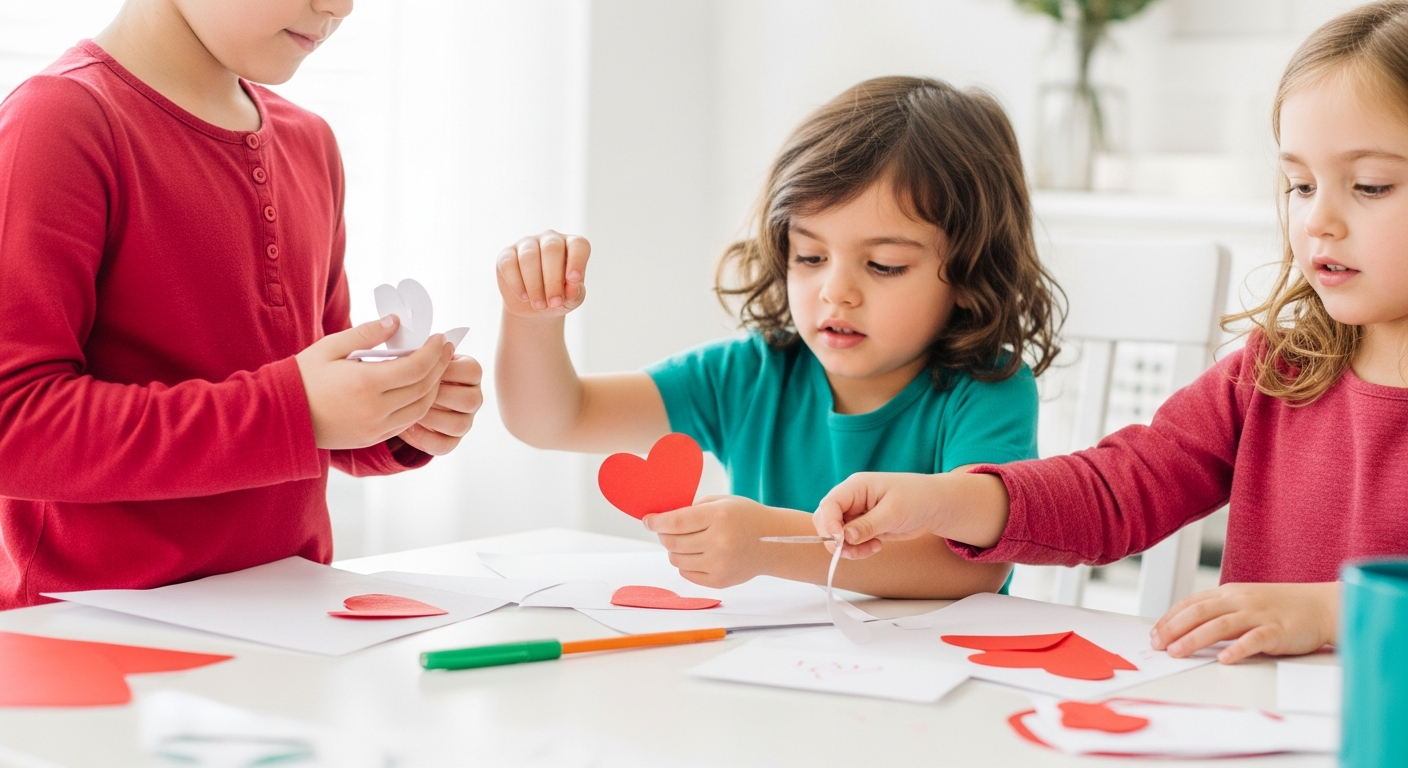
Table of Contents
- Introduction
- The Heart of Valentine's Day: More Than Just Candy
- Creative Crafts: Hands-On Love Expressions
- Sweet Treats & Kitchen Adventures: Baking Love Together
- Engaging Games & Play: Sparking Joy and Language
- Acts of Kindness: Spreading Love Beyond Our Walls
- Nurturing Communication Through Play: How Speech Blubs Helps
- Investing in Your Child's Future: Choosing Speech Blubs
- Conclusion: A Valentine's Day Full of Love and Language
- Frequently Asked Questions (FAQ)
Has your child ever received a handmade Valentine's card that sparked an explosion of joy and curiosity, leading to a flurry of questions and animated descriptions? It’s a magical moment that reminds us how special connection and communication are, especially during holidays centered around love. Valentine's Day offers a unique opportunity to celebrate affection, kindness, and friendship, but beyond the chocolates and red roses, it’s a fantastic time to foster valuable communication skills and strengthen family bonds.
In this comprehensive guide, we'll dive into a treasure trove of engaging and fun Valentine's Day activities designed for kids of all ages. From creative crafts that encourage expressive language to delicious baking adventures that build vocabulary and sequencing skills, and even meaningful acts of kindness that teach empathy, you’ll find inspiration to make this Valentine’s Day truly memorable. We’ll explore how these joyful moments can naturally enhance your child’s speech and language development, creating opportunities for them to "speak their minds and hearts." We'll also highlight how Speech Blubs, a tool born from our founders’ personal experiences with speech challenges, can become a valuable partner in your family’s communication journey, providing scientifically-backed "smart screen time" that complements your hands-on holiday fun.

Introduction
Valentine's Day often brings to mind images of store-bought cards and sugary treats, but for families, it can be so much more. It's a prime opportunity to slow down, connect, and intentionally teach our children about love in its many forms—friendship, kindness, and family affection. Imagine the sparkle in your child’s eyes as they meticulously decorate a heart-shaped cookie, or the proud grin on their face as they hand a homemade card to a grandparent. These aren't just cute moments; they are rich learning experiences that nurture emotional intelligence and, crucially, language development.
This post is dedicated to helping you transform Valentine's Day into a vibrant celebration of communication and connection. We'll explore a variety of engaging activities—from art projects and baking to games and acts of service—all designed to be fun, accessible, and packed with opportunities for speech and language growth. You’ll discover how to use these festive moments to encourage new words, practice sounds, understand emotions, and build confidence in expressing thoughts and feelings. Our goal is to provide you with practical, valuable advice and realistic expectations, focusing on the joy of the process. We’ll also show you how Speech Blubs can seamlessly integrate into these activities, supporting your child’s communication journey with engaging, peer-based video modeling. By the end, you'll be equipped with ideas to create a Valentine's Day filled with laughter, learning, and heartfelt expressions that resonate long after the holiday ends.
The Heart of Valentine's Day: More Than Just Candy
Valentine's Day carries a rich history of celebrating love, compassion, and appreciation for others. While popular culture often focuses on romantic love, at its core, this holiday is about recognizing and expressing affection in all its forms. For children, this can be a beautiful lesson in empathy, gratitude, and the joy of giving.
The Deeper Meaning: Connection and Communication
Beyond the festive decorations, Valentine's Day offers a profound chance to engage children in understanding and articulating emotions. It's an ideal time to talk about who we love, why we love them, and how we show that love. These conversations lay the groundwork for strong social-emotional skills and robust communication. When a child creates a card for a friend, they're not just making art; they're contemplating their relationship with that friend, deciding what they want to convey, and then working to express it. This entire process—from thought to action—is a powerful communication exercise.

For instance, a child who might be a "late talker" can still participate fully. As they choose colors for a card, you can verbally describe their choices: "Oh, you picked the red crayon! Red is the color of a big, big heart!" These simple interactions expose them to new vocabulary and encourage them to point, gesture, or even attempt sounds. Every activity we propose is designed with this kind of interactive engagement in mind, transforming holiday fun into meaningful developmental opportunities.
Creative Crafts: Hands-On Love Expressions
Crafts are a cornerstone of childhood fun, and Valentine's Day provides the perfect theme to dive into projects filled with hearts, colors, and creativity. These activities aren't just about making pretty things; they're sensory-rich experiences that boost fine motor skills, encourage descriptive language, and foster imaginative play.
DIY Valentine's Cards: Crafting Messages of Affection
Making homemade Valentine's cards is a classic activity that never goes out of style. It’s a wonderful way to teach children about thoughtfulness and expressing appreciation.
- Materials: Provide a diverse array of materials: construction paper in various colors (especially red, pink, and white), safety scissors, glue sticks, glitter, stickers, markers, crayons, fabric scraps, pipe cleaners, and even old magazines for collage.
- Process: Encourage children to think about the recipient. "What does Grandma love? Maybe we can draw a flower for her!" For younger children, focus on the sensory experience: "Feel how sticky the glue is! What color sticker are you choosing?" For older kids, prompt them to write short messages or draw pictures that convey their feelings.
- Communication Benefits:
- Vocabulary Expansion: Introduce words like "heart," "love," "friend," "glitter," "sticky," "smooth," "rough," "red," "pink," "sparkle."
- Following Instructions: "First, cut the paper. Then, glue the heart."
- Expressing Emotions: Discuss happy, kind, loving feelings. "How does it make you feel to make something special for someone?"
- Descriptive Language: Encourage them to describe their creations: "My card is sparkly and has a big, red heart!"
- Storytelling: "What story does your picture tell about you and your friend?"
Practical Scenario: For a child working on early sounds like "M" or "D," making a card for "Mommy" or "Daddy" can be highly motivating. While they color, you can model the target word repeatedly: "We're making this for Mommy! Look, Mommy will love this red heart." Speech Blubs offers dedicated "My Family" sections with video modeling of peers saying "Mommy" or "Daddy," giving children a clear visual and auditory target to imitate, seamlessly reinforcing what they learn in the app during real-life activities. Ready to start empowering your child's communication? Download Speech Blubs on the App Store or Google Play today!
Sensory Bins & Playdough Fun: Tactile Exploration with a Loving Theme
Sensory play is crucial for development, engaging multiple senses and supporting cognitive growth, fine motor skills, and language. A Valentine-themed sensory bin or playdough station is a fantastic way to combine festive fun with learning.
- Materials for Sensory Bin: Fill a bin with dried pasta (dyed pink or red with food coloring), rice, or red lentils. Add heart-shaped cookie cutters, small scoops, plastic hearts, red or pink pom-poms, pipe cleaners, small plastic cups, and measuring spoons.
- Materials for Playdough: Make homemade playdough (or use store-bought) in red, pink, and white. Add glitter, heart cookie cutters, rolling pins, plastic knives, and small beads or buttons for decorating.
- Process: Let children explore freely. Encourage them to sort, scoop, pour, and create.
- Communication Benefits:
- Action Verbs: "Scoop," "pour," "mix," "cut," "roll," "squish," "build."
- Descriptive Adjectives: "Soft," "smooth," "bumpy," "sparkly," "sticky," "cold," "warm," "big," "small," "red," "pink."
- Prepositions: "In," "out," "on," "under," "next to."
- Problem-Solving & Sequencing: "What happens if we roll the dough really thin?" "First, we roll it, then we cut a heart."
- Imaginative Play: "I'm making a heart pizza!"
Practical Scenario: A child who enjoys imaginative play but struggles with descriptive language can benefit immensely from a sensory bin. As they play, describe their actions and the items: "You're scooping the red rice! Is it soft? Now you're putting the small heart in the cup." For children who respond well to visual learning, Speech Blubs' various categories, such as "Colors" or "Shapes," offer video models of peers naming and describing objects, which can then be reinforced during this hands-on play.
Heart-Themed Art Projects: Unleashing Inner Artists
Art is a powerful avenue for self-expression and can be adapted for any age or skill level. Valentine's Day art projects are bursting with opportunities for creative exploration and language development.
- Blot Art Hearts: Fold a piece of paper in half, open it, put a blob of red/pink paint on one side, then fold again and press. Open to reveal a symmetrical heart shape.
- Communication: Discuss "symmetry," "surprise," "colors mixing," "big/small blobs."
- Suncatcher Hearts: Cut out heart shapes from contact paper, let kids stick tissue paper pieces onto them, then cover with another piece of contact paper. Hang in a window.
- Communication: Talk about "light," "colors," "transparent," "sticky," "crinkly."
- Faux Stained-Glass Valentines with Black Glue: Draw a heart design on paper, trace lines with black glue (glue mixed with black paint), and then fill the sections with watered-down paint.
- Communication: "Line," "shape," "section," "outline," "bright," "dark," "blending."
- Melted Bead Suncatchers: Arrange plastic pony beads on a metal cookie cutter placed on parchment paper, then bake until melted.
- Communication: "Melt," "solid," "liquid," "hot," "cool," "smooth," "colorful."
- Communication Benefits across Art:
- Naming Colors & Shapes: "Red," "pink," "heart," "circle."
- Following Multi-Step Directions: Crucial for complex projects.
- Sharing Observations: "What do you see?" "What do you like?"
- Expressing Preferences: "I like the sparkly one best."
- Developing Concepts: Understanding "big/small," "inside/outside," "same/different."
Practical Scenario: If you have a child who tends to be quiet or hesitant to initiate conversation, collaborative art projects can be a gentle way to encourage verbalization. As you work together on a "Blot Art Heart," you can model questions like, "What color paint should we use next? Do you want a big blob or a little blob?" The low-pressure, shared focus helps build confidence. Our research-backed methodology at Speech Blubs emphasizes learning through imitation; just as children learn to imitate the actions of their peers in our app, they can learn to imitate language modeled by parents during these activities. To learn more about the science behind our approach, visit our Research page.
Sweet Treats & Kitchen Adventures: Baking Love Together
The kitchen is a fantastic classroom, offering countless opportunities for learning and bonding. Baking Valentine's treats not only results in delicious goodies but also provides a rich sensory experience and a practical way to develop language, math, and motor skills.
Heart-Shaped Delights: Cookies, Cakes, and More
Transform your kitchen into a festive bakery by making heart-shaped goodies.
- Recipes:
- Heart-Shaped Sugar Cookies: Classic and perfect for decorating. Kids can help measure, mix, roll dough, and use heart cutters.
- Cherry Hand Pies: Use pre-made pie crust, a heart cookie cutter, and cherry filling. Great for practicing "fold," "press," and "fill."
- Peanut Butter Cups in Heart Molds: A simple, no-bake option involving melting chocolate and filling molds.
- Cupcakes with Pink Frosting: Children can help stir, scoop batter, and, of course, decorate!
- Communication Benefits:
- Vocabulary: "Flour," "sugar," "eggs," "mix," "stir," "bake," "sweet," "sticky," "dough," "frosting," "sprinkles."
- Sequencing: "First, we add the flour. Next, the sugar." This is vital for narrative skills and following multi-step directions.
- Measurement Concepts: "A little," "a lot," "half," "full," "empty."
- Sensory Descriptions: "Smell the vanilla," "feel the sticky dough," "taste the sweet cookie."
- Problem-Solving: "Oh no, the dough is too sticky! What should we add?"
Practical Scenario: For a child who is developing their understanding of sequential instructions, baking is an excellent exercise. As you follow a recipe, verbally break down each step. "Okay, first, we need to pour the flour into the bowl. Can you pour?" Then, "Next, we stir it all together!" If your child uses Speech Blubs, you'll find activities that focus on action words and following directions, which directly translate to the kitchen environment. These kinds of real-world applications help solidify the skills they practice in our app, turning "screen time" into "smart screen time" that sparks family connection.
Edible Art: Decorating Valentine's Snacks
Once your treats are baked, the real fun (and language learning) begins with decorating!
- Decorating Ideas:
- Cookie Decorating Station: Set out bowls of pink and red frosting, various sprinkles (hearts, nonpareils), candies, and edible glitter.
- Fruit Skewers: Cut strawberries, raspberries, and marshmallows into heart shapes (if possible) and thread them onto skewers. Dip in chocolate!
- Cupcake Toppers: Let kids place candy hearts or custom-made paper toppers on cupcakes.
- Communication Benefits:
- Color & Shape Identification: "Which red sprinkle do you want?" "Look, a heart candy!"
- Fine Motor Language: "Pinch," "sprinkle," "spread," "dot."
- Sharing & Turn-Taking: Essential social communication skills practiced naturally.
- Expressing Creativity: "Tell me about your beautiful cookie!"
- Cause and Effect: "If we add too many sprinkles, they might fall off!"
Practical Scenario: Imagine a child who struggles with using adjectives. As they decorate a cookie, you can model: "Wow, that's a sparkly cookie! You used so many red sprinkles. Is it yummy?" Encourage them to imitate or offer their own descriptions. At Speech Blubs, our mission is to empower children to speak their minds and hearts, and activities like this provide a joyful, low-pressure environment for them to practice those emerging descriptive words, making communication fun and rewarding.
Engaging Games & Play: Sparking Joy and Language
Games and imaginative play are fundamental to child development, fostering social skills, critical thinking, and language acquisition. Integrating a Valentine's theme makes these activities even more exciting and memorable.
Valentine's Scavenger Hunt: A Quest for Love
A scavenger hunt is an interactive and energetic activity that gets kids moving and thinking.
- Setup: Hide heart-shaped cutouts or small Valentine's treats around the house or yard. Each heart can have a clue leading to the next, or simply be a find.
- Clues: For younger children, use picture clues or simple one-word directions ("Look under the table!"). For older children, use rhyming riddles or more complex instructions ("Find something red where we read books").
- Communication Benefits:
- Following Directions: Essential for listening comprehension.
- Prepositions: "Under," "over," "behind," "in front of," "next to."
- Descriptive Language: "The clue is small and pink."
- Problem-Solving: Deciphering clues and planning their next move.
- Verbalizing Discoveries: "I found a heart! It's under the couch!"
Practical Scenario: For a child who is learning to follow multi-step directions, a scavenger hunt is perfect. Break down the clues into manageable parts and celebrate each success. "Great job finding the first heart! Now, let's read the next clue: 'Go to the place where we wash our hands.' Where is that?" Speech Blubs offers categories like "Actions" and "Following Directions" where children can watch peers model these skills, providing a strong foundation that can be applied directly to a fun game like this.
Building Blocks of Love: Constructing Heartfelt Creations
Building activities with blocks, LEGOs, or even cardboard boxes can be adapted to a Valentine's theme, encouraging creativity and collaborative language.
- Ideas:
- Heart Tower Challenge: Use red, pink, and white blocks (if available) to build the tallest tower. Discuss "tall," "short," "strong," "wobbly."
- Love Castle: Build a castle or house for imaginary Valentine's characters. Encourage role-play and narrative development.
- Heart Maze: Create a maze using blocks and guide a small toy through it. Practice directional language ("go straight," "turn left").
- Communication Benefits:
- Spatial Concepts: "On top," "underneath," "beside," "through."
- Comparative Language: "Taller," "shorter," "bigger," "smaller."
- Collaborative Language: Discussing ideas, compromising, asking for help ("Can you pass me the red block?").
- Narrative Development: Creating stories about their constructions.
- Descriptive Adjectives: "Heavy," "light," "smooth," "rough."
Practical Scenario: If you have a child who enjoys building but struggles with initiating conversation, you can become their "narrator" or "co-builder." "You're building a tall tower! It needs a red block for the top. Should we put a small heart on it?" This models language in a natural, engaging way. At Speech Blubs, we believe in providing an immediate, effective, and joyful solution for the 1 in 4 children who need speech support, blending scientific principles with play. This building activity mirrors our philosophy of learning through playful interaction.
Interactive Storytelling & Rhyme Time: Weaving Tales of Affection
Reading books and engaging in imaginative storytelling are powerful ways to boost literacy, comprehension, and expressive language.
- Valentine's Books: Read books about love, friendship, and kindness. Discuss the characters' feelings and actions. Ask "what if" questions.
- Story Starters: Begin a story with "Once upon a time, there was a little heart..." and let your child add to it. Take turns building the narrative.
- Rhyme Time: Make up silly rhymes about Valentine's words (e.g., "Heart, start, cart"). Rhyming helps with phonological awareness.
- Puppet Show: Create simple heart puppets and put on a show where the puppets express different feelings or act out a story about friendship.
- Communication Benefits:
- Vocabulary & Comprehension: Understanding new words and plot points.
- Narrative Skills: Developing the ability to tell a story with a beginning, middle, and end.
- Emotional Literacy: Identifying and discussing feelings like joy, sadness, love, and kindness.
- Auditory Processing: Listening carefully to stories and rhymes.
- Expressive Language: Retelling stories, creating new ones, answering questions.
Practical Scenario: For a child who needs practice with retelling stories or answering "who, what, where" questions, after reading a Valentine's book, ask them to describe their favorite part or what the characters did. "Who was your favorite character in the story? What did they do that was kind?" Our Reading Blubs app, which is included exclusively with the Yearly Speech Blubs plan, offers further tools to develop literacy and comprehension skills, making stories even more engaging.
Acts of Kindness: Spreading Love Beyond Our Walls
Valentine's Day isn't just about receiving; it's profoundly about giving and showing love to others. Engaging children in acts of kindness teaches empathy, gratitude, and the joy of making a positive impact. These activities are rich in social communication opportunities.
Community Love Notes: Acknowledging Everyday Heroes
Encourage children to create and distribute small tokens of appreciation to people in your community who might be overlooked.
- Ideas:
- Thank You Hearts: Cut out paper hearts and write "Thank you!" or "You are loved!" on them. Leave them for postal workers, grocery store cashiers, librarians, or bus drivers.
- Neighborhood Drop-Offs: Leave small bags of homemade cookies or cards on neighbors' doorsteps.
- Communication Benefits:
- Empathy: Discussing how others might feel when receiving a kind gesture. "How do you think the mail carrier will feel when they see this note?"
- Social Scripts: Practicing simple phrases like "Thank you," "You're welcome," "Happy Valentine's Day."
- Perspective-Taking: Understanding the roles of different community helpers.
- Explaining Intentions: "We made this to say thank you."
Practical Scenario: For a child who is shy in new social situations, practicing saying "thank you" or "Happy Valentine's Day" to a cashier while handing them a small card can be a huge step. You can model the phrase first, and then encourage them to try. This real-world interaction builds confidence, a key outcome we champion at Speech Blubs, where our goal is for children to build confidence and reduce frustration as they communicate.
Family Appreciation Jar: Cultivating Gratitude at Home
This ongoing activity helps foster a culture of gratitude and positive communication within the family.
- Setup: Decorate a jar or box with hearts and "Love Jar" on it.
- Process: Throughout February (or even all year), encourage family members to write down acts of kindness, things they appreciate about each other, or happy memories. Put the slips into the jar. At the end of the month, read them aloud.
- Communication Benefits:
- Expressing Gratitude: Learning to identify and articulate appreciation.
- Observational Skills: Noticing positive actions of others.
- Descriptive Writing/Speaking: Formulating specific statements about why they are grateful.
- Emotional Vocabulary: Discussing feelings of happiness, love, pride.
Practical Scenario: If a child struggles to express affection verbally, writing it down provides a different modality for expression. Reading these notes aloud provides a wonderful opportunity for them to hear positive language modeled and reinforced. This activity is a fantastic way to create joyful family learning moments, aligning perfectly with our values at Speech Blubs.
Sharing Sweetness: Gifting Homemade Treats
Baking delicious treats becomes even more meaningful when they are shared with others.
- Ideas:
- Treat Bags: Package homemade cookies or cupcakes in decorative bags for friends, teachers, or extended family.
- Hospitality Plate: Create a plate of goodies to share with new neighbors or someone who might be feeling lonely.
- Communication Benefits:
- Social Gifting Etiquette: Practicing how to offer a gift and say, "Happy Valentine's Day!"
- Sharing Stories: "We made these cookies together!"
- Anticipation & Joy: Discussing the excitement of giving and receiving.
- Building Relationships: Using food as a bridge for social connection.
Practical Scenario: For a child who might be hesitant to share, participating in the making and giving of treats can help them understand the joy that generosity brings. You can prompt them: "Who should we give these yummy cookies to? How will they feel when they get them?" This links actions to emotions and encourages communication about social interactions.
Nurturing Communication Through Play: How Speech Blubs Helps
As you embark on these fun Valentine's activities, remember that every interaction is an opportunity for your child to learn and grow. At Speech Blubs, we are dedicated to supporting that growth, helping children "speak their minds and hearts" every day.
Empowering Every Voice: Our Mission and Methodology
Our company was born from a very personal place: our founders all grew up with speech problems. They created Speech Blubs to be the tool they wished they had—an immediate, effective, and joyful solution for the 1 in 4 children who need speech support. We blend scientific principles with play, creating one-of-a-kind "smart screen time" experiences that are miles away from passive viewing like cartoons.
We know how vital interaction is, which is why our unique approach uses "video modeling" methodology. Children learn by watching and imitating their peers, fostering a sense of connection and making learning feel natural and fun. This approach is backed by extensive research and has earned us top ratings, including a high MARS scale rating.
Smart Screen Time: Learning from Peers
While traditional screen time can be isolating, Speech Blubs is designed to be an interactive and powerful tool for family connection. Imagine your child watching a video of another child saying "heart" while pointing to a heart, and then trying to imitate that sound. This active imitation is a critical component of speech development. Our app provides hundreds of hours of carefully crafted, interactive content across various categories like "Early Sounds," "My Body," "Animal Kingdom," and "Feelings," all presented in an engaging, play-based format.
For a child who is practicing "H" sounds, our "Happy Sounds" section might feature a peer saying "happy heart." When you're making Valentine's crafts, you can reinforce this by saying, "Look, a happy heart!" This creates a consistent learning environment where the skills practiced in the app transfer seamlessly to real-life activities.
Real-World Application: Bridging App Play to Family Fun
Our app is a powerful supplement to your child's overall development plan and, when applicable, professional therapy. It's designed for active co-play and adult support, making it a shared learning experience. For instance, if your child loves the "Animal Kingdom" section in Speech Blubs and is practicing "moo" and "baa" sounds, you can seamlessly integrate this into a Valentine's activity by making animal-themed Valentine's cards and having the animals "talk" to each other, using the sounds your child is learning.
The benefits extend far beyond just speech sounds. Speech Blubs fosters a love for communication, builds confidence, reduces frustration, develops key foundational skills, and creates joyful family learning moments. We focus on progress and effort, not guaranteed outcomes, celebrating every step your child takes towards clearer communication.
Investing in Your Child's Future: Choosing Speech Blubs
We believe every child deserves the opportunity to express themselves fully, to "speak their minds and hearts." Speech Blubs is designed to make that journey engaging, effective, and accessible for families. When considering how to incorporate Speech Blubs into your family's routine, it's important to understand our flexible pricing options and the superior value of our Yearly plan.
Our Flexible Plans: Monthly vs. Yearly
We offer two main subscription plans to fit your family's needs:
- Monthly Plan: For $14.99 per month, you get access to all core Speech Blubs features. It's a great way to try out the app with a shorter commitment.
- Yearly Plan: This is our most popular and value-packed option, priced at $59.99 per year. This breaks down to an incredible value of just $4.99 per month, which means you're saving 66% compared to the monthly plan!
Why the Yearly Plan is the Best Value
The Yearly plan isn't just significantly cheaper; it also unlocks exclusive, high-value features designed to give your child the best possible head start in their communication journey:
- A 7-Day Free Trial: Only with the Yearly plan can you access a full 7-day free trial, allowing your child to explore all the engaging activities and experience the Speech Blubs difference firsthand before committing.
- The Extra Reading Blubs App: This bonus app, included only with the Yearly plan, extends the learning into early literacy, helping your child develop phonological awareness, letter recognition, and reading comprehension—all essential building blocks for robust communication.
- Early Access to New Updates: Yearly subscribers get a first look at new features, activities, and content, ensuring your child always has fresh, exciting ways to learn.
- 24-Hour Support Response Time: Enjoy peace of mind with prioritized customer support, ensuring any questions or technical issues are addressed promptly.
The Monthly plan, while flexible, does not include the 7-day free trial, the Reading Blubs app, early access, or the 24-hour support response time. Choosing the Yearly plan is truly the best way to maximize your child's communication potential and get the most value from your investment. Don't just take our word for it—see what other parents are saying about their child's success with Speech Blubs by visiting our Testimonials page.
Ready to give your child the gift of confident communication this Valentine's Day and beyond? Unsure if your child could benefit? Take our quick 3-minute preliminary screener to get a simple assessment and a free 7-day trial when you choose the Yearly plan.
Conclusion: A Valentine's Day Full of Love and Language
Valentine's Day offers far more than just commercial celebrations; it's a precious opportunity to cultivate love, kindness, and connection within your family, all while fostering essential communication skills. From the joy of crafting heartfelt cards and baking sweet treats to the adventure of scavenger hunts and the empathy found in acts of kindness, each activity is a building block for your child's development. These moments provide a rich tapestry for expanding vocabulary, practicing new sounds, following directions, and expressing a full range of emotions.
At Speech Blubs, we are passionate about empowering children to "speak their minds and hearts." We’ve designed our app to be a powerful, joyful, and scientifically backed tool that complements these hands-on activities, providing "smart screen time" where children learn to communicate by watching and imitating their peers. We are committed to providing an effective solution that nurtures confidence and reduces frustration, making every step of their communication journey a positive one.
Don't let this Valentine's Day pass by without embracing the full potential it holds for family bonding and language growth. Ready to transform your child's communication journey with engaging, playful learning? Start your 7-day free trial today by choosing the Yearly plan! This will give you access to our full suite of features, including the bonus Reading Blubs app, early updates, and dedicated support, all for the best value. Create your account and begin your 7-day free trial today! Let's make this Valentine's Day a celebration of love, laughter, and confident communication!
Frequently Asked Questions (FAQ)
Q1: What age group are these Valentine's activities best suited for?
A1: The activities suggested are highly adaptable for a wide range of ages, from toddlers to early elementary school children. For younger children (1-3 years), focus on sensory exploration, naming objects, and simple actions like "put in" or "take out." For preschoolers (3-5 years), incorporate more descriptive language, simple instructions, and emotional vocabulary. Older children (5-8+ years) can engage in multi-step projects, storytelling, and writing more complex messages, making the activities suitable for the whole family to enjoy together.
Q2: How can I specifically incorporate speech and language practice into these fun activities?
A2: Every activity is a language opportunity! Narrate what you and your child are doing, describing actions ("We are stirring the sticky dough") and objects ("This is a big, red, sparkly heart"). Model new vocabulary, ask open-ended questions ("What do you like about this?"), and encourage them to explain their choices. Focus on target sounds or words your child is working on by repeating them naturally within the context of play. For example, if they are working on "S" sounds, you can say, "Look at these sweet sprinkles on the cookie!"
Q3: How does Speech Blubs fit into these hands-on Valentine's Day activities?
A3: Speech Blubs is a powerful supplement that can enhance the language learning from these activities. For instance, if your child is working on animal sounds in the app, you can extend that by making animal-themed Valentine's cards and having the animals "talk." The "Feelings" category in Speech Blubs can help your child identify and express emotions, making it easier for them to articulate feelings of love or kindness during card-making or acts of service. Our unique video modeling from peers can give children the confidence and examples they need to try new words or sounds, which you can then reinforce during your playful, real-world interactions.
Q4: What makes the Yearly Speech Blubs plan the best option for families?
A4: The Yearly plan offers significantly superior value and exclusive features compared to the Monthly plan. At just $59.99 per year, it breaks down to only $4.99 per month, saving you 66% annually. More importantly, it includes a 7-day free trial, allowing you to explore all features risk-free. You also gain access to our bonus Reading Blubs app for early literacy development, receive early access to new updates, and benefit from a prioritized 24-hour support response time. These added benefits ensure a more comprehensive and supported communication learning experience for your child.
About the author