
Heartfelt Kids Christmas Craft Gifts: Creating Memories & More
 By Speech Blubs Team•Dec 22, 2025•21 min.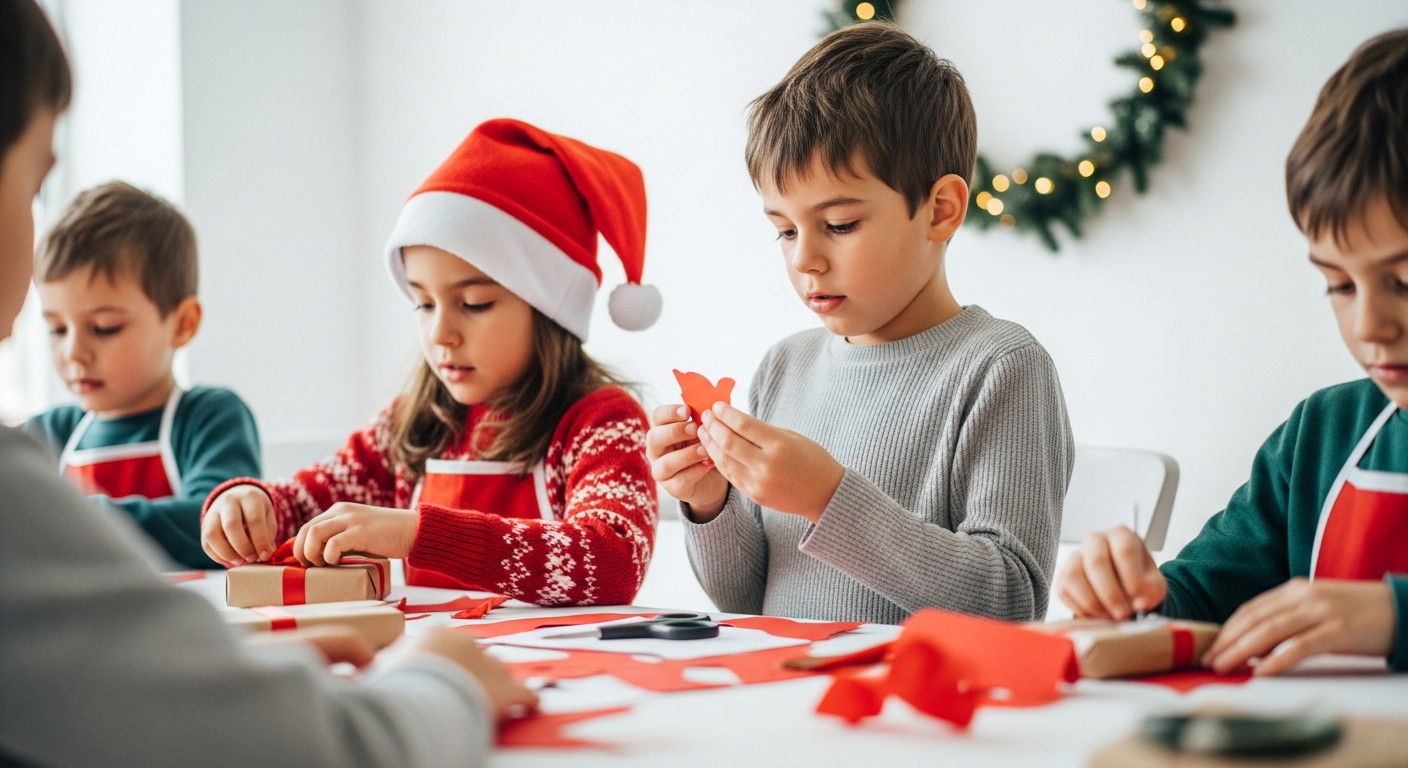
Table of Contents
- Introduction
- The Magic of Handmade Gifts from Little Hands
- Developmental Wonders of Christmas Crafting
- Craft Ideas for Every Age and Stage
- Turning Craft Time into Speech & Language Time
- The Speech Blubs Difference: Smart Screen Time for Smart Kids
- Choosing Your Speech Blubs Plan: Maximize Your Child's Potential
- Conclusion
- FAQ
Introduction
The holiday season twinkles with anticipation, particularly through the eyes of a child. While store-bought toys often grab headlines, there's a unique, quiet magic in a small, slightly crooked, handmade gift. It’s not just a present; it's a piece of a child's heart, a tangible expression of their effort and love. As parents, we often cherish these homemade treasures far more than anything from a store shelf. But beyond the sentimental value, inviting children into the world of Christmas crafting offers a sleigh-full of developmental benefits, especially for their burgeoning communication skills.
This post will delve into the wonderful world of kids' Christmas craft gifts, exploring not only inspiring ideas for various age groups but also highlighting the profound impact these activities have on a child's overall development, particularly their speech and language abilities. We'll show you how crafting can become a joyful, hands-on speech therapy session, building confidence and fostering a love for communication, all while creating cherished family memories. Join us as we explore how simple crafts can transform into powerful tools for growth and connection, making this holiday season truly special.

The Magic of Handmade Gifts from Little Hands
In a world increasingly dominated by consumerism, a handmade gift from a child stands out as a beacon of pure, unadulterated love. These aren't just objects; they are expressions of thought, effort, and care. When a child carefully selects colors, painstakingly glues a pom-pom, or proudly presents a drawing, they are giving a piece of themselves. This act of giving fosters empathy, teaching children the joy of making something special for someone else.
For the recipient, a gift from a child's hands carries an emotional weight that no store-bought item can match. It represents a precious moment in time, a memory captured in glitter and paint. Grandparents, aunts, uncles, and even parents often treasure these unique creations for years, knowing the love and effort that went into them. It connects generations, creating stories and shared experiences that become part of family lore. The imperfect lines, the smudged fingerprints, the enthusiastic choice of unconventional colors – these are all hallmarks of authenticity, making each gift truly one-of-a-kind. It reminds us that the most valuable gifts are often not found under the tree but are born from the heart.
Developmental Wonders of Christmas Crafting
Engaging in Christmas crafting isn't just about making pretty things; it's a powerhouse for a child's holistic development. From the moment they touch the materials to the proud presentation of their gift, children are learning, growing, and building essential skills across multiple domains.
Fine Motor Skills
Crafting activities are a goldmine for developing fine motor skills, which are crucial for tasks like writing, drawing, and even self-feeding. When children are cutting with scissors, squeezing glue, tearing paper, painting with brushes, stringing beads, or molding clay, they are actively strengthening the small muscles in their hands and fingers. These precise movements require hand-eye coordination and dexterity, improving their ability to manipulate objects with control and precision. The more varied the crafting activities, the more opportunities children have to refine these essential motor skills, laying a strong foundation for future academic and life skills.

Cognitive Development
Beyond the physical aspects, crafting ignites a child's cognitive development in myriad ways. Following step-by-step instructions, whether visual or verbal, hones their ability to sequence and remember. They learn problem-solving as they figure out how to attach a tricky piece or what to do when something doesn't go as planned. Crafting encourages planning and organization – thinking ahead about what materials are needed and in what order. Making choices, such as which color to use or how to decorate, fosters decision-making skills and a sense of ownership over their project. They also develop spatial awareness, understanding how shapes and objects fit together.
Creativity and Imagination
Perhaps the most obvious benefit of crafting is the boost it gives to creativity and imagination. With a blank canvas or a pile of materials, children are free to explore their ideas, experiment with colors and textures, and bring their unique visions to life. There’s no right or wrong way to be creative, fostering an environment where self-expression is celebrated. This imaginative play is vital for developing innovative thinking, helping children to think outside the box and approach challenges with a flexible mindset, skills that are invaluable throughout life.
Emotional Growth
Crafting also offers rich opportunities for emotional development. It teaches patience, as some projects require time and careful attention. It builds perseverance, encouraging children to keep trying even when a task is challenging. Completing a craft project, especially one intended as a gift, instills a profound sense of pride and accomplishment, boosting self-esteem. The act of creating something for someone else cultivates empathy and generosity, as children consider the recipient's preferences and the joy their gift will bring. It’s a wonderful way to teach children about kindness and the spirit of giving.
Speech and Language Development
Crucially for us at Speech Blubs, crafting is an incredibly powerful, natural environment for fostering speech and language development. Every step of the crafting process can be a language-rich experience. Children can:
- Describe: "This paper is red and shiny." "The glue is sticky." "My ornament is sparkly."
- Narrate: "First, I cut the circle. Then, I glued the glitter. Last, I added the string."
- Follow and Give Instructions: "Pick up the blue crayon." "Can you hand me the scissors?" "Now, put the star on top."
- Label and Identify: Naming colors, shapes, materials, and tools.
- Ask and Answer Questions: "What should I make next?" "Where does this go?" "Is this for Grandma?"
- Express Feelings: "I love this!" "This is hard." "I'm so proud!"
- Develop Vocabulary: Learning new words related to tools, textures, actions, and Christmas themes.
- Engage in Conversational Turn-Taking: Discussing ideas, collaborating on steps, and talking about the gift's recipient.
These interactive moments turn craft time into an organic language lesson, often far more engaging than a formal exercise. For parents whose children might be a little slower to develop speech, these activities provide a low-pressure, high-motivation environment for communication practice. We believe in harnessing these everyday joyful moments to build foundational communication skills.
Craft Ideas for Every Age and Stage
Crafting for Christmas can be tailored to suit every child's developmental level, ensuring a fun and engaging experience for everyone. Remember, adult co-play and support are implicitly part of these activities, turning them into wonderful opportunities for bonding and learning.
Toddlers (1-3 years): Simple & Sensory
Toddlers thrive on sensory exploration and simple, repetitive actions. The goal here is participation and exposure to new textures, colors, and vocabulary.
Handprint/Footprint Ornaments or Cards
- Materials: Non-toxic paint, cardstock or salt dough, glitter (optional), ribbon.
- Activity: Help your toddler press their hand or foot into paint and then onto paper or salt dough. Decorate lightly.
- Speech & Language Opportunities:
- Labeling: Name body parts ("hand," "foot," "fingers," "toes"), colors ("red paint," "green paper"), and actions ("press," "stamp," "paint").
- Sensory Vocabulary: "Wet paint," "soft paper," "sticky glue."
- Early Commands: "Touch," "press," "more paint."
- Engagement: Ask "Whose hand is this?" "What color is this?"
- Speech Blubs Connection: For parents with a toddler working on early vocabulary, the "First Words" section in Speech Blubs can make learning new words fun and interactive, just like naming colors and textures during this craft. Our app uses engaging video modeling where children watch their peers, motivating them to imitate and learn. This "smart screen time" complements hands-on learning beautifully. Download Speech Blubs on the App Store or Google Play to begin your child's communication journey.
Pom-Pom Christmas Trees
- Materials: Construction paper cones, various colored pom-poms, non-toxic glue.
- Activity: Toddlers apply glue to the cone and stick pom-poms onto it, creating a textured Christmas tree.
- Speech & Language Opportunities:
- Color Identification: "Give me the red pom-pom." "Where is the green one?"
- Counting: Count pom-poms as they’re placed.
- Positional Concepts: "Put it on the cone," "Put it next to the blue one."
- Action Verbs: "Glue," "stick," "push."
- Requests: Child can request "more glue" or "another pom-pom."
Preschoolers (3-5 years): More Complex & Imaginative
Preschoolers can handle more steps and enjoy expressing their burgeoning creativity. They start to understand the concept of making a gift for a specific person.
Painted Rock Art (Paperweights/Decor)
- Materials: Smooth river rocks, acrylic paints, paintbrushes, sealant.
- Activity: Children paint rocks with festive designs, characters, or abstract patterns.
- Speech & Language Opportunities:
- Storytelling: Encourage them to tell a story about what they’re painting ("This is Santa flying to the moon!").
- Description: "My rock is bumpy and smooth." "I used sparkly blue paint."
- Prediction: "What do you think Grandma will say when she sees this?"
- Sequencing: "First, we paint the base, then we add the details."
- Speech Blubs Connection: If your child struggles with expressing sequences or describing details, our app’s activities, which often involve narrating and describing, can provide engaging practice. Our video modeling approach helps children learn by watching and imitating their peers, fostering confidence in developing more complex communication skills. Learn more about the scientific research behind our methods.
Salt Dough Ornaments
- Materials: Salt, flour, water, cookie cutters, paint, glitter, ribbon.
- Activity: Mix dough, roll it out, cut shapes, bake, then paint and decorate.
- Speech & Language Opportunities:
- Vocabulary: "Dough," "flour," "salty," "roll," "cut," "bake."
- Action Verbs: "Mix," "knead," "press," "paint," "hang."
- Following Multi-Step Directions: "First, mix the flour and salt. Then add water. Next, roll it out."
- Making Choices: "Which cookie cutter should we use?" "What color should this star be?"
Early Elementary (6-8 years): Skill-Building & Practical
At this age, children can follow more detailed instructions and enjoy making gifts with a practical purpose. They appreciate learning new skills.
DIY Coasters (Tile/Cork)
- Materials: Plain ceramic tiles or cork squares, acrylic paints, brushes, sealant, felt pads for the bottom.
- Activity: Children paint designs, patterns, or simple pictures on the tiles. Once dry, seal and attach felt pads.
- Speech & Language Opportunities:
- Spatial Concepts: "Put the stripe across the middle." "The dots go around the edge."
- Explaining Process: Encourage them to explain how they made the design.
- Negotiation/Collaboration: If making a set, discuss designs ("Let's make two with stripes and two with polka dots.").
- Problem-solving Discussions: "What should we do if the paint smudges?"
- Speech Blubs Connection: For children developing more advanced sentence structures and narrative skills, engaging in conversations about craft steps or stories behind the gifts can be reinforced by Speech Blubs activities that encourage sentence building and story creation. Our goal at Speech Blubs is to empower children to speak their minds and hearts, helping them articulate these new skills with confidence. Unsure if your child could benefit from Speech Blubs? Take our quick 3-minute preliminary screener to get a simple assessment and a free 7-day trial.
Personalized Bookmarks
- Materials: Cardstock, markers, colored pencils, stickers, laminating sheets (optional), ribbon.
- Activity: Design and decorate bookmarks, perhaps writing the recipient's name or a short message.
- Speech & Language Opportunities:
- Writing/Reading Connection: Discuss favorite books, characters, or messages.
- Descriptive Language: "I want to draw a magical unicorn for Aunt Carol."
- Asking for Clarification: "What does 'bibliophile' mean?"
- Expressing Intent: "I'm making this for Uncle Mike because he loves reading mysteries."
Older Kids (9-12 years): Independent & Detailed
Older children can take on more independent projects, learning new techniques and creating more intricate gifts. They enjoy seeing a project through from start to finish.
Handmade Soaps/Bath Bombs
- Materials: Soap-making kit or bath bomb ingredients (baking soda, citric acid, essential oils, molds).
- Activity: Follow a recipe to create custom soaps or bath bombs.
- Speech & Language Opportunities:
- Procedural Language: Explaining the exact steps of the recipe to someone else.
- Vocabulary: Introducing terms like "emulsify," "fragrance," "mold," "ingredients."
- Safety Discussions: Talking about the importance of following instructions and safe handling of materials.
- Cause and Effect: "If we add too much water, the bath bomb won't fizz."
- Speech Blubs Connection: As kids get older, they might be exploring more nuanced communication, like explaining complex processes or giving instructions. Speech Blubs offers tools to empower children to "speak their minds and hearts," helping them articulate these new skills with confidence. We provide an immediate, effective, and joyful solution for the 1 in 4 children who need speech support, blending scientific principles with play. See what other parents are saying about their child's success with Speech Blubs.
Upcycled Jar Lanterns/Vases
- Materials: Clean glass jars, tissue paper, glue (Mod Podge works well), paint, glitter, fairy lights or candles (for lanterns).
- Activity: Decorate jars with tissue paper, paint, or other embellishments to create beautiful lanterns or vases.
- Speech & Language Opportunities:
- Creative Problem Solving: "How can we make this jar look like a snowy forest?"
- Justifying Choices: "I chose blue and silver because it reminds me of winter."
- Discussing Aesthetics: "Do you think this looks good?" "What could make it even better?"
- Planning and Design: Conceptualizing the final look before starting.
Turning Craft Time into Speech & Language Time
The real magic happens when we intentionally weave language and communication into every stage of the crafting process. It’s not just about doing the craft; it’s about talking through the craft.
Pre-Crafting: Planning and Preparation
Before you even get out the glue sticks, you can start building language skills.
- Choose the Craft: Discuss with your child what they want to make and for whom. "Who are we making a gift for?" "What does Aunt Susan like?" This encourages planning and considering another person's preferences.
- Gather Materials: Narrate the process. "We need scissors. Can you find the red scissors?" "Where is the sparkly paper?" This reinforces object identification, colors, and prepositions.
- Discuss Steps: Briefly outline the plan. "First, we get the paper. Next, we cut. Then, we glue." This introduces sequencing vocabulary.
During Crafting: Active Communication
This is where the bulk of the language learning happens.
- Describe Actions: Verbally label everything you and your child are doing. "I am cutting the paper." "You are gluing the stars." This builds action verb vocabulary.
- Label Objects and Attributes: "This is a smooth rock." "The paint is wet." "That pom-pom is soft."
- Follow and Give Instructions: Give simple, clear commands and encourage your child to give them back. "Put the cap on the glue." "Mommy, cut the string." This practices receptive and expressive language.
- Ask Open-Ended Questions: Move beyond "yes/no" answers. "What do you want to draw next?" "How does that feel?" "Why did you choose that color?"
- Narrate Progress: "Oh, you're making a beautiful tree! What are you putting on top?" This encourages descriptive language and storytelling.
- Relatable Scenario: For a parent whose 3-year-old "late talker" loves animals, let's say you're making a handprint reindeer ornament. You can talk about "deer," "antlers," "nose," and "hooves." You can model animal sounds. The "Animal Kingdom" section in Speech Blubs offers a fun, motivating way to practice these very sounds and words like "moo," "baa," "roar," and "oink." The video modeling approach, where children learn by watching and imitating their peers, is a fantastic way to build confidence in vocalizing new sounds and words related to animals, colors, and textures. Before you even start crafting, or as a complementary activity, you can practice sounds and words within the app, then transfer that confidence to your hands-on craft. This is what we call "smart screen time," seamlessly blending digital learning with real-world interaction.
- Ready to get started? Create your account and begin your 7-day free trial today.
Post-Crafting: Reflection and Sharing
Even after the glue dries, the language opportunities continue.
- Describe the Finished Product: "Look at your sparkly star! Tell me about it."
- Explain the Process: "How did you make this? What was the first thing you did?"
- Discuss Feelings: "How do you feel about your gift?" "What do you think Grandma will say?" This encourages emotional vocabulary.
- Practice Giving the Gift: Role-play giving the gift and saying "Merry Christmas" or "Thank you."
Crafting offers a natural, joyful environment for communication. If you ever find yourself wondering if your child could benefit from a little extra support in these areas, remember that we are here to help. Unsure if your child could benefit from dedicated speech support? Take our quick 3-minute preliminary screener to get a simple assessment and a personalized next-steps plan, along with a free 7-day trial. It's a great way to gain insight and explore valuable resources.
The Speech Blubs Difference: Smart Screen Time for Smart Kids
At Speech Blubs, we understand the challenges parents face when their children need a little extra help with communication. Our company was born from the personal experiences of our founders, all of whom grew up with speech problems and created the tool they wished they had. Our mission is to empower children to "speak their minds and hearts," providing an immediate, effective, and joyful solution for the 1 in 4 children who need speech support.
We blend scientific principles with play into one-of-a-kind "smart screen time" experiences. Unlike passive viewing like cartoons, Speech Blubs offers an active, interactive, and engaging alternative. Our unique approach utilizes "video modeling," where children learn by watching and imitating their peers. This technique leverages the power of mirror neurons, making learning sounds, words, and sentences a natural and highly effective process. When children see other children vocalizing and expressing themselves, it creates a compelling desire to join in and communicate.
Speech Blubs acts as a powerful supplement to a child's overall development plan and, when applicable, professional therapy. It’s a tool that fosters family connection, turning screen time into quality time spent learning and growing together. We focus on building confidence, reducing frustration, developing key foundational skills, and creating joyful learning moments, rather than promising instant miracles. Our goal is to lay the groundwork for a lifelong love of communication. Our method is backed by science, placing us in the top tier of speech apps worldwide.
Choosing Your Speech Blubs Plan: Maximize Your Child's Potential
We believe every child deserves the opportunity to communicate confidently. That's why we've designed our Speech Blubs app to be accessible and packed with features. To get the most out of what we offer, it's helpful to understand our subscription options.
We offer two main plans:
- Monthly Plan: This plan is available for $14.99 per month. It provides access to our core features, allowing your child to start their communication journey with our engaging activities.
- Yearly Plan: This is our best value plan, priced at $59.99 per year. When broken down, this comes out to just $4.99 per month, which means you save a significant 66% compared to the monthly subscription!
The Yearly Plan isn't just about saving money; it unlocks a full suite of exclusive, high-value features designed to supercharge your child's learning experience:
- 7-Day Free Trial: Only with the Yearly Plan do you get a full 7-day free trial, allowing you and your child to explore all the app's features and see the magic of video modeling firsthand before making a commitment.
- The Extra Reading Blubs App: Included exclusively with the Yearly Plan, our Reading Blubs app helps build crucial pre-reading and early literacy skills, complementing the speech and language development in Speech Blubs.
- Early Access to New Updates: Subscribers to the Yearly Plan get first access to all our exciting new content, features, and improvements.
- 24-Hour Support Response Time: We prioritize our Yearly Plan members with expedited customer support, ensuring any questions or concerns are addressed promptly.
The Monthly Plan, while a good starting point, does not include these valuable benefits. We strongly encourage you to choose the Yearly Plan to take full advantage of our complete offering, including the free trial and all the exclusive features that support comprehensive communication development. It’s the smart choice for dedicated parents looking for the best value and the most robust tools to help their child thrive.
Conclusion
This holiday season, let's rediscover the profound joy and developmental benefits of creating kids' Christmas craft gifts. These handmade treasures are far more than just presents; they are powerful catalysts for fine motor skill development, cognitive growth, creative expression, emotional intelligence, and, most importantly for us, rich opportunities for speech and language development. From the simplest handprint ornament to a more intricate handmade soap, each craft provides a natural, engaging setting for children to describe, narrate, question, and express themselves.
By actively engaging with our children during craft time, we transform a fun activity into an invaluable language-building session. We provide a space for them to practice new vocabulary, follow instructions, tell stories, and build confidence in their communication abilities. And when you're looking for an additional, scientifically-backed tool to empower your child's speech journey, remember Speech Blubs. We’re here to support you in fostering a love for communication, building confidence, reducing frustration, and developing foundational skills through our unique video modeling "smart screen time" experiences.
Ready to infuse your child's learning with joy and empower them to speak their minds and hearts? Start your child's journey with us today. Download Speech Blubs on the App Store or Google Play to unlock a world of confident communication. For the best value and access to exclusive features like the Reading Blubs app and a 7-day free trial, be sure to select our Yearly Plan. You can also create your account and begin your 7-day free trial directly on our website. Give the gift of confident communication this Christmas – it's a present that truly lasts a lifetime.
FAQ
Q1: What age group are Christmas craft gifts best for?
A1: Christmas craft gifts are wonderful for children of all ages, from toddlers to pre-teens. The key is to choose age-appropriate crafts that match their developmental stage and skill level. Toddlers benefit from simple, sensory-rich activities like handprint art, while older children can tackle more complex projects that involve following detailed instructions or learning new skills, like making soaps or personalized bookmarks. The most important aspect is adult involvement and adapting the craft to the child's abilities, ensuring a positive and enriching experience.
Q2: How can I make craft time more educational for my child?
A2: To maximize the educational benefits of craft time, actively engage with your child throughout the process. Narrate your actions, describe materials, ask open-ended questions, and encourage them to explain their choices and steps. Use rich vocabulary related to colors, shapes, textures, actions, and emotions. For example, instead of just "red paint," say "This is shiny, cardinal red paint." This interactive approach turns craft time into a natural opportunity for language development, cognitive growth, and fine motor skill enhancement.
Q3: My child gets frustrated easily with crafts. How can I help?
A3: If your child gets frustrated, simplify the craft, focus on the process rather than a perfect outcome, and offer plenty of encouragement. Break down steps into smaller, manageable chunks. Provide a lot of praise for effort, not just the finished product. Sometimes, frustration stems from communication challenges. Using clear, simple instructions and allowing time for processing can help. Apps like Speech Blubs can also build foundational communication skills, reducing frustration and empowering them to express themselves more clearly, which can translate into greater confidence during hands-on activities.
Q4: How does Speech Blubs help with communication skills developed during crafting?
A4: Speech Blubs complements the communication skills fostered during crafting by providing a structured, engaging, and joyful environment for practice. While crafting helps with descriptive language and following instructions in a real-world context, Speech Blubs uses its unique video modeling technique to help children learn articulation, expand vocabulary, and build sentences by imitating their peers. This "smart screen time" reinforces the language concepts learned during hands-on activities, making it easier for children to verbalize their thoughts, feelings, and the crafting process itself. It helps build the confidence needed to "speak their minds and hearts" both within and beyond creative play.
About the author