
Heartfelt Toddler Craft Christmas Gifts for Your Family
 By Speech Blubs Team•Feb 20, 2026•14 min.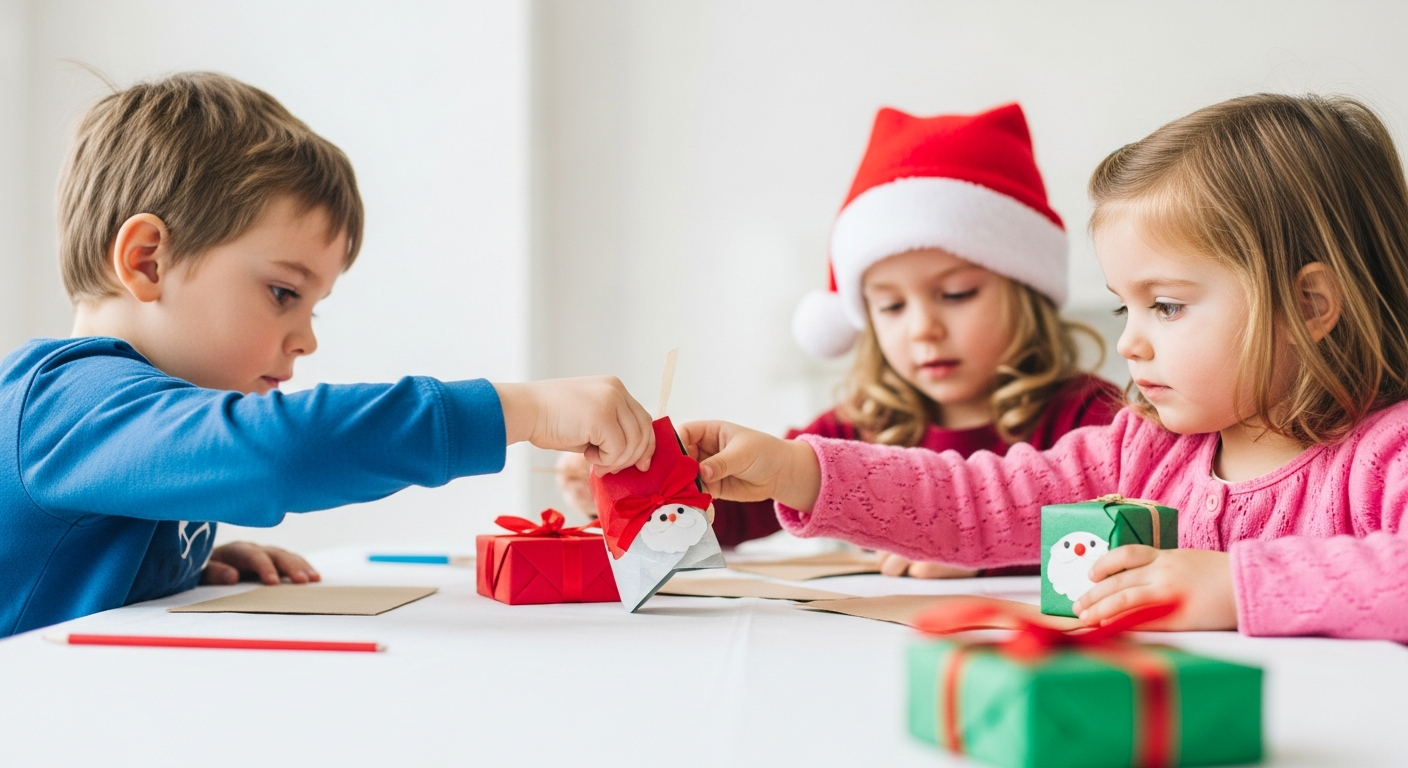
Table of Contents
- Introduction
- Why Crafting is a Developmental Powerhouse
- Setting Realistic Expectations for Holiday Crafting
- The Best Toddler Craft Christmas Gifts: Kept and Cherished
- Kitchen-Based Gifts: Measuring and Pouring
- Gifts for the Home: Beauty and Function
- Making Crafting a Family Connection Tool
- Addressing Challenges: What if My Toddler Isn't Interested?
- The Speech Blubs Difference: "Smart Screen Time"
- Summary: The Joy of the Gift
- FAQs about Toddler Crafting and Development
Introduction
Have you ever looked at a tiny, smudged handprint on a piece of construction paper and felt a lump in your throat? There is something undeniably magical about a gift created by a toddler. It isn’t about the straightness of the lines or the perfect application of glitter; it is about the focused tongue-tip poking out as they work, the pride in their eyes when they say, "I made this for you," and the beautiful, messy process of a child learning to express their love.
At Speech Blubs, our mission is to empower every child to speak their minds and hearts. We know that communication isn't just about words; it’s about connection, creativity, and the joy of being understood. Our founders grew up with speech challenges themselves, and they created the very tool they wished they had—a way to turn "screen time" into "smart time" that actually builds foundational skills.

In this post, we’re going to explore the wonderful world of toddler craft Christmas gifts. We’ll dive into why these activities are so vital for development, how to keep the process stress-free, and provide a huge list of hands-on projects that your little ones will love making (and your family will treasure receiving). Crafting is more than just a holiday pastime; it is a powerful way to foster confidence, build fine motor skills, and create joyful family learning moments.
Why Crafting is a Developmental Powerhouse
When a toddler engages in making toddler craft Christmas gifts, they aren't just making a mess—they are building their brains. Crafting is a multi-sensory experience that touches on almost every area of early childhood development.
Fine Motor Skill Development
Think about the movements involved in crafting: squeezing a glue bottle, picking up tiny sequins, or rolling salt dough. these actions strengthen the small muscles in the hands and fingers. This is essential preparation for later skills like writing, buttoning clothes, and using utensils. When your child practices these "pincer" and "power" grips, they are laying the groundwork for independence.
Language and Vocabulary Expansion
Crafting is a prime time for language modeling. As you work together, you can narrate the process: "The glue is sticky," "This ribbon is shiny," or "We are rolling the dough." For a child who might be a "late talker," these functional words are golden. Just like our "Animal Kingdom" section in the Speech Blubs app helps kids practice "moo" and "baa" sounds through peer imitation, crafting allows them to hear and repeat words in a natural, motivating context.
Confidence and Self-Expression
There is a profound sense of "I can do it!" that comes from finishing a project. When a child sees their artwork displayed or gifted to a loved one, it reinforces their sense of self-worth. It tells them that their ideas and efforts have value. This is why we focus so much on positive reinforcement and peer modeling; seeing another child succeed (either in person or through our video modeling) gives toddlers the courage to try new things themselves.

Setting Realistic Expectations for Holiday Crafting
Before we get out the glue and glitter, let’s talk about the "perfection trap." As adults, we often have a vision of what the final product should look like. But for a two-year-old, the joy is in the doing, not the finishing.
We always encourage parents to prioritize "process over product." If your child wants to put five handprints on a card instead of one, let them! If their "Christmas tree" looks more like a green blob, celebrate that blob. The goal isn't to create a boutique-quality item; it’s to foster a love for communication and creativity.
Using tools like Speech Blubs can also help set the stage. If you find your child getting frustrated because they can't quite grasp a concept, taking a break with a session of "smart screen time" can help. Our app uses video modeling, where children watch their peers perform actions and make sounds. This peer-to-peer connection reduces the pressure on the child and makes learning feel like play.
The Best Toddler Craft Christmas Gifts: Kept and Cherished
Here are some of our favorite, tried-and-true ideas for gifts that toddlers can actually help make. These projects are designed to be accessible, budget-friendly, and high on the "sentimental value" scale.
1. The Classic Salt Dough Ornament
Salt dough is the "holy grail" of toddler crafting. It is inexpensive, non-toxic, and acts like a permanent snapshot of your child's tiny hands.
- How to do it: Mix 2 cups of flour, 1 cup of salt, and 1 cup of water. Knead it until smooth. Let your toddler help with the mixing and stirring—it's a great sensory experience!
- The Gift: Roll it out and press your child’s hand or foot into the dough. Bake at 200°F (approx. 95°C) for 2–3 hours until hard.
- Why it works: It’s a tactile activity that builds hand strength. Once dry, your child can paint it, further developing their fine motor control.
If you’re unsure if your child’s fine motor or speech milestones are on track while doing these activities, you can always take our quick 3-minute preliminary screener to get a simple assessment and a plan for next steps.
2. Pinecone Christmas Trees
This project starts with an outdoor adventure! Take your toddler on a "nature hunt" to find the perfect pinecones.
- How to do it: Once you have your pinecones, set out some green paint and small "decorations" like buttons, beads, or pom-poms.
- The Gift: Glue the pinecone into a small terracotta pot or onto a wooden base. Let the child paint the "tree" and "decorate" it with the beads.
- Language Tip: Use this time to practice descriptive words. Is the pinecone prickly or smooth? Is the paint wet?
3. Fingerprint "String of Lights" Frames
Grandparents absolutely adore photo gifts. This one adds a personalized, artistic touch to a standard frame.
- How to do it: Buy a plain wooden or cardboard frame. Take a black permanent marker and draw a "wavy line" all around the edge to represent a wire.
- The Gift: Have your child dip their fingertips in different bright colors of paint and "press" them along the wire to create Christmas lights. Insert a photo of the child for the final touch.
- Social Proof: Parents often tell us that activities like this, paired with the speech practice they get from Speech Blubs on the App Store, help their children feel more connected to distant relatives.
Kitchen-Based Gifts: Measuring and Pouring
The kitchen is a natural classroom. Measuring ingredients for toddler craft Christmas gifts is a fantastic way to introduce early math concepts and following directions.
4. "Cookie in a Jar" Mix
This is a wonderful gift for neighbors or teachers.
- How to do it: Layer the dry ingredients for your favorite cookie recipe (flour, sugar, cocoa, chocolate chips) into a clean mason jar.
- Toddler’s Role: Let them use a funnel to pour the ingredients. This requires hand-eye coordination and focus.
- The Finishing Touch: Have your child decorate a tag with stickers or crayons. You can help them write the baking instructions.
5. Scented Potpourri Simmer Mix
This gift makes the whole house smell like the holidays and is incredibly easy for little hands to assemble.
- How to do it: Provide dried orange slices, cinnamon sticks, star anise, and cranberries.
- The Gift: Your toddler can "scoop" these items into a clear bag or jar. Tie it with a ribbon.
- Sensory Focus: This is a perfect opportunity to talk about smells! "Mmm, that smells sweet!" or "That cinnamon is spicy!"
Gifts for the Home: Beauty and Function
Many parents want gifts that are actually useful. These projects fit the bill while allowing for plenty of toddler creativity.
6. Hand-Painted Terracotta Pots
If you have a plant lover in the family, a personalized pot is a "growing" reminder of a child's love.
- How to do it: Give your child a small pot and some acrylic paints (with adult supervision).
- The Process: Let them paint freely. You can also do a "handprint flower" on the side once their base coat is dry.
- The Gift: Add a small succulent or some herbs.
7. Beeswax Candle Rolling
Rolling candles is a great "screen-free" alternative to passive viewing. It requires focus and provides a wonderful beeswax scent.
- How to do it: Buy sheets of honeycomb beeswax and wicking.
- The Gift: Show your child how to lay the wick and roll the sheet tightly. It’s like rolling a playdough snake, a skill many kids practice in our "Mouth Gym" section of the app!
Making Crafting a Family Connection Tool
At Speech Blubs, we believe the best learning happens when parents and children play together. Crafting isn't just about the kid staying busy; it’s about the conversation that happens while you’re both covered in glue.
When you sit down to make toddler craft Christmas gifts, you are creating a "communication rich" environment. You are looking at each other, sharing materials, and responding to each other's cues. This is exactly why we recommend our app as a co-play tool. Rather than just handing the phone to your child, sit with them. Watch the peers in the app together. Mirror the sounds they make. This shared experience is what builds lasting neural pathways for language.
"Our method is backed by science, placing us in the top tier of speech apps worldwide." – Check out our Research Page to see how video modeling and mirror neurons help your child learn.
Addressing Challenges: What if My Toddler Isn't Interested?
Not every child loves getting their hands messy. Some children have sensory sensitivities, while others may have shorter attention spans. If your child isn't "into" the craft, don't force it.
- Try "Parallel Play": Sit near them and work on your own version of the craft. Often, seeing you have fun will pique their curiosity.
- Change the Medium: If they hate the feeling of wet paint, try using stickers or dot markers instead.
- Short Bursts: Craft for 5 or 10 minutes, then move on. You can always come back to it.
For parents who feel their child is struggling with focus or following simple directions, seeing what other parents say about Speech Blubs can be very encouraging. Many families have found that building confidence through peer-modeling helps their children engage more in physical activities like crafting.
The Speech Blubs Difference: "Smart Screen Time"
We know that during the busy holiday season, you might need a moment to prep dinner or wrap gifts. While we always advocate for hands-on play and family connection, we also recognize that digital tools are a part of modern life.
Our goal is to provide an immediate, effective, and joyful solution for the 1 in 4 children who need speech support. We offer a screen-free alternative to passive viewing (like cartoons) by providing an interactive experience. In the Speech Blubs app, your child isn't just watching; they are imitating, participating, and learning. It’s a powerful supplement to professional therapy or a child's overall development plan.
If you are ready to see how our unique approach can help your child "speak their mind and heart," we invite you to start your journey today.
Choosing the Right Plan for Your Family
We believe in transparency and providing the best value for our community. We offer two main paths to joining the Speech Blubs family:
- Monthly Plan: $14.99 per month. This is a great way to test the waters and see how your child responds to the video modeling.
- Yearly Plan (Best Value): $59.99 per year. This breaks down to just $4.99 per month—a massive 66% savings compared to the monthly rate.
Why choose the Yearly Plan? It isn't just about the price. Our Yearly plan is designed to be the ultimate support system for your child’s development. It includes:
- A 7-day free trial so you can explore everything risk-free.
- The Reading Blubs app, which helps transition those speech skills into early literacy.
- Early access to new updates and new content "worlds."
- 24-hour support response time from our dedicated team.
Create your account and begin your 7-day free trial today to unlock the full suite of features and start your child on a path of confident communication.
Summary: The Joy of the Gift
Creating toddler craft Christmas gifts is about much more than the final object under the tree. It is about the smell of cinnamon, the squish of salt dough, and the laughter shared between a parent and a child. These moments are the building blocks of a child's world.
By engaging in these activities, you are helping your toddler develop:
- Motor skills for future independence.
- Vocabulary to express their needs and feelings.
- Confidence to try new things and interact with others.
Remember, the most important part of any gift is the love behind it. Whether you are painting a pinecone or practicing new words together on Speech Blubs via Google Play, you are investing in your child's future.
We are so proud to be a part of your family’s learning journey. This holiday season, let's focus on the joy of the process, the beauty of the mess, and the incredible potential of every child to speak their heart.
FAQs about Toddler Crafting and Development
1. My toddler hates the feeling of paint on their hands. Can they still make these gifts?
Absolutely! Many children have sensory sensitivities. Instead of finger painting, try using "no-mess" options like dot markers, stickers, or placing paper and paint inside a sealed Ziploc bag so they can "squish" the paint around without touching it directly. You can also use tools like sponges or brushes to create a barrier between the child and the medium.
2. How can I use crafting to help my "late talker" with their speech?
Crafting is a "low-pressure" environment for speech. Use simple, repetitive words related to the actions you are doing (e.g., "Push," "Pull," "Open," "Sticky"). Avoid asking too many "What is this?" questions, which can feel like a test. Instead, narrate what you are doing. If you want to see how peer modeling helps this process, try a session of Speech Blubs before you start your craft to get your child in a "mimicry" mindset.
3. Are these crafts safe for 2-year-olds?
Safety is always the priority. Always supervise your toddler closely, especially with small items like beads, buttons, or sequins, which can be choking hazards. Use non-toxic, washable paints and glues. Activities like the salt dough or beeswax rolling are generally very safe and toddler-friendly with adult guidance.
4. What is the best way to introduce a new craft to a toddler?
The "Watch Me, Then You" approach works best. This is essentially the same principle as our video modeling methodology. Show them what you are doing in a very simple, exaggerated way. Let them watch you for a moment before inviting them to try. Keep your instructions to one or two words to avoid overwhelming them.
Ready to make this holiday season the most communicative and creative one yet? Download Speech Blubs on the App Store or Google Play to begin. For the best experience and the most features, including Reading Blubs and priority support, be sure to select our Yearly Plan when you start your 7-day free trial. Let’s help your little one speak their mind and heart together!
About the author