
Heartfelt Valentine's Day Toddler Crafts for Joyful Learning
 By Speech Blubs Team•Feb 20, 2026•14 min.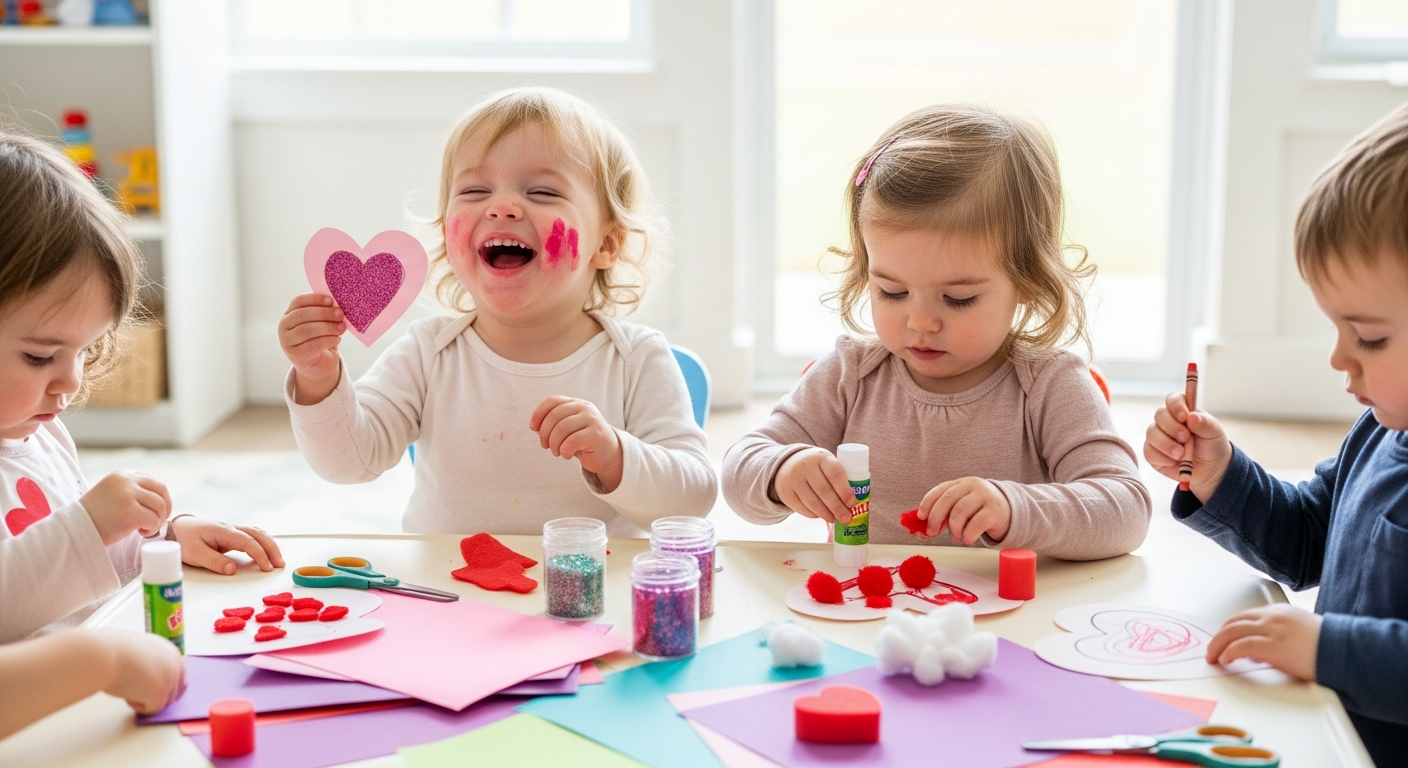
Table of Contents
- Introduction
- The Power of Crafting in Child Development
- 25+ Engaging Valentine’s Day Toddler Crafts
- Practical Scenarios: Bringing Crafts to Life
- Why Choose Speech Blubs for Your Child?
- Maximizing the Impact of Valentine's Crafts
- Integrating Speech Blubs into Your Daily Routine
- Frequently Asked Questions
- Conclusion
Introduction
Have you ever seen the pure, unadulterated pride on a toddler’s face when they hand you a lopsided, glue-covered paper heart? It’s a moment of pure connection, where a few scraps of construction paper and some washable paint transform into a bridge between their heart and yours. Valentine’s Day is the perfect season to lean into this magic. While the holiday often centers on romantic love, for those of us with little ones, it is a golden opportunity to celebrate the growing bond between parent and child.
In this post, we’re sharing a curated collection of valentines day toddler crafts that are designed to do more than just look cute on your refrigerator. We will explore over 25 creative activities that foster fine motor skills, encourage language development, and build the confidence your child needs to "speak their minds and hearts." We’ll also show you how these hands-on moments perfectly complement the "smart screen time" we provide at Speech Blubs, where our mission is to make communication a joyful journey for every child.

Whether your toddler is a "late talker" or simply a budding artist, these crafts provide a sensory-rich environment for learning. By the end of this article, you’ll have a complete roadmap for a month of heart-centered play, backed by the same scientific principles we use in our app to help 1 in 4 children who need speech support.
The Power of Crafting in Child Development
Before we dive into the glitter and glue, it’s important to understand why we prioritize these activities. At Speech Blubs, our company was born from the personal experiences of our founders, who all grew up with speech problems. They created the tool they wished they had—a tool that blends scientific principles with play. Crafting operates on a similar frequency.
When a toddler reaches for a red crayon or tries to peel a heart sticker, they aren't just making art; they are building the foundational skills required for communication. Fine motor movements (like pincer grasps) are neurologically linked to the same areas of the brain that control speech. Furthermore, crafting is a social experience. It requires following directions, labeling colors and shapes, and expressing needs—all key components of early language.
Scientific Foundations: Mirror Neurons and Imitation
Our unique approach at Speech Blubs involves "video modeling," where children learn by watching and imitating their peers. This is based on the concept of mirror neurons: when a child sees another child performing an action, their brain fires as if they were doing it themselves.
You can use this same principle during your valentines day toddler crafts sessions. By sitting across from your child and modeling how to "smoosh" the paint or "stick" the paper, you are triggering those same neural pathways. This adult co-play is essential. Just as our app provides a screen-free alternative to passive viewing by encouraging active imitation, these crafts require your presence and encouragement to truly blossom.
25+ Engaging Valentine’s Day Toddler Crafts
Sensory Exploration Activities
Sensory play is the "work" of a toddler. It allows them to explore textures and concepts without the pressure of a finished product.

- Red Noodle Sensory Bin: Dye some dry pasta shapes red and pink using food coloring and vinegar. Hide small plastic hearts or "love bugs" inside. As your child digs, encourage them to use action words like "dig," "find," and "hide."
- Valentine Play-Doh Station: Set out red and white play-doh with heart-shaped cookie cutters. This is a fantastic way to practice "push," "pull," and "cut."
- Textured Heart Collage: Provide a large cardboard heart and various materials like cotton balls, sandpaper, felt, and corrugated cardboard. Talk about how each piece feels—"soft," "rough," or "bumpy."
- Scented Strawberry Paint: Mix red tempera paint with strawberry extract. As your child paints, they engage their sense of smell, adding another layer to their cognitive processing.
- Shaving Cream Heart Marble Art: Spread shaving cream on a tray, drop red food coloring on top, and swirl with a stick. Press a paper heart onto it. The "wow" factor here is great for eliciting spontaneous exclamations!
Expert Tip: If you are unsure where your child stands with their developmental milestones, take our quick 3-minute preliminary screener. It involves 9 simple questions and provides an assessment and next-steps plan to help you support your child's growth.
Language-Boosting Crafts
These activities focus on specific communication goals, such as name recognition and labeling.
- The Love Bug Name Craft: Cut out several hearts. On each heart, write one letter of your child’s name. Help them glue the hearts in order to create the body of a "Love Bug." This reinforces letter recognition and the sequence of their name.
- Alphabet Heart Matching: Draw uppercase letters on large paper hearts and lowercase letters on smaller ones. Have your child match the "Mommy" letter to the "Baby" letter.
- "I Love" Vocabulary Poster: Cut out pictures of things your child loves (dogs, bananas, cars) and glue them to a giant heart. This is a wonderful way to practice labeling familiar objects.
- Action Heart Dice: Tape pictures of actions (jump, clap, blow a kiss) onto a square box decorated with hearts. Roll the dice and perform the action together.
- Color Sorting Hearts: Provide three bowls (red, pink, white) and a pile of colored pom-poms. Ask your child to "put red in the red bowl."
Keepsake Art and Gifts
These crafts capture a moment in time and make wonderful gifts for family members.
- Handprint "Tree of Love": Trace your child’s arm and hand as the trunk and branches. Have them use their fingerprints to make red and pink "leaves" all over the tree.
- Footprint "V-A-L-E-N-T-I-N-E": Use footprints to create the "V" in Valentine. It’s a messy, joyful experience that creates a lasting memory.
- Heart-Shaped Suncatchers: Use contact paper and small bits of tissue paper. This requires focus and precision, which helps build the "internal quiet" needed for learning.
- Salt Dough Conversation Hearts: Make a simple salt dough, cut out hearts, and stamp "I LOVE YOU" or your child's name into them. Bake and paint.
- Family Love Chain: Write one thing you love about each family member on strips of red paper and link them together. Read the links aloud to foster a sense of belonging.
Fine Motor & Coordination Challenges
Focus on the physical mechanics of crafting to strengthen little hands.
- Yarn-Wrapped Cardboard Hearts: Cut a heart from a cereal box and have your child wrap red yarn around it. This is excellent for hand-eye coordination.
- Bead Threading Hearts: Use red pipe cleaners and large plastic beads. Form the pipe cleaner into a heart once the threading is done.
- Sticker Heart Art: Give your child a sheet of heart stickers and a plain piece of paper. The act of peeling the sticker is a high-level fine motor skill.
- Fruit Loop Bird Feeders: Thread circular cereal onto a pipe cleaner and shape it into a heart. Hang it outside to "show love" to the birds.
- Paper Plate Heart Sewing: Punch holes around the edge of a paper plate heart and let your child "sew" through them with a blunt plastic needle and yarn.
Low-Mess "Smart" Alternatives
Sometimes, life is too busy for glitter. These activities offer the same benefits with less cleanup.
- Water Painting Hearts: Use a paintbrush and a cup of water to "paint" hearts on red construction paper. The paper darkens where it’s wet and then "disappears" as it dries.
- Magnetic Tile Hearts: Use red and pink magnetic tiles to build 2D or 3D hearts on the floor.
- Chalk Hearts on the Sidewalk: Get some fresh air and practice drawing big, sweeping heart shapes.
- Flashlight Heart Hunt: Cut hearts out of paper and hide them around a darkened room. Use a flashlight to find them.
- "Smart Screen Time" with Speech Blubs: When you need a break from the physical glue, use Speech Blubs to continue the learning. Our app is a powerful tool for family connection, framing screen time as an interactive, peer-led experience rather than a passive one.
Practical Scenarios: Bringing Crafts to Life
To see how these valentines day toddler crafts work in the real world, let’s look at a few relatable scenarios.
Scenario A: The Late Talker Who Loves Animals Imagine a parent whose 3-year-old is a "late talker" but is obsessed with animals. To build engagement, the parent chooses the "Animal Kingdom" section in the Speech Blubs app to practice "moo" and "roar" sounds. Afterward, they sit down together to make a "Heart Lion" craft—using a large yellow heart for the face and many small orange hearts for the mane. As they glue, the parent repeats the animal sounds from the app, creating a bridge between the digital learning and the physical craft. This multi-sensory approach reduces frustration and builds the child's confidence in using their voice.
Scenario B: Building Focus through Suncatchers A parent of a very active toddler struggles to get their child to sit for more than two minutes. Instead of a complex painting project, they choose the Heart Suncatcher craft. Using sticky contact paper (which provides immediate sensory feedback), the child is motivated to place "just one more" piece of tissue paper. The parent uses simple, encouraging language: "Stick! More red! Pretty!" This small win builds the foundational skill of sustained attention, which is vital for later communication.
Why Choose Speech Blubs for Your Child?
While these crafts are wonderful, many parents find they need a bit more structured support. That’s where we come in. At Speech Blubs, we provide an immediate, effective, and joyful solution for children who need a little extra help. Our method is backed by science, placing us in the top tier of speech apps worldwide with a high rating on the MARS scale.
We don't just want your child to talk; we want them to love the process of communicating. By using video modeling, we show your child that other kids just like them are having fun making sounds and learning words. This reduces the pressure and replaces it with play.
Transparent Pricing and Best Value
We believe in building trust with parents through transparency. We offer two main paths to joining our community:
- Monthly Plan: $14.99 per month. This is a great way to test the waters.
- Yearly Plan (Best Value): $59.99 per year. This breaks down to just $4.99/month, saving you 66% compared to the monthly rate.
The Yearly Plan is our most popular choice because it includes exclusive, high-value features that the monthly plan does not:
- A 7-day free trial to explore everything we offer.
- The extra Reading Blubs app, which helps transition speech skills into early literacy.
- Early access to all new updates and features.
- Priority 24-hour support response time from our dedicated team.
Ready to get started? Create your account and begin your 7-day free trial today.
Maximizing the Impact of Valentine's Crafts
To get the most out of your crafting sessions, keep these three principles in mind:
- Follow Their Lead: If your child wants to make a blue heart instead of a red one, let them! The goal is fostering a love for creation, not perfect aesthetics.
- Narrate Everything: Be a "sportscaster" for your child’s actions. "You are squeezing the glue! Squeeze, squeeze, squeeze!" This provides a rich linguistic environment.
- Celebrate the Effort: Focus on the process rather than the result. Instead of saying "That's a pretty heart," try "I love how hard you worked to peel those stickers!" This builds self-esteem and encourages them to try more challenging tasks in the future.
Don't just take our word for it—see what other parents are saying about their child's success with Speech Blubs. From "late talkers" finding their first words to children with autism building social connections, our community is full of stories of joyful breakthroughs.
Integrating Speech Blubs into Your Daily Routine
We recommend using Speech Blubs as a powerful supplement to your child's overall development plan. Think of it as a "warm-up" for your physical activities.
- Morning: 10-15 minutes of Speech Blubs to get those "mirror neurons" firing and practice new sounds.
- Mid-Day: A hands-on valentines day toddler craft to reinforce the concepts and vocabulary learned in the app.
- Evening: Storytime or a "Family Love Chain" activity to build emotional connection.
This holistic approach ensures that your child is receiving support from multiple angles—digital, physical, and emotional. You can download Speech Blubs on the App Store or Google Play to start this integrated journey today.
Frequently Asked Questions
1. What if my toddler tries to eat the craft supplies?
Safety is always the priority. When choosing materials for your valentines day toddler crafts, always opt for non-toxic, washable, and age-appropriate items. For very young toddlers, focus on "edible" sensory bins (like dry cereal or dyed pasta) and avoid small beads or sequins that could be choking hazards. Always supervise your child during craft time.
2. How do these crafts actually help with speech?
Crafting creates a "naturalistic" environment for language. Unlike a flashcard, a craft is an active experience. It naturally requires a child to use functional language: "more," "help," "open," "all done." By labeling the colors, shapes, and actions as you go, you are expanding their receptive and expressive vocabulary in a way that feels like play, not work.
3. Can I do these activities if my child has a significant speech delay?
Absolutely. In fact, these sensory-rich activities are often even more beneficial for children with delays. Focus on simple, repetitive sounds and gestures. For example, while gluing, you might just say "Pop! Pop! Pop!" for each drop of glue. Pair these activities with the peer-led video modeling in Speech Blubs to provide a consistent, low-pressure learning environment.
4. How much screen time is "too much" for a toddler?
The American Academy of Pediatrics suggests limiting screen time for young children, but they also emphasize the quality of that time. At Speech Blubs, we advocate for "smart screen time"—interactive, educational, and designed for co-play. We recommend short sessions (10-15 minutes) where you sit with your child, watch the videos together, and then transition to a physical activity like one of the crafts listed above.
Conclusion
Valentine’s Day is about more than just cards and candy; it’s about the joy of connection and the celebration of your child’s unique voice. By engaging in these valentines day toddler crafts, you are providing your little one with the tools they need to explore their world, strengthen their hands, and build their communication skills.
At Speech Blubs, we are honored to be a part of that journey. Our mission is to empower every child to speak their minds and hearts, providing a playful and scientifically-backed foundation for a lifetime of communication. We encourage you to view these crafts not as a chore, but as an opportunity for joyful family learning moments.
Ready to take the next step in your child's communication journey? Start your journey with us today. We highly recommend selecting our Yearly plan, which offers the best value at just $59.99/year. This plan gives you a 7-day free trial, the Reading Blubs app, and exclusive early access to all our latest tools.
Download Speech Blubs on the App Store or Google Play now, or create your account on our website to begin. Let's make this Valentine's Day the start of something beautiful for your child's development!
About the author