
Holiday Fun: Engaging Christmas Games for Kids
 By Speech Blubs Team•Dec 23, 2025•19 min.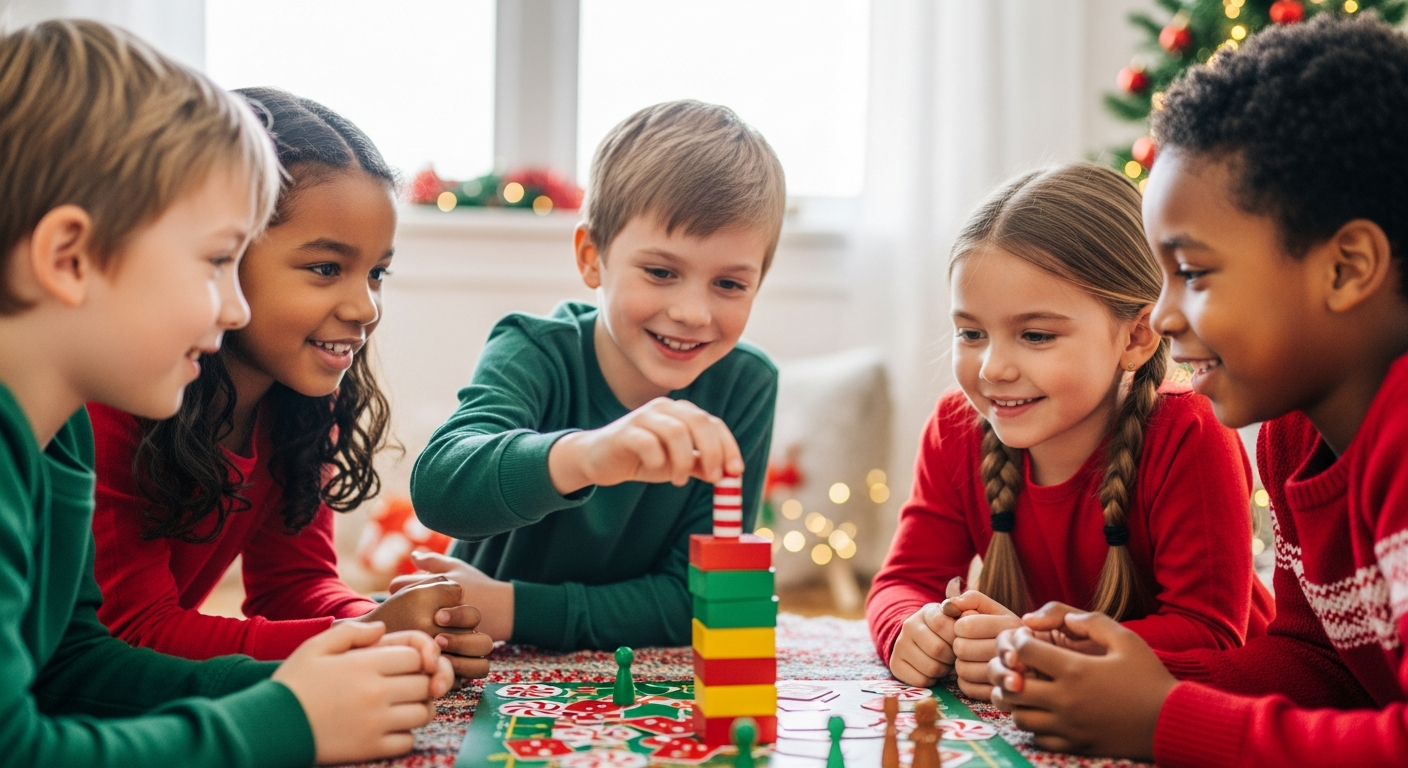
Table of Contents
- Why Christmas Games Are More Than Just Fun
- Planning Your Festive Fun: Tips for Success
- Classic Christmas Games with a Communication Twist
- Enhancing Communication Through Play: The Speech Blubs Way
- Making the Most of Your Speech Blubs Journey
- Conclusion
- FAQ
The festive season arrives in a whirlwind of twinkling lights, delicious aromas, and the joyous anticipation of family gatherings. For many parents, this time of year is a beautiful opportunity to create lasting memories, but it can also feel overwhelming. You want to make these moments special, full of laughter and connection, especially for your children. But how do you keep the little ones engaged and entertained amidst all the holiday hustle and bustle? The secret lies in simple, joyful activities that bring everyone together and, often, spark unexpected learning opportunities.
This post isn't just about filling time; it's about transforming holiday parties and family get-togethers into enriching experiences. We'll explore a wide array of fun Christmas games for kids that are easy to set up, low-cost, and packed with developmental benefits. Beyond the giggles and friendly competition, these games can become powerful platforms for fostering communication, building confidence, and strengthening family bonds. We'll also show you how Speech Blubs, with its unique approach to language development, can beautifully complement these festive activities, ensuring your child truly thrives this holiday season. Get ready to turn your Christmas party into a hub of engaging play and meaningful connection!

Why Christmas Games Are More Than Just Fun
At first glance, holiday games might seem like mere distractions, a way to keep kids busy while the adults chat or prepare food. However, for a child, play is intrinsically linked to learning and development. Christmas party games, in particular, offer a rich tapestry of benefits that extend far beyond simple entertainment.
Fostering Social-Emotional Skills
Games are miniature classrooms for life skills. Children learn about turn-taking, sharing, and the invaluable lessons of winning and losing gracefully. When a child participates in a game, they practice empathy by understanding others' feelings, develop patience while waiting for their turn, and learn to negotiate or cooperate within a group. These are foundational social-emotional competencies that help children navigate friendships and family dynamics throughout their lives. The shared laughter and excitement also build a sense of belonging and connection, reinforcing the joy of being part of a family or community celebration.
Boosting Cognitive Development
Many Christmas games are stealthy brain-builders. From memory challenges to problem-solving puzzles, these activities engage various cognitive functions. Children practice following multi-step instructions, developing their working memory, and enhancing their critical thinking skills as they strategize. A simple scavenger hunt, for instance, requires spatial reasoning and careful observation, while a guessing game encourages deductive reasoning. These moments of playful learning lay crucial groundwork for academic success and everyday problem-solving.
Igniting Language and Communication Skills
Perhaps one of the most significant benefits, especially relevant to our mission at Speech Blubs, is the boost to language and communication. Games provide natural, low-pressure environments for children to practice speaking, listening, and understanding. They encourage:
- Expressive Language: Children describe actions, articulate rules, explain strategies, and express their feelings ("I'm excited!", "My turn!").
- Receptive Language: Following game instructions, understanding cues, and listening to others' turns are vital for receptive language development.
- Vocabulary Expansion: Introducing new words related to the game or holiday theme (e.g., "reindeer," "tinsel," "unwrap").
- Narrative Skills: Creating stories around game scenarios or recounting what happened during a round helps develop narrative abilities.
At Speech Blubs, we believe that every child deserves to "speak their minds and hearts," and games are a fantastic way to nurture this. Our company was founded by individuals who personally experienced speech challenges in childhood, so we understand the importance of immediate, effective, and joyful solutions. We're committed to blending scientific principles with play, creating "smart screen time" experiences that complement real-world interactions.

Building Unforgettable Family Bonds
Beyond the individual skills, playing games together as a family creates cherished memories. These shared experiences of laughter, friendly competition, and collaboration strengthen the bonds between parents, siblings, and relatives. In an age where digital distractions often pull us apart, family game time offers a precious opportunity for genuine, face-to-face connection. These are the moments children will look back on fondly, remembering the warmth and togetherness of the holiday season.
Planning Your Festive Fun: Tips for Success
To ensure your Christmas party games are a smashing success, a little planning goes a long way. But don't worry, "planning" doesn't have to mean elaborate preparations! The goal is joyful, low-stress fun.
Consider the Age Range and Group Size
Think about the youngest and oldest participants. Can games be easily adapted for toddlers and teens alike? For instance, a charades game can involve simple animal sounds for younger children and more complex holiday movie titles for older kids and adults. A mix of active and quieter games can also cater to different energy levels. For larger groups, team-based games work well, while smaller gatherings might enjoy individual challenges.
Embrace Simplicity and Low Prep
The holidays are busy enough! Choose games that require minimal supplies, many of which you might already have around the house. Repurpose items, use inexpensive party store finds, or get creative with holiday candies. The less time you spend setting up, the more time you have to enjoy the festivities.
Adapt Games for Different Abilities
Every child is unique, and some might need extra support or modifications to fully participate. For a child working on specific sounds or words, gently encourage them to use those words during the game. If fine motor skills are a challenge, modify tasks that require intricate movements. The key is inclusivity, ensuring everyone feels successful and has fun.
Involve the Kids in Planning
Letting children help choose or even create games can boost their excitement and sense of ownership. Ask them what sounds fun, or what holiday-themed twist they'd like to add to a classic game. This also provides an opportunity for them to practice expressing their preferences and ideas.
Classic Christmas Games with a Communication Twist
Now, let's dive into some fantastic game ideas! We’ll combine popular holiday activities with our Speech Blubs insights, showing you how to turn every game into a language-rich experience.
1. Gingerbread Shuffle (Cookie Face)
What it is: Players place a small gingerbread cookie (or other flat cookie) on their forehead and, without using their hands, try to move it down their face into their mouth. Why it's great: Hilarious to watch and play, it develops fine motor control and perseverance. Communication Twist:
- Descriptive Language: Encourage kids to describe the cookie: "It's crumbly!" "It's sweet!" "My cookie is brown."
- Action Words: Use words like "slide," "wobble," "balance," "eat!"
- Problem-Solving Talk: "How will you get it down?" "Try to wiggle your nose!"
- Sounds: "Mmm!" (for eating), "Oh no!" (if it falls).
- Relatable Scenario: For a child learning sounds, practicing the "m" sound for "mouth" or "mmm, tasty!" after successfully getting the cookie in can be a fun, spontaneous way to reinforce learning.
2. Candy Cane Hook-a-Cane
What it is: Each player holds one candy cane in their mouth (hook facing down) and, using only their mouth, tries to hook as many other candy canes as possible onto it in one minute. Why it's great: A surprisingly challenging game that brings lots of focus and a few dropped candy canes (all part of the fun!). Communication Twist:
- Counting: "How many did you hook?" "One, two, three candy canes!"
- Spatial Concepts: "Is it on top?" "It fell off!" "Underneath."
- Turn-Taking Language: "My turn," "Your turn."
- Anticipation & Reaction: "Almost!" "You got it!" "Good try!"
3. Pin the Nose on Rudolph/Snowman
What it is: A holiday spin on a classic. Blindfolded players try to stick a red nose (or carrot nose for a snowman) in the correct spot on a large drawing. Why it's great: Encourages following directions, spatial awareness, and lots of giggles. Communication Twist:
- Directional Words: Give instructions using "forward," "backward," "left," "right," "up," "down."
- Body Parts: Reinforce "nose," "head," "face."
- Prepositions: "Put it on the reindeer," "Is it above the mouth?"
- Describing: Players can describe where they think the nose should go before sticking it.
- Relatable Scenario: A child practicing "up" and "down" can benefit immensely from the repetitive cues given during this game. A parent might say, "A little bit up! More up!" strengthening the association between the word and the action.
4. Christmas Bingo
What it is: Players mark off holiday-themed pictures or words on their bingo card as they are called out. Why it's great: Excellent for listening skills, vocabulary recognition, and visual discrimination. Communication Twist:
- Vocabulary Reinforcement: Use clear, slow pronunciation of each word/picture called. "Santa," "reindeer," "stocking," "bell."
- Question Answering: "Do you have a bell?" "What's on your card?"
- Requesting: "Can you say that again?" "I need a marker."
- Early Sound Practice: If a child is working on a specific sound, say, "S-s-s-anta," emphasizing the target sound.
- Relatable Scenario: For a parent whose 3-year-old "late talker" loves animals, if a "reindeer" is called, you can relate it back to the "Animal Kingdom" section of Speech Blubs, where they might have practiced "deer" sounds. This connection helps bridge app learning with real-world context.
5. Christmas Charades / Pictionary
What it is: Players act out or draw holiday-related words or phrases for their team to guess. Why it's great: Encourages creative thinking, non-verbal communication, and quick word recall. Communication Twist:
- Expressive Language: Players guessing use descriptive words, ask clarifying questions ("Is it an animal?"), and make suggestions.
- Inferencing: Children learn to make educated guesses based on clues.
- Vocabulary Expansion: Introduce a wide range of holiday words to act out/draw.
- Turn-Taking & Waiting: Essential for group play.
6. Holiday Memory Game
What it is: Using pairs of cards with holiday images, players try to find matching pairs by flipping two cards at a time. Why it's great: Boosts memory, concentration, and visual recognition. Communication Twist:
- Object Naming: "What's on this card?" "It's a snowman!"
- Describing Differences/Similarities: "These are the same!" "No, that's a tree and that's an ornament."
- Recalling Information: "Where was the other present?"
- Spatial Language: "It was here," "Over there."
7. Christmas Scavenger Hunt
What it is: Kids follow clues (pictures or words) to find hidden holiday items around the house or party area. Why it's great: Encourages problem-solving, reading/listening comprehension, and physical activity. Communication Twist:
- Following Directions: "Go to the fireplace," "Look under the tree."
- Prepositions: "Is it on the shelf? Behind the cushion? Next to the window?"
- Describing Items: "I found a shiny red ball!"
- Question Formulation: "Where should we look next?" "What's the next clue?"
8. Tannenbaum Avalanche (Stacking Cups) / Bell Stack (Stacking Candies)
What it is: Players race to build the tallest "Christmas tree" using red plastic cups or stack bell-shaped candies as high as they can in a minute. Why it's great: Excellent for fine motor skills, hand-eye coordination, and a sense of friendly competition. Communication Twist:
- Counting: "How many cups high is your tree?" "You have ten bells!"
- Comparative Language: "My tree is taller!" "Yours is taller than mine!"
- Spatial Words: "On top," "bottom," "middle."
- Encouragement: "You can do it!" "Keep going!"
9. Guess Who Christmas Game / Christmas Character Guess
What it is: One player has a Christmas character (e.g., Santa, Elf, Reindeer) written on a sticky note on their forehead. Others give clues or ask yes/no questions until the player guesses their character. Why it's great: Develops descriptive language, question-asking skills, and deductive reasoning. Communication Twist:
- Formulating Questions: Practicing "Am I...?", "Do I have...?", "Is it...?"
- Descriptive Vocabulary: "Do I have a red suit?" "Am I an animal?" "Do I fly?"
- Categorization: "Am I a person or an animal?"
- Listening to Clues: Understanding the information given by others.
10. Christmas Musical Statues
What it is: Play festive Christmas music and have everyone dance. When the music stops, everyone freezes in place like a statue. Anyone who moves is out. Why it's great: A high-energy game that encourages listening skills, body control, and self-regulation. Communication Twist:
- Listening Comprehension: Following the "dance when music plays, freeze when it stops" rule.
- Body Awareness: Describing their frozen pose: "I'm a star!" "I'm holding a present!"
- Action Verbs: "Dance," "jump," "spin," "freeze."
11. Gift Wrapping Race
What it is: Teams or individuals race to wrap oddly shaped items as neatly and quickly as possible using provided supplies. Why it's great: Fosters fine motor skills, creativity, and a sense of accomplishment. Communication Twist:
- Sequencing: "First, cut the paper. Then, fold it. Next, tape it."
- Action Verbs: "Cut," "fold," "tape," "tie," "decorate."
- Descriptive Words: "This paper is shiny." "It's a big box." "This ribbon is bumpy."
12. Candy Cane Relay
What it is: Teams race to pass candy canes from one person's mouth to another's (without using hands) down a line. Why it's great: Promotes teamwork, coordination, and lots of laughter. Communication Twist:
- Teamwork Language: "Go, go, go!" "Careful!" "Pass it to me!"
- Turn-Taking & Waiting: Crucial for success.
- Counting: Counting how many candy canes were successfully passed.
13. Oh, Christmas Tree (Whipped Cream Edition)
What it is: Each player gets a can of whipped cream and a plate, then has one minute to spray the tallest or best-looking Christmas tree. Why it's great: A wonderfully messy, sensory, and creative game that's sure to be a hit. Communication Twist:
- Sensory Vocabulary: "It's cold!" "It's squishy!" "It tastes sweet!"
- Comparative Language: "My tree is taller!" "Yours is fluffier."
- Action Verbs: "Spray," "build," "decorate," "eat."
- Requesting: "More whipped cream, please!"
Enhancing Communication Through Play: The Speech Blubs Way
At Speech Blubs, we understand that language development is a journey, not a race. Our goal is to empower children to communicate effectively and joyfully. We’ve poured our personal experiences as founders who grew up with speech problems into creating a tool we wished we had—a solution blending scientific principles with engaging play. We are committed to providing an immediate, effective, and joyful solution for the 1 in 4 children who need speech support.
The Power of Video Modeling
Our unique approach centers around "video modeling." Instead of passive viewing, children learn by watching and imitating their peers on screen. This interactive "smart screen time" activates mirror neurons in the brain, making learning feel natural and intuitive. This is a crucial element that sets us apart from mere cartoons or passive apps.
How Speech Blubs Complements Festive Games
The beauty of Speech Blubs lies in its ability to seamlessly integrate with a child's everyday life, including holiday play.
1. Vocabulary Reinforcement: Before a game like "Christmas Bingo" or "Holiday Memory Game," spend a few minutes in Speech Blubs' "Holiday" or "Object" sections. This pre-exposure to relevant vocabulary, like "Santa," "present," "bell," or "star," makes the game more accessible and fun, allowing your child to recognize and use these words with greater confidence.
2. Sound Practice in Context: If your child is working on a specific sound (e.g., "S" sound), integrate it into a game. During "Guess Who Christmas," if the character is "Santa," encourage them to articulate the "S" sound. Speech Blubs provides targeted sound practices, and these games offer real-world opportunities to apply those skills.
3. Following Directions: Many Speech Blubs activities involve following multi-step instructions, just like our suggested games. Practicing with the app strengthens a child's receptive language skills, which then translate directly into understanding game rules and cues.
4. Building Confidence: As children gain confidence in their communication through Speech Blubs, they are more likely to participate enthusiastically in social games. The app helps reduce frustration by providing a supportive, engaging environment for practice, leading to more joyful interactions during family play.
Relatable Scenario: Imagine your child is working on early sentence structures and action verbs using the "Actions" section within Speech Blubs. During the "Gift Wrapping Race," you can encourage them to narrate their actions: "I cut the paper," "I tape the box," "I wrap the gift." This isn't just playing; it's active language application, where the festive fun provides the perfect, low-pressure context for speech practice.
We believe that fostering a love for communication, building confidence, and creating joyful family learning moments are paramount. Speech Blubs serves as a powerful supplement to your child’s overall development plan and, when applicable, professional therapy. It’s a tool for family connection, offering a screen-free alternative to passive viewing for many activities while also providing engaging, smart screen time when used interactively.
Ready to see the magic for yourself? Take our quick 3-minute preliminary screener to get an assessment and a personalized next-steps plan. It’s a great way to understand if Speech Blubs is the right fit for your family and leads directly to a free 7-day trial!
Making the Most of Your Speech Blubs Journey
We are dedicated to supporting your child’s speech and language development with the best possible tools and resources. Our methodology, backed by science, places us in the top tier of speech apps worldwide. You can explore our research and scientific foundation here and read incredible testimonials from other parents who have seen amazing progress with Speech Blubs.
To truly unlock the full potential of Speech Blubs and give your child the best start, we encourage you to choose our Yearly plan. Transparency is key to building trust, so let's look at the options:
- Monthly Plan: For $14.99 per month, you get access to the core Speech Blubs app.
- Yearly Plan: At just $59.99 per year, this plan breaks down to an incredible value of only $4.99 per month – a savings of 66% compared to the monthly option!
The Yearly plan is undeniably the superior choice, offering not just significant savings, but also exclusive, high-value features designed to accelerate your child's progress and enhance your family's experience:
- 7-Day Free Trial: Only available with the Yearly plan, giving you a full week to explore all the features and see the benefits firsthand.
- Extra Reading Blubs App: This bonus app helps develop literacy skills, seamlessly integrating with language learning for comprehensive support.
- Early Access to New Updates: Be the first to try out exciting new content and features.
- 24-Hour Support Response Time: Get your questions answered quickly and efficiently by our dedicated support team.
The Monthly plan does not include these invaluable benefits. So, if you're ready to empower your child's communication journey with the most comprehensive and valuable solution, choose the Yearly plan.
Don't wait to give your child the gift of confident communication this holiday season and beyond. Join our community of parents and children who are speaking their minds and hearts every day. We invite you to learn more about our mission and approach by visiting the Speech Blubs homepage.
Conclusion
Christmas is a magical time for children, filled with wonder, joy, and the warmth of family. By incorporating fun, engaging games into your holiday celebrations, you're not just providing entertainment; you're creating rich opportunities for social-emotional growth, cognitive development, and, most importantly, language and communication enhancement. These games foster connection, build confidence, and create cherished memories that will last a lifetime.
At Speech Blubs, we are honored to be a part of your child's journey, offering a scientifically-backed, playful approach to developing essential communication skills. Our video modeling methodology, coupled with interactive "smart screen time," provides a unique and effective way for children to learn to speak their minds and hearts. By integrating the concepts and skills learned in Speech Blubs into your holiday games, you can amplify the developmental benefits and make every festive moment a learning opportunity.
Don't let this holiday season pass without giving your child the gift of confident communication. Ready to embark on a joyful journey of speech development? Download Speech Blubs on the App Store or Google Play today! For the best value and access to all our premium features, remember to sign up for the Yearly plan to get your 7-day free trial and the extra Reading Blubs app. Let's make this Christmas a season of laughter, learning, and confident communication for your entire family!
FAQ
Q1: What are some good low-prep Christmas party games for kids?
A1: Many games require minimal setup and supplies. "Gingerbread Shuffle" (cookie face), "Candy Cane Hook-a-Cane," "Pin the Nose on Rudolph," and "Christmas Musical Statues" are all great options that use common household items or inexpensive holiday candies, ensuring you can focus more on fun and less on preparation.
Q2: How can I make Christmas games more educational for my child?
A2: You can enhance the educational value by focusing on communication. Encourage descriptive language ("What color is that present?"), ask open-ended questions ("How will you get the cookie to your mouth?"), practice following directions, and reinforce vocabulary related to the game or holiday theme. Integrating concepts learned from speech therapy apps like Speech Blubs can further amplify these learning opportunities.
Q3: What age range are these Christmas games suitable for?
A3: Most of the games mentioned can be easily adapted for a wide range of ages, from toddlers to school-aged children and even adults. For younger children, simplify rules and focus on basic concepts like sounds, colors, and simple actions. For older kids, add competitive elements, complex vocabulary, or strategy. A mix of active and quiet games also caters to different developmental needs and energy levels.
Q4: How does Speech Blubs help with a child's communication during holiday activities?
A4: Speech Blubs complements holiday activities by providing a foundation for language and speech development. It helps children practice target sounds, expand vocabulary, and strengthen listening skills through engaging video modeling. This practice makes children more confident to participate verbally in games, understand instructions, and express themselves, turning festive play into a natural extension of their learning journey.
About the author