
Honor and Fun: Meaningful Veterans Day Toddler Activities
 By Speech Blubs Team•Feb 23, 2026•13 min.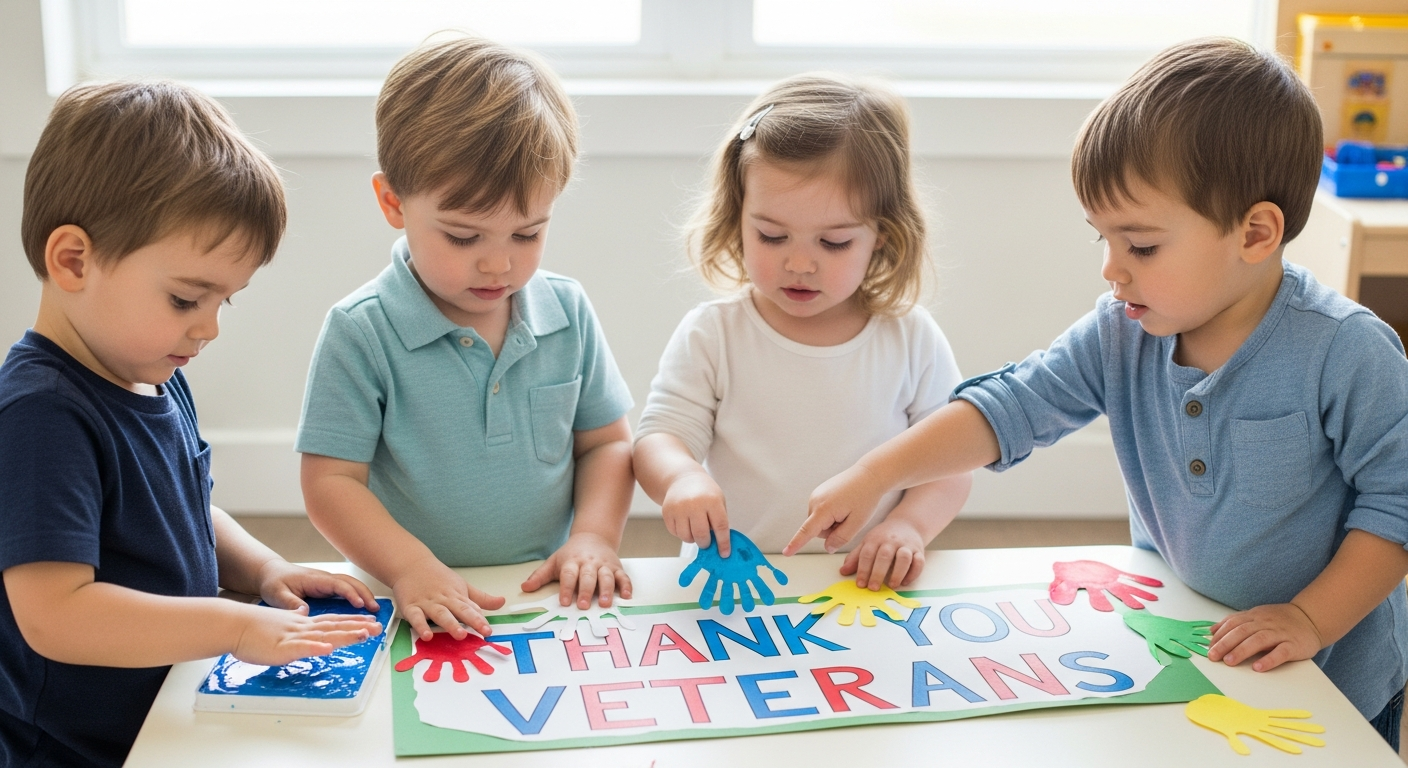
Table of Contents
- Introduction
- Understanding Veterans Day at a Toddler Level
- Language-Boosting Veterans Day Activities
- Creative Arts and Crafts for Fine Motor Development
- Active Play and Physical Connection
- Building Connections: Gratitude in Action
- Using "Smart Screen Time" to Enhance Learning
- Why Speech Blubs is the Right Choice for Your Family
- Real-World Scenarios: Making Activities Work for You
- Creating Joyful Family Learning Moments
- Conclusion
- Frequently Asked Questions
Introduction
Have you ever watched your toddler’s face light up when they finally master a new word or a difficult sound? That spark of connection is what we live for. At Speech Blubs, we know that communication is about more than just sounds; it is about "speaking our minds and hearts." While we focus on helping the 1 in 4 children who need speech support, we also believe in using every calendar milestone as a chance to build character, empathy, and vocabulary. Veterans Day, celebrated every November 11th, is one of those perfect opportunities.
You might wonder if a two-year-old can really understand the weight of military service or the history of an armistice. While the complexities of global history are a few years away, the core values of bravery, gratitude, and "helping" are well within their reach. By engaging in veterans day toddler activities, you aren't just filling an afternoon; you are planting the seeds of civic awareness and emotional intelligence.

In this guide, we will explore a wide range of sensory-rich, language-boosting activities tailored specifically for little learners. We will cover everything from patriotic crafts and storytelling to active play and vocabulary building. Most importantly, we will show you how to blend these activities with "smart screen time" to create a holistic learning environment. Our goal is to help you foster a love for communication and community, creating joyful family learning moments that resonate far beyond the holiday.
Understanding Veterans Day at a Toddler Level
Before diving into the glue sticks and construction paper, it is helpful to frame the day in a way that makes sense to a toddler. Children at this age understand the world through the lens of "helpers." They know that doctors help them feel better and firefighters put out fires. On Veterans Day, we can introduce veterans as the "special helpers" who work hard to keep our country and our families safe.
By focusing on the concept of a "hero" or a "brave helper," you remove the abstract or frightening elements of conflict and replace them with a positive, relatable figure. This approach encourages your child to develop an "attitude of gratitude," which is a foundational social-emotional skill.
Language-Boosting Veterans Day Activities
At Speech Blubs, our scientific methodology is rooted in video modeling. We believe children learn best by watching and imitating their peers. You can apply this same principle to Veterans Day by introducing new vocabulary and concepts through imitation and repetition.
1. The "Brave Helper" Vocabulary Parade
Toddlers love new words, especially those that sound strong and exciting. Create a "Word Wall" or simply use flashcards to introduce terms like:
- Brave: Someone who helps even when things are hard.
- Hero: A very special helper.
- Veteran: Someone who was in the Army, Navy, Air Force, Marines, or Coast Guard.
- Flag: A symbol of our home.
- Thank You: The most important words of the day.
For a child who is just beginning to put two words together, practicing "Thank you, hero" or "Brave soldier" can be a fantastic way to work on expressive language. If your little one is a "late talker," focusing on the "m" sound in "military" or the "f" in "flag" can be a fun, low-pressure way to practice phonemes.

2. Patriotic Storytelling
Reading together is one of the most effective ways to build language. Choose books that use simple language and vibrant illustrations. Some excellent choices for the toddler set include:
- Hero Dad by Melinda Hardin: A sweet look at how a child views their military parent as a superhero.
- H is for Honor by Devin Scillian: While an alphabet book, the rhymes are engaging for toddlers even if they don't grasp all the technical terms yet.
- Veterans: Heroes in Our Neighborhood by Valerie Pfundstein: This helps children see that veterans are regular people they might see at the grocery store or the park.
As you read, ask your child to point to the "red, white, and blue" or "find the stars." This builds their receptive language and visual discrimination skills.
Creative Arts and Crafts for Fine Motor Development
Crafting is more than just making a mess; it’s a workout for those tiny hand muscles. Fine motor skills are closely linked to speech development, as both require precise muscle control and coordination.
3. The Torn Paper Poppy
The poppy is a traditional symbol of remembrance. For a toddler, a "torn paper" craft is perfect because it doesn't require perfect scissor skills.
- Materials: Red and black construction paper, glue, and a paper plate.
- The Activity: Have your child tear the red paper into small bits. This action strengthens the pincer grasp. Let them glue the red pieces all over the paper plate and finish with a black circle in the center.
- The Lesson: Explain that this flower is a way we say "I remember you" to our heroes.
4. Handprint American Flags
Nothing says "patriotic" like a handprint craft. This is a great sensory activity that allows children to feel the texture of the paint.
- Materials: Non-toxic red, white, and blue paint, and large white paper.
- The Activity: Paint your child’s palm blue and their fingers red. Press it onto the paper. Once it dries, you can add white star stickers to the blue area.
- Why it works: Sensory play helps children process information about the world. For a child who might be sensitive to textures, this is a gentle way to explore "wet" and "sticky" while talking about the colors of our flag.
5. Q-Tip Star Art
If your toddler is working on their "pointing" motion, Q-tip painting is a fantastic tool.
- Materials: Blue paper, white paint, and Q-tips.
- The Activity: Show your child how to dip the Q-tip in paint and make "dots" to create stars.
- The Lesson: This mimics the stars on the flag and requires concentration and hand-eye coordination.
Active Play and Physical Connection
Toddlers learn through movement. Incorporating physical activities into your Veterans Day celebrations helps them burn energy while reinforcing the day's themes.
6. The Backyard Parade
Gather some small flags, some musical instruments (or pots and pans!), and have a mini-parade.
- The Goal: Practice "marching" like a soldier. This works on gross motor skills and rhythm.
- The Language: Use action words like "march," "stop," "go," "fast," and "slow." These opposites are key developmental milestones in early language.
7. Sensory Bin: Red, White, and Blue
Fill a bin with dyed rice, pasta, or pom-poms in patriotic colors. Hide "treasures" like plastic stars or toy planes.
- The Activity: Let your child scoop, pour, and find the hidden items.
- The Connection: For a parent whose child loves sorting, this is a great time to practice color identification. You might say, "Can you find the blue star?" or "Put the red pasta in the cup."
Building Connections: Gratitude in Action
Teaching a toddler to say "thank you" is a major milestone. Veterans Day provides a real-world context for this social skill.
8. Designing "Thank You" Cards
Even if your child’s contribution is just a series of colorful scribbles, the act of creating something for someone else is powerful.
- The Activity: Set up a station with markers and stickers. Ask your child, "Who should we say thank you to?"
- The Impact: Take these cards to a local VA center or mail them to a veterans' organization. Seeing you value the veterans' service teaches your child that their actions—and their words—have meaning.
9. A Moment of Reflection
While a minute of silence might be too long for a three-year-old, you can practice a "quiet moment."
- The Activity: Sit together and stay quiet for 10 seconds. Afterward, ask them what they heard.
- The Goal: This builds focus and self-regulation. Tell them, "We were quiet to think about our brave friends."
Using "Smart Screen Time" to Enhance Learning
In a world filled with passive cartoons, we believe in a different approach. At Speech Blubs, our founders grew up with speech challenges themselves, and they created the tool they wished they had. We offer "smart screen time"—an interactive experience that encourages children to speak, imitate, and engage.
Our app uses video modeling, where children watch other children perform speech exercises. This peer-to-peer connection is incredibly motivating. For a child working on their Veterans Day vocabulary, using Speech Blubs can provide the foundational speech skills they need to express their gratitude clearly.
If your child is struggling to meet their milestones, you don't have to wonder alone. You can take our quick 3-minute preliminary screener to get a simple assessment and a plan for next steps. This tool is based on 9 simple questions and is a great way to see where your child stands.
"Our mission is to empower children to speak their minds and hearts. We provide a screen-free alternative to passive viewing and a powerful tool for family connection."
Why Speech Blubs is the Right Choice for Your Family
When it comes to your child's development, you want a solution that is both effective and joyful. Our method is backed by science and has earned high ratings on the MARS scale. You can read about the research behind our methodology to see how we use mirror neurons to trigger speech.
We aren't just an app; we are a supplement to your child’s overall growth. Whether your child is a "late talker" or just needs a little extra confidence, we provide a supportive environment. See what other parents are saying in our testimonials and success stories.
Transparent Pricing for Every Family
We believe in building trust through transparency. We offer two main plans to fit your family's needs:
- Monthly Plan: $14.99 per month. This is a great way to test the waters.
- Yearly Plan: $59.99 per year. This is our best value choice, breaking down to just $4.99 per month (a 66% savings!).
The Yearly Plan includes exclusive features you won't get with the monthly option:
- A 7-day free trial so you can explore everything risk-free.
- Access to the Reading Blubs app, which expands your child’s learning into literacy.
- Early access to all new updates and features.
- 24-hour support response time from our dedicated team.
To get started and unlock the full suite of features, we recommend choosing the Yearly plan during your web account creation.
Real-World Scenarios: Making Activities Work for You
Every child is unique. Here is how you might adapt these veterans day toddler activities for different personalities:
- For the "Late Talker" who loves movement: If your 3-year-old isn't talking much but loves to climb and run, focus on the "Backyard Parade." Use the "Toy Box" section in Speech Blubs to practice the sounds of whistles or drums before you head outside. The physical rhythm of marching can often help "unlock" the rhythm of speech.
- For the child who is shy with new people: If you are visiting a veteran relative, use the video modeling in Speech Blubs to practice saying "Hi" and "Thank you." Watching other kids do it on the screen can reduce the anxiety of a real-life interaction.
- For the sensory seeker: Focus on the "Torn Paper Poppy" or the "Handprint Flag." Use the descriptive words for the textures (sticky, soft, rough) to build their vocabulary while they play.
Creating Joyful Family Learning Moments
Veterans Day is more than just a day off; it is a day to connect. By participating in these activities, you are showing your child that they are part of a larger community. You are teaching them that being "brave" and "kind" are qualities to be admired.
At Speech Blubs, we are honored to be a part of your journey. Whether you are using our app to help your child find their first words or simply looking for ways to make "smart screen time" a reality in your home, we are here to support you. We don't promise overnight miracles, but we do promise a process that fosters a love for communication and builds the foundational skills your child needs to thrive.
Conclusion
Teaching toddlers about Veterans Day is a beautiful way to integrate history, art, and language development. From the simple "torn paper poppy" to a lively backyard parade, these veterans day toddler activities provide a rich landscape for learning. You are not only helping them build fine motor skills and vocabulary but also instilling life-long values of gratitude and respect.
Remember, the goal isn't perfection—it’s participation. It’s about the "moo" during an animal game or the "thank you" whispered to a grandparent. These are the moments that build confidence and reduce frustration for both you and your child.
Ready to take the next step in your child's communication journey? Join the thousands of families who have found joy and progress with Speech Blubs. Download Speech Blubs on the Apple App Store or Google Play to begin today.
For the best experience and the most value, sign up for our Yearly plan. You’ll get a 7-day free trial, access to the Reading Blubs app, and priority support—all for just $4.99 a month. Let’s help your little one speak their mind and heart this Veterans Day and every day after!
Frequently Asked Questions
1. How do I explain what a "Veteran" is to a 2-year-old?
Keep it simple and focus on the concept of a "helper." You can say, "A veteran is a very brave person who worked hard to keep our home and our friends safe." Using terms they already know, like "hero" or "brave," helps them connect the new word to a positive feeling.
2. Are these activities safe for toddlers who still put things in their mouths?
Always supervise your child during crafts. For the poppy craft, ensure you use non-toxic glue and large pieces of paper. For sensory bins, use edible-safe items like large pasta shapes or dry cereal instead of small beads or rice if your child is still in the "mouthing" phase.
3. How can Speech Blubs specifically help with holiday-themed learning?
While Speech Blubs focuses on foundational speech sounds and early vocabulary, it builds the confidence a child needs to engage in holiday activities. By practicing sounds and words in the app, children become more comfortable using those words in real-world settings, like saying "thank you" or "flag" during Veterans Day celebrations.
4. Why should I choose the Yearly plan over the Monthly plan?
The Yearly plan is designed for families committed to long-term progress. It is 66% cheaper than the monthly rate and includes the Reading Blubs app, which is essential for transitioning from speech to literacy. Plus, the 7-day free trial is only available with the Yearly plan, allowing you to explore the full range of "smart screen time" before committing.
About the author