
Hop Into Learning: Joyful Toddler Easter Craft Ideas
 By Speech Blubs Team•Feb 23, 2026•14 min.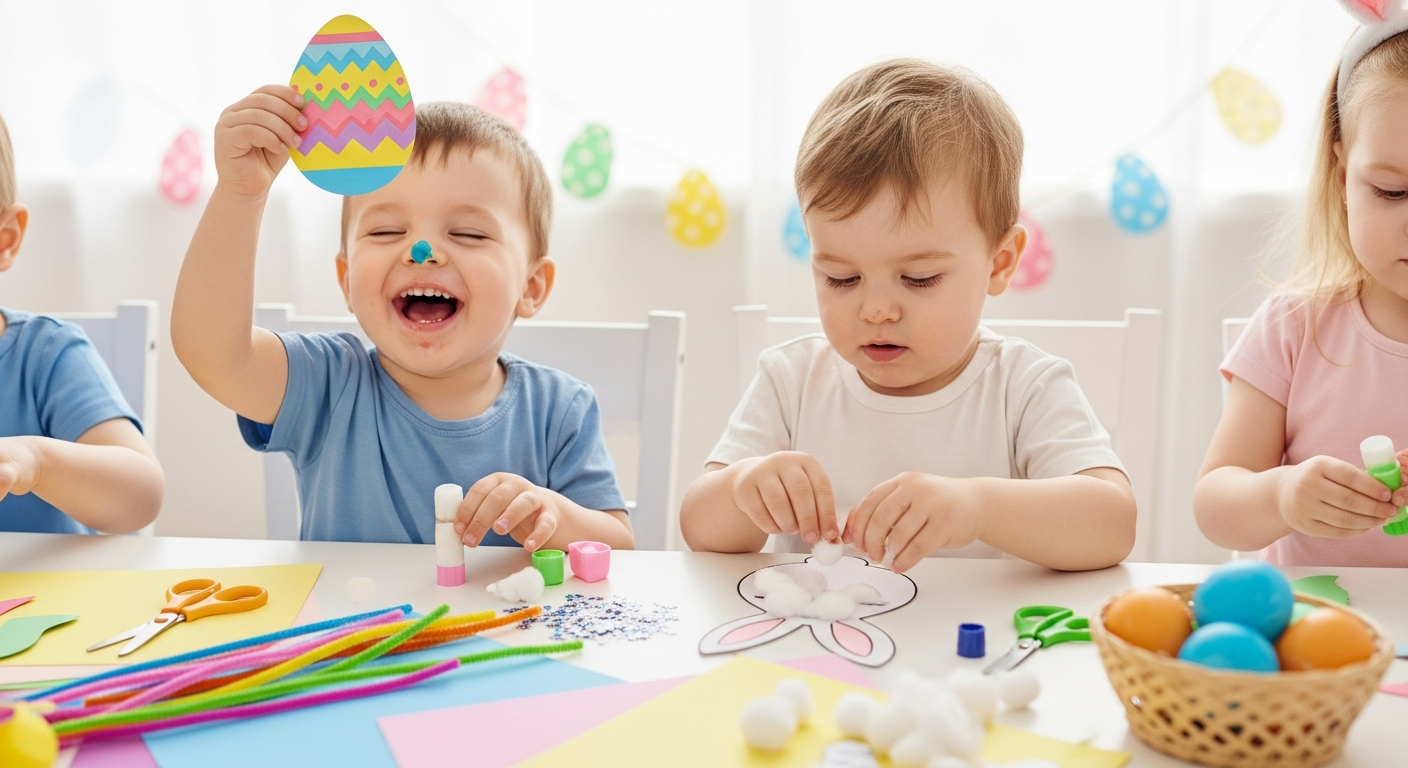
Table of Contents
- Introduction
- The Power of Play and Communication
- Toddler Easter Craft Ideas: Chick-Themed Fun
- Bunny-Themed Creations for Little Hands
- Colorful Easter Egg Crafts
- Nature and Sensory-Focused Ideas
- Using "Smart Screen Time" to Enhance Crafting
- Understanding Our Methodology: Why Peer Modeling Works
- Choosing the Best Plan for Your Family
- Practical Tips for Stress-Free Crafting
- The Role of Co-Play in Speech Development
- Conclusion
- Frequently Asked Questions
Introduction
Did you know that nearly one in four children will experience some form of speech or language delay during their early development? As parents, we often find ourselves looking for the perfect balance between fun, "smart screen time," and hands-on activities that foster these essential communication skills. Spring is the ultimate season for renewal, and there is no better way to celebrate than by diving into a world of color, texture, and creativity. Whether your little one is already a chatterbox or is just beginning to find their voice, engaging in holiday-themed activities can provide the spark they need to connect with the world around them.
In this post, we are going to explore a wide variety of toddler Easter craft ideas that are designed to be simple, low-mess, and high-impact. We will look at everything from sensory-rich painting projects to recycled masterpieces that transform household items into festive friends. Beyond just the "how-to," we will discuss how each of these activities serves as a powerful tool for speech development, fine motor skills, and family bonding. Our mission at Speech Blubs is to empower children to speak their minds and hearts, and we believe that joyful, play-based learning is the most effective way to reach that goal. By the end of this article, you will have a full toolkit of activities and a clear understanding of how to use them to support your child’s growth.

The Power of Play and Communication
At Speech Blubs, we understand that for a child, play is their "work." It is how they process information, test boundaries, and learn the names of the objects in their environment. Our founders grew up with speech challenges themselves, which is why they created the tool they wished they had—one that blends scientific principles with the pure joy of discovery. This same philosophy applies to crafting. When a toddler holds a paintbrush or glues a cotton ball onto a paper bunny, they aren't just making art; they are building the foundational skills required for complex communication.
Our unique approach focuses on "video modeling," where children learn by watching and imitating their peers. You can mirror this at home during your craft sessions. By narrating what you are doing—"I am sticking the yellow feather on the chick"—you are providing a linguistic map for your child to follow. This type of co-play reduces frustration and builds the confidence a child needs to try new sounds and words. Before you begin your crafting journey, you might want to explore how our methodology works by visiting our research page, which details the science behind peer-led learning and mirror neurons.
Toddler Easter Craft Ideas: Chick-Themed Fun
Chicks are a staple of Easter, and their bright yellow color is naturally engaging for young eyes. These crafts focus on basic shapes and simple textures, making them perfect for children who are still developing their pincer grasp.
1. Dot Marker Chirping Chicks
Dot markers (or bingo daubers) are a fantastic tool for toddlers because they require less precision than a traditional paintbrush but still offer a rich sensory experience.
- What you need: White paper, yellow dot markers, orange construction paper (for the beak), and googly eyes.
- The Process: Draw a large oval on the paper. Let your toddler "dot" the entire inside of the oval with yellow. Once dry, help them glue on a small orange triangle for a beak and two eyes.
- Speech Connection: This is a great time to practice the "Ch-ch-ch" sound for "chick" or the "D-d-d" sound for "dot." In the Speech Blubs app, the "Animal Kingdom" section features peer models making these exact sounds, which can be a great way to warm up before you start crafting.
2. Egg Carton Hatchlings
Don’t throw away those cardboard egg cartons! They are the perfect size for toddler-led projects.

- What you need: An empty egg carton, yellow paint, and feathers.
- The Process: Cut out an individual egg cup. Have your child paint it yellow. Once it’s dry, poke a small hole in the top or sides and let them "stick" a yellow feather in.
- Speech Connection: Focus on the word "In." As they put the feather in, say the word clearly. Using Speech Blubs on the Apple App Store or Google Play Store can help your child see other kids using these prepositions in a fun, interactive way.
Bunny-Themed Creations for Little Hands
Bunnies offer a great opportunity to talk about body parts—ears, nose, and tail—which is a key milestone in early language development.
3. Toilet Paper Roll Bunny Stamps
This is an excellent way to teach shapes and cause-and-effect.
- What you need: Three empty toilet paper rolls, tape, and white or pink paint.
- The Process: Leave one roll circular. Pinch the other two into oval "ear" shapes. Tape the two ovals to the top of the circle. Let your child dip the end into paint and "stamp" bunny faces onto paper.
- Speech Connection: Use the word "Hop!" every time the stamp touches the paper. This creates a physical and auditory connection to the action.
4. Fluffy Cotton Ball Bunnies
Texture is everything for a toddler. The softness of cotton balls provides a calming sensory experience.
- What you need: A cardboard cutout of a bunny, glue, and a bowl of cotton balls.
- The Process: Spread a thin layer of glue over the cardboard. Let your child press the cotton balls onto the glue until the bunny is "fluffy."
- Speech Connection: Focus on descriptive words like "Soft," "White," and "Sticky." If you’re unsure where your child stands with their descriptive language, you can take our quick 3-minute preliminary screener to see if they are meeting their developmental milestones.
Colorful Easter Egg Crafts
The oval shape of an egg is one of the first shapes toddlers learn to recognize. These crafts allow for maximum color exploration.
5. Coffee Filter Suncatcher Eggs
These look beautiful when taped to a sunny window and require very little "neatness" to look great.
- What you need: Coffee filters, washable markers, and a spray bottle with water.
- The Process: Cut the coffee filters into egg shapes. Let your child scribble all over them with various colors. Then, let them use a spray bottle to mist the paper. Watch as the colors bleed together like tie-dye!
- Speech Connection: This is perfect for practicing color names. "Red," "Blue," "Green." Ask your child, "Which color do you want next?" to encourage requesting.
6. Masking Tape Resist Eggs
This craft is like a magic trick for toddlers. It teaches them about "hidden" patterns.
- What you need: Thick paper cut into an egg shape, masking tape, and watercolors.
- The Process: Place strips of masking tape in various patterns across the egg. Let your child paint over the entire thing. Once the paint is dry, peel off the tape to reveal the white lines underneath.
- Speech Connection: Use the word "Gone!" when the tape covers the paper, and "Look!" when you peel it off. These simple exclamations are foundational for early communication.
Nature and Sensory-Focused Ideas
Spring is about more than just bunnies; it’s about the flowers and the outdoor world waking up.
7. Handprint Lilies
Handprint crafts are a wonderful way to document how much your child has grown, and they make excellent gifts for grandparents.
- What you need: White paper, yellow pipe cleaners, and tape.
- The Process: Trace your child’s hand on white paper and cut it out. Roll the "palm" of the hand into a cone shape around a yellow pipe cleaner (the stamen) and tape it in place. Curl the fingers outward to look like petals.
- Speech Connection: Talk about "Hands" and "Fingers." This helps with body awareness. You can read testimonials from other parents who have used similar interactive play strategies alongside our app to see the progress their little ones have made.
8. Sidewalk Chalk Bunny Trails
If the weather is nice, take the crafting outside!
- What you need: Thick sidewalk chalk.
- The Process: Draw "bunny prints" (two long ovals and a circle) leading to different areas of the yard or park. Let your child color them in.
- Speech Connection: This is a "movement-based" craft. Use action verbs like "Run," "Jump," and "Find." Combining physical activity with speech is a core part of the "smart screen time" philosophy we promote, where digital learning leads to real-world interaction.
Using "Smart Screen Time" to Enhance Crafting
While hands-on crafting is essential, it can be even more effective when supplemented with high-quality educational tools. We designed Speech Blubs to be the opposite of passive cartoon watching. Instead of your child zoning out, they are prompted to engage, imitate, and interact.
When you use the app before a craft session, you are setting the stage. For example, if you plan to make the "Dot Marker Chicks," you could first play the "Animal Kingdom" section in the app. Your child will see other children making "Peep peep" sounds and mimicking chick movements. This peer-led modeling is much more effective than an adult simply telling a child what to do, as children are naturally more inclined to imitate their peers.
We invite you to experience this difference firsthand. You can create your account and begin your 7-day free trial today. This trial gives you full access to our library of over 1,500 activities, all designed by speech-language pathologists and powered by the joy of play.
Understanding Our Methodology: Why Peer Modeling Works
You might wonder why we focus so heavily on other children in our videos. This is based on the concept of mirror neurons. When a child sees another child performing an action or making a sound, the same parts of their own brain light up as if they were doing it themselves. This makes the "learning curve" much shorter and significantly more fun.
In a traditional setting, a child might feel pressured to "perform" for an adult. But with Speech Blubs, the child feels like they are playing with a friend. This "smart screen time" acts as a bridge between the digital world and physical activities like crafting. It builds the confidence they need to then sit down at the kitchen table and tell you, "I want the blue paint." For a more general overview of how we support families, you can always visit the Speech Blubs homepage.
Choosing the Best Plan for Your Family
We want to make sure every family has the tools they need to succeed, which is why we offer flexible pricing options. However, we always recommend our Yearly Plan as the best value for long-term progress.
- Monthly Plan: $14.99 per month. This is a great "pay-as-you-go" option for those who want to test the waters.
- Yearly Plan: $59.99 per year. This breaks down to just $4.99 per month, saving you 66% compared to the monthly rate.
The Yearly Plan isn't just about saving money; it’s designed to provide a more comprehensive developmental experience. When you choose the Yearly option, you receive:
- A 7-day free trial to explore everything we have to offer.
- Access to our Reading Blubs app, which focuses on early literacy and phonics—the perfect next step after speech.
- Early access to all new updates and content drops.
- Priority support with a 24-hour response time from our dedicated team.
The Monthly plan does not include the Reading Blubs app or the priority support, making the Yearly plan the clear choice for parents committed to their child’s long-term communication journey.
Practical Tips for Stress-Free Crafting
Crafting with a toddler can sometimes feel more like "controlled chaos" than an art session. Here are a few ways to keep it fun for both of you:
- Lower Your Expectations: The end result doesn't matter. If the bunny has three eyes and no tail, that's okay! The goal is the conversation you have while making it.
- Prepare in Advance: Have all your supplies cut and ready before you bring the toddler to the table. Their attention spans are short, and "wait time" is the enemy of engagement.
- Narrate Everything: Act like a sports commentator for your child’s art. "Oh, you chose the purple! Now you are making a long line. Swish, swish, swish!"
- Limit the Choices: Giving a toddler 20 colors can be overwhelming. Offer two or three at a time to help them practice making clear choices.
The Role of Co-Play in Speech Development
All the toddler Easter craft ideas in the world won't be as effective if the child is left to do them alone. Communication is a social act. It requires a sender and a receiver. By sitting on the floor or at the table with your child, you are showing them that their efforts to communicate are valued.
This is why we frame Speech Blubs as a tool for family connection. We encourage parents to watch the videos with their children, make the funny faces along with the peer models, and celebrate every small sound. Whether it's a "Baa" during a craft or a "Mama" after using the app, these moments of joy are the building blocks of a lifetime of confident communication.
Conclusion
Easter is a season of growth, and there is no better time to nurture your child’s ability to "speak their minds and hearts." By combining these hands-on toddler Easter craft ideas with the "smart screen time" offered by Speech Blubs, you are providing a rich, multi-sensory environment where your child can thrive. Remember, the goal isn't to create a perfect piece of art; it’s to create a joyful learning moment that reduces frustration and builds confidence.
Whether you are stamping bunny prints with toilet paper rolls or watching peer models on your tablet, you are taking active steps to support your child’s development. We are here to walk that path with you, providing the tools and the science-backed methodology to make every "peep" and "hop" count.
Ready to see your child's confidence grow? Download Speech Blubs on the App Store or Google Play today. To get the absolute best value, including a 7-day free trial and the bonus Reading Blubs app, be sure to select our Yearly plan. We can't wait to be a part of your family’s learning journey this Easter!
Frequently Asked Questions
What are the best Easter crafts for a toddler with a short attention span?
For toddlers who can't sit still for long, focus on "process art" rather than "product art." Sidewalk chalk bunny trails or "stamping" with toilet paper rolls are great because they involve movement and provide immediate results. These activities allow the child to jump in and out as their interest dictates.
How can I use Easter crafts to help my "late talker"?
Use the crafts as a "communication temptation." For example, hold the googly eyes or the feathers and wait for your child to make a sound or gesture before giving them one. Narrate your actions with simple, repetitive words like "Glue on," "Blue egg," or "Soft bunny" to provide a clear language model they can eventually imitate.
Are these crafts safe for 2-year-olds?
Most of these crafts use common household items, but adult supervision is always required, especially with small items like googly eyes or buttons which can be choking hazards. Always use non-toxic, washable paints and glues. We always frame our activities with the understanding that an adult is there to co-play and support.
Do I need expensive supplies for these toddler Easter craft ideas?
Not at all! Many of the best toddler crafts use recycled materials like egg cartons, toilet paper rolls, and old coffee filters. The most important "supply" is your time and engagement. Simple items, when paired with enthusiastic co-play and educational tools like Speech Blubs, can create powerful learning opportunities.
About the author