
Hoppy Fun: Easy Bunny Crafts for Kids That Boost Communication Skills
 By Speech Blubs Team•Jan 13, 2026•23 min.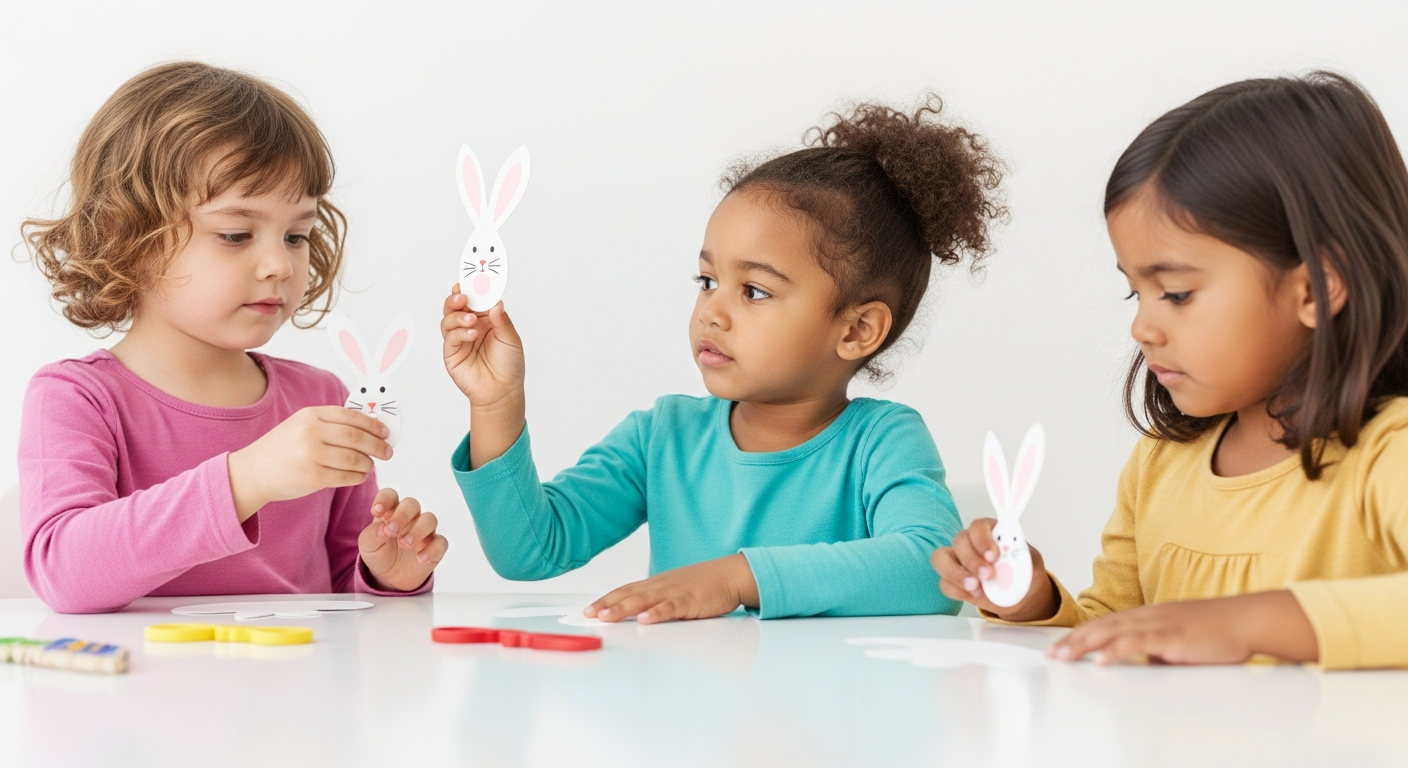
Table of Contents
- Introduction
- The Magic of Crafting for Little Learners
- Why Bunnies? A Perfect Muse for Young Minds
- Our Top Easy Bunny Craft Ideas for Kids
- Integrating Speech & Language Fun with Every Craft
- Beyond the Craft Table: Continuing the Language Journey
- Your Partner in Communication: Why Speech Blubs?
- Conclusion
- Frequently Asked Questions
The delightful giggles of children, the scent of glue, and the joy of creating something with their own hands – these are moments we cherish as parents. Yet, for many, the simple act of playful creation can also unlock incredible opportunities for growth, especially in communication. Imagine a world where every snip of the scissors, every dab of paint, and every fuzzy cotton ball doesn't just make a cute bunny, but also builds crucial speech and language skills. This isn't just a daydream; it's the reality we aim to help you create at home.
In this comprehensive guide, we'll hop into the wonderful world of easy bunny crafts for kids, exploring not only how to make adorable fluffy friends but also how each step can become a stepping stone for language development. We'll dive into the sensory delights, the vocabulary treasures, and the fine motor magic that crafting offers. Plus, we'll show you how to effortlessly weave these hands-on activities with the power of our Speech Blubs app, creating a joyful, holistic approach to helping your child "speak their minds and hearts." Get ready to transform craft time into an invaluable learning experience!

Introduction
Have you ever noticed how children's eyes light up when they see a cute bunny? Whether it's the floppy ears, the twitching nose, or the soft, fluffy tail, bunnies hold a special charm that captures young imaginations. This universal appeal makes them the perfect muse for crafting projects with kids. Beyond the sheer cuteness, engaging in creative activities like making bunny crafts offers a treasure trove of developmental benefits, particularly for speech and language. We believe that learning should be an adventure, filled with joy and discovery, and what better way to embark on that journey than with a charming, easy bunny craft?
This post will guide you through several simple and engaging bunny craft ideas that are perfect for toddlers, preschoolers, and early elementary children. We'll explore how these hands-on projects naturally foster fine motor skills, encourage descriptive language, and provide opportunities for following instructions—all vital components of communication development. More importantly, we'll demonstrate how these delightful crafting sessions can be seamlessly integrated with the interactive learning experiences offered by Speech Blubs, enriching your child’s speech journey in a fun and effective way. Our goal is to empower you with practical, valuable advice, transforming everyday activities into powerful catalysts for your child's confidence and communication skills.
The Magic of Crafting for Little Learners
Crafting is far more than just a way to pass the time; it's a profound developmental powerhouse disguised as fun. For children, especially those needing a little extra support with speech and language, every creative endeavor is a chance to build foundational skills. We often see parents looking for screen-free alternatives that offer genuine developmental benefits, and crafting stands out as a prime example of "smart screen time" when paired with interactive tools.
Fine Motor Skills and Coordination
From picking up a cotton ball to snipping paper with child-safe scissors, crafting directly hones fine motor skills. These small, precise movements strengthen the hand muscles and improve hand-eye coordination. This might seem separate from speech, but the same brain pathways involved in precise hand movements are also crucial for the intricate muscle movements of the tongue, lips, and jaw necessary for clear articulation. When children manipulate craft materials, they are indirectly preparing their oral motor system for speech.

Following Instructions and Sequencing
Most crafts involve multiple steps, presenting a natural opportunity for children to practice following instructions. "First, glue the ears, then draw the eyes." This simple sequence helps children understand order and develop their auditory processing skills. As they learn to listen and execute each step, they build a critical foundation for comprehending longer sentences and narratives, which are essential for effective communication. This ability to sequence actions and thoughts is also vital for forming coherent sentences and telling stories later on.
Vocabulary Expansion
Crafting introduces a rich vocabulary naturally. Children learn words related to colors ("pink," "white," "brown"), shapes ("circle," "triangle," "oval"), textures ("fluffy," "smooth," "bumpy"), actions ("cut," "glue," "fold," "draw"), and materials ("paper," "cotton," "pipe cleaner," "pom-pom"). They also learn descriptive adjectives, helping them to articulate what they are seeing and doing. For a child who might be a "late talker," hearing and using these words in a tangible, context-rich environment makes them far more meaningful and memorable than simply hearing them spoken.
Expressive Communication
As children create, they naturally want to talk about their creations. This provides a fantastic opportunity for expressive communication. They can describe their bunny, explain what they did, and even narrate stories about their finished masterpiece. Asking open-ended questions like "Tell me about your bunny" or "What's your bunny doing now?" encourages them to formulate sentences and expand their thoughts. This is where the magic truly happens—children move from simply identifying objects to expressing ideas, emotions, and narratives.
Problem-Solving and Creativity
Crafting often involves making choices and adapting. "What color should the nose be?" "What if the ears don't stick?" These small challenges encourage problem-solving and foster creative thinking. Children learn that there isn't always one "right" way to do something, boosting their confidence and encouraging them to experiment. This translates into more flexible thinking, which is invaluable for navigating social interactions and communicating effectively in diverse situations.
Emotional Regulation and Patience
Crafting requires patience. Waiting for glue to dry, carefully cutting along a line, or repeating a step can be a lesson in persistence. The satisfaction of completing a project, even if it took some effort, builds self-esteem and teaches children about delayed gratification. These emotional regulation skills are interwoven with a child's ability to communicate, as managing frustration and sustaining attention are crucial for successful social interactions and learning new skills.
Why Bunnies? A Perfect Muse for Young Minds
Bunnies are not just cute; they are incredibly versatile and engaging subjects for children's crafts, making them an ideal choice for integrating language practice. Their simple shapes, recognizable features, and association with nature, spring, and holidays like Easter make them relatable and exciting for kids of all ages.
Sensory Exploration
Many bunny crafts involve materials with varied textures, providing excellent sensory input. Think of the soft fluffiness of cotton balls, the smooth coolness of paper, or the fuzzy feel of pipe cleaners. Children explore these textures, which naturally leads to descriptive language: "This is soft," "This feels bumpy," "This is sticky." This sensory vocabulary is critical for building a rich descriptive lexicon, enhancing their ability to articulate their experiences. When a child touches a cotton ball bunny and describes it as "fluffy," they're making a deep connection between a tactile experience and a word.
Sound Imitation and Animal Noises
Bunnies often inspire playful sounds and movements. Children can practice making "hop, hop" sounds, wiggling their noses, or saying "fluffy" while they create their bunnies. These imitative sounds and words are fantastic for early speech development, encouraging vocalization and sound production. For many children, especially those working on specific consonant or vowel sounds, animal-related words provide a fun, low-pressure context for practice. At Speech Blubs, we know how powerful these playful sounds can be, which is why our "Animal Kingdom" section is so popular for sound imitation and vocabulary building. You can discover more about our fun, science-backed approach by visiting our main homepage.
Relatability and Imagination
Bunnies are often characters in children's books and cartoons, making them familiar and comforting. Crafting a bunny brings these beloved characters to life, sparking imaginative play and storytelling. Once the craft is complete, the bunny can become a puppet, a toy, or a character in a new adventure, encouraging children to create narratives and engage in pretend play—a cornerstone of language and social development.
Our Top Easy Bunny Craft Ideas for Kids
Here are some wonderfully easy and engaging bunny crafts that are perfect for little hands and minds. Each one offers unique opportunities for speech and language development, making craft time a truly enriching experience. Remember, the focus isn't on perfection, but on participation, exploration, and communication.
1. Fluffy Cotton Ball Paper Plate Bunny
This classic craft is fantastic for sensory exploration and building a rich descriptive vocabulary. It's especially great for young children due to its simple steps and tactile nature.
Materials:
- Paper plate
- Cotton balls
- Craft glue
- Construction paper (white and pink for ears, black for whiskers)
- Googly eyes
- Pink pom-pom (for nose)
- Scissors (child-safe)
- Markers or crayons
Instructions:
- Preparation: Talk about the materials. "This is a paper plate—it's round and white." "These are cotton balls—they feel so soft and fluffy!"
- Glueing the Body: Help your child spread glue all over the paper plate. Encourage them to use words like "sticky," "all over," and "more glue."
- Attaching Cotton Balls: Let your child press cotton balls onto the glue, covering the entire plate. This is a wonderful sensory experience. Ask, "How does it feel? Is it soft? Is it fluffy?" This builds descriptive vocabulary. For a child working on early sounds, emphasize the "f" sound in "fluffy" or "soft."
- Making the Ears: Cut out two large white ear shapes and two smaller pink inner ear shapes from construction paper. Guide your child to glue the pink onto the white. "Let's make the ears! One ear, two ears. The pink goes inside the white."
- Assembling the Face: Glue the ears to the top of the paper plate. Then, attach the googly eyes. "Where do the eyes go? Above the nose!" Glue the pink pom-pom for the nose and draw whiskers with a marker. "Look at the wiggly whiskers!"
- Finishing Touches: Draw a mouth or add any other decorations. Encourage your child to describe their bunny: "My bunny is fluffy," "It has big eyes," "It's a happy bunny."
Language Focus: Sensory words (fluffy, soft, sticky), body parts (ears, eyes, nose, whiskers), colors, positional words (on, in, above), descriptive adjectives (big, happy). For a child working on multi-step commands, this craft offers plenty of opportunities to practice.
2. Simple Paper Fold Bunnies
This craft is excellent for introducing basic origami concepts, following sequential instructions, and developing spatial vocabulary.
Materials:
- Square paper (any color, pastels work well)
- Markers or crayons
- Optional: Googly eyes, small pom-pom for tail
Instructions:
- Start with a Square: "We have a square piece of paper. It has four equal sides."
- Fold in Half (Triangle): Help your child fold the square diagonally in half to make a triangle. "Fold it corner to corner! Now it's a triangle!"
- Fold Up Ears: Take the two bottom corners of the triangle and fold them upwards to create the bunny's ears. "Fold the corners up! These are the ears."
- Fold Down Top Point: Fold the very top point of the paper down a little to form the bunny's head shape.
- Fold Up Bottom Point: Fold the bottom point up slightly to create the chin/mouth area.
- Decorate: Turn the paper over. Draw eyes, a nose, and a mouth. Add details to the ears. "Let's draw round eyes and a tiny nose."
- Add a Tail: If desired, glue a small pom-pom for the bunny's fluffy tail. "Look, a fluffy tail!"
Language Focus: Shapes (square, triangle), actions (fold, draw), positional words (up, down, corner), numbers (one, two), body parts (ears, eyes, nose, tail). This craft is great for practicing sequencing and listening skills.
3. Recycled Roll Bunnies
Transforming a simple toilet paper roll into a cute bunny teaches children about repurposing and offers a sturdy base for creative decoration.
Materials:
- Empty toilet paper or paper towel rolls
- Paint (white, pink) or construction paper
- Craft glue
- Googly eyes
- Pink pom-pom for nose
- Pipe cleaners for whiskers
- Scissors
- Markers
Instructions:
- Prepare the Roll: "We have an empty roll! It's round and long." Decide whether to paint it or cover it with paper. "Do we want to paint it white, or use paper?"
- Paint/Cover: If painting, let your child paint the roll white. "Dip the brush in the white paint! Paint it all over." If using paper, cut white construction paper to fit the roll and glue it on.
- Make the Ears: Cut out two ear shapes from construction paper (white with pink inserts). Pinch the bottom of each ear and glue them to the inside top of the roll. "These ears will stand up tall!"
- Assemble the Face: Glue on googly eyes, a pink pom-pom nose, and pipe cleaner whiskers. "Push the whiskers through the roll, or glue them on top."
- Add Details: Draw a mouth and any other decorations. You can also add little feet cut from paper to the bottom.
Language Focus: Actions (paint, cut, glue, push), descriptive words (empty, round, long, tall), colors, spatial concepts (through, on top, inside). This is a great opportunity to practice requesting items and describing actions.
4. Bunny Ear Headbands
This interactive craft encourages imaginative play and helps children develop a sense of self and body awareness, all while having fun.
Materials:
- White cardstock or thick paper
- Pink construction paper
- Scissors
- Glue or stapler
- Markers or glitter (optional)
Instructions:
- Make the Band: Cut a long strip of white cardstock that fits around your child's head, leaving extra for overlap. "We need a long strip to go around your head."
- Create Ears: Cut two large bunny ear shapes from white cardstock and two smaller inner ear shapes from pink paper. "These are the big ears, and these are the little pink ears."
- Assemble Ears: Glue the pink inner ears onto the white ears. "The pink goes inside the white."
- Attach Ears to Band: Glue or staple the finished ears to the top of the headband strip. "The ears stand up tall on the headband!"
- Secure Headband: Fit the headband to your child's head and glue or staple the ends together. "Now you have bunny ears! Wiggle your nose!"
Language Focus: Body parts (head, ears, nose), actions (cut, glue, wear), descriptive words (long, big, little), positional words (around, on top). Encourage role-play: "What does your bunny say?" "Hop like a bunny!"
5. Rocking Paper Plate Bunnies
This craft adds an element of movement, making it particularly engaging and offering opportunities to discuss actions and balance.
Materials:
- Paper plate
- White and pink construction paper
- Googly eyes
- Pink pom-pom
- Pipe cleaners
- Glue, scissors, markers
Instructions:
- Prepare Plate: Cut the paper plate in half. Decorate one half with white paint or cotton balls for the bunny's face, similar to the first craft. "We're using half a plate for the bunny's face."
- Make the Body (Rocker): Take the other half of the paper plate. Fold it in half to create a semi-circle rocker base. "This will make our bunny rock!"
- Assemble Face: Glue on googly eyes, a pink pom-pom nose, and pipe cleaner whiskers onto the decorated plate half.
- Add Ears: Cut out and attach white and pink ears to the top of the bunny's head.
- Attach Head to Rocker: Glue the decorated bunny face onto the folded paper plate rocker base. Make sure it's balanced. "Carefully glue it, so it can rock back and forth!"
- Play! Once dry, gently push the bunny to make it rock. "Look, it rocks! Up and down!"
Language Focus: Actions (rock, push, balance), positional words (up, down, back, forth), descriptive words (half, balanced), and imaginative play.
Integrating Speech & Language Fun with Every Craft
At Speech Blubs, we understand that true communication development happens through engaging, meaningful interactions. Our mission is to empower children to "speak their minds and hearts," and we've found that blending hands-on activities like crafting with our scientifically-backed app creates a powerful, joyful learning experience. We were founded by individuals who grew up with speech problems, so we truly created the tool we wished we had.
Video Modeling with Speech Blubs
Our unique "video modeling" methodology is at the heart of our approach. Children learn best by watching and imitating their peers, and our app provides countless opportunities for this. After making a fluffy bunny craft, for example, you can open Speech Blubs and find sections like "Animal Kingdom" or "Sounds" where children can see other kids making animal sounds or describing animals. This connection reinforces the vocabulary and sounds learned during crafting in a dynamic, engaging digital environment. Our research-backed methodology has placed us in the top tier of speech apps worldwide, a fact you can explore further on our research page.
Interactive Learning and Smart Screen Time
We believe in "smart screen time"—active, engaging digital experiences that are a screen-free alternative to passive viewing like cartoons. When you pair a bunny craft with Speech Blubs, you're not just giving your child a device; you're offering a powerful tool for family connection and interactive learning. The physical act of crafting builds the initial understanding, and the app reinforces it through imitation and play. For instance, if your child loves the sensory texture of the cotton ball bunny, you can then transition to the app and explore activities that focus on "fluffy" animals or "soft" textures, solidifying their understanding and pronunciation.
Vocabulary Building in Action
During crafting, you're naturally introducing a wealth of vocabulary. Let's say your child is making a paper plate bunny. You can repeatedly use words like:
- Colors: "What color is the paper? White! And the nose? Pink!"
- Actions: "Let's cut the ears. Now we glue the eyes."
- Textures: "Feel the soft cotton! The glue is sticky."
- Shapes: "The plate is round! The ears are like ovals."
After the craft, open Speech Blubs and find activities that use these same words. Our app offers thousands of activities that can reinforce this vocabulary in a playful context, ensuring that these new words stick.
Following Multi-Step Directions
Every craft is a sequence of steps. "First, paint the roll. Next, cut the ears. Then, glue them on." This practice is directly transferable to following instructions within the Speech Blubs app, where activities often involve a series of actions or prompts. This consistency helps children develop stronger auditory processing and memory skills.
Expressing Ideas and Building Confidence
As your child completes their bunny, encourage them to talk about it. "Tell me about your bunny. What's its name? Where does it live?" If your child is struggling to verbalize, Speech Blubs can help build that confidence. Our founders created Speech Blubs because they personally experienced the frustration of speech difficulties. We are committed to providing an immediate, effective, and joyful solution for the 1 in 4 children who need speech support. Our app helps children practice sounds and words in a supportive environment, reducing anxiety and fostering a love for communication. Many parents have shared their success stories, which you can read on our testimonials page.
Relatable Scenario Example: Imagine a parent whose 3-year-old is a "late talker" and loves animals. They decide to make a fluffy cotton ball bunny craft. As they craft, the parent emphasizes words like "soft," "fluffy," and "hop." They make little bunny noises. After the craft, the parent opens Speech Blubs. They navigate to the "Animal Kingdom" section, where their child sees peers making "hop, hop" sounds or imitating bunny actions. The child, already warmed up from the physical craft, is more likely to engage and imitate the sounds and words from the app. This playful cycle—crafting, speaking, reinforcing with the app—creates a powerful, joyful learning loop, fostering confidence and encouraging those crucial first words or new sounds.
Beyond the Craft Table: Continuing the Language Journey
The fun doesn't have to stop when the glue dries. The skills nurtured during easy bunny crafts—listening, speaking, imagining, and creating—are lifelong assets. Speech Blubs is designed to be your partner in continuing this language journey, providing consistent support and engagement every day.
Our comprehensive approach ensures that children are constantly stimulated and supported in their communication development. We offer thousands of activities, covering a wide range of speech sounds, vocabulary, and language concepts. Whether your child is focusing on specific sounds, expanding their vocabulary, or building their sentence structure, Speech Blubs provides targeted, playful practice. You can start exploring this incredible resource today by creating your account and beginning your 7-day free trial.
We recognize that every child's journey is unique. If you're unsure whether your child could benefit from a structured approach to speech development, we offer a valuable tool. Take our quick 3-minute preliminary screener for a simple assessment and a personalized next-steps plan. It involves just 9 simple questions and can provide immediate insights, often leading to a free 7-day trial of our app.
Your Partner in Communication: Why Speech Blubs?
At Speech Blubs, we are more than just an app; we are a community and a resource built on personal experience and scientific principles. Our founders, who themselves grew up with speech problems, poured their hearts and expertise into creating the tool they wished they had—an immediate, effective, and joyful solution for the 1 in 4 children who need speech support. We blend the joy of play with proven scientific methods, offering one-of-a-kind "smart screen time" experiences that are a powerful alternative to passive viewing.
When you choose Speech Blubs, you're choosing a partner dedicated to empowering your child to "speak their minds and hearts." We provide a powerful tool for family connection, turning learning into a shared, delightful experience. Our unique video modeling methodology, where children learn by watching and imitating their peers, is at the core of our success, activating mirror neurons and making learning intuitive and fun.
We believe in transparency and providing exceptional value. We offer two primary subscription plans:
- Monthly Plan: For $14.99 per month, you get access to the core Speech Blubs app features. This is a flexible option for those who prefer month-to-month commitment.
- Yearly Plan: At just $59.99 per year, this plan offers incredible value, breaking down to only $4.99 per month. Choosing the Yearly plan allows you to save 66% compared to the monthly option, and it comes packed with exclusive, high-value features designed to accelerate your child's progress and enhance your experience.
The Yearly plan is truly the best choice for committed parents, as it includes:
- A 7-day free trial: Experience the full potential of Speech Blubs before committing.
- The extra Reading Blubs app: An additional app designed to boost early literacy skills, seamlessly complementing speech development.
- Early access to new updates: Be the first to enjoy new features and content as soon as they are released.
- 24-hour support response time: Get prompt assistance whenever you need it.
The Monthly plan, while flexible, does not include these additional benefits. For the most comprehensive support, the greatest savings, and the full suite of features that Speech Blubs offers, the Yearly plan is the clear choice.
Ready to see the difference Speech Blubs can make? We invite you to download our app today and start your child's journey towards confident communication.
Conclusion
Engaging in easy bunny crafts with your children offers far more than just a cute decoration; it provides a vibrant, hands-on platform for fostering critical speech and language development. From refining fine motor skills and expanding vocabulary to practicing multi-step instructions and igniting imaginative storytelling, each craft becomes a joyful opportunity for growth. By integrating these tactile, sensory-rich experiences with the innovative power of Speech Blubs, you're creating a holistic and incredibly effective learning environment.
We’ve seen how playful activities, coupled with our unique video modeling method, can genuinely empower children to find their voice and build confidence. Our commitment at Speech Blubs is to provide an immediate, effective, and joyful solution, ensuring that every child has the chance to "speak their minds and hearts."
Don't let another day pass without discovering the potential within your child. We encourage you to take the first step towards a brighter, more communicative future. Start your 7-day free trial today by downloading Speech Blubs on the Apple App Store or Google Play Store. Alternatively, you can create your account and begin your free trial directly on our website. Remember to choose the Yearly plan to unlock your free trial and gain access to the full suite of premium features, including the Reading Blubs app and early updates, ensuring the best value and most comprehensive support for your child's journey!
Frequently Asked Questions
Q1: How do crafts specifically help with speech development in young children?
A1: Crafts offer a multi-sensory environment that naturally boosts speech development. They help children develop fine motor skills essential for articulation, provide opportunities to practice following multi-step instructions, expand vocabulary related to colors, shapes, and textures, and encourage expressive communication as children describe their creations. The interactive nature of crafting, especially with adult support, makes learning new words and sounds meaningful and memorable.
Q2: What age group are these easy bunny crafts best suited for?
A2: Most of these easy bunny crafts are wonderfully adaptable for children from toddlers (with significant adult assistance) up through early elementary school (around 7-8 years old). The key is to adjust the level of complexity and independence based on your child's developmental stage. For younger children, focus on sensory exploration and simple actions; for older children, encourage more intricate details and independent problem-solving.
Q3: How can I integrate the Speech Blubs app with these craft activities effectively?
A3: Seamlessly integrate Speech Blubs by connecting the craft theme to app activities. For instance, after making an animal craft, open the "Animal Kingdom" section in Speech Blubs to reinforce animal sounds and names through video modeling. Use vocabulary introduced during crafting (e.g., "fluffy," "sticky," "cut") and then look for app activities that use similar descriptive words or actions. This creates a powerful learning loop, making screen time productive and enriching.
Q4: What are the main benefits of choosing the Speech Blubs Yearly plan over the Monthly plan?
A4: The Speech Blubs Yearly plan offers significantly better value and a more comprehensive experience. For just $59.99 per year (saving 66% compared to monthly), it includes a 7-day free trial, the bonus Reading Blubs app for literacy support, early access to new updates, and 24-hour support response time. The Monthly plan ($14.99/month) does not include these valuable extra features or the free trial, making the Yearly plan the best choice for dedicated support and maximum benefits for your child's communication journey.
About the author