
Jolly Jingles & Crafty Creations: Christmas Crafts for Kids at School
 By Speech Blubs Team•Dec 22, 2025•22 min.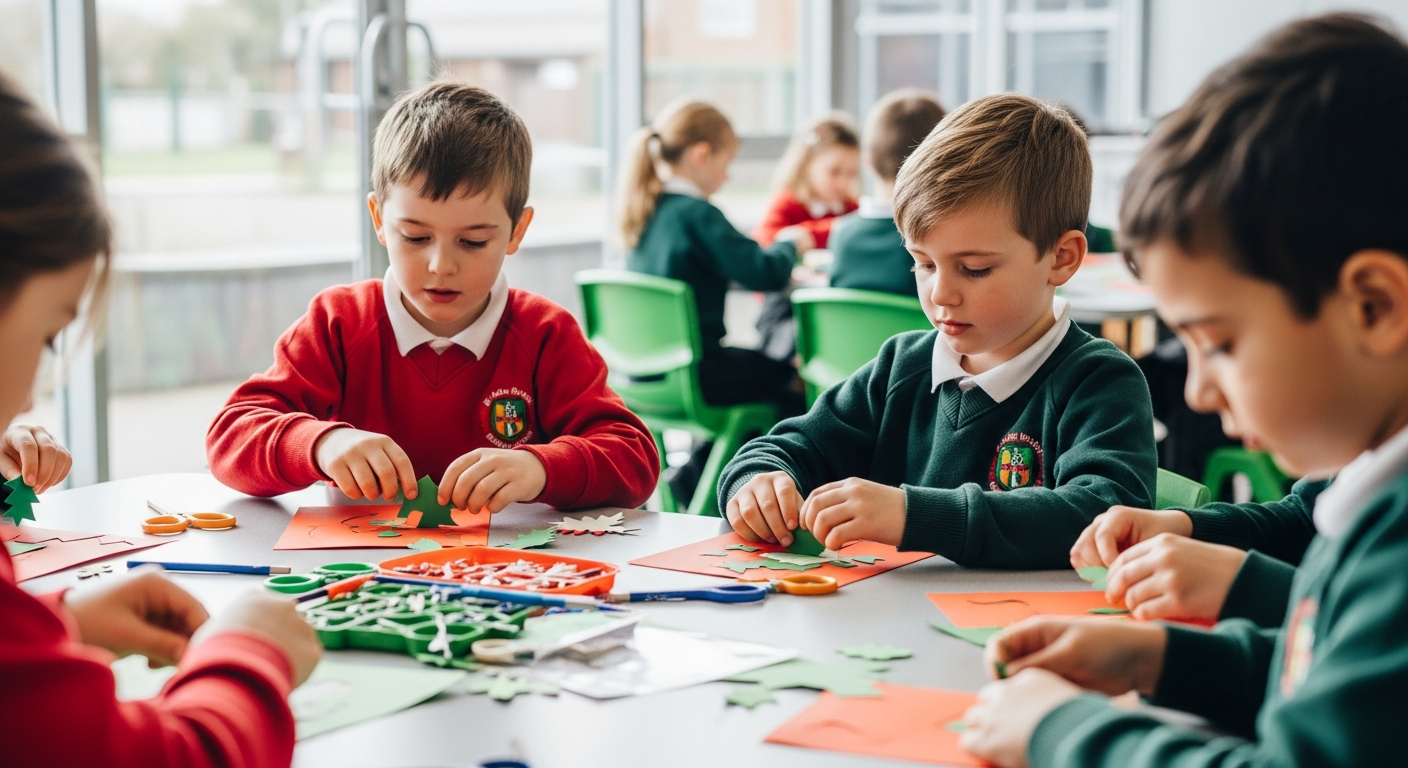
Table of Contents
- Introduction
- The Developmental Power of Christmas Crafts in the Classroom
- Integrating Language and Communication through Festive Projects
- Diverse Christmas Craft Ideas for Kids at School
- Making Crafts an Opportunity for Speech Development with Speech Blubs
- Tips for Teachers and Parents: Maximizing Craft-Time Learning
- Choosing Speech Blubs: Your Partner in Communication Growth
- Conclusion
- FAQ
Introduction
As the festive season twinkles into view, bringing with it the crisp scent of pine and the promise of holiday cheer, a unique kind of magic fills school classrooms: the magic of creation. Imagine a bustling classroom, alive with laughter, the rustle of paper, and the cheerful clatter of craft supplies. For many children, these moments of crafting festive decorations are among their most cherished school memories. They're not just making ornaments or cards; they're building skills, expressing themselves, and connecting with their peers and teachers in meaningful ways. These "christmas crafts for kids at school" offer far more than just a fun break from academics; they are potent opportunities for growth across numerous developmental domains. In this comprehensive guide, we'll delve into the incredible benefits of bringing Christmas crafts into the school setting, exploring how these joyful activities can foster creativity, enhance fine motor skills, and, crucially, act as a powerful springboard for language and communication development. We believe that through thoughtful engagement with these festive projects, children can truly begin to speak their minds and hearts, building confidence and connection one glittery masterpiece at a time.

The Developmental Power of Christmas Crafts in the Classroom
Beyond the sheer delight they bring, engaging in Christmas crafts provides a rich tapestry of developmental advantages for children of all ages. In a school environment, where learning and growth are paramount, these festive projects become invaluable educational tools.
Nurturing Fine Motor Skills and Coordination
Crafting inherently involves a myriad of small, precise movements that are essential for developing fine motor skills. Activities like cutting with scissors, gluing small pieces, drawing intricate lines, threading beads, or tying knots all require significant hand-eye coordination and dexterity. For instance, a child carefully cutting out a paper snowflake is not only creating a beautiful decoration but is also strengthening the small muscles in their hands and improving their grip, which are foundational skills for writing and many other daily tasks. This repetitive, focused work helps refine their pincer grasp and builds muscle memory, transforming seemingly simple actions into complex learning experiences.
Sparking Creativity and Imagination
Christmas crafts are an open invitation to explore imagination. When children are given materials and a theme, they are encouraged to think outside the box, experiment with colors, textures, and designs, and bring their unique visions to life. There's no single "right" way to decorate a gingerbread man or design a Christmas tree ornament. This freedom fosters a sense of creative ownership and teaches children that their ideas are valuable. It cultivates divergent thinking, allowing them to approach challenges with flexibility and inventiveness, skills that are transferable to all areas of learning and life.
Boosting Cognitive Growth and Problem-Solving
Crafting involves a series of steps, from planning to execution, which directly supports cognitive development. Children learn to follow instructions, sequence actions (e.g., "first cut, then glue, finally decorate"), and understand cause and effect (e.g., "if I put too much glue, the paper will wrinkle"). When a craft doesn't go exactly as planned, they're faced with a problem to solve: "How can I fix this bent reindeer antler?" or "What can I use instead of glitter if we ran out?" These moments are crucial for developing critical thinking, adaptability, and resilience. They learn to persevere, experiment with different solutions, and celebrate small victories in overcoming challenges.

Fostering Emotional Expression and Social Connection
Crafts offer a wonderful outlet for emotional expression. Children can pour their feelings into their creations, whether it's the joy of the holiday season reflected in vibrant colors or a thoughtful design for a loved one. Sharing their finished work, explaining their choices, and receiving positive feedback builds self-esteem and a sense of accomplishment. In a classroom setting, collaborative Christmas craft projects encourage teamwork, sharing materials, and helping peers. These interactions promote social skills like cooperation, negotiation, and empathy, strengthening friendships and creating a positive, supportive learning environment. The shared experience of creating holiday magic together builds a sense of community and belonging, reinforcing the idea that everyone's contribution is valued.
Integrating Language and Communication through Festive Projects
While the visual and tactile aspects of Christmas crafts are evident, their potential for nurturing language and communication skills is equally profound. These activities provide natural, low-pressure environments for children to practice and expand their verbal abilities.
Building Vocabulary with Descriptive Language
Every craft project introduces a wealth of new vocabulary. From naming the materials ("glitter," "felt," "pinecone," "ribbon") to describing the sensory attributes ("sticky," "sparkly," "rough," "soft," "bumpy"), children are constantly exposed to and encouraged to use descriptive language.
- "This tinsel feels silky and shiny!"
- "My ornament is red and green, like a candy cane."
- "Can I have the prickly pipe cleaner?"
Such exchanges enrich their lexicons and help them articulate their observations more precisely.
Practicing Action Verbs and Sequencing
Craft instructions are full of action verbs: "cut," "glue," "fold," "paint," "sprinkle," "twist," "decorate." As children follow these directions, they internalize these verbs and learn to use them in context. Furthermore, the sequential nature of crafting helps children understand and articulate order:
- "First, we cut the paper shapes."
- "Next, we glue them onto the card."
- "Then, we add some glitter."
- "Finally, we write a message inside."
This practice with sequencing language is crucial for storytelling, following multi-step directions, and organizing thoughts, foundational skills that carry over into literacy and academic success.
Encouraging Social Communication and Narrative Skills
Craft time is inherently social. Children ask for specific materials, offer to share, discuss their ideas, and compliment each other's work. These interactions naturally promote:
- Asking and Answering Questions: "What color should I use next?" "Where does this piece go?"
- Giving and Following Instructions: "Pass me the scissors, please." "Can you hold this while I glue?"
- Expressing Preferences: "I like the blue ribbon best." "I want my star to be sparkly."
- Narrating the Process: "Look, I'm making a reindeer!" "I cut out a big green tree."
These exchanges are vital for developing conversational turn-taking, active listening, and the ability to articulate thoughts and intentions clearly. When children talk about their finished crafts, they are essentially creating a narrative, explaining their process, their choices, and the meaning behind their creations. This strengthens their storytelling abilities and helps them connect words to experiences.
Diverse Christmas Craft Ideas for Kids at School
To maximize these developmental benefits, it's essential to select crafts that are appropriate for various age groups and skill levels, while still being engaging and fun. Here are some ideas, along with suggestions for weaving in language development opportunities.
For Toddlers & Preschoolers: Simple Sensory Delights
At this age, the focus is on sensory exploration, simple actions, and building foundational vocabulary. Supervision and adult guidance are key.
- Handprint/Footprint Ornaments: Paint children's hands or feet and press them onto cardstock or salt dough to create reindeer, Santa, or snowmen.
- Language Focus: Naming body parts ("hand," "foot"), colors ("red," "brown"), simple actions ("press," "paint"), and animal sounds ("moo" for reindeer - a great way to use a child's love for animals to practice sounds, much like the exciting Animal Kingdom section in Speech Blubs).
- Cotton Ball Santa Beards: Provide pre-cut Santa faces and cotton balls for children to glue onto the beard area.
- Language Focus: Describing texture ("soft," "fluffy"), size ("big," "small"), and facial features ("beard," "nose"). Ask, "How does the cotton feel?"
- Paper Plate Wreaths: Children glue green tissue paper scraps or torn construction paper around a paper plate cut-out.
- Language Focus: Shapes ("circle," "round"), colors ("green," "red"), and actions ("tear," "glue"). "This is a round wreath!"
- Popsicle Stick Stars: Simple gluing of popsicle sticks into a star shape, then decorating with glitter or paint.
- Language Focus: Counting ("one, two, three sticks"), shapes ("star"), and descriptive adjectives ("sparkly," "bright").
For a child who might be a "late talker" at 3, loving animals, the "Animal Kingdom" section within our app offers a fun, motivating way to practice simple sounds like "moo" and "baa." This can then easily translate into talking about a "reindeer" craft. These foundational sounds and words are crucial building blocks, and Speech Blubs provides a supportive environment for this early learning. If you're wondering if your child could benefit from a little extra support, why not take our quick 3-minute preliminary screener? It involves 9 simple questions and provides an assessment and next-steps plan to help you understand your child's communication journey.
For Early Elementary: Developing Skills and Storytelling
At this stage, children can follow more complex instructions, use scissors with greater proficiency, and are ready for projects that allow for more individual expression and storytelling.
- Pinecone Animals/Ornaments: Gather pinecones and use felt, googly eyes, and small pom-poms to transform them into owls, reindeer, or forest creatures.
- Language Focus: Identifying parts ("head," "eyes," "antlers"), describing textures ("bumpy pinecone," "smooth felt"), and action verbs ("attach," "stick"). Encourage children to name their animal and tell a short story about it.
- Paper Chain Countdown: Cut strips of red and green paper, then glue them into interlocking loops to form a chain. Each link can represent a day until Christmas.
- Language Focus: Sequencing ("first, next, then"), counting, and temporal concepts ("before," "after," "today," "tomorrow"). "We need 10 more links until Christmas!" If a child struggles with sequencing, using our app's "How Do I Feel" or "Early Sounds" section can help them practice action verbs and descriptive words in a structured way before applying them to craft instructions. Ready to help your child master sequencing and expressive language? Download Speech Blubs on the App Store or Google Play today!
- DIY Snow Globes: Use small jars, glitter, water, and waterproof figurines (e.g., miniature trees, reindeer) to create personalized snow globes.
- Language Focus: Describing movement ("swirl," "shake," "float"), adjectives ("sparkly," "magical," "clear"), and prepositions ("in," "on," "under"). "The reindeer is in the snow globe."
- Cardboard Gingerbread House Decorating: Use pre-assembled cardboard gingerbread houses and provide various candies, icing, and sprinkles for decoration.
- Language Focus: Naming shapes ("square windows," "triangle roof"), colors, counting items, and expressing preferences ("I want more gumdrops!"). This activity is great for practicing descriptive vocabulary and following multi-step directions.
For Upper Elementary: Intricate Designs and Independent Expression
Older elementary students are capable of more intricate tasks, independent work, and projects that require sustained focus and planning.
- Salt Dough Ornaments with Intricate Designs: Children roll out salt dough, cut shapes with cookie cutters, then etch designs or add beads/glitter before baking and painting.
- Language Focus: Explaining processes ("First I rolled the dough, then I cut it..."), using comparative adjectives ("This star is shinier than that one"), and discussing patterns ("I made a zigzag pattern"). This is a wonderful opportunity for children to explain their creative choices and use more complex sentence structures.
- Origami Christmas Figures: Guide students through creating simple origami shapes like stars, trees, or Santa hats using patterned paper.
- Language Focus: Following detailed, sequential instructions, understanding spatial relationships ("fold in half," "turn over"), and using precise vocabulary ("crease," "flap"). This activity really challenges listening comprehension and verbal instruction following.
- DIY Pop-Up Christmas Cards: Children design and create pop-up elements inside their greeting cards, adding a surprise dimension.
- Language Focus: Explaining mechanisms ("When you open it, the tree pops up!"), using cause and effect language, and articulating design choices. They can write personalized messages, expanding their written communication skills.
- Personalized Gift Tags: Students design and create unique gift tags for family and friends using stamping, drawing, or collage techniques.
- Language Focus: Using adjectives to describe recipients ("This is for my kind grandma"), discussing preferences ("Do you like bold letters or swirly ones?"), and practicing polite requests ("May I borrow the red marker?").
For a 7-year-old working on expanding their vocabulary and descriptive language, decorating these ornaments or cards offers endless opportunities. They can use the words they've learned from Speech Blubs' "When I Grow Up" or "Numbers & Shapes" sections to describe their creations. "My ornament is a star, and it's sparkly and blue, like the sky!" This practical application reinforces learning, making it meaningful and memorable. Our mission at Speech Blubs is to empower children to speak their minds and hearts, and activities like these crafts provide the perfect stage for that. Create your account and begin your 7-day free trial today to explore how our app can support your child's communication journey. See what other parents are saying about their child's success with Speech Blubs by visiting our testimonials page.
Making Crafts an Opportunity for Speech Development with Speech Blubs
At Speech Blubs, we understand that fostering communication skills is a continuous journey, and it thrives in engaging, interactive environments. Our app is designed to be a powerful companion to real-world activities like Christmas crafting, providing a "smart screen time" experience that complements hands-on learning.
Our Mission and Methodology: Empowering Communication
Our company was born from the personal experiences of our founders, all of whom grew up with speech problems. They created the tool they wished they had – an immediate, effective, and joyful solution for the 1 in 4 children who need speech support. We are committed to blending scientific principles with play into one-of-a-kind experiences.
Our unique approach centers around video modeling, where children learn by watching and imitating their peers. This technique leverages the power of mirror neurons, encouraging children to mimic sounds, words, and expressions in a natural, engaging way. Imagine a child watching a peer say "Merry Christmas" in the app, and then confidently saying it as they hand over a crafted card. The synergy between app-based learning and real-world application is profound. Our methodology is backed by science, placing us in the top tier of speech apps worldwide, as detailed on our research page.
Practical Scenarios: Bridging App and Craft Time
Here’s how Speech Blubs can seamlessly integrate with your classroom's Christmas craft activities, turning every step into a language-rich opportunity:
- Scenario 1: For the little one just starting to vocalize (Ages 2-3)
- Craft: Making a "cotton ball snowman."
- Challenge: A child is captivated by the craft but only makes limited sounds.
- Speech Blubs Integration: Before or during the craft, use Speech Blubs' "Early Sounds" section. The child can watch peers make sounds like "wh-" for "white" or "s-" for "snowman." As they glue the cotton balls, you can prompt, "What color is the snow?" and encourage imitation of the "wh-" sound for "white." You can also make a "brrr" sound for "cold." This prepares their mouths and minds for vocalization in a fun, pressure-free way. The app helps build the confidence they need to then apply those sounds to their craft.
- Benefit: Connects visual learning with practical application, making new sounds meaningful.
- Scenario 2: For the child working on action verbs and sequencing (Ages 4-5)
- Craft: Decorating a paper Christmas tree with various pre-cut shapes.
- Challenge: A child struggles with following multi-step directions or using action verbs.
- Speech Blubs Integration: Engage with Speech Blubs' "What Am I Doing?" section, focusing on verbs like "sticking," "coloring," "gluing." During the craft, narrate your actions clearly: "First, I will glue the star on top." Then ask, "What are you doing now? Are you sticking the bauble?" Encourage the child to narrate their own steps, reinforcing the verbs they just saw and practiced in the app.
- Benefit: Reinforces action verbs and sequencing in a natural, engaging context, improving comprehension and expressive language for following and giving instructions.
- Scenario 3: For the older child expanding descriptive vocabulary (Ages 6-8)
- Craft: Creating personalized gift tags for family members.
- Challenge: A child uses general terms ("nice," "good") rather than specific adjectives.
- Speech Blubs Integration: Use sections like "How Do I Feel" or "Amazing Animals" to explore a wider range of adjectives (e.g., "sparkly," "colorful," "kind," "funny," "beautiful"). As they design the tag, prompt them: "What kind of tag are you making for Grandma? Is it sparkly? Is it for your kind grandpa?" This encourages them to apply the more sophisticated vocabulary learned in the app directly to their craft, making their communication richer and more detailed.
- Benefit: Expands descriptive vocabulary, fostering more expressive and nuanced communication, aligning with our mission for children to speak their minds and hearts.
Beyond the Screen: Fostering Family Connection
We believe in fostering family connection, and our app provides a screen-free alternative to passive viewing. Just as our app encourages parents and children to interact, Christmas crafts are a powerful tool for family bonding and shared experiences. They create opportunities for conversations, collaborative problem-solving, and celebrating successes together, whether in the classroom or at home.
Ready to see how Speech Blubs can become an essential part of your child's communication growth? Download Speech Blubs on the App Store or Google Play today and join our community of families helping children shine!
Tips for Teachers and Parents: Maximizing Craft-Time Learning
To ensure that Christmas crafts are both fun and developmentally enriching, here are some practical tips for educators and caregivers:
- Preparation is Key: Gather all materials beforehand and organize them logically. A well-prepared workspace reduces frustration and allows children to focus on the activity rather than searching for supplies. Have clear, simple instructions ready, perhaps with visual aids for younger children.
- Model Language Explicitly: As you craft, narrate your actions and observations aloud. "I am cutting the red paper. It feels smooth." Use descriptive language and varied sentence structures. This provides a natural language model for children to imitate and internalize.
- Ask Open-Ended Questions: Instead of "Do you like it?", ask questions that encourage more than a 'yes' or 'no' answer.
- "What do you like most about your snowflake?"
- "How did you make that part look so shiny?"
- "What do you think will happen if we add more glitter?"
- "Tell me about your Christmas tree."
- These prompts encourage children to use descriptive language, explain their reasoning, and develop their narrative skills.
- Encourage Peer Interaction: Create opportunities for children to work together, share supplies, and comment on each other's work. "Can you ask [friend's name] if you can borrow the glue?" "What do you think of [friend's] snowman?" These interactions foster social communication, negotiation, and turn-taking.
- Focus on the Process, Not Just the Product: While a beautiful final craft is rewarding, emphasize the effort, learning, and enjoyment of the activity itself. Praise perseverance, creativity, and the joy of participation rather than just the aesthetic outcome. This reduces pressure and encourages experimentation.
- Embrace "Mistakes" as Learning Opportunities: If a child's craft doesn't turn out as expected, frame it as a chance to problem-solve. "That's an interesting way to glue the eyes! What could we do if we wanted them to stay straight?" This teaches resilience and critical thinking.
- Keep It Fun and Flexible: The holiday season should be about joy. If a child isn't interested in a particular craft, offer alternatives or allow them to customize it in their own way. The goal is engagement and positive association with creative expression and communication.
By implementing these strategies, teachers and parents can transform Christmas craft time into a dynamic learning environment where creativity flourishes and communication skills blossom, setting the stage for children to speak their minds and hearts with confidence.
Choosing Speech Blubs: Your Partner in Communication Growth
As you seek ways to enrich your child's learning and communication development, especially during exciting times like holiday crafting, consider Speech Blubs as your dedicated partner. We offer a scientifically-backed, engaging, and joyful solution for children needing speech support, transforming screen time into "smart screen time."
At Speech Blubs, we are committed to providing an immediate, effective, and joyful solution for the 1 in 4 children who need speech support. Our app is a powerful tool for family connection, offering a screen-free alternative to passive viewing. We empower children to "speak their minds and hearts" by blending scientific principles with play, using our unique video modeling methodology where children learn by watching and imitating their peers. This approach has earned us a top-tier rating on the MARS scale for app quality, validating our commitment to effective, engaging content.
We understand that choosing the right tools for your child's development is a significant decision. That's why we strive for transparency and offer clear, value-driven pricing options:
- Monthly Plan: For $14.99 per month, you get access to our core Speech Blubs features.
- Yearly Plan: Our best value at just $59.99 per year, which breaks down to an incredible $4.99 per month. This means you save 66% compared to the monthly plan!
Unlock More Value with the Yearly Plan!
The Yearly plan isn't just about saving money; it's about unlocking a comprehensive suite of features designed to maximize your child's communication potential:
- 7-Day Free Trial: Only with the Yearly plan can you start with a full week to explore all that Speech Blubs has to offer, completely risk-free.
- The Extra Reading Blubs App: Expand your child's literacy journey with our complementary Reading Blubs app, included exclusively with the Yearly plan.
- Early Access to New Updates: Be among the first to experience our latest features and content, keeping your child's learning fresh and exciting.
- 24-Hour Support Response Time: Get priority assistance whenever you need it, ensuring a smooth and supportive experience.
The Monthly plan, unfortunately, does not include these exclusive benefits. For the most comprehensive support and the best possible value for your child's speech and language development, the Yearly plan is the clear choice.
Conclusion
Christmas crafts for kids at school are much more than just festive decorations; they are vibrant, multi-faceted learning experiences that profoundly impact a child's development. From sharpening fine motor skills and sparking creative thinking to boosting cognitive abilities and fostering social-emotional growth, these holiday projects offer a rich canvas for learning. Crucially, they serve as exceptional platforms for language and communication development, encouraging children to expand their vocabulary, practice action verbs, understand sequencing, and engage in meaningful conversations. By mindfully integrating language-rich interactions into craft time, teachers and parents can transform simple activities into powerful catalysts for expressive communication.
At Speech Blubs, we are dedicated to complementing these hands-on learning experiences with our innovative, scientifically-backed app. Our mission is to empower children to "speak their minds and hearts," providing a joyful and effective tool that turns screen time into "smart screen time." Through video modeling and engaging activities, Speech Blubs supports and enhances the very communication skills that are so beautifully practiced during Christmas crafting.
Don't let this holiday season pass without giving your child every opportunity to thrive verbally and creatively. Ready to give your child the gift of confident communication? We encourage you to start your journey with us today! To get the full suite of benefits, including a 7-day free trial and the Reading Blubs app, we recommend choosing our Yearly Plan. It's our best value at just $59.99 per year, saving you 66% compared to the monthly option.
Download Speech Blubs on the App Store or Google Play and select the Yearly plan to unlock all features and start your free trial. Let's make this Christmas a season of communication breakthroughs and joyful creations!
FAQ
Q1: What are the main benefits of doing Christmas crafts in school?
A1: Christmas crafts in school offer a wide range of developmental benefits. They significantly enhance fine motor skills, boost creativity and imagination, support cognitive growth through problem-solving and following instructions, and foster emotional expression and social connection. Critically, these activities provide abundant opportunities for language and communication development, helping children expand their vocabulary, practice action verbs, understand sequencing, and engage in meaningful conversations about their creations.
Q2: How can teachers ensure Christmas crafts also support speech and language development?
A2: Teachers can support speech and language development by modeling descriptive language, asking open-ended questions that encourage detailed responses, narrating their own actions during the craft, and promoting peer interaction. Using a tool like Speech Blubs can also prepare children by practicing sounds, words, and sentences relevant to the craft materials and actions, then encouraging them to apply these new skills during the hands-on activity. Focusing on the process of creation and communication, rather than just the final product, is key.
Q3: Are there specific craft ideas for different age groups that are better for language development?
A3: Yes! For toddlers and preschoolers, focus on crafts with simple actions and sensory elements (e.g., handprint ornaments, cotton ball Santa beards) to build basic vocabulary (colors, textures, body parts) and sounds. Early elementary students can engage in crafts with more steps (e.g., paper chain countdown, pinecone animals) to practice action verbs and sequencing. Older elementary students can tackle intricate projects (e.g., salt dough ornaments, pop-up cards) to explain processes, use comparative language, and articulate complex ideas, boosting narrative and descriptive skills.
Q4: How does Speech Blubs integrate with and enhance Christmas craft activities?
A4: Speech Blubs enhances Christmas craft activities by providing a "smart screen time" experience that prepares and reinforces communication skills. Our video modeling methodology allows children to learn sounds, words, and sentences by imitating peers, which can then be applied directly to craft time (e.g., practicing "white" from the app and then describing white cotton balls). The app offers sections focused on vocabulary, action verbs, and social communication, which directly translate to the language needed for crafting. This synergy fosters confidence, reduces frustration, and makes language learning a joyful, integrated experience that complements hands-on creative play.
About the author