
Jolly Kid Christmas Crafts for Festive Family Fun
 By Speech Blubs Team•Dec 22, 2025•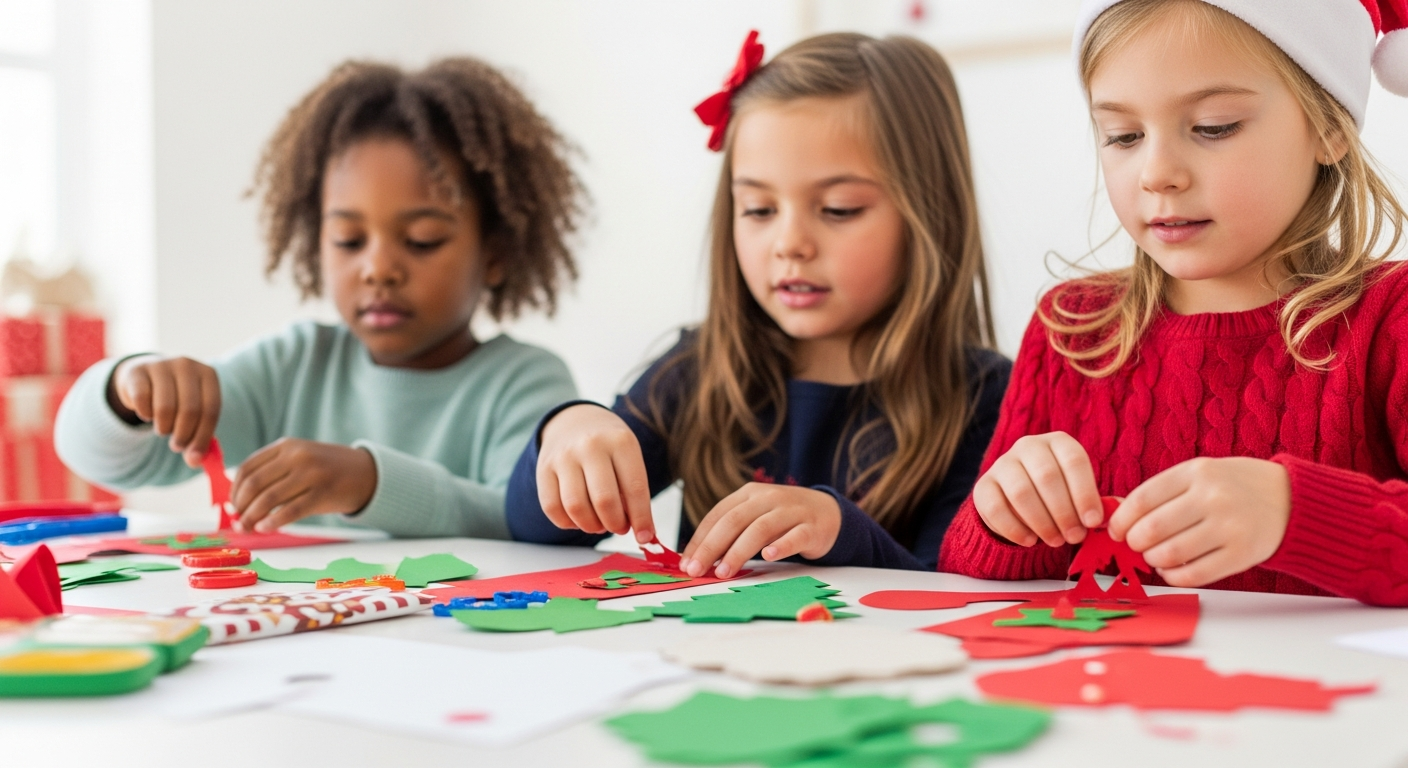
Table of Contents
- Introduction
- The Magic of Christmas Crafts for Growing Minds
- Speech and Language: Crafting Conversations
- Fine Motor Skills: Little Hands, Big Creations
- Cognitive Development: Learning Through Play
- Emotional and Social Growth: Sharing the Joy
- Our Top 10 Easy Christmas Crafts for Kids
- Integrating "Smart Screen Time" with Craft Time
- Making the Most of Your Crafting Experience (Tips for Parents)
- Supporting Your Child's Communication Journey with Speech Blubs
- Understanding Speech Blubs Value: Our Plans
- Conclusion
- FAQ
The holiday season is a whirlwind of twinkling lights, festive songs, and heartwarming traditions. Amidst the joyous chaos, there's a unique magic that happens when little hands get busy creating. But have you ever stopped to consider that those glitter-covered ornaments and handmade cards are more than just charming decorations? They are powerful catalysts for your child's development, especially their communication skills. We've all seen the sparkle in a child's eyes as they proudly present their latest creation, but the journey to that finished product is where the real learning happens. From the simple act of choosing colors to narrating their crafting steps, Christmas crafts offer a vibrant playground for speech, fine motor skills, and cognitive growth. This post will delve into how festive crafting can boost your child's development, share some of our favorite easy Christmas crafts, and show how Speech Blubs can seamlessly integrate into and enhance these joyful learning moments, empowering your child to "speak their minds and hearts" with confidence this holiday season and beyond.
Introduction
As the air grows crisp and carol melodies fill the stores, families everywhere begin to embrace the festive spirit of Christmas. For parents, this time often brings a delightful mix of excitement and a search for engaging activities to share with their children. While baking cookies and decorating the tree are cherished traditions, there's a particular kind of magic that unfolds when kids dive into Christmas crafts. Beyond the glitter and glue, these creative endeavors offer a unique opportunity to nurture essential developmental skills. This blog post isn't just a list of craft ideas; it's a deep dive into how engaging in kid crafts during Christmas can profoundly impact a child's speech and language development, fine motor control, and cognitive abilities. We will explore why these seemingly simple activities are incredibly beneficial, share practical tips for maximizing their developmental impact, and introduce you to fantastic craft ideas that promise both fun and learning. Ultimately, we aim to equip you with the knowledge and tools to turn this holiday season into a period of significant growth and joyful connection for your child, celebrating not just the finished craft but the precious conversations and skills gained along the way.
The Magic of Christmas Crafts for Growing Minds
At its heart, crafting is an incredibly holistic activity for children. It engages multiple senses, requires problem-solving, and offers a tangible outcome that builds self-esteem. During the Christmas season, the added layers of anticipation, tradition, and the spirit of giving amplify these benefits, making festive crafts particularly impactful. Children aren't just making a snowflake; they're creating a memory, a gift, and a piece of their holiday story.
Consider the simple act of choosing materials: "Do we want red glitter or green?" This question alone sparks decision-making and introduces descriptive vocabulary. As they cut, glue, and assemble, their little fingers are honing the very skills needed for writing and self-care. When they talk about what they're making, who it's for, or what it will look like, they are building narratives, expressing desires, and developing their ability to communicate complex ideas. Christmas crafts, therefore, aren't just about adorning the home; they're about building the foundations of a confident, articulate, and capable child.
Speech and Language: Crafting Conversations
One of the most profound benefits of engaging in Christmas crafts with your child is the natural stimulation of speech and language development. The very nature of crafting invites conversation, description, and instruction-following, creating a rich verbal environment.
- Descriptive Language: Imagine your child decorating a paper plate Santa. You can talk about "red hats," "white fluffy beards," "sticky glue," and "sparkly glitter." This constant exposure to descriptive adjectives expands their vocabulary and helps them understand how to use these words to paint a picture with language. "Can you hand me the red, shiny paper?" "This glue feels wet and sticky." Such interactions turn abstract concepts into concrete, touchable experiences.
- Following Instructions: Craft recipes are excellent for practicing sequential instructions. "First, cut the circle. Then, glue the cotton balls. Next, draw the eyes." Breaking down tasks into steps helps children develop auditory processing skills and understand temporal concepts like "first," "next," and "last." For children who might struggle with following multi-step directions, crafting provides a low-pressure, visual way to practice this crucial skill.
- Storytelling and Narration: As your child works, encourage them to talk about what they are creating. "Who is this snowman for?" "What will Santa do with this sleigh?" "Tell me about your sparkly star." These questions prompt imaginative thinking and allow them to build simple narratives, express ideas, and articulate their creative vision. This also fosters theory of mind as they imagine the recipient's reaction.
- Problem-Solving Talk: Crafts aren't always perfect, and that's okay! When something spills or doesn't go as planned, it's a golden opportunity for problem-solving language. "Oh no, the glitter spilled! What should we do?" "How can we make this piece stick better?" These moments encourage children to verbalize challenges and brainstorm solutions, boosting their critical thinking and expressive language.
For a parent whose 3-year-old "late talker" loves animals but struggles with stringing words together, creating a reindeer ornament can be incredibly motivating. As they glue on googly eyes and pipe cleaner antlers, you can model sounds and words: "Reindeer! Moo? No, reindeer say... snort!" or "Brown antlers! Sticky glue!" This provides a visual and tactile context for new vocabulary. Our mission at Speech Blubs is to empower children to "speak their minds and hearts," and activities like crafting lay a fantastic groundwork for this. We understand that effective communication is about more than just words; it’s about connection and confidence.
This is where Speech Blubs truly shines as a supplementary tool. While you're knee-deep in glitter and glue, our app can prepare your child for richer interactions by building their foundational vocabulary and encouraging imitation through our unique video modeling methodology. Children learn by watching and imitating their peers, a powerful and engaging way to develop new sounds and words. It makes them more confident and ready to express themselves during craft time. To learn more about the science behind our approach, visit our research page.
Fine Motor Skills: Little Hands, Big Creations
The intricate movements involved in crafting are fundamental for developing fine motor skills, which are crucial for countless daily activities, including self-care, writing, and playing.
- Cutting: Using child-safe scissors to cut shapes, lines, or fringe strengthens hand muscles, improves bilateral coordination (using both hands together), and develops hand-eye coordination.
- Gluing: Squeezing glue bottles, spreading glue sticks, and carefully placing small objects require precision, controlled movements, and finger strength.
- Painting: Holding brushes, making strokes, and controlling paint flow enhances grip, wrist stability, and artistic expression.
- Threading and Weaving: Stringing beads onto pipe cleaners or yarn through holes demands focus, dexterity, and refined pincer grasp.
- Molding and Shaping: Working with playdough or salt dough strengthens hand muscles and encourages imaginative manipulation of materials.
Developing these skills is not just about making a pretty craft; it's about building the physical dexterity needed for kindergarten and beyond. These activities strengthen the small muscles in the hands and fingers, preparing them for holding a pencil, buttoning a shirt, or tying shoelaces.
Cognitive Development: Learning Through Play
Christmas crafts are also a powerhouse for cognitive development, engaging children in various forms of learning and problem-solving.
- Sequencing and Planning: Most crafts require following a series of steps. This helps children understand and remember sequences, a critical cognitive skill for academic success and daily routines. They learn to plan their actions, thinking ahead about what comes next.
- Shape and Color Recognition: Crafts are a natural environment for identifying and using different shapes and colors. "Can you find a blue circle for the snowman's hat?" or "Let's use a triangle for the Christmas tree."
- Cause and Effect: Children learn through experimentation. "If I put too much glue, it gets messy." "If I press too hard, the paper rips." These immediate feedback loops teach them about cause and effect relationships.
- Spatial Reasoning: Arranging pieces, understanding how shapes fit together, and creating symmetrical designs all contribute to spatial awareness and reasoning.
- Patience and Persistence: Crafting often requires sustained attention and effort. Children learn to be patient as glue dries or as they meticulously cut out a shape. Finishing a craft, especially one that presented challenges, teaches them the value of persistence and the satisfaction of accomplishment.
Emotional and Social Growth: Sharing the Joy
Beyond the tangible skills, crafting together during the holidays nurtures emotional and social development, fostering connections and positive self-perception.
- Sense of Accomplishment and Pride: Completing a craft, no matter how simple, gives children a profound sense of achievement. Seeing their creation displayed or given as a gift builds their self-esteem and confidence.
- Sharing and Cooperation: When crafting with siblings or friends, children learn to share materials, take turns, and cooperate on a project. These social interactions are vital for developing empathy and conflict resolution skills.
- Patience and Frustration Tolerance: Crafts can sometimes be challenging. Learning to manage frustration when a design doesn't work out perfectly or waiting for a turn helps build resilience and emotional regulation.
- Creating Gifts for Others: Making a handmade gift for a loved one instills a sense of generosity and empathy. It teaches children the joy of giving and the thoughtfulness behind a personal present.
- Family Bonding: Uninterrupted craft time creates invaluable moments of connection. Sharing laughter, collaborating on a project, and simply being present with one another strengthens family bonds and creates cherished holiday memories.
Our Top 10 Easy Christmas Crafts for Kids
Here are some of our favorite easy Christmas crafts that are big on fun and even bigger on developmental benefits. Remember to focus on the process, not just the perfect outcome, and engage in conversation every step of the way!
1. Paper Plate Santas or Reindeer
- Materials: Paper plates, cotton balls, red/brown construction paper, googly eyes, glue, markers.
- Instructions: Decorate a paper plate as Santa's face (red hat, cotton ball beard) or a reindeer (brown antlers, red nose).
- Speech & Language Tip: Focus on descriptive words: "red hat," "fluffy beard," "big eyes," "pointy antlers." Practice action verbs like "cut," "glue," "draw." Ask, "What color is Santa's hat?" "How many eyes does the reindeer have?" Encourage imitation of sounds like "ho ho ho" or "clip-clop."
- Fine Motor Tip: Great for cutting circles and strips of paper, peeling and sticking googly eyes, and gluing cotton balls for texture.
2. Popsicle Stick Ornaments
- Materials: Popsicle sticks, glue, paint, glitter, sequins, yarn/ribbon.
- Instructions: Glue popsicle sticks into shapes (stars, triangles for trees, snowflakes). Paint and decorate. Add a loop of yarn to hang.
- Speech & Language Tip: Talk about shapes ("star," "triangle"), colors, and textures ("sparkly," "rough stick"). Practice counting sticks. Ask "What are you making?" "How many sticks did you use?"
- Fine Motor Tip: Gluing sticks together precisely, painting within lines, and attaching small decorations like sequins.
3. Handprint/Footprint Christmas Art
- Materials: Non-toxic paint, paper/cardstock, markers.
- Instructions: Dip hands or feet in paint and press onto paper to create festive images (e.g., green handprints as a tree, white footprints as a snowman, reindeer from handprints).
- Speech & Language Tip: Talk about body parts ("hand," "foot," "fingers," "toes"). Use action verbs: "dip," "press," "paint." Narrate the process: "First, we dip your hand. Then, we press it down."
- Fine Motor Tip: Developing body awareness, learning to press evenly, and using markers to add details later.
4. Salt Dough Ornaments
- Materials: 1 cup flour, 1/2 cup salt, 1/2 cup water. Cookie cutters, paint, glitter, ribbon.
- Instructions: Mix ingredients, knead dough, roll out, cut shapes, bake at low temp (250°F) for 1-2 hours until hard. Paint and decorate once cool.
- Speech & Language Tip: Engage in sensory language: "soft dough," "sticky," "smooth." Talk about shapes of cookie cutters. Practice verbs like "mix," "roll," "cut," "bake."
- Fine Motor Tip: Kneading dough strengthens hands, rolling with a rolling pin, precise cutting with cookie cutters, and careful painting.
5. Pipe Cleaner Candy Canes & Stars
- Materials: Red and white pipe cleaners, beads (optional).
- Instructions: Twist red and white pipe cleaners together to form candy canes. Or bend single pipe cleaners into stars and thread with beads.
- Speech & Language Tip: Use color words ("red," "white"), shape words ("curve," "pointy star"). Count beads. Discuss patterns. Ask "What color comes next?"
- Fine Motor Tip: Twisting, bending, and threading beads require excellent fine motor control and bilateral coordination.
6. Cotton Ball Snowmen
- Materials: Blue or black construction paper, cotton balls, glue, googly eyes, orange construction paper (for nose), markers.
- Instructions: Glue cotton balls onto paper to form a snowman. Add googly eyes, a carrot nose, and drawn-on stick arms and buttons.
- Speech & Language Tip: Focus on quantity ("many cotton balls"), size ("big snowman," "little nose"), and texture ("soft," "fluffy"). Practice sequencing.
- Fine Motor Tip: Pinching and gluing individual cotton balls develops pincer grasp and precision.
7. Pom-Pom Christmas Trees
- Materials: Green construction paper (rolled into a cone), various colored pom-poms, glue.
- Instructions: Roll green paper into a cone and secure with glue. Decorate by gluing colorful pom-poms all over the "tree."
- Speech & Language Tip: Use color names ("red," "green," "blue" pom-poms), size words ("big pom-pom," "small pom-pom"), and positional words ("on top," "under," "all over").
- Fine Motor Tip: Picking up small pom-poms and placing them carefully with glue is excellent for pincer grasp and hand-eye coordination.
8. DIY Advent Calendars (Paper Chains)
- Materials: Construction paper (various colors), glue or stapler, markers.
- Instructions: Cut strips of paper. Link them together into a chain, gluing or stapling each link closed. Write a simple activity or countdown number on each link.
- Speech & Language Tip: Count the days/links. Talk about the sequence of days. Discuss the activities on each link. "What are we doing today?" "What color is this link?"
- Fine Motor Tip: Cutting straight strips, gluing or stapling precisely, and writing numbers or words.
9. Cinnamon Stick Ornaments
- Materials: Cinnamon sticks, craft glue, glitter, small buttons, ribbon.
- Instructions: Glue multiple cinnamon sticks together to form shapes (like a mini raft, then decorate) or simply tie a ribbon around one and decorate it.
- Speech & Language Tip: Focus on sensory language: "smells spicy," "rough stick." Talk about shapes. Practice verbs like "tie," "glue," "decorate."
- Fine Motor Tip: Handling small buttons, tying ribbon, and gluing on small decorations with control.
10. Toilet Paper Roll Characters
- Materials: Empty toilet paper rolls, construction paper, glue, markers, cotton balls, googly eyes.
- Instructions: Wrap toilet paper rolls in colored paper (red for Santa, green for an elf, white for a snowman). Add faces, hats, buttons, and other details.
- Speech & Language Tip: Encourage imaginative play with the finished characters. Ask "What does Santa say?" "What does the elf do?" Use character names and action verbs.
- Fine Motor Tip: Wrapping and gluing paper neatly, cutting small shapes for features, and drawing faces with markers.
Integrating "Smart Screen Time" with Craft Time
While hands-on activities like crafting are invaluable, we also understand that in today's world, screen time is a part of many families' routines. At Speech Blubs, we believe in "smart screen time" – an active, engaging experience that genuinely supports development, rather than passive viewing like cartoons. Our innovative approach, born from the personal experiences of our founders who all grew up with speech problems, provides the immediate, effective, and joyful solution they wished they had. We empower children to find their voice and "speak their minds and hearts."
Our app’s unique "video modeling" methodology is based on scientific principles, where children learn by watching and imitating their peers. This active engagement is a screen-free alternative to passive viewing and a powerful tool for family connection.
Imagine this scenario: Your child is struggling to verbalize the colors they want for their Christmas craft. A short, focused session with Speech Blubs can introduce or reinforce color vocabulary through engaging videos of other children saying the words. After using the app, they might return to their craft with newfound confidence, pointing to the red glitter and saying "red!" with a proud smile. This isn't about replacing craft time; it's about making your child's participation in craft time richer and more expressive.
Our extensive library of over 5,000 activities is categorized into sections like "Early Sounds," "Talking for the First Time," and "Sentence Building," all designed to build foundational communication skills. This means that while you're guiding them through cutting paper and gluing sequins, Speech Blubs can be strengthening their ability to describe those actions and materials. We are committed to providing an immediate, effective, and joyful solution for the 1 in 4 children who need speech support, blending scientific principles with play into one-of-a-kind "smart screen time" experiences. We provide a screen-free alternative to passive viewing (like cartoons) and a powerful tool for family connection. Ready to empower your child's voice and make their craft time even more communicative? Download Speech Blubs on the App Store or Google Play to begin your journey towards clearer, more confident communication.
Making the Most of Your Crafting Experience (Tips for Parents)
To truly unlock the developmental potential of Christmas crafts, your role as a parent or caregiver is key. Here are some tips to enhance the experience:
- Focus on the Process, Not Just the Product: The learning happens during the making, not just in the finished item. Celebrate effort and exploration, even if the final craft isn't "perfect."
- Follow the Child's Lead: Offer choices, but let your child direct their creativity. If they want to make a blue Santa, embrace it! This fosters independence and self-expression.
- Use Open-Ended Questions: Instead of "Is this red?", ask "What color did you choose?" or "Tell me about your design." This encourages more elaborate responses and imaginative thinking.
- Narrate Actions and Describe Materials: As you craft, verbally describe what you're doing ("I'm cutting the paper with the scissors") and the properties of the materials ("This glitter is so sparkly!"). This models language for your child.
- Create a Dedicated "Craft Zone": Lay down a tablecloth or newspaper to protect surfaces. Having a designated, messy-friendly area encourages experimentation and reduces stress about cleanup.
- Embrace the Mess! Crafts often get messy, and that's part of the fun (and learning!). Focus on the joy and growth, and remember that cleanup can also be a cooperative activity.
- Be Present and Engaged: Put away distractions and immerse yourself in the activity with your child. Your undivided attention is one of the greatest gifts you can give, fostering connection and making the learning more impactful.
Supporting Your Child's Communication Journey with Speech Blubs
At Speech Blubs, we are deeply committed to empowering children to communicate effectively and joyfully. Our mission is to provide an immediate, effective, and joyful solution for the 1 in 4 children who need speech support. We believe every child deserves to find their voice and express their unique thoughts and feelings. Our app isn't just a tool; it's a reflection of our founders' personal journeys, who designed the resource they wished they had growing up with speech challenges.
Our methodology is rooted in scientific principles, utilizing "video modeling" to tap into a child's natural inclination to learn by observing and imitating peers. This approach fosters active engagement, making learning fun and effective, and earning us high ratings on the MARS scale, placing us in the top tier of speech apps worldwide. You can explore the evidence behind our methods on our research page.
Speech Blubs offers a rich environment for building vocabulary, practicing sounds, and developing sentence structure through over 5,000 engaging activities. It's a powerful supplement to a child's overall development plan, and when applicable, professional therapy, providing consistent practice and joyful learning opportunities at home.
Curious about your child's communication development and how Speech Blubs might help? Take our quick 3-minute preliminary screener to get a simple assessment and a personalized next-steps plan. It's a great first step towards empowering your child's voice and discovering how we can support their journey. You can also read inspiring stories from other parents who have seen remarkable progress with their children on our testimonials page.
Understanding Speech Blubs Value: Our Plans
We believe in making high-quality speech and language support accessible to every family. To best suit your needs, we offer two main subscription plans, with clear benefits for each:
- Monthly Plan: For $14.99 per month, you get access to our core Speech Blubs app. This plan is flexible and allows you to try the app month-to-month.
- Yearly Plan: For just $59.99 per year, you get significantly more value. This breaks down to an incredible $4.99 per month, allowing you to save 66% compared to the monthly option.
The Yearly Plan is designed to give you the most comprehensive and rewarding experience. It includes:
- A 7-day free trial: Experience the full power of Speech Blubs before committing.
- The extra Reading Blubs app: An additional app specifically designed to boost early literacy skills.
- Early access to new updates: Be the first to enjoy our latest features and content.
- 24-hour support response time: Get your questions answered quickly and efficiently.
Please note: The Monthly plan does not include these valuable benefits. For the ultimate value, the most features, and a commitment to your child's long-term progress, the Yearly plan is the clear best choice.
Conclusion
This holiday season, let your kitchen table or living room floor transform into a vibrant workshop of learning and laughter. Christmas crafts offer an unparalleled opportunity to nurture your child's speech and language skills, refine their fine motor control, boost their cognitive development, and foster deep emotional connections. From the simplest paper plate Santa to a sparkling pipe cleaner ornament, each creation is a stepping stone in their developmental journey, building confidence and fostering a love for communication.
Remember, the true magic lies not just in the finished product, but in the joyful process, the shared conversations, and the dedicated time spent together. And when you're looking for an intelligent partner to further support your child's communication growth, Speech Blubs is here. Our unique blend of scientific methodology and playful "smart screen time" provides a powerful supplement, empowering your child to articulate their thoughts and feelings with clarity and joy.
Ready to make this holiday season not just merry, but also a monumental step in your child's development? Embark on this exciting journey with us. Create your Speech Blubs account today and start your 7-day free trial. To unlock the full suite of features, including the bonus Reading Blubs app and priority support, be sure to select our Yearly plan. Download the app now from the App Store or Google Play and discover how together, we can help your child speak their minds and hearts!
FAQ
Q1: What age are these Christmas crafts suitable for?
Many of these crafts are adaptable for a wide range of ages, generally from toddlers (with significant adult supervision) up through early elementary school. For younger children, focus on simpler tasks like gluing cotton balls, tearing paper, or finger painting. Older children can handle more intricate cutting, detailed painting, and complex assembly. Always prioritize child-safe materials and supervision.
Q2: How can I encourage my child to talk more during craft time?
The key is to create an engaging and non-pressured environment. Narrate your own actions ("I'm cutting the red paper!"), ask open-ended questions ("What color will you use next?"), offer choices ("Do you want glitter or sequins?"), and praise their efforts. Comment on what you see them doing and ask about their creative choices. Don't correct errors, simply model the correct language.
Q3: How does Speech Blubs fit into our family's routine, especially during busy holidays?
Speech Blubs is designed for flexibility. Even short, focused sessions of 5-10 minutes can be highly beneficial. During busy holidays, you can integrate it as a "pre-craft" warm-up to build vocabulary relevant to your craft, or as a calming activity before or after a big family gathering. It’s "smart screen time" that actively engages your child, making it a valuable complement to hands-on play, not a replacement.
Q4: What if my child gets frustrated with a craft?
Frustration is a natural part of learning! When it happens, offer gentle encouragement, break the task into smaller steps, or suggest a simpler alternative. Remind them that it’s okay if it’s not "perfect." The goal is the process and the learning, not just the finished product. If they are truly overwhelmed, it's perfectly fine to take a break and return to it later, or even put it aside and try another activity. Patience and understanding are key.