
Joyful At Home Christmas Crafts for Kids
 By Speech Blubs Team•Dec 22, 2025•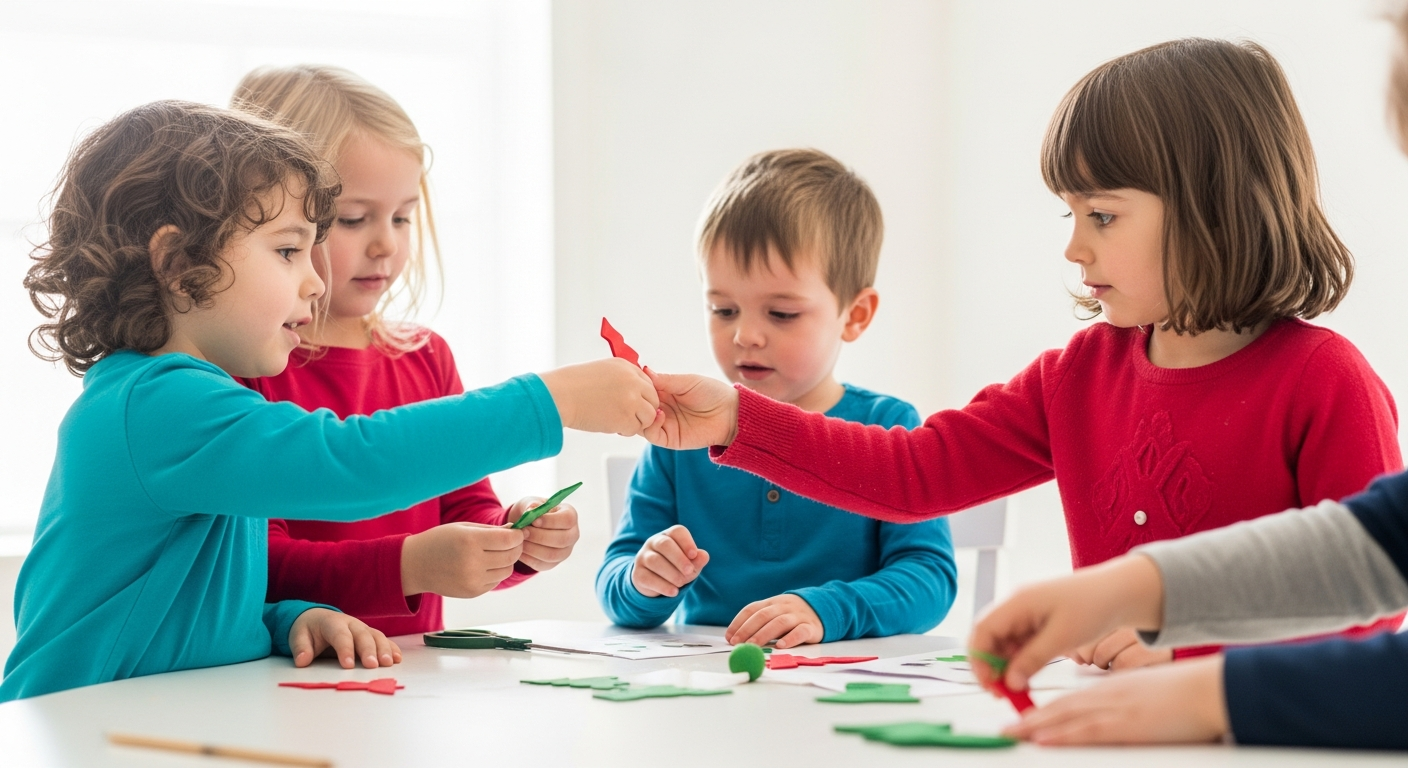
Table of Contents
- Introduction
- The Magic of Christmas Crafts: More Than Just Decoration
- Delightful At Home Christmas Crafts for Kids: Ideas & Language Tips
- Fostering Communication with Festive Fun and Speech Blubs
- Making the Most of Your Crafting Time
- Conclusion
- FAQ
Introduction
As the days grow shorter and a festive chill fills the air, many of us find ourselves yearning for moments of warmth, connection, and creativity. While screens often beckon with their bright lights and endless entertainment, there's a unique magic that unfolds when families gather around a table, glue sticks in hand, and glitter ready to sparkle. More than just creating pretty decorations, engaging in at-home Christmas crafts offers a treasure trove of developmental benefits for children, fostering everything from fine motor skills to imaginative play. What if these cheerful crafting sessions could also become powerful opportunities to nurture your child's speech and language development, laying foundations for them to speak their minds and hearts?
This blog post isn't just a collection of craft ideas; it's a guide to transforming festive activities into rich, interactive learning experiences. We'll explore why hands-on Christmas crafts are so beneficial for your child's overall development, how they specifically support speech and language, and provide a variety of delightful, easy-to-make projects. We’ll also show you how resources like Speech Blubs can seamlessly integrate into your holiday routine, empowering your child’s communication journey. Prepare to dive into a world of colorful paper, twinkling lights, and joyful conversations as we embark on a season of creative expression and meaningful growth.
The Magic of Christmas Crafts: More Than Just Decoration
The holiday season is often synonymous with dazzling lights, comforting scents, and beautiful decorations. While store-bought ornaments are lovely, there's an unparalleled charm in adornments created by little hands. These aren't just seasonal trinkets; they are tangible memories, capturing a moment in time, a child’s unique creativity, and the shared laughter of family. Beyond the sentimental value, at-home Christmas crafts offer a powerhouse of developmental advantages that contribute significantly to a child's growth.
A Feast for the Senses and Skills
Crafting is an incredibly multi-sensory experience. Think about the rough texture of a pinecone, the smooth coolness of a pom-pom, the sticky feel of glue, or the vibrant hues of construction paper. These sensory inputs are vital for a child's cognitive development, helping them interpret and understand the world around them. Furthermore, crafts engage a wide array of essential skills:
- Fine Motor Development: Cutting, gluing, painting, threading beads, ripping paper – these actions are incredible workouts for the small muscles in a child’s hands and fingers. These finely tuned movements are crucial for tasks like writing, buttoning clothes, and self-feeding.
- Gross Motor Skills: While crafts mostly focus on fine motor skills, actions like reaching for supplies, carrying materials, or even standing to get a better angle can engage larger muscle groups, contributing to overall coordination.
- Cognitive Development: Following instructions, problem-solving when a design doesn't quite work, understanding cause and effect (e.g., glue holds paper together), and sequencing steps are all powerful cognitive exercises.
- Creativity and Imagination: Crafts provide an open canvas for children to express their unique ideas, experiment with colors and shapes, and bring their imaginations to life. There's no right or wrong way to create, fostering a sense of artistic freedom.
- Self-Esteem and Confidence: Completing a craft project, especially one that gets displayed, instills a huge sense of accomplishment in a child. They see the tangible result of their efforts, boosting their confidence and encouraging future endeavors.
- Attention Span and Focus: In an age of quick-paced digital content, crafting encourages children to slow down, concentrate on a task, and see it through to completion. This focused attention is a foundational skill for all learning.
- Emotional Regulation: The process of crafting can be calming and meditative. It allows children a constructive outlet for their energy and emotions, teaching patience and persistence.
Crafting as a Language-Rich Environment
While the physical and cognitive benefits are clear, we at Speech Blubs are particularly passionate about how crafting activities create prime opportunities for language development. When children are engaged in a hands-on activity with a supportive adult, natural conversation blossoms. This is the ideal setting for nurturing communication skills, helping children to speak their minds and hearts.
Imagine a parent whose three-year-old is a "late talker" but loves animals. During a reindeer craft session, they can label "reindeer," "antlers," "nose," "brown," and "red." They can make "ho-ho-ho" sounds, or practice imitating animal noises. These interactions are invaluable.
Crafts naturally encourage:
- Vocabulary Expansion: Naming colors, shapes, materials (glue, glitter, paper), actions (cut, paste, paint, stick), and finished products.
- Following Directions: "First, we cut the paper. Next, we glue it here." This builds receptive language skills.
- Descriptive Language: Encouraging children to describe what they are making, how it feels, what colors they are using, or what they imagine it will look like. "It's a sparkly red star!"
- Sequencing and Storytelling: Discussing the steps involved in making the craft in order, or creating a story about the finished item (e.g., "This gingerbread man is going to deliver presents!").
- Question Asking and Answering: Prompting children with "What color should we use?" or "How does this feel?" and encouraging them to ask their own questions.
- Social Communication: When crafting with siblings or friends, children learn to share materials, negotiate, and collaborate, practicing vital social language skills.
At Speech Blubs, we believe in turning everyday activities into "smart screen time" experiences and powerful tools for family connection, complementing the magic of hands-on play. Our unique video modeling methodology is designed to help children learn complex communication skills by watching and imitating their peers, providing a dynamic supplement to real-world interactions like crafting. For a child who might be hesitant to try new words during a craft, seeing a peer confidently model those sounds or words in the app can provide a gentle, motivating boost.
Delightful At Home Christmas Crafts for Kids: Ideas & Language Tips
Now, let's get to the fun part! Here are some fantastic, easy-to-make Christmas craft ideas that are perfect for little hands and offer abundant opportunities for language development. Remember, the key is to engage with your child, rather than just giving them the materials and stepping away. Talk, describe, ask questions, and celebrate their efforts!
1. Salt Dough Ornaments
Salt dough ornaments are a timeless classic, offering a wonderfully tactile experience. They’re easy to make, safe for little ones, and provide a lasting memory.
Materials:
- 1 cup flour
- 1/2 cup salt
- 1/2 cup water (you might need a little more or less)
- Cookie cutters (Christmas shapes like stars, trees, gingerbread men)
- Straw or toothpick (to make a hole for hanging)
- Paints, glitter, markers, or beads for decorating
- Ribbon or string for hanging
Instructions:
- Mix flour, salt, and water in a bowl until it forms a dough. Knead for 5-10 minutes until smooth and pliable.
- Roll out the dough to about 1/4 inch thick.
- Use cookie cutters to create shapes.
- Make a small hole at the top of each ornament with a straw or toothpick.
- Bake at 250°F (120°C) for 2-3 hours, or air dry for 24-48 hours, until hardened.
- Once cooled, decorate! Paint, add glitter, draw faces, or glue on small beads.
- Thread a ribbon through the hole to hang.
Language Opportunities:
- Vocabulary: "Flour," "salt," "water," "dough," "mix," "roll," "cut," "bake," "paint," "glitter," "star," "tree," "round," "sparkly," "sticky," "smooth."
- Actions: Talk about the actions you're performing: "We're mixing the dough," "You are rolling it flat," "Let's cut a star."
- Sensory Descriptors: Ask, "How does the dough feel? Is it sticky? Is it smooth?" or "What color is the sparkly paint?"
- Following Directions: "First, we add the flour. Next, the salt."
- Imitation: Encourage imitation of sounds and words like "squish," "pat," or the names of the shapes.
2. Paper Plate Reindeer
Simple, adorable, and perfect for practicing facial features and animal sounds!
Materials:
- Paper plate
- Brown paint or brown construction paper
- Brown construction paper or cardstock for antlers
- Red pom-pom or red construction paper for nose
- Googly eyes (or draw them)
- Glue, scissors
Instructions:
- Paint the paper plate brown and let it dry, or cover it with brown construction paper.
- Cut out two antler shapes from brown paper.
- Glue the antlers to the top back of the plate.
- Glue on the googly eyes (or draw them).
- Glue the red pom-pom (or a red paper circle) in the center for the nose.
- Draw a mouth.
Language Opportunities:
- Body Parts/Features: "Reindeer," "antlers," "eyes," "nose," "mouth," "head." Point to each as you glue them.
- Colors: "Brown," "red."
- Actions: "Paint," "cut," "glue," "draw."
- Sounds: Make "ho-ho-ho" sounds or "sleigh bell" sounds.
- Concepts: "Big nose," "long antlers."
- Creative Play: Encourage your child to give the reindeer a name or talk about where it's going.
3. DIY Christmas Tree Garland
A wonderful craft for practicing patterns, colors, and sequencing.
Materials:
- Green construction paper
- Other colored construction paper for decorations (red, yellow, blue, etc.)
- Scissors
- Glue stick
- String or yarn
Instructions:
- Cut out various sizes of green triangles to represent Christmas trees. You can pre-cut these for younger children or let older kids practice their cutting skills.
- Cut out small circles, stars, or strips of other colored paper for "ornaments" and "garland."
- Have your child decorate each paper tree with the colorful shapes using glue. Encourage patterns if they are ready (e.g., "red circle, yellow star, red circle...").
- Once the trees are decorated and dry, glue or tape them onto a long piece of string or yarn to create a garland.
Language Opportunities:
- Shapes and Colors: "Triangle," "circle," "star," "green," "red," "yellow."
- Patterns: "What comes next? Green, red, green...?"
- Sizes: "Big tree, little tree," "big circle, tiny circle."
- Prepositions: "Put the star on the tree," "Put the glue under the paper."
- Sequencing: "First, we cut the trees. Then, we decorate them."
- Counting: Count how many trees or ornaments you've made.
4. Pinecone Christmas Trees
Bringing nature indoors for a beautiful, tactile craft.
Materials:
- Pinecones (collected from outside, or store-bought)
- Green paint (acrylic works well)
- Small pom-poms, beads, sequins, or glitter for decoration
- Glue
- Small star sticker or paper star for the top
Instructions:
- Ensure pinecones are clean and dry.
- Paint the pinecones green. Let dry completely.
- Once dry, glue on small decorations to look like ornaments. Use a variety of colors and textures.
- Place a star on top.
Language Opportunities:
- Vocabulary: "Pinecone," "tree," "paint," "green," "sparkly," "rough," "smooth," "sticky."
- Sensory Exploration: Ask, "How does the pinecone feel? Is it prickly or soft?" "Does the glitter sparkle?"
- Actions: "Paint the pinecone," "Glue the pom-pom."
- Comparisons: "This pinecone is bigger than that one."
- Prepositions: "Put the star on top," "Put the glitter all over."
5. Handprint or Footprint Christmas Keepsakes
These personalized crafts are wonderful for remembering how small your child's hands and feet once were, while also providing a unique opportunity to discuss body parts.
Materials:
- Construction paper (various colors, e.g., red, green, blue) or plain white cardstock
- Child-safe paint (various colors)
- Markers or glitter glue for details
- Ribbon or string (optional)
Instructions (Handprint Reindeer):
- Paint your child's palm and fingers brown.
- Press their hand firmly onto a piece of paper, fingers spread, with the thumb pointing slightly outwards (this will be the reindeer's nose).
- Once dry, turn the print upside down. The thumbprint becomes the face, and the other four fingers are the antlers.
- Use a red marker or paint to draw a round nose on the thumbprint.
- Add googly eyes or draw them with a marker.
- Draw a mouth.
- Write the child's name and the year on the craft.
Instructions (Footprint Mistletoe):
- Paint your child's foot green.
- Press their foot onto paper to make two overlapping prints, forming a mistletoe shape.
- Once dry, add red "berries" with paint or markers.
- Draw a small bow at the top.
Language Opportunities:
- Body Parts: "Hand," "fingers," "palm," "foot," "toes," "nose," "eyes," "mouth."
- Actions: "Paint," "press," "lift," "draw."
- Colors: "Brown," "red," "green."
- Sensory: "Wet paint," "ticklish brush."
- Anticipation/Sequencing: "Ready? One, two, three, press!" "First, we paint the hand. Then, we make the print."
- Descriptive: "Look at your tiny hand!" or "Your foot is green!"
Fostering Communication with Festive Fun and Speech Blubs
Engaging in these at-home Christmas crafts is a fantastic way to bond with your child and stimulate their development. These activities provide a rich, natural environment for language learning. For parents who are looking for an additional boost, or whose children are experiencing speech delays, incorporating tools specifically designed for speech development can make a significant difference.
At Speech Blubs, our mission is to empower children to speak their minds and hearts. Our company was born from the personal experiences of our founders, who all grew up with speech problems and created the tool they wished they had. We are committed to providing an immediate, effective, and joyful solution for the 1 in 4 children who need speech support, blending scientific principles with play into one-of-a-kind "smart screen time" experiences. We offer a screen-free alternative to passive viewing (like cartoons) and a powerful tool for family connection, ensuring that every interaction is meaningful and beneficial.
Our unique approach utilizes a "video modeling" methodology, where children learn by watching and imitating their peers. This is incredibly powerful because children are naturally inclined to mimic other children, making the learning process engaging and effective. Think about it: during a craft session, your child might see a peer in the app demonstrating how to say "star" or "tree," and then apply that learning directly to the star ornament they're making. This combination of hands-on activity and guided digital learning creates a holistic environment for communication growth.
How Speech Blubs Enhances Your Child's Communication Journey
- Targeted Practice: While crafting, you might focus on words like "cut" or "glue." Speech Blubs offers thousands of words, sounds, and phrases organized into engaging sections like "Animal Kingdom" or "Yummy Time," allowing your child to practice a wider range of vocabulary and phonetics in a structured, yet playful, way. For instance, if your child is working on the "s" sound, they can practice words like "star" or "snowman" in the app, and then reinforce those sounds while decorating their craft.
- Motivation and Engagement: The interactive nature of Speech Blubs, combined with fun filters and stickers, keeps children highly motivated. This can be particularly beneficial for children who might feel frustrated with traditional speech exercises.
- Building Confidence: Our app is designed to celebrate every step of progress, helping children build confidence in their communication abilities. As they master new sounds and words, they feel more empowered to use them in real-world contexts, like describing their beautiful Christmas crafts.
- Consistency is Key: Consistent practice is vital for speech development. Speech Blubs makes it easy to incorporate short, effective learning sessions into your daily routine, even during the busy holiday season. Just 10-15 minutes a day can make a significant impact.
Ready to Empower Your Child's Voice?
If you're wondering if your child could benefit from speech support, we offer a quick 3-minute preliminary screener. It involves 9 simple questions and provides an immediate assessment and next-steps plan, along with a free 7-day trial of our app. It's a risk-free way to explore the benefits we offer.
We are proud that our scientific methodology and efficacy have been recognized globally, placing us in the top tier of speech apps worldwide. You can explore the research behind our approach on our website, or read inspiring testimonials from other parents who have seen incredible progress with their children using Speech Blubs.
Making the Most of Your Crafting Time
To ensure your at-home Christmas craft sessions are both fun and developmentally beneficial, keep these tips in mind:
- Preparation is Key: Gather all materials before you start. This minimizes interruptions and keeps your child engaged.
- Embrace the Mess: Crafts can be messy, and that's part of the fun! Lay down old newspapers or a tablecloth, and have wipes handy. Focus on the process, not just the pristine outcome.
- Follow Your Child's Lead: While you can offer suggestions, let your child experiment and create freely. Their unique vision is more important than a perfect reproduction of an example.
- Talk, Talk, Talk: Narrate your actions, ask open-ended questions, describe what you see, and respond to your child's babbles and words. Turn every step into a conversation.
- Praise Effort, Not Just the Product: "I love how carefully you glued that!" or "You worked so hard on your tree!" is more impactful than just "That's a pretty ornament."
- Display Their Work: Show off their creations! Hang them on the tree, tape them to the fridge, or gift them to family members. This reinforces their sense of accomplishment.
- Short and Sweet: Young children have shorter attention spans. Keep crafting sessions brief and enjoyable, rather than trying to force a long, drawn-out activity. It’s okay to do a craft in stages over a couple of days.
- Connect to Real Life: Talk about where the crafts will go, who will see them, or what stories they tell. This helps children connect their creative output to their world.
Conclusion
The holiday season is a precious time for creating memories, and at-home Christmas crafts offer a unique opportunity to blend festive joy with profound developmental benefits. From strengthening fine motor skills and sparking creativity to building confidence and fostering rich language development, these simple activities are gifts that keep on giving. By engaging actively with your child, narrating steps, asking questions, and embracing the process, you're not just making decorations; you're building foundational skills that will empower them for years to come.
Whether your child is learning new sounds, expanding their vocabulary, or simply loving the creative process, every snip, glue, and sprinkle contributes to their growth. For those moments when you're seeking additional support or a playful, scientifically backed tool to enhance your child's communication skills, Speech Blubs is here. We designed our app to be an immediate, effective, and joyful solution, ensuring that every child has the opportunity to speak their minds and hearts.
Don't let this festive season pass without embracing the magic of creating together. Ready to infuse your holiday with joyful learning and empower your child's communication journey? Download Speech Blubs on the App Store or Google Play to begin your 7-day free trial today. Or, if you prefer to sign up from your computer, you can create your account on our website. Remember, for the best value and access to all premium features, choose the Yearly plan at just $59.99 per year (saving you 66% compared to the Monthly plan of $14.99) – it includes Reading Blubs, early access to new updates, and 24-hour support!
FAQ
Q1: What are the main benefits of doing Christmas crafts with kids? A1: Christmas crafts offer numerous benefits, including enhancing fine motor skills (cutting, gluing), stimulating cognitive development (following instructions, problem-solving), boosting creativity and imagination, fostering self-esteem, improving attention span, and providing rich opportunities for language development through conversation and description. They also create lasting family memories and traditions.
Q2: How can I make Christmas crafts more language-rich for my child? A2: To maximize language development, talk constantly during crafting: narrate your actions ("I'm cutting the paper"), describe materials ("This glitter is sparkly!"), ask open-ended questions ("What color should we use next?"), and encourage your child to describe their creations. You can also focus on vocabulary related to colors, shapes, actions, and the craft's theme, and practice following directions.
Q3: My child gets frustrated easily with crafts. How can I help? A3: Start with simple crafts suitable for their age, focusing on the process rather than a perfect outcome. Offer lots of encouragement for their effort, not just the final product. Break down complex steps into smaller, manageable tasks. Keep sessions short, embrace the mess, and remember it's okay if the craft looks different from the example. Sometimes, giving them choices in materials or colors can boost their engagement.
Q4: How does Speech Blubs fit into our crafting routine? A4: Speech Blubs acts as a wonderful complement to hands-on activities like crafting. While crafting, your child is learning words and concepts in a real-world context. Speech Blubs can reinforce and expand this learning through its video modeling methodology, where children imitate peers saying specific words or sounds (like "star" or "tree"). This "smart screen time" provides targeted practice for sounds and vocabulary in a fun, engaging way, empowering your child's communication skills developed during your creative family moments.