
Joyful Christmas Activities at Home for Kids
 By Speech Blubs Team•Dec 19, 2025•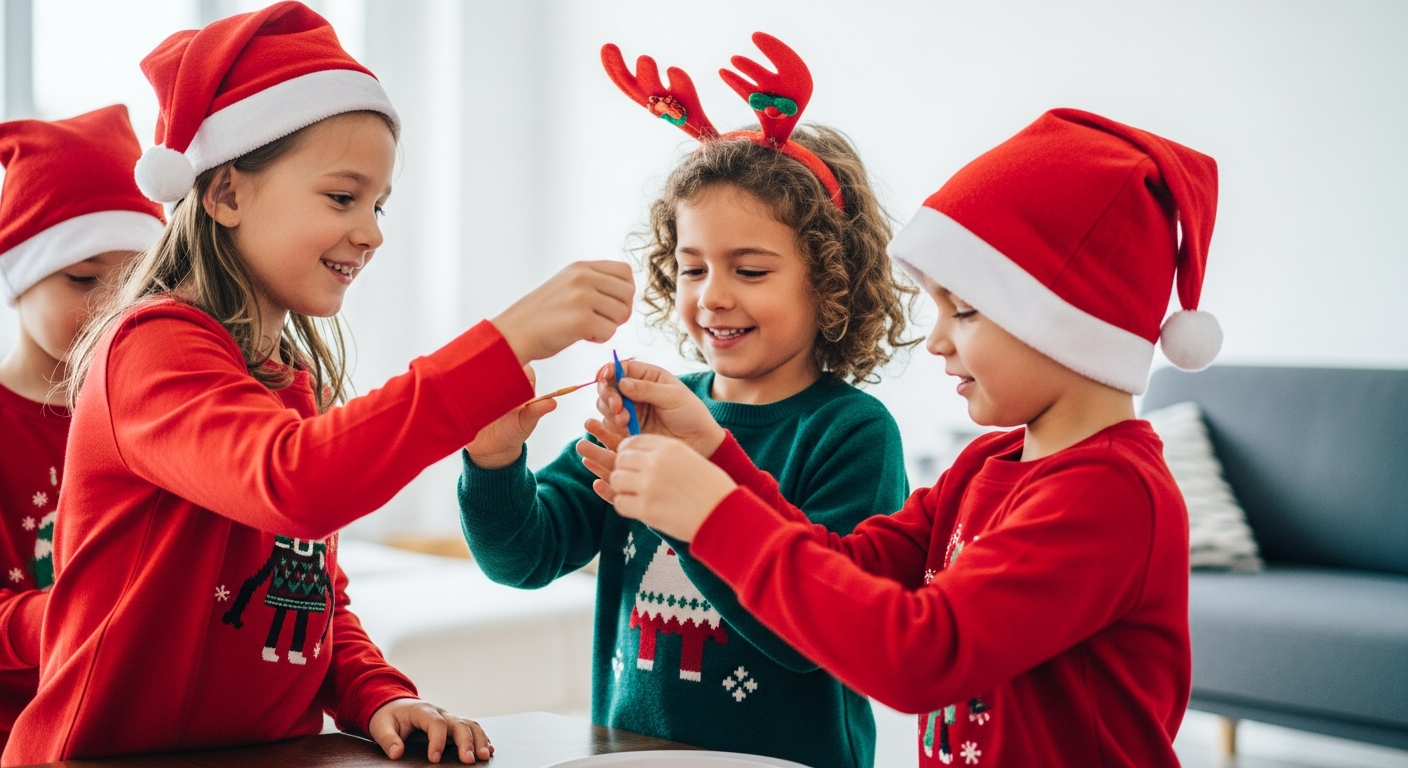
Table of Contents
- The Magic of Christmas: More Than Just Presents
- Crafting Connections: DIY Christmas Creations
- Culinary Christmas Adventures: Cooking and Baking Together
- Storytelling and Imagination: Bringing Tales to Life
- Musical Merriment: Singing and Dancing
- Sensory and Thematic Play: Engaging All Senses
- Giving Back and Connecting: The Spirit of Christmas
- Screen Time with a Purpose: Smart Choices for Speech Development
- Making Speech Blubs Part of Your Family's Christmas Joy
- Choosing the Right Plan for Your Family's Journey
- Conclusion
- FAQ
The holiday season is a magical time, often filled with twinkling lights, festive songs, and the joyful anticipation of shared moments. Yet, for many parents, the thought of keeping little ones engaged and learning amidst the excitement can feel overwhelming. We often wonder how to make these precious days truly count, beyond just presents and passive entertainment. What if we told you that the very heart of Christmas – spending quality time together at home – offers a treasure trove of opportunities to nurture your child's communication skills and foster deep family connections?
This blog post is designed to guide you through a sleigh-full of engaging, speech-boosting Christmas activities you can enjoy right in your own home. We'll explore how simple festive play can become powerful learning experiences, helping your child build confidence, expand their vocabulary, and express themselves more fully. From crafting and cooking to storytelling and singing, each idea is crafted to be fun, accessible, and incredibly beneficial for language development. And, as you embark on this festive journey, we’ll also show you how Speech Blubs, a tool born from our founders' personal experiences with speech challenges, can seamlessly integrate into your holiday routine, transforming screen time into "smart screen time" that supports your child's journey to speak their minds and hearts.
The Magic of Christmas: More Than Just Presents
Christmas is a time of wonder, a period when the ordinary transforms into the extraordinary. For children, it’s a symphony of new sensations, traditions, and the joy of togetherness. Beyond the allure of beautifully wrapped gifts, the real magic of the season lies in the shared experiences and the connections we forge. These moments at home, steeped in festive cheer, are not just about making memories; they are fertile ground for significant developmental growth, especially in communication.
Why At-Home Activities Matter
In our increasingly fast-paced world, the simple act of slowing down and engaging in focused activities at home offers immense benefits. For children, it provides a sense of security, predictability, and undivided attention from caregivers. These familiar settings remove external pressures and allow children to explore, experiment, and express themselves freely. During Christmas, this becomes even more vital. The heightened emotions, new sights, and sounds can sometimes be overwhelming. Engaging in structured, yet playful, activities at home provides a calm anchor, making learning fun and less intimidating. It allows parents to tailor experiences to their child’s unique pace and interests, maximizing engagement and learning outcomes.
Fostering Communication Through Festive Play
Every giggle, every shared glance, every "look!" and "wow!" during a Christmas activity is a brick in the foundation of your child's communication skills. At Speech Blubs, we believe that communication is a journey best traveled with joy and interaction. Our mission is to empower children to speak their minds and hearts, and we know that play is the most natural classroom. Festive activities are inherently rich in opportunities for language development. They introduce new vocabulary (ornament, tinsel, carols, reindeer), encourage descriptive language (sparkly, sticky, sweet, loud), promote turn-taking (my turn, your turn), and build narrative skills (telling Santa what they want).
For children who might be a little slower to speak or are developing their communication skills, these structured playtimes are invaluable. They offer natural contexts for practicing sounds, words, and sentences without the pressure of formal lessons. Imagine a child who is typically quiet. During a gingerbread house decorating session, the sheer fun and tactile experience can loosen them up, prompting spontaneous exclamations like "yum!" or "more icing!" We believe in making every moment count, turning everyday interactions into powerful learning experiences that foster confidence and reduce frustration.
Crafting Connections: DIY Christmas Creations
There's something incredibly special about creating something with your own hands, especially during Christmas. These tactile activities are not only wonderful for fine motor skills but also bursting with opportunities for rich verbal exchanges.
Ornament Making: Sparking Imagination and Language
Gathering around a table to craft unique ornaments is a timeless Christmas tradition. Whether you’re painting clear baubles, gluing glitter onto stars, or threading beads onto pipe cleaners, each step is a chance for communication.
- Vocabulary Expansion: Introduce words like "sparkle," "shimmer," "glue," "paint," "ribbon," "star," "angel," "bell."
- Descriptive Language: "What color is that paint? Is it shiny or dull? How does the glitter feel?"
- Following Instructions: "First, we get the paint. Then, we dip the brush."
- Turn-Taking: "My turn to glue, then your turn to add the beads."
For a parent whose child is learning to identify colors or shapes, making a homemade ornament provides a real-world, engaging context. You can point to a red star and say, "Red star!" or ask, "Where is the blue circle?" For children who are just starting to put two words together, guiding them to say "red paint" or "my star" can be incredibly rewarding. This kind of active participation, mirroring and imitating, is at the heart of our Speech Blubs app methodology, where children learn by watching and imitating their peers, creating a "smart screen time" experience.
Handmade Cards: Expressing Love and Early Literacy Skills
Creating personalized Christmas cards for family and friends is a beautiful way to teach children about thoughtfulness and connection. It also offers excellent opportunities for early literacy and expressive language.
- Recipient Identification: "Who are we making this card for? Grandma? Uncle John?"
- Expressing Wishes: "What do we want to say to Grandma? 'Merry Christmas, I love you!'"
- Color and Shape Recognition: Using crayons, markers, and cut-outs to decorate.
- Early Writing Practice: Scribbling, drawing pictures, or even tracing letters helps build pre-writing skills.
Encourage your child to dictate messages for the cards, even if you do the actual writing. This helps them understand the power of words and how they convey feelings. For children who are still building their confidence in verbalizing, this can be a safe space to express themselves.
Salt Dough Creations: Sensory Play and Vocabulary Building
Salt dough is a wonderful, inexpensive medium for sensory play and crafting. Kneading, rolling, and shaping the dough into festive forms like stars, trees, or gingerbread men engages multiple senses and provides rich language opportunities.
- Sensory Vocabulary: "Sticky," "smooth," "rough," "soft," "hard," "cold," "warm."
- Action Words: "Knead," "roll," "cut," "press," "decorate."
- Shape and Size Concepts: "Big star," "little tree," "round ball."
Consider a child who might struggle with describing textures or feelings. As they manipulate the salt dough, you can prompt them: "How does the dough feel? Is it sticky? Let's roll it smooth!" This direct, experiential learning, coupled with your descriptive language, helps solidify new vocabulary. For parents wondering if their child could benefit from more targeted language support, our quick 3-minute preliminary screener offers a simple assessment and a next-steps plan. It’s a great first step towards understanding your child’s needs and unlocking a free 7-day trial of Speech Blubs.
Culinary Christmas Adventures: Cooking and Baking Together
The kitchen during Christmas is a hub of delicious aromas and bustling activity, making it an ideal place for children to learn and grow. Cooking and baking together offer practical life skills alongside a feast of language development opportunities.
Gingerbread House Decorating: Following Instructions and Descriptive Language
Decorating a gingerbread house is a holiday highlight for many children. It's a fantastic activity for sequencing, following multi-step directions, and using a wide range of descriptive words.
- Sequencing: "First, we put the icing on the roof. Then, we add the gumdrops."
- Directional Language: "Put the candy on top, next to the door."
- Descriptive Vocabulary: "Sweet," "sticky," "colorful," "sparkly," "crunchy," "tiny."
- Problem-Solving: "Oh no, the wall fell down! How can we fix it?"
This activity naturally encourages communication as you guide your child through the steps, ask questions, and marvel at their creations. For a child who is learning to follow a sequence of directions, guiding them through decorating a gingerbread house can be incredibly beneficial. "Put the green candy on the roof, then put a red one beside it." This visual and tactile learning reinforces spatial concepts and sequencing.
Christmas Cookie Baking: Sequencing, Math, and Sensory Exploration
Baking Christmas cookies from scratch is a multi-sensory experience that engages children in numerous ways, fostering both cognitive and language skills.
- Action Verbs: "Mix," "stir," "pour," "roll," "cut," "decorate," "bake."
- Measurement Concepts: "A little," "a lot," "half," "full."
- Sensory Descriptions: "Dough feels cold/sticky," "cookies smell sweet," "taste delicious."
- Predicting Outcomes: "What do you think will happen when we bake them?"
A child who loves animals can connect with the "Animal Kingdom" section of Speech Blubs to practice sounds and words while cutting out animal-shaped cookies. Our app provides a safe, interactive "smart screen time" experience that complements hands-on activities, helping children link real-world objects and actions to the words they are learning. Our scientifically backed "video modeling" method allows children to learn by watching and imitating their peers, a powerful way to build confidence and vocabulary. You can learn more about the research behind our methods here.
Festive Drink Preparation: Simple Steps, Rich Vocabulary
Even making a simple cup of hot chocolate or a non-alcoholic "mocktail" can be a fantastic language activity.
- Ingredient Names: "Cocoa powder," "milk," "marshmallows," "sprinkles," "juice."
- Action Verbs: "Pour," "stir," "mix," "sip."
- Temperature Concepts: "Hot," "cold," "warm."
- Cause and Effect: "What happens if we add too much sugar?"
For a child who is a "late talker," and loves the visual aspect of cooking, being involved in pouring and stirring, while you narrate each step, can prompt them to imitate words like "pour" or "stir." The immediate reward of a delicious drink reinforces their participation and encourages future communication.
Storytelling and Imagination: Bringing Tales to Life
Stories are the heart of human connection, and Christmas is brimming with them. Engaging in storytelling activities nurtures creativity, empathy, and crucial narrative skills vital for strong communication.
Reading Christmas Books: Nurturing a Love for Language
Snuggling up with a festive book is a cherished holiday tradition. Reading together is one of the most powerful ways to build vocabulary, comprehension, and a love for language.
- Vocabulary: Introducing new words related to Christmas themes (e.g., caribou, sleigh, chimney).
- Sequencing: Discussing the order of events in the story.
- Character and Plot Discussion: "Why do you think the Grinch was grumpy?" "What happened next?"
- Emotional Literacy: Identifying and discussing the feelings of characters.
Choose books with vibrant illustrations and repetitive phrases to encourage participation. Point to pictures, ask open-ended questions, and let your child "read" their favorite parts using their own words. This is also where our unique approach shines. Many parents praise how Speech Blubs offers a screen-free alternative to passive viewing, making it a powerful tool for family connection, much like reading a book together.
Creating Our Own Christmas Stories: Encouraging Narrative Skills
Beyond reading existing stories, invite your child to become a storyteller themselves. This could involve making up stories about Santa, elves, or even a silly reindeer.
- Narrative Structure: Beginning, middle, end, characters, setting, problem, solution.
- Imagination and Creativity: Encouraging abstract thought and idea generation.
- Vocabulary and Sentence Structure: Practicing forming coherent sentences and using descriptive words.
Start with a simple prompt: "Once upon a time, on Christmas Eve, a little elf..." and let your child fill in the blanks. You can take turns adding to the story, building it together. This collaborative storytelling strengthens their ability to sequence ideas and express themselves verbally.
Puppet Shows and Role-Playing: Building Social Communication
Using puppets or dressing up as Christmas characters allows children to explore different voices, emotions, and social scenarios in a playful, low-stakes environment.
- Voice Modulation: Experimenting with loud/soft, high/low voices.
- Emotional Expression: Acting out happy, sad, excited, or grumpy characters.
- Social Scripts: Practicing greetings, asking questions, offering help.
- Perspective-Taking: Understanding different viewpoints through character roles.
For a child who might be shy about speaking in new situations, a puppet can be a wonderful mediator. Using a Santa puppet to ask "What do you want for Christmas?" can reduce pressure and encourage responses. This method of learning through imitation and play is very similar to how Speech Blubs helps children build confidence. We are committed to providing an immediate, effective, and joyful solution for the 1 in 4 children who need speech support, empowering them to find their voice. You can read testimonials from other parents who have seen their children thrive with our app.
Musical Merriment: Singing and Dancing
Music is a universal language, and during Christmas, carols fill the air with joy. Engaging in musical activities is not only fun but also incredibly beneficial for speech development, rhythm, and articulation.
Christmas Carol Sing-Alongs: Rhythm, Rhyme, and Articulation
Singing carols together helps children develop phonological awareness, practice articulation, and memorize lyrics, all while boosting their mood.
- Rhythm and Rhyme: Identifying patterns in songs, which is foundational for reading.
- Articulation Practice: Singing helps children slow down and enunciate words more clearly.
- Vocabulary: Learning new words through song lyrics.
- Memory Skills: Memorizing song verses.
Choose familiar carols and encourage your child to sing along, even if they just hum or sing a few words. Make it a family affair! The repetitive nature of songs, combined with the melodic component, makes them powerful tools for language acquisition.
Making Festive Instruments: Exploring Sounds and Collaboration
Beyond singing, creating simple homemade instruments allows children to explore sound production and engage in collaborative music-making.
- Sound Exploration: Shakers from rice in plastic bottles, drums from overturned pots.
- Vocabulary: "Loud," "soft," "shake," "tap," "bang."
- Turn-Taking: "My turn to shake, your turn to tap."
- Following Directions: Creating the instruments step-by-step.
These activities are not just about making noise; they are about listening, creating, and communicating through sound and shared experience.
Sensory and Thematic Play: Engaging All Senses
Children learn best when multiple senses are engaged. Christmas provides a wealth of sensory experiences that can be channeled into enriching play.
Christmas Sensory Bins: Exploring Textures, Scents, and Fine Motor Skills
A Christmas-themed sensory bin can be a captivating play experience. Fill a bin with items like fake snow, pinecones, cinnamon sticks, jingle bells, small ornaments, and scoopers.
- Sensory Vocabulary: "Smooth," "prickly," "soft," "crunchy," "cold," "fragrant."
- Action Verbs: "Scoop," "pour," "bury," "find," "jingle."
- Imaginative Play: Creating mini-scenes with figures and objects.
- Fine Motor Skills: Picking up small objects, manipulating tools.
For a child who is exploring new words, describing the contents of a sensory bin provides a tangible context. "Look, a shiny bell! It jingles!" This encourages them to associate words with sensory experiences, enriching their understanding and expressive vocabulary.
DIY Christmas Scavenger Hunts: Problem-Solving and Direction Following
A Christmas scavenger hunt around the house is an exciting way to practice following directions, problem-solving, and prepositions.
- Prepositions: "Under," "on top," "behind," "next to."
- Direction Following: "Go to the tree, then look under the red ornament."
- Object Identification: "Find the green stocking," "Where is the Santa hat?"
- Memory Skills: Remembering clues.
Hide festive items and provide visual or verbal clues. This activity encourages active listening and comprehension. For children who are developing their receptive language skills, a scavenger hunt offers a fun, low-pressure way to practice understanding and following instructions.
Giving Back and Connecting: The Spirit of Christmas
Christmas is also about generosity and connecting with others. Incorporating activities that focus on giving fosters empathy, social awareness, and provides opportunities for expressing gratitude and love.
Making Gifts for Loved Ones: Empathy and Expression
Creating simple handmade gifts, like decorated picture frames or small crafts, teaches children about the joy of giving and the effort involved in making something special for someone else.
- Identifying Recipients: "Who is this gift for? What do they like?"
- Expressing Affection: "This is for Daddy because I love him."
- Planning and Execution: Following steps to complete a project.
This activity naturally encourages conversations about the recipient, what they might like, and the joy of seeing someone happy.
Writing Letters to Santa/Family: Early Writing and Storytelling
Even if your child isn't writing yet, dictating a letter to Santa or other family members is a fantastic exercise in expressive language and early literacy.
- Expressing Desires: "I want a toy train for Christmas."
- Sequencing Thoughts: Organizing what they want to say.
- Understanding Print: Seeing their spoken words translated into written form.
Encourage them to draw pictures to accompany their words. This helps bridge the gap between spoken and written language, nurturing pre-literacy skills.
Screen Time with a Purpose: Smart Choices for Speech Development
In today's digital age, screen time is an undeniable part of children's lives. The key is to make it productive, engaging, and beneficial for their development. While passive viewing like cartoons offers little to no speech benefit, interactive, educational apps can be incredibly powerful tools.
Beyond Passive Viewing: The Power of Interactive Tools
We understand the concern parents have about screen time. That's why at Speech Blubs, we've developed an app that champions "smart screen time," turning minutes spent with a device into valuable speech practice. Unlike passive consumption, interactive apps demand engagement, response, and active participation from the child. They transform the screen from a distraction into a dynamic learning environment, especially when paired with an engaged adult.
How Speech Blubs Transforms Screen Time into Speech Time
Speech Blubs was born from the personal experiences of our founders, who all grew up with speech problems and created the tool they wished they had. We are committed to providing an immediate, effective, and joyful solution for the 1 in 4 children who need speech support. Our app blends scientific principles with play, creating one-of-a-kind "smart screen time" experiences that are a screen-free alternative to passive viewing and a powerful tool for family connection.
Our unique approach focuses on "video modeling," where children learn by watching and imitating their peers. This method harnesses the power of mirror neurons in the brain, helping children naturally mimic sounds, words, and expressions. The app is packed with thousands of engaging activities, organized into fun themes like "Animal Kingdom," "Rattle & Roll," and "Rhythm & Beats," ensuring that learning feels like play. This scientific methodology is why we consistently receive high ratings on the MARS scale, placing us among the top-tier speech apps globally.
Consider a child who is easily distracted by passive cartoons and struggles with pronunciation. Speech Blubs offers highly engaging, interactive videos where children watch other kids say words and then get a chance to imitate them. The app responds to their voice, providing immediate feedback and encouragement. This not only builds confidence but also helps refine articulation in a joyful, motivating way. Our goal is to empower every child to find their voice, and we provide a supportive, interactive environment to do just that.
Making Speech Blubs Part of Your Family's Christmas Joy
Christmas is about connection, and Speech Blubs is designed to enhance that connection, making communication a fun family journey. Our mission is clear: to empower children to "speak their minds and hearts." We believe every child deserves the chance to express themselves fully, to share their thoughts, feelings, and the magic they see in the world.
Our app provides a wonderful supplement to the hands-on Christmas activities we’ve discussed. After decorating cookies, your child can practice food-related words in the app. After reading a Christmas story, they can work on expressive language in a playful, guided setting. Speech Blubs is a powerful tool for building foundational skills, reducing frustration, and creating those joyful learning moments that make the holiday season even more special.
Unsure if your child could benefit? Take our quick 3-minute preliminary screener to get a simple assessment and a personalized next-steps plan. It’s completely free and could be the first step towards unlocking your child's communication potential this Christmas.
Choosing the Right Plan for Your Family's Journey
We believe in transparency and providing the best value to families. When you decide to bring Speech Blubs into your home, you have two primary plan options:
- Monthly Plan: Priced at $14.99 per month. This plan offers access to the core Speech Blubs app.
- Yearly Plan: Priced at $59.99 per year. This breaks down to just $4.99 per month, representing a significant savings of 66% compared to the monthly option.
The Unbeatable Benefits of the Yearly Plan
While both plans provide access to our award-winning Speech Blubs app, the Yearly plan is designed to offer significantly more value and an enhanced experience for your family:
- 7-Day Free Trial: Only with the Yearly plan do you receive a full 7-day free trial. This allows you to explore all the features, see the magic of video modeling, and experience the joy your child finds in the app before making a commitment. The Monthly plan does not include a free trial.
- The Extra Reading Blubs App: The Yearly plan includes access to our companion Reading Blubs app, designed to further support early literacy skills. This adds another layer of developmental support, blending seamlessly with the language foundations built in Speech Blubs.
- Early Access to New Updates: Yearly subscribers get priority access to new content, features, and improvements, ensuring your child always has the latest and greatest learning tools.
- 24-Hour Support Response Time: We are here to support you. Yearly plan members receive expedited customer support, with a guaranteed response within 24 hours to help with any questions or needs you may have.
The Monthly plan, unfortunately, does not include these valuable benefits. For the most comprehensive support, the best value, and the full suite of features to empower your child's speech and language journey, the Yearly plan is the clear best choice.
Ready to transform screen time into a powerful speech development tool? We invite you to explore the world of Speech Blubs. Download Speech Blubs on the App Store or get it on Google Play today. To unlock your free 7-day trial and all the exclusive benefits, remember to choose the Yearly plan when you sign up. You can also create your account and begin your 7-day free trial directly on our website.
Conclusion
This Christmas, transform your home into a festive hub of learning and connection. The simple, joyful activities we've explored – from crafting ornaments and baking cookies to telling stories and singing carols – are not just ways to pass the time; they are powerful catalysts for your child's communication development. Each shared moment is an opportunity to expand vocabulary, practice articulation, build narrative skills, and foster a lifelong love for expressing oneself.
At Speech Blubs, we are dedicated to supporting this journey, providing a scientifically backed, play-based solution that complements your family's efforts. Our app empowers children to speak their minds and hearts, turning screen time into purposeful speech practice through our unique video modeling approach. By blending the magic of Christmas with intentional, engaging activities, you can build your child’s confidence, reduce frustration, and create unforgettable family memories that resonate long after the decorations are put away.
Don't let this Christmas pass without embracing the opportunity to boost your child's communication skills in the most joyful way. Download Speech Blubs from the App Store or Google Play today! To unlock the full potential of our app, including a 7-day free trial, the bonus Reading Blubs app, early access to updates, and 24-hour support, make sure to choose the Yearly plan. Start your free trial now and give your child the gift of confident communication this holiday season.
FAQ
Q1: How do these Christmas activities specifically help with speech development?
A1: These activities provide natural, engaging contexts for language learning. They introduce new vocabulary (e.g., "tinsel," "carol"), encourage descriptive language (e.g., "sparkly," "sticky"), promote turn-taking and conversational skills, and help practice following instructions and narrative building. The multi-sensory nature of many activities reinforces learning and makes it more memorable and enjoyable for children.
Q2: How can Speech Blubs integrate into our family's Christmas holiday routine?
A2: Speech Blubs offers a fantastic "smart screen time" complement to your festive activities. For instance, after baking cookies, your child can practice food-related words or action verbs in the app. After decorating, they can identify colors and shapes. The app's engaging video modeling sessions can be a fun, quiet activity during a busy holiday moment, offering structured speech practice that feels like play and empowers children to speak their minds and hearts.
Q3: Is Speech Blubs a replacement for professional speech therapy?
A3: Speech Blubs is a powerful supplemental tool designed to support and enhance your child's speech and language development journey. It is not intended to replace professional speech therapy. However, for many children, particularly those needing initial support or wanting to practice between therapy sessions, Speech Blubs provides a highly effective, engaging, and scientifically backed resource to build foundational skills, boost confidence, and reduce frustration. We always recommend consulting with a speech-language pathologist if you have concerns about your child's development.
Q4: What's the best way to try Speech Blubs and access all its features?
A4: The best way to experience everything Speech Blubs has to offer is by choosing our Yearly plan. This plan not only provides the most value at just $59.99 per year (saving 66% compared to the monthly plan) but also includes an exclusive 7-day free trial, access to our Reading Blubs app, early updates, and 24-hour customer support. You can start your free trial by downloading the app from the App Store or Google Play and selecting the Yearly option, or by signing up directly on our website.