
Joyful Christmas Activities for Kids for Language Fun
 By Speech Blubs Team•Dec 19, 2025•17 min.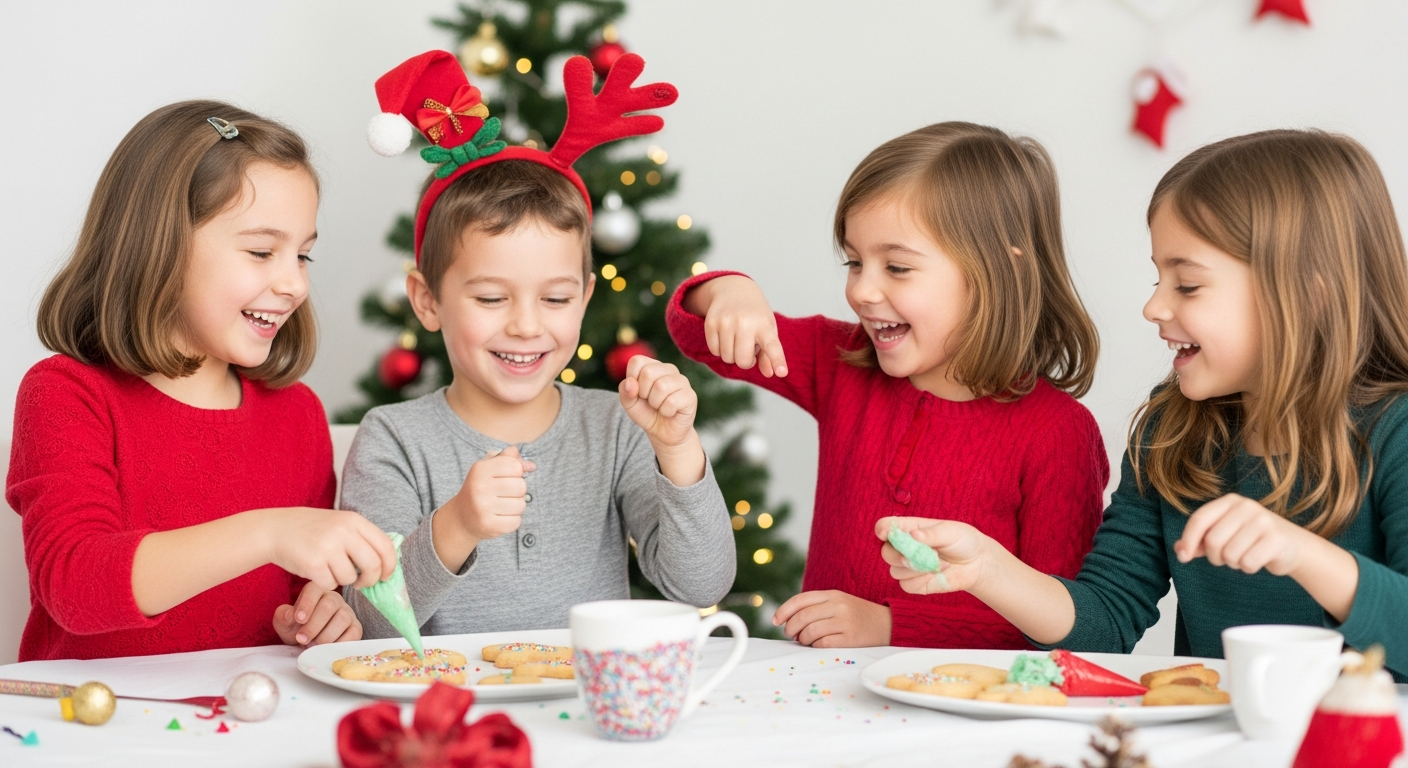
Table of Contents
- The Magic of Christmas for Communication Development
- Interactive Christmas Activities to Spark Speech and Language
- General Tips for Encouraging Communication During the Holidays
- Conclusion: A Season of Connection and Communication
- Frequently Asked Questions About Christmas Activities for Kids and Speech
The holiday season twinkles with magic, laughter, and an unparalleled sense of togetherness. For children, it's a wonderland of new sights, sounds, and smells – a perfect backdrop for rich sensory experiences and, perhaps surprisingly, a powerful environment for fostering communication skills. Imagine the sheer joy of decorating a tree, the wonder of twinkling lights, or the delicious aroma of baking cookies. These moments aren't just about creating cherished memories; they are vibrant opportunities to engage your child's developing mind and encourage them to express themselves.
This post will explore a delightful array of Christmas activities for kids, designed not only to entertain but also to subtly boost their speech and language development. We'll dive into hands-on crafts, interactive games, festive storytelling, and imaginative play, all while showing you how to transform holiday fun into a playful language lesson. Our mission at Speech Blubs is to empower children to speak their minds and hearts, and we know that blending scientific principles with play creates one-of-a-kind "smart screen time" experiences. This Christmas, let's explore how real-world play can amplify those efforts, making every festive moment a step towards confident communication. Get ready to discover how to infuse your holiday celebrations with purpose, connection, and a whole lot of linguistic cheer!

The Magic of Christmas for Communication Development
Christmas offers a unique sensory-rich landscape that naturally encourages conversation and expression. From the crinkle of wrapping paper to the jingle of bells, the vibrant colors of ornaments to the taste of gingerbread, every element provides a prompt for language. Children are inherently curious, and the novelty of holiday traditions sparks questions, invites descriptions, and ignites the imagination.
Think about a child describing the 'sparkly red ball' on the tree, or asking 'who is that man in the big red suit?' These seemingly simple interactions are fundamental building blocks for vocabulary expansion, sentence structure, question formation, and narrative skills. The repetitive nature of holiday songs and stories helps with phonological awareness and memorization, while the social interactions surrounding gift-giving and family gatherings provide a rich context for practicing greetings, turn-taking, and expressing gratitude.
For parents, these festive moments present an incredible chance to engage actively with their children, to model language, and to create a supportive environment where communication flourishes. It's about being present, listening intently, and responding with enthusiasm. By consciously weaving language-rich interactions into your holiday traditions, you're not just celebrating; you're building a foundation for lifelong communication confidence.
Interactive Christmas Activities to Spark Speech and Language
This holiday season, let's turn traditional Christmas fun into powerful opportunities for language growth. These activities are designed for co-play, encouraging parents to interact and model language, transforming passive viewing into active learning and connection.
Crafting Winter Wonderland: Fine Motor & Descriptive Language
Crafts are a fantastic way to engage multiple senses and provide concrete objects for discussion. As children create, they naturally use their hands, which can be closely linked to speech development, and they have tangible results to talk about.

DIY Ornament Decorating
Transform plain ornaments into personalized treasures. Provide clear, shatterproof ornaments, glitter, paint, markers, stickers, and small decorative items.
How it helps speech:
- Vocabulary Expansion: Introduce words like "sparkly," "smooth," "rough," "shiny," "sticky," "colorful," "round," "fragile."
- Descriptive Language: Encourage your child to describe their creation: "I'm making a blue and silver ornament with lots of glitter!"
- Following Directions: "First, put the glitter on. Next, add a sticker."
- Prepositional Concepts: "Put the star on top," "Put the paint inside."
- Narrative Skills: Ask them about their favorite ornament and why they made it that way.
Relatable scenario: For a parent whose child struggles with combining words, offering choices like "Red paint or blue paint?" or "Big sticker or small sticker?" provides structured opportunities for two-word phrases. You can model the words and encourage imitation.
Handprint/Footprint Christmas Art
Create adorable keepsakes like Santa's beard (white handprints), reindeer (brown handprints with thumbprints for antlers), or even mistletoe (green handprints).
How it helps speech:
- Body Part Identification: "Where is your hand?" "Let's put your fingers here."
- Action Verbs: "Press," "Lift," "Paint," "Wiggle."
- Sensory Vocabulary: "Squishy," "Wet," "Tickly."
- Anticipation & Prediction: "What do you think it will look like?"
Relatable scenario: If your child is working on action verbs, as you help them press their hand onto the paper, emphasize, "We're pressing! Now we lift!" You can even turn it into a silly game, asking, "Should we wiggle our fingers?"
Festive Storytelling and Reading: Building Narrative Skills
Books and stories are cornerstones of language development, and Christmas offers a treasure trove of festive tales.
Reading Christmas Books Aloud
Curl up with classic Christmas stories like "The Night Before Christmas," "How the Grinch Stole Christmas," or any of your child's favorite holiday tales.
How it helps speech:
- Vocabulary: Introduce new words specific to Christmas (e.g., sleigh, reindeer, carols, mistletoe).
- Narrative Structure: Children learn about plot, characters, setting, and sequence of events.
- Emotional Understanding: Discuss character feelings ("The Grinch felt grumpy").
- Question Answering: "What did Santa bring?" "Why was Rudolph's nose red?"
- Phonological Awareness: Point out rhyming words or alliteration.
Relatable scenario: For a child who has difficulty with comprehension, after reading a page, ask a simple "wh-" question, like "Who saw Santa?" or "What did they hang by the chimney?" Encourage them to point to pictures as clues.
Creating Your Own Christmas Story
Using puppets, toys, or even just imaginations, invent a Christmas story together. One person starts, and the other adds a sentence or two.
How it helps speech:
- Creative Thinking & Imagination: Encourages open-ended thought.
- Sequencing & Plot Development: "What happened next?"
- Character Development: Giving characters voices and traits.
- Turn-Taking: Essential for conversational skills.
Relatable scenario: If your child is a "late talker" and primarily uses single words, start with, "Once upon a time, a little elf..." and then pause, encouraging them to add a word like "ran" or "jumped." You can extend it: "The elf ran to the North Pole."
Melodies and Movement: Rhythmic Language Acquisition
Music is a powerful tool for language, helping with rhythm, intonation, and memory. Movement adds an extra layer of engagement.
Singing Christmas Carols
Sing classic carols like "Jingle Bells," "Rudolph the Red-Nosed Reindeer," or "We Wish You a Merry Christmas."
How it helps speech:
- Vocabulary: Learn new words within the songs.
- Rhyme & Rhythm: Develops phonological awareness, crucial for reading readiness.
- Auditory Memory: Remembering lyrics and melodies.
- Intonation & Pitch: Mimicking varied tones and expressions.
- Confidence: Singing in a group can reduce inhibitions.
Relatable scenario: For a child struggling with articulation, focus on specific sounds in carols. For example, exaggerate the "j" sound in "Jingle Bells." Make it a game: "Can you make a super loud 'Jingle!'"
Christmas Dance Party
Put on some festive music and simply dance! Encourage expressive movements.
How it helps speech:
- Action Verbs: "Jump," "Spin," "Wiggle," "Clap," "Stomp."
- Directional Words: "Up," "Down," "Around."
- Body Part Identification: "Shake your hands," "Tap your feet."
- Following Instructions: "Let's all jump high!"
Relatable scenario: For a child who is learning to follow multi-step directions, try, "First, clap your hands, then stomp your feet!" Use visual cues to support understanding.
Sensory and Imaginative Play: Exploring Through Touch and Pretend
Engaging multiple senses reinforces learning and makes experiences more memorable.
Christmas Sensory Bin
Fill a bin with red and green rice, pom-poms, jingle bells, small ornaments, pinecones, cinnamon sticks, and scoops/tongs.
How it helps speech:
- Sensory Vocabulary: "Crunchy," "Soft," "Smooth," "Rough," "Smelly," "Jingling."
- Action Verbs: "Pour," "Scoop," "Mix," "Hide," "Find."
- Prepositional Concepts: "In," "Out," "Under," "On top."
- Open-Ended Play: Encourages child-led conversation and creativity.
Relatable scenario: For a child working on basic concepts, ask, "Can you find something red?" or "Can you put the bell in the cup?" As they play, narrate their actions to model language: "Oh, you're scooping the rice!"
Pretend Play: Santa's Workshop or Reindeer Stable
Set up an area with props like gift boxes, wrapping paper, tools (toy hammers), and toy animals.
How it helps speech:
- Role-Playing: Taking on different characters ("I'm Santa, you're an elf!").
- Social Scripts: Practicing conversational turn-taking, greetings, and requests.
- Problem-Solving: "Oh no, the toy is broken! How can we fix it?"
- Expanding Vocabulary: Words related to toys, tools, and gift-making.
Relatable scenario: For a child who is shy about initiating conversation, start a scenario: "Elf, we need more red ribbon! Can you get it for Santa?" This gives them a clear prompt to respond.
Cooking and Baking: Delicious Language Lessons
The kitchen is a fantastic natural language lab, full of actions, ingredients, and delicious outcomes.
Baking Christmas Cookies
Making sugar cookies, gingerbread men, or any festive treat.
How it helps speech:
- Sequencing: "First, we mix. Then, we roll. Finally, we bake."
- Action Verbs: "Stir," "Pour," "Mix," "Roll," "Cut," "Decorate."
- Measurement Vocabulary: "Cup," "Spoon," "Half."
- Taste & Smell Vocabulary: "Sweet," "Spicy," "Yummy," "Warm."
- Following Directions: A recipe is a perfect set of instructions.
Relatable scenario: For a child who struggles with receptive language, provide choices when decorating: "Sprinkles or icing?" or "Star or tree cookie cutter?" This allows them to demonstrate understanding through non-verbal cues first, then verbally.
Decorating Gingerbread Houses
A fantastic activity for fine motor skills and creative expression.
How it helps speech:
- Descriptive Language: "Sticky icing," "colorful candies," "pointy roof."
- Spatial Concepts: "On top," "next to," "under," "inside."
- Requesting: "Can I have more frosting?" "Please pass the gumdrops."
- Problem-Solving: "The roof is falling! What should we do?"
Relatable scenario: If your child is working on asking questions, encourage them by modeling, "Hmm, I wonder where the candy goes? Where should we put the candy?"
Family Connection and "Smart Screen Time" with Speech Blubs
While these hands-on activities are wonderful, we also understand the reality of modern parenting and the role technology plays. At Speech Blubs, we believe in turning screen time into "smart screen time" – an active, engaging, and highly effective learning experience. Our app offers a unique blend of scientific principles and play, making it a powerful tool to supplement your child's language journey.
We know the struggles many families face because our company was born from the personal experiences of our founders, all of whom grew up with speech problems. They created the tool they wished they had: an immediate, effective, and joyful solution for the 1 in 4 children who need speech support. Our innovative "video modeling" methodology is central to our approach, where children learn by watching and imitating their real-life peers. This unique method is backed by science and rated in the top tier of speech apps globally, as detailed on our research page. It’s a screen-free alternative to passive viewing, promoting interaction and connection.
Integrating Speech Blubs into your holiday routine can be seamless. After a fun session of making ornaments, you can continue the language practice by exploring the "Holiday Fun" or "Animal Kingdom" sections in the app (depending on seasonal updates). For instance, if you were talking about reindeer, the app might offer fun sounds and words for other animals, reinforcing vocabulary.
Ready to see the difference Speech Blubs can make? If you're wondering if your child could benefit from a little extra speech support, take our quick 3-minute preliminary screener. It involves 9 simple questions and provides an assessment along with a personalized next-steps plan. It’s a great first step towards empowering your child to speak their mind and heart.
When you're ready to dive in, we offer flexible subscription plans. Our Monthly plan is $14.99 per month, but the real value lies in our Yearly plan at just $59.99 per year. That breaks down to an incredible $4.99/month – you save 66% with the Yearly plan! Beyond the significant cost savings, the Yearly plan unlocks exclusive, high-value features. You get a full 7-day free trial to experience everything the app has to offer, access to our extra Reading Blubs app to boost early literacy skills, early access to all new updates and content, and a priority 24-hour response time for customer support. The Monthly plan, by contrast, does not include these benefits. We truly encourage you to choose the Yearly plan to get the free trial and the full suite of features that will best support your child's communication journey.
Download Speech Blubs on the App Store or Google Play to begin your free trial today. If you prefer to sign up via our website, you can create your account here.
General Tips for Encouraging Communication During the Holidays
Beyond specific activities, here are some overarching strategies to foster language development throughout the festive season:
Be Present and Responsive
The most powerful tool for language development is your undivided attention.
- Engage in eye contact: Show your child you're listening.
- Respond enthusiastically: Validate their attempts to communicate, even if it's just a sound or a gesture.
- Narrate your actions: "I'm wrapping the gift," "We're stirring the batter." This models language in context.
Expand on Your Child's Utterances
When your child says something, build on it.
- If they say "tree," you can say, "Yes, a big green Christmas tree!"
- If they point and say "lights," you can respond, "Wow, those are sparkly, colorful lights!"
- This shows them how to add more words and details to their communication.
Ask Open-Ended Questions
Move beyond "yes/no" questions to encourage more elaborate responses.
- Instead of "Do you like the gingerbread man?", try "What do you like most about the gingerbread man?"
- Instead of "Is the ornament shiny?", ask "How does the ornament feel?"
- This encourages critical thinking and descriptive language.
Create Predictable Routines
Children thrive on predictability.
- Having a routine for certain holiday activities (e.g., "every night we read a Christmas story") provides opportunities for repetitive language exposure and reduces anxiety.
- Use visual schedules for younger children to help them understand what's coming next, using pictures alongside words.
Limit Passive Screen Time
While Speech Blubs offers engaging, interactive screen time, passive viewing (like cartoons without interaction) offers fewer opportunities for active communication.
- During the holidays, balance screen time with plenty of hands-on, interactive activities and face-to-face conversations.
- When using Speech Blubs, sit with your child, repeat words, and make it a shared experience.
Be Patient and Celebrate Small Wins
Language development is a journey, not a race.
- Some children will pick up new words quickly, others will take more time.
- Celebrate every attempt at communication, no matter how small. A new sound, a new word, a new gesture – these are all progress!
- Focus on fostering a love for communication and building confidence, rather than demanding perfection.
Leverage Social Opportunities
The holidays often bring extended family and friends together. These social gatherings are a fantastic opportunity for children to practice their communication skills in a variety of contexts.
- Greetings and Farewells: Practice saying "hello" and "goodbye" to relatives.
- Asking and Answering Questions: Encourage them to ask relatives about their day or answer questions about their own experiences.
- Turn-Taking in Conversation: Model waiting for their turn to speak and actively listening to others.
- Expressing Gratitude: Practice saying "thank you" for gifts and kindness.
For parents whose children may be hesitant in social settings, gently prepare them beforehand. Talk about who will be there and what they might do. You can even practice simple phrases together. Remember, the goal isn't perfect performance, but joyful participation and exposure to different communication styles. Many parents have shared their success stories with us; you can read some of them on our testimonials page. Their experiences highlight the power of consistent, supportive practice, both within the family and with tools like Speech Blubs.
Conclusion: A Season of Connection and Communication
The Christmas season, with its unique blend of traditions, sensory delights, and opportunities for togetherness, is a truly special time for children's growth. By thoughtfully integrating these engaging activities into your holiday plans, you're not just creating festive memories; you're actively nurturing your child's speech and language development. Every decorated cookie, every caroled song, and every shared story becomes a stepping stone towards confident, joyful communication. These are the moments that empower children to speak their minds and hearts.
Remember that you don't have to be a speech expert to make a profound difference. Your presence, your responsiveness, and your enthusiasm are the most powerful tools you possess. And when you're looking for an immediate, effective, and joyful solution that blends scientific principles with play into a one-of-a-kind "smart screen time" experience, Speech Blubs is here to support you.
We encourage you to embark on this festive journey of discovery and connection with your child. To give your child the gift of confident communication this holiday season, start your risk-free 7-day trial of Speech Blubs today. Choose our Yearly plan – it’s only $59.99 for the entire year, which is just $4.99 a month, saving you 66% compared to the Monthly plan. With the Yearly plan, you’ll unlock the free trial, our bonus Reading Blubs app, early access to new updates, and 24-hour support response.
Download Speech Blubs on the App Store or Google Play to get started. Or, for web users, create your account and begin your free trial today! Let's make this Christmas a season filled with language, laughter, and lasting family connections.
Frequently Asked Questions About Christmas Activities for Kids and Speech
Q1: How can I make sure my child stays engaged during these activities?
A1: The key to engagement is to follow your child's lead and keep it fun! Offer choices, use props, and incorporate movement and sensory elements. If your child loses interest in one activity, simply switch to another. Keep sessions short, especially for younger children, and remember that consistent, brief interactions are often more effective than long, forced ones. Focus on the process of playing and communicating, not just the finished product.
Q2: What if my child isn't talking much during the activities?
A2: It's perfectly normal for some children to be less verbal. Even if your child isn't talking, they are still learning by listening and observing. Continue to model language by narrating your actions, expanding on their gestures or sounds, and asking open-ended questions. Don't pressure them to speak; instead, create a supportive environment where they feel comfortable communicating in any way they can. Speech Blubs, with its video modeling, can also be a gentle way to encourage imitation without direct pressure.
Q3: Are these activities suitable for all ages and developmental levels?
A3: Many of these activities are highly adaptable. For toddlers, simplify instructions, focus on single words and sounds, and provide lots of repetition. For preschoolers, encourage more descriptive language, simple sentences, and narrative skills. Older children can help plan activities, take on more complex roles in pretend play, and use more sophisticated vocabulary. Always adjust the complexity to match your child's current abilities and interests, ensuring they feel successful and engaged.
Q4: How can Speech Blubs supplement these holiday activities?
A4: Speech Blubs acts as a powerful supplement by reinforcing and expanding on the language skills learned during hands-on play. For example, after decorating a gingerbread house, you can open Speech Blubs to a section on shapes or colors, or even an action verb section, to practice words like "build" or "decorate." The app's video modeling provides a structured way for children to practice articulation and vocabulary by imitating their peers, making it a great "smart screen time" complement to your festive real-world interactions. It helps maintain a consistent focus on speech development even amidst the holiday excitement.
About the author