
Joyful Christmas Activities for Kids & Language Growth
 By Speech Blubs Team•Dec 19, 2025•19 min.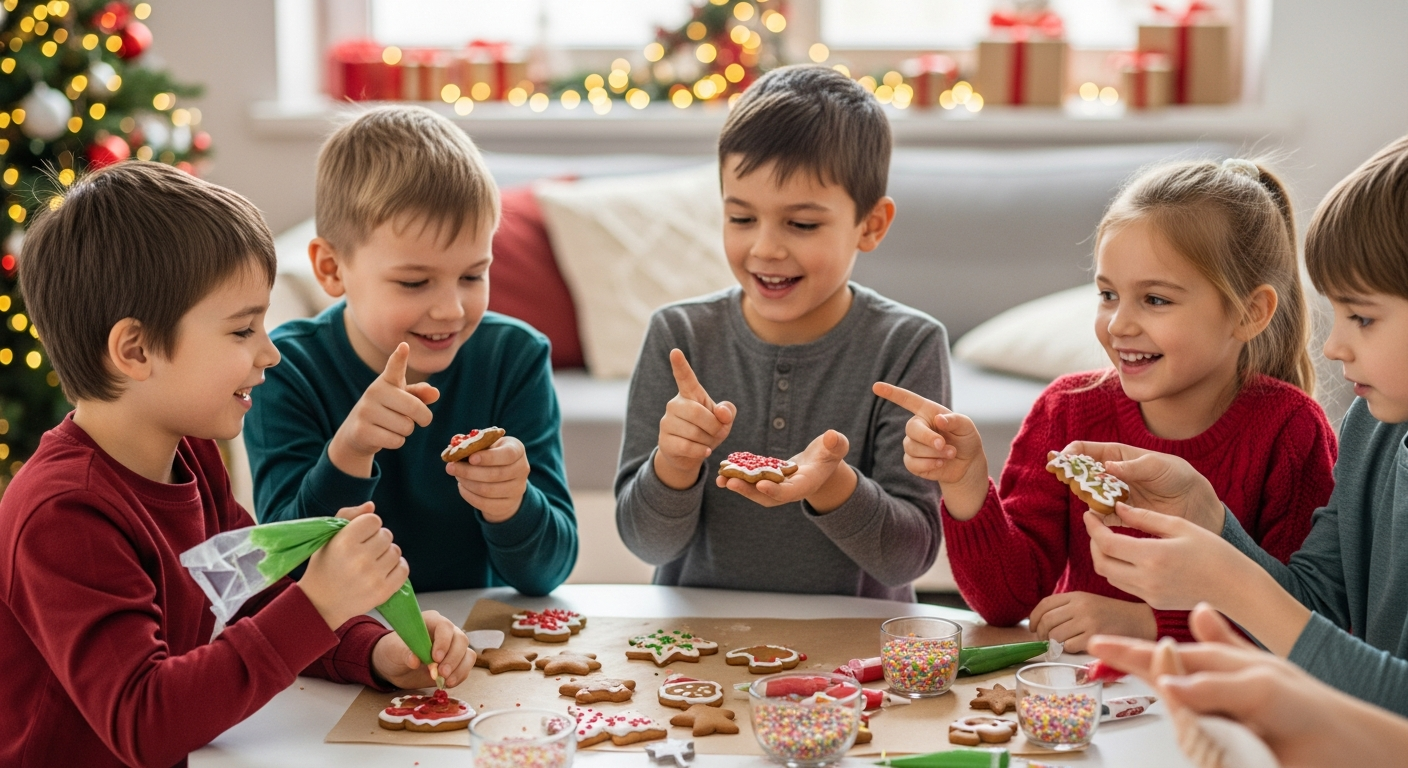
Table of Contents
- Introduction
- The Magic of Christmas for Language Development
- Intentional Activities for Speech Growth
- Seamlessly Integrating Speech Blubs into Your Holiday
- Maximizing Language Opportunities: Tips for Parents
- Beyond the Activities: Fostering a Language-Rich Environment
- Setting Realistic Expectations
- Conclusion
- FAQ
The holiday season often wraps us in a cozy blanket of magic, joy, and anticipation. Twinkling lights, festive music, and the scent of gingerbread fill our homes, creating cherished memories. But beyond the glitter and gifts, Christmas offers a unique and wonderful opportunity: a chance to connect with our children on a deeper level and naturally foster their speech and language development. Imagine turning every festive craft, cookie decorating session, or caroling adventure into a playful learning experience. This isn't just about celebrating; it's about intentionally building communication skills while making unforgettable holiday memories.
At Speech Blubs, we believe every child deserves to speak their minds and hearts, and we know firsthand the transformative power of early language support. Our founders, having navigated their own speech challenges as children, created the very tool they wished they had: a platform blending scientific principles with play to empower children. This holiday season, we're here to show you how to sprinkle a little speech therapy magic into your family's Christmas traditions, turning ordinary moments into extraordinary language-learning opportunities. This post will explore a wealth of engaging Christmas activities that naturally encourage speaking, listening, and understanding, ensuring your child’s holiday experience is as enriching as it is joyful.

Introduction
As parents, we often find ourselves caught in the whirlwind of holiday preparations, striving to create that perfect festive atmosphere. But amidst the hustle and bustle, there's a quieter, more profound magic waiting to be discovered: the incredible potential for connection and communication with our children. The Christmas season, with its unique blend of traditions, sensory experiences, and shared narratives, provides an unparalleled backdrop for fostering language development. It's a time when children are naturally curious, engaged, and eager to participate, offering a fertile ground for introducing new vocabulary, practicing conversational turn-taking, and honing their descriptive skills.
Many parents wonder how to turn everyday interactions into meaningful learning experiences, especially when faced with the challenges of speech development. This blog post aims to demystify that process, transforming the usual Christmas activities into intentional opportunities for communication growth. We'll dive into a variety of festive endeavors, from creative crafts to culinary adventures and storytelling sessions, demonstrating how each can be a powerful catalyst for speech and language progress. Our goal is to equip you with practical strategies and creative ideas that blend seamlessly into your holiday traditions, making language learning an integral, joyful part of your family's Christmas celebrations. By focusing on engagement and interaction, we can help our children build confidence, reduce frustration, and develop key foundational communication skills, all while creating precious memories that will last a lifetime.
The Magic of Christmas for Language Development
Christmas is more than just a season; it's an immersive, multi-sensory experience that naturally stimulates curiosity and communication. The vibrant colors of decorations, the distinct smells of pine and cinnamon, the taste of festive treats, and the sounds of carols all combine to create a rich environment for learning. For children, especially those needing extra support with speech and language, this sensory overload can be a powerful tool. It provides countless opportunities for descriptive language, emotional expression, and imaginative play – all crucial elements in developing strong communication skills.

Why Holiday Traditions Boost Communication
Holiday traditions, by their very nature, are repetitive and predictable, which is incredibly beneficial for children learning language. The predictability allows children to anticipate events, learn associated vocabulary, and practice specific phrases or actions. When you consistently decorate the tree, bake cookies, or read the same Christmas stories year after year, you're reinforcing language patterns and building a strong foundation for understanding and expression. These traditions also provide shared experiences, giving children common topics to discuss, ask questions about, and narrate to others.
Moreover, the emotional warmth and excitement surrounding Christmas naturally lower inhibitions, making children more willing to experiment with new sounds and words. The joy of giving, the anticipation of Santa, and the gathering of loved ones create a positive emotional context that enhances learning and memory retention. For a child who might be hesitant to speak in other settings, the sheer delight of the holidays can be a powerful motivator to express themselves. This is where the magic truly happens: when learning feels like pure fun, it becomes effortless and deeply ingrained.
Intentional Activities for Speech Growth
Turning Christmas activities into language-rich experiences doesn't require a special degree in speech pathology; it simply requires a shift in mindset towards intentional interaction. Every activity, from the simplest to the most elaborate, holds potential. The key is to engage, ask open-ended questions, encourage description, and model clear language.
Crafting Communication: Festive Art Projects
Crafts are fantastic for developing fine motor skills, but they're equally powerful for language. They offer tangible outcomes that children can describe and discuss.
- Ornament Making: Whether it's salt dough, paper, or painted baubles, ornament making is ripe with language opportunities.
- Vocabulary: Discuss shapes (round, star), colors (red, green, gold), textures (smooth, rough, glittery), and actions (roll, cut, paint, sprinkle, hang).
- Sequencing: For a child learning to follow multi-step directions, guide them through "First, we roll the dough. Next, we cut out a star. Then, we paint it red."
- Descriptive Language: Encourage them to describe their finished ornament. "My ornament is shiny and red, and it has glitter!"
- Scenario: For a child who struggles with using adjectives, ask them to choose three words to describe their favorite ornament. "Is it sparkly, big, or soft?"
- Card Making: Creating handmade Christmas cards involves decision-making, personalization, and thinking about the recipient.
- Recipient-focused Language: Discuss who the card is for ("Grandma will love this!"), what message to write ("Happy Christmas!"), and what pictures to draw.
- Action Verbs: "Fold the paper," "glue the picture," "write your name."
- Scenario: If your child is a "late talker," help them pick out stickers and then ask, "What sticker do you want? A Santa or a reindeer?" This encourages choice-making and verbal requests.
Culinary Connections: Holiday Baking and Cooking
Baking offers a sensory feast and a structured environment perfect for language learning. Following recipes, measuring ingredients, and tasting the results are all language-rich experiences.
- Cookie Decorating: This is a classic for a reason!
- Vocabulary: Colors of icing, shapes of sprinkles (stars, trees), textures (soft cookie, crunchy sprinkles), actions (squeeze, spread, dip, eat).
- Requesting & Expressing Preferences: "More sprinkles, please!" "I like the blue icing."
- Sequencing & Turn-Taking: "My turn to decorate this cookie, then your turn!" "First, the icing, then the sprinkles."
- Scenario: For a child working on conversational turn-taking, take turns decorating cookies and describe what each of you is doing. "I'm making stripes! What are you doing?"
- Relatable Scenario: For a parent whose child is developing early word combinations, you can make this activity highly interactive. As you decorate, explicitly model simple phrases like "Red icing," "More sprinkles," "Cookie yum!" Encourage your child to imitate or expand. If they point to the sprinkles, you can say, "You want sprinkles!" This helps bridge non-verbal communication to verbal.
- Making Hot Chocolate: A simpler activity but still full of language.
- Concepts: Hot/cold, sweet, more/less, stirring.
- Following Directions: "Get the mug," "Pour the milk."
- Scenario: For a child needing to expand their vocabulary related to actions and attributes, ask them, "Is the hot chocolate hot or cold?" "Do you want marshmallows or whipped cream?"
Storytelling & Imagination: Festive Narratives
Stories are the backbone of language. Reading, listening, and creating stories develop vocabulary, narrative skills, and imaginative play.
- Christmas Story Time: Read classic Christmas books.
- Vocabulary & Comprehension: Discuss new words, ask "who," "what," "where" questions. "Who is this?" "What is Santa doing?" "Where does Rudolph live?"
- Predicting: "What do you think will happen next?"
- Emotional Language: Discuss characters' feelings. "How do you think the Grinch feels?" "Why is Buddy the Elf so happy?"
- Scenario: For a child who struggles with understanding abstract concepts or emotions, pointing to the pictures and explicitly naming the feelings ("He's sad," "She's excited") can be very helpful.
- Creating Your Own Christmas Story: Use puppets, toys, or simply your imaginations.
- Narrative Skills: Practice beginning, middle, and end.
- Imaginative Play: Encourage "what if" scenarios. "What if Santa got stuck in the chimney?"
- Turn-Taking: One person starts the story, the next adds a sentence, and so on.
- Scenario: For an older child working on more complex sentence structures, challenge them to include a specific number of descriptive words or action verbs in their part of the story.
Sensory & Movement Play: Engaging All the Senses
Speech and language development are deeply intertwined with sensory processing and motor skills. Incorporating movement and sensory experiences can make learning more impactful.
- Christmas Sensory Bins: Fill a bin with festive items like pinecones, jingle bells, cinnamon sticks, fake snow, or cranberries.
- Descriptive Language: "It's rough," "It's shiny," "It smells like Christmas."
- Prepositional Concepts: "Put the bell under the pinecone," "The snow is on the tree."
- Scenario: For a child needing to expand their descriptive vocabulary, ask them to pick an item and tell you three things about it. "This pinecone is brown, bumpy, and smells like the forest."
- Festive Music & Movement: Sing carols, dance to holiday tunes, or play musical instruments.
- Auditory Processing: Identify instruments, recognize familiar songs.
- Following Directions: "Clap your hands," "Stomp your feet," "Wiggle like an elf."
- Rhyming & Rhythm: Sing along to rhyming songs, notice the rhythm.
- Scenario: For a child who benefits from multi-modal learning, combining a song with actions (e.g., "Rudolph the Red-Nosed Reindeer" with hand gestures) can reinforce vocabulary and memory.
Community & Connection: Spreading Holiday Cheer
The holiday season is about more than just family; it's also about community and giving back. These activities teach social language skills and empathy.
- Visiting a Nursing Home or Delivering Treats:
- Social Greetings: Practice "Hello," "Merry Christmas," "Thank you."
- Sharing Experiences: Describe the treats you made or the songs you sang.
- Scenario: For a child working on pragmatic language skills, model how to greet someone and how to ask a simple question, like, "Do you like gingerbread cookies?"
- Decorating the Neighborhood:
- Collaborative Language: Discuss where to hang lights, what decorations to use. "Let's put the big star here."
- Giving & Following Directions: "Hand me the tinsel," "Hold this ladder."
- Scenario: For a child who struggles with joint attention, actively involve them in the decision-making process, pointing to different spots and asking, "Should we put the lights above the window or below?"
Seamlessly Integrating Speech Blubs into Your Holiday
While these hands-on activities are incredibly valuable, we also recognize that modern families need modern solutions. That's where Speech Blubs comes in as a powerful complement, especially when you need a "smart screen time" solution. Our app is designed to be an immediate, effective, and joyful tool for the 1 in 4 children who need speech support, blending scientific principles with play. We're not just another app; we're a screen-free alternative to passive viewing experiences like cartoons, turning screen time into an active, interactive, and language-rich adventure.
Our unique approach, called "video modeling," is where children learn by watching and imitating their peers. This technique leverages mirror neurons, making learning natural and highly engaging. Imagine your child watching other joyful kids make sounds or articulate words in our "Christmas Fun" section (or any of our themed sections) – the motivation to imitate is incredibly strong.
For a parent whose 3-year-old "late talker" is obsessed with Christmas lights, our app might not have a dedicated "Christmas Lights" section, but the broader categories like "Early Sounds" or "People & Actions" can be used contextually. For instance, practicing "light" sounds, or actions like "blink" or "turn on/off" within our structured activities, and then immediately applying those new sounds to the Christmas lights in your home, creates a powerful bridge between app-based learning and real-world application. This focused interaction transforms potentially passive screen time into a dynamic tool for communication development.
We're committed to empowering children to speak their minds and hearts, and our app is the tool our founders wished they had when they were growing up with speech problems. It's not just about words; it's about building confidence, reducing frustration, and fostering a lifelong love for communication. When you integrate Speech Blubs, you're not just giving your child screen time; you're providing a structured, engaging, and scientifically backed resource that supports their journey toward clear and confident speech.
Unsure if your child could benefit from a little extra speech support during the holidays or year-round? Take our quick 3-minute preliminary screener to get a simple assessment and a personalized next-steps plan. It's a great way to gain insight and a free 7-day trial of the app!
Maximizing Language Opportunities: Tips for Parents
Making the most of these festive activities requires a bit of conscious effort, but the rewards are immeasurable. Here are some strategies to amplify the language-learning potential:
- Be Present and Engaged: Put down your phone (unless you're using Speech Blubs together!) and give your child your full attention. Your presence makes them feel valued and encourages them to communicate.
- Ask Open-Ended Questions: Instead of "Do you like it?" try "What do you like about it?" or "Tell me more about what you're doing." This encourages elaboration.
- Model Clear Language: Speak clearly, using appropriate vocabulary. If your child uses a single word, expand on it. If they say "cookie," you can say, "Yes, a delicious gingerbread cookie!"
- Narrate Your Actions: Talk about what you're doing. "I'm rolling the dough," "Now I'm cutting out a star." This provides a constant stream of language input.
- Follow Their Lead: If your child shows interest in a particular aspect of an activity, lean into it. Their engagement is key to their learning.
- Create Communication Opportunities: Intentionally "forget" an ingredient while baking or give them only half of what they need to encourage them to ask for the missing item.
- Praise Effort, Not Just Perfection: Celebrate every attempt at communication, no matter how small. "Great job trying to say 'star'!" or "I love how you told me you wanted more sprinkles!"
- Incorporate Repetition: Children learn through repetition. Repeat words and phrases, especially during routine activities. "We're decorating the tree again!"
- Use Visuals: Point to objects as you name them, use gestures, or look at pictures in books. Visual cues support language comprehension.
- Embrace the Mess: Language development often thrives in messy, sensory-rich play. Don't be afraid of a little flour or glitter; it means active learning is happening!
Remember, our mission at Speech Blubs is to empower children to speak their minds and hearts, providing a solution born from our founders' personal experiences. We are committed to an immediate, effective, and joyful solution for the 1 in 4 children who need speech support, blending scientific principles with play. These interactive activities, coupled with our scientifically-backed video modeling methodology, offer a holistic approach to nurturing your child's communication skills. For more information on our approach and effectiveness, explore our research page and discover why we're in the top tier of speech apps worldwide.
Beyond the Activities: Fostering a Language-Rich Environment
While specific Christmas activities provide excellent language opportunities, the overall environment you create during the holidays is equally important. A home filled with conversation, reading, and shared experiences naturally supports language development.
- Turn Off the Background Noise: Minimize passive screen time from TV or other devices. This creates space for active conversation and listening. When it's time for screen-based learning, choose "smart screen time" with Speech Blubs on your Apple device or Google Play device.
- Engage in Daily Conversations: Talk about your day, what you see, what you plan to do. Make conversation a natural, ongoing part of family life.
- Read Together Every Day: Even short bursts of reading can make a huge difference. Choose festive books and revisit favorites.
- Sing Songs and Rhymes: Music helps with rhythm, intonation, and memory, all of which are crucial for speech development.
- Play Games: Board games, card games, or even simple peek-a-boo offer structured opportunities for turn-taking, following rules, and using specific vocabulary.
- Encourage Pretend Play: Provide props like dress-up clothes, dolls, or toy kitchens and let your child lead the imaginative play. This is a rich context for developing narrative skills and using language creatively.
Creating this supportive, language-rich environment is an ongoing effort that extends far beyond the Christmas season. It’s about cultivating a home where communication is valued, encouraged, and celebrated. It's about empowering your child not just to speak words, but to express their unique personality, ideas, and emotions.
Setting Realistic Expectations
It's important to remember that speech and language development is a journey, not a race. While these activities offer wonderful opportunities, they are part of a larger, ongoing process. Celebrate small victories: a new word, a more complex sentence, a successful turn in a conversation. Don't expect your child to suddenly become a public speaker overnight. Our goal at Speech Blubs is to foster a love for communication, build confidence, reduce frustration, and develop key foundational skills. We provide a powerful supplement to a child's overall development plan and, when applicable, professional therapy. The most significant benefit often comes from the joyful family learning moments and the strengthening of your bond with your child through shared experiences.
We hear incredible stories from parents every day about the progress their children make. You can read what other parents are saying about their child's success with Speech Blubs and be inspired by their journeys.
Conclusion
The Christmas season, with its inherent magic and myriad traditions, offers a precious window of opportunity to nurture your child's speech and language development in the most joyful way imaginable. By transforming everyday festive activities—from baking and crafting to storytelling and singing—into intentional, interactive experiences, you're not just creating memories; you're building a strong foundation for lifelong communication skills. Each shared laugh, every decorated cookie, and every carol sung becomes a stepping stone on their journey to speaking their minds and hearts.
At Speech Blubs, we are passionate about providing children with the tools they need to communicate confidently. Our app, born from the personal experiences of our founders, offers a unique blend of scientific methodology and playful "smart screen time," using video modeling to inspire children to imitate their peers. This holiday, empower your child with both screen-free engagement and targeted, effective digital support.
Ready to embark on a festive journey of language growth? Give your child the gift of confident communication this Christmas. Start your 7-day free trial today and explore hundreds of engaging activities designed to make speech therapy fun. To unlock the full suite of features, including the extra Reading Blubs app, early access to new updates, and 24-hour support response time, be sure to select our Yearly plan for just $59.99 (which breaks down to an incredible $4.99/month, saving you 66% compared to the Monthly plan at $14.99/month, which does not include these benefits). Download Speech Blubs on the App Store or Google Play and choose the Yearly plan to give your child the best start on their communication adventure!
FAQ
Q1: How can I encourage my child to talk more during Christmas activities if they are usually quiet?
A1: Start with simple, low-pressure interactions. Focus on non-verbal communication like pointing, gesturing, and making eye contact. Model language clearly and narrate your own actions. Instead of direct questions, try making comments ("I see the red ornament!") and pause, giving your child time to respond. For a "late talker," use choices: "Do you want the star or the bell?" This encourages a response without demanding complex speech. Remember, praise any attempt at communication, even a sound or gesture.
Q2: My child has specific speech delays. Can these general activities truly help, or do we need professional therapy?
A2: These general activities are fantastic for creating a language-rich environment and naturally reinforcing skills, but they are designed to supplement, not replace, professional therapy if a significant delay is present. Intentional interaction during play can significantly support what your child is learning in therapy, making new concepts more concrete and transferable to real-life situations. For personalized guidance, consult a speech-language pathologist. Meanwhile, tools like Speech Blubs offer structured, scientifically-backed support that you can integrate into your daily routine.
Q3: How do I make sure I'm not putting too much pressure on my child during these activities?
A3: The key is to keep it playful and fun! Avoid turning activities into formal "lessons." If your child shows signs of frustration or disinterest, take a break or switch to something else. Focus on the joy of the activity itself and celebrate small successes rather than pushing for perfect articulation. Your goal is to create positive associations with communication. Remember, the holidays are about connection, and language learning should flow naturally from that bond.
Q4: How does Speech Blubs specifically help with communication during holiday-themed interactions?
A4: Speech Blubs leverages video modeling, where children learn by observing and imitating their peers, making learning engaging and effective. While we may not have a specific "Christmas Tree Decorating" section, the app's hundreds of activities, from "Early Sounds" to "People & Actions" and "Animal Kingdom," provide foundational vocabulary and speech practice. For instance, after practicing "on" and "off" sounds in the app, you can immediately apply it by saying "turn on the lights" while decorating. This direct application bridges the "smart screen time" with real-world interactions, making communication skills more robust and natural during all your festive adventures.
About the author