
Joyful Christmas Activities for Kids & Little Talkers
 By Speech Blubs Team•Dec 19, 2025•20 min.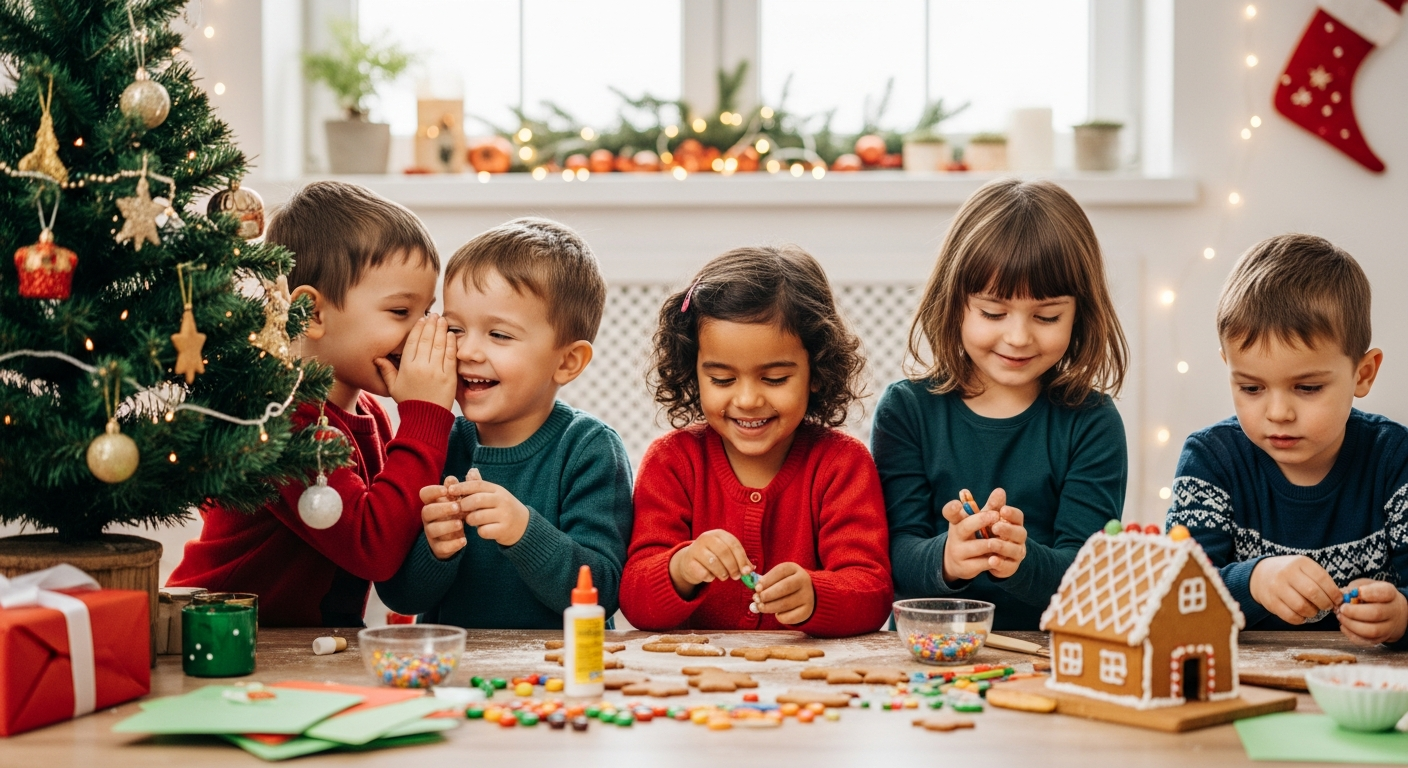
Table of Contents
- Introduction
- The Magic of Christmas for Language Development
- Top Festive Christmas Activities for Kids
- How Speech Blubs Enhances Your Holiday Fun
- Your Partner in Communication: Our Mission and Values
- Choosing the Right Plan for Your Family
- Conclusion
- FAQ
The crisp scent of pine, the twinkle of lights, and the joyful anticipation in children's eyes – Christmas is a magical time of year. But beyond the glitter and the gifts, the holiday season offers an unparalleled opportunity for connection, learning, and, perhaps most importantly, communication. Imagine transforming those cherished holiday moments into powerful foundations for your child's speech and language development.
At Speech Blubs, we believe every child deserves to "speak their minds and hearts," and the holiday season provides a natural, vibrant backdrop for fostering these vital skills. We understand the unique journey of a child’s communication development, as our company was born from the personal experiences of our founders, who all grew up with speech challenges and created the tool they wished they had. This isn't just about passive entertainment; it's about engaging, interactive experiences that blend scientific principles with play, creating one-of-a-kind "smart screen time." This blog post will guide you through a sleigh-full of fun, festive Christmas activities for kids that naturally boost speech and language, showing you how to seamlessly integrate these moments with the powerful support of tools like Speech Blubs to build confidence and joy in communication.

Introduction
Have you ever stopped to consider just how many words, sounds, and social interactions are packed into a single Christmas season? From excitedly exclaiming "Santa!" to singing carols, describing glittering ornaments, or asking for "more cookies," the holidays are a veritable feast for language. Yet, for parents of children who might be struggling with speech development, this bustling time can sometimes feel overwhelming, adding pressure to an already busy schedule. The good news is that holiday traditions don't have to be another source of stress; they are, in fact, incredible, organic opportunities to nurture your child's communication skills without them even realizing they're "learning."
We'll explore a variety of engaging Christmas activities for kids, from classic traditions like decorating the tree and baking cookies, to creative crafts and interactive games. For each activity, we'll dive into the specific ways it supports different facets of speech and language development – be it vocabulary expansion, articulation practice, sentence structure, or social communication skills. Crucially, we’ll also illustrate how Speech Blubs can act as a powerful, complementary tool, reinforcing these real-world experiences with targeted, joyful practice through our unique video modeling approach. Our goal is to empower you to turn every festive moment into a chance for your child to grow their voice, build confidence, and truly speak their mind and heart, creating lasting memories along the way.
The Magic of Christmas for Language Development
The holiday season is inherently rich with sensory experiences and novel vocabulary. Think about it: twinkling lights, the smell of gingerbread, the rustle of wrapping paper, the feel of soft snow, and the sounds of carols. Each of these sensory inputs creates a pathway for language acquisition. Children are naturally curious, and the festive environment provides countless prompts for questions, descriptions, and storytelling.

Why Holiday Activities Are So Effective
- Novel Vocabulary: Words like "reindeer," "sleigh," "ornament," "garland," "eggnog," and "carol" are often unique to this season, offering fresh vocabulary challenges and expansions.
- Sensory Engagement: Engaging multiple senses (sight, sound, touch, smell, taste) enhances memory and deepens understanding of new words and concepts.
- Emotion and Context: The joy, excitement, and anticipation of Christmas provide a strong emotional context, which helps solidify learning. When children are happy and engaged, they are more receptive to new information.
- Social Interaction: Many holiday activities are communal, requiring children to communicate with family members, practice turn-taking, make requests, and express preferences.
- Repetition and Routine: Many holiday traditions are repeated year after year, providing valuable opportunities for children to hear and use the same language patterns and vocabulary multiple times, reinforcing learning.
These organic learning opportunities, coupled with supportive engagement from adults, lay a strong foundation for speech development. When a child's environment is stimulating and encouraging, their natural inclination to communicate flourishes. And when they have a tool like Speech Blubs to reinforce these real-world lessons, their progress can truly accelerate.
Top Festive Christmas Activities for Kids
Let's dive into some specific Christmas activities for kids and explore their immense potential for boosting communication skills.
Decorating the Christmas Tree: A Language-Rich Tradition
The act of decorating a Christmas tree is far more than just hanging ornaments; it's a multi-sensory language lesson.
- Vocabulary: Introduce and repeat words like "star," "angel," "bauble," "tinsel," "lights," "garland," "branch," "top," "bottom," "fragile," "sparkle," "shiny," "red," "green," "gold."
- Following Directions: "Find the red ornament." "Put the star on top." "Hang the tinsel carefully."
- Sequencing: "First, we put on the lights, then the garland, then the ornaments."
- Describing: "Tell me about this ornament. What color is it? What shape is it? Is it big or small?"
- Spatial Concepts: "Put it on the branch, under the light, next to the Santa ornament."
Relatable Scenario: For a parent whose child is a "late talker" and struggles with descriptive words, simply holding up ornaments and asking "What do you see?" or "Tell me about this" can be incredibly powerful. If the child points, model the word: "Yes, that's a shiny red bauble!" For a child who enjoys pointing at specific objects, like animals, our "Animal Kingdom" section within Speech Blubs offers a fun, motivating way to practice "moo" and "baa" sounds, which can then be transferred to describing animal ornaments on the tree. You can also explore sections that focus on colors and shapes, reinforcing the language learned during tree decorating.
Baking & Decorating Christmas Cookies: Sweet Speech Skills
The kitchen becomes a language lab when you're baking cookies.
- Action Verbs: "Mix," "stir," "pour," "roll," "cut," "bake," "decorate," "eat."
- Measurement Concepts: "Half," "full," "empty," "more," "less."
- Sensory Words: "Sticky," "sweet," "warm," "soft," "crunchy," "delicious."
- Following Multi-Step Instructions: Reading a simple recipe together.
- Requesting: "Can I have more sprinkles?" "Please pass the cookie cutter."
Relatable Scenario: Imagine a child who finds it hard to make requests or use full sentences. While baking, encourage them with phrases like, "What do you need next?" If they point to sprinkles, gently prompt, "I need sprinkles, please." The immediate gratification of the cookie making process provides a strong motivator. After the baking fun, reinforce food-related vocabulary and action verbs with interactive games and exercises in Speech Blubs, making "baking cookies" a fun topic to practice with our video models. You can easily find categories that help practice descriptive words like "sticky" or "sweet," making the transition from kitchen to app seamless and reinforcing.
Crafting Homemade Ornaments & Cards: Tiny Hands, Big Words
Crafts are fantastic for fine motor skills and also for sparking conversation.
- Vocabulary: "Glue," "glitter," "paper," "scissors," "ribbon," "paint," "draw," "cut," "fold."
- Describing Process: "First, we cut the paper. Then, we glue the glitter."
- Color & Shape Recognition: "What color glitter should we use? A circle or a square?"
- Sharing Ideas: "What picture should we draw on the card?" "Who is this card for?"
Relatable Scenario: For a child who struggles with articulation, like saying "scissors," crafting offers repeated, natural chances to practice. "Can you hand me the scissors?" or "Let's cut the paper." If a child is working on specific sounds, our app allows for focused practice that can then be applied in context. For instance, if the child is practicing the /s/ sound, you can talk about "sparkly stars" for their ornament, and then dive into Speech Blubs to reinforce the /s/ sound with our interactive exercises. To see how other parents have integrated Speech Blubs into their daily routines for similar challenges, you can explore our testimonials page.
Singing Christmas Carols: Rhyme, Rhythm, and Resonance
Music is a powerful tool for speech development, engaging different parts of the brain.
- Rhythm and Intonation: Carols help children develop a sense of speech rhythm and the natural rise and fall of intonation.
- Vocabulary and Storytelling: Many carols tell stories and introduce new words.
- Articulation: Singing slowly can help children articulate sounds more clearly.
- Memory and Sequencing: Remembering song lyrics helps with auditory memory and sequencing skills.
- Emotional Expression: Songs provide an outlet for expressing feelings.
Relatable Scenario: A child who is shy about speaking might feel more confident singing along in a group. The repetitive nature of carols helps them learn and practice new words and phrases in a low-pressure environment. After a carol sing-along, you can use Speech Blubs to further develop a love for sounds and words. While we don't have carols specifically, our app's various categories encourage sound imitation and word repetition, much like singing does. For example, practicing sounds in our "Animal Kingdom" or "When I Grow Up" sections can strengthen the same muscles used for singing and clear articulation.
Reading Holiday Stories Together: Journeys Through Words
Cozying up with a Christmas book is a time-honored tradition that profoundly impacts language.
- Vocabulary Expansion: Exposure to new words and concepts.
- Narrative Skills: Understanding plot, characters, setting, and sequencing of events.
- Comprehension: Asking questions about the story ("Why did Santa do that?").
- Phonological Awareness: Recognizing rhymes, alliteration, and different sounds in words.
- Turn-Taking: Letting your child "read" a page, or describe pictures.
Relatable Scenario: For a child developing early literacy skills, pointing to words as you read, or asking them to identify objects in the pictures, is invaluable. For children ready for more, discussing character emotions or predicting what might happen next helps develop higher-level language skills. After story time, consider using Speech Blubs to reinforce new vocabulary. Our app often introduces words through engaging visuals and video models, similar to picture books but with an interactive element. The Reading Blubs app, included with our Yearly plan, is also an excellent companion for fostering early reading skills.
Building a Gingerbread House: Edible Engineering & Elocution
This delightful activity is a fantastic way to combine creativity with communication.
- Planning & Problem-Solving: "Where should the door go?" "How can we make this stick?"
- Descriptive Language: Describing textures ("sticky icing," "crunchy candy"), colors, and shapes.
- Spatial Relationships: "Put the gumdrop on top of the roof, next to the chimney."
- Following Instructions: Carefully assembling the house.
- Requesting & Collaborating: "Can you hold this wall for me?" "I need more icing."
Relatable Scenario: A child who struggles with using prepositions can greatly benefit from a hands-on activity like this. Constantly using words like "on," "under," "next to," "in front of" while building provides concrete examples. "Put the candy on the roof," "Place the gingerbread man in front of the door." Speech Blubs can further reinforce these concepts with activities that focus on spatial prepositions or descriptive vocabulary. This real-world application, followed by targeted practice, creates a powerful learning loop.
Exploring Christmas Lights & Decorations: A Visual Vocabulary Feast
A simple walk or drive to see Christmas lights can be an incredibly stimulating language experience.
- Descriptive Language: "Look at the bright, sparkling, colorful lights!" "That reindeer is huge!"
- Vocabulary Expansion: "Twinkle," "glow," "ornate," "festive," "dazzling," "silhouette."
- Question Asking & Answering: "Which lights are your favorite?" "How do you think they made that Santa?"
- Comparing and Contrasting: "This house has more lights than that one." "Do you like the blue lights or the red lights better?"
Relatable Scenario: For a child who is visually oriented, this activity can spark a torrent of new words and phrases. Encourage them to describe what they see, even if it's just one word initially. Model more complex sentences. "Wow, look at the bright blue lights! They are twinkling!" You can then translate this excitement into Speech Blubs, using categories related to colors, actions, or adjectives to reinforce the new vocabulary learned during your light tour. This connects the magic of the real world with structured, playful learning.
Writing Letters to Santa: Pre-Literacy & Imagination
Even if your child can't write yet, the act of "writing" a letter to Santa is excellent for development.
- Sequencing: What do we want to tell Santa first? Then what?
- Imagination & Creativity: What gifts would they ask for? What adventures has Santa had?
- Pre-Writing Skills: Holding a crayon, scribbling, drawing pictures to convey messages.
- Vocabulary: "Wish list," "reindeer," "sleigh," "elves," "North Pole."
- Narrative Skills: Constructing a simple story or request.
Relatable Scenario: A child who is hesitant to verbalize their desires might find it easier to "draw" their wishes in a letter. This provides a bridge to verbal expression. You can then interpret their drawings and verbalize them: "Oh, you drew a truck! You want a red truck from Santa!" This validates their efforts and models language. Our Speech Blubs app has categories dedicated to toys and daily objects, which can help children practice the names of items they might be asking Santa for, further enriching their vocabulary.
Festive Sensory Bins: Touch, Tell, and Thrive
Sensory bins are fantastic for engaging multiple senses and promoting imaginative play and language. For Christmas, fill a bin with rice, cranberries, pinecones, cinnamon sticks, jingle bells, small ornaments, and toy figures (e.g., Santa, reindeer, elves).
- Descriptive Language: "The rice feels smooth." "The pinecone is prickly." "The bells make a jingling sound."
- Action Verbs: "Pour," "scoop," "bury," "find," "shake."
- Prepositional Phrases: "The reindeer is under the rice." "The bell is in the scoop."
- Imaginative Play & Storytelling: Encourage children to create scenarios with the figures. "Santa is looking for his sleigh!"
- Requesting: "Can I have the scoop?" "More rice, please."
Relatable Scenario: For a child who thrives on hands-on exploration but struggles with verbal output, a sensory bin can be a low-pressure environment to elicit speech. As they interact with the materials, you can model language based on their actions and discoveries. "You found a shiny red ornament!" or "Listen to the jingle bells!" Our app’s categories on descriptive words and actions can reinforce these new words, making the "smart screen time" a natural extension of their play. To explore more about the science behind our effective methodology, including video modeling and mirror neurons, visit our research page.
Playing Holiday-Themed Games: Turn-Taking & Talk
Simple games, whether board games or active games, are excellent for social communication and specific language skills.
- Turn-Taking & Sharing: Essential social skills reinforced in any game.
- Following Rules: Understanding and verbalizing rules.
- Problem-Solving: Strategizing about the game.
- Expressing Emotions: Learning to win and lose gracefully, expressing joy or frustration appropriately.
- Vocabulary: Game-specific words ("dice," "spinner," "move," "card").
Relatable Scenario: A child who struggles with social reciprocity or conversational turn-taking can learn these skills in a fun, structured game environment. "My turn!" "Your turn!" "I rolled a three!" Speech Blubs also emphasizes interaction and active participation, offering a screen-free alternative to passive viewing experiences like cartoons. The app uses our unique video modeling methodology, where children learn by watching and imitating their peers, providing a powerful tool for family connection as you play and learn together. If you're wondering if your child could benefit from targeted speech support, take our quick 3-minute preliminary screener to get a simple assessment and a free 7-day trial.
How Speech Blubs Enhances Your Holiday Fun
While these Christmas activities for kids naturally boost language, Speech Blubs offers a structured, engaging way to amplify and accelerate that learning.
Connecting Festive Fun with Targeted Learning
Imagine your child learns the word "star" while decorating the tree. Later, they can reinforce this word in the "Things We See" category within Speech Blubs, practicing its pronunciation and incorporating it into simple sentences through our interactive exercises. This synergy between real-world experience and targeted app practice creates a powerful learning loop. For a child working on specific sounds, our app helps them isolate and practice those sounds in a playful way, preparing them to use them confidently when singing carols or describing decorations.
Our Unique "Smart Screen Time" Approach
We know parents are concerned about screen time, and so are we. That’s why Speech Blubs offers a unique "smart screen time" experience. Unlike passive viewing, our app requires active participation. Children aren't just watching; they're imitating, speaking, and interacting. This turns screen time into a powerful developmental tool, fostering engagement and learning. We believe in providing an immediate, effective, and joyful solution for the 1 in 4 children who need speech support, blending scientific principles with play. This active engagement creates a stark contrast to passive screen experiences like cartoons, offering a powerful tool for family connection as you encourage and play alongside your child.
The Power of Video Modeling
At the core of our methodology is "video modeling." Children learn by watching and imitating their peers. This natural, intuitive learning process is incredibly effective for speech development. When a child sees other children their age successfully making sounds or saying words, they are more motivated and confident to try it themselves. This approach harnesses the power of mirror neurons, making learning feel organic and fun. Just as a child learns to wave goodbye by watching a peer, they can learn to articulate "Santa" by seeing another child do it clearly on the app.
Beyond the Holiday Season: Continuous Support
The benefits of Speech Blubs extend far beyond the Christmas holidays. Our app provides a comprehensive library of activities, sounds, words, and sentences across various categories, ensuring continuous learning and support throughout the year. It's designed to be a powerful supplement to a child's overall development plan and, when applicable, professional therapy, building a strong foundation for lifelong communication skills.
Ready to see the magic unfold? Download Speech Blubs on the App Store or Google Play to begin your journey.
Your Partner in Communication: Our Mission and Values
At Speech Blubs, our mission is clear: to empower children to "speak their minds and hearts." We believe that every child deserves the opportunity to communicate effectively, express themselves confidently, and connect meaningfully with the world around them. This deep commitment stems from our founders' personal experiences, as they built Speech Blubs to be the very tool they wished they had during their own childhood struggles with speech.
We are dedicated to providing an immediate, effective, and joyful solution for the 1 in 4 children who need speech support. Our approach is rooted in blending scientific principles with engaging, playful experiences, creating what we proudly call "smart screen time." This means your child is actively participating, imitating, and learning, rather than passively observing. We leverage our unique "video modeling" methodology, where children learn by watching and imitating their peers, fostering confidence and natural speech development. We’re not just an app; we're a powerful tool for family connection, designed to be used with adult co-play and support, turning learning into shared moments of joy. We encourage you to visit our main homepage to learn more about our comprehensive approach.
Choosing the Right Plan for Your Family
We are committed to transparency and want to help you make the best choice for your family’s communication journey. Speech Blubs offers two primary subscription plans:
- Monthly Plan: Priced at $14.99 per month. This plan offers access to our core Speech Blubs app.
- Yearly Plan: Our most popular and recommended option, priced at just $59.99 per year. This breaks down to an incredible value of only $4.99 per month, allowing you to save 66% compared to the monthly subscription!
The Yearly Plan isn't just about significant savings; it's about unlocking the full Speech Blubs experience and providing the best value for your child’s development. The Yearly Plan includes exclusive, high-value features that are not available with the Monthly Plan:
- A 7-day free trial: Experience the full benefits of Speech Blubs before committing.
- The extra Reading Blubs app: An invaluable tool to support early literacy skills, complementing your child’s speech development.
- Early access to new updates: Be among the first to benefit from our latest features and content.
- 24-hour support response time: Get prompt assistance whenever you need it.
We strongly encourage you to choose the Yearly Plan to maximize your savings and provide your child with the most comprehensive support possible.
Conclusion
The Christmas season is a precious gift, overflowing with opportunities to nurture your child's communication skills through joyous, memorable activities. From the vocabulary learned while decorating the tree, to the descriptive language used during cookie baking, and the social skills practiced in holiday games, every festive moment holds potential for growth. By actively engaging with these Christmas activities for kids, you're not just creating holiday memories; you're building a strong foundation for their confidence and ability to express themselves.
And when you combine these real-world experiences with the targeted, playful learning offered by Speech Blubs, you amplify the impact. Our app provides "smart screen time" that actively engages your child, reinforcing new words, sounds, and communication patterns through our unique video modeling methodology. It’s a powerful supplement, designed to empower your child to speak their minds and hearts, not just during the holidays but all year round.
Don't let this holiday season pass without investing in your child's most important skill – communication. Ready to embark on this joyful journey? Create your account and begin your 7-day free trial today! Remember to select the Yearly plan to get the free trial and unlock the full suite of features, including the Reading Blubs app and early access to updates, saving 66% and giving your child the very best in speech development support.
FAQ
Q1: How can Christmas activities specifically help with my child's speech delay? A1: Christmas activities are rich in new vocabulary, sensory experiences, and social interactions, providing natural prompts for communication. They offer low-pressure environments for children to practice new words, follow instructions, describe objects, and engage in conversations, all of which are crucial for overcoming speech delays. The joyful context makes learning fun and memorable.
Q2: My child is shy about speaking. How can these activities encourage them? A2: Many holiday activities offer gentle ways to encourage communication. Singing carols provides a group setting where a child can participate without feeling singled out. Crafts or baking involve hands-on tasks that naturally elicit requests or descriptions ("More glue, please," "Red cookie cutter"). Pairing these with Speech Blubs' video modeling, where children imitate their peers, can further build confidence in a fun, non-intimidating way.
Q3: How does Speech Blubs integrate with traditional holiday activities? A3: Speech Blubs acts as a powerful complement. For instance, if your child learns "star" while decorating the tree, they can then practice that word and its sounds in the app's relevant categories, reinforcing the real-world lesson. The app's structured, playful exercises can strengthen articulation, expand vocabulary, and build sentence structure, directly supporting the language learned during holiday fun. Our mission is to blend scientific principles with play, ensuring learning is effective and joyful.
Q4: What is the best way to get started with Speech Blubs to support my child's communication? A4: The best way to start is by taking advantage of our 7-day free trial. We highly recommend choosing the Yearly plan, as it not only offers significant savings (66% compared to the monthly plan) but also includes the free trial, the Reading Blubs app, early access to updates, and 24-hour support. This ensures your child receives the most comprehensive and continuous support for their speech development journey.
About the author