
Joyful Christmas Activities for Little Kids
 By Speech Blubs Team•Dec 19, 2025•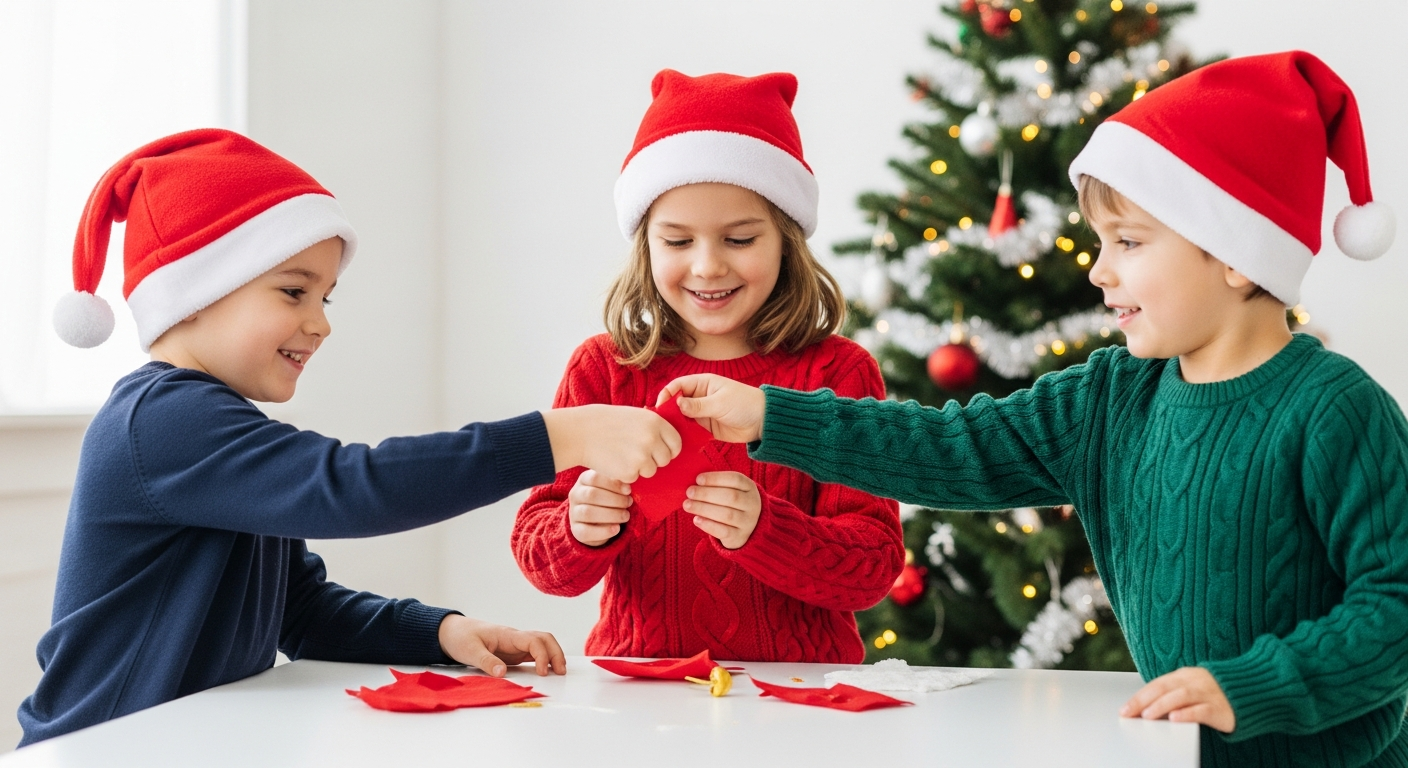
Table of Contents
- Introduction
- The Magic of Christmas for Little Ones
- Simple & Sensory Christmas Crafts
- Engaging Christmas Storytime & Music
- Kitchen Adventures: Festive Christmas Baking & Cooking
- Outdoor & Active Christmas Fun
- Building Connections: Christmas Traditions & Conversations
- Screen Time with Purpose: How Speech Blubs Enhances Holiday Learning
- Why Choose Speech Blubs for Your Family?
- Integrating Speech Blubs with Your Christmas Activities
- Conclusion
- FAQ
Introduction
The holiday season twinkles with a unique kind of magic, especially through the eyes of our little ones. From sparkling lights to gingerbread scents, Christmas offers a feast for the senses and countless opportunities for growth and connection. Yet, amidst the hustle and bustle, it can sometimes feel challenging to channel that festive energy into meaningful, developmental experiences for toddlers and preschoolers. This blog post is your guide to transforming the joyful chaos of Christmas into enriching, speech-boosting, and memory-making adventures. We'll explore a wide array of engaging, age-appropriate Christmas activities for little kids, focusing on how each can foster communication, fine motor skills, sensory exploration, and precious family moments. By the end, you'll be armed with creative ideas and understand how purposeful play can lay a strong foundation for your child's confidence and ability to express themselves, both during the holidays and beyond.
The Magic of Christmas for Little Ones
Christmas isn't just about presents; it's a season bursting with sensory experiences and new vocabulary waiting to be discovered. For little kids, every twinkling light, every caroled song, and every spiced cookie represents a chance to learn, explore, and connect. These early years are a critical window for language development, and the vibrant, emotion-rich environment of the holidays provides a natural, exciting backdrop for boosting communication skills.
Engaging in festive activities helps children build a rich vocabulary related to colors, shapes, textures, sounds, and actions. It encourages them to describe what they see, feel, and hear, fostering descriptive language and narrative skills. Moreover, the social interactions inherent in holiday traditions—talking about Santa, sharing wishes, or collaborating on a craft—are vital for developing pragmatic language and social communication. These experiences aren't just fun; they're foundational for helping children speak their minds and hearts, a mission we deeply cherish at Speech Blubs.
Simple & Sensory Christmas Crafts
Crafts are a wonderful way to engage little hands and minds, offering a multi-sensory experience that naturally encourages communication. When children are absorbed in creating, they are often more open to talking about their process, the materials, and their finished product.
DIY Ornaments for Little Hands
Creating ornaments is a classic Christmas activity for little kids that offers a fantastic opportunity for fine motor skill development and language practice.
- Salt Dough Ornaments: Mix flour, salt, and water to create a pliable dough. Let your child roll it out, press cookie cutters (stars, trees, bells), and poke a hole for string. While doing this, talk about the sticky dough, the round shapes, the pushing action. Once baked and cooled, decorating with paint, glitter, or markers allows for color recognition and expressive descriptions like "sparkly," "red," or "green."
- Paper Plate Santas/Reindeer: Provide a paper plate, cotton balls, red construction paper, and googly eyes. Guide your child to glue the cotton for Santa's beard, or draw antlers for a reindeer. Discuss body parts, colors, and actions: "Let's glue Santa's fuzzy beard," "Can you find the red hat?" This activity helps with following multi-step directions and identifying common objects.
Festive Holiday Card Making
Making cards for family and friends is a thoughtful way to introduce the concept of giving and connection, while also boosting creativity and language.
- Finger Painting Cards: Lay out red, green, and white washable paints. Let your child create abstract designs or finger-paint simple Christmas trees. Talk about the squishy paint, the swirls of color. Afterward, you can help them dictate a message to write inside, reinforcing the idea that their marks and words can convey meaning.
- Christmas Collages: Provide various festive materials like glitter, small pom-poms, scraps of shiny paper, and magazine cut-outs of holiday themes. Let your child glue them onto a piece of cardstock. As they choose items, ask questions: "What will you add next? A sparkly star? A fluffy cloud?" This encourages choice-making and descriptive vocabulary.
Christmas Playdough Fun
Playdough is a timeless tool for sensory exploration and imaginative play, perfect for festive themes.
- Scented Christmas Playdough: Add a few drops of peppermint or cinnamon essential oil to homemade or store-bought playdough. Provide cookie cutters in Christmas shapes (gingerbread man, snowflake, tree). Your child can squish, roll, and cut the dough. The scent adds another sensory layer, prompting discussions about "smells nice," "spicy," or "minty." This is excellent for developing hand strength and coordination, which are foundational for writing and other fine motor tasks.
- Decorate a "Playdough Christmas Tree": Offer green playdough and small beads, buttons, or pasta shapes to "decorate" a tree. This activity encourages creative expression and allows for conversations about "decorating," "adding," "putting on," and counting the "ornaments."
For a child who might be a "late talker" and especially loves hands-on activities, these craft sessions are golden opportunities. For instance, while decorating salt dough stars, you can point to the shapes and colors, "Look, a yellow star! Can you say 'star'?" Later, you can reinforce these words through apps like Speech Blubs, which offers engaging categories like "Animal Kingdom" or "Yummy Time" where children imitate peers saying related words, bringing those concepts to life through our unique video modeling. You can download Speech Blubs on the App Store or get Speech Blubs on Google Play to explore these categories and many more.
Engaging Christmas Storytime & Music
Stories and songs are universal languages, and during Christmas, they become powerful vehicles for imagination, emotional expression, and language acquisition.
Reading Festive Books
Reading aloud is one of the most beneficial activities for language development, boosting vocabulary, comprehension, and narrative skills.
- Interactive Christmas Storytelling: Choose age-appropriate Christmas books. Instead of just reading, make it interactive. Point to pictures and ask, "What do you see here? A big snowman!" "What is Santa doing?" Encourage your child to predict what will happen next. Use different voices for characters to make it more engaging.
- Create Your Own Christmas Picture Book: After reading several stories, provide paper and crayons. Ask your child to draw their favorite Christmas character or event. Then, help them "write" a story by asking questions and writing down their responses. "Who is in your picture? What are they doing?" This empowers them to be storytellers.
Singing Carols and Holiday Songs
Music lights up different parts of the brain and provides a repetitive, joyful way to practice sounds and words.
- Action-Packed Carols: Sing classic Christmas songs like "Jingle Bells" or "Rudolph the Red-Nosed Reindeer" with accompanying actions. Encourage your child to imitate the movements and vocalizations. The repetition and rhythm help cement new words and sounds, making it easier for them to join in.
- Fill-in-the-Blank Songs: For slightly older toddlers, sing familiar carols but pause before a key word, letting them fill it in. For example, "Jingle bells, jingle bells, jingle all the..." (way!). This encourages anticipation and word retrieval.
Puppet Shows with Christmas Characters
A simple puppet show can spark immense creativity and encourage imaginative dialogue.
- Use store-bought puppets or simple DIY stick puppets (pictures glued to craft sticks) of Santa, elves, reindeer, or snowmen. Create a short, simple story. Encourage your child to make the puppets talk and interact. This is fantastic for developing social scripts, turn-taking in conversation, and expressing emotions through characters.
These activities are perfect for nurturing a child's love for language. For children who may be developing speech at their own pace, consistent exposure to these rich language environments, coupled with targeted practice, can make a huge difference. Our scientific video modeling approach at Speech Blubs offers a complementary tool, allowing children to watch and imitate peers in a fun, pressure-free way, strengthening their phonetic and vocabulary skills. You can learn more about the science behind our method and how it’s rated among the top apps for speech development.
Kitchen Adventures: Festive Christmas Baking & Cooking
The kitchen is a magical place for learning, especially during the holidays. Cooking and baking offer hands-on opportunities for sensory exploration, following directions, and building a rich vocabulary around ingredients, actions, and tastes.
Decorating Christmas Cookies
A beloved Christmas activity for little kids, cookie decorating is a multi-sensory delight.
- Color, Shape, and Texture Talk: Once cookies are baked, lay out different colored frostings, sprinkles, and candies. As your child decorates, talk about the "red frosting," the "sparkly sprinkles," the "round candy," and the "sweet taste." This builds descriptive vocabulary and helps with color and shape recognition.
- Action Verbs: Focus on the actions involved: "spreading" the frosting, "sprinkling" the decorations, "placing" the candies. These action verbs are crucial for developing dynamic language.
Simple No-Bake Christmas Treats
For very young children or to keep things simple, no-bake treats are fantastic.
- Reindeer Pretzels or "Grinch" Fruit Skewers: These recipes involve simple steps like dipping pretzels in melted chocolate and adding candy eyes, or threading green grapes and a strawberry hat onto a skewer. Children can help "measure" ingredients (even if approximations), "pour" chocolate, and "stir" mixtures. This introduces early math concepts and sequencing, vital for understanding stories and instructions.
Making Hot Chocolate Together
A warm cup of hot chocolate is a cozy Christmas tradition that offers gentle learning moments.
- Following Instructions: Guide your child through the steps: "First, we add the milk. Next, the cocoa powder." This reinforces sequencing and comprehension.
- Sensory Vocabulary: Discuss the "warm" milk, the "chocolatey" smell, the "sweet" taste, and the "fluffy" marshmallows.
- Cause and Effect: "What happens when we stir the cocoa? It mixes!"
These kitchen activities naturally integrate language into everyday routines. For example, a parent whose child is working on expanding their vocabulary related to food and actions can find immense value here. After decorating cookies and talking about "red," "sweet," and "mix," they could then go to the "Yummy Time" section in Speech Blubs. Here, children can watch videos of their peers saying "cookie" or "milk," reinforcing the words they just used in a real-world context. This "smart screen time" provides a powerful complement to hands-on learning, creating a cohesive learning experience that fuels their journey to speak their minds and hearts. Ready to get started? Create your account and begin your 7-day free trial today! Remember to choose the Yearly plan to unlock all features, including the extra Reading Blubs app!
Outdoor & Active Christmas Fun
Getting outside, even in colder weather, offers a refreshing change of pace and unique sensory input. Movement and gross motor activities are essential for overall development, including supporting speech by engaging different parts of the brain and body.
Decorating the Yard
Involving little ones in decorating the outdoor space can be just as exciting as decorating indoors.
- Light, Color, and Size Descriptions: As you hang lights or place yard decorations, talk about them. "Look at the bright red light!" "This reindeer is big, and that one is small." This reinforces concepts of size, color, and adjectives.
- Counting and Sorting: Count the number of lights you hang or sort decorations by color. "How many blue lights do we have?"
Winter Nature Walk
Even if there's no snow, a winter walk can be a magical exploration.
- Scavenger Hunt: Create a simple list of things to find: a "spiky" pinecone, a "bare" tree branch, something "red" (like holly berries), or a "smooth" rock. This encourages observational skills and descriptive language.
- Talk About Weather: Discuss the "cold" air, the "grey" sky, or the sound of "crunching" leaves underfoot. Sensory language is vital for building a rich vocabulary.
"Reindeer Games" Indoors
When it's too chilly outside, bring the active fun indoors with some festive-themed movement.
- "Fly Like a Reindeer": Encourage your child to gallop, prance, and "fly" around the room. Add sound effects like "whoosh" or "zoom." This helps with gross motor skills and imaginative play.
- "Gift Wrap Obstacle Course": Use pillows, blankets, and low furniture to create a simple obstacle course. Have your child crawl under a blanket, step over pillows, or balance on a line of tape, pretending they are delivering gifts. Use prepositions and action verbs to guide them.
These active Christmas activities for little kids are perfect for energetic children. For a child who might benefit from practicing action words or sounds associated with movement, these moments are valuable. You can integrate Speech Blubs by engaging with categories focused on actions or sounds. For example, after "flying like a reindeer," find videos where peers are imitating animal sounds or actions, reinforcing the connection between movement and vocalization. At Speech Blubs, we believe in empowering children to communicate effectively, and movement often plays a crucial role in building that foundational confidence.
Building Connections: Christmas Traditions & Conversations
The heart of Christmas often lies in its traditions, which are rich ground for fostering social-emotional development and complex communication skills. These activities encourage storytelling, memory recall, and empathetic discussions.
Gift Wrapping Fun
Involve your little one in the process of wrapping gifts for family members.
- Descriptive Language & Problem-Solving: As you wrap, talk about the "shiny" paper, the "crinkly" ribbon, and the "sticky" tape. Let your child help hold the paper, or stick on bows. Discuss the size of the box ("Is this a big present or a small present?"). This helps with spatial reasoning and problem-solving, along with a host of new vocabulary.
- Discussing Recipients: Talk about who the gift is for and why they might like it. "This is for Grandma. She loves warm socks!" This nurtures empathy and understanding of others' preferences.
Talking About Family Traditions
Every family has unique Christmas traditions. Sharing these stories helps children understand their cultural heritage and builds their narrative skills.
- Storytelling Time: Share simple stories about past Christmases: "Remember when we went to see the big lights downtown?" or "When Mommy was little, we always made gingerbread houses." Encourage your child to contribute their own memories or ask questions.
- Visual Aids: Look at old Christmas photos or videos together. This provides concrete visual cues that can help prompt memories and facilitate conversation.
"What Do You See?" Christmas Scavenger Hunt
A simple indoor scavenger hunt can be a fun way to engage children in observation and descriptive language.
- Object Identification and Attributes: Hide a few festive items around the house (e.g., a "red" ornament, a "green" elf, a "sparkly" star). Give clues like, "Find something red on the tree" or "Find something that sparkles." This reinforces object identification, color recognition, and understanding of attributes.
- Prepositional Phrases: Give clues that involve location: "Look under the table," or "Find it behind the cushion." This helps children learn important spatial concepts.
These activities are about building language within the context of loving family interactions. At Speech Blubs, we believe in supporting every child's journey to express themselves confidently. For a child who might be working on telling longer stories or using descriptive words, these festive conversations are invaluable. Our app offers sections that can reinforce these narrative skills, helping children structure their thoughts and express themselves clearly. It’s a powerful tool for family connection, offering "smart screen time" that actively engages children, rather than passive viewing. You can read what other parents are saying about their child's success with Speech Blubs by visiting our testimonials page.
Screen Time with Purpose: How Speech Blubs Enhances Holiday Learning
In a world filled with screens, it's natural for parents to seek out screen time that genuinely benefits their child's development. This is where Speech Blubs shines, offering a unique approach that transforms passive viewing into active learning, especially during the language-rich Christmas season.
At Speech Blubs, our mission is deeply personal: to empower children to "speak their minds and hearts." Our founders all grew up facing speech challenges, and they created the very tool they wished they had. We understand the immense importance of early speech support for the 1 in 4 children who need it. That's why we've committed to providing an immediate, effective, and joyful solution, blending scientific principles with play into one-of-a-kind "smart screen time" experiences.
Our unique "video modeling" methodology is at the heart of what we do. Children learn by watching and imitating their peers—real kids, not animated characters—making sounds, words, and sentences. This method leverages mirror neurons, making the learning process intuitive and engaging. Unlike passive cartoons, Speech Blubs requires active participation, encouraging children to mimic and interact.
A Relatable Scenario: Imagine your child, a three-year-old "late talker," has just helped you decorate the Christmas tree. They point to the "ball" and say "ba," but you want to encourage the full word. Later, during a short, focused Speech Blubs session, you could navigate to a category like "What Am I Doing?" or "Things Around Us." Here, they might see peers saying "ball" or "decorate," reinforced with visual cues and the encouraging faces of other children. This direct, imitative learning can bridge the gap from a partial sound to a full word, building their confidence in a pressure-free environment.
This purposeful screen time is a powerful supplement to a child's overall development plan. It's a tool for family connection, too. Parents can sit with their child, engage in the activities together, and then apply what they've learned to their real-world Christmas adventures. We are proud that our app is rigorously tested and highly rated on the Mobile App Rating Scale (MARS), placing us in the top tier of speech apps worldwide. This commitment to scientific rigor ensures that our playful activities are genuinely effective.
Why Choose Speech Blubs for Your Family?
Choosing the right resources for your child's development is a significant decision. At Speech Blubs, we are dedicated to providing an accessible, engaging, and scientifically-backed tool to foster communication skills. We’re not about making unsubstantiated promises; we're about providing a supportive, joyful journey for every child.
When considering Speech Blubs, we want to be completely transparent about our options to help you make the best choice for your family.
Our plans are designed to provide flexibility, but the value difference is clear:
- Monthly Plan: For $14.99 per month, you get access to our core speech therapy exercises and video modeling activities.
- Yearly Plan: This is by far our most popular and recommended option, priced at $59.99 per year. This breaks down to just $4.99 per month, which means you save a massive 66% compared to the monthly plan!
But the savings are just the beginning of the benefits with the Yearly Plan. It includes exclusive, high-value features that are not available with the Monthly plan:
- A 7-day free trial: Experience the full power of Speech Blubs before committing.
- The extra Reading Blubs app: Double the learning with our companion app designed to boost early reading skills.
- Early access to new updates: Be the first to try out exciting new features and content.
- 24-hour support response time: Get your questions answered quickly and efficiently by our dedicated team.
The Monthly plan does not include these invaluable benefits, making the Yearly plan the superior choice for comprehensive support and long-term value.
We genuinely believe in the transformative potential of our app, which is why we encourage parents to experience it risk-free. If you're unsure whether Speech Blubs is right for your child, we invite you to take our quick 3-minute preliminary screener. It involves just 9 simple questions and provides an assessment and a personalized next-steps plan, which also includes access to the free 7-day trial when you choose the Yearly plan.
Integrating Speech Blubs with Your Christmas Activities
The beauty of Speech Blubs is how seamlessly it can complement and enhance the Christmas activities for little kids you're already doing. It's not about replacing real-world interactions but enriching them.
- Reinforce Vocabulary: After decorating the Christmas tree and discussing "lights," "ornaments," "star," and "red," spend 10-15 minutes in Speech Blubs. Look for categories like "Things Around Us" or "Colors" to reinforce those same words through peer video modeling.
- Practice Action Verbs: If you've been baking cookies and using action words like "mix," "stir," "pour," or "spread," find activities in Speech Blubs that focus on action verbs. Seeing other children perform and vocalize these actions can help solidify understanding and encourage imitation.
- Encourage Storytelling: After sharing family traditions or reading Christmas books, use Speech Blubs sections that encourage sequencing or descriptive language to help your child articulate their thoughts and memories.
- Target Specific Sounds: If your child is working on a particular sound, like "k" for "cookie" or "g" for "gift," you can incorporate Speech Blubs' targeted sound practice sections. Then, bring those sounds back into your real-world holiday conversations.
- Build Confidence for Social Interaction: For children who are shy about speaking in new social situations, the non-threatening environment of imitating peers on screen can build confidence. They can practice sounds and words related to greetings ("Merry Christmas!") or expressing preferences ("I like the red bow!") before trying them out in real interactions.
At Speech Blubs, we're here to support you and your child every step of the way, helping them find their voice and express their unique personalities. We've designed our app to be a powerful, joyful addition to your family's learning journey, not just during the holidays but all year long. Our commitment is to empower children to communicate freely and confidently, creating a foundation for a lifetime of meaningful connections. If you're ready to explore how Speech Blubs can make a difference for your child, explore the Speech Blubs homepage today!
Conclusion
The Christmas season is truly a magical time, offering an abundance of unique opportunities for joy, connection, and profound learning experiences for our little ones. From the sensory delight of crafting festive ornaments and baking holiday treats to the immersive worlds of storytelling and outdoor adventures, every activity provides a rich canvas for developing essential communication skills. By engaging in these Christmas activities for little kids, we're not just creating cherished memories; we're actively nurturing their vocabulary, comprehension, social interaction, and overall confidence.
We hope this guide has inspired you to embrace the holiday spirit as a powerful catalyst for your child's growth. Remember, every shared song, every spoken word, and every playful moment contributes to their ability to speak their minds and hearts. And when you're looking for an immediate, effective, and joyful supplement to these real-world experiences, Speech Blubs is here to support your journey with scientifically-backed, engaging "smart screen time."
Ready to give your child the gift of clear and confident communication this Christmas? Start your journey with Speech Blubs today! Download Speech Blubs on the App Store or get Speech Blubs on Google Play. We highly recommend choosing the Yearly plan to unlock your 7-day free trial and gain access to all premium features, including the Reading Blubs app and priority support, for the best value. Create your account and begin your 7-day free trial today – your child's voice awaits!
FAQ
Q1: What age group are these Christmas activities best suited for?
These Christmas activities are primarily designed for toddlers and preschoolers, generally ages 1-5. Many can be adapted for slightly younger babies with more adult assistance or for older children by adding more complex steps or language challenges. The key is to follow your child's lead and adapt the activity to their developmental stage and interests.
Q2: How can these activities specifically help with speech development?
These activities naturally create opportunities for language exposure and practice. They introduce new vocabulary (descriptive words, action verbs, festive terms), encourage imitation of sounds and words, promote turn-taking in conversations, build comprehension by following directions, and develop narrative skills through storytelling. The sensory-rich environment makes learning engaging and memorable.
Q3: How can Speech Blubs integrate with these hands-on Christmas activities?
Speech Blubs acts as a powerful complement. After a hands-on activity (e.g., decorating cookies), you can use the app to reinforce related vocabulary, sounds, or actions through our video modeling approach. For example, if you discussed "red" and "sweet" cookies, you can then find categories in Speech Blubs that feature these colors or food items, allowing your child to imitate peers saying these words, solidifying their learning in a fun, active way.
Q4: Is Speech Blubs suitable for children with diagnosed speech delays?
Yes, Speech Blubs is designed to be a beneficial tool for children with a wide range of speech and language needs, including those with diagnosed delays. Our video modeling approach is rooted in scientific principles, leveraging mirror neurons to make imitation-based learning highly effective. While it's a powerful supplement, we always recommend consulting with a certified speech-language pathologist for personalized diagnosis and therapy plans. Speech Blubs can serve as a valuable tool to practice skills learned in therapy and provide consistent, joyful language exposure at home.