
Joyful Christmas Activities Kids Can Speak & Play With
 By Speech Blubs Team•Dec 19, 2025•17 min.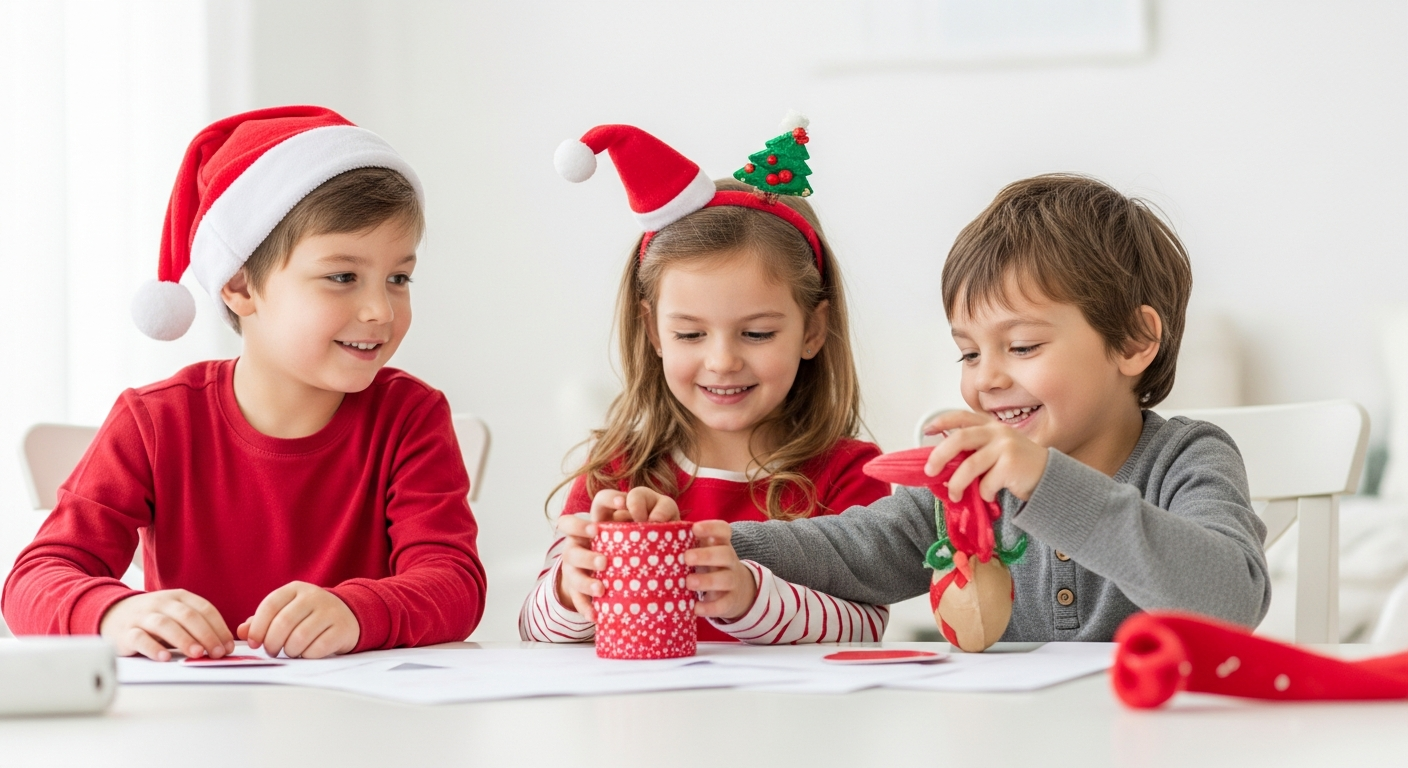
Table of Contents
- Introduction
- The Magic of Christmas for Child Development
- Why Christmas Activities Are Goldmines for Language Development
- Sensory & Creative Christmas Activities for Little Ones (0-3 years)
- Storytelling & Dramatic Play Christmas Activities (3-6 years)
- Cooking & Crafting for Christmas (All ages, with supervision)
- Outdoor & Adventurous Christmas Ideas (All ages)
- Leveraging "Smart Screen Time" with Speech Blubs for Holiday Fun
- Making the Most of Your Speech Blubs Experience
- Conclusion
- FAQ
The air fills with a special kind of magic as the holidays approach. For children, Christmas is a season of wonder, dazzling lights, and eager anticipation. But beyond the glitter and gifts, this festive period offers a unique, often overlooked, opportunity for profound child development, especially in communication. From the youngest toddlers just starting to babble to preschoolers stringing together sentences, every holiday tradition is a chance for rich interactions, new vocabulary, and shared joy. We believe that empowering children to speak their minds and hearts is paramount, and the festive season provides the perfect backdrop. This post will explore a wealth of engaging Christmas activities that not only entertain but also naturally foster language development, strengthen family bonds, and create cherished memories. We’ll show you how to transform holiday traditions into powerful learning experiences, and how tools like Speech Blubs can further amplify these invaluable moments.

Introduction
As parents and caregivers, we cherish the holiday season, eager to create lasting memories with our children. While the focus often falls on gifts and festivities, Christmas is also an incredible time for developmental growth. The abundance of new sights, sounds, smells, and social interactions provides a fertile ground for children to expand their understanding of the world and, crucially, to develop their communication skills. Every ornament placed, every carol sung, and every cookie baked becomes a moment for conversation, observation, and expression. At Speech Blubs, our mission is to empower children to speak their minds and hearts. Our company was born from the personal experiences of our founders, who all grew up with speech problems and created the tool they wished they had. We are committed to providing an immediate, effective, and joyful solution for the 1 in 4 children who need speech support, blending scientific principles with play into one-of-a-kind "smart screen time" experiences. We provide a screen-free alternative to passive viewing (like cartoons) and a powerful tool for family connection. This guide is designed to help you harness the magic of Christmas to enrich your child's communication journey, turning everyday holiday moments into powerful language-building opportunities.
The Magic of Christmas for Child Development
The festive season is a multisensory feast, offering a unique landscape for a child's holistic development. It’s not just about language; it’s about nurturing the whole child.
Emotional Connection and Social Skills
Christmas is inherently a social season. Family gatherings, visits from friends, and community events provide countless opportunities for children to practice social communication, learn about empathy, and understand different social cues. Engaging in shared activities like decorating or singing fosters a sense of belonging and cooperation. For a child who might be shy, participating in a group activity like caroling can gently encourage them to use their voice in a supportive environment, reducing the pressure of one-on-one interaction. These moments build confidence and reinforce the idea that their voice matters.

Cognitive Growth and Problem-Solving
From planning a gift for a loved one to helping organize decorations, Christmas activities subtly encourage cognitive development. Children learn to follow multi-step instructions, categorize items (e.g., separating ornaments by color or type), and engage in simple problem-solving (e.g., figuring out where a decoration should go). These seemingly simple tasks lay the groundwork for more complex thinking and academic readiness.
Fine and Gross Motor Skills
Many Christmas activities are hands-on, providing excellent opportunities for developing both fine and gross motor skills. Stringing popcorn for garlands, kneading dough for cookies, or carefully placing ornaments on a tree all refine fine motor control and hand-eye coordination. Carrying boxes of decorations or helping to set up a nativity scene engages gross motor skills, contributing to overall physical development.
Why Christmas Activities Are Goldmines for Language Development
Beyond the general developmental benefits, Christmas activities are particularly rich for language acquisition and practice. The novelty and excitement of the season naturally boost engagement, making learning feel like pure play.
Rich Vocabulary Exposure
The holiday season introduces a plethora of new words and concepts. Think about words like "sparkle," "twinkle," "festive," "gingerbread," "sleigh," "carol," "chimney," "holly," "jolly," and "reindeer." Each decoration, treat, and tradition brings with it a whole new set of descriptive adjectives, nouns, and verbs. Actively using these words in context helps children internalize them more effectively. For instance, when decorating a tree, you can talk about the "shiny red bauble," the "rough pinecone," or the "delicate angel."
Opportunities for Storytelling and Narration
Christmas is steeped in stories – from the tale of Santa Claus to family traditions passed down through generations. These narratives provide a natural springboard for children to develop their own storytelling skills. Encouraging them to recount a favorite Christmas memory, describe what they saw at a holiday parade, or invent a new story about a mischievous elf helps build narrative structure, sequence events, and expand their descriptive language. Even simple picture books about Christmas can ignite their imagination and prompt them to "read" the story in their own words.
Social Communication Practice
The constant stream of social interactions during Christmas offers invaluable practice for social communication. Children learn to greet relatives, ask and answer questions, express gratitude, make requests, and participate in conversations. These interactions also provide opportunities to practice non-verbal communication, such as making eye contact, understanding facial expressions, and taking turns in conversation. For a child who might benefit from some extra support in these areas, our quick 3-minute preliminary screener can provide an assessment and a next-steps plan, including a free 7-day trial of Speech Blubs.
Following Directions and Understanding Concepts
Many holiday activities involve following a sequence of instructions, from baking a recipe to assembling a toy. This helps children develop their ability to understand and execute multi-step directions, crucial for both language comprehension and academic success. Concepts like "first," "next," "then," "before," and "after" become concrete through hands-on experience. "First, we put the cookies on the tray, then we put them in the oven."
Sensory & Creative Christmas Activities for Little Ones (0-3 years)
For our youngest learners, sensory exploration is the gateway to language. These activities are designed to engage multiple senses while providing simple language opportunities.
DIY Christmas Sensory Bins
Create a festive sensory bin using items like dried cranberries, cinnamon sticks, jingle bells, small plastic ornaments, pinecones, and artificial snow. As your child explores, describe what they are doing and what they are touching: "You're scooping the shiny bells!" "Listen to the jingle!" "That smells sweet like cinnamon!" This rich, descriptive language paired with hands-on experience builds strong connections in their developing brains.
Christmas Playdough Fun
Mix red and green food coloring into homemade playdough, add glitter, or even a drop of peppermint extract. Provide cookie cutters in festive shapes like stars, trees, and gingerbread men. Encourage actions and sounds: "Roll, roll, roll the dough!" "Squish!" "Cut!" "Look, a star!" This activity is fantastic for fine motor skills and introducing action verbs and shape names.
Decorating the Tree: A Language Lesson
Even toddlers can help decorate a Christmas tree (with unbreakable ornaments, of course!). Focus on simple descriptive words: "Here's a red ball," "This one is sparkly," "Can you put the ornament up high?" "Big ornament, little ornament." Asking simple "where" questions ("Where should this go?") encourages early conversational turns and understanding of spatial concepts.
Storytelling & Dramatic Play Christmas Activities (3-6 years)
As children grow, their imaginations blossom, making them ripe for storytelling and dramatic play. These activities foster narrative skills, emotional expression, and imaginative language.
Reading Christmas Books Aloud
Curl up with a stack of Christmas picture books. Don't just read the words; point to illustrations, ask questions ("What do you think Santa will do next?"), and encourage your child to "read" parts of the story based on the pictures. Discuss the characters' feelings and motivations. Reading aloud expands vocabulary, introduces story structure, and models fluent language. For example, a story about a busy elf can introduce concepts of speed, hard work, and different emotions like excitement or tiredness.
Creating a Christmas Play or Puppet Show
Use simple props, puppets, or even stuffed animals to re-enact a classic Christmas story or create a new one. This encourages children to use different voices, develop character dialogue, and sequence events logically. It's a fantastic way to practice expressive language in a playful, low-pressure setting. Even a simple play where a teddy bear "delivers" gifts to other toys involves planning, speaking, and interacting.
Singing Carols & Rhyming Games
Christmas carols are a treasure trove of language development. Singing helps with rhythm, pitch, and memorization, all of which support language acquisition. Point out rhyming words in songs and then play rhyming games: "Santa... Planta? No! Santa... Fanta? No! Santa... Pants? No! Santa... Claus!" (with silly variations). This playful exploration of sounds and words is crucial for phonological awareness, a key pre-reading skill.
Cooking & Crafting for Christmas (All ages, with supervision)
These hands-on activities are not only fun but also provide natural contexts for following instructions, describing processes, and developing fine motor skills crucial for speech.
Baking Holiday Treats
From decorating gingerbread men to stirring hot cocoa, cooking offers a rich language environment. Talk about ingredients ("We need fluffy flour and sweet sugar"), actions ("Stir," "Mix," "Pour," "Spread"), and sensory descriptions ("This tastes spicy," "It smells delicious!"). For a parent whose child is learning to request, baking provides endless opportunities for "Can I have...?" or "More, please!" moments. This process helps children connect words to tangible experiences.
Making Handmade Ornaments & Cards
Gather craft supplies – paper, glue, glitter, pipe cleaners, cotton balls, buttons – and let creativity flow. As you craft, describe the materials and the steps: "We need to cut the red paper," "Now we're gluing on the sparkly glitter." Encourage children to explain their artistic choices. These activities enhance fine motor skills, which are closely linked to the muscles used for speech production, and provide a context for descriptive language.
Wrapping Gifts Together
Transform gift wrapping into a language-rich activity. Discuss the shape and size of the gifts, the patterns on the wrapping paper, and the different steps involved. "We need to measure the paper," "Let's fold it carefully," "Can you cut the tape?" This activity helps reinforce vocabulary related to shapes, sizes, and sequential actions.
Outdoor & Adventurous Christmas Ideas (All ages)
The festive season doesn't mean staying indoors. Exploring the outdoors with a Christmas theme can be just as enriching for language development and physical activity.
Christmas Light Scavenger Hunt
Bundle up and take a walk or drive to see neighborhood Christmas lights. Create a simple checklist of things to spot: "Santa," "reindeer," "a star," "blue lights," "a snowman." As you find each item, talk about it: "Look at that bright red nose on Rudolph!" "The lights are twinkling!" This activity encourages observation, vocabulary expansion, and turn-taking in conversation.
Visiting Santa or a Holiday Market
A visit to Santa, a holiday parade, or a local Christmas market is an immersive experience. Before going, talk about what you might see and do. Afterwards, encourage your child to recount their favorite parts: "What did you see at the market?" "What did Santa say?" This helps develop memory recall, sequencing skills, and descriptive language. For a child who might struggle with answering open-ended questions, offer choices: "Did you like the lights or the music best?"
Nature Walks with a Festive Twist
Even in winter, nature offers beauty. Go for a walk and look for natural "decorations" like pinecones, interesting branches, or red berries. Discuss textures ("prickly," "smooth"), colors, and sizes. You can even collect items to bring home and create a natural Christmas centerpiece. This simple act of observation and description sharpens sensory language and connection to the natural world.
Leveraging "Smart Screen Time" with Speech Blubs for Holiday Fun
While many holiday activities are wonderfully hands-on, modern tools can also play a pivotal role in a child's communication journey. We recognize that for many families, "screen time" is a part of daily life. At Speech Blubs, we've transformed this into "smart screen time," offering a powerful, engaging alternative to passive viewing. Our unique approach focuses on active participation and learning.
For children who are still building their foundational communication skills, the structured, interactive environment of Speech Blubs can be an incredible asset. Imagine a child who loves animals but is a late talker. The "Animal Kingdom" section of Speech Blubs offers a fun, motivating way to practice "moo" and "baa" sounds, preparing them to confidently name animals in a Christmas book or at a petting zoo. For a child who struggles with social greetings at holiday parties, the "Party Time" section can help them practice "hello" and "goodbye" through video modeling, building their confidence before a family gathering.
Our methodology is rooted in video modeling, where children learn by watching and imitating their peers, not animated characters. This approach taps into the natural human tendency to learn from others and is backed by scientific principles. Our research, which you can explore on our research page, shows the effectiveness of this peer-to-peer learning. It’s like having a group of friends teaching your child to speak! This "smart screen time" creates a fantastic opportunity for family connection – you can play along, encourage, and celebrate every new sound and word together. It’s a powerful supplement to a child's overall development plan and, when applicable, professional therapy, providing consistent, joyful practice right at home.
You can download Speech Blubs directly from the Apple App Store or the Google Play Store today and see for yourself how children learn effectively through our engaging activities.
Making the Most of Your Speech Blubs Experience
We believe in providing flexible, high-value solutions to support your child's communication journey. When you decide to join the Speech Blubs family, you have two primary options: our Monthly plan and our Yearly plan.
Flexible Learning Options
- Monthly Plan: For $14.99 per month, you get access to our core speech and language activities. This is a good option if you want to try it out on a shorter-term basis.
- Yearly Plan: This is by far our best value, costing just $59.99 per year. This breaks down to an incredible $4.99 per month, allowing you to save 66% compared to the monthly plan!
Exclusive Yearly Plan Benefits
Choosing the Yearly plan isn't just about saving money; it unlocks a suite of exclusive, high-value features designed to give your child the most comprehensive support possible:
- 7-Day Free Trial: Only with the Yearly plan do you get a full 7-day free trial to experience everything Speech Blubs has to offer before committing.
- Reading Blubs App Included: The Yearly plan also grants you full access to our complementary Reading Blubs app, providing even more educational content to foster early literacy skills alongside speech development.
- Early Access to New Updates: Be among the first to explore new features, activities, and content as we continuously enhance the app.
- 24-Hour Support Response Time: Our dedicated support team prioritizes Yearly plan members, ensuring you get quick assistance whenever you need it.
The Monthly plan, by contrast, does not include these valuable benefits. We encourage you to choose the Yearly plan to get the free trial and the full suite of features that will truly empower your child's communication journey. See what other parents are saying about their child's success with Speech Blubs on our testimonials page.
Conclusion
The Christmas season is a truly special time, brimming with potential for fostering your child's speech and language development. By intentionally engaging in festive activities – from crafting ornaments and baking cookies to singing carols and exploring neighborhood lights – you create a rich, stimulating environment for communication. These moments build vocabulary, encourage storytelling, strengthen social skills, and create cherished memories that last a lifetime. Every giggle, every shared story, and every new word spoken contributes to a child who feels confident and empowered to express themselves.
At Speech Blubs, we are dedicated to supporting families on this incredible journey. Our app offers "smart screen time" that complements these real-world experiences, utilizing our unique video modeling approach to make learning speech and language joyful and effective. We believe in harnessing the power of play to unlock your child's potential.
Ready to make this Christmas season not just joyful, but also profoundly enriching for your child’s communication? Start your journey with us today! We invite you to experience the magic for yourself with a free 7-day trial. To unlock this trial and gain access to all our exclusive features, including the Reading Blubs app, make sure to choose the Yearly plan.
Get started now and empower your child to speak their mind and heart. You can create your account and begin your free trial at our sign-up page, or download Speech Blubs on the Apple App Store or Google Play Store.
FAQ
Q1: How can I encourage a shy child to participate in Christmas activities that involve speaking?
A1: Start with low-pressure activities where they can contribute without being the sole focus, like singing along to carols or helping with a craft. Offer choices rather than open-ended questions to reduce anxiety ("Do you want the red glitter or the green?"). Use parallel talk, narrating what they are doing, to model language without demanding a response. Speech Blubs can also provide a safe space for them to practice new words and sounds by imitating peers in a non-judgmental environment.
Q2: What if my child isn't interested in traditional Christmas crafts?
A2: Not every child loves every activity! Try to find a Christmas-themed activity that aligns with their existing interests. If they love building, try building a "gingerbread house" out of blocks or cardboard. If they love science, experiment with "exploding" candy canes or making crystal ornaments. The goal is engagement, not strict adherence to tradition. Remember, any shared activity can become a language opportunity when you interact and talk about it.
Q3: How much screen time is appropriate for language development during the holidays?
A3: The key is "smart screen time." Activities should be interactive and encourage active participation, not passive viewing. With Speech Blubs, your child is actively imitating, making sounds, and engaging, which is vastly different from watching cartoons. We recommend integrating short, focused sessions with Speech Blubs throughout the day, balancing it with all the wonderful hands-on holiday activities. Always prioritize adult co-play and support, even during app use, to maximize learning.
Q4: My child is already receiving professional speech therapy. How can Speech Blubs complement that during the holidays?
A4: Speech Blubs is designed to be a powerful supplement to professional therapy, providing consistent practice in a fun, engaging way at home. You can even discuss with your child's therapist how specific sections of the app might reinforce goals they are working on. The app's video modeling allows for repetition and exposure to target sounds and words, which is crucial for generalization of skills. Plus, it turns what might feel like "homework" into joyful play, making it easier to maintain progress during busy holiday breaks.
About the author