
Joyful Christmas Arts & Crafts for Kids: Festive Ideas
 By Speech Blubs Team•Dec 22, 2025•20 min.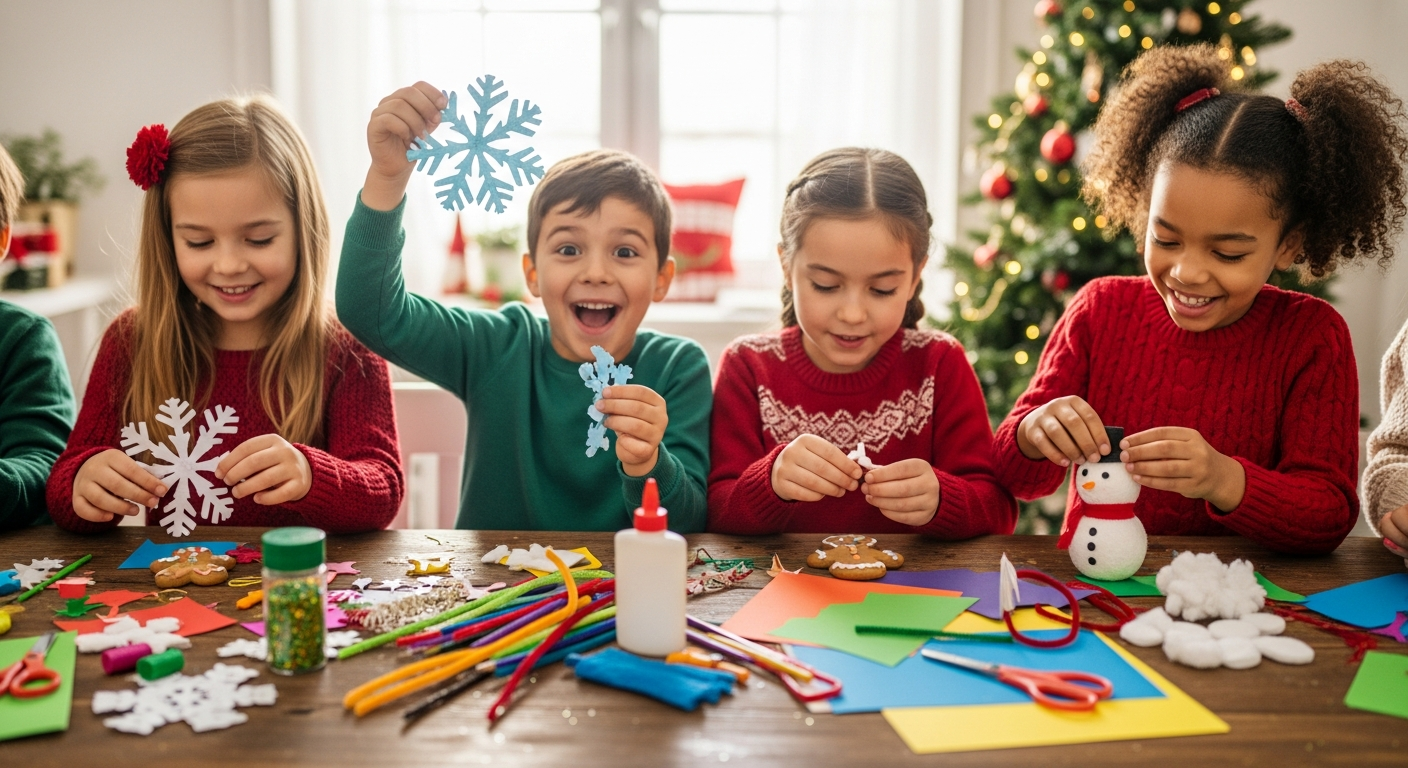
Table of Contents
- Introduction to the Magic of Christmas Crafts and Child Development
- Wonderful Christmas Arts & Crafts for Toddlers (Ages 1-3)
- Engaging Christmas Arts & Crafts for Preschoolers (Ages 3-5)
- Creative Christmas Arts & Crafts for School-Aged Kids (Ages 6+)
- Integrating Speech and Language Development into Craft Time
- Essential Tips for Successful Christmas Crafting with Kids
- Conclusion: Crafting Memories and Growing Minds This Christmas
- Frequently Asked Questions About Christmas Arts & Crafts for Kids
The magic of Christmas often feels most vibrant through the eyes of a child. Their excitement for twinkling lights, special treats, and festive stories fills our homes with an unparalleled warmth. But beyond the wrapped gifts and carols, there's an incredible, often overlooked, opportunity to weave developmental growth into the holiday fun: Christmas arts and crafts. Far from just occupying little hands, these creative activities are powerful catalysts for building essential communication skills, fostering self-expression, and strengthening family bonds.
Imagine your child proudly showing off a glittery ornament they made, eagerly describing each step and color. This isn't just a sweet memory; it's a profound moment of communication, confidence, and connection. In this comprehensive guide, we'll dive into a treasure trove of Christmas arts and crafts ideas suitable for various ages and skill levels. We'll explore how these festive projects naturally support speech and language development, fine motor skills, and cognitive growth, transforming simple playtime into meaningful learning. Get ready to discover how to infuse your holiday season with creativity, connection, and a little help from our unique approach at Speech Blubs, empowering your child to speak their minds and hearts.

Introduction to the Magic of Christmas Crafts and Child Development
The holiday season is a whirlwind of joy, anticipation, and countless opportunities for connection. For children, it's a time of wonder, and what better way to harness that energy than through creative Christmas arts and crafts? Beyond the sheer delight of making something beautiful, these activities offer a rich landscape for developmental growth, nurturing skills that extend far beyond the craft table.
When a child engages with craft materials – feeling the stickiness of glue, the softness of cotton balls, or the coarse texture of glitter – they are not just playing; they are actively exploring their world through their senses. This sensory engagement is crucial for cognitive development, helping children to build connections in their brains and understand different properties of objects. Moreover, the process of creating, from envisioning a design to bringing it to life, hones problem-solving abilities and cultivates patience.
For parents, these crafting sessions become precious moments to bond, chat, and witness their child's unique personality shine through their creations. It’s an invaluable way to practice language in a natural, low-pressure environment, expanding vocabulary and reinforcing concepts in a joyful setting.
The Developmental Benefits of Festive Crafting
Before we dive into specific craft ideas, let's appreciate the broad spectrum of developmental benefits that Christmas arts and crafts bring to the table:
- Fine Motor Skills: The intricate movements involved in cutting, gluing, drawing, and decorating are perfect for strengthening the small muscles in a child's hands and fingers. This precision is foundational for skills like writing, dressing themselves, and eating independently.
- Speech and Language Development: Crafts are a natural conversation starter! Children learn new vocabulary (colors, shapes, textures, specific Christmas items), practice following multi-step directions, and develop descriptive language as they talk about their creations. It’s an excellent opportunity to ask open-ended questions and encourage storytelling.
- Cognitive Skills: Planning a craft, choosing materials, and seeing a project through from start to finish all involve executive functions like sequencing, problem-solving, and attention to detail.
- Creativity and Self-Expression: Arts and crafts provide a safe space for children to express their unique ideas and emotions without judgment. There's no right or wrong way to make a snowman out of cotton balls!
- Sensory Exploration: The diverse materials used in crafting—from smooth paper to rough pipe cleaners, sticky glue to shimmering glitter—offer a rich sensory experience crucial for sensory processing and development.
- Emotional Regulation and Patience: Crafting teaches children to persevere through challenges, manage frustration when something doesn’t go as planned, and experience the satisfaction of completing a task.
- Family Bonding: Crafting together creates shared memories, strengthens relationships, and provides a relaxed environment for meaningful interaction. These moments are where connection truly blossoms, fostering an environment where children feel secure and supported, which is vital for confident communication.
At Speech Blubs, we deeply understand that learning happens best when it’s fun and interactive. Our mission, born from the personal experiences of our founders who faced speech challenges themselves, is to empower children to "speak their minds and hearts." We believe that combining play with scientific principles creates an immediate, effective, and joyful solution for the 1 in 4 children who need speech support. Just like a craft project, our app provides a "smart screen time" experience, acting as a powerful tool for family connection rather than a passive viewing alternative.

Wonderful Christmas Arts & Crafts for Toddlers (Ages 1-3)
For our youngest crafters, the focus is on sensory exploration, simple actions, and building foundational skills. Safety is key, so always supervise closely and choose non-toxic, child-friendly materials.
Simple Sensory Ornaments
- Cotton Ball Snowman/Santa: Provide paper shapes (circles for snowman, Santa hat/beard for Santa), cotton balls, and glue sticks. Let your toddler glue cotton balls onto the shapes. This is fantastic for fine motor skills (picking up and placing small objects) and sensory input.
- Speech Tip: As you craft, talk about the texture: "Fluffy cotton! Soft like snow!" Name the shapes: "This is a circle for the snowman's body."
- Glitter Star/Tree: Draw simple star or tree outlines on cardstock. Let your child spread glue within the lines (you can help guide their hand). Then, sprinkle chunky glitter.
- Speech Tip: Introduce vocabulary: "Shiny glitter! Green tree! Yellow star!" Practice actions: "Spread the glue," "Sprinkle the glitter."
- Pinecone "Tree": Gather small pinecones. Offer washable green paint and chunky pom-poms or small beads. Let your toddler paint the pinecones and stick on decorations.
- Speech Tip: Talk about the pinecone's texture ("bumpy," "rough"), the colors of the paint and pom-poms. "This is a tall tree!"
Handprint & Footprint Keepsakes
These are timeless, personal, and wonderful for capturing your child's size each year.
- Handprint Reindeer/Santa: Paint your child's hand brown (for reindeer) or white/pink (for Santa's face/beard). Press onto cardstock. Add googly eyes, a red nose (for Rudolph), or a Santa hat later.
- Speech Tip: Talk about body parts: "Where is your hand?" "Let's make a print!" Practice animal sounds if making a reindeer.
- Footprint Mistletoe: Paint your child's foot green and press onto paper. Use two footprints overlapping slightly. Add small red pom-poms for berries.
- Speech Tip: Focus on following a simple instruction: "Foot on the paper!" "Red berries!"
Easy Paper Crafts
- Torn Paper Wreath: Provide green construction paper (or various shades of green) and red paper. Help your toddler tear the paper into strips or smaller pieces. Guide them to glue these pieces onto a paper plate with the center cut out to form a wreath. Add red paper "berries."
- Speech Tip: Encourage descriptive words: "Crinkly paper," "Tear, tear, tear!" Count the "berries" together.
- Pipe Cleaner Candy Canes: Bend red and white pipe cleaners into candy cane shapes. This develops fine motor control and hand-eye coordination.
- Speech Tip: Talk about colors, "red and white stripes!" and the shape, "It's a curved candy cane!"
Real-World Scenario & Speech Blubs Connection: For a toddler who is just starting to string words together and loves animals, crafting a pinecone "tree" or a handprint reindeer offers a fantastic opportunity to practice animal sounds and simple action verbs. After the craft, you can reinforce these concepts with Speech Blubs. Our app uses a unique "video modeling" methodology, where children learn by watching and imitating their peers. Imagine making a reindeer craft, then opening the app to the "Animal Kingdom" section, where they can watch and imitate kids making "moo" sounds or saying "reindeer." This connection between a tangible craft and an engaging digital experience creates powerful learning moments. Ready to explore? Download Speech Blubs on the App Store or get it on Google Play Store.
Engaging Christmas Arts & Crafts for Preschoolers (Ages 3-5)
Preschoolers are ready for slightly more complex projects, involving more cutting, gluing, and imaginative play. These crafts build on foundational skills while introducing new concepts.
Creative Ornaments
- Salt Dough Ornaments: Mix 2 cups flour, 1 cup salt, and 1 cup water to form a dough. Roll it out and let your child cut shapes with Christmas cookie cutters. Bake at 250°F (120°C) for 2-3 hours until hard, then let them cool and paint!
- Speech Tip: This is a multi-step activity perfect for practicing sequencing: "First, mix. Then, roll. Next, cut!" Talk about textures ("sticky," "smooth") and colors for painting.
- Craft Stick Christmas Characters: Use craft sticks to create Santa, elves, or reindeer. Glue sticks together for a body, then add googly eyes, pom-pom noses, felt hats, or pipe cleaner antlers.
- Speech Tip: Encourage descriptive language: "This Santa has a long white beard!" "The reindeer has big, brown antlers." Practice naming body parts.
- Cereal Box Gingerbread House: Cut open a cereal box and let your child paint it brown. Once dry, they can decorate it with cotton ball "snow," paper "candy," and glitter glue.
- Speech Tip: This is great for introducing prepositions: "Put the candy on the roof," "Put the snow around the house."
Festive Decorations
- Paper Plate Christmas Characters: Transform paper plates into Santa, reindeer, or snowmen. Children can paint the plates, glue on features (cotton for Santa's beard, brown paper antlers for reindeer, carrot nose for snowman), and decorate with glitter or sequins.
- Speech Tip: Focus on identifying colors and shapes. Ask, "What color is Santa's hat?" "What shape are the snowman's eyes?"
- Paper Chain Garlands: Cut strips of construction paper in festive colors. Show your child how to glue or staple them into interlocking rings.
- Speech Tip: Practice counting the links, identifying patterns ("red, green, red, green"), and requesting "more glue" or "another strip."
- Pasta and Bead Garlands: String large pasta shapes (like penne or rigatoni) and chunky beads onto yarn or pipe cleaners. Paint the pasta festive colors beforehand.
- Speech Tip: Great for fine motor skill development and practicing color names and sequencing. "First a red bead, then a green pasta."
Homemade Gift Tags & Cards
- Potato Stamping: Cut a potato in half and carve simple Christmas shapes (star, tree, bell) into the cut surface. Dip into paint and stamp onto cardstock to make personalized gift tags or cards.
- Speech Tip: Talk about the shapes: "Star stamp! Tree stamp!" Practice the action: "Stamp, stamp, stamp!"
- Fingerprint Christmas Lights: Draw a wavy line on a card. Let your child dip their finger in different colored paints and make "fingerprint" light bulbs along the line.
- Speech Tip: Reinforce color names and counting. "How many red lights do we have?"
Real-World Scenario & Speech Blubs Connection: A preschooler might struggle with articulating specific sounds, like the 's' sound in "star" or "Santa." Crafting a sparkly star ornament provides a natural context to say these words repeatedly. For parents wondering if their child needs extra support, our quick 3-minute preliminary screener can offer insights and a personalized next-steps plan. If the screener indicates a need for more focused practice, Speech Blubs offers dedicated sound practice sections where children can confidently imitate target sounds from their peers, making learning engaging and effective. Our research-backed methodology has placed us in the top tier of speech apps worldwide.
Creative Christmas Arts & Crafts for School-Aged Kids (Ages 6+)
School-aged children have more developed fine motor skills, longer attention spans, and a greater capacity for detailed work and independent thought. These crafts can be more intricate and allow for more personal expression.
Advanced Ornaments
- Pom-Pom Gnomes/Elves: Use wooden beads for heads, felt for hats, and a large pom-pom for the body. Glue smaller pom-poms for noses and use yarn for beards.
- Speech Tip: This craft encourages detailed descriptive language: "The gnome has a fuzzy white beard and a tall red hat."
- Watercolor Christmas Scenes: Provide watercolor paper and paints. Encourage them to paint winter landscapes, nativity scenes, or abstract festive patterns.
- Speech Tip: Discuss colors, shading, and the emotional feeling conveyed by their art. "How does this blue make you feel?"
- DIY Snow Globes: Use small jars, glitter, water, and waterproof Christmas figurines. Glue the figurines to the inside of the lid, fill the jar with water and glitter, and secure the lid.
- Speech Tip: Explain the science behind it: "Why does the glitter float down slowly?" Practice explaining the steps to someone else.
Home Decorations & Gifts
- Felt Christmas Garland: Cut out various Christmas shapes (trees, stars, stockings, snowflakes) from felt. Children can decorate them with embroidery floss, beads, or sequins, then string them together.
- Speech Tip: Ideal for practicing sequencing, planning, and precise vocabulary: "I'm going to stitch the green star with yellow thread."
- Yarn-Wrapped Letter Ornaments/Decorations: Cut out initial letters or shapes from cardboard. Provide yarn in festive colors. Children wrap the yarn tightly around the cardboard, securing it with glue.
- Speech Tip: Talk about the texture of the yarn ("soft," "fuzzy"), the letter they are making, and words that start with that letter.
- Painted Rock Nativity/Characters: Find smooth rocks and paint them to resemble characters from the nativity scene, snowmen, or Santa's helpers. Seal with a clear coat.
- Speech Tip: Encourage storytelling around the painted characters. "Tell me a story about this little shepherd."
- Upcycled CD Ornaments/Coasters: Old CDs can be painted, decoupaged with festive paper, or decorated with glitter and sequins to create sparkling ornaments or coasters.
- Speech Tip: Discuss recycling and transforming old items into new ones. "How did we change this old CD into something new and beautiful?"
Real-World Scenario & Speech Blubs Connection: For an older child who understands complex instructions but might hesitate to elaborate on their thoughts or share stories, creating a detailed watercolor scene or a DIY snow globe offers a wonderful platform. Encourage them to describe their choices, the scene they’re creating, or even a story behind it. At Speech Blubs, we go beyond simple word practice; we help children develop conversational skills, storytelling abilities, and confidence in expressing themselves. Our "What Do I Do?" section, for example, helps children understand and express multi-step actions, perfectly complementing the sequencing required in these more advanced crafts. See how our approach empowers children by checking out what other parents are saying about their child's success with Speech Blubs.
Integrating Speech and Language Development into Craft Time
Crafting is inherently a language-rich activity. Here’s how you can intentionally weave speech and language practice into every Christmas craft session:
Building Vocabulary
- Name Everything: As you gather materials, name each item: "red glitter," "green pipe cleaner," "sticky glue stick," "fluffy cotton ball."
- Describe Attributes: Encourage descriptive words: "This paper is shiny," "The pinecone is bumpy," "The paint is smooth." Talk about colors, shapes, sizes, and textures.
- Christmas-Specific Vocabulary: Introduce and reinforce words like "ornament," "garland," "wreath," "reindeer," "snowman," "gingerbread," "angel," "star."
Practicing Following Directions
- Multi-Step Instructions: Give instructions like, "First, get the scissors, then cut the red paper, and finally, glue it onto the plate." Break down complex steps into smaller, manageable chunks if needed.
- Using Prepositions: "Put the star on top of the tree." "Glue the button under the snowman's nose." "Place the ornament inside the box."
- Spatial Concepts: Discuss "up," "down," "next to," "between," "above," "below."
Encouraging Expressive Language
- Open-Ended Questions: Instead of "Do you like it?", ask "What do you like most about your craft?" or "Tell me about your snowman."
- Sequencing and Storytelling: "What did you do first?" "What happened next?" Encourage them to narrate the steps of their craft, or even create a story about their finished piece.
- Making Choices: "Do you want red glitter or green glitter?" "Which color should we use for Santa's hat?" This empowers children and encourages them to articulate their preferences.
- Sound Practice: If your child is working on specific sounds, weave them into the craft conversation. For example, if practicing 'S' sounds, emphasize "star," "snowman," "sparkle," "scissors." If it's 'T,' talk about "tree," "tape," "two."
Strengthening Social Communication Skills
- Turn-Taking: If multiple children are crafting, practice taking turns with materials or steps.
- Sharing: "Can I please have the glue?" "Would you like to share the glitter?"
- Problem-Solving Together: If a craft isn't going as planned, work through it collaboratively, discussing solutions.
At Speech Blubs, we are deeply committed to providing an immediate, effective, and joyful solution for children needing speech support. Our platform offers a screen-free alternative to passive viewing, promoting active engagement and family interaction, much like a shared craft project. We use cutting-edge video modeling, where children learn speech and language skills by watching and imitating their peers, a method scientifically proven to activate mirror neurons and accelerate learning. This approach reduces pressure and builds confidence, allowing children to progress at their own pace while having fun. We are the tool our founders, who all grew up with speech problems, wished they had. To experience this unique approach, you can learn more about us on the Speech Blubs website.
Essential Tips for Successful Christmas Crafting with Kids
To make your Christmas crafting sessions enjoyable and developmentally rich, keep these tips in mind:
- Prepare Ahead: Gather all materials before you start. This minimizes interruptions and keeps little hands engaged. Lay down a protective covering (old newspaper, tablecloth) to make cleanup easier.
- Embrace the Mess: Arts and crafts are messy, especially with younger children. See it as part of the creative process and an opportunity for sensory exploration.
- Focus on the Process, Not Just the Product: The goal is the experience of creating, learning, and bonding, not a perfectly executed masterpiece. Celebrate effort and uniqueness.
- Offer Choices: Let your child choose colors, materials, or even which craft to do. This fosters independence and boosts engagement.
- Be Patient and Flexible: Kids have varying attention spans. If they lose interest, take a break or switch to another activity. It's okay if a project isn't finished in one sitting.
- Sit and Engage: Join in the crafting! Your participation models enthusiasm and provides opportunities for natural conversation. Ask questions, offer suggestions, and share your own creative process.
- Display Their Work Proudly: Hang their ornaments on the tree, display their cards, or give their creations as gifts. This validates their effort and builds self-esteem.
- Connect to Real-Life: Talk about how the crafts relate to Christmas traditions, family, and the broader holiday season.
- Reinforce Learning with Speech Blubs: After a craft session, use Speech Blubs to reinforce vocabulary, sounds, or concepts learned. For example, if you made a craft stick Santa, explore the "People & Jobs" section in the app to practice words related to Santa or other characters. Our app is designed to complement real-world learning, making speech development a continuous, joyful journey.
Conclusion: Crafting Memories and Growing Minds This Christmas
As the festive season approaches, let's seize the incredible opportunity to turn everyday moments into profound learning experiences. Christmas arts and crafts are more than just holiday pastimes; they are dynamic platforms for developing fine motor skills, expanding vocabulary, enhancing cognitive abilities, and nurturing emotional intelligence. From the simplest handprint ornament for a toddler to an intricate felt garland for an older child, each project is a step in their developmental journey, building confidence and fostering a love for communication.
By engaging in these joyful activities, we create not just beautiful decorations, but lasting memories and a nurturing environment where children feel empowered to express themselves. We witness their creativity blossom, hear their new words, and cherish their proud smiles. At Speech Blubs, we stand with you in this journey, offering a powerful supplement to your child's overall development plan. Our scientifically backed "video modeling" approach transforms screen time into "smart screen time," where children learn speech and language by actively imitating their peers – a unique, effective, and joyful solution for communication growth. We're committed to helping every child speak their minds and hearts, building the foundational skills that lead to confident communicators.
Don't let this holiday season pass without embracing the magic of crafting and the incredible developmental benefits it offers. Ready to enhance your child's communication journey with joy and confidence? Start your 7-day free trial today by choosing our best-value Yearly plan! For just $59.99 per year (which breaks down to an incredible $4.99/month, saving you 66% compared to the monthly cost), the Yearly plan includes not only the full Speech Blubs experience but also the extra Reading Blubs app, early access to new updates, and 24-hour support response time. The Monthly plan at $14.99 per month does not include these invaluable benefits or a free trial.
Make the most of this opportunity to empower your child's voice. Download Speech Blubs on the App Store or get it on the Google Play Store to create your account and begin your 7-day free trial with the Yearly plan today!
Frequently Asked Questions About Christmas Arts & Crafts for Kids
Q1: What age group are these Christmas craft ideas suitable for?
A1: We've organized our Christmas arts and crafts ideas into three main age categories: toddlers (ages 1-3), preschoolers (ages 3-5), and school-aged children (ages 6+). While many crafts can be adapted for different ages with adult supervision, the suggestions are tailored to specific developmental stages to ensure safety, engagement, and appropriate skill-building. Always supervise young children, especially with small parts or scissors.
Q2: How can I make Christmas crafting more accessible for a child with special needs?
A2: Adaptations are key! For children with fine motor challenges, use larger materials, chunky glue sticks, or pre-cut shapes. For sensory sensitivities, introduce new textures gradually and have wipes or water readily available. Focus on the child's strengths, provide verbal prompts and visual aids, and remember that the process and enjoyment are more important than the perfect outcome. Activities that encourage repetitive actions, like tearing paper or sticking items, can be very calming and beneficial. Our mission at Speech Blubs is to empower every child, and we recognize that every child's developmental journey is unique.
Q3: What are the best materials to have on hand for Christmas crafts?
A3: A well-stocked craft cupboard makes spontaneous creativity much easier! Essential Christmas craft materials include: construction paper (red, green, white, brown), washable paints, glue sticks and liquid glue, safety scissors, cotton balls, pipe cleaners, pom-poms, googly eyes, glitter (chunky is less messy!), yarn, felt, craft sticks, paper plates, and natural elements like pinecones. Don't forget recycled items like toilet paper rolls and cereal boxes, which can be transformed into amazing creations.
Q4: How does Speech Blubs specifically help with communication during these craft activities?
A4: Speech Blubs complements Christmas crafting by providing structured, fun opportunities to reinforce the very skills developed during hands-on play. While crafting, children learn new vocabulary, practice following directions, and engage in descriptive language. Afterward, Speech Blubs can solidify this learning through engaging "smart screen time." For example, if you made a snowman craft, you can then use our app to practice words related to "snow," "cold," or "white" through video modeling, where children imitate their peers. Our activities are designed to build confidence in speech, vocabulary, and even social communication, empowering children to "speak their minds and hearts" both in play and in conversation.
About the author