
Joyful Christmas Coloring Crafts for Kids
 By Speech Blubs Team•Dec 22, 2025•23 min.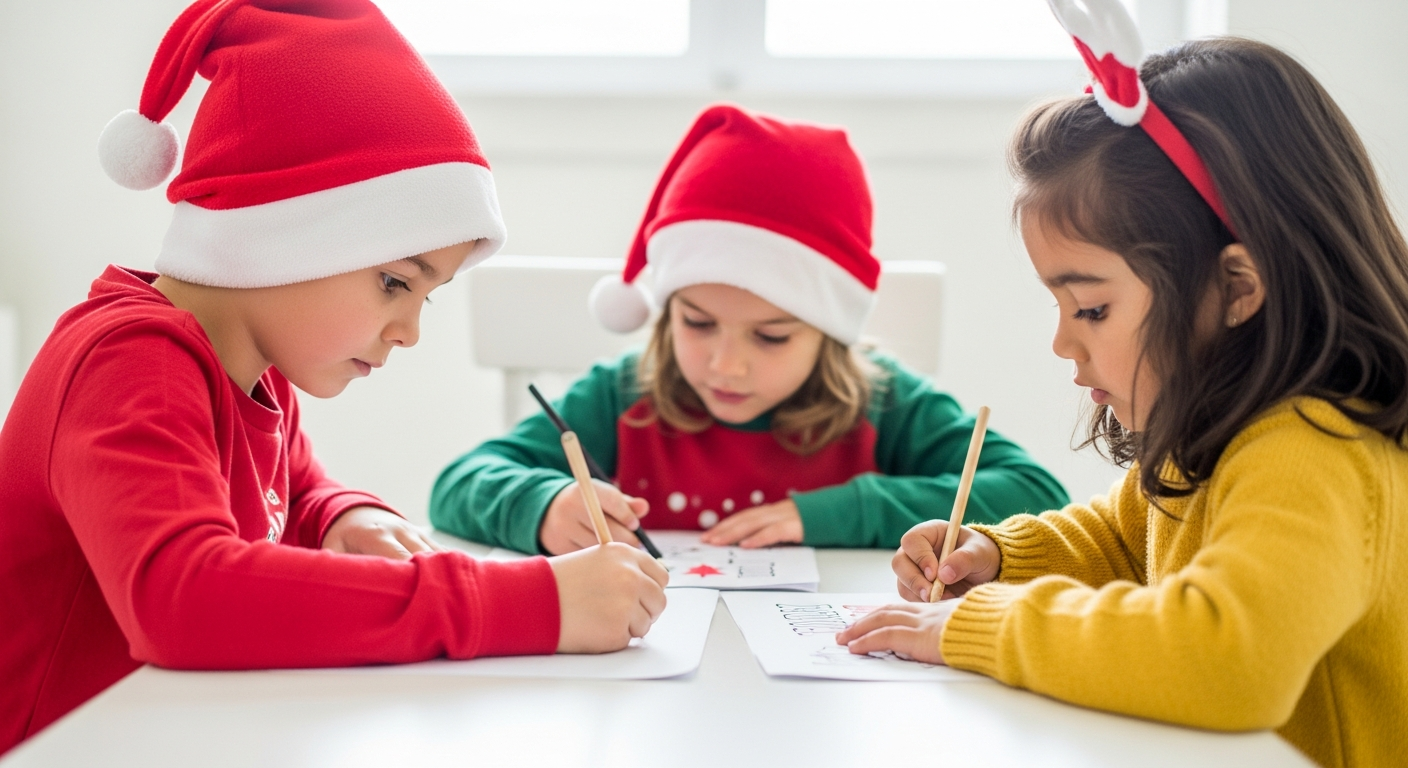
Table of Contents
- Introduction
- The Magic of Christmas Crafts for Development
- Why Christmas Coloring Crafts are So Beneficial for Kids
- Getting Started: Setting Up Your Christmas Craft Station
- Top Christmas Coloring Crafts for All Ages
- Integrating Language & Learning into Christmas Coloring Crafts
- How Speech Blubs Elevates Communication Through Play
- Making the Most of Your Speech Blubs Experience: Pricing & Value
- Setting Realistic Expectations
- Conclusion
- FAQ
The air fills with a special kind of magic as the holiday season approaches. It's a time of wonder, twinkling lights, festive carols, and, perhaps most importantly, connection. While the shiny new toys and delicious treats are certainly exciting, some of the most cherished memories often come from shared experiences – especially creative ones. For children, the simple act of coloring and crafting during Christmas isn't just a fun way to pass the time; it’s a profound opportunity for growth, learning, and expressing their unique little personalities.
This post will explore the myriad benefits of engaging children in Christmas coloring crafts, from boosting fine motor skills and cognitive development to enriching their language abilities and fostering invaluable family bonding. We'll delve into practical tips for setting up an inviting craft station, offer age-specific craft ideas, and reveal how you can seamlessly integrate language learning into these festive activities. Crucially, we’ll also highlight how tools like Speech Blubs can amplify these developmental benefits, providing an interactive and joyful foundation for communication that complements hands-on play. Get ready to sprinkle some extra holiday magic into your child's development journey, creating not just beautiful crafts, but also beautiful conversations and memories that will last a lifetime.

Introduction
Picture this: a cozy afternoon, holiday music softly playing, and your child’s eyes gleaming with concentration as they bring a Santa Claus or a reindeer to life with a splash of color. It's a scene steeped in simple joy, but beneath the surface of that quiet concentration, a powerful developmental process is unfolding. Many parents might see coloring crafts as merely entertainment, a way to keep little hands busy, but we at Speech Blubs understand that these activities are much more. They are rich, multi-sensory experiences that lay crucial groundwork for cognitive growth, emotional regulation, and, most notably, language development.
This blog post is designed to illuminate the incredible value of integrating Christmas coloring crafts into your child's holiday season. We will guide you through the developmental advantages, provide age-appropriate craft ideas, and share strategies to turn every coloring session into an opportunity for speech and language growth. Furthermore, we’ll demonstrate how our app, Speech Blubs, can be a supportive partner in this journey, transforming "screen time" into "smart screen time" that enhances your child's communication skills. Our aim is to empower you with ideas and tools to make this Christmas not just festive, but also wonderfully educational and profoundly connective for your family.
The Magic of Christmas Crafts for Development
Christmas crafts, especially those involving coloring, offer a unique blend of fun and functionality that supports a child's holistic development. It’s far more than just putting crayon to paper; it’s an intricate dance of physical coordination, mental processing, and emotional expression.
Beyond Just Fun: Fine Motor, Cognitive, and Language Skills
When a child colors, they are engaging a complex network of skills. The precision required to stay within lines, the pressure applied to the crayon, and the continuous movement of their hand all contribute to strengthening fine motor skills. These are the small, deliberate movements essential for tasks like writing, buttoning clothes, and tying shoelaces.

Cognitive benefits are equally profound. Choosing colors, understanding patterns, following instructions (e.g., "color the tree green"), and visualizing the final product all stimulate problem-solving, decision-making, and imaginative thinking. Children learn about cause and effect, how different colors interact, and begin to develop a spatial awareness.
Crucially, coloring crafts are a goldmine for language development. From simply naming colors and objects ("red ornament," "green tree") to describing actions ("I am coloring," "The glue is sticky") and even narrating stories about their creations, children are constantly using and expanding their vocabulary and sentence structure. These interactions are invaluable for building communication confidence.
Connecting Through Creativity
In our increasingly digital world, hands-on activities provide a much-needed opportunity for tactile engagement and real-world interaction. Creating something tangible brings a sense of accomplishment and pride. When parents and caregivers participate, it creates a shared experience, strengthening bonds and providing a natural context for conversation. This connection is at the heart of what we believe in at Speech Blubs. Our mission is to empower children to "speak their minds and hearts," and what better way than through joyful, shared creative moments?
The Unique Role of Coloring
Coloring, in particular, stands out for its accessibility and broad appeal. It requires minimal setup, is relatively mess-free (compared to some other crafts!), and offers immediate gratification. It can be a calming activity for an overstimulated child, promoting focus and mindfulness. For a child who might be hesitant to draw from scratch, a coloring page provides a scaffold, reducing pressure and allowing them to focus on color, texture, and expression. It’s a low-barrier entry point into the world of art and self-expression, making it perfect for children across various developmental stages and abilities.
Why Christmas Coloring Crafts are So Beneficial for Kids
Let's dive deeper into the specific ways Christmas coloring crafts serve as powerful developmental tools.
Fine Motor Skill Development
Holding a crayon, marker, or paint brush correctly is a foundational skill. These activities refine:
- Pencil Grip: Children naturally experiment with different grips, eventually developing the tripod grip necessary for writing.
- Hand-Eye Coordination: Aligning the crayon with the lines on the page requires precise visual-motor integration.
- Dexterity and Strength: The muscles in their hands and fingers strengthen with repeated coloring, cutting, and gluing motions. This is essential for future self-care tasks and academic success.
Cognitive Benefits
Beyond the physical, the mental workout is significant:
- Color Recognition and Discrimination: Learning to identify and differentiate between colors is a basic cognitive skill reinforced through coloring.
- Pattern Sequencing and Problem-Solving: Some crafts involve following a sequence of steps or figuring out how pieces fit together, encouraging logical thinking.
- Attention Span and Focus: Engaging in a craft project requires sustained attention, helping children develop the ability to concentrate for longer periods.
- Imagination and Creativity: Even with a pre-drawn picture, children decide the colors, add embellishments, and often invent stories about what they're creating.
Emotional Regulation & Self-Expression
Crafting offers a safe outlet for emotions:
- Calmness and Stress Reduction: The repetitive motion of coloring can be meditative and calming for many children, helping them manage emotions.
- Sense of Accomplishment: Completing a craft project, especially one they can display, instills pride and boosts self-esteem.
- Creative Outlet: Children can express themselves without words, choosing colors and designs that reflect their mood or personality.
Language and Communication Boost
This is where coloring crafts truly shine as a communication catalyst:
- Vocabulary Expansion: Naming colors (red, green, gold), objects (Santa, reindeer, tree, snowflake), actions (coloring, cutting, gluing), and descriptive words (sparkly, bright, fuzzy).
- Descriptive Language: Encouraging children to describe their choices ("I made Santa's hat red because he loves red!"). "The reindeer has big antlers."
- Following Instructions: "First, color the star, then cut out the tree." This strengthens receptive language skills.
- Storytelling: "What is happening in your picture? Is Santa delivering presents? Where is he going next?" Prompting narrative creation.
- Question Asking & Answering: "What's your favorite part of your craft? Why did you choose that color?" Fosters conversational skills.
- Sound Practice: For a parent whose child is working on specific sounds, like /s/ for "star" or /r/ for "reindeer," pointing to these elements and practicing the words during crafting can be incredibly effective. Our app offers numerous sections, such as "Animal Kingdom" or "Yummy Time," where children can practice specific sounds and words through video modeling, watching and imitating their peers. This direct application of learned sounds to real-world objects during craft time provides powerful reinforcement.
Family Bonding & Connection
Shared creative time is incredibly valuable:
- Quality Time: Dedicated time together, free from distractions, fosters deeper connection.
- Shared Experience: Creating memories together, laughing over a slightly crooked ornament, or admiring each other's work.
- Natural Conversation: The craft itself becomes a talking point, making conversations flow more easily and organically.
Getting Started: Setting Up Your Christmas Craft Station
A well-organized craft station can make all the difference, making it inviting for children and less stressful for parents.
Materials Needed
You don't need to break the bank to create a festive craft haven. Here’s a basic list:
- Coloring Pages: Printable Christmas-themed pages (Santa, elves, reindeer, trees, ornaments, stockings, snowmen, gingerbread houses). You can find tons online for free!
- Coloring Tools: Crayons (jumbo for toddlers, regular for preschoolers and up), washable markers, colored pencils.
- Cutting & Gluing: Child-safe scissors, washable glue sticks, white liquid glue (for glitter/larger items).
- Embellishments: Glitter (optional, but very festive!), cotton balls (for snow or Santa's beard), googly eyes, pom-poms, stickers, pipe cleaners.
- Paper: Construction paper in festive colors (red, green, white, gold), cardstock (for sturdier crafts), paper plates.
- Extras: Hole punch, yarn or string (for hanging ornaments), old magazines (for cut-out collages).
Creating a Safe and Inviting Space
- Designated Area: A kitchen table, a cleared-off desk, or even a low coffee table works. Lay down a plastic tablecloth or old newspaper to protect surfaces.
- Accessibility: Keep materials within easy reach for your child, perhaps in clear bins or a caddy. Encourage them to choose their own colors and tools.
- Good Lighting: Ensure the area is well-lit to prevent eye strain.
- Comfort: Make sure your child has a comfortable chair and can sit upright to promote good posture.
Managing Mess (Tips for Parents)
Let’s be honest, crafts can get messy!
- Protective Gear: Old T-shirts or smocks for children (and yourself!).
- Easy Clean-Up: Keep wet wipes or a damp cloth handy for quick spills. A small dustpan and brush for glitter fallout is a lifesaver.
- Set Expectations: Talk to your child about keeping materials on the table and cleaning up afterward. Make cleanup part of the activity.
- Embrace the Process: Sometimes the most creative moments are the messiest. Focus on the joy of creation rather than pristine perfection.
Top Christmas Coloring Crafts for All Ages
Let's explore some age-appropriate Christmas coloring crafts that cater to different developmental stages, ensuring both fun and learning.
Toddlers (1-3 years): Simple Shapes & Big Colors
For our youngest crafters, the focus is on exploration, sensory experience, and developing basic hand control. Simplicity is key!
- Giant Christmas Ornaments to Color: Print out large, simple outlines of ornaments. Let your toddler scribble with chunky crayons or dot paint with their fingers. The goal is sensory input and cause-and-effect understanding ("my hand moves, and color appears!").
- Relatable Scenario: A parent has a 2-year-old "late talker" who loves pointing at animals. While coloring a simple reindeer, the parent can ask, "What animal is this?" and imitate reindeer sounds. Then, they can transition to the Speech Blubs app's Animal Kingdom section where their child can practice animal sounds and names by watching and imitating peers. This reinforces the learning from the craft in a structured, engaging digital environment.
- Simple Santa, Reindeer, Tree Outlines: Provide large, clear outlines. Encourage single-color exploration or simple scribbling. Talk about the colors they're using.
- Handprint/Footprint Art with Coloring Elements: Paint their hand green for a "Christmas tree" and then let them color "ornaments" around it with a marker. Or paint their foot white for a "snowman" and let them add colored scarf details. These are wonderful keepsakes!
Preschoolers (3-5 years): Storytelling & Skill Building
Preschoolers are developing more control and enjoy crafts with a bit more structure and narrative potential.
- Coloring Christmas Character Masks: Print out mask outlines (Santa, reindeer, elf). After coloring, cut them out (assist with cutting if needed), attach string, and encourage imaginative play. This is fantastic for expressing ideas and practicing characters' voices.
- Design Your Own Christmas Sweater/Stocking: Provide blank outlines of a sweater or stocking. Let them color, draw patterns, and glue on embellishments like glitter, pom-poms, or even fabric scraps. Encourage them to describe their design: "My sweater has a big star and red stripes!" This builds descriptive language and creativity.
- Relatable Scenario: A child who struggles with using adjectives to describe objects. After they've decorated their "sparkly" or "striped" stocking, encourage them to describe it. If they struggle, open Speech Blubs to our "Description" category where they can practice words like "shiny," "big," "small," "colorful" by watching and repeating after their peers.
- Color-by-Number Christmas Scenes: These are excellent for number recognition, following instructions, and color matching. Choose scenes with familiar Christmas elements.
- Pop-up Christmas Cards: A simple fold-and-cut technique can create a pop-up element. Color the background and the pop-up figures. This introduces basic 3D concepts.
Early Elementary (5-8 years): Detailed Designs & Creative Expression
Children in this age group are refining their fine motor skills and enjoy more complex, multi-step projects that allow for greater individual expression.
- Intricate Mandalas with Christmas Themes: Provide detailed coloring pages with festive patterns. This promotes focus, patience, and a sense of calm.
- Christmas Village Scenes: Print out various buildings (bakery, toy shop), characters, and trees. Color them, cut them out, and then arrange them into a diorama or glue them onto a large piece of paper to create a bustling Christmas village. This fosters spatial reasoning and storytelling.
- Relatable Scenario: A child who is generally shy about sharing their ideas or explaining their creative process. After building their Christmas village, prompt them with open-ended questions like, "What's happening in your village? Which house does Santa live in?" To build their confidence in expressing thoughts, encourage them to try the "Tell a Story" sections in Speech Blubs, which provide prompts and models for narrative development. This practice can help them articulate their creative vision more confidently.
- Personalized Gift Tags: Cut out various Christmas shapes (stars, trees, snowflakes) from cardstock. Let them color intricate patterns, write names, and add glitter. Hole punch and attach string. These make gifts extra special.
- 3D Paper Ornaments (Color, Cut, Fold): Many templates are available online for paper ornaments that you color, cut, and then fold and glue into 3D shapes. This is fantastic for following multi-step instructions and understanding geometric concepts.
Integrating Language & Learning into Christmas Coloring Crafts
The real magic happens when you intentionally weave language development into these joyful activities. Here’s how:
Vocabulary Expansion
- Name Everything: As your child colors, name the colors, the objects in the picture (star, bell, wreath), and the tools they are using (crayon, paper, scissors).
- Introduce New Words: Use descriptive words they might not know yet: "sparkling," "frosty," "jolly," "sleigh," "stocking."
- Action Verbs: Focus on verbs related to the craft: "You are coloring the reindeer," "Let's cut the snowflake," "We need to glue the cotton balls."
Descriptive Language
- Encourage Details: Ask open-ended questions that prompt descriptive answers: "Tell me about the Santa you drew. What color is his hat? Is his beard long or short?"
- Model Descriptions: "I see you used a bright red for the ornament. It looks very festive!"
- Compare and Contrast: "Your tree is tall, and mine is short." "Your reindeer has big antlers, and mine has small ones."
Following Instructions
- Multi-Step Directions: Give clear, sequential instructions: "First, color the star, then put glue on the edges, and finally, sprinkle the glitter."
- Vary Complexity: Adjust the number of steps based on your child's age and attention span.
Storytelling
- Prompt Narratives: "What do you think is happening in this Christmas scene?" "If your snowman could talk, what would he say?"
- Character Development: "Who are the characters in your picture? What are their names?"
- Predicting Outcomes: "What do you think will happen next in your picture?"
Question Asking & Answering
- Open-Ended Questions: Avoid yes/no questions. Instead, ask "Why did you choose that color?" "How does this make you feel?" "What's your favorite part?"
- Reciprocal Conversation: Encourage them to ask you questions about your craft or their own.
Sound Practice
- Targeted Sounds: If your child is working on specific speech sounds, incorporate words containing those sounds directly into the craft conversation. For example, if they're working on the /sh/ sound, talk about "shiny" ornaments or "shoe" stockings. If it's /g/, discuss "green" trees or "gingerbread" men.
- Repetition: Gently repeat the target words or phrases as you interact.
How Speech Blubs Elevates Communication Through Play
At Speech Blubs, we believe that learning to communicate should be an immediate, effective, and joyful experience. Our company was born from the personal experiences of our founders, who all grew up with speech problems and created the tool they wished they had. We understand the challenges parents face, and our mission is to empower children to "speak their minds and hearts" by providing scientifically-backed tools that blend seamlessly into everyday life.
We are committed to offering a powerful, accessible solution for the 1 in 4 children who need speech support. While Christmas coloring crafts offer fantastic opportunities for language development, integrating them with a dedicated tool like Speech Blubs can amplify the learning process significantly.
Our Unique Approach: "Smart Screen Time" and Video Modeling
Unlike passive viewing like cartoons, Speech Blubs provides a "smart screen time" experience. We utilize a unique video modeling methodology, where children learn by watching and imitating their peers. This approach is highly engaging and leverages the natural human tendency to learn through observation and imitation. When children see other children making sounds, words, and sentences, it activates mirror neurons in their brains, making learning more intuitive and effective.
Imagine a child practicing the word "star" in Speech Blubs by imitating a peer on screen. Then, during a Christmas coloring craft, they can proudly point to their colored star and say the word. This synergy between app-based learning and real-world application is incredibly powerful. Our app supports a wide range of speech and language development areas, including:
- First Words: Building foundational vocabulary.
- Early Sounds: Practicing specific phonemes.
- Storytelling: Developing narrative skills.
- Sentence Building: Constructing more complex sentences.
- Social Skills: Learning to interact and express themselves.
Speech Blubs is designed to be a vibrant, interactive experience that supports communication growth. It acts as a powerful supplement to a child's overall development plan and, when applicable, can work wonderfully alongside professional speech therapy. We provide a screen-free alternative to passive viewing, offering instead an active and engaging tool for family connection, where you can play and learn alongside your child. You can explore more about the science behind our method and our high MARS scale rating by visiting our research page.
Relatable Scenario: Bridging App Learning with Craft Time
Consider a common scenario: a parent has a 4-year-old who is consistently omitting initial consonant sounds, often saying "at" instead of "cat" or "all" instead of "ball." They've been using Speech Blubs, focusing on sections like "Things That Go" or "Food," which help practice CVC (consonant-vowel-consonant) words. During a Christmas craft session where they are coloring a picture of Santa's sleigh, the parent asks, "What is Santa riding in?" The child, recalling the sounds practiced in the app, might make a more accurate attempt at "sleigh." The parent can then reinforce this, "Yes, a sleigh! You did such a great job coloring it too!"
This real-world application, directly linking sounds and words practiced in the app to tangible objects in a fun activity, makes the learning stick. It builds confidence and reduces frustration, fostering a love for communication in an incredibly joyful way. For inspiring stories from other parents who have seen their children thrive with Speech Blubs, check out our testimonials page.
Making the Most of Your Speech Blubs Experience: Pricing & Value
We are transparent about our pricing because we believe in providing exceptional value for your family's investment in your child's communication journey. We offer two main plans to access the full suite of Speech Blubs features:
- Monthly Plan: For $14.99 per month.
- Yearly Plan: For $59.99 per year. This breaks down to just $4.99 per month, offering significant savings.
The Yearly plan is our superior value option, and we highly recommend it for several compelling reasons. Choosing the Yearly plan allows you to save a remarkable 66% compared to the monthly option, making it the most cost-effective way to support your child's speech development consistently throughout the year.
Beyond the substantial savings, the Yearly plan unlocks exclusive, high-value features designed to maximize your child's learning experience:
- A 7-Day Free Trial: This is your risk-free opportunity to explore all that Speech Blubs has to offer, experiencing firsthand how our "smart screen time" can empower your child's voice. Please note, the free trial is only available with the Yearly plan.
- The Extra Reading Blubs App: This fantastic bonus app is included exclusively with the Yearly plan, providing additional resources to foster early literacy and reading skills alongside speech development.
- Early Access to New Updates: Be among the first to experience our latest features, activities, and improvements.
- 24-Hour Support Response Time: Get your questions answered quickly and efficiently with priority customer support.
The Monthly plan, while flexible, does not include these invaluable benefits. By choosing the Yearly plan, you're not just getting a better price; you're investing in a comprehensive, feature-rich experience that supports your child's growth more fully.
Ready to see the difference Speech Blubs can make? We encourage you to choose the Yearly plan to get your free 7-day trial and unlock the full suite of features today. Create your account and begin your 7-day free trial now, or download Speech Blubs on the App Store or Google Play to get started!
Setting Realistic Expectations
It's important to approach any developmental activity, including crafts and app-based learning, with realistic expectations. Our goal at Speech Blubs is to foster a love for communication, build confidence, and reduce frustration, not to suggest guaranteed outcomes like "your child will be giving public speeches in a month."
Instead, focus on the benefits of the process:
- Fostering a Love for Communication: Creating a positive association with speaking and expressing ideas.
- Building Confidence: Giving children opportunities to succeed and express themselves.
- Reducing Frustration: Providing tools and activities that make communication less intimidating.
- Developing Key Foundational Skills: Strengthening fine motor, cognitive, and pre-linguistic abilities.
- Creating Joyful Family Learning Moments: Cherishing the shared experiences and connections.
Speech Blubs is a powerful supplement to your child's overall development plan. If your child is receiving professional speech therapy, the app can be a wonderful way to reinforce skills learned in sessions through fun, interactive practice at home. Always remember that adult co-play and support are crucial for maximizing the benefits of both hands-on crafts and digital learning tools.
If you're unsure whether your child could benefit from speech support, take our quick 3-minute preliminary screener. It involves 9 simple questions and provides an immediate assessment and a personalized next-steps plan, along with access to a free 7-day trial.
Conclusion
The holiday season is a precious time, filled with opportunities to create lasting memories and foster significant growth in our children. Christmas coloring crafts, far from being just a simple pastime, are rich developmental experiences that enhance fine motor skills, cognitive abilities, emotional well-being, and, most importantly, language and communication. By intentionally engaging in these festive activities and integrating thoughtful interactions, parents and caregivers can unlock a world of learning.
Pairing these hands-on creative adventures with the innovative power of Speech Blubs creates a comprehensive approach to communication development. Our unique video modeling methodology and "smart screen time" experiences are designed to build confidence, expand vocabulary, and encourage expression in a joyful and effective way. We're here to support every child's journey to speak their minds and hearts, turning learning into an exciting adventure.
Don't let this holiday season pass without embracing the full potential of creative play and intelligent learning. We invite you to experience the difference Speech Blubs can make. Download Speech Blubs on the App Store or Google Play today and embark on your 7-day free trial. Remember to select the Yearly plan to unlock the free trial, the bonus Reading Blubs app, early access to updates, and priority support—giving your child the best possible start to their communication journey for just $4.99 a month (billed annually at $59.99). Make this Christmas truly special, not just with beautiful crafts, but with the gift of confident communication.
FAQ
Q1: What age group are these Christmas coloring crafts best for?
These crafts are wonderfully versatile and can be adapted for children across all early developmental stages, from toddlers (1-3 years) to early elementary schoolers (5-8 years) and beyond. The key is to choose age-appropriate complexity: simple, large outlines and chunky crayons for toddlers, slightly more detailed pages and multi-step instructions for preschoolers, and intricate designs or 3D crafts for older children. The beauty is in the adaptability, allowing you to tailor the activity to your child's current skill level and interests.
Q2: How can I encourage my child to talk more during crafting?
The best way to encourage conversation is through open-ended questions and active participation. Instead of "What color is that?", try "Tell me about the color you chose for Santa's hat. Why did you pick that one?" Model descriptive language, ask about their creative process, and prompt storytelling related to their craft. Make it a two-way conversation, sharing your own thoughts and asking for their opinions. Remember, patience and positive reinforcement go a long way in building their confidence to communicate.
Q3: What if my child gets frustrated with coloring or crafting?
Frustration is a natural part of learning. If your child gets frustrated, first, acknowledge their feelings ("I see you're finding this part tricky"). Then, offer support without taking over. Simplify the task, provide a break, or switch to a different activity. Focus on the effort and the process, not just the perfect outcome. For instance, if they're struggling to stay within the lines, emphasize how creative their color choices are. Remember, the goal is enjoyment and development, not perfection.
Q4: How does Speech Blubs fit with these Christmas craft activities?
Speech Blubs perfectly complements hands-on crafts by reinforcing and expanding the communication skills practiced during play. Our app uses video modeling to help children learn new sounds, words, and sentences by imitating their peers. A child who practices words like "star," "tree," or "red" in Speech Blubs can then confidently identify and articulate those words while coloring a Christmas scene. It's a fantastic way to bridge digital learning with real-world application, making communication practice interactive, engaging, and deeply integrated into your child's daily life. It helps to build a strong foundation, making conversations during craft time even richer and more meaningful.
About the author