
Joyful Christmas Crafts for Kids: Speak, Play, & Create
 By Speech Blubs Team•Dec 22, 2025•20 min.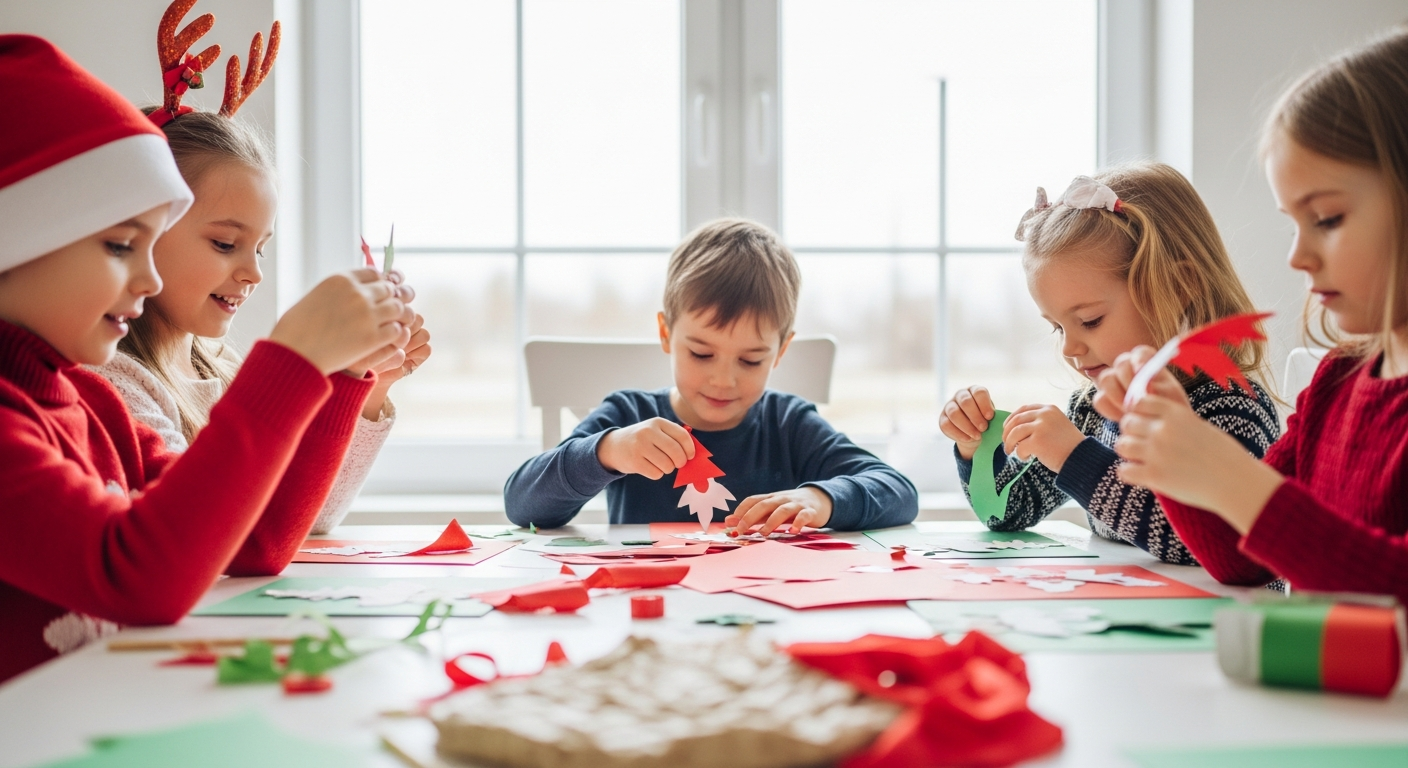
Table of Contents
- The Magic of Christmas Crafts: More Than Just Glitter
- Why Christmas Crafts Are Goldmines for Speech Development
- Choosing the Right Christmas Crafts for Different Ages (and Speech Goals)
- Making Crafts a Communication-Rich Experience: Practical Tips
- Boosting Communication Beyond the Craft Table with Speech Blubs
- Unlocking Full Potential: Choosing Your Speech Blubs Plan
- Addressing Common Parent Questions (and How We Help!)
- Conclusion
- Frequently Asked Questions (FAQ)
The twinkling lights, the scent of gingerbread, the rustle of wrapping paper – Christmas is a season brimming with magic, excitement, and countless opportunities for cherished family moments. But amidst the festive flurry, many parents wonder how to channel that boundless childhood energy into activities that are not only fun but also genuinely enriching. How do we move beyond passive consumption of holiday entertainment to truly engage our children in a way that sparks their creativity and fosters essential developmental skills?
This time of year offers a unique golden opportunity to do just that, especially through the delightful world of Christmas crafts. Far from being just a way to keep little hands busy, engaging in creative projects during the holidays provides a rich, multi-sensory environment that is incredibly beneficial for a child's overall development, and particularly for their speech and communication skills. In this comprehensive guide, we'll dive deep into why Christmas crafts are such powerful tools for fostering language, explore age-appropriate ideas, offer practical tips to maximize their developmental impact, and show you how Speech Blubs can seamlessly enhance this festive learning journey. Our mission at Speech Blubs is to empower children to "speak their minds and hearts," and we believe that joyful, hands-on activities like holiday crafting are a perfect complement to our scientifically-backed approach.

The Magic of Christmas Crafts: More Than Just Glitter
When we picture Christmas crafts, we often think of sparkling decorations, homemade gifts, or perhaps a bit of glorious mess. While these are certainly outcomes, the true magic lies in the process itself. For children, crafting is an immersive experience that taps into multiple developmental areas simultaneously:
Sensory Exploration
From the sticky texture of glue to the soft fluff of cotton balls, the crisp sound of scissors cutting paper, the vibrant hues of glitter, and even the subtle scent of pinecones, Christmas crafts engage nearly all senses. This rich sensory input is crucial for brain development, helping children process information from their environment and build a foundation for learning.
Fine Motor Skill Development
Cutting, gluing, painting, threading beads, tearing paper, molding clay – these actions are fantastic exercises for strengthening the small muscles in a child's hands and fingers. Developing fine motor skills is not just about dexterity; it's a fundamental step towards tasks like writing, self-feeding, and dressing, all of which contribute to a child's independence and confidence.
Cognitive Growth
Crafting involves planning, problem-solving, and decision-making. "Which color glitter should I use?" "How do I make this reindeer stand up?" "What happens if I put too much glue?" These questions encourage critical thinking, spatial reasoning, and an understanding of cause and effect. Following multi-step instructions also hones attention span and memory.
Emotional Connection and Family Bonding
Perhaps most importantly, Christmas crafts are a wonderful way to create lasting memories and strengthen family bonds. Sitting together, sharing materials, laughing at imperfect creations, and celebrating each other's efforts fosters a sense of togetherness and warmth. These shared experiences build a foundation of security and love, which is vital for a child's emotional well-being and willingness to communicate.

At Speech Blubs, we understand the profound impact of connecting with children through engaging activities. Our company was born from the personal experiences of our founders, who all grew up with speech problems and created the tool they wished they had: a solution that blends scientific principles with play. We are committed to providing an immediate, effective, and joyful experience, recognizing that the joy of connection is a powerful motivator for learning and communication.
Why Christmas Crafts Are Goldmines for Speech Development
Beyond the general developmental benefits, Christmas crafts offer an unparalleled environment for targeting specific speech and language goals. Think of a simple craft project not just as an artistic endeavor, but as a mini speech therapy session disguised as fun!
Vocabulary Expansion
Every craft introduces new words. "Glitter," "tinsel," "ribbon," "bauble," "holly," "bell," "reindeer," "snowflake," "Santa," "elf" – the list is endless. Children learn to associate these words with tangible objects and actions. They also learn descriptive adjectives like "sparkly," "sticky," "soft," "shiny," "red," "green," and verbs like "cut," "glue," "paint," "thread," "decorate." The more words a child hears and uses in context, the richer their vocabulary becomes.
Following Instructions (Receptive Language)
Craft tutorials naturally involve giving and receiving instructions. "First, get the red paper." "Next, cut out a circle." "Then, glue it here." This process helps children develop their receptive language skills – their ability to understand and follow directions. For children who struggle with auditory processing, the visual nature of crafts provides crucial support.
Expressive Language & Storytelling
As children create, they have a natural urge to talk about their work. They describe what they are making, explain their choices, ask for specific materials, and even narrate the steps. This encourages spontaneous expressive language. They might tell a story about the "reindeer" they just made or explain how their "snow globe" works, fostering early narrative skills and imaginative play.
Social Communication & Interaction
Crafting is often a collaborative activity. Children learn turn-taking ("My turn to glue, your turn to cut"), asking for help ("Can you pass the scissors?"), negotiating ("I want the blue glitter!"), and making polite requests. These are fundamental social communication skills that are vital for interacting with peers and adults. Joint attention – focusing on the same object or activity as another person – is also naturally encouraged, a crucial pre-linguistic skill.
Pre-Linguistic Skills
Even before a child uses words, crafts support pre-linguistic development. Pointing to materials, making eye contact when asking for something, babbling excitedly about a finished product, or imitating sounds associated with the craft (like "ho-ho-ho" or "jingle, jingle") are all important steps on the path to verbal communication.
At Speech Blubs, our unique approach of teaching complex communication skills through our "video modeling" methodology is perfectly aligned with the learning that happens during crafts. Children learn by watching and imitating their peers, much like they might imitate your actions during a craft. This activates mirror neurons in the brain, making learning intuitive and effective. Our method is backed by science, placing us in the top tier of speech apps worldwide. You can explore the research behind our methodology here.
Choosing the Right Christmas Crafts for Different Ages (and Speech Goals)
To truly maximize the speech benefits, it's helpful to tailor crafts to your child's developmental stage. Remember, the goal isn't perfection in the craft itself, but rich interaction and communication during the process.
Toddlers (1-3 years): Sensory Exploration & Simple Sounds
For our youngest crafters, the focus is on sensory engagement, cause and effect, and encouraging early vocalizations. Keep materials safe, non-toxic, and large enough to prevent choking hazards.
- Craft Ideas:
- Edible Ornament Garlands: String O-shaped cereal, pretzels, or dried fruit onto pipe cleaners or yarn.
- Cotton Ball Snow: Let them glue cotton balls onto blue paper to make snow or a fluffy Santa beard.
- Sensory Bins: Fill a bin with cotton "snow," jingle bells, pinecones, cinnamon sticks, and small, unbreakable ornaments.
- Finger Painting: Use safe, washable paints to create abstract "Christmas lights" or "snow scenes."
- Speech Focus:
- Animal Sounds: If making a reindeer, practice "reindeer go gallop, gallop."
- Exclamations: "Wow!" "Uh-oh!" "Yay!"
- Early Words: "More," "all done," "up," "down," "sticky," "soft," "bell," "red."
- Imitation: Encourage them to imitate simple sounds or actions.
- Relatable Scenario: Imagine a parent whose 2-year-old is a "late talker" but loves to explore textures. A "snow" sensory bin with cotton balls, jingle bells, and pinecones offers a fantastic opportunity. As the child plays, the parent can narrate: "Look, soft cotton! Jingle, jingle, bell! Can you say 'bell'?" They can practice sounds like "cold," "soft," and "scoop." To reinforce these initial vocalizations and encourage sound imitation, Speech Blubs' "Early Sounds" or "Animal Kingdom" sections can be incredibly engaging, providing video models of peers making similar sounds. Download Speech Blubs on the App Store or Google Play to explore these features.
Preschoolers (3-5 years): Vocabulary Expansion & Sentence Building
At this age, children can follow slightly more complex instructions and are developing a wider range of vocabulary and simple sentence structures.
- Craft Ideas:
- Paper Plate Santas/Reindeer: Cut, glue, and decorate paper plates with cotton, construction paper, and googly eyes.
- Handprint Reindeer/Wreaths: Use paint to make handprint art that transforms into festive figures.
- Ornament Decorating: Provide plain ornaments and various decorating supplies like glitter, paint pens, stickers.
- Simple Collages: Cut out pictures from old magazines or holiday catalogs and glue them onto paper.
- Speech Focus:
- Descriptive Adjectives: "Sparkly," "shiny," "fuzzy," "prickly," "big," "small."
- Action Verbs: "Cut," "glue," "paint," "stick," "mix," "decorate."
- "What" and "Where" Questions: "What color is that?" "Where should the eyes go?"
- Simple Sentences: "I want red glue." "My Santa has a big beard." "I like this star."
- Sequencing: "First we cut, then we glue."
- Relatable Scenario: Consider a 4-year-old who struggles with using descriptive language. While decorating a plain ornament, a parent can strategically prompt: "What color is this glitter? Is it sparkly? How does it feel?" "Tell me about your shiny star." This encourages the child to use new adjectives. Speech Blubs has categories like "Who Am I?" or "Out Loud" that encourage children to describe objects, characters, and actions, building their confidence in using descriptive language in a playful, low-pressure environment.
Early School-Aged (5-7 years): Sequencing, Narratives & Problem-Solving
Children in this age group are often ready for more intricate crafts, multi-step processes, and can engage in more complex conversations.
- Craft Ideas:
- Gingerbread House Decorating: A classic that involves planning, fine motor skills, and creative expression.
- Personalized Christmas Cards: Designing and writing messages encourages literacy and creative writing.
- DIY Gift Tags: Cutting, stamping, and writing names.
- Pipe Cleaner Creations: Making elves, snowmen, or abstract designs.
- Speech Focus:
- Explaining Processes: "First, I put on the icing, then I add the candy."
- Predicting Outcomes: "What do you think will happen if we use too much frosting?"
- Telling Stories: Creating a narrative about their gingerbread house or the character they've made.
- Problem-Solving Language: "My reindeer's head keeps falling off! How can we fix it?"
- Comparisons: "My tree is taller than yours."
- Relatable Scenario: For a 6-year-old who needs help with sequencing events and telling a coherent story, building and decorating a gingerbread house is ideal. The parent can guide them through each step, using sequencing words: "Okay, first we put the walls together. Next, we'll add the roof. Then, we can decorate with candy!" Afterward, the child can describe the entire process. Speech Blubs supports this with activities that encourage narrative building and sequential thinking, helping children practice putting events in order and expressing them clearly.
Making Crafts a Communication-Rich Experience: Practical Tips
It’s not just about what craft you choose, but how you engage with your child during the activity. Here are some simple, yet powerful, strategies to turn any Christmas craft into a speech and language booster:
- Get Down to Their Level: Physically position yourself at eye level with your child. This shows you are engaged and makes interaction more natural and comfortable.
- Narrate and Describe Everything: Talk about what you are doing, seeing, feeling, and hearing. "I'm cutting the red paper," "This glitter is so sparkly!" "The glue feels sticky." This models language and exposes them to new vocabulary.
- Ask Open-Ended Questions: Instead of "Is this fun?" (a yes/no question), try "What do you like best about this craft?" or "What do you think will happen if we add more glue?" Open-ended questions encourage longer, more complex responses.
- Model and Expand Language: If your child says "Red," you can respond with "Yes, that's a big red circle!" or "You want the red paint." This provides correct models and expands their vocabulary and sentence structure without direct correction.
- Pause and Wait: After asking a question or making a comment, give your child ample time (at least 5-10 seconds) to process and respond. Resist the urge to fill the silence. This encourages them to initiate communication.
- Use Visuals and Gestures: Point to objects, demonstrate actions, or use simple signs if appropriate. Visual cues can support comprehension, especially for younger children or those with language delays.
- Limit Distractions: Turn off the TV, put away phones (yours too!), and focus solely on the craft and your child. A quiet, focused environment enhances learning and connection.
- Celebrate Efforts, Not Just Outcomes: Praise their participation, their attempts at communication, and their creativity, rather than just the "perfect" finished product. "I love how you chose those colors!" or "Thank you for helping me find the glue!" fosters confidence and a love for communication.
These interactive strategies are at the core of what we do at Speech Blubs. We believe in transforming screen time into "smart screen time" – an active, engaging experience that promotes learning and strengthens family connection, rather than passive viewing. Much like a crafting session, our app encourages active participation and interaction.
Boosting Communication Beyond the Craft Table with Speech Blubs
While Christmas crafts provide an incredible foundation, consistent and targeted practice is key for lasting speech and language development. This is where Speech Blubs steps in as a powerful, joyful supplement to your child's overall communication journey. Our app was born from a deep understanding of what children and parents need because our founders experienced speech problems themselves. They created the tool they wished they had: an immediate, effective, and joyful solution for the 1 in 4 children who need speech support.
Reinforcing Skills with Video Modeling
The magic of Speech Blubs lies in our unique video modeling methodology. Children learn by watching and imitating their peers on screen. This approach is highly engaging and scientifically proven to activate mirror neurons in the brain, making imitation – a fundamental part of language acquisition – more natural and effective. Think of it as a virtual playdate where your child is constantly encouraged to speak, copy sounds, and form words and sentences.
- Connecting Crafts to the App: After a crafting session where your child practices animal sounds for a reindeer decoration, you can seamlessly transition to the "Animal Kingdom" section within Speech Blubs to reinforce those very sounds with engaging video models. If you've been working on descriptive words like "red" or "sparkly" for an ornament, our "Who Am I?" category can encourage your child to describe various objects, solidifying their vocabulary.
- Targeted Practice: With over 1,500 activities covering sounds, words, sentences, and early reading, Speech Blubs offers structured opportunities to practice specific skills that you might be introducing during crafts or noticing your child needs support with. Our app's diverse activities keep engagement high, even for children who lose interest quickly in traditional learning methods.
- Building Confidence and Reducing Frustration: For children who struggle with speaking, learning can sometimes feel frustrating. Speech Blubs transforms this into play. By presenting speech tasks as fun games and celebrated successes, we help children build confidence and associate communication with positive experiences.
- Empowering Parents: Our app provides valuable tools and guidance for parents, helping you understand your child's progress and giving you ideas for how to continue supporting their speech development in everyday life, not just during app time.
We are committed to providing a screen-free alternative to passive viewing (like cartoons) and a powerful tool for family connection. We encourage co-play and interaction, ensuring that "smart screen time" with Speech Blubs becomes another joyful learning moment you share with your child. See what other parents are saying about their child's success with Speech Blubs and how it has empowered their children to communicate their minds and hearts.
Ready to empower your child's communication journey and turn learning into a joyful adventure? Download Speech Blubs on the App Store or Google Play to begin your free trial today!
Unlocking Full Potential: Choosing Your Speech Blubs Plan
We believe in transparency and want you to have all the information to choose the best option for your family. Speech Blubs offers two main subscription plans:
Monthly Plan: Flexibility for $14.99 per month
The Monthly plan offers flexibility if you prefer a month-to-month commitment. For $14.99 each month, you get access to our core speech development activities. However, it's important to note that this plan does not include a free trial, access to the Reading Blubs app, early updates, or priority 24-hour support.
Yearly Plan: The Smartest Choice for Long-Term Growth
For the best value and a truly comprehensive experience, we highly recommend our Yearly plan. For just $59.99 per year, you save a significant 66% compared to the monthly option, bringing the cost down to an incredible $4.99 per month!
The Yearly plan isn't just about savings; it unlocks a full suite of exclusive, high-value features designed to maximize your child's development:
- A Full 7-Day Free Trial: Experience all that Speech Blubs has to offer before committing. This allows you and your child to explore the vast library of activities and see the engagement firsthand.
- The Extra Reading Blubs App: This bonus app helps lay foundational literacy skills, providing an integrated approach to language development.
- Early Access to New Updates: Be among the first to experience new features, activities, and improvements as soon as they are released.
- 24-Hour Support Response Time: Get faster, dedicated support whenever you need assistance or have questions.
Choosing the Yearly plan provides continuous support for your child's communication journey at an unbeatable price, complete with exclusive benefits that enhance the overall learning experience. We understand that sustained engagement yields the best results, and the Yearly plan is designed to support that long-term commitment to your child's progress.
To get started with the best value and unlock all these amazing benefits, we encourage you to choose the Yearly plan, which includes a 7-day free trial and the Reading Blubs app!
Addressing Common Parent Questions (and How We Help!)
We know you might have questions about combining creative play with targeted speech support. Here are some common concerns and how Speech Blubs offers solutions:
"My child loses interest quickly in activities."
Children naturally have short attention spans. The key is to keep craft sessions brief, follow your child's lead, and incorporate elements they love. If they adore animals, make animal-themed Christmas crafts. If they love glitter, embrace the sparkle! Speech Blubs is designed with this in mind, offering a wide variety of engaging, short activities that can be tailored to your child's interests, keeping them motivated and focused.
"I'm not very creative or crafty myself."
You don't need to be an artist! The simplest crafts often yield the richest communication opportunities. Focus on the interaction and the language, not the artistic masterpiece. A paper plate Santa or a simple string of popcorn can be just as valuable as an elaborate project. Our app requires no artistic skill from parents; just open it up and engage with your child!
"Is screen time actually good for speech development?"
Not all screen time is created equal. Passive viewing, like watching cartoons, offers limited developmental benefits. However, "smart screen time" with interactive, engaging apps like Speech Blubs can be incredibly beneficial. Our video modeling approach ensures active participation, imitation, and engagement, turning screen time into a powerful learning tool. We offer a true alternative to passive viewing, transforming it into a dynamic opportunity for language acquisition and family connection.
"How do I know if my child needs extra support for their speech?"
It's natural to have questions about your child's developmental milestones. Sometimes, a little extra support can make a big difference. If you're unsure whether your child could benefit from targeted speech assistance, we've developed a simple, helpful tool. Take our quick 3-minute preliminary screener to get a simple assessment and a personalized next-steps plan. It's a great way to gain clarity and peace of mind.
Conclusion
The Christmas season is a precious time, full of wonder and discovery for children. By embracing the joy of Christmas crafts, you're not just creating decorations; you're building cherished memories, fostering creativity, and providing a dynamic, language-rich environment that nurtures your child's speech and communication skills. From expanding vocabulary and mastering instructions to boosting expressive language and strengthening family bonds, the benefits are truly profound.
Remember, every "oops" with the glitter, every giggle over a lopsided reindeer, and every shared conversation during a craft session is a step forward in your child's developmental journey. And when you're looking for an immediate, effective, and joyful way to support and accelerate that journey, Speech Blubs is here to help. Our app complements these real-world interactions by providing scientifically-backed, engaging "smart screen time" that empowers children to find their voice and speak their minds and hearts.
Don't let another holiday season pass by without harnessing the full potential of these magical moments. Embark on a journey of discovery and communication with your child today. For the best value, a comprehensive suite of features, and a full 7-day free trial, we highly recommend our Yearly plan. It's the perfect way to give your child the gift of clear communication, confidence, and connection for the holidays and beyond. Start your 7-day free trial with the Yearly plan today!
Frequently Asked Questions (FAQ)
Q1: What are the best Christmas crafts for non-verbal children?
A1: For non-verbal children, focus on highly sensory crafts that encourage exploration and engagement through touch, sight, and sound. Edible crafts (like stringing cereal), sensory bins with festive items (cotton balls, jingle bells, pinecones), or simple painting activities where they can experiment with colors and textures are excellent. During these activities, narrate what they are experiencing, model simple sounds or gestures, and praise any form of communication (eye contact, pointing, babbling). Speech Blubs' "Early Sounds" section can also provide visual and auditory models for imitation.
Q2: How can I encourage my child to talk more during Christmas crafts?
A2: Create a language-rich environment by narrating your actions, using descriptive words, and asking open-ended questions (e.g., "What do you want to do next?"). Provide choices (e.g., "Do you want red glitter or green glitter?"). Most importantly, pause and wait patiently for their response, giving them time to formulate their thoughts. Celebrate all attempts at communication, no matter how small. Our app reinforces these real-life interactions with thousands of video modeling activities that encourage vocalization and interaction.
Q3: What if my child gets frustrated with the craft or makes a mess?
A3: Frustration is a natural part of learning! Offer gentle assistance without taking over, simplify the steps, or suggest a different approach. Emphasize that it's okay for things to not be perfect. The process and interaction are more important than the final product. As for messes, embrace them as part of the creative process – lay down newspaper or an old sheet beforehand. Speech Blubs offers a frustration-free learning environment where mistakes are simply opportunities to try again, fostering resilience and confidence.
Q4: How does Speech Blubs specifically help with communication during holiday activities?
A4: Speech Blubs acts as a powerful supplement by reinforcing the language and sounds learned during crafts. For example, if you're making reindeer, you can then use our "Animal Kingdom" category to practice animal sounds and names. If you're describing colors, our "Who Am I?" section can help your child use descriptive adjectives. Our unique video modeling methodology provides clear examples for imitation, helping children build confidence and transfer their skills from the app to real-world interactions and conversations during festive play.
About the author