
Joyful Christmas Crafts for Kids to Make at Home
 By Speech Blubs Team•Dec 22, 2025•22 min.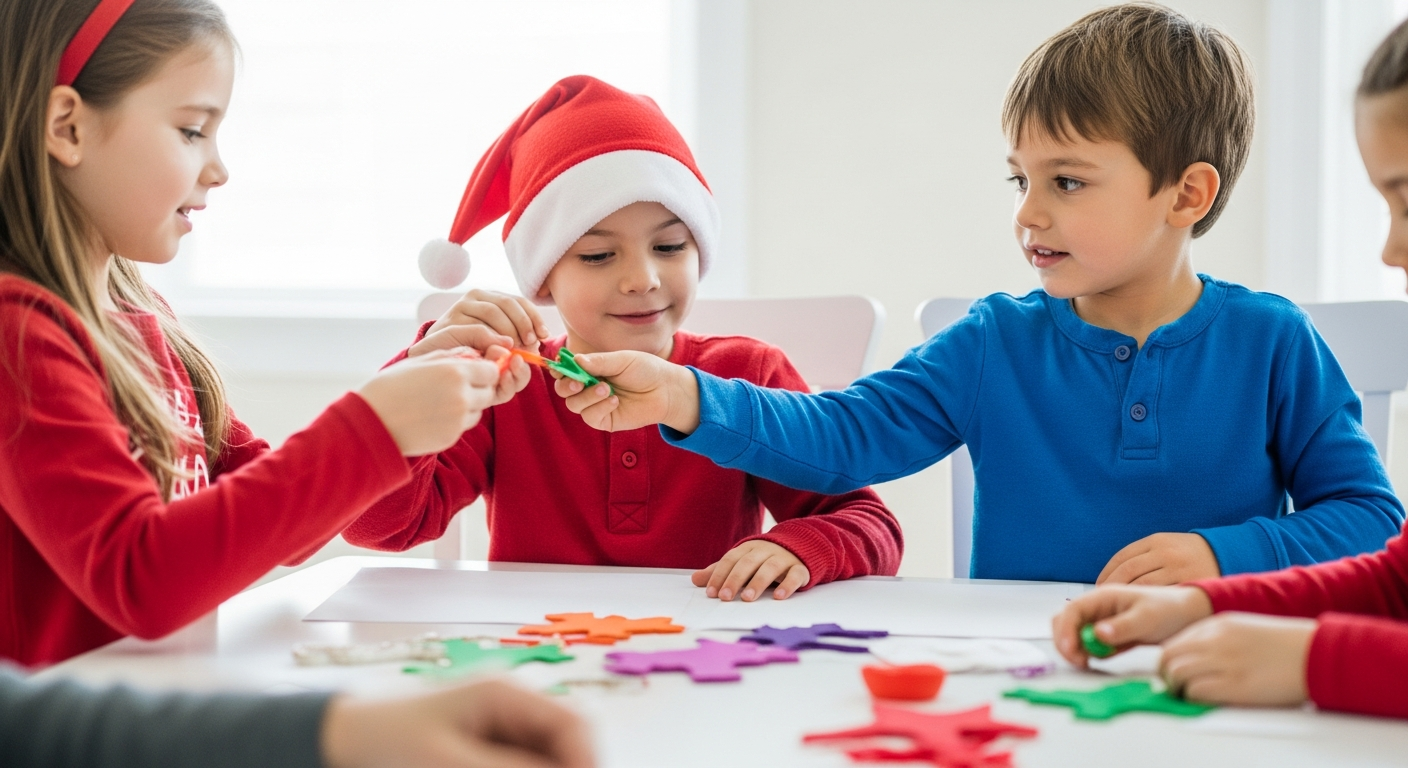
Table of Contents
- Introduction
- Why Christmas Crafts Are More Than Just Fun
- Planning Your Crafting Adventures: Tips for Success
- Our Favorite Easy Christmas Crafts for Kids to Make at Home
- Maximizing Communication During Craft Time: Our Speech Blubs Philosophy
- How Speech Blubs Enhances Your Child's Communication Journey
- Choosing the Right Plan for Your Family: Our Commitment to Value
- Beyond the Crafts: Continued Communication Growth
- Conclusion
- FAQ
Introduction
The air is crisp, the lights are twinkling, and a certain magical excitement fills our homes. Christmas is a time for joy, togetherness, and creating cherished memories. But amidst the hustle and bustle of holiday preparations, do you ever find yourself wishing for simple, meaningful activities that truly connect your family? We know the feeling – the desire to slow down, engage with our children, and witness their eyes light up with discovery and accomplishment. This festive season, let's turn to the timeless tradition of Christmas crafts. They’re not just about glitter and glue; they’re powerful opportunities for learning, bonding, and sparking communication. In this comprehensive guide, we'll dive into a world of easy, delightful Christmas crafts that your children can make right at home, transforming everyday materials into holiday masterpieces. More importantly, we'll explore how these hands-on activities become incredible springboards for boosting your child's speech and language development, fostering confidence and a love for expressing themselves.

Why Christmas Crafts Are More Than Just Fun
Engaging in arts and crafts during the holidays offers a treasure trove of benefits that extend far beyond simply creating a pretty decoration. For children, these activities are vital for holistic development, touching upon various cognitive, emotional, and physical aspects.
Developmental Benefits: Building Essential Skills
Crafting is a powerhouse for skill-building. When little hands cut, paste, paint, and mold, they are actively refining their fine motor skills – the precise movements of small muscles in the hands and fingers crucial for tasks like writing and self-care. Following multi-step instructions, identifying shapes and colors, and understanding concepts like "under," "over," "next to," and "before" all contribute to cognitive development and early literacy skills. Children learn problem-solving as they figure out how to attach an arm to a snowman or if they have enough glitter. This hands-on engagement stimulates creativity, allowing children to experiment with materials and express their unique visions.
Emotional Benefits: Confidence and Self-Expression
There's immense pride in creating something with one's own hands. Finishing a craft, whether it's a wonky reindeer or a perfectly painted ornament, gives children a profound sense of accomplishment. This boosts self-esteem and fosters a positive attitude towards learning new things. Crafting also provides a safe outlet for emotional expression. Children can channel their excitement, curiosity, and even frustrations into their creations, communicating feelings through colors, textures, and designs. It’s a wonderful way for them to explore their inner world and share it with others.
Family Bonding: Cherished Moments and Shared Laughter
In our increasingly digital world, crafting offers a beautiful opportunity for genuine family connection. Sitting together around a table, sharing materials, helping each other, and laughing at the occasional mishap creates invaluable memories. These are the moments that strengthen family ties, build traditions, and offer a dedicated time for parents and children to simply be together, engaging in a shared, joyful activity. It’s an antidote to passive screen time, creating an active, collaborative experience.

Speech and Language Connection: A Natural Bridge to Communication
This is where the magic truly happens, especially for children who are still developing their communication skills. Crafting naturally encourages conversation and interaction. As children work, they describe what they're doing ("I'm cutting the red paper!"), narrate their actions ("First, we glue the eyes, then the nose."), and ask questions ("Where does this go?"). They learn to follow verbal instructions, understand new vocabulary related to tools and materials (e.g., "glue stick," "pipe cleaner," "texture," "sparkle"), and articulate their choices and preferences. For a child who might be a "late talker" or needs support with expressive language, craft time provides a low-pressure, highly motivating environment to practice sounds, words, and sentences. It's a real-world context for applying language skills, fostering a love for communication, and building confidence in expressing their minds and hearts.
We understand this profound connection between play and communication at Speech Blubs. Our mission is to empower children to speak their minds and hearts, and we believe that engaging, interactive experiences like crafting lay a powerful foundation for this. If you’re curious about your child’s speech development, we invite you to take our quick 3-minute preliminary screener. It involves just 9 simple questions and provides an immediate assessment along with a personalized next-steps plan.
Planning Your Crafting Adventures: Tips for Success
Before diving into the glitter and glue, a little preparation can go a long way in ensuring a smooth and enjoyable crafting session for everyone.
Age-Appropriate Choices: Tailoring to Development
Consider your child's age and developmental stage when selecting crafts.
- Toddlers (1-3 years): Focus on sensory experiences, simple gluing, tearing paper, chunky crayons, and playdough. Supervised handprint crafts are perfect.
- Preschoolers (3-5 years): They can handle basic cutting with safety scissors, more complex gluing, simple painting, and following 2-3 step instructions. Crafts with a clear outcome they can identify with are very motivating.
- Early Elementary (5+ years): Children in this age group can often cut more accurately, assemble multiple pieces, and show more detailed painting skills. They can follow longer sequences of instructions and even contribute ideas for modifying crafts.
Gathering Supplies: Simple and Sustainable
You don't need a craft store overhaul! Many fantastic Christmas crafts can be made with items you already have around the house or can easily gather from nature.
- Recyclables: Toilet paper rolls, paper plates, cardboard, old magazines, bottle caps.
- Nature Finds: Pinecones, leaves, small twigs.
- Basic Craft Staples: Construction paper (red, green, white are Christmas classics!), glue sticks, liquid glue, safety scissors, crayons, markers, tempera paints, cotton balls, googly eyes.
- Optional Fun Extras: Glitter (use sparingly to avoid overwhelming messes!), pipe cleaners, pom-poms, stickers.
Setting Up: Taming the Mess Monster
Crafting can get messy, and that's part of the fun! But a little foresight can prevent a huge cleanup headache.
- Protect Surfaces: Cover your table with an old tablecloth, newspaper, or a plastic sheet.
- Designated Area: Choose a space where you don't mind a bit of a creative explosion.
- Accessibility: Place all materials within easy reach for your child, but keep paints and glues in a way that prevents spills until needed.
- Smock Up: Have old shirts or actual art smocks ready to protect clothing.
- Cleanup Crew: Keep wet wipes, paper towels, and a small dustpan and brush handy for quick fixes.
Safety First: Crafting with Care
Always prioritize safety during craft time.
- Supervision: Always supervise young children, especially when using scissors, small beads, or paint.
- Non-Toxic Materials: Ensure all paints, glues, and markers are labeled non-toxic.
- Age-Appropriate Tools: Provide safety scissors for young children and demonstrate proper use.
- Choking Hazards: Be mindful of small items like beads, buttons, or pom-poms for children under three.
Our Favorite Easy Christmas Crafts for Kids to Make at Home
Now for the fun part! Here are some of our top picks for delightful and easy Christmas crafts, complete with instructions and tips for weaving in language-rich interactions. Remember, the goal isn't perfection, but participation and the joy of creation.
1. Pinecone or Popsicle Stick Reindeer Ornaments
These adorable reindeer are a fantastic way to bring a touch of nature indoors or transform simple craft sticks.
Materials:
- Pinecones OR popsicle sticks (3-4 per reindeer)
- Brown paint (optional, for popsicle sticks)
- Googly eyes
- Small red pom-pom (for Rudolph's nose)
- Brown pipe cleaners or small twigs (for antlers)
- Glue (liquid craft glue works best for pinecones)
- Ribbon or string (for hanging)
Instructions:
- Preparation: If using popsicle sticks, paint them brown and let them dry. For pinecones, gently shake off any loose debris.
- Form the Body:
- Popsicle Sticks: Glue two sticks together side-by-side. Then, glue another stick horizontally across the top to form the head and shoulders, and one near the bottom for the legs.
- Pinecone: The pinecone naturally forms the body.
- Add the Face: Glue two googly eyes onto the top part of the pinecone or the upper horizontal popsicle stick. Then, glue the red pom-pom below the eyes for the nose.
- Antlers: Cut a brown pipe cleaner into two small pieces and curl them slightly, or find two small twigs. Glue them to the top of the reindeer's head/pinecone.
- Hang It Up: Once dry, loop a piece of ribbon or string and glue it to the back of the reindeer for hanging on the tree.
Language & Communication Boost:
- Vocabulary: "Pinecone," "popsicle stick," "brown," "googly eyes," "red nose," "antlers," "glue," "stick," "pointy," "soft," "hard."
- Actions: "Paint," "glue," "cut," "twist," "hang."
- Concepts: "Big," "little," "on top," "next to," "first," "then."
- Sentence Starters: "I see the red nose!" "Let's glue the eyes." "My reindeer has big antlers."
2. Salt Dough Ornaments
A classic craft that's wonderfully tactile and results in beautiful, lasting ornaments.
Materials:
- 1 cup all-purpose flour
- 1/2 cup salt
- 1/2 cup water (plus a little more if needed)
- Cookie cutters (Christmas shapes like stars, trees, gingerbread men)
- Straw or skewer (to make a hole)
- Baking sheet and parchment paper
- Paints, glitter, markers (for decorating)
- Ribbon or string
Instructions:
- Mix the Dough: In a large bowl, combine flour and salt. Slowly add water, mixing until a dough forms. Knead on a floured surface for 5-10 minutes until smooth and pliable. If too sticky, add a little more flour; if too dry, a tiny bit more water.
- Roll and Cut: Roll out the dough to about 1/4 inch thick. Use Christmas cookie cutters to cut out shapes.
- Make Holes: Use a straw or skewer to poke a hole at the top of each ornament for hanging.
- Bake: Place ornaments on a parchment-lined baking sheet. Bake at 250°F (120°C) for 2-3 hours, or until completely hard. Flip them halfway through for even drying.
- Decorate: Once cooled, let your child paint, glitter, or draw on their ornaments.
- Hang: Thread ribbon or string through the hole.
Language & Communication Boost:
- Vocabulary: "Flour," "salt," "dough," "sticky," "smooth," "roll," "cut," "star," "tree," "gingerbread man," "bake," "paint," "glitter."
- Sensory Words: "Soft," "hard," "rough," "smooth," "warm," "cold."
- Sequencing: "First, we mix. Next, we roll. Then, we cut."
- Descriptive Language: "The dough is soft," "My star is red," "It's a sparkly ornament."
3. Cotton Ball Snowmen or Santa
Fluffy, simple, and perfect for practicing words like "white" and "round."
Materials:
- Construction paper (blue for background, black for hat, orange for nose, red for Santa)
- Cotton balls
- Glue stick or liquid glue
- Googly eyes (or draw eyes with a marker)
- Markers or crayons
Instructions (for Snowman):
- Draw the Body: On blue construction paper, draw three circles for the snowman's body, or just let your child glue cotton balls freehand.
- Glue Cotton Balls: Have your child glue cotton balls inside the circles, filling them in to make a fluffy snowman.
- Add Details:
- Cut a small orange triangle for the nose and glue it on.
- Glue on googly eyes or draw them.
- Draw a mouth with a black marker.
- Cut out a small black hat and two "stick" arms and glue them on.
- Optional: Draw falling snowflakes around the snowman.
Instructions (for Santa):
- Draw Santa: Draw a simple Santa head and hat shape on red paper.
- Beard & Hat Trim: Glue cotton balls all over where Santa's beard should be, and along the brim of his hat.
- Face Details: Glue on googly eyes. Draw a pink circle for his nose and a smiling mouth.
Language & Communication Boost:
- Vocabulary: "Cotton," "fluffy," "white," "snowman," "Santa," "hat," "nose," "eyes," "mouth," "arms," "cold," "round."
- Actions: "Glue," "draw," "stick," "fill."
- Concepts: "Big," "medium," "small," "on," "off," "up," "down."
- Sentence Structure: "The snowman is white." "Santa has a big beard." "I want more cotton."
4. Handprint or Footprint Santas/Reindeer
A cherished keepsake that captures your child's tiny hands or feet.
Materials:
- Thick construction paper (white or light blue for background)
- Washable red, brown, and white paint
- Paper plate (for paint)
- Markers (black, red)
- Googly eyes (optional)
Instructions (for Santa Handprint):
- Red Handprint: Pour some red paint onto a paper plate. Help your child press their palm into the paint and then firmly onto the paper. This will be Santa's face and hat.
- White Details: Once the red paint is dry, use white paint for the brim of Santa's hat (along the top of the handprint) and a fluffy beard (around the bottom/thumb area).
- Face: When all paint is dry, use a black marker for eyes (or glue googly eyes), a red marker for his nose, and a small pink mouth.
- Add Holly: Draw or glue a small piece of green paper with a red pom-pom for holly on his hat.
Instructions (for Reindeer Footprint):
- Brown Footprint: Pour brown paint onto a paper plate. Help your child press their foot into the paint and then firmly onto the paper. The heel will be the reindeer's head, and the toes will be the top of its head.
- Add Face & Antlers: Once dry, draw two eyes (or glue googly eyes) on the heel. Draw a red nose (or glue a red pom-pom) at the very bottom of the heel.
- Antlers: Use a brown marker to draw antlers extending from the top of the foot (where the toes are).
Language & Communication Boost:
- Body Parts: "Hand," "foot," "fingers," "toes," "palm," "heel."
- Colors & Actions: "Red paint," "brown paint," "press," "print," "dry," "draw," "wiggle."
- Descriptive Words: "Big hand," "little foot," "wet paint," "soft paper."
- Sensory: "Squishy," "cold," "tickly."
5. Paper Plate Christmas Characters (Santa, Rudolph, Elf)
Versatile and easy, paper plates are perfect for turning into festive friends.
Materials:
- Paper plates
- Paints (red, brown, green, flesh tone)
- Construction paper (various colors)
- Googly eyes
- Pom-poms (red for Rudolph, various for decorations)
- Pipe cleaners
- Glue, scissors, markers
Instructions (for Rudolph):
- Paint the Plate: Paint the entire paper plate brown and let it dry.
- Face Details: Glue two googly eyes onto the plate. Glue a red pom-pom in the center for Rudolph's nose.
- Antlers: Cut out two antler shapes from brown construction paper or use brown pipe cleaners. Glue them to the top back of the plate.
- Ears: Cut two ear shapes from brown paper and glue them on either side of the antlers.
Language & Communication Boost:
- Vocabulary: "Plate," "round," "brown," "red nose," "antlers," "ears," "googly eyes," "circle," "cut," "paste."
- Questions: "What color should Rudolph be?" "Where do the eyes go?" "Can you find the red nose?"
- Social-Emotional: "Happy Rudolph," "silly Rudolph."
6. DIY Christmas Cards
A personal touch that’s wonderful for developing fine motor skills and expressing gratitude.
Materials:
- Construction paper (red, green, white)
- Crayons, markers, or colored pencils
- Stickers (Christmas-themed)
- Glitter, glue, cotton balls (optional)
- Safety scissors
Instructions:
- Fold the Card: Fold a piece of construction paper in half to create a card base.
- Decorate the Front:
- Encourage your child to draw a Christmas tree, Santa, a snowman, or presents.
- They can use stickers, glue on cotton balls for snow, or add glitter for sparkle.
- Practice drawing shapes: "Draw a triangle for the tree!" "Can you draw a circle for a snowman's head?"
- Write a Message: Help your child write their name or a simple message like "Merry Christmas" or "I love you" inside. Even scribbles are wonderful expressions!
- Give it Away: Discuss who the card is for and why they are special.
Language & Communication Boost:
- Vocabulary: "Card," "draw," "write," "fold," "sticker," "picture," "tree," "present," "star," "give," "thank you."
- Social Language: Discussing recipients, expressing affection, greeting phrases.
- Pre-Writing Skills: Holding crayons, making lines and shapes, recognizing letters.
7. Toilet Paper Roll Christmas Figures (Elf, Santa, Snowman)
Transform humble cardboard rolls into festive characters.
Materials:
- Empty toilet paper rolls
- Construction paper (red, green, white, flesh tone)
- Markers, crayons
- Googly eyes
- Pom-poms, pipe cleaners (optional for embellishments)
- Glue, scissors
Instructions (for Elf):
- Cover the Roll: Wrap the toilet paper roll in green construction paper and glue it down. This is the elf's body.
- Head: Cut a strip of flesh-tone paper for the face and glue it to the top of the roll.
- Features: Glue on googly eyes, draw a nose, and a cheerful mouth.
- Hat & Collar: Cut a triangular elf hat from green paper (maybe with a tiny pom-pom on top) and a white collar, then glue them on.
- Arms & Legs: Draw or cut out green arms and legs from paper and glue them to the roll.
Language & Communication Boost:
- Vocabulary: "Roll," "stand," "elf," "Santa," "snowman," "hat," "suit," "green," "red," "white," "decorate," "dress up."
- Concepts: "Tall," "short," "on top," "at the bottom."
- Imagination: "What is your elf doing?" "Where is Santa going?"
Maximizing Communication During Craft Time: Our Speech Blubs Philosophy
Beyond the visual appeal of these crafts, the true magic lies in the communicative opportunities they offer. Every snip of the scissors, every dab of glue, and every color choice is a chance for your child to learn and practice essential speech and language skills.
- Descriptive Language: Encourage your child to describe what they are seeing, doing, and feeling. "Tell me about the bumpy pinecone," "That paint is so shiny!" "The glue feels sticky." This builds a rich vocabulary of adjectives and helps them articulate their observations.
- Following Directions: "First, get the red paper. Then, cut a circle." This reinforces sequential understanding and memory, crucial for academic success and daily life.
- Asking & Answering Questions: Prompt open-ended questions like, "What should we add next?" or "Why did you choose that color?" and encourage them to ask you questions too. This promotes conversational turn-taking.
- Narrating the Process: Encourage them to explain the steps they are taking. "I'm putting the eyes on Rudolph." "I finished painting the star." This strengthens their ability to tell stories and recount events.
- Emotional Expression: Crafting can be a space for children to communicate feelings about their creations. "I feel so proud of my snowman!" or "This part is a little tricky." Validate their efforts and emotions.
At Speech Blubs, we deeply understand the power of play-based learning to unlock a child's communication potential. We believe every child deserves to speak their minds and hearts, and our app was born from the personal experiences of our founders, who wished they had such a tool growing up. We’ve designed Speech Blubs to be an immediate, effective, and joyful solution for the 1 in 4 children who need speech support, blending scientific principles with play. Our unique "video modeling" methodology, where children learn by watching and imitating their peers, provides a captivating and effective way to acquire new sounds and words. It's "smart screen time" that acts as a powerful screen-free alternative to passive viewing, promoting active engagement and family connection. You can learn more about the research behind our highly-rated method and see why we're trusted by millions of families worldwide.
How Speech Blubs Enhances Your Child's Communication Journey
While hands-on crafts are invaluable, Speech Blubs offers a complementary, engaging, and scientifically-backed approach to further boost your child’s speech development. Imagine a world where learning to speak feels like playing a game with friends!
Our app integrates seamlessly with the developmental goals fostered through crafting. For example, if your child enjoys making a "moo" sound while creating an animal craft, they can then practice that sound with other children in our "Animal Kingdom" section. This reinforces learning across different contexts. The app features:
- Hundreds of Activities: Covering a wide range of sounds, words, and early literacy skills, designed to keep children engaged.
- Real Kids, Real Learning: Our core video modeling method allows children to imitate real peers, activating "mirror neurons" in the brain that facilitate learning.
- Interactive Learning: Our activities require active participation, not just passive viewing, making screen time productive and valuable.
- Progress Tracking: Parents can monitor their child's development and celebrate milestones.
- Expert-Backed: Developed by speech-language pathologists, ensuring the content is effective and appropriate.
Many parents have seen incredible transformations. Read inspiring parent testimonials to hear directly about the successes families have experienced with Speech Blubs. We focus on fostering a love for communication, building confidence, reducing frustration, and creating joyful family learning moments. Our app is a powerful supplement to a child's overall development plan and, when applicable, professional therapy, always encouraging adult co-play and support.
Choosing the Right Plan for Your Family: Our Commitment to Value
We believe in making effective speech and language support accessible to every family. That’s why we offer flexible plans for Speech Blubs, designed to fit your needs.
Our pricing is straightforward:
- Monthly Plan: $14.99 per month.
- Yearly Plan: Just $59.99 per year! This breaks down to an incredible value of only $4.99 per month.
We strongly recommend our Yearly plan because it offers significantly superior value, allowing you to save 66% compared to the monthly subscription. But the savings are just one part of the story! The Yearly plan unlocks exclusive, high-value features that are not available with the Monthly plan:
- A 7-Day Free Trial: Experience the full power of Speech Blubs before committing. This trial is only available with the Yearly plan selection.
- The Extra Reading Blubs App: Access our companion app designed to support early reading skills, completely free!
- Early Access to New Updates: Be the first to enjoy new features and content.
- 24-Hour Support Response Time: Get priority assistance whenever you need it.
When you're ready to empower your child's communication journey, choose the Yearly plan to unlock these fantastic benefits and get the most out of your Speech Blubs experience. It's the best way to support your child's growth and enjoy the full suite of our unique "smart screen time" tools.
Beyond the Crafts: Continued Communication Growth
The holiday season offers a unique backdrop for engaging in enriching activities like Christmas crafts, but the lessons and connections forged during these times can extend throughout the year. Making communication a daily habit, through playful interaction and dedicated learning, is key to sustained growth.
Remember that you, as a parent or caregiver, are your child's most important communication partner. Your engagement, encouragement, and patience create an environment where they feel safe and confident to experiment with sounds, words, and sentences. Whether you're describing the texture of a cotton ball snowman, narrating the steps of a salt dough ornament, or simply chatting about your child's favorite Christmas movie, every interaction is a building block for their language skills.
If you're ever unsure about your child's speech development or want to explore more ways to support them, remember that resources are available. Take a moment to explore our website to learn more about how we can help.
Conclusion
Christmas crafts offer so much more than just festive decorations; they provide a rich, multi-sensory environment for children to learn, grow, and connect. From developing fine motor skills and sparking creativity to fostering crucial speech and language abilities, these simple activities are a gift in themselves. By engaging in joyful crafting sessions, you're not just making ornaments; you're building memories, strengthening family bonds, and laying a strong foundation for your child's communication journey.
At Speech Blubs, we are committed to supporting every child's potential to speak their minds and hearts. Our app seamlessly complements these hands-on activities, providing a unique, science-backed approach to accelerate speech development through engaging, interactive "smart screen time." This holiday season, let's embrace the power of creativity and communication.
Ready to combine the magic of crafting with the power of playful learning? Start fostering your child's communication skills today. We invite you to begin your 7-day free trial and unlock a world of expressive possibilities. Simply download Speech Blubs on the App Store or get it on Google Play. When you sign up, be sure to choose the Yearly plan to get your free trial, access to the Reading Blubs app, and all our exclusive premium features. You can also create your account and start your trial directly on our website. Let's make this Christmas a season of joyful creation and confident communication for your child!
FAQ
Q1: What are the best ages for Christmas crafts at home?
A1: Christmas crafts can be enjoyed by children of all ages! For toddlers (1-3), focus on simple, sensory activities like gluing cotton balls or tearing paper. Preschoolers (3-5) can handle basic cutting and more structured projects. School-aged children (5+) can engage in more intricate crafts, follow multi-step instructions, and personalize their creations with greater detail. The key is to choose age-appropriate activities and always provide supervision.
Q2: How can I make Christmas crafts educational beyond just fine motor skills?
A2: To make crafts more educational, focus on language and cognitive development. Encourage your child to describe colors, shapes, and textures ("The glitter is sparkly!"). Ask open-ended questions ("What do you think will happen next?"). Have them narrate their steps ("First, I cut, then I glue."). Practice following instructions and identifying new vocabulary words related to the materials and process. These interactions are fantastic for boosting speech and language skills.
Q3: My child gets frustrated easily during crafts. How can I help?
A3: Frustration is common! The best approach is to simplify tasks, focus on the process rather than a perfect outcome, and offer plenty of praise for effort. Break down complex steps into smaller, manageable ones. Let your child have choices (e.g., "Do you want red or green paper?"). If a craft isn't working out, have a backup activity ready or suggest taking a break. Remember, the goal is positive engagement and connection, not perfection. Tools like Speech Blubs can also help reduce communication frustration by giving children a joyful way to express themselves and build confidence.
Q4: How does Speech Blubs connect with hands-on activities like Christmas crafts?
A4: Speech Blubs complements hands-on activities by reinforcing the sounds, words, and concepts learned in a playful, interactive digital environment. For instance, if your child learned "red" and "star" while making an ornament, they can then practice those words with other children in our app's themed sections. Our unique video modeling allows children to imitate peers, building confidence in a "smart screen time" setting that mirrors the joyful interaction of crafting. It’s a powerful way to integrate active learning, both on and off the screen, helping your child speak their minds and hearts.
About the author