
Joyful Christmas Crafts Kids Can Make
 By Speech Blubs Team•Dec 22, 2025•21 min.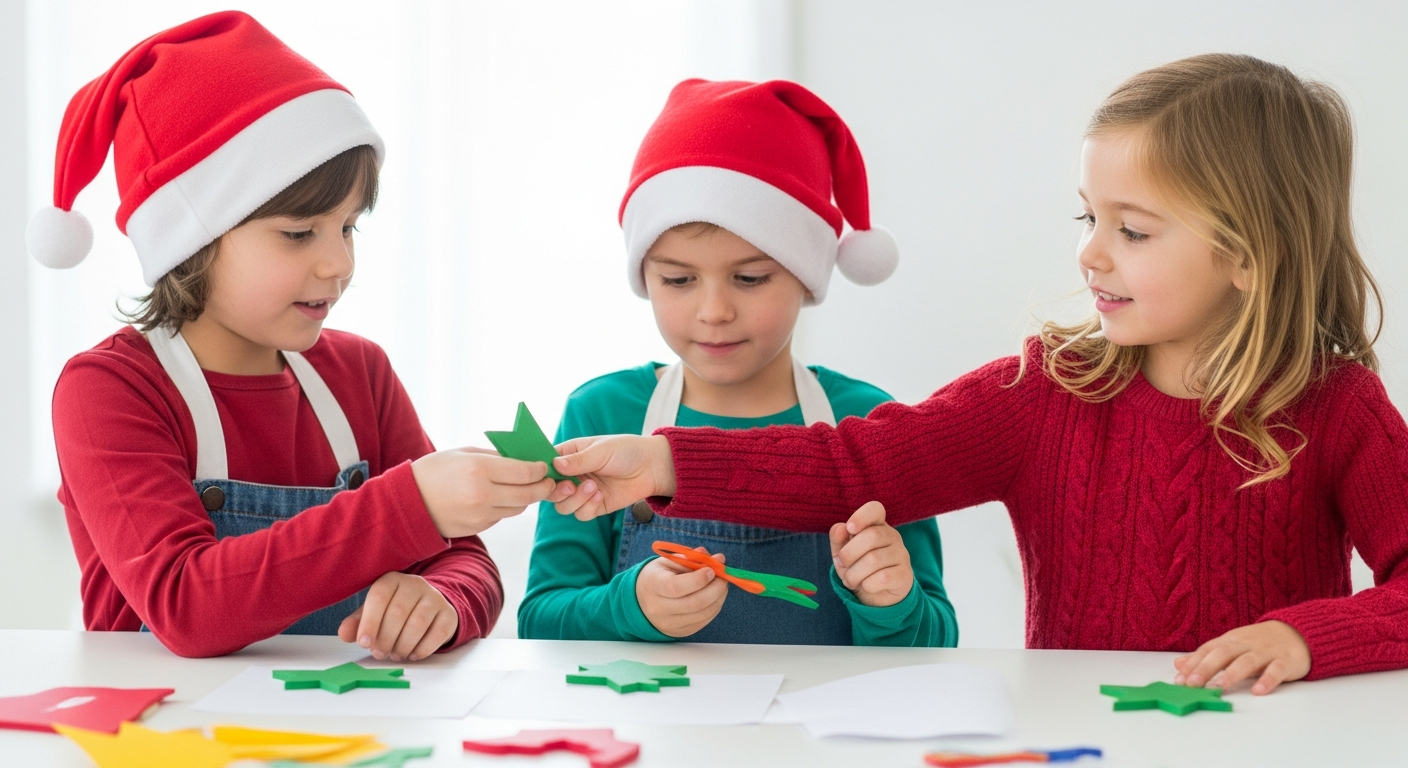
Table of Contents
- Why Christmas Crafts Are More Than Just Fun
- Easy Christmas Crafts for Kids to Make: A Festive Collection
- Integrating Speech Blubs for Enhanced Learning
- Making Speech Blubs Part of Your Family's Learning Journey
- Conclusion
- Frequently Asked Questions (FAQ)
The air begins to sparkle with anticipation as the festive season approaches. For many families, Christmas crafts are more than just a fun activity; they’re cherished traditions that bring joy, spark creativity, and create lasting memories. But did you know that these simple, hands-on projects are also powerful tools for your child's development, especially when it comes to communication?
At Speech Blubs, we believe every child deserves to speak their minds and hearts, and we understand the magic that happens when learning is woven into play. Our company was born from the personal experiences of our founders, who all grew up with speech problems and created the tool they wished they had. We are committed to providing an immediate, effective, and joyful solution for the 1 in 4 children who need speech support, blending scientific principles with play into one-of-a-kind "smart screen time" experiences. Just like creating a beautiful Christmas ornament can build fine motor skills and encourage descriptive language, our app offers a screen-free alternative to passive viewing, promoting active engagement and family connection through our unique video modeling methodology.

This Christmas, let’s transform your home into a festive workshop! This blog post will guide you through a variety of easy Christmas crafts that are perfect for kids of all ages. We’ll explore not only how to make them but also how each craft supports critical developmental milestones, including fine motor skills, cognitive development, social-emotional growth, and, of course, speech and language. Get ready to gather your supplies, put on some festive tunes, and create beautiful holiday keepsakes while fostering a love for communication in your child.
Why Christmas Crafts Are More Than Just Fun
Crafting with your child during the holidays offers a treasure trove of developmental benefits that extend far beyond the finished product. These activities provide rich opportunities for learning, growth, and connection, laying foundations for essential life skills.
Fostering Fine Motor Skills and Hand-Eye Coordination
Many Christmas crafts involve intricate actions like cutting, gluing, drawing, painting, and manipulating small objects. These seemingly simple tasks are crucial for developing fine motor skills – the coordination of small muscles in the hands and fingers. When your child carefully places glitter on a star or threads a bead onto a string, they're not just making art; they're refining their dexterity, strengthening their hand muscles, and improving their hand-eye coordination. These skills are vital for everyday tasks such as writing, dressing, and self-feeding. The more opportunities children have to practice these precise movements, the more confident and capable they become.
Boosting Cognitive Development and Problem-Solving
Crafts are mini-challenges that encourage children to think creatively and solve problems. From deciding what colors to use to figuring out how to attach two pieces of paper, children are constantly engaging their cognitive abilities. They learn about cause and effect ("If I put too much glue, it will be sticky"), spatial awareness ("How big should this piece be to fit here?"), and sequencing ("What step comes next?"). Following instructions, adapting when things don't go as planned, and making choices all contribute to a child's cognitive flexibility and critical thinking skills. This is a form of active learning that prepares their minds for more complex challenges.

Enhancing Social-Emotional Growth and Family Bonding
Crafting together is a fantastic way to strengthen family bonds. It provides a relaxed, joyful environment for interaction, cooperation, and shared laughter. Children learn important social skills like sharing materials, taking turns, and offering compliments. When they see their creations displayed, it boosts their self-esteem and sense of accomplishment. The process of creating something unique, especially for someone else, also fosters empathy and generosity. These shared moments of creativity become treasured family traditions, building a strong sense of connection and belonging. For parents looking for screen-free alternatives to passive activities, crafting offers a powerful tool for family connection, creating moments of collaboration and joyful interaction.
Supporting Speech and Language Development
Perhaps one of the most exciting benefits of Christmas crafts is their immense potential for speech and language development. As children engage with materials and create, they naturally encounter opportunities to communicate.
- Vocabulary Expansion: Introducing new words related to materials (glitter, felt, pipe cleaner), actions (cut, glue, paint), colors (scarlet, emerald, silver), and festive objects (star, reindeer, candy cane).
- Following Directions: Listening and understanding multi-step instructions ("First, cut the paper; then, glue the eyes"). This is a fundamental skill for language comprehension.
- Descriptive Language: Encouraging children to describe their creations ("It's a sparkly red star!"), talk about the textures ("This felt is soft"), and explain their choices ("I chose green because it looks like a Christmas tree").
- Asking and Answering Questions: Prompting children with questions like "What do you want to make next?" or "How does this feel?" encourages them to formulate responses.
- Narrative Skills: As children get older, they can tell stories about their crafts – who they made it for, what inspired them, or even invent a story about the craft itself.
- Sound Production: Repetitive sounds associated with actions ("snip, snip" for cutting, "squish, squish" for playdough) or object names (the "s" sound in "star," "c" in "candy cane," "r" in "reindeer").
For a parent whose child might be a "late talker" or struggling with specific sounds, a craft session can be a low-pressure environment to encourage verbalization. For example, if your 3-year-old is working on animal sounds, making a reindeer craft could naturally lead to practicing "reindeer" and "deer," and the associated sounds. Our Speech Blubs app complements these real-world interactions perfectly. With our unique "video modeling" methodology, children learn by watching and imitating their peers, making the learning of new words and sounds engaging and effective. It's a fantastic supplement to the rich language environment you create through crafting. You can even use the crafts as props while engaging with our app's various sections, bringing the screen time to life!
Easy Christmas Crafts for Kids to Make: A Festive Collection
Now, let's dive into some wonderfully simple and engaging Christmas crafts that your kids will love making! Each one is designed to be accessible, use common materials, and provide a wealth of developmental opportunities.
1. Paper Plate Snowman
This classic craft is perfect for little hands and offers endless opportunities for creativity and language building.
- Materials: Paper plates, white paint, orange and black construction paper, colorful scarves or fabric scraps, glue, cotton balls (optional), googly eyes (optional).
- Steps:
- Paint the paper plate white (if not already white). Let it dry. This is a great chance to talk about the color "white" and the action "paint."
- Cut out a triangle for the nose from orange paper and circles for the eyes and mouth from black paper. For older kids, they can practice cutting; for younger ones, pre-cut shapes work well, allowing them to focus on gluing.
- Glue the nose, eyes, and mouth onto the plate. Use googly eyes for extra fun!
- Add cotton balls for a fluffy, textured snow effect, or glue on a colorful fabric scrap for a scarf.
- Developmental Boost:
- Fine Motor: Painting, cutting, gluing small pieces.
- Cognitive: Understanding facial features, sequencing steps.
- Speech & Language: Vocabulary (snowman, snow, white, orange, black, nose, eyes, mouth, scarf, cold), descriptive words (fluffy, round, pointy), following instructions, asking "What's next?" and describing their snowman. "My snowman has big, black eyes!"
- Speech Blubs Connection: After making the snowman, you can explore the "Winter Wonderland" or "People & Feelings" sections in the app to reinforce vocabulary related to cold weather, facial expressions, and emotions, using our video modeling to practice new words and sounds.
2. Handprint Reindeer Ornaments
Personalized and adorable, these ornaments make wonderful keepsakes and gifts.
- Materials: Brown salt dough or air-dry clay (or brown paint and paper), red pom-poms, googly eyes, ribbon, glue.
- Steps:
- If using salt dough/clay: Roll out the dough, press your child's hand firmly into it, and cut around the handprint. Make a small hole at the top for hanging. Bake or air-dry according to instructions.
- If using paint/paper: Paint your child's hand brown and press it onto sturdy paper. Once dry, cut out the handprint.
- Once the handprint is dry and ready, glue a red pom-pom onto the thumb for Rudolph's nose.
- Glue two googly eyes above the nose.
- Decorate the "fingers" (antlers) with glitter or paint if desired.
- Attach a ribbon through the hole (or punch a hole in the paper version) for hanging.
- Developmental Boost:
- Fine Motor: Pressing dough/hand painting, gluing small pom-poms and eyes, threading ribbon.
- Cognitive: Understanding the concept of a handprint becoming an animal, following a multi-step process.
- Speech & Language: Vocabulary (reindeer, handprint, nose, eyes, antlers, brown, red, shiny), describing the process ("I am pressing my hand!"), making animal sounds ("What sound does a reindeer make?"), talking about feelings of excitement or pride.
- Speech Blubs Connection: Dive into the "Animal Kingdom" section of Speech Blubs to practice animal sounds and names. Your child can watch their peers make sounds like "moo" or "baa," and even practice saying "reindeer" after seeing similar animal segments. This reinforces the real-world craft with interactive digital learning.
3. DIY Christmas Cards (Sponge Painted Trees)
Making and sending cards is a lovely way to teach children about giving and connection.
- Materials: Folded cardstock or construction paper, green and brown paint, sponges (cut into triangles for trees, rectangles for trunks), glitter (optional).
- Steps:
- Set out green paint on a plate and brown paint on another.
- Show your child how to dip the triangle sponge into the green paint and press it onto the card to make a tree shape. They can make several trees.
- Use the rectangle sponge and brown paint to add trunks beneath the trees.
- Let the paint dry. Add glitter or small sticker "ornaments" for decoration.
- Help your child write their name inside or dictate a message for you to write.
- Developmental Boost:
- Fine Motor: Holding and pressing sponges, decorating with small stickers or glitter.
- Cognitive: Understanding shapes (triangle, rectangle), color mixing (if they try), spatial reasoning (where to place the trees).
- Speech & Language: Vocabulary (card, tree, green, brown, paint, sponge, decorate, send), practicing prepositions ("on the card," "under the tree"), formulating messages for the card, discussing who the card is for. "We are sending this card to Grandma!"
- Speech Blubs Connection: The "Colors & Shapes" section in our app is perfect for reinforcing these concepts, using engaging video modeling to help children recognize and name different colors and shapes, preparing them for more complex descriptive language.
4. Pinecone Christmas Trees
Bringing nature indoors for crafting is a wonderful sensory experience.
- Materials: Pinecones (collected from outdoors, cleaned), green paint, small pom-poms, glitter glue, small beads, glue.
- Steps:
- Paint the pinecones green. Let them dry thoroughly. This step is excellent for sensory exploration of the pinecone's texture and the act of painting.
- Once dry, use glue to attach small colorful pom-poms to the "branches" as ornaments.
- Add glitter glue for sparkle.
- Glue a small bead or star on top as the tree topper.
- Developmental Boost:
- Fine Motor: Holding the pinecone, painting, gluing tiny decorations.
- Sensory: Exploring the rough texture of the pinecone, the stickiness of glue, the smoothness of pom-poms.
- Cognitive: Naturalistic observation (discussing where pinecones come from), understanding decoration.
- Speech & Language: Vocabulary (pinecone, green, sparkle, rough, smooth, stick, glue, decorate, top, bottom), descriptive words, counting pom-poms, talking about the "tree" growing in the forest.
- Speech Blubs Connection: Our app offers various categories that can expand on this theme. While decorating, you can discuss "Nature" or "Outside" concepts found in our diverse learning library. For children who enjoy exploring textures and actions, the engaging activities in Speech Blubs can provide a bridge to understanding and describing these real-world sensory experiences.
5. Cotton Ball Santa Beard Craft
A simple, charming craft that’s great for younger children.
- Materials: Red construction paper (for Santa's hat), peach or pink construction paper (for face), cotton balls, glue, googly eyes.
- Steps:
- Cut a large circle or oval from the peach/pink paper for Santa's face.
- Cut a triangle or hat shape from red paper and glue it to the top of the face.
- Glue googly eyes onto the face.
- Spread glue generously below the eyes, then have your child attach cotton balls to create Santa's fluffy white beard.
- Add a small cotton ball to the tip of the hat.
- Developmental Boost:
- Fine Motor: Peeling cotton balls, pressing them onto glue, gluing googly eyes.
- Sensory: Feeling the softness of cotton balls.
- Cognitive: Recognizing Santa, understanding facial features.
- Speech & Language: Vocabulary (Santa, beard, white, red, fluffy, soft, hat, eyes), describing Santa ("He has a big, white beard!"), practicing sounds like "ho ho ho!" and discussing Christmas wishes.
- Speech Blubs Connection: Making a Santa craft can naturally lead to talking about Christmas and gifts. Our app features various categories that help children express their wishes and feelings. For example, practicing words related to "toys" or "family" through our video modeling can enhance their ability to articulate their holiday excitement and express desires, fostering their confidence to "speak their minds and hearts."
6. Popsicle Stick Snowflakes
A classic, easy craft that allows for intricate designs.
- Materials: Popsicle sticks (natural or colored), white glue, glitter, small sequins or beads.
- Steps:
- Arrange 3-4 popsicle sticks into a snowflake shape (e.g., two crossing in an "X" shape, one straight across the middle). Glue them securely at the center.
- Once the glue is dry, decorate the snowflake. Spread glue on the sticks and sprinkle glitter over them.
- Carefully glue small sequins or beads onto the snowflake for extra sparkle.
- Attach a loop of string or ribbon for hanging.
- Developmental Boost:
- Fine Motor: Arranging and gluing small sticks, sprinkling glitter, placing tiny sequins.
- Cognitive: Spatial reasoning (creating symmetrical patterns), counting sticks, understanding shapes.
- Speech & Language: Vocabulary (snowflake, stick, glitter, sparkle, cold, winter, big, small, star, point), counting, describing patterns ("My snowflake has six points and lots of sparkle!"), talking about snow.
- Speech Blubs Connection: The precision and pattern recognition involved in this craft can be mirrored in the structured yet playful learning environment of Speech Blubs. Our app's diverse activities help children develop observational skills and the vocabulary to describe what they see, strengthening their overall language comprehension and expression.
7. Pasta Angel Ornaments
Using pantry staples for crafts is always a hit!
- Materials: Various types of pasta (bow-tie for wings, ditalini for head, rotini for body), white glue, glitter, gold or silver paint, string or ribbon.
- Steps:
- Assemble the angel: Glue a ditalini (or small round pasta) for the head to a rotini for the body. Glue bow-tie pasta behind the rotini for wings.
- Let the glue dry completely.
- Paint the pasta angel gold or silver. Let dry.
- Add glitter for a heavenly glow.
- Glue a small loop of string behind the head for hanging.
- Developmental Boost:
- Fine Motor: Handling small pasta shapes, precise gluing, painting.
- Cognitive: Understanding assembly, identifying different pasta shapes and their uses.
- Speech & Language: Vocabulary (angel, pasta, wings, head, body, gold, silver, glitter, heavenly), describing shapes ("The wings are like a bow!"), talking about the sound pasta makes when you touch it, discussing Christmas traditions.
- Speech Blubs Connection: This craft involves recognizing and naming different shapes and textures. Speech Blubs includes activities that focus on identifying objects and their characteristics, helping children expand their descriptive vocabulary and improve their ability to articulate observations. For instance, the "Things I See" category can help your child find words for the "gold" or "sparkly" angel they've created.
8. Felt Christmas Tree Decoration
Soft, tactile, and reusable, these felt decorations are wonderful for little fingers.
- Materials: Green felt (for tree), various colored felt scraps (for ornaments), fabric glue or craft glue, sequins, small buttons (optional).
- Steps:
- Cut a simple Christmas tree shape from the green felt. (Adult can do this or older kids).
- Cut small shapes (circles, stars, squares) from the colorful felt scraps for ornaments.
- Have your child arrange and glue the felt "ornaments" onto the felt tree.
- Add sequins or buttons for extra sparkle.
- Optionally, glue a loop of ribbon to the back for hanging.
- Developmental Boost:
- Fine Motor: Cutting (if old enough), gluing small felt pieces, placing sequins/buttons.
- Sensory: Exploring the soft texture of felt.
- Cognitive: Color recognition, shape recognition, creative arrangement.
- Speech & Language: Vocabulary (felt, soft, green, red, blue, yellow, circle, star, glue, decorate, tree, ornament), describing colors and shapes, making choices ("Which color ornament next?"). "I want the red circle ornament here."
- Speech Blubs Connection: The "Colors & Shapes" and "Things I See" sections in Speech Blubs are perfect for reinforcing the concepts of color, shape, and object identification learned during this craft. Our video modeling approach makes these learning experiences highly engaging, providing children with a dynamic way to practice naming and describing.
Integrating Speech Blubs for Enhanced Learning
While these crafts are incredibly beneficial on their own, pairing them with the Speech Blubs app can significantly amplify their developmental impact. We are dedicated to providing an immediate, effective, and joyful solution for children, blending scientific principles with play. Our app is a powerful tool for family connection, offering "smart screen time" that encourages active participation rather than passive viewing.
How Speech Blubs Works with Crafting:
- Pre-Crafting Warm-up: Before you start a craft, use Speech Blubs to introduce vocabulary relevant to the project. For example, if you’re making a paper plate snowman, you could visit a section in Speech Blubs that focuses on winter words or body parts to get your child familiar with terms like "nose," "eyes," "white," and "cold."
- During Crafting: As you craft, refer back to the words and sounds practiced in the app. "Remember how we said 'blue' in Speech Blubs? Let's use blue glitter here!" This helps bridge the gap between digital learning and real-world application, reinforcing concepts in a meaningful context.
- Post-Crafting Reflection: Once the craft is complete, use Speech Blubs to encourage descriptive language. Find pictures or videos in the app that relate to your creation (e.g., animals if you made a reindeer, colors if you made an ornament) and prompt your child to describe their craft using the words they’ve learned. Our unique "video modeling" method, where children learn by watching and imitating their peers, makes this a truly engaging process.
- Motivation and Engagement: If your child is struggling to engage with a craft, a short, focused session with Speech Blubs can reignite their enthusiasm. The app’s interactive nature and positive reinforcement can make them more receptive to hands-on activities afterward. Conversely, a fun craft can be a reward for engaging with the app, creating a positive feedback loop.
We believe in supporting parents with practical, valuable advice and realistic expectations. Speech Blubs is a powerful supplement to a child's overall development plan and, when applicable, professional therapy. It’s designed to foster a love for communication, build confidence, reduce frustration, develop key foundational skills, and create joyful family learning moments.
Unsure if your child could benefit from a little extra speech support? Take our quick 3-minute preliminary screener to get a simple assessment and a free 7-day trial. It’s a great first step toward understanding your child’s unique communication journey.
Making Speech Blubs Part of Your Family's Learning Journey
We are proud of the impact Speech Blubs has on families worldwide. Our methodology is backed by science, placing us in the top tier of speech apps worldwide, and we constantly strive to provide the most effective and engaging "smart screen time" for children. You can read more about our research and methodology here.
We offer flexible plans to fit your family's needs:
- Monthly Plan: For just $14.99 per month, you get access to our core features.
- Yearly Plan: This is our most popular and value-packed option at $59.99 per year. That breaks down to just $4.99/month – you save 66% compared to the monthly plan!
Why choose the Yearly Plan? It’s not just about the incredible savings; it’s about unlocking the full potential of Speech Blubs. The Yearly plan includes:
- A 7-day free trial to explore all our amazing features.
- The extra Reading Blubs app, designed to help with early literacy skills.
- Early access to new updates so your child always has fresh content.
- 24-hour support response time for any questions you may have.
The Monthly plan does not include these additional high-value benefits, making the Yearly plan the clear best choice for committed families ready to embrace a comprehensive learning experience.
Ready to embark on this joyful learning adventure? Download Speech Blubs on the App Store or Google Play to get started with your 7-day free trial through the Yearly plan. Or, create your account on our website today!
Conclusion
This holiday season, let the magic of crafting fill your home with laughter, creativity, and invaluable learning opportunities. From sticky fingers covered in glitter to proud smiles displaying handmade ornaments, easy Christmas crafts are a powerful way to foster fine motor skills, boost cognitive development, enhance social-emotional growth, and significantly support speech and language development. Each snip, glue, and dab becomes a chance for your child to explore, express, and connect, building a strong foundation for communication.
Remember, the goal isn’t perfection in the craft itself, but the rich process of creation and the interaction it sparks. By embracing these hands-on activities, you’re not just making decorations; you’re making memories and nurturing your child’s ability to "speak their minds and hearts."
To further support your child’s communication journey, consider integrating the Speech Blubs app into your family’s routine. It’s designed to turn screen time into "smart screen time," offering engaging, science-backed activities that complement your real-world interactions. See what other parents are saying about their child's success with Speech Blubs and discover how we can help.
Ready to combine festive fun with effective learning? Download Speech Blubs today from the App Store or Google Play and begin your 7-day free trial! Make sure to select the Yearly plan to unlock exclusive features like the Reading Blubs app and 24-hour support, ensuring your family gets the most value from our comprehensive learning tools.
Frequently Asked Questions (FAQ)
Q1: What age group are these easy Christmas crafts suitable for?
A1: Most of these crafts are adaptable for a wide range of ages, from toddlers (with significant adult assistance for tasks like cutting) to older elementary school children who can follow multi-step instructions more independently. The key is to supervise closely, pre-prepare materials for younger children, and focus on the process rather than a perfect outcome.
Q2: How can I minimize the mess that comes with crafting with kids?
A2: Mess is often part of the fun and learning! To minimize it, lay down old newspapers, a plastic tablecloth, or an old sheet. Use washable paints and glues. Have wet wipes or a damp cloth readily available. Designate a specific "crafting zone" and involve your child in the cleanup process, which is another great opportunity for following directions and language practice.
Q3: My child is shy about speaking. How can crafts help encourage them?
A3: Crafts provide a natural, low-pressure environment for communication. Instead of directly asking them to "say this," you can model language by describing your own actions ("I'm putting on the red glitter!"), asking open-ended questions ("What color are you going to use next?"), and narrating the steps. When they see their creations, they often feel more confident and motivated to talk about their work. Combining this with the peer-led video modeling in Speech Blubs can further build their confidence in a playful setting.
Q4: How does Speech Blubs specifically enhance the learning from these crafts?
A4: Speech Blubs acts as a dynamic partner to hands-on crafts by reinforcing vocabulary, sound production, and descriptive language in an engaging digital format. While crafting, you introduce words and concepts; our app then provides a "smart screen time" experience where children can see and imitate peers using those same words and sounds, making the learning stick. For example, if you're making a reindeer, you can then find animal-related activities in the app to practice animal sounds and names, creating a seamless learning loop between the physical and digital worlds.
About the author