
Joyful Christmas Kids Crafts Ideas for Family Fun
 By Speech Blubs Team•Dec 22, 2025•16 min.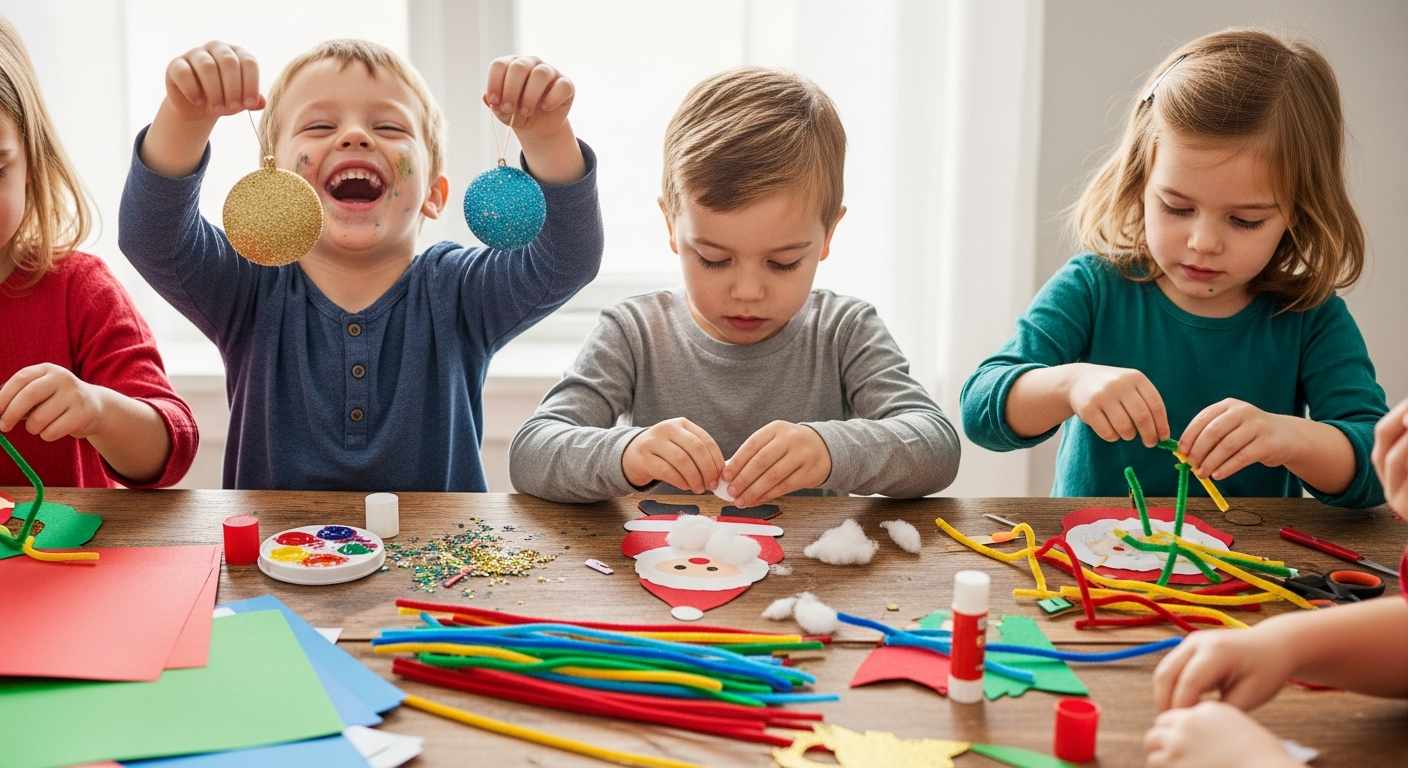
Table of Contents
- Introduction
- The Enduring Magic of Christmas Crafts for Development
- Integrating Speech Blubs' Philosophy into Craft Time
- Easy-Peasy Crafts for Little Hands (Toddlers & Preschoolers)
- Creative Crafts for Growing Minds (School-Aged Children)
- Crafts That Encourage Communication
- Beyond the Craft: Making It a Speech-Rich Activity
- Speech Blubs: Your Partner in Communication Development
- Conclusion
- FAQ
Introduction
The holiday season twinkles with magic, laughter, and the joyous anticipation of family togetherness. Yet, for many parents, the whirlwind of excitement can sometimes leave little ones feeling overwhelmed or needing engaging ways to channel their boundless energy. What if the very activities we turn to for holiday cheer could also be powerful catalysts for your child's development, especially their communication skills? This Christmas, we invite you to transform simple craft time into a rich landscape for learning, connection, and expression. This post will guide you through a sleigh-full of delightful Christmas kids crafts ideas, from easy projects for toddlers to more intricate creations for school-aged children, all designed to spark imagination and encourage vital speech and language development. We'll explore how these hands-on activities, when approached with intention, can become incredible opportunities for interaction, vocabulary building, and fostering the confidence in children to "speak their minds and hearts."

The Enduring Magic of Christmas Crafts for Development
Christmas crafts are far more than just festive decorations; they are incredible tools for holistic child development. When little hands cut, glue, paint, and glitter, they're not just making a pretty ornament – they're building a foundation for crucial skills.
Fine Motor Skill Development
Every snip of the scissors, every careful dab of glue, and every precise placement of a sequin hones fine motor skills. These are the small, coordinated movements of the hands and fingers that are essential for tasks like writing, buttoning clothes, and self-feeding. Crafting strengthens these muscles and improves hand-eye coordination, laying the groundwork for greater independence.
Cognitive Growth and Problem-Solving
Following instructions, choosing colors, deciding where to place elements, and adapting when a material doesn't quite work as planned are all exercises in problem-solving and critical thinking. Children learn about cause and effect, sequencing, and spatial awareness. They develop the ability to plan, execute, and evaluate their own creative process.
Sensory Exploration and Creativity
Crafting engages multiple senses: the feel of different textures, the smell of glue or paint, the sight of vibrant colors, and sometimes even the sound of crinkling paper. This sensory input is vital for brain development and helps children interpret and understand the world around them. It also provides a safe space for imaginative expression, allowing children to bring their unique visions to life without judgment.
Boosting Language and Communication Skills
Perhaps most importantly, crafting creates natural, low-pressure opportunities for communication. From discussing ideas before starting, asking for specific materials, narrating steps, describing colors and textures, to proudly presenting their finished masterpiece, children are constantly engaged in language. These interactions are invaluable for expanding vocabulary, practicing sentence structure, developing conversational turn-taking, and building confidence in expressing thoughts and feelings. For a child who might be a "late talker" or struggling with certain sounds, the concrete nature of crafts provides immediate context for new words and concepts. If you're wondering if your child could benefit from a little extra communication support, our quick 3-minute preliminary screener offers a simple assessment and a personalized next-steps plan.

Integrating Speech Blubs' Philosophy into Craft Time
At Speech Blubs, we believe in empowering children to "speak their minds and hearts." Our mission was born from a very personal place; our founders grew up with speech problems themselves and created the tool they wished they had. We are committed to providing an immediate, effective, and joyful solution for the 1 in 4 children who need speech support, blending scientific principles with play. This philosophy seamlessly extends to hands-on activities like Christmas crafting.
Our unique approach of "video modeling" – where children learn by watching and imitating their peers – can even be mirrored in a broader sense during craft time. When you sit down with your child and model how to cut, glue, or describe an object, you're offering them a real-life video model, providing examples they can imitate. This isn't just about crafting; it's about making every moment a learning opportunity, transforming passive viewing into "smart screen time" experiences when using our app, and making "screen-free" activities like crafts a powerful tool for family connection.
Easy-Peasy Crafts for Little Hands (Toddlers & Preschoolers)
These crafts are perfect for little ones, focusing on simple steps, large movements, and plenty of sensory fun. Remember, the process is more important than the perfect outcome!
Sparkling Star Ornaments
Materials: Cardboard, glue, glitter, pipe cleaners, string. Communication Focus:
- Vocabulary: "Star," "sparkle," "glue," "glitter," "sticky," "shiny," "red," "gold."
- Action Words: "Cut," "spread," "shake," "twist," "hang."
- Following Directions: "First, put glue on the star. Next, shake the glitter." How To: Pre-cut star shapes from cardboard. Let your child spread glue on the stars (great for fine motor practice). Then, encourage them to "shake, shake, shake" different colored glitters onto the glue. Add a pipe cleaner loop for hanging. Narrate their actions: "You are putting red glitter on your star!"
Cotton Ball Snowman Faces
Materials: Blue or black construction paper, cotton balls, googly eyes, orange construction paper (for nose), markers. Communication Focus:
- Vocabulary: "Snowman," "soft," "white," "round," "eyes," "nose," "mouth."
- Descriptive Words: "Fluffy," "cold" (if talking about real snow), "big," "small."
- Body Parts: Identifying and placing facial features. How To: Draw a simple snowman outline on paper. Have your child glue cotton balls inside the outline. Then, ask them to "put the eyes on the snowman." "Where does the nose go?" Use an orange triangle for the nose and draw a smile with a marker. This is a wonderful activity for naming and locating facial features.
Paper Plate Santas
Materials: Paper plates, red paint, cotton balls, googly eyes, red construction paper (for hat), glue. Communication Focus:
- Concepts: "Santa," "beard," "hat," "eyes," "white," "red."
- Questions: "What color is Santa's hat?" "What does Santa say?" "Who is this?"
- Prepositions: "On," "under," "above." How To: Paint the center of a paper plate peach or light pink for Santa's face. Once dry, help your child glue cotton balls around the bottom for Santa's beard, on top for the hat brim, and a pom-pom for the hat's tip. Add googly eyes and a red construction paper hat. As they craft, ask them to name the parts they are adding. "You're putting Santa's fluffy white beard on!"
Handprint Reindeer Ornaments
Materials: Brown paint, white paper, red pom-poms, googly eyes, brown pipe cleaners, glue, ribbon. Communication Focus:
- Verbs: "Paint," "press," "glue," "cut," "tie."
- Nouns: "Hand," "reindeer," "antlers," "nose," "eyes," "ribbon."
- Colors: "Brown," "red." How To: Paint your child's hand brown and press it onto white paper to make the reindeer's head and antlers. Once dry, glue a red pom-pom for the nose and googly eyes. Cut brown pipe cleaners into antler shapes and glue them above the thumbprint. Punch a hole and add a ribbon. Talk about the "sticky paint," the "wriggly fingers," and "Rudolph's shiny red nose!"
Creative Crafts for Growing Minds (School-Aged Children)
For slightly older children, crafts can involve more steps, finer details, and opportunities for independent thought and planning. These activities foster patience and more complex language skills.
DIY Advent Calendars
Materials: Large piece of poster board, small envelopes or paper bags, numbers 1-24, small treats/activities, glue, markers, stickers. Communication Focus:
- Sequencing: "First, we glue the numbers. Next, we fill the bags."
- Numeracy & Counting: Identifying numbers 1-24, counting down.
- Planning & Decision Making: "What should we put in number 5?" "Where should this bag go?"
- Future Tense: "Tomorrow, we will open number 3!" How To: Work together to design an advent calendar layout on a poster board. Children can decorate 24 small envelopes or paper bags. Write or glue numbers 1-24 on them. Inside, place small treats or slips of paper with fun holiday activities (e.g., "Sing a Christmas carol," "Read a Christmas book"). Glue the envelopes onto the poster board. This project is rich in opportunities for discussion, planning, and anticipation.
Paper Chain Countdown
Materials: Construction paper (red, green, white), scissors, glue stick or stapler. Communication Focus:
- Concepts: "Chain," "link," "long," "short," "day," "Christmas."
- Verbs: "Cut," "loop," "glue," "count."
- Time: "Today," "tomorrow," "yesterday."
- Quantitative Concepts: "More," "less." How To: Cut strips of construction paper. Show your child how to make a loop and glue or staple the ends to form a link. Then, connect the next strip through the first loop to create a chain. Make 25 links, one for each day until Christmas. Each day, remove a link and talk about how many days are left until Christmas. This simple activity is fantastic for practicing counting, sequencing, and discussing the passage of time.
Pinecone Animals and Ornaments
Materials: Pinecones, googly eyes, pom-poms, felt scraps, pipe cleaners, glue, string. Communication Focus:
- Descriptive Language: "Bumpy," "poky," "smooth," "soft," "brown," "green."
- Imagination & Storytelling: "What kind of animal could this be?" "What will your pinecone owl do?"
- Problem-Solving: "How can we make the ears stick?" How To: Collect pinecones during a nature walk (another great communication opportunity!). Turn them into animals or festive ornaments. Glue googly eyes, felt ears, pom-pom noses, or pipe cleaner antlers. Hang with string. Encourage your child to describe their creation and even give it a name and a story. This really taps into imaginative play and descriptive vocabulary.
Crafts That Encourage Communication
Every craft activity can be a language-rich experience with a little intentionality. Here are ways to naturally weave in communication practice.
Describing Materials and Steps
Before, during, and after crafting, engage your child in conversation about what they are doing and seeing.
- "What materials do we need for our snowman? We need soft cotton, shiny googly eyes, and sticky glue."
- "First, you are cutting the red paper. Now, you are gluing the strip."
- "Tell me about your sparkly star. What colors did you use? How does it feel?"
Asking Open-Ended Questions
Move beyond yes/no questions to prompt more elaborate responses.
- "What do you think will happen if we mix the blue and yellow paint?"
- "If this reindeer could talk, what would it say?"
- "How did you decide where to put the glitter?"
Narrating and Self-Talk
Model good language by narrating your own actions and thoughts, and encourage your child to do the same.
- "I'm going to spread the glue now. Look how sticky it is!"
- "Hmm, I need to find the red pom-pom for Santa's nose."
- "You're putting the big googly eyes on your owl! Now it can see everything!"
Role-Playing with Finished Crafts
Once the crafts are dry, use them as props for imaginative play.
- Make your pinecone animals talk to each other.
- Have Santa visit the reindeer and deliver presents.
- Ask your child to "introduce" their craft to a family member, describing it in detail.
Beyond the Craft: Making It a Speech-Rich Activity
The real magic happens when you extend the learning beyond the craft itself.
Pre-Craft Discussion: Planning and Vocabulary Building
Before you even touch a material, talk about the project. Show a picture of what you're making or discuss the concept.
- "We're going to make a Christmas tree ornament today. What do you think an ornament is?"
- "What color is a Christmas tree? What shapes do we see on a tree?"
- Introduce new vocabulary words specific to the craft, like "tinsel," "bauble," "wreath," "jingle bell," and practice saying them.
During Craft: Turn-Taking, Following Directions, Describing Actions
This is prime time for interaction.
- Turn-taking: "My turn to put glue, your turn to add glitter!" This is a foundational communication skill.
- Following directions: "Please hand me the red scissors." "Put the glue stick on the table."
- Describing actions: "You are spreading the glue. I am cutting the paper." Use action verbs and describe what you both are doing.
- For a parent whose 4-year-old is working on consonant-vowel (CV) sounds, saying "cut, cut, cut" or "glue, glue, glue" repeatedly during the activity provides a natural and motivating context for practice.
Post-Craft: Showing Off, Storytelling, Describing Feelings
The learning doesn't stop when the glue dries.
- Showing off: Encourage your child to present their creation to other family members or friends. This builds confidence and provides a natural opportunity for them to talk about their work. "Look what I made!"
- Storytelling: "Tell me a story about your reindeer. Where did it go? Who did it meet?"
- Describing feelings: "How do you feel about your snowman? Are you proud? Are you happy?" This helps develop emotional vocabulary.
- Hang the crafts on the tree or display them prominently. Every time you see them, it's a chance to revisit the experience and the language associated with it. "Remember when we made this star? That was so fun!"
Speech Blubs: Your Partner in Communication Development
While hands-on crafts are wonderful for fostering communication, we understand that busy parents also need effective, engaging tools to support their child's speech and language journey. That's where Speech Blubs comes in. Our app is designed to be a powerful supplement to your child's overall development plan, blending fun and learning to help children communicate with confidence.
We provide a unique, "smart screen time" experience, acting as a screen-free alternative to passive viewing like cartoons, and a powerful tool for family connection. Our methodology is rooted in the scientifically proven concept of "video modeling," where children learn by watching and imitating their peers. This natural, engaging process encourages them to articulate words, sounds, and ultimately, their thoughts and feelings. Many parents, like those whose stories you can read on our testimonials page, have seen incredible progress with their children using Speech Blubs. Our commitment to scientific principles is further detailed on our research page, showing why we consistently rank among the top speech apps worldwide.
Our mission is to empower every child to express themselves, and we strive to make this support accessible and effective. If you're looking to provide immediate, joyful, and effective support for your child's communication journey, we encourage you to explore Speech Blubs.
Discover the Value of Speech Blubs
We believe in transparency and providing exceptional value. Here’s a breakdown of our plans:
- Monthly Plan: For $14.99 per month, you get access to a wide range of engaging activities.
- Yearly Plan: This is our best value, priced at just $59.99 per year, which breaks down to an incredible $4.99 per month – that's a 66% saving!
The Yearly plan isn't just cheaper; it also includes exclusive, high-value features:
- A 7-day free trial to experience everything Speech Blubs has to offer before committing.
- The extra Reading Blubs app, providing even more developmental support.
- Early access to new updates and a swift 24-hour support response time, ensuring you always have the best and most current resources at your fingertips.
The Monthly plan does not include these fantastic benefits. We highly recommend choosing the Yearly plan to unlock the free trial and the full suite of features designed to support your child's communication growth.
Ready to get started? Create your account and begin your 7-day free trial today! You can also download Speech Blubs on the App Store or Google Play to explore how we can support your child in speaking their minds and hearts.
Conclusion
This holiday season, embrace the simple joy of creating with your children. These Christmas kids crafts ideas are more than just festive decorations; they are invaluable opportunities to foster fine motor skills, cognitive development, creativity, and, most importantly, crucial speech and language growth. By engaging intentionally in these activities, asking open-ended questions, and narrating the process, you can transform ordinary craft time into extraordinary learning moments.
At Speech Blubs, we are dedicated to helping every child communicate with confidence and joy. Our app, born from personal experience and backed by scientific methodology, offers a powerful, engaging, and effective tool to support your child's journey to express their unique voice. We provide a unique "smart screen time" experience that complements hands-on play, offering our "video modeling" approach for immediate and effective results.
Don't let another moment pass by. Give your child the gift of confident communication this Christmas. Ready to experience the full benefits? Download Speech Blubs on the App Store or Google Play and start your 7-day free trial today! Make sure to choose the Yearly plan to unlock the free trial, the bonus Reading Blubs app, and exclusive features for the best value and comprehensive support.
FAQ
Q1: What are the benefits of doing Christmas crafts with kids for speech development?
A1: Christmas crafts offer numerous benefits for speech development by creating natural opportunities for language use. Children learn new vocabulary related to materials and themes (e.g., "glitter," "pinecone," "reindeer"), practice following multi-step directions, engage in descriptive language (e.g., "sticky glue," "sparkly star"), and participate in turn-taking conversations. These activities provide a concrete context for communication, making learning fun and meaningful.
Q2: How can I make simple crafts more engaging for my child who struggles with communication?
A2: To make crafts more engaging for children with communication challenges, keep instructions simple and visual, use gestures, and offer choices (e.g., "red or green glitter?"). Focus on the process rather than the perfect outcome, celebrating every effort. Narrate your own actions and your child's actions using simple, repetitive language. Most importantly, foster a playful and pressure-free environment. Incorporating tools like Speech Blubs can also provide a complementary "smart screen time" experience that uses video modeling to encourage imitation and speech.
Q3: What age range are these Christmas craft ideas suitable for?
A3: This post offers a variety of Christmas craft ideas suitable for a broad age range. "Easy-Peasy Crafts for Little Hands" are ideal for toddlers and preschoolers (ages 2-5), focusing on simple steps and large motor skills. "Creative Crafts for Growing Minds" are better suited for school-aged children (ages 6-10+), involving more detailed instructions and problem-solving. Many crafts can be adapted for different ages with varying levels of adult assistance.
Q4: How does Speech Blubs complement hands-on crafting for my child's development?
A4: Speech Blubs complements hands-on crafting by providing a structured yet playful digital environment for targeted speech and language practice. While crafts offer real-world sensory and social interaction, Speech Blubs uses "video modeling" where children learn by imitating peers on screen, helping them practice specific sounds, words, and sentences in a motivating way. Together, these activities create a rich, multi-faceted approach to developing communication skills, helping children build confidence and truly "speak their minds and hearts."
About the author