
Joyful Christmas Party Games for Kids & Family
 By Speech Blubs Team•Dec 24, 2025•23 min.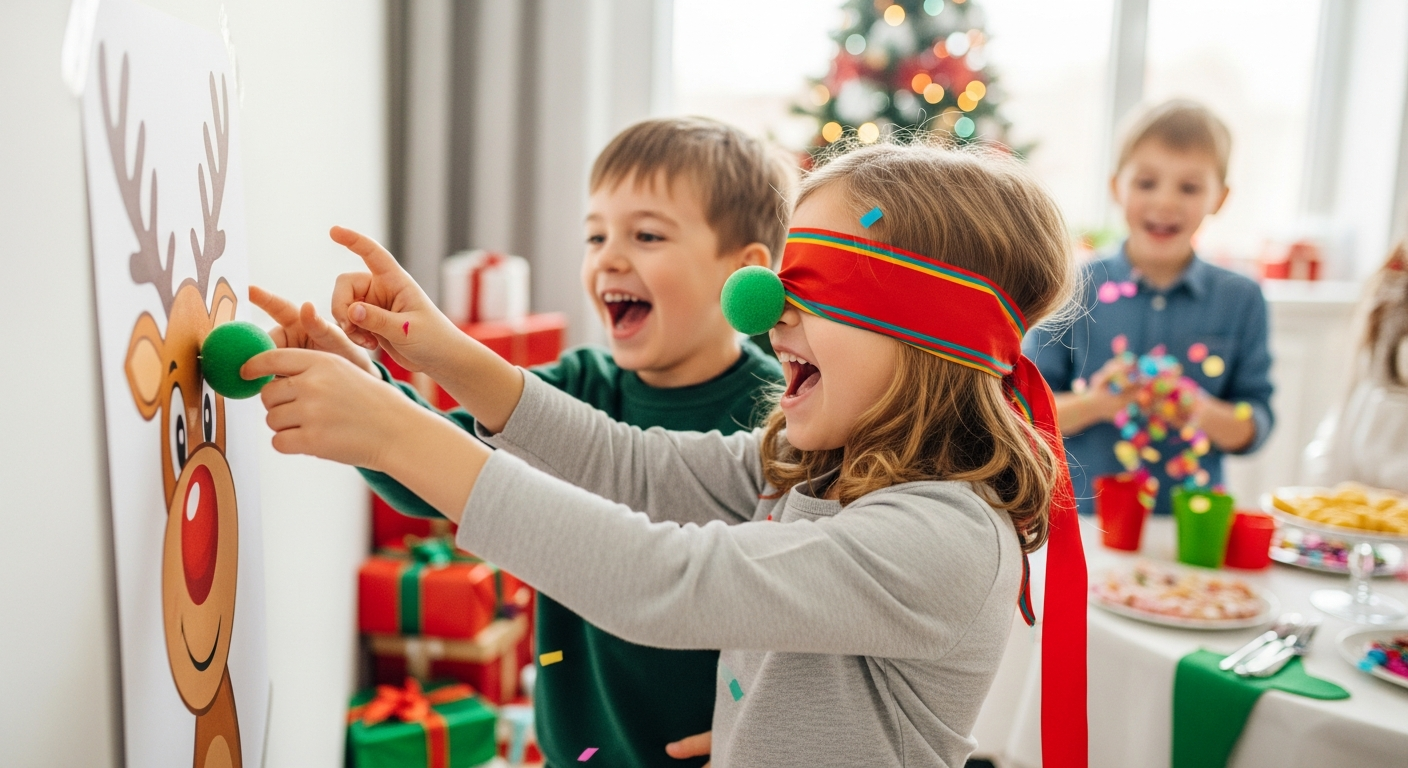
Table of Contents
- Introduction
- The Heart of the Holidays: Why Games Matter Beyond the Fun
- Our Top Picks: Engaging Christmas Party Games for All Ages
- Beyond the Games: Nurturing Communication All Year Round
- Planning Your Christmas Game Extravaganza
- Give the Gift of Confident Communication with Speech Blubs
- Conclusion
- Frequently Asked Questions (FAQ)
Introduction
The holiday season often brings a flurry of activity, from bustling shopping trips to endless baking marathons. Amidst the cheerful chaos, it's easy for the true magic of Christmas – the precious moments of connection and shared laughter – to get lost. We all dream of creating those picture-perfect family memories, but sometimes the sheer volume of "to-dos" can overshadow the simple joy of being together. What if we told you that some of the most memorable and developmentally beneficial holiday moments can be found in the simplest of activities: playing games?
This blog post is your ultimate guide to transforming your Christmas gatherings into vibrant hubs of fun, engagement, and genuine connection. We’ll dive into a treasure trove of the best Christmas party games for kids and families, offering creative ideas suitable for every age group, from the littlest elves to the coolest teenagers. More than just entertainment, we’ll explore how these playful interactions are powerful tools for fostering essential communication skills, building confidence, and strengthening the bonds that truly make the season bright. These games aren't just about winning; they're about creating cherished memories, building essential skills, and strengthening family bonds, making the holiday season truly magical.

The Heart of the Holidays: Why Games Matter Beyond the Fun
While the twinkling lights and festive treats certainly set the mood, it’s the shared experiences that truly make the holidays unforgettable. Family Christmas games offer a unique opportunity to pause the holiday rush and immerse yourselves in joyful interaction. Beyond the immediate fun, these activities serve as incredible catalysts for your child's development, enriching their world in myriad ways.
More Than Just Entertainment: Developmental Benefits
Engaging in structured play, like party games, provides a dynamic environment for children to practice and refine a wide array of skills. It’s a chance for them to learn, grow, and connect, often without even realizing they’re doing so.
- Fostering Communication and Connection: Games are natural conversation starters. They encourage children to listen to instructions, ask questions, explain rules, cheer for teammates, and express their excitement or even disappointment. This vibrant exchange of words and emotions builds crucial social communication skills, laying the groundwork for clear and confident expression. Children learn about turn-taking in conversations, understanding different perspectives, and articulating their thoughts in an engaging context. These moments of active listening and enthusiastic chatter are invaluable for language development.
- Building Confidence Through Play: Every time a child successfully completes a game challenge, whether it’s stacking candy bells or guessing a charade, their self-esteem gets a wonderful boost. The non-threatening, fun environment of a game allows them to take risks, try new things, and celebrate small victories. This sense of accomplishment, even in silly games, reinforces their belief in their own abilities, empowering them to tackle new challenges—both in play and in life—with greater assurance.
- Enhancing Cognitive and Motor Skills: Many Christmas games require a blend of mental agility and physical dexterity. Children develop hand-eye coordination as they toss a "snowball" or decorate a cookie. They hone problem-solving skills when strategizing in a scavenger hunt or building a gingerbread house. Following instructions, remembering rules, and adapting to new game variations all contribute to cognitive flexibility and executive function development.
- Reducing Frustration and Encouraging Expression: Play provides a safe outlet for children to navigate a range of emotions. The laughter, the friendly competition, and even the occasional "oh, no!" moment offer opportunities for emotional regulation and expression. When children feel heard and understood, they are more likely to express their thoughts and feelings clearly. If you ever wonder about your child's communication journey and whether they could benefit from extra support, we encourage you to take our quick 3-minute preliminary screener. It offers a simple assessment and a next-steps plan, guiding you toward resources that can empower your child to speak their mind and heart.
Our Top Picks: Engaging Christmas Party Games for All Ages
Ready to deck the halls with laughter? Here's a curated list of the best Christmas party games, designed to delight children of all ages and create a festive atmosphere that will be remembered for years to come.

For the Littlest Elves (Preschool & Early Elementary)
When planning games for toddlers and preschoolers, keep things simple, engaging, and flexible. The goal is participation and fun, not intense competition. These games focus on basic skill development, sensory engagement, and lots of festive cheer.
Classic Games with a Holiday Spin
- Santa Says (Holiday Simon Says): This beloved classic gets a festive makeover. Instead of "Simon Says," the leader becomes "Santa Says!" Children must only follow commands preceded by "Santa Says."
- How to Play: The designated "Santa" gives commands like "Santa says touch your red nose," "Santa says march like a toy soldier," or "Santa says decorate the tree." If Santa doesn't say "Santa Says" first, players shouldn't follow the command. Those who do are out, until one "Santa's Helper" remains!
- Developmental Boost: Excellent for listening skills, following multi-step instructions, gross motor coordination, and learning new holiday vocabulary. Encourage Santa to use descriptive words like "sparkling," "jolly," or "twinkling."
- Pro Tip: For very young children, keep commands super simple and demonstrate the actions clearly. Don't worry about eliminating players; just celebrate everyone who participates!
- Holiday Freeze Dance: Get those wiggles out with a festive dance party!
- How to Play: Create a playlist of upbeat Christmas songs. When the music plays, everyone dances. When the music stops, everyone must freeze in place like a snowman or a gingerbread man. Anyone who moves while the music is off is out. The last one dancing wins!
- Developmental Boost: Encourages listening, rhythm, gross motor skills, and creative movement. It’s also a fantastic way to burn off some holiday energy!
- Pro Tip: Encourage kids to freeze in specific holiday poses, like decorating a tree, wrapping a present, or flying in Santa's sleigh.
- Christmas Bingo: A timeless favorite that can be easily adapted for various age groups.
- How to Play: Create or print bingo cards featuring holiday symbols (candy canes, presents, snowmen, Santa, reindeer). For younger kids, use pictures. For older kids, use holiday words. Call out the symbols or words one by one. Players mark off the corresponding square. The first to get a line (horizontal, vertical, or diagonal) shouts "Bingo!"
- Developmental Boost: Enhances recognition skills (visual or word), listening, and concentration. Using small candies like M&Ms or chocolate kisses as markers adds an extra sweet incentive and works on fine motor skills.
- Pro Tip: Make multiple versions for different age groups in mixed family gatherings. Have a small prize ready for the winners, like a candy cane or a small festive sticker.
- Pin the Nose on the Reindeer: A classic party game with a charming holiday twist.
- How to Play: Draw or print a large picture of a reindeer without a nose. Cut out red pompoms or circles for the noses. Blindfold each player, spin them around gently a few times, and have them try to pin (or tape) the nose in the correct spot. The closest one wins!
- Developmental Boost: Promotes spatial awareness, fine motor skills, and provides plenty of silly laughter.
- Pro Tip: Use double-sided tape or sticky tack for the "noses" instead of pins for safety with younger children. You can also add funny sound effects when they get close or far!
Creative & Sensory Explorations
- Gingerbread House Decorating: This activity is more of a creative project than a competitive game, but it encourages teamwork and imagination.
- How to Play: Provide pre-baked gingerbread house kits or simply use graham crackers for walls and roofs. Set out an array of frosting, candies, sprinkles, and other edible decorations. Let teams or individuals decorate their dream gingerbread houses within a set time limit.
- Developmental Boost: Fosters creativity, fine motor skills (applying frosting, placing small candies), teamwork (if done in groups), and imaginative play.
- Pro Tip: Provide small bowls for different candies to make sorting and selecting easier. Offer "awards" for categories like "Most Creative," "Most Colorful," or "Winter Wonderland Masterpiece" to celebrate everyone's efforts.
- Cookie Decorating Competition: A delicious way to get creative and engage the senses.
- How to Play: Bake or buy plain sugar cookies in holiday shapes (stars, trees, gingerbread men). Provide various colored frostings, piping bags (or ziploc bags with a corner snipped), and a generous supply of sprinkles, edible glitter, and small candies. Set a timer and let everyone unleash their inner pastry artist!
- Developmental Boost: Encourages artistic expression, fine motor control, and sensory exploration (textures, smells, tastes).
- Pro Tip: Set up individual "decorating stations" to minimize mess. Take photos of the finished masterpieces before they're devoured! This is a wonderful activity for encouraging descriptive language – "My cookie is sparkly red!" or "I made a green tree with yellow stars."
- Sort the Christmas Tree Ornaments: A simple yet effective game for young learners.
- How to Play: Gather a collection of unbreakable plastic or felt ornaments. Have children sort them by color, size, shape, or even by type (e.g., all the Santas in one pile, all the snowflakes in another).
- Developmental Boost: Develops classification skills, color and shape recognition, counting, and fine motor skills as they pick up and place the ornaments.
- Pro Tip: Make it a cooperative activity by having everyone work together to sort and then decorate a small tree or wall with the grouped ornaments.
- Snow Paint Art (Outdoor Fun): If you're lucky enough to have snow, take the creativity outside!
- How to Play: Fill spray bottles with water mixed with a few drops of food coloring. Kids can "paint" colorful designs, pictures, or patterns directly onto the snow.
- Developmental Boost: Promotes artistic expression, gross motor skills (spraying), and sensory play with the cold, wet snow. It’s also a fantastic way to encourage observation and descriptive language about colors and patterns in nature.
- Pro Tip: Use old mittens or gloves, as hands can get cold! This is a great activity to do just before coming inside for hot cocoa.
For the Growing Gang (Elementary to Teens)
Older children and teenagers often crave more complex games that involve strategy, higher energy, or opportunities for social interaction and witty humor. These games provide a fantastic outlet for their developing cognitive abilities and competitive spirits.
Active & Hilarious Challenges
- Gingerbread Shuffle: This game promises giggles and goofy faces!
- How to Play: Each player places a small gingerbread cookie (or any flat cookie) on their forehead. On "Go!", players must try to get the cookie from their forehead to their mouth using only their facial muscles – no hands allowed! The first one to successfully eat their cookie wins.
- Developmental Boost: Enhances fine motor control (especially facial muscles!), patience, and provides immense comedic relief, encouraging laughter and social bonding.
- Pro Tip: Have a few extra cookies on hand, as they might fall! This game is best played standing up.
- Candy Cane Slide: A deceptively simple game that requires focus and a steady hand (or mouth!).
- How to Play: Each player holds a candy cane in their mouth, with the hooked end facing down. On "Go!", players try to hook as many other candy canes onto the one in their mouth as possible within one minute. The player with the most hooked candy canes wins.
- Developmental Boost: Develops fine motor control, hand-eye coordination (even if it's mouth-eye!), and concentration. It's also incredibly silly and fun, encouraging lighthearted competition.
- Pro Tip: Use standard-sized candy canes. If you have extra candy canes, this is a fun way to spread holiday cheer by giving them out after the game!
- Shake the Snowballs Out: A high-energy, laugh-out-loud game perfect for getting everyone moving.
- How to Play: Each player ties an empty tissue box (decorated with festive paper if you like) around their waist, like a tail, using a ribbon or belt. Fill each box with 6-8 ping pong balls ("snowballs"). On "Go!", players must shake, jump, and wiggle to get all the "snowballs" out of their box without using their hands. The first to empty their box wins.
- Developmental Boost: Great for gross motor skills, coordination, and pure fun. It's a fantastic way to break the ice and get everyone energized.
- Pro Tip: Make sure the ribbon is tied securely. Play some upbeat holiday music to add to the festive atmosphere!
- Christmas Obstacle Course: Design a challenge course, indoors or out, with festive elements.
- How to Play: Set up various "stations" around the room or yard. Examples: crawl through a "Santa's tunnel" (cardboard box), toss "presents" (small wrapped boxes) into a "chimney" (laundry basket), weave through "candy cane poles" (pool noodles), or balance on a "frozen pond" (blue tarp). Players race against the clock or against each other.
- Developmental Boost: Encourages physical activity, problem-solving, following multi-step directions, and teamwork if played in relays.
- Pro Tip: Adapt the complexity to the age group. For older kids, add more intricate challenges. For younger ones, keep it simple and focus on completion rather than speed.
Thought-Provoking & Social Games
- Holiday Mad Libs: A hilarious way to engage with language and creativity.
- How to Play: Print out some holiday-themed Mad Libs templates (or create your own simple stories with blanks for nouns, verbs, adjectives, etc.). One person acts as the "reader" and asks for words (e.g., "Give me an adjective," "Now a noun"). Once all the blanks are filled, the reader reads the completed story aloud, often resulting in side-splittingly silly tales.
- Developmental Boost: Reinforces parts of speech, expands vocabulary, encourages creative thinking, and provides a fun, low-pressure way to practice reading aloud and listening.
- Pro Tip: Encourage kids to come up with the most outlandish words they can think of for maximum comedic effect. This is a wonderful way to play with language, much like how Speech Blubs encourages joyful engagement with words and sounds!
- Christmas Movie Trivia: Test everyone's holiday film knowledge.
- How to Play: Prepare a list of trivia questions about popular Christmas movies, from classics like It's a Wonderful Life to modern favorites like Elf or Home Alone. Divide into teams or play individually. Read questions aloud, and the first to buzz in (or raise their hand) with the correct answer earns a point.
- Developmental Boost: Enhances memory recall, strengthens general knowledge, encourages teamwork (if played in teams), and provides an opportunity for friendly competition and discussion.
- Pro Tip: Offer multiple-choice options for younger kids or more challenging "bonus" questions for tie-breakers.
- Holiday Charades: A classic game that gets everyone expressive and guessing.
- How to Play: Write down holiday-themed words or phrases on slips of paper (e.g., "decorating the tree," "Santa Claus," "singing carols," "reindeer flying," "opening presents"). Divide players into teams. One person draws a slip and acts out the phrase without speaking, while their team tries to guess within a time limit.
- Developmental Boost: Develops non-verbal communication skills, creative expression, quick thinking, and teamwork. It’s also a fantastic way to expand vocabulary related to holiday actions and traditions.
- Pro Tip: Include popular Christmas movie titles or song lyrics for older kids to make it more challenging. For younger children, stick to simple actions.
- White Elephant Gift Exchange: A game for older kids and adults that involves strategy, humor, and a little bit of playful trickery.
- How to Play: Everyone brings a wrapped, inexpensive (or humorous) gift. Players draw numbers. The person with number 1 chooses a gift, unwraps it, and shows everyone. The person with number 2 can either choose a new wrapped gift or "steal" an unwrapped gift from number 1. If a gift is stolen, the person who had it stolen then chooses a new wrapped gift (they cannot steal back the same gift immediately). Play continues until all gifts are unwrapped.
- Developmental Boost: Encourages social interaction, strategic thinking, humor, and the art of gracious giving and receiving.
- Pro Tip: Set a clear price limit and theme for the gifts (e.g., "something silly," "something red," "something useful for winter") to guide participants.
Beyond the Games: Nurturing Communication All Year Round
The joy of Christmas games highlights a fundamental truth: children learn best when they are engaged, having fun, and connecting with others. This philosophy is at the very heart of what we do at Speech Blubs. We believe that empowering children to "speak their minds and hearts" isn't just about uttering words; it's about building confidence, fostering connection, and creating a lifelong love for communication.
The Speech Blubs Philosophy: Play, Connection, and Confidence
At Speech Blubs, we understand that every child's journey to confident communication is unique. Our company was born from the personal experiences of our founders, who all grew up with speech problems and were driven to create the immediate, effective, and joyful tool they wished they had. We are committed to providing a fun, scientifically grounded solution for the 1 in 4 children who need speech support.
- The Power of Play and Imitation: Just like children learn rules and social cues from playing games together, our app harnesses the natural power of peer interaction. Our unique "video modeling" methodology allows children to learn by watching and imitating their peers, rather than just adults. This approach taps into mirror neurons, making learning feel natural, engaging, and highly effective. When kids see other kids making sounds and words, they're often more motivated to join in.
- Smart Screen Time for Language Growth: In a world filled with passive screen time like cartoons, Speech Blubs offers a refreshing alternative. We provide "smart screen time" experiences that are active, interactive, and purposefully designed to stimulate speech and language development. It's not about replacing family time; it's about enriching it, transforming screen use into a powerful tool for learning and connection. We're proud that our method is backed by science, placing us in the top tier of speech apps worldwide for efficacy and engagement.
- Creating Joyful Family Learning Moments: Whether it's playing a Christmas game or exploring the exciting worlds within our app, the goal is always to create joyful family learning moments. We encourage parents and caregivers to play alongside their children, turning our app into a powerful tool for family connection, not just independent learning. The laughter, the shared discoveries, and the proud moments of progress become cherished memories, echoing the warmth of holiday togetherness throughout the year. See what other parents are saying about their child's success with Speech Blubs.
Planning Your Christmas Game Extravaganza
Hosting a successful Christmas game party doesn't have to be stressful. A little planning and a lot of flexibility will ensure a celebration filled with joy and minimal fuss.
Tips for a Smooth & Joyful Party
- Preparation is Key: Gather all your game supplies well in advance. Having everything ready means you can focus on the fun, not last-minute scrambling.
- Know Your Audience: Consider the age range and interests of your guests. Have a mix of active, quiet, creative, and competitive games to cater to different personalities and energy levels.
- Focus on Participation, Not Perfection: The goal is laughter and connection, not flawless execution. Don't worry if a game doesn't go exactly as planned; adapt and keep the festive spirit alive.
- Be Flexible: Have more games prepared than you think you'll need. Some games might be quicker than expected, or a particular game might not click with the group. It's always good to have backups!
- Embrace the Chaos: A party with kids is bound to be a little loud and messy. Lean into it! Laughter and happy chaos are the signs of a truly memorable celebration.
Adapting Games for Different Communication Needs
For children who might be working on their speech or language skills, party games are incredible opportunities to practice in a natural, low-pressure environment.
- Simplify Instructions: Break down game rules into small, manageable steps. Use visual cues, gestures, and modeling to demonstrate what to do.
- Encourage Descriptive Language: During games like gingerbread house decorating or "I Spy," prompt children to use descriptive words. "What color is that frosting?" "Tell me about your sparkling tree!" "I spy something round and red."
- Focus on Turn-Taking: Games inherently encourage turn-taking, a foundational skill for conversation. Highlight this by explicitly saying, "It's my turn, then it's your turn!"
- Model Clear Communication: As an adult, model clear, articulate speech. Repeat back what children say to ensure understanding and to provide a good example.
- Celebrate All Attempts: Emphasize effort and participation over winning. Acknowledge every attempt at communication, even if it's not perfectly clear, to build confidence and reduce frustration.
Give the Gift of Confident Communication with Speech Blubs
Just as these Christmas games create cherished memories and build essential skills, Speech Blubs is dedicated to providing an engaging, scientific, and joyful way for children to develop strong communication abilities all year round. Our commitment stems from a deep, personal understanding of the challenges children can face with speech. Our founders experienced these struggles firsthand, which ignited their passion to create a tool they genuinely wished they had during their own formative years.
We are not just an app; we are a community-driven solution, meticulously designed to blend scientific principles with the magic of play. This unique approach allows us to deliver a one-of-a-kind "smart screen time" experience. We know that for the 1 in 4 children who need speech support, finding an immediate, effective, and joyful solution can be life-changing. Our goal is to empower every child to articulate their thoughts and feelings, fostering a love for communication and building the confidence to express themselves fully. It's about providing a screen-free alternative to passive viewing and a powerful tool for family connection, extending the warmth and interaction of your holiday games into daily life.
An Investment in Their Future: Speech Blubs Pricing
We believe in transparency and providing exceptional value. We offer two main subscription plans for Speech Blubs, and we want to ensure you choose the one that best suits your family's needs:
- Monthly Plan: For those who prefer flexibility, our Monthly plan is available for $14.99 per month.
- Yearly Plan: The Best Value! Our Yearly plan is by far the most popular and offers incredible savings at just $59.99 per year. This breaks down to an unbeatable $4.99 per month, allowing you to save 66% compared to the monthly option!
The Yearly plan isn't just cheaper; it's packed with exclusive, high-value features designed to give your child the most comprehensive communication support:
- 7-Day Free Trial: Only with the Yearly plan do you get a full 7-day free trial to explore all the features and see the magic of Speech Blubs for yourself.
- Extra Reading Blubs App: Unlock access to our companion Reading Blubs app, which provides even more literacy development support.
- Early Access to New Updates: Be among the first to experience exciting new games, activities, and features as they are released.
- 24-Hour Support Response Time: Enjoy peace of mind with prioritized customer support, ensuring your questions are answered quickly.
The Monthly plan does NOT include these incredible benefits. For the best value, the most features, and the chance to try it all absolutely free, we strongly encourage you to choose the Yearly plan.
Ready to unlock your child's full communication potential? Create your account and begin your 7-day free trial today by selecting the Yearly plan to access all these exclusive features!
Conclusion
The holiday season is a precious time for family, laughter, and making memories that last a lifetime. By incorporating a variety of joyful Christmas party games, you’re not just providing entertainment; you’re creating invaluable opportunities for connection, communication, and growth. From the silly antics of the Gingerbread Shuffle to the creative endeavors of cookie decorating, each game fosters essential skills, builds confidence, and strengthens the unique bond within your family.
These moments of playful interaction are a wonderful reflection of our mission at Speech Blubs: to empower children to speak their minds and hearts, nurturing their ability to communicate with joy and confidence. Just as games bring families closer during the holidays, our app extends that spirit of engaging, interactive learning throughout the year. We are dedicated to providing a scientifically-backed, fun, and effective solution that parents truly wished they had, fostering a love for communication and helping children express themselves fully.
As you plan your festive celebrations, remember the profound impact that dedicated play and mindful interaction can have on your child's development. Give the gift of confident communication this holiday season and beyond. Don't miss out on the incredible benefits and exclusive features available with our Yearly plan. Download Speech Blubs on the App Store or Google Play and start your free trial by creating an account today! Be sure to select the Yearly plan to unlock a world of communication possibilities, the extra Reading Blubs app, and your exclusive 7-day free trial.
Frequently Asked Questions (FAQ)
Q1: What age ranges are these Christmas party games suitable for?
A1: This guide includes a wide variety of games designed for all ages, from preschoolers (ages 2-5) and elementary school children (ages 6-10) to middle and high schoolers (ages 11+). Many games can be easily adapted to suit different developmental levels, with suggestions provided for making them simpler or more challenging.
Q2: Do I need to buy a lot of expensive supplies for these games?
A2: Not at all! We've focused on games that are budget-friendly and often use common household items or easily found, inexpensive supplies like candy canes, paper plates, or small cookies. Many ideas can be repurposed from your existing Christmas decorations or crafted with minimal cost, ensuring that fun doesn't have to break the bank.
Q3: How can these games help my child's communication skills?
A3: Party games are fantastic for communication development! They naturally encourage listening to instructions, asking questions, turn-taking in conversation, expressing emotions, and using descriptive language. Even non-verbal games like charades enhance expressive skills. These interactive moments provide a playful, low-pressure environment for children to practice and refine their speech and language abilities, much like the active learning experiences provided by Speech Blubs.
Q4: How does Speech Blubs connect with the idea of joyful family games?
A4: At Speech Blubs, we believe that learning thrives in a joyful, interactive environment, mirroring the spirit of family games. Our app's "video modeling" approach encourages children to learn by imitating their peers, fostering communication in a fun and engaging way. We offer "smart screen time" that actively builds speech and language skills, transforming passive viewing into an opportunity for family connection and confident expression, just like the shared laughter and learning from holiday party games.
About the author