
Joyful Christmas Wood Crafts for Kids
 By Speech Blubs Team•Dec 22, 2025•22 min.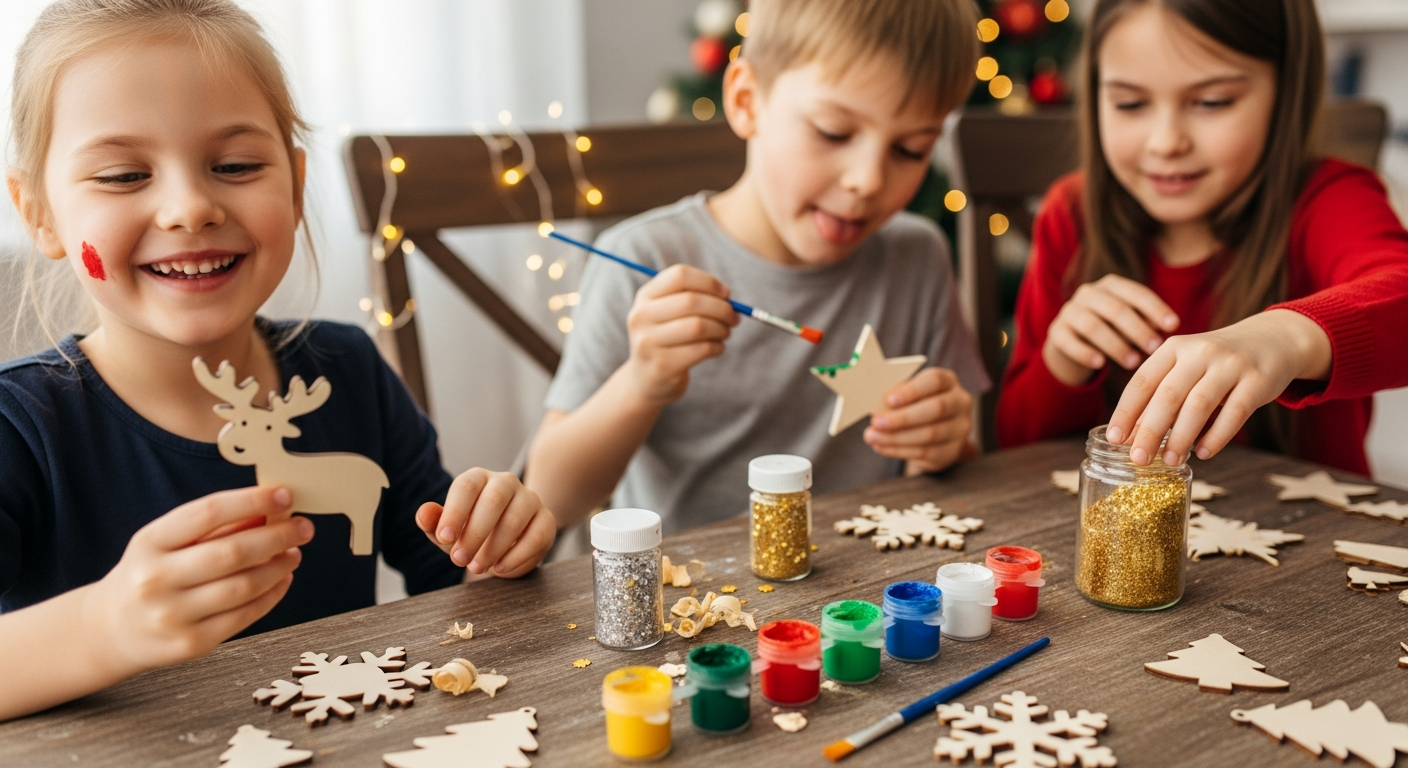
Table of Contents
- Introduction
- The Wonderful World of Wood Crafts for Kids
- Safety First: Essential Tips for Crafting with Wood
- Gathering Your Materials: The Crafting Toolkit
- Festive Christmas Wood Crafts for Kids: Step-by-Step Inspiration
- Nurturing Communication: Beyond the Craft
- How Speech Blubs Can Further Empower Your Child's Communication Journey
- Choosing the Right Plan for Your Family: Experience Speech Blubs Today
- Conclusion
- Frequently Asked Questions (FAQ)
The magic of the holiday season often conjures images of sparkling lights, festive music, and cherished family traditions. Yet, amidst the hustle and bustle, many parents grapple with finding meaningful activities that captivate young minds and foster development, especially in an age dominated by screens. What if we told you that some of the most enduring joy and significant developmental strides can come from the simplest materials – like wood?
This Christmas, let's trade passive screen time for engaging, hands-on creativity that lights up young imaginations and strengthens crucial skills. This post will guide you through a world of enchanting Christmas wood crafts for kids, exploring everything from the developmental benefits to essential safety tips, material gathering, and step-by-step instructions for several festive projects. More than just pretty decorations, these crafts are powerful tools for building fine motor skills, sparking creativity, and, most importantly, enriching your child's communication journey. We'll show you how to transform simple wooden pieces into holiday masterpieces and, along the way, encourage a love for language and connection, turning every crafting session into a joyful learning experience.

Introduction
As parents, we constantly seek ways to nurture our children's growth, curiosity, and ability to express themselves. The holidays offer a unique opportunity to create lasting memories while engaging in activities that are not only fun but profoundly beneficial for development. Imagine your child’s delight in transforming a plain wooden block into a shimmering Christmas ornament or a simple craft stick into a festive reindeer. These aren't just crafts; they are adventures in creativity, problem-solving, and self-expression.
Beyond the sheer joy of creation, engaging in hands-on activities like wood crafting provides a rich environment for developing vital skills, including fine motor coordination, sensory processing, and, significantly, language and communication. When little hands are busy painting, gluing, and arranging, their minds are actively processing information, observing details, and forming ideas – all excellent prompts for conversation. We believe that every shared moment, every spoken word, and every creative endeavor contributes to a child's ability to "speak their minds and hearts." This Christmas, let’s embark on a creative journey with wood crafts, fostering not just beautiful decorations, but also building blocks for better communication and stronger family bonds.
The Wonderful World of Wood Crafts for Kids
Wood, in its many forms, offers a unique sensory experience and a robust foundation for countless craft projects. Unlike paper or fabric, wood provides a tangible, sturdy base that can be painted, glued, sanded, and embellished, giving children a sense of accomplishment in creating something lasting. But the benefits extend far beyond the final product.
Boosting Developmental Skills Through Wood Crafting
Engaging with wood crafts offers a treasure trove of developmental advantages for children of all ages:
- Fine Motor Skill Development: Holding brushes, squeezing glue bottles, placing small embellishments, and even light sanding all refine the small muscles in the hands and fingers. These are the same muscles crucial for writing, buttoning clothes, and other daily tasks.
- Creativity and Imagination: With a blank wooden canvas, children are free to envision and create. There are no "right" or "wrong" ways to decorate a wooden ornament, fostering imaginative thinking and encouraging unique expressions of self.
- Problem-Solving Skills: From deciding what colors to use to figuring out how to attach a reindeer's antlers, children naturally engage in problem-solving. They learn to plan, adapt, and see their ideas come to life.
- Patience and Concentration: Crafting requires sustained attention. Waiting for paint to dry, meticulously placing small pieces, or carefully cutting shapes teaches children the value of patience and helps extend their attention spans.
- Sensory Exploration: The feel of smooth, rough, or textured wood, the smell of wood and paint, and the visual delight of colors all contribute to a rich sensory experience, which is vital for early learning.
- Self-Esteem and Confidence: Completing a craft project, especially one that can be proudly displayed or given as a gift, provides an enormous boost to a child's self-esteem. They see the tangible result of their efforts.
The Speech and Language Connection
Perhaps less obvious but equally significant is the profound impact wood crafts can have on speech and language development. When children craft, they are engaged in a multi-sensory activity that naturally lends itself to conversation and learning new vocabulary.

- Vocabulary Expansion: As they work, you can introduce new words: "grain," "smooth," "rough," "sparkly," "dull," "decorate," "attach," "squeeze," "mix." Describing colors ("vibrant red," "forest green") and shapes ("circular," "star-shaped") becomes an organic part of the process.
- Following Instructions: Craft recipes provide excellent opportunities to practice following multi-step directions ("First, paint the base red, then glue on two googly eyes").
- Descriptive Language: Encourage your child to describe what they are doing, what they see, and what they plan to do next. "I'm painting the tree green." "This glue is sticky." "My snowman needs a blue hat."
- Question and Answer Practice: Ask open-ended questions like, "What color should we use next?" "How do you think we can make this part stick?" "What story does your reindeer tell?" This promotes conversational turn-taking and critical thinking.
- Storytelling and Imagination: Once a craft is complete, it can become a prop for imaginative play, encouraging children to tell stories about their wooden characters or ornaments. For instance, a wooden Santa might need help delivering presents, prompting a story about his journey.
For a child who might be a "late talker" or struggling with expressive language, the hands-on nature of crafting can reduce pressure and provide concrete objects to talk about. A parent observing their 3-year-old carefully painting a wooden star can narrate the actions ("You're painting the star yellow! So shiny!"), gently prompting sounds or words related to the activity. This kind of supportive interaction during play is exactly what we champion at Speech Blubs, creating an engaging, low-pressure environment for communication. Our mission, born from our founders' personal experiences with speech challenges, is to empower children to "speak their minds and hearts" by providing a tool we wished we had growing up.
Safety First: Essential Tips for Crafting with Wood
While wood crafts are incredibly rewarding, ensuring a safe environment for your little crafters is paramount. Always remember that crafting with children should be a supervised activity.
- Adult Supervision is Key: Never leave young children unsupervised with craft materials, especially sharp tools or small pieces.
- Age-Appropriate Tools: For younger children, stick to blunt-tipped scissors (if any cutting is involved with other materials like felt), wider paintbrushes, and easily manageable wood pieces. Older children might be ready for more intricate tools under strict supervision.
- Non-Toxic Materials: Always opt for non-toxic paints, glues, and sealants. Look for labels that explicitly state "AP certified non-toxic" or "child-safe."
- Splinter Patrol: While craft wood is usually smooth, always check for potential splinters before handing pieces to your child. A quick sanding with fine-grit sandpaper can smooth any rough edges.
- Ventilation: If using spray sealants or certain types of paints, ensure good ventilation by opening windows or working outdoors.
- Supervise Small Parts: Small embellishments like beads, googly eyes, or tiny pom-poms can be choking hazards for very young children. Choose larger, safer alternatives or supervise closely with older kids.
- Mess Management: Lay down newspaper, craft paper, or an old tablecloth to protect your workspace. This also helps create a designated "craft zone" where messes are expected and easily contained.
Gathering Your Materials: The Crafting Toolkit
One of the beauties of wood crafts is that many materials are readily available and often quite affordable. A well-stocked craft cupboard can lead to spontaneous moments of creative fun!
Essential Wood Crafting Supplies:
- Various Wood Pieces:
- Craft Sticks (Popsicle Sticks): Versatile and inexpensive, perfect for building structures, frames, or flat ornaments.
- Wood Slices: Often found in craft stores, these natural circles are ideal for painting ornaments, gift tags, or coasters.
- Wood Blocks: Come in various sizes and shapes, excellent for building characters, small houses, or sturdy bases.
- Dowels: Thin wooden rods useful for axles, legs, or small structural elements.
- Wood Beads: Can be strung or glued for added texture and detail.
- Adhesives:
- Craft Glue (PVA Glue): All-purpose, non-toxic, and dries clear. Great for most projects.
- Low-Temp Hot Glue Gun (Adult Use Only): For quicker bonds or stronger attachments, an adult can use a low-temp hot glue gun safely.
- Paints and Brushes:
- Acrylic Craft Paints: Wide range of colors, non-toxic, and durable when dry.
- Washable Tempera Paints: Great for younger children as they clean up easily.
- Various Sized Brushes: From wide flat brushes for large areas to fine-tipped brushes for details. Sponges or cotton swabs can also be used for unique textures.
- Embellishments:
- Glitter and Glitter Glue: Adds sparkle and festive cheer.
- Pom-Poms, Pipe Cleaners, Felt Scraps: For adding soft textures, details like noses, hats, or scarves.
- Googly Eyes: Bring characters to life instantly.
- Ribbon, Twine, Yarn: For hanging ornaments, adding decorative bows, or hair.
- Buttons, Sequins, Beads: Small details that can add visual interest (use with caution for young children due to choking hazards).
- Markers/Paint Pens: For fine details, outlines, or writing.
- Protective Finishes (Optional):
- Clear Craft Sealant (Non-Toxic): Can protect painted wood pieces and give them a finished look.
- Mod Podge: A glue, sealer, and finish all in one.
You can often find these supplies at local craft stores, dollar stores, or online retailers. Many craft stores also offer holiday-themed wood blanks (pre-cut shapes like stars, trees, or reindeer) which are perfect for quick and easy projects.
Festive Christmas Wood Crafts for Kids: Step-by-Step Inspiration
Now, let's dive into some specific craft ideas that are perfect for little hands and big imaginations. Remember, the goal is not perfection, but participation, creativity, and connection.
1. Wooden Slice Ornaments: Nature's Canvas
These rustic ornaments are simple, beautiful, and a fantastic way to incorporate nature into your holiday decor.
- Materials: Small wood slices (pre-drilled with a hole if possible), acrylic paints, paintbrushes, fine-tip markers, glitter glue, twine or ribbon.
- Instructions:
- Prepare the Canvas: If your wood slices aren't pre-sanded, a quick pass with fine-grit sandpaper can make them smoother. Discuss the "grain" of the wood and how it feels.
- Paint the Base (Optional): Your child can paint the entire slice a solid color or leave the natural wood showing. Talk about the colors they choose: "That's a vibrant red!" "Are you making a snowy white background?"
- Decorate! Once the base is dry, let their creativity soar. They can paint a snowman, a Christmas tree, a star, or an abstract design. Markers can be used for details like faces or patterns. Glitter glue adds a festive sparkle. For a child working on shape recognition, guide them to paint a "circle," "triangle," or "star" on the slice.
- Add a Hanging Loop: Thread twine or ribbon through the pre-drilled hole and tie a loop. If there's no hole, an adult can carefully drill one, or you can hot glue a ribbon loop to the back.
- Speech Blubs Connection: This craft is rich with descriptive language. As your child paints, encourage them to describe their colors ("bright blue," "shiny silver"), shapes ("round ornament," "pointy star"), and actions ("I'm brushing the paint," "gluing the ribbon"). For a parent whose child is learning animal sounds, they might paint a reindeer face and then practice "What does the reindeer say?" with our "Animal Kingdom" category in the Speech Blubs app, where children imitate peers making various animal sounds. It provides a screen-free alternative to passive viewing while complementing hands-on play.
2. Craft Stick Christmas Trees: Build and Decorate
Craft sticks are incredibly versatile for building, and a Christmas tree is a perfect festive project.
- Materials: Green craft sticks (or natural ones painted green), brown craft sticks (for the trunk), craft glue, small pom-poms, buttons, sequins, glitter, a star-shaped button or felt star.
- Instructions:
- Form the Tree: An adult can help cut craft sticks into varying lengths if needed, or children can arrange full-sized sticks to form a triangular tree shape. Lay a long brown stick vertically for the trunk. Glue shorter green sticks horizontally across it, getting shorter towards the top, or overlap them to create a full tree shape. Talk about "long," "short," "on top," "underneath."
- Decorate the Tree: Once the glue is dry, it's time for ornaments! Use craft glue to attach pom-poms, buttons, and sequins like tiny ornaments. "Are you putting the red pom-pom on the tree?" "Where is the shiny sequin going?"
- Add the Star: Glue a star at the very top of the tree.
- Speech Blubs Connection: This activity is fantastic for practicing spatial concepts and prepositions ("on," "under," "top," "bottom," "next to"). It also encourages following a sequence of actions. For a child working on sequencing or following directions, you can model and prompt phrases like "first glue, then decorate," or "paint the tree, then add the star." These are essential skills reinforced by the structured yet playful activities within Speech Blubs, where children learn by watching and imitating their peers, building complex communication skills through our unique "video modeling" methodology.
3. Wooden Block Characters: Santa, Snowman & Reindeer Friends
Turn simple wooden blocks into adorable holiday characters that can stand on their own.
- Materials: Various sized wood blocks, acrylic paints (red, white, black, brown, orange), paintbrushes, googly eyes, small pom-poms, felt scraps, craft glue.
- Instructions:
- Choose a Character: Let your child pick if they want to make Santa, a snowman, or a reindeer.
- Paint the Base: Paint the block accordingly: red for Santa, white for a snowman, brown for a reindeer. Talk about the "body," "head," "color."
- Add Details:
- Santa: White beard (painted or cotton ball), black belt, googly eyes, red pom-pom for a nose. "Santa needs a big red nose!"
- Snowman: Orange carrot nose (painted or tiny felt cone), coal eyes and mouth (painted or googly eyes), felt scarf. "Where's his happy smile?"
- Reindeer: Googly eyes, red or black pom-pom nose, felt or small twig antlers. "He has two big antlers!"
- Speech Blubs Connection: This craft is superb for character naming, body part identification, and descriptive language. Use specific vocabulary for each character (e.g., "ho ho ho" for Santa, "brr cold" for snowman). For parents whose children are working on specific sounds or words, like the "M" sound for "mouth" or "N" sound for "nose," you can gently emphasize these words during the craft. Our app offers numerous categories, like "My Body" or "What We Do," where children can practice naming body parts and actions, making it an ideal companion to this hands-on activity. Download Speech Blubs on the App Store or Google Play to explore fun ways to build these essential vocabulary skills!
4. Personalized Wood Signs/Gift Tags: Spreading Holiday Cheer
Create meaningful gifts or decorations with personalized messages.
- Materials: Larger wood slices or small wood planks, paint, paint pens or fine-tip markers, clear sealant, twine or ribbon.
- Instructions:
- Prepare and Paint: Paint the wood piece a base color if desired, or leave it natural for a rustic look.
- Personalize: Once dry, help your child write a festive message like "Merry Christmas," "Joy," "Love," or a family name. They can also draw pictures. For children learning letters, help them identify each letter as they write. "What letter is this? 'J' for 'Joy'!"
- Decorate: Add festive touches like holly berries, snowflakes, or borders using paint or markers.
- Seal and Hang: Once everything is dry, an adult can apply a clear, non-toxic sealant to protect the design. Add twine or ribbon for hanging.
- Speech Blubs Connection: This craft provides an excellent opportunity for letter recognition, phonological awareness (identifying sounds in words), and early writing skills. As they write or draw, discuss the sounds each letter makes or the story behind their drawing. For a child working on initial letter sounds or recognizing their name, this is a very motivating activity. Our Reading Blubs app, included with the Yearly plan, focuses specifically on these pre-reading and early literacy skills, making this a perfect complementary activity.
Nurturing Communication: Beyond the Craft
The true magic of these wood crafts isn't just in the finished product, but in the process and the conversations they inspire. To truly maximize the communication benefits, consider these strategies:
- Narrate and Describe: Be your child's personal commentator. "You're mixing the blue and white paint, making light blue! How cool!" "You're carefully gluing the eyes on the snowman."
- Ask Open-Ended Questions: Instead of "Do you like it?", try "What's your favorite part about your craft?" or "If this reindeer could talk, what would he say?"
- Expand on Their Words: If your child says "tree," you can respond with "Yes, a tall green Christmas tree!" adding descriptive words.
- Encourage Choices: "Do you want red or green ribbon?" "Should we put glitter on first or last?" This empowers them and encourages them to use preference words.
- Practice Turn-Taking: Take turns adding a decoration or painting a section, modeling conversational turn-taking as well.
- Sing and Rhyme: Incorporate Christmas carols or simple rhymes related to the craft. Rhyming helps with phonological awareness, a critical pre-literacy skill.
These simple interactions create a rich language environment, making every crafting session a powerful opportunity for growth. It’s about creating "smart screen time" experiences where learning is active, engaging, and personal. At Speech Blubs, we are committed to providing an immediate, effective, and joyful solution for the 1 in 4 children who need speech support, blending scientific principles with play. We believe that family connection is paramount, and these crafting moments are invaluable for fostering that bond.
How Speech Blubs Can Further Empower Your Child's Communication Journey
We understand that supporting a child's speech and language development is a journey, and sometimes, parents need a little extra help. That's where Speech Blubs comes in. Our app is designed to be a powerful, playful supplement to your child's overall development plan, offering unique and engaging activities that reinforce the very communication skills you foster during activities like Christmas wood crafts.
Our Unique Approach: Video Modeling
At the heart of Speech Blubs is our unique "video modeling" methodology. Children learn by watching and imitating their peers on screen, who are demonstrating sounds, words, and sentences in a fun, natural way. This method taps into mirror neurons in the brain, making learning intuitive and highly effective. When your child sees other children making the "moo" sound or saying "red hat," they are more likely to imitate and learn themselves.
Imagine your child crafting a wooden reindeer. After they've painted it brown and added a red nose, you can transition to Speech Blubs. In our "Animal Kingdom" section, they can watch and imitate other children making reindeer sounds or saying words like "nose" and "antlers." This bridges the gap between hands-on play and guided speech practice, making learning seamless and enjoyable. Our high MARS scale rating and robust research validate the effectiveness of our approach.
Beyond Passive Viewing: Interactive and Engaging
Unlike passive cartoons, Speech Blubs requires active participation. Children don't just watch; they imitate, respond, and interact. This active engagement is critical for language acquisition. We provide a screen-free alternative to passive viewing (like cartoons) by turning screen time into an interactive, educational experience. It’s about purposeful, "smart screen time" that sparks conversation and encourages connection.
Many parents have shared incredible stories of their children's progress. For example, a parent whose 3-year-old was struggling with initial sounds found that the "Early Sounds" section within Speech Blubs, combined with playful interaction, helped their child master challenging sounds with confidence. You can see what other parents are saying about their child's success with Speech Blubs and witness the positive impact firsthand.
Unsure if Your Child Needs Support?
If you're wondering if your child could benefit from a little extra speech support, we offer a quick, insightful tool. Take our quick 3-minute preliminary screener. It involves just 9 simple questions and provides an assessment and a personalized next-steps plan. It's a great way to gain clarity and empower you with information, and it leads directly to a free 7-day trial of Speech Blubs.
Choosing the Right Plan for Your Family: Experience Speech Blubs Today
We believe in making effective speech support accessible and affordable for every family. To get the most out of Speech Blubs, we offer two flexible plans, with our Yearly plan providing exceptional value and an enhanced experience.
Our Plans:
- Monthly Plan: For $14.99 per month, you get access to our core Speech Blubs features.
- Yearly Plan: Our most popular and recommended option is just $59.99 per year. This breaks down to an incredible value of just $4.99 per month, allowing you to save 66% compared to the monthly plan!
Why the Yearly Plan is the Best Choice:
The Yearly plan isn't just about significant savings; it's about unlocking the full potential of Speech Blubs and gaining access to exclusive, high-value features designed to support your child's communication journey more comprehensively:
- 7-Day Free Trial: Only with the Yearly plan do you receive a complimentary 7-day free trial. This gives you ample time to explore all the features, see your child engage, and experience the benefits firsthand before committing.
- Exclusive Reading Blubs App: The Yearly plan includes the extra Reading Blubs app, a fantastic resource specifically designed to boost pre-reading and early literacy skills, making it a perfect complement to your child's overall development.
- Early Access to New Updates: As a Yearly subscriber, you'll be among the first to experience new features, activities, and content updates, ensuring your child always has fresh, engaging learning experiences.
- 24-Hour Support Response Time: Enjoy peace of mind with prioritized customer support, ensuring any questions or concerns are addressed promptly within 24 hours.
The Monthly plan does not include these valuable benefits. We encourage you to choose the Yearly plan to get the free trial and the full suite of features that Speech Blubs offers, providing the most comprehensive and joyful learning experience for your child.
Ready to empower your child's voice and create meaningful connections? Start your journey with us today.
Conclusion
This holiday season, let's embrace the simple, profound joy of creating with our children. Christmas wood crafts for kids offer more than just beautiful decorations; they are gateways to developing essential fine motor skills, sparking boundless creativity, and fostering rich communication. From the sensory experience of working with wood to the shared conversations about colors, shapes, and stories, every craft project becomes a treasured learning opportunity. We encourage you to narrate, ask open-ended questions, and truly connect with your child as they bring their festive visions to life.
Remember, every spoken word and every shared smile during these activities helps build the foundation for a child who can confidently "speak their minds and hearts." Just as you carefully guide your child through painting a wooden star, we at Speech Blubs are here to guide and support their communication journey, blending scientific methodology with joyful, interactive play. Our unique video modeling and engaging activities are designed to complement your efforts, turning screen time into "smart screen time" that sparks real language development.
Don't let this holiday season pass without experiencing the dual joy of crafting and communicating with your little ones. Whether you're making wooden ornaments or block characters, you're not just making crafts – you're making memories and building skills that last a lifetime.
Ready to embark on this enriching adventure and provide your child with the gift of confident communication? Begin your 7-day free trial today by choosing our Yearly plan. It's the best way to unlock the full suite of Speech Blubs features, including the Reading Blubs app and priority support, all while saving 66%. Simply create your account and begin your 7-day free trial on our website or download Speech Blubs on the App Store or Google Play Store to get started!
Frequently Asked Questions (FAQ)
Q1: What age group are Christmas wood crafts suitable for?
Christmas wood crafts can be adapted for a wide range of ages, generally from toddlers (with heavy adult supervision for safety) up through early elementary school. For younger children, focus on larger wood pieces, washable paints, and simple gluing tasks. Older children can handle more intricate designs, smaller embellishments, and fine-tipped brushes. The key is always age-appropriate materials and adult supervision, especially with small parts or sharp tools.
Q2: What are the main benefits of wood crafts compared to other craft materials for kids?
Wood crafts offer unique benefits due to their tactile nature and durability. They provide a sturdy, long-lasting canvas for creativity, enhancing fine motor skills through manipulation and painting. The natural texture of wood offers a rich sensory experience. Unlike paper or fabric crafts which can be fragile, wooden creations offer a greater sense of accomplishment as they can be proudly displayed or used as toys for years, fostering self-esteem and providing tangible reminders of their achievements.
Q3: How can I best encourage my child to talk during crafting activities?
To encourage communication, make the crafting experience highly interactive and language-rich. Narrate your child's actions ("You're painting the tree green!"), ask open-ended questions ("What should we add next to make it sparkle?"), and expand on their utterances ("Yes, a big, shiny star!"). Encourage choices ("Do you want the red or blue pom-pom?"), and discuss the colors, shapes, and textures they are using. This natural, low-pressure environment provides ample opportunities for vocabulary expansion, descriptive language, and conversational turn-taking.
Q4: My child has a speech delay. How can Speech Blubs complement our crafting time?
Speech Blubs is an excellent complement to hands-on activities like crafting. While crafting, your child develops fine motor skills and encounters new vocabulary. Speech Blubs then reinforces these words and concepts through our unique video modeling, where children learn by imitating peers. For example, if your child makes a wooden reindeer, they can then practice "reindeer" or animal sounds in the app's "Animal Kingdom" category. This blend of real-world experience and targeted app activities creates a dynamic and effective learning environment, turning screen time into a powerful tool for developing communication skills. It provides a joyful solution for children needing speech support, aligning with our mission to empower them to "speak their minds and hearts."
About the author